美元信用危机

Search documents
华安基金:“大美丽”法案通过,关税暂缓将到期
Xin Lang Ji Jin· 2025-07-08 08:48
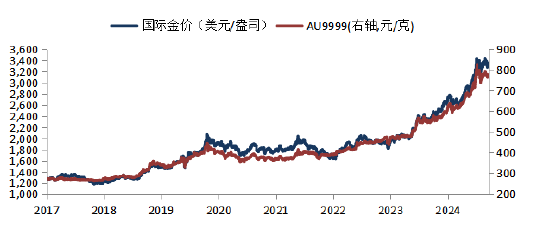
Group 1: Gold Market Overview - Gold prices have declined due to easing tensions in the Middle East, with London spot gold closing at $3,337 per ounce (down 1.9% week-on-week) and domestic AU9999 gold at 772 yuan per gram (down 0.9% week-on-week) [1] - The market is closely monitoring the risk of renewed U.S. tariffs, which could boost safe-haven demand for gold if significantly increased [1] - The U.S. "Great Beautiful" Act has been signed, which will increase federal debt by $3.4 trillion over the next decade, maintaining a loose fiscal stance [1] Group 2: U.S. Employment Data and Economic Outlook - U.S. unemployment rate stands at 4.1%, lower than the expected 4.3% and previous 4.2%, with non-farm payrolls adding 147,000 jobs, exceeding the forecast of 106,000 [2] - Despite short-term resilience in employment data, the job creation structure is unhealthy, heavily reliant on government and education sectors, while small business hiring remains low [2] - The outlook suggests potential for two interest rate cuts by the Federal Reserve this year, supported by expectations of weakening employment and rising unemployment [2] Group 3: Future Signals for Gold ETFs - Key signals to watch for gold ETFs include trade negotiations and tariff developments, as well as the People's Bank of China's gold purchasing activities [2]

这一次,黄金怎么不涨了?
Xin Lang Ji Jin· 2025-06-27 06:37
Group 1 - The core viewpoint of the articles revolves around the unexpected performance of gold prices during the recent Israel-Iran conflict, where geopolitical tensions did not lead to the anticipated rise in gold prices, contrary to historical trends [1][2][3] - The London spot gold price briefly reached $3450 per ounce at the onset of the conflict but subsequently fell to around $3330, marking a cumulative decline of 1.87% [1] - The lack of a significant increase in geopolitical risk premium for gold during this conflict is noted as an anomaly compared to historical reactions to similar geopolitical events [1][3] Group 2 - Citibank Research has significantly lowered its three-month gold price target from $3500 to $3150, reflecting a 10% decrease [4] - Goldman Sachs maintains a bullish outlook, suggesting that if geopolitical conflicts or policy uncertainties escalate, gold prices could still challenge $3500 or higher [5] - The SPDR Gold ETF holdings are still far from the peak levels seen in 2011, indicating that gold has not yet reached a bubble state [5][6] Group 3 - Central banks are expected to continue increasing their gold reserves, with one-third of 75 global central banks planning to do so in the next one to two years, which could support gold prices [7] - Uncertainties surrounding tariff policies may lead to inflationary pressures, with the potential for stagflation risks increasing, which could provide opportunities for gold investment [8] - The dollar's credit crisis is a concern, as the dollar index has dropped by 9.72% this year, prompting investors to shift funds from dollar assets to gold and other safe-haven assets [9] Group 4 - The gold ETF (518800) has seen its scale grow to 18.1 billion, with an increase of over 11 billion this year, indicating active trading and interest in gold investments [10] - For retail investors, gold ETFs may offer better liquidity and preservation compared to physical gold or jewelry, reflecting the overall trend and investment value in the gold market [10]
美元信用或将崩塌!国际资本仓皇出逃
Sou Hu Cai Jing· 2025-06-19 14:33
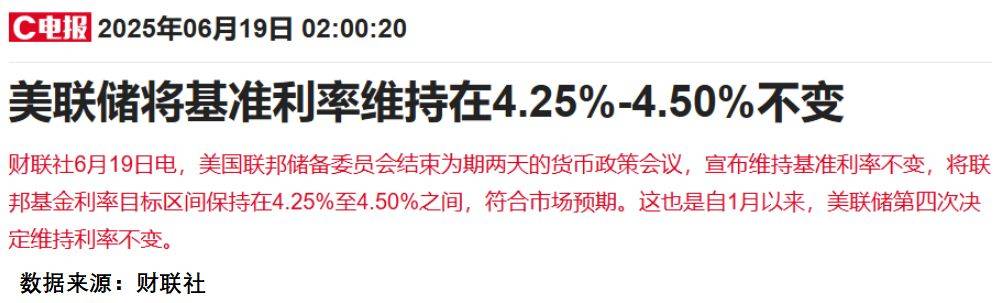
Group 1 - The core viewpoint is that the A-share market is heavily influenced by external news, leading to erratic stock price movements, which can be likened to a "puppet show" controlled by information [1] - The Federal Reserve's decision to maintain interest rates is seen as a significant factor affecting market sentiment, with the dot plot indicating a lack of imminent rate cuts, which could lead to prolonged market uncertainty [2][3] - There is a growing concern regarding the credibility of the US dollar, as international capital begins to lose faith in it due to the weaponization of the dollar settlement system [3][5] Group 2 - The market's reaction to the Federal Reserve's decision illustrates the characteristics of an "external leverage market," where neutral news is exaggerated in a fragile market environment, leading to significant volatility [6] - Retail investors often fall into the trap of emotional trading, reacting to short-term market movements rather than focusing on underlying data, which contributes to their losses [9] - The use of quantitative analysis tools has revealed the importance of understanding institutional trading activity, particularly through "institutional inventory" data, which reflects the true market dynamics [10][12] Group 3 - Observations of specific stocks demonstrate that price movements can be misleading; a stock that experiences a rapid rise may not have institutional support, while a stock that declines may have strong institutional backing, leading to a rebound [12][14] - The ability to visualize data and analyze institutional inventory alongside price charts can provide clearer insights into market trends, moving beyond superficial analysis [14][17] - The focus on interest rate expectations may obscure deeper funding trends, highlighting the need for investors to identify hidden opportunities within the market [15]
伊以冲突再升级,撩拨大宗商品琴弦
和讯· 2025-06-18 10:23
Core Viewpoint - The article discusses the impact of escalating geopolitical tensions in the Middle East, particularly the Israel-Iran conflict, on international oil and gold prices, highlighting the potential for price fluctuations due to supply concerns and market sentiment [1][2]. Oil Market Analysis - Since the onset of the Israel-Iran conflict on June 13, international oil prices have risen, with Brent crude oil prices increasing by over 9% [2]. - Concerns regarding oil supply stem from Iran's current production of approximately 3.4 million barrels per day and an export volume of about 1.5 million barrels per day, predominantly to China [2]. - The potential for conflict escalation raises fears of Iran blocking the Strait of Hormuz, through which approximately 20 million barrels of oil are transported daily, accounting for 75% of oil transport in the region [2]. - Despite these concerns, the global oil supply situation remains manageable, with OPEC in a production increase cycle and an estimated 4-5 million barrels per day of idle capacity available [2][3]. - Long-term projections suggest that international oil prices may stabilize around $65 per barrel, influenced by inflationary pressures in the U.S. and geopolitical dynamics [3][4]. Gold Market Analysis - International gold prices have surged due to the heightened tensions in the Middle East, currently hovering around $3,400 per ounce [5]. - Over the past month, gold prices have rebounded from below $3,200 per ounce, with a potential challenge to the previous high of $3,500 per ounce [5]. - The increase in gold prices is attributed to rising risk aversion amid geopolitical instability and a declining U.S. dollar index, which enhances the valuation of dollar-denominated gold [5]. - Long-term trends indicate that gold prices are influenced by the global monetary system, central bank policies, and inflation expectations, with potential for prices to reach $3,700-$3,800 per ounce if they surpass the $3,500 mark [6].

特稿|管涛:全球关税风暴下的人民币国际化
Di Yi Cai Jing· 2025-06-18 01:28
Core Viewpoint - The article discusses the opportunities and challenges for the internationalization of the Renminbi (RMB), emphasizing the need for a more market-oriented floating exchange rate system and the potential for RMB to become a more significant international currency amidst the declining credibility of the US dollar [1][4]. Group 1: Opportunities for RMB Internationalization - Since the pilot program for cross-border trade settlement in RMB began in 2009, the currency has transitioned from "non-internationalization" to "internationalization," becoming the third-largest currency in the International Monetary Fund's Special Drawing Rights (SDR) [1]. - As of December 2024, RMB accounts for 6.0% of cross-border trade financing, closely trailing the euro at 6.5%, but significantly lower than the US dollar's 81.9% [2]. - The RMB is the fourth-largest international payment currency, with a share of 3.8%, again lower than the dollar and euro, which hold 50.2% and 22.0%, respectively [2]. Group 2: Challenges for RMB Internationalization - The RMB's share in foreign exchange reserves was 2.2% at the end of 2024, down 0.7 percentage points from its historical high in early 2022, indicating a significant gap compared to the dollar and euro [2]. - The RMB is not yet fully convertible, and its exchange rate remains influenced by concerns over domestic financial stability and export competitiveness, complicating the process of capital account opening [9]. - The ongoing geopolitical tensions and trade conflicts, particularly with the US, pose additional risks to the RMB's internationalization efforts, potentially leading to a reconfiguration of global supply chains [8][9]. Group 3: Strategic Recommendations for RMB Internationalization - To enhance the RMB's international status, it is crucial to implement proactive economic policies and deepen reforms that stimulate market vitality and improve the investment environment for foreign investors [10]. - Strengthening financial market infrastructure and aligning domestic regulations with international standards will facilitate greater foreign participation in RMB-denominated assets [11][12]. - Accelerating the construction of Shanghai as an international financial center will support the RMB's internationalization by enhancing its competitiveness and service capabilities in global markets [14].

【专家观点】加速人民币国际化:破局美元信用危机的战略窗口
Xin Hua Cai Jing· 2025-06-09 09:03
Core Viewpoint - The article discusses the strategic opportunity for accelerating the internationalization of the Renminbi (RMB) amid the weakening credibility of the US dollar, highlighting the mismatch between China's economic strength and the current status of the RMB in global finance [1][2]. Group 1: Current State of RMB Internationalization - Despite being the world's largest trading nation and the second-largest economy, China's RMB accounts for only about 4% of global payments and 2.4% of global foreign exchange reserves [1][2]. - The share of RMB in cross-border trade settlements has increased from 18% in 2022 to 30% in the first quarter of 2024, while capital account RMB receipts have reached 73% [1][2]. - The reliance on the US dollar for overseas investments and trade exposes Chinese enterprises to significant risks, including exchange rate volatility and limited access to RMB financing [2][3]. Group 2: Structural Contradictions - There exists a contradiction between China's economic strength, which accounts for approximately 18% of the global economy, and the RMB's international share of less than 3% [4]. - The RMB's dominance in trade settlements contrasts with its weakness in capital account transactions, where the depth and liquidity remain insufficient [4][5]. - The separation of onshore market size and offshore pricing power leads to a loss of pricing authority for the RMB, necessitating a strengthening of onshore market influence [5][6]. Group 3: Strategic Recommendations - A five-year action plan is proposed to enhance RMB internationalization, focusing on three pillars: capital account opening, regional anchor currency development, and upgrading financial infrastructure [6][7]. - The plan includes expanding the issuance of Panda bonds and RQFII, as well as developing RMB-denominated futures to manage dollar volatility risks [6][9]. - Establishing a robust payment and clearing network to mitigate risks associated with reliance on the US dollar payment system is essential [10][11]. Group 4: Quantitative Goals and Policy Support - The article sets clear quantitative targets for RMB internationalization by 2030, including increasing the global payment share from 3.79% to over 6% and the foreign exchange reserve share from 2.4% to 5% [12][14]. - It emphasizes the need for coordinated policy support across various departments to enhance the RMB's role as a global currency [13][14]. - The successful implementation of these strategies could position the RMB as the third-largest reserve currency globally, aligning its status with China's economic power [13][14].
商品:长期主义的困境,拥挤空头?
对冲研投· 2025-06-06 11:40
Core Viewpoint - The article discusses the current state of the market, highlighting a lack of confidence in macroeconomic recovery and the ongoing challenges posed by external shocks, particularly in the context of U.S.-China trade relations and geopolitical tensions [3][4][5]. Group 1: Macroeconomic Environment - The macroeconomic changes are minimal, with no systemic confidence being rebuilt. The average tariff between the U.S. and China is expected to remain high, around 30%-40% [4]. - U.S. debt pressure and fiscal constraints are weakening the strength of the U.S. economy, leading to a decline in the "American exceptionalism" narrative [5]. - The market is experiencing a price stagnation where prices remain the same but purchasing power is diminishing, creating a poor trading experience [3]. Group 2: Commodity Prices and Market Dynamics - Commodity prices are low enough that the market does not anticipate immediate negative shocks comparable to the lows seen in early April [5]. - Certain commodities, such as glass and rubber, have fallen below their early April lows, indicating a return to previous pricing levels [5]. - Oil and coal are seen as leading indicators for commodity prices, with geopolitical issues potentially driving oil prices higher despite recent market corrections [5][7]. Group 3: Geopolitical Tensions - Recent attacks on Russian airports by Ukraine indicate a shift in military dynamics, suggesting that Ukraine may have opportunities to challenge Russian dominance [6]. - The ongoing geopolitical conflicts are likely to create long-term threats to energy exports, particularly oil [6]. Group 4: Supply and Demand Dynamics - Current U.S. retail inventory levels are increasing, suggesting that demand may be overstretched, with inventory growth at 5% while sales growth is only at 4% [6]. - The supply growth rate is currently double that of demand growth, indicating a trend towards oversupply, which will pressure PPI recovery [8]. Group 5: Investment Considerations - The article raises questions about the potential for market recovery in a long-term weak economic environment, emphasizing the need for systematic thinking regarding investment strategies [9]. - There are structural contradictions in trading, with some sectors appearing overvalued while others, like the photovoltaic and black industrial chains, may offer valuation recovery opportunities [9].

特朗普威胁对欧盟加征50%关税原因;金价会升至5000美元吗? | 国际
清华金融评论· 2025-05-25 10:33
Core Viewpoint - The article discusses President Trump's threat to impose a 50% tariff on EU goods, highlighting the potential economic impacts on both the EU and the US, as well as the broader implications for global trade dynamics [1][3][6]. Group 1: Reasons for Trump's Tariff Threat - The tariff threat serves as a negotiation pressure tactic aimed at accelerating trade talks with the EU, particularly regarding issues like digital service taxes and regulatory coordination [3]. - The US faces a significant trade deficit with the EU, amounting to $235.6 billion in 2024, with nearly 40% attributed to the automotive sector, prompting Trump to accuse the EU of unfair trade practices [3]. - Domestic political considerations are also at play, as the upcoming 2025 elections require Trump to fulfill promises related to revitalizing American manufacturing, which could resonate with voters in industrial states [3]. - The US aims to leverage tariffs to influence EU policies towards China, seeking to align EU actions with US interests in limiting Chinese supply chains [4]. Group 2: Potential Consequences of High Tariffs - The EU economy would be significantly impacted, particularly German car manufacturers like Porsche and Audi, which could face substantial losses and potential layoffs due to reduced exports to the US [7]. - The US could experience inflationary pressures as consumers bear the cost of increased prices for goods such as automobiles and alcohol, leading to higher household expenditures [7]. - A global economic ripple effect may occur, with financial markets experiencing volatility and companies shifting production to regions like Mexico and Southeast Asia, ultimately passing increased costs onto consumers [7]. - The EU may respond with concessions, such as increasing imports of US agricultural products, but is unlikely to accept unilateral US demands, potentially leading to a "lose-lose" scenario for both economies [8]. Group 3: Long-term Implications - The ongoing trade tensions could accelerate the trend of regionalizing global supply chains, resulting in higher compliance costs for multinational companies [8]. - The situation is characterized as a high-stakes negotiation, with the outcome dependent on the EU's ability to withstand US pressure and maintain its trade principles [8]. - Goldman Sachs predicts that gold prices could rise to $5,000 per ounce due to factors such as increased central bank gold purchases and a potential crisis of confidence in the US dollar [8][9].

21深度|乱局之下避险资产“大分化”:金价飙升美元破百,“黄金时代”拉开大幕
Sou Hu Cai Jing· 2025-05-21 12:08
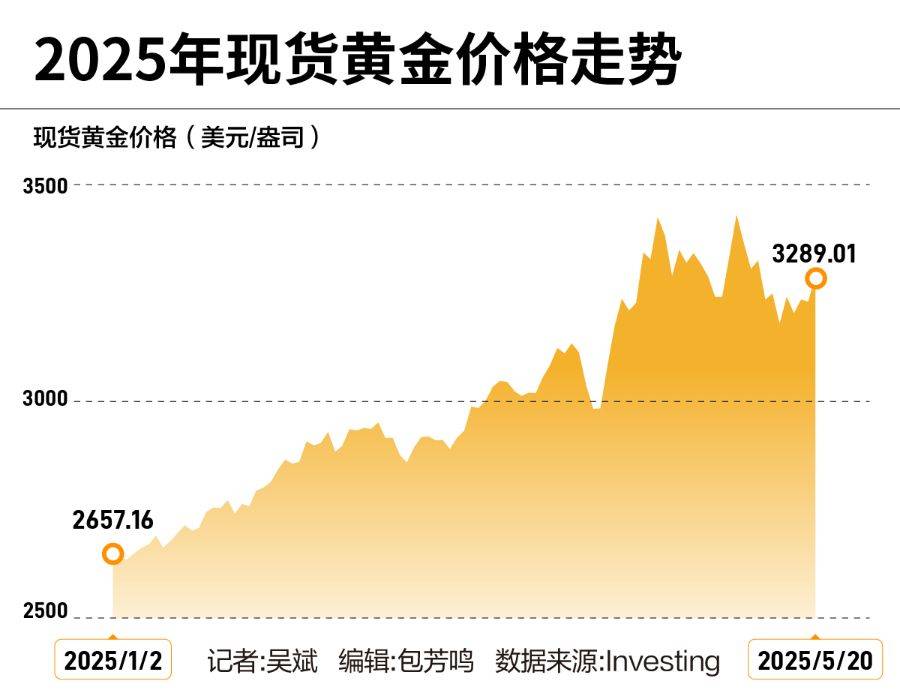
Core Viewpoint - The recent surge in gold prices, breaking the $3,300 per ounce mark, is driven by a combination of technical rebounds, deepening dollar credit crises, and escalating geopolitical tensions [1][2][4] Group 1: Gold Price Dynamics - Gold prices have increased significantly, with a rise of nearly 2% on May 20, reaching approximately $3,289.01 per ounce, and surpassing $3,300 on May 21 [1][2] - The price of gold has cumulatively increased over 26% in 2025, reflecting strong demand for gold as a safe-haven asset amid geopolitical and economic uncertainties [4][11] - The market is witnessing a structural shift in gold investment, particularly in Asia, with sustained growth in gold ETFs driven by investors from China and India [11] Group 2: Dollar Credit Crisis - Moody's downgraded the U.S. sovereign credit rating from Aaa to Aa1, highlighting unsustainable fiscal deficits and rising debt interest, which has weakened confidence in the dollar as a global reserve currency [2][8] - The dollar index fell below 100, significantly lower than its peak of around 110 earlier in the year, indicating a loss of trust in the dollar [2][8] - The foreign exchange options market reflects unprecedented pessimism regarding the dollar's future, with a risk reversal indicator showing a strong preference for put options over calls [8][9] Group 3: Geopolitical Tensions - Escalating geopolitical risks, including potential military actions in the Middle East and stalled ceasefire negotiations in the Russia-Ukraine conflict, have contributed to the surge in gold prices [2][4] - The geopolitical landscape is influencing investor behavior, with gold becoming a primary choice for hedging against uncertainties as traditional safe-haven assets like U.S. Treasuries and the dollar face pressure [11][12] Group 4: Future Outlook for Gold - Analysts predict that gold could reach new historical highs, with Goldman Sachs forecasting prices of $3,700 per ounce by the end of 2025 and $4,000 by mid-2026 [12] - The role of gold is evolving from merely a safe-haven asset to a core anchor in the restructuring of the global monetary system, as central banks diversify their reserves by increasing gold holdings [12][13] - The long-term bullish outlook for gold is supported by limited supply growth and strong demand from central banks and ETFs, despite potential short-term volatility [13]
中国又悄悄干大事,3月份再抛189亿美元美债,引爆美元信用危机?
Sou Hu Cai Jing· 2025-05-19 15:24
Core Viewpoint - China is significantly reducing its holdings of US Treasury bonds, which raises concerns about potential impacts on the US dollar's creditworthiness and the stability of the US debt market [1][3]. Group 1: China's Actions on US Treasury Bonds - In March, China reduced its US Treasury holdings by nearly $20 billion, marking the first time in a decade that it has ceded its position as the second-largest holder of US debt to the UK [1]. - Currently, China holds over $700 billion in US Treasury bonds, down nearly $300 billion from April 2022 and almost halved from its peak of $1.3 trillion in 2011 [1]. - China is primarily holding short-term US Treasury bonds, which, despite lower yields, offer high liquidity, allowing for quick sales in case of a dollar crisis [1]. Group 2: Market Reactions and Trends - The recent rise in US Treasury yields indicates a significant sell-off in the market, with China being a key contributor to this trend [3]. - Among the top ten foreign holders of US debt, only China and Ireland are currently selling, while other countries, such as the UK, have increased their holdings [3]. - The likelihood of a short-term crisis in the US Treasury market is considered low, although risks are accumulating over time [3]. Group 3: China's Strategy for Currency Internationalization - China is facilitating the replacement of US dollar debt with renminbi debt for countries along the Belt and Road Initiative, thereby promoting the internationalization of the renminbi [4]. - Over the past two years, China has reportedly provided over $100 billion to help these countries repay their US dollar debts, with expectations for this scale to increase [4]. Group 4: Diversification of Investments - China is diversifying its investments to mitigate the risks associated with holding excessive US dollar assets, including increasing its gold reserves [5]. - The People's Bank of China has added 70,000 ounces of gold to its reserves in March, continuing a trend of increasing gold holdings over the past six months [5]. Group 5: Implications for the US Debt Market - China's ongoing sell-off of US Treasury bonds may lead to price volatility in the market, but it is not expected to trigger an immediate crisis [7]. - The US, as the issuer of the dollar, can manage its debt through monetary expansion, although this could undermine the dollar's creditworthiness [7]. - The dynamics of US-China trade and the recent negotiations on tariffs are influencing the US Treasury market, with expectations of increased selling pressure in April [7].