贸易战

Search documents
金价暴跌!多家银行宣布上调
Sou Hu Cai Jing· 2025-04-05 20:49
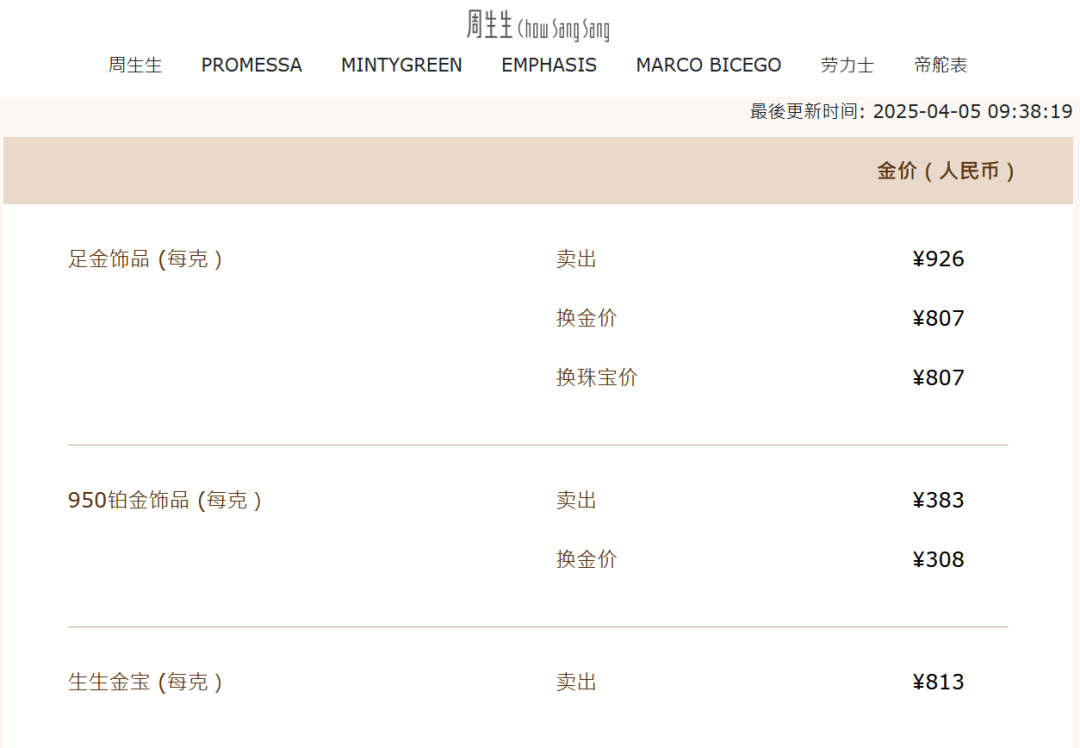
Group 1 - The article highlights the impact of the trade war initiated by the Trump administration, leading to concerns about a potential global economic recession, which has resulted in significant declines in the US stock market [1] - Gold prices have seen a notable drop, with the June gold futures on the New York Mercantile Exchange closing at $3035.40 per ounce, down 2.76%, erasing earlier gains from the week. The cumulative decline in international gold prices for the week is reported at 2.53% [1] - Domestic gold jewelry prices have also decreased, with notable reductions in prices from major retailers such as Chow Sang Sang and Lao Miao, reflecting a broader trend in the gold market [1] Group 2 - The Shanghai Gold Exchange has issued a notice emphasizing the need for market participants to enhance risk prevention measures due to increased volatility in precious metal prices, urging investors to manage their positions wisely [3] - Several banks, including Everbright Bank and Bank of China, have raised the minimum subscription amounts for gold accumulation products, indicating a tightening of investment conditions in the gold market [4][6] - The Bank of China has adjusted its minimum purchase amount for gold accumulation products twice this year, reflecting a trend among multiple banks to increase the entry threshold for gold investment [6]


聊聊领跌的纳斯达克
Hu Xiu· 2025-03-29 23:52
Group 1 - The core conflict in the U.S. is between the former president and the Federal Reserve, with the former president's rise leading to a surge in tech stocks like Tesla, despite a lack of substantial support for such price increases [1][5] - The government efficiency department's efforts to expose corruption have not resulted in any significant legal actions, indicating a lack of real fear among those in power [2][3] - The former president's first term saw the initiation of trade wars as a means to access additional budgetary resources, highlighting the political maneuvering involved in fiscal policy [3][4] Group 2 - The current administration's reluctance to remove tariffs is tied to the potential backlash from various interest groups that benefit from these tariffs [4][5] - The Federal Reserve's interests are aligned with maintaining the dollar's global dominance, which conflicts with the former president's populist agenda [4][5] - The tech sector, particularly companies like Tesla, faces significant challenges as the Federal Reserve's actions, including short-selling by influential figures, threaten their market positions [7][17] Group 3 - The current AI bubble is compared to the internet bubble of 2001, suggesting that without a viable profit model, the tech sector may face a significant downturn [10] - The former president's foreign policy actions, including military interventions, are seen as attempts to maintain control over global resources, which could impact the energy and real estate markets [11][14] - The relationship between the former president and tech leaders like Musk is complex, as both seek to leverage financial capital while navigating the constraints imposed by the Federal Reserve [15][20]
消费提振预期下如何看家电?
2025-03-18 01:38
Summary of Key Points from the Conference Call on the Home Appliance Industry Industry Overview - The conference call focuses on the home appliance industry in China, discussing market trends, retail performance, and investment opportunities in the sector [2][3][4]. Core Insights and Arguments - **Market Style Shift**: There is a notable shift in market style from technology sectors like AI to consumer sectors, driven by consumption-boosting policies [2]. - **Retail Performance**: Home appliance retail is expected to progress in a wave-like manner rather than experiencing sharp declines. The first two months of 2025 are influenced by a short-term pull-forward effect from December, but the overall impact on annual performance is minimal [3][4]. - **Sales Growth Expectations**: Air conditioning shipments are projected to achieve double-digit growth from March to August 2025, supported by promotional seasons and national subsidy policies [3][4]. - **Tariff Concerns**: Concerns regarding tariffs are diminishing, with companies having low exposure to U.S. revenues being less affected. This alleviates valuation pressures on the sector [3][5]. - **Valuation Levels**: White appliance companies are currently valued at historical lows, with Gree at less than 7 times earnings, Midea at about 23 times, and Haier and Hisense around 10 to 11 times [3][6]. - **High-End Brands**: Haier is benefiting from domestic sales transformations and its high-end brand, Casarte, showing strong performance with a 15% year-on-year growth in air conditioning installations in January-February 2025 [3][8]. Additional Important Insights - **Black and Kitchen Appliances**: The black appliance sector is benefiting from trends like larger screens and increased Mini LED penetration, while kitchen appliances are seeing growth due to the release of second-hand homes in first-tier cities [3][9]. - **Export Performance**: In 2024, China's home appliance exports exceeded $100 billion, marking a 14% year-on-year increase. The first two months of 2025 also show a 6% increase in export value [3][20]. - **Competitive Landscape**: The competitive landscape in the home appliance market remains robust, with retail subsidies expected to reach 80-100 billion yuan, driving growth in the sector [10][21]. - **Investment Recommendations**: Recommended investment targets include low-valuation, high-dividend white appliance companies like Gree, Haier, Hisense, and Midea, which are expected to benefit from domestic sales recovery and consumption-boosting policies [7][21]. Conclusion - The home appliance industry in China is poised for growth, supported by favorable market conditions, improving retail performance, and strategic investment opportunities. The focus on consumer spending and government support is expected to drive positive trends in both domestic and export markets [2][20][21].
暴力反弹!抄不抄?
格隆汇APP· 2025-03-13 09:13
作者 | 深鹏 数据支持 | 勾股大数 据(www.gogudata.com) 花无百日红,股无千日好! 过去两年,称霸全球的美股,现在正陷入连日的大跌状态。 周一晚,纳指一度跌至17000点附近,回撤幅度15%,进入技术性调整区间,将特朗普当选后的涨幅全部归 零。 类似2022年初,美股再一次站在了十字路口。 虽然昨晚发布的CPI数据低于预期,暂时缓解了经济衰退的阴影,美股出现暴力反弹,特斯拉、英伟达等高 弹性的科技股涨幅居前。 但总体上看,美股市场还说不上企稳,接下来依然会呈现高波动性。 都说美股长牛是信仰,只要有大回撤,就可以买入,这一次,会不一样吗? 01 美股跌到底了吗? 单从技术指标上看,美股的确存在超卖。 以纳指为例。 周一大跌时,纳斯达克100指数主连(2503)分析,RSI跌至10.95,比24年4月19日的15.69,24年8月7日的 21.47,24年9月6日的20.27还要低。 另外,周一晚标普500波动率指数(VIX)冲高到29.56,收盘为27.86,追平了2023年3月份硅谷银行爆雷时 的水平,仅次于24年8月5日日元加息传闻时的恐慌水平,高于2023年10月份、24年4月份、2 ...

高位已经腰斩!马斯克和特斯拉是时候分道扬镳了吗?
美股研究社· 2025-03-11 11:24
Core Viewpoint - Tesla faces significant challenges including high vehicle prices, outdated product lines, and customer service issues, compounded by a negative economic environment and trade tensions. However, its long-term prospects in autonomous driving may outweigh these concerns [1][3]. Group 1: Market Performance - Tesla's vehicle registrations in California have declined by 11.6% in 2024, while zero-emission vehicle registrations overall increased by 1.2% [4]. - In January 2025, Tesla's sales in Germany dropped by 59.5%, followed by a 76.3% decline in February. Australia saw a 71.9% drop in February, and China experienced a 49.16% decrease in the same month [4]. Group 2: Leadership and Brand Impact - Elon Musk's controversial public persona and political involvement have negatively affected Tesla's brand perception, leading to protests and backlash from customers [3][6]. - The close association between Musk and Tesla raises concerns about the company's future if Musk were to leave or be removed, despite the presence of other talented individuals within the company [7][9]. Group 3: Financial Metrics - Tesla's forward P/E ratio stands at 92.12, significantly higher than its peers at 6.21 and the S&P 500 at 19.26. The projected 3-5 year EPS growth for Tesla is 17.47%, compared to 11.38% for peers and 9.59% for SPY [11]. - The PEG ratio for Tesla is 5.27, while peers average 4.16, indicating a higher valuation relative to growth expectations [11]. Group 4: Stock Rating and Market Sentiment - Analysts are cautious about downgrading Tesla's stock rating, currently classified as "hold," due to the potential for future recovery and the risks posed by competitors [13]. - Current market indicators show a bearish trend, with the Chaikin Oscillator (CO) moving towards neutrality, suggesting that some investors have not completely abandoned the stock [12].


信璞归江的持有人信:以一颗“拥有资产”的心,很多投资就变得简单……
聪明投资者· 2025-03-10 05:54
Core Viewpoint - The letter from the private equity manager emphasizes a conservative investment strategy that focuses on high-quality traditional industries while cautiously approaching emerging sectors, resulting in strong long-term returns despite market volatility [4][10]. Group 1: Investment Strategy - The investment approach is characterized by a "conservative practice," focusing on holding quality companies in traditional industries, which has led to substantial returns over the past decade [4]. - The fund has achieved a cumulative return of ***% and an annualized return of ***% since its inception, outperforming the CSI 300 index, which rose less than 70% during the same period [4]. - The strategy includes selling stocks during valuation bubbles and repurchasing during downturns, maintaining a balanced portfolio with a stable ROE around 15% [4][18]. Group 2: Market Insights - The letter discusses the importance of understanding disruptive forces from new technologies and business models that could impact cash flow-generating companies [6]. - It highlights the shift in asset classes, with a recent increase in internet stocks exceeding 20% of the portfolio, reflecting a strategic pivot towards undervalued sectors [10][12]. - The competitive landscape is becoming clearer, with companies focusing on dividend distribution and share buybacks, supported by a more favorable regulatory environment [12]. Group 3: Economic Context - The letter notes that China's fixed capital formation has exceeded 40% of GDP over the past 20 years, indicating a historical limit to the economy's capacity [28]. - It emphasizes the need for a long-term low-interest-rate environment to utilize stable cash flows for societal benefits, which is essential for sustaining China's low-interest and high-dividend strategies [29]. - The economic recovery is anticipated as the country transitions from a period of consolidation to growth, urging investors to reassess their asset allocations between Chinese and U.S. markets [47].

“抢出口”还有多少空间?(国金宏观宋雪涛)
雪涛宏观笔记· 2025-03-09 14:29
Core Viewpoint - The article discusses the current state of China's export market, particularly focusing on the "rush to export" phenomenon and its potential continuation or conclusion in light of recent trade dynamics and economic conditions [2][3][4]. Export Performance - In January-February, China's dollar-denominated exports grew by 2.3% year-on-year, a decline from 9.9% in the previous quarter, primarily due to temporary factors such as fewer working days and the early timing of the Spring Festival [2][3]. - Exports to Russia, South Korea, and Africa decreased by 10.9%, 2.6%, and 0.2% respectively, while exports to the U.S. and transshipment trade remained relatively strong [3]. "Rush to Export" Analysis - The article questions whether the "rush to export" has ended and explores its potential duration. Historical context from 2018-2019 indicates that the onset of trade tensions led to significant export activity as U.S. companies sought to stockpile goods [6][11]. - The current "rush to export" is expected to be shorter and less intense than in previous trade conflicts, with an estimated duration of around 6 months due to higher initial inventory levels and rapid implementation of tariffs [11][12]. Inventory Dynamics - The article highlights that the passive inventory replenishment observed in U.S. manufacturers and wholesalers is influenced by the current economic climate, with certain sectors like electrical and electronic products showing significant room for inventory buildup [12][13]. - The inventory-to-sales ratios for various durable goods indicate that while some sectors are experiencing high sales growth, their inventory levels are relatively low, suggesting ongoing demand for exports from China [13]. Future Outlook - The article anticipates that China's export growth may rebound after temporary factors subside, with expectations of sustained resilience in export performance through the first half of the year [4][10]. - However, potential risks such as further tariff increases or unexpected downturns in the U.S. economy could impact future export trends [11].
宏观利率图表217:政策待机
Hua Tai Qi Huo· 2025-03-09 14:14
Domestic Market Analysis - The monetary policy includes a 1.901 billion CNY operation of the Standing Lending Facility in February, with an end balance of 1.3 billion CNY[2] - The future scale of re-loans for technological innovation and transformation is set to expand to between 800 billion and 1 trillion CNY[2] - The government work report sets a GDP growth target of around 5%, a CPI increase of about 2%, and a deficit ratio of 4%[2] - In February, the Caixin Services PMI was at 51.4, while the Manufacturing PMI was at 50.8[2] - Exports grew by 3.4% in January-February, while imports fell by 7.3%[2] International Market Analysis - The U.S. economy showed a slight increase in overall activity since mid-January, according to the Federal Reserve's Beige Book[3] - The European Central Bank lowered interest rates by 25 basis points, indicating a potential end to the easing cycle[3] - The U.S. non-farm employment increased by 151,000 in February, with an unemployment rate of 4.1%[3] - The Atlanta Fed revised down the U.S. Q1 GDP forecast, expecting a contraction of over 2.8%[3] Strategic Recommendations - A global strategy to buy U.S. dollars (+DXY) and U.S. Treasury bonds (-TU) is recommended[4] - Domestically, a strategic approach to steepen the yield curve (+2×TS2506-1×T2506) is advised[4] Risk Factors - Potential escalation of geopolitical conflicts and risks associated with U.S. and European debt are highlighted[5] - The risk of yen appreciation is also noted[5]
研客专栏 | 如何看待中美关税政策变化之于集运欧线远月合约的影响
对冲研投· 2025-03-05 11:24
Core Viewpoint - The article discusses the implications of recent trade tensions, particularly the U.S. tariffs on imports from China, and their potential impact on global trade dynamics and market behavior [3][4][5]. Group 1: Trade Tensions and Market Reactions - The recent announcement by the State Council Tariff Commission regarding increased tariffs on certain U.S. imports has led to significant market reactions, particularly in futures contracts [3]. - The futures market interprets these developments as an escalation of the "trade war," which may weaken trade demand further [4]. - The article suggests that while trade tensions may negatively impact trade efficiency, they could paradoxically increase maritime transport demand due to the complexities introduced by tariffs [4]. Group 2: Economic Implications - The article highlights that changes in tariffs may serve more as a domestic propaganda tool and a bargaining chip in international negotiations, with effects dependent on the comparative strengths of the negotiating parties [5]. - It notes that U.S. consumers are purchasing cheaper goods at an unusual rate, which could be influenced by high inflation and its adverse effects on government approval ratings [5]. Group 3: Trade Dynamics - The article emphasizes that the short-term trade disputes between the U.S. and China are relatively independent of the trade demand between China and Europe [6]. - It points out that the use of smaller vessels on U.S. West and East Coast routes, as opposed to larger vessels on China-Europe routes, could lead to inefficiencies in trade logistics [6]. - Recent diplomatic tensions may inadvertently promote the development of China-Europe trade [6]. Group 4: Market Strategies - The article advises a flexible approach to participating in futures markets, particularly regarding contracts 06 and 08, emphasizing the importance of cost management and risk control [7]. - It predicts that the spot market may experience a low point between 1480 and 1650 points during the off-season from February to April, suggesting a cautious outlook on specific contracts [8]. - The article reiterates the strategy of being bullish without taking excessive risks, advocating for a "sell first, buy later" approach in the current market environment [8].

中国跨境电商巨头转战越南,亚马逊是不是最大受益者?
雷峰网· 2025-03-04 12:08
Core Viewpoint - The article discusses how the U.S. tariff issues have prompted Chinese supply chains to shift to Vietnam, with Amazon strategically positioning itself to benefit from this transition [1][2][10]. Group 1: Impact of U.S. Tariffs - Since Trump's second term, U.S. tariff issues have negatively impacted China's cross-border e-commerce platforms, affecting various stakeholders including platforms, major sellers, traders, and logistics providers [4]. - Vietnam has emerged as the preferred location for Chinese companies to mitigate supply chain risks due to its geographical proximity and lower logistics costs [5][7]. - Many financially capable cross-border sellers are relocating core supply chain resources to Vietnam, establishing overseas warehouses or factories to adapt to the changing market [6][8]. Group 2: Amazon's Strategic Moves - Amazon has quietly positioned Vietnam as its Southeast Asia business hub, merging teams and enhancing logistics capabilities in anticipation of U.S. tariff challenges [11][12]. - The appointment of a new leader from AWS to oversee Amazon's Southeast Asia operations indicates a strategic shift towards strengthening its presence in Vietnam [12][13]. - As Chinese supply chains move to Vietnam, Amazon is likely to benefit from an increase in available goods, prompting the need for improved tools to attract local Vietnamese sellers [13][14]. Group 3: Market Dynamics - The article highlights that the logistics flow is adapting to the new supply chain dynamics, with major logistics providers establishing direct routes to facilitate shipments from Vietnam to the U.S. [6][9]. - The experience from previous trade wars has made the industry more resilient, with many companies prepared to adjust pricing strategies to cope with increased logistics costs [9]. - Vietnam's rapid economic growth and e-commerce potential make it an attractive market for Chinese companies looking to expand internationally [7].