
美联储降息预期

Search documents
人民币升值与资产走势
2025-09-02 14:41
Summary of Key Points from Conference Call Records Industry or Company Involved - The discussion primarily revolves around the **Chinese economy**, **RMB (Renminbi) exchange rate**, and the **impact of U.S. monetary policy** on global markets, particularly focusing on **A-shares** and **bond markets**. Core Points and Arguments 1. **Impact of U.S. Monetary Policy**: The Federal Reserve's loose monetary policy typically weakens the dollar and lowers U.S. Treasury yields, which is expected to benefit gold. However, recent market behavior has diverged from this logic, with the dollar showing signs of recovery and Treasury yields stabilizing around 4.25% [1][3][11]. 2. **RMB Appreciation**: The recent appreciation of the RMB is expected to boost market risk appetite, particularly in the context of de-dollarization. However, caution is advised regarding extreme events like the UK fiscal storm that could trigger global asset volatility, particularly affecting Hong Kong stocks [1][4][5]. 3. **External and Internal Influences**: The RMB's recent performance is influenced by both external factors (like the dollar and U.S. Treasury yields) and internal factors (such as domestic economic conditions). The stability of the dollar around 98 and Treasury yields around 4.2-4.25 has allowed for independent market movements [2][6]. 4. **Market Sentiment and Risk Appetite**: The RMB's appreciation is linked to increased market risk appetite, driven by a weak dollar and the ongoing U.S.-China economic dynamics. Historical extreme events should be considered, as they can lead to significant market adjustments [4][5][23]. 5. **Future RMB Exchange Rate Expectations**: The RMB is expected to appreciate further, potentially falling below 7 by year-end, driven by stronger-than-expected exports and anticipated Fed rate cuts. The central bank may intervene to prevent rapid fluctuations to protect export-oriented businesses [11][23]. 6. **Inventory Cycle and Economic Indicators**: Recent PMI data indicates a mixed picture, with supply-side strength but weak demand. Companies are preemptively stocking up due to concerns over rising prices, which may not reflect genuine demand recovery [9][10][12][13]. 7. **Stock and Bond Market Dynamics**: There has been a noticeable decoupling between stock and bond markets, with funds shifting from bonds to equities, leading to upward pressure on stock prices. This trend may face challenges if retail investors do not significantly enter the market [15]. 8. **Investment Strategy in Current Environment**: Suggested investment areas include financial insurance, gold, domestic coal, and photovoltaic sectors, as well as consumer services and innovative pharmaceuticals, which are sensitive to U.S. Treasury yields [18]. 9. **RMB Internationalization**: The discussion highlights the ongoing efforts towards RMB internationalization, including the development of stablecoins and digital RMB, with a focus on cross-border trade and financial infrastructure [22]. Other Important but Possibly Overlooked Content 1. **Potential Risks**: The potential for short-term declines in global risk appetite due to external shocks, such as political instability in France and fiscal issues in the UK, should be monitored closely [5][6]. 2. **Liquidity and Market Dynamics**: The central bank's response to potential hot money inflows could significantly impact liquidity and interest rates, affecting both the bond and equity markets [7][8]. 3. **Long-term Economic Policies**: The effectiveness of policy measures aimed at stabilizing the economy and promoting growth, particularly in infrastructure investment, remains a critical area of focus [19][20].
美联储降息在即,散户却踩中牛市四大陷阱!
Sou Hu Cai Jing· 2025-09-02 07:22
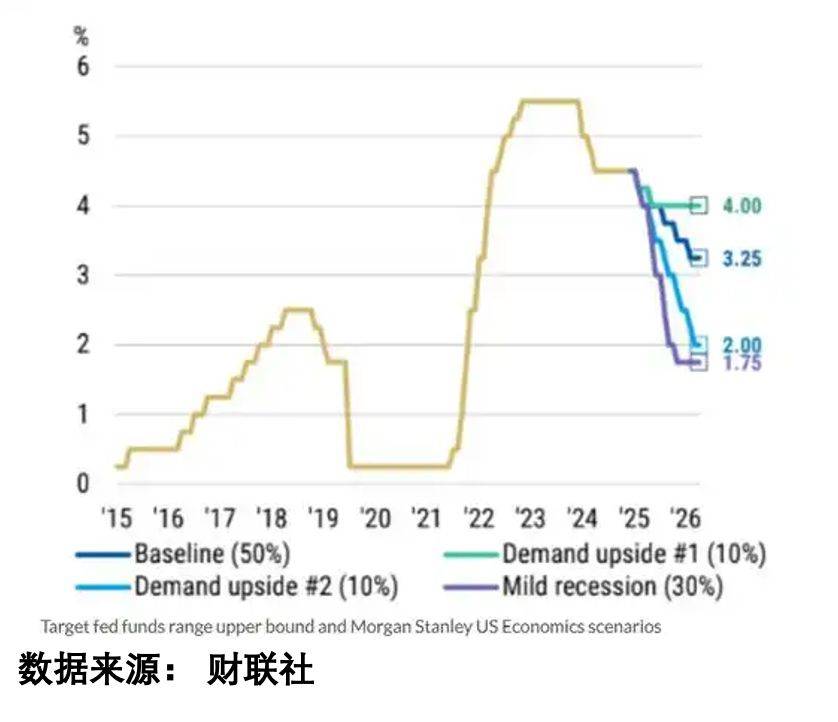
Core Insights - Morgan Stanley suggests that the Federal Reserve may implement larger-than-expected interest rate cuts, leading to significant market reactions, particularly in U.S. Treasury bonds [1][2] - The report outlines three scenarios for the Fed's actions: fiscal stimulus (10% probability), inflation tolerance (10% probability), and economic recession (30% probability) [2] Group 1: Market Reactions - Following the news of potential rate cuts, Wall Street traders began to engage in steepening yield curve trades, indicating a shift in market sentiment [1][2] - Retail investors often react impulsively to interest rate news, leading to potential losses, as seen in the recent volatility in the brokerage sector [4] Group 2: Investor Behavior - Four common misconceptions among retail investors during bull markets are identified: 1. "Holding stocks will lead to gains" syndrome, where investors hold onto losing stocks in hopes of recovery [6] 2. "Chasing hot trends" syndrome, where investors invest heavily in trending sectors without proper analysis [6] 3. "Strong stocks will continue to perform" fallacy, where investors assume that leading stocks will always rise, ignoring underlying data [6] 4. "Buying the dip" trap, where investors buy stocks that have fallen significantly without considering institutional selling behavior [8] Group 3: Institutional Insights - The pricing power in the stock market is primarily held by institutional investors, who utilize advanced data models and algorithmic trading, contrasting with retail investors' reliance on basic technical indicators [9] - The "institutional inventory" data is highlighted as a crucial metric for understanding market dynamics, as it reflects the activity level of institutional funds [11][13] Group 4: Strategic Recommendations - To avoid losses, retail investors should adopt an institutional perspective by monitoring foreign capital trading behavior and institutional inventory data [14][16] - The importance of recognizing genuine market opportunities through active institutional participation is emphasized, rather than relying solely on media narratives about interest rate cuts [14][17]


南向资金年内净买入近万亿港元,机构看好港股,这些板块将受益
Mei Ri Jing Ji Xin Wen· 2025-09-02 02:49
Group 1 - Southbound funds have continuously bought into Hong Kong stocks, with a cumulative net purchase amount exceeding 990 billion HKD as of September 1, indicating strong investor confidence in the Hong Kong market [1] - Key sectors attracting significant capital include pharmaceuticals, technology, internet, and consumer markets, reflecting a focused investment strategy [1] - Both the Hong Kong and A-share markets are experiencing a notable recovery in investor confidence, supported by resilient fundamentals and ongoing policy benefits, which may drive positive market trends [1] Group 2 - The overall liquidity environment is favorable due to expectations of interest rate cuts by the Federal Reserve, which may further enhance capital inflows into the Hong Kong stock market [1] - Technology, pharmaceuticals, and internet sectors, which are more sensitive to liquidity changes, are expected to benefit from this influx of capital [1] Group 3 - Relevant ETFs include the Hang Seng Technology Index ETF (513180), focusing on technology leaders and new energy vehicles, the Hang Seng Internet ETF (513330), which targets leading internet companies in Hong Kong, and the Hang Seng Pharmaceutical ETF (159892), concentrating on innovative drugs and contract research organizations [2]
降息预期持续升温?9月2日,凌晨的三大重要消息冲击市场!
Sou Hu Cai Jing· 2025-09-01 18:50
汇率方面,人民币终于迎来补涨,央行通过近日中间价也传递出升值信号。历史上,升值期间股市大多上涨,且跌幅不深。一方面,人民币升值和股市上涨 是经济预期变化的共同结果。另一方面,人民币升值也会影响股市风险偏好、资金面和基本面。除此之外,在美联储降息预期下,如今美元指数低于98,且 未来仍有贬值预期。 二、崩了!又是牛市中波澜不惊的一天,创业板指晃晃悠悠收盘大涨2.29%再创波段新高。 一、意外宣布降息!本周重点关注美国8月非农就业情况,作为9月美联储议息前的关键数据,崩了将极大程度决定是否开启降息。目前来看降息概率较大, 这对下半年的全球资本市场影响较大。 很多人觉得A股要大涨,这种想法人如果多了,短线就是风险,不要以为9.3号股市就不会跌,涨了这么一大波,可能管某些资金早就觉得高觉得危险了。 如果下跌他们也不一定会托着,这里不是3000点,而是接近4000点,A股不需要救市而是需要降温。管理层要的是慢牛,不是疯牛。 三、收盘,沪指上涨0.46%,深指上涨1.05%,创业板指大涨2.29%。 整体来看,当前市场行情仍处于牛市初期。沪深300的市盈率大约14倍,低于历史均值。从新基金发行量来看,虽然有所回暖,但与市 ...
豆粕、豆油期货品种周报-20250901
Chang Cheng Qi Huo· 2025-09-01 03:30
Report Overview - This is a weekly report on soybean meal and soybean oil futures from September 1st to September 5th, 2025, covering mid - term market analysis, trading strategies, and relevant data [1][2] 1. Soybean Meal Futures 1.1 Mid - term Market Analysis - **Trend Judgment**: The soybean meal main contract is in a wide - range oscillation phase. The current high soybean crushing volume by oil mills ensures stable supply, while downstream feed enterprises purchase cautiously. High US soybean good - quality rates strengthen the supply - abundant pattern. However, supported by import costs and pre - festival stocking demand, and with uncertainties in fourth - quarter soybean arrivals, the futures are expected to continue the wide - range oscillation trend. Attention should be paid to Sino - US trade progress [6] 1.2 Trading Strategies - **Last Week's Strategy Review**: The overall trend of soybean meal futures prices was sideways, with a bullish bias in funds. The M2601 contract might be in an oscillatory trend in the short term, with an expected trading range of 3000 - 3250 [10] - **This Week's Strategy Suggestion**: The overall trend of soybean meal futures prices remains sideways, with a bullish bias in funds. The M2601 contract may continue the oscillatory trend in the short term, with an expected trading range of 2980 - 3200 [11] 1.3 Relevant Data - The data sources include Wind, Mysteel, and the Great Wall Futures Trading Consultation Department, covering soybean meal weekly production, inventory, apparent consumption, weekly inventory days, basis, and oil - meal ratio [19][22][24] 2. Soybean Oil Futures 2.1 Mid - term Market Analysis - **Trend Judgment**: The soybean oil main contract is in an oscillatory consolidation phase. The current soybean oil production is at a high level year - on - year, and the overall supply - abundant pattern persists. Market sentiment is affected by factors such as Sino - US negotiation uncertainties, Fed interest - rate cut expectations, biodiesel policies, and international crude oil and related oil prices. Overall, soybean oil futures prices are expected to mainly oscillate and consolidate. A wait - and - see approach is recommended [29] 2.2 Trading Strategies - **Last Week's Strategy Review**: The overall trend of soybean oil futures prices was in an upward channel, with a bullish bias in funds. The Y2601 contract might be in a high - level oscillatory pattern in the short term [32] - **This Week's Strategy Suggestion**: The overall trend of soybean oil futures prices is in a downward channel, with a strongly bullish bias in funds. The Y2601 contract may maintain an oscillatory consolidation pattern in the short term [32] 2.3 Relevant Data - The data sources include Wind, Mysteel, and the Great Wall Futures Trading Consultation Department, covering soybean oil weekly production, inventory, basis, trading volume, soybean weekly arrivals, inventory, crushing volume, startup rate, port inventory, and Brazilian premium [42][45][47]
铁矿石:宏观预期回暖,矿价偏强运行
Hua Bao Qi Huo· 2025-08-26 05:08
Report Industry Investment Rating No relevant content provided. Core View of the Report - The external macro - influence is more positive, and there are still incremental expectations for monetary and fiscal policies in the later period. The price this week will be more affected by the macro - situation. The supply growth rate of iron ore exceeds expectations, the demand side remains resilient, and the overall supply - demand relationship shifts from balanced and tight to balanced. The short - term price will mainly follow the market trend. The price will fluctuate strongly this week, with the main contract of Dalian Iron (2601 contract) in the range of 775 - 810 yuan/ton, corresponding to the external market FE09 price of about 101 - 105.5 US dollars/ton [3]. Summary by Relevant Catalogs Logic - Yesterday, the black - series traded with strong expectations and weak reality, and the overall price rose due to macro - sentiment. The continuous three - week over - seasonal inventory accumulation of rebar at the finished - product end has suppressed the valuation level of the black - series, and the carbon element's disk valuation has returned. The high - profit of blast furnaces has declined from the high level, limiting the space for hot - metal increase. The unexpected increase in supply has also suppressed the disk, and the price generally follows the sector trend [3]. Supply - The overseas ore shipments have slightly declined but still remain at a relatively high level. Among them, the shipments of Rio Tinto and FMG mines in Australia have significantly increased, the shipments from Brazil have dropped significantly after reaching a historical high, and the shipments from non - mainstream mines have also dropped from the high level. The arrival volume is at a medium - to - high level, and overall, the supply - side pressure has weakened [3]. Demand - The domestic daily average hot - metal volume has increased slightly for two consecutive weeks, with the current daily average hot - metal output at 240.75 (a week - on - week increase of 0.09). The profitability rate of steel mills has declined from the high level, and the blast - furnace profit has also continuously decreased. The short - process steelmaking has fallen into full - scale losses again, which protects the demand for iron ore to a certain extent. Overall, the support of domestic demand for prices has weakened marginally. Later, attention should be paid to whether the hot - metal can remain at a high level and the military - parade production - restriction trends in North China [3]. Inventory - The daily consumption of imported ore at steel mills remains high, and the inventory at steel mills has decreased week - on - week. The port inventory has continued to accumulate slightly this period. In the future, with the increase in shipments and the decline of hot - metal production from the high level, it is expected that the inventory will generally remain stable or increase slightly in the short term [3].
加拿大将取消多种针对美国产品的报复性关税,加元涨幅扩大,加拿大股市持稳于历史最高附近
Sou Hu Cai Jing· 2025-08-22 15:07
Group 1 - Canada will implement tariff exemptions on many U.S. goods under the USMCA agreement [1] - The Canadian dollar depreciated over 0.5% against the U.S. dollar, trading at 1.3838 [1] - The Canadian stock index maintained a gain of approximately 1%, stabilizing near the historical high of 28,340.87 points following Fed Chair Powell's speech [1] Group 2 - The yield on Canadian 10-year government bonds rebounded, nearly recovering losses incurred after Powell's dovish remarks [1] - The two-year Canadian bond yield remained over a 4 basis point decline, trading around 2.69%, having briefly dipped below 2.67% post-speech [1] - U.S. stock indices saw significant gains, with the Dow Jones up 840 points (1.87%), S&P 500 up 1.55%, and Nasdaq up 400 points (1.9%) [1]
铁矿石:宏观预期偏向于积极,短期矿价区间运行
Hua Bao Qi Huo· 2025-08-18 05:14
Report Industry Investment Rating - No specific industry investment rating is provided in the report. Core Viewpoints - The short - term iron ore supply - demand is expected to be balanced and tight, with slow supply growth and strong domestic demand. The short - term iron ore futures price is expected to fluctuate at a high level [1][2]. - The price will fluctuate in a strong range. The main contract of Dalian iron ore futures will be in the range of 775 - 805 yuan/ton, corresponding to the overseas market price of about 101 - 105 US dollars/ton [3]. Summary by Related Catalogs Logic - Last week, the Sino - US tariff policy was implemented, and the domestic short - term macro entered a window period. The market focused more on the Fed's interest - rate cut expectation. Affected by the weakening terminal demand and the exchange's suppression of coking coal speculation, the iron ore price declined. But high blast - furnace profits and short - process losses at off - peak electricity prices are expected to keep domestic demand at a relatively high level in the short term, and the supply - side recovery pressure is not large, with a phased balance in iron ore supply and demand and stable port inventories [1]. Supply - Overseas ore shipments will gradually enter the seasonal recovery cycle, but the overall month - on - month growth rate is low. After the maintenance of Australian BHP and FMG mines ended, shipments did not recover quickly. Brazilian shipments remained at a moderately high level this period. Due to the decline in shipments in July, the short - term arrivals in August are expected to be low, and the actual supply - side pressure is not prominent [1]. Demand - The daily average pig iron output in China ended three consecutive weeks of decline and rebounded slightly, with the current daily average pig iron output at 240.66 (month - on - month +0.34). The current profitability of steel mills is high, blast - furnace profits are considerable, and short - process steelmaking is in full - scale loss. Short - term iron ore demand remains resilient, and high domestic demand strongly supports prices. Later, attention should be paid to whether pig iron production can maintain a high - level upward trend and the military parade production - restriction in North China [2]. Inventory - The daily consumption of imported ore at steel mills remains high, and the inventory at steel mills has been rising month - on - month and is higher than the same period last year. Due to the increase in arrivals, port inventories have slightly accumulated this period. In the future, with the decline in arrivals and high pig iron production, short - term inventories are expected to remain stable or decline slightly [2].
光大期货能化商品日报-20250815
Guang Da Qi Huo· 2025-08-15 04:47
1. Report Industry Investment Rating - All commodities in the report are rated as "volatile" [1][2][4][5][6] 2. Core Viewpoints of the Report - The crude oil market is affected by factors such as the Fed's interest - rate cut expectations, the "Trump - Putin Summit", and the market is in a state of waiting for further guidance with an increase in risk - aversion sentiment. The oil price has rebounded from a low level, but the final outcome of the talks needs to be monitored [1]. - The fuel oil market is under pressure due to sufficient supply and falling spot premiums. The high - sulfur fuel oil's summer power - generation demand is waning, and the upward space for both high - and low - sulfur fuel oils is not optimistic [2]. - The asphalt market is expected to show a pattern of increasing supply and demand in August. In the short term, the price will likely fluctuate within a range due to the lack of a clear one - sided driver [2][4]. - The polyester market is affected by the decline in crude oil prices. With the recovery of supply and demand, the polyester chain follows the decline in the cost - end crude oil price [4]. - The methanol market has a situation where the Iranian device load has recovered to a high point, the port inventory has increased rapidly, suppressing the near - month price. However, the main contract will switch to January, and the subsequent winter port destocking will limit the downward space, maintaining a near - weak and far - strong structure with narrow - range price fluctuations [5]. - The polyolefin market is approaching the peak demand season of "Golden September and Silver October". The supply will remain at a high level after the end of the maintenance season, and the demand is expected to increase. The overall upward space is limited, and the price is expected to fluctuate within a narrow range [5]. - The PVC market has high - level supply fluctuations and gradually recovering demand. The supply - demand gap is narrowing, and the inventory is expected to decline slowly. The price is expected to fluctuate weakly [6]. 3. Summary by Relevant Catalogs 3.1 Research Views - **Crude Oil**: On Thursday, oil prices rose. The WTI September contract closed up $1.31 to $63.96 per barrel, a 2.09% increase; the Brent October contract closed up $1.21 to $66.84 per barrel, a 1.84% increase; SC2509 closed at 488.2 yuan per barrel, up 4.6 yuan per barrel, a 0.95% increase. The Fed's interest - rate cut expectations may boost market demand. The "Trump - Putin Summit" is about to take place, and the market is waiting for the outcome. The oil price has rebounded from a low level, and the overall view is "volatile" [1]. - **Fuel Oil**: On Thursday, the main fuel oil contract FU2509 on the SHFE closed down 1.03% at 2700 yuan per ton; the low - sulfur fuel oil main contract LU2510 closed down 0.23% at 3449 yuan per ton. Singapore's on - land fuel oil inventory decreased, and the spot premium of low - sulfur fuel oil in Singapore fell to a four - month low. The overall view is "volatile" [2]. - **Asphalt**: On Thursday, the main asphalt contract BU2509 on the SHFE closed down 0.4% at 3510 yuan per ton. This week, the sample shipment volume of 54 domestic asphalt enterprises decreased, and the capacity utilization rate of 69 sample modified asphalt enterprises increased. The supply is expected to increase, and the demand is expected to recover, with the price expected to fluctuate within a range. The view is "volatile" [2][4]. - **Polyester**: TA509 closed down 0.55% at 4666 yuan per ton; EG2509 closed down 0.89% at 4367 yuan per ton. Some MEG devices are shut down, and some polyester devices are restarted. The overall view is "volatile" [4]. - **Methanol**: The Iranian device load has recovered to a high point, the port inventory has increased rapidly, suppressing the near - month price. The main contract will switch to January, and the price is expected to maintain a near - weak and far - strong structure with narrow - range fluctuations. The view is "volatile" [5]. - **Polyolefin**: The maintenance season is coming to an end, and the supply will remain high. With the approaching of the peak demand season, the demand is expected to increase. The price is expected to fluctuate within a narrow range. The view is "volatile" [5]. - **Polyvinyl Chloride (PVC)**: The supply remains at a high - level fluctuation, the demand is gradually recovering, and the price is expected to fluctuate weakly. The view is "volatile" [6]. 3.2 Daily Data Monitoring - The report provides the base - price data of multiple energy - chemical varieties on August 15, 2025, including spot prices, futures prices, basis, basis rates, and their changes and historical quantiles [7]. 3.3 Market News - The Russian government is considering extending the full ban on gasoline exports until September [9]. - South Korea did not import Iranian crude oil in July this year and last year, and its crude oil imports in July this year were 11.3 million tons, slightly higher than the same period last year [9]. 3.4 Chart Analysis - **4.1 Main Contract Prices**: The report presents the closing - price charts of the main contracts of various energy - chemical products from 2021 to 2025, including crude oil, fuel oil, low - sulfur fuel oil, asphalt, LPG, PTA, ethylene glycol, etc. [11][13][15][17][19][21][24] - **4.2 Main Contract Basis**: It shows the basis charts of various products such as crude oil, fuel oil, low - sulfur fuel oil, asphalt, etc. from 2021 to 2025 [25][27][31][32][33][37] - **4.3 Inter - period Contract Spreads**: The report provides the spread charts of different contracts of fuel oil, asphalt, PTA, ethylene glycol, PP, LLDPE, natural rubber, etc. [39][41][44][47][50][51][54] - **4.4 Inter - variety Spreads**: It includes the spread charts of different varieties such as crude oil's internal - external market, B - W spread, fuel oil's high - low sulfur spread, BU/SC ratio, ethylene glycol - PTA spread, etc. [56][60][58] - **4.5 Production Profits**: The report shows the production - profit charts of ethylene - based ethylene glycol, PP, LLDPE, etc. [64][66] 3.5 Team Member Introduction - The research team members include Zhong Meiyan, Du Bingqin, Di Yilin, and Peng Haibo, each with their own professional fields and rich experience and honors [69][70][71][72] 3.6 Contact Information - The company's address is Unit 703, 6th Floor, No. 729 Yanggao South Road, China (Shanghai) Pilot Free Trade Zone. The company phone is 021 - 80212222, the fax is 021 - 80212200, the customer service hotline is 400 - 700 - 7979, and the postal code is 200127 [74]
三大股指集体拉升,创业板指一度涨超1%,沪指创阶段新高
Sou Hu Cai Jing· 2025-08-13 02:29
Core Viewpoint - The market sentiment has improved significantly due to the easing of US-China trade tensions and expectations of interest rate cuts by the Federal Reserve [1] Market Performance - On August 13, the three major stock indices experienced fluctuations but ultimately rose, with the Shanghai Composite Index briefly surpassing previous highs, reaching its highest level since December 2021 [1] - The ChiNext Index saw an increase of over 1% during the trading session [1] Sector Performance - Sectors such as coal, logistics, agriculture, healthcare, liquor, and oil saw declines, while the military industry sector performed strongly [1] - Other sectors including non-ferrous metals, automotive, steel, and semiconductors experienced upward momentum, with industrial gases, PEEK materials, and photolithography machine concepts being particularly active [1] Policy and Economic Outlook - Pacific Securities indicated that the policy direction is gradually shifting towards supporting residents, exemplified by the introduction of birth subsidies, which lays a foundation for economic recovery [1] - The strong performance of global risk assets has further boosted the risk appetite in the A-share market, with expectations that both large and small caps will work together to break through historical resistance levels [1]
