
证券业

Search documents
利率月报:9月,债市重塑“独立人格”-20250902
HUAXI Securities· 2025-09-02 11:41
Market Trends - In August, the bond market's trading logic shifted to "watch stocks and trade bonds," with 10-year and 30-year government bond yields peaking at 1.79% and 2.06% respectively[1][12]. - The bond market's traditional pricing mechanisms failed as the stock market's performance overshadowed bond expectations, leading to a significant rise in yields despite a generally loose funding environment[1][12]. Institutional Behavior - Major banks reported a significant decline in financial investment returns, with state-owned banks experiencing an average year-on-year drop of 30 basis points (bp) in the first half of 2025, compared to 11 bp in the same period of 2024[2][23]. - Since May, large banks have been selling long-term bonds while buying short-term ones, indicating a strategy to realize profits amid pressure on revenue KPIs[2][24]. Funding Conditions - September is expected to see a tightening of funds initially, followed by a loosening, with historical trends suggesting a rise in funding rates post-August[3][39]. - The central bank has maintained a supportive stance on funding, with significant short-term injections to stabilize market sentiment, including a net injection of 4,217 billion yuan during the month-end transition[3][41]. Economic Indicators - Key economic indicators such as inflation, credit, and real estate have shown a downward trend, which the bond market has largely ignored, potentially leading to increased expectations for loose monetary policy[5][50]. - The upcoming release of August's economic data could reinforce the downward trend in key indicators, impacting market expectations for monetary policy[5][50]. Future Outlook - The bond market's ability to regain its "independent personality" hinges on three factors: stock market volatility, the impact of August's economic data, and the resolution of negative institutional behaviors[6][57]. - The market is divided into three phases for September: an observation period, a gaming period, and a bargain-hunting period, with strategies focusing on maintaining a neutral duration of around 3.5-4.0 years[7][57].
每日债市速递 | 国债期货收盘集体上涨
Wind万得· 2025-09-01 22:49
Group 1: Open Market Operations - The central bank announced a reverse repurchase operation of 182.7 billion yuan for 7 days at a fixed rate of 1.40% on September 1, with the same amount being the bid and awarded [1] - On the same day, 288.4 billion yuan of reverse repos matured, resulting in a net withdrawal of 105.7 billion yuan [1] Group 2: Funding Conditions - On the first trading day of the month, the central bank's reverse repos decreased significantly, leading to a net withdrawal, while the interbank market remained stable overall [3] - The overnight repo rate for deposit-taking institutions fell by nearly 2 basis points to 1.31% [3] - The latest quotes for overnight financing of non-bank institutions using pledged certificates and credit bonds slightly decreased to around 1.43% [3] - The latest overnight financing rate in the U.S. was reported at 4.34% [3] Group 3: Interbank Certificates of Deposit - The latest transaction rate for one-year interbank certificates of deposit among major national and joint-stock banks remained stable at 1.66% [10] Group 4: Bond Market Overview - The yields on major interbank bonds mostly declined [9] - The closing prices for government bond futures collectively increased, with the 30-year main contract rising by 0.30%, the 10-year by 0.17%, the 5-year by 0.08%, the 2-year by 0.02% [13] Group 5: Global Macro Insights - The European Central Bank President Lagarde expressed concerns about any government changes in the Eurozone, stating that the French banking system is in a better condition than during the 2008 crisis [16] - South Korea's exports in August increased by 1.3% year-on-year, marking the third consecutive month of growth, with semiconductor exports reaching a record high of 15.1 billion USD, up 27.1% year-on-year [18]


海外高频 | 特朗普解雇理事库克,金银价格共振大涨(申万宏观·赵伟团队)
赵伟宏观探索· 2025-09-01 16:05
Group 1 - The article discusses the rapid appreciation of the Renminbi and the simultaneous surge in gold and silver prices, with COMEX gold rising by 3.0% to $3475.5 per ounce and COMEX silver increasing by 6.7% to $40.3 per ounce [2][39] - The S&P 500 index fell by 0.1%, while the French CAC40 dropped by 3.3%, indicating a decline in developed market indices [2][3] - Emerging market indices showed mixed results, with Brazil's IBOVESPA rising by 2.5% and India's SENSEX30 falling by 1.8% [3][11] Group 2 - The article highlights the impact of political events in France, where Prime Minister Borne's proposed €44 billion austerity plan led to a significant drop in the CAC 40 index and a spike in bond yields, raising concerns about the government's stability [47] - The U.S. Treasury auction results indicate strong demand for short-term and floating rate bonds, with the 6-month bond showing a bid-to-cover ratio of 3.36, reflecting robust investor interest [51][52] Group 3 - The article notes that the U.S. fiscal deficit for the year 2025 has reached $1.14 trillion, with total expenditures of $5.31 trillion and tax revenues of $3.29 trillion, indicating a significant increase in fiscal spending compared to the previous year [54][56] - The article mentions that the Federal Reserve's recent actions, including the dismissal of Governor Cook by Trump, have led to fluctuations in stock and bond markets, with a potential shift in the balance of power within the Fed [63][73] Group 4 - The article reports that the U.S. PCE price index for July matched market expectations at 2.6%, while core PCE inflation was at 2.9%, indicating stable inflationary pressures [81] - Initial jobless claims in the U.S. were reported at 229,000, lower than market expectations, suggesting a resilient labor market [84]

美联储宣布投降,特朗普逼宫成功,人民币却成最大赢家
Sou Hu Cai Jing· 2025-09-01 14:46
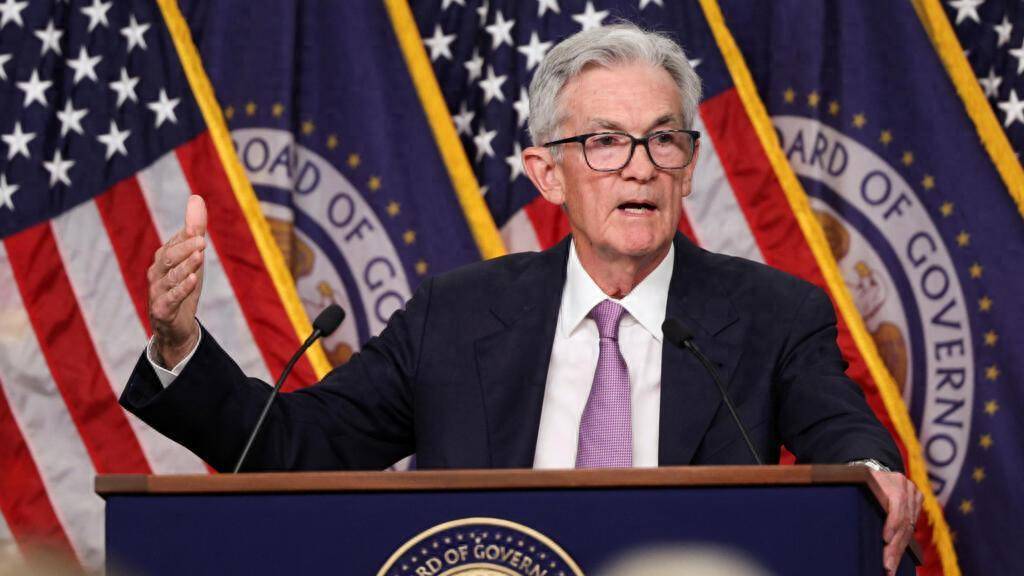
Group 1 - The Federal Reserve's shift from a hardline stance against inflation to a more accommodative approach under pressure from political figures like Trump indicates a significant policy change [1][5][9] - The probability of a rate cut in September surged to 86.9% following comments from Fed officials, signaling a potential capitulation to political pressure [5][9] - Trump's actions, including the dismissal of a Fed board member, have created substantial political pressure on the Fed to lower interest rates, which could save the U.S. government approximately $1 trillion in annual interest payments if rates drop to 1% [7][9] Group 2 - The depreciation of the U.S. dollar, with the dollar index falling from 110.17 to 97.77, has led to a significant appreciation of the Chinese yuan, which strengthened from 7.42 to 7.12 yuan per dollar [11][11] - The decline in U.S. interest rates has made the dollar less attractive, prompting capital to flow towards markets with higher yields, such as China, where economic recovery is evident [13][15] - Foreign investment in Chinese assets has surged, with a net increase of $10.1 billion in domestic stocks and funds in the first half of the year, reversing a two-year trend of net outflows [20][22] Group 3 - China's economic fundamentals are strong, with a 6.1% increase in exports from January to July, particularly to regions like the EU and Latin America, which helps mitigate declines in exports to the U.S. [22][24] - The Chinese government has increased its fiscal spending significantly, with a new debt quota up by 2.5 trillion yuan, enhancing economic growth potential [24] - The comparative stability and professionalism of China's monetary policy, in contrast to the politicization seen in the U.S., has made Chinese assets more appealing to global investors [26] Group 4 - The Federal Reserve's rate cuts provide the Chinese central bank with more policy space to lower financing costs for businesses, particularly in manufacturing and technology sectors [28][29] - While a stronger yuan may pose challenges for traditional exporters, the overall demand for Chinese goods may increase due to a stabilized U.S. economy [31][33] - The potential rise in commodity prices due to a weaker dollar could lead to increased costs for China, but moderate inflation may stimulate consumption and investment [35] Group 5 - The changes in monetary policy and capital flows present a unique opportunity for the internationalization of the yuan, with more central banks considering increasing their yuan asset allocations [39] - The evolving dynamics between the U.S. and China may lead to a new phase in economic relations, impacting investment strategies and market behaviors [39]
每日机构分析:9月1日
Sou Hu Cai Jing· 2025-09-01 12:00
Group 1 - Gold prices are on an upward trend, influenced by U.S. personal consumption expenditure data, with market expectations for a potential interest rate cut by the Federal Reserve [1] - Speculators increased their net long positions in Comex gold by 6,363 contracts, bringing the total net long positions to 148,122 contracts [1] Group 2 - The U.S. stock market is at a critical juncture, with upcoming employment data, inflation indicators, and Federal Reserve interest rate decisions expected to set the market tone [2] - In August, South Korean retail investors sold $657 million worth of Tesla stock, marking the largest outflow since early 2023, as interest shifted towards more volatile investments like cryptocurrencies [2] Group 3 - The average house price in the UK fell by 0.1% month-on-month to £271,079, with affordability concerns impacting price growth [3] - Analysts suggest that the European Central Bank's rate-cutting cycle may be over, with expectations to maintain the deposit rate at 2% during the September policy meeting [3] Group 4 - The Reserve Bank of India may intervene in the bond market to curb rising yields, with economists expressing concern over the speed of yield increases [4]
调整已至尾声,9月债市或震荡转强
Southwest Securities· 2025-09-01 02:49
1. Report Industry Investment Rating - Not provided in the given content 2. Core Viewpoints - The adjustment of the bond market is nearing its end, and it is likely to shift from a volatile to a stronger state in September. The short - term bonds may maintain excellent performance due to the continuous loose capital situation, while the long - term and ultra - long - term bonds may see a downward space as the upward slope of the equity market slows down. The interest rate may show a "moderate downward trend" [2][77][78] - The current investment strategy remains cautiously optimistic. The upper limit of the 10 - year Treasury bond yield in this adjustment is estimated to be between 1.80% - 1.85%. In the short term, the idea of "shortening the portfolio duration + preferentially allocating old bonds" may improve the portfolio's winning rate [2][78] 3. Summary by Directory 3.1 Important Matters - From January to July, the profits of industrial enterprises above designated size decreased by 1.7% year - on - year, and the operating income increased by 2.3% year - on - year. State - owned enterprises were the main drag, while private and foreign - invested enterprises showed better profit repair [5] - The Shanghai headquarters of the central bank adjusted the pricing mechanism of commercial personal housing loan interest rates in Shanghai, no longer distinguishing between first - and second - home mortgages [6] - Trump announced the removal of Fed Governor Lisa Cook, and the legal outcome will affect the balance between the president's power over the Fed board and the central bank's independence [7] 3.2 Money Market 3.2.1 Open Market Operations and Fund Interest Rate Trends - From August 25 to 29, 2025, the central bank's net injection of funds through 7 - day reverse repurchase was 196.1 billion yuan. From September 1 to 5, 2025, 227.31 billion yuan of basic currency is expected to mature and be withdrawn [10] - After the tax payment and government bond payment peaks, with the central bank's care for liquidity, the inter - bank liquidity has become looser. As of August 29, 2025, compared with August 22, R001, R007, DR001, and DR007 changed by - 2.82BP, 3.32BP, - 8.27BP, and 4.89BP respectively [14] 3.2.2 Certificate of Deposit Interest Rate Trends and Repurchase Transaction Situations - In the primary market, commercial bank certificates of deposit continued to be in a net financing state, with a net financing scale of - 194.66 billion yuan last week. As of the 35th week of 2025, the cumulative issuance scale of certificates of deposit for the whole year has reached 22.58 trillion yuan [19] - The issuance interest rates of certificates of deposit increased last week. The average issuance interest rates of 3 - month and 1 - year certificates of deposit for state - owned banks, joint - stock banks, city commercial banks, and rural commercial banks changed to varying degrees compared with the previous week [22] - In the secondary market, most maturity certificate of deposit yields declined, and the 1Y - 3M term spread widened further [25] 3.3 Bond Market 3.3.1 Primary Market - From January to August, the net financing rhythm of local government bonds was faster than that of national bonds. As of August 29, 2025, the cumulative net financing scale of various national bonds was about 4.67 trillion yuan, and that of local bonds was about 5.75 trillion yuan [28] - Last week, national bonds were not issued, and the issuance scale of local bonds and policy - financial bonds was basically the same as the previous week. The net financing amount of interest - rate bonds was 56.268 billion yuan [27][31] - As of last week, the issuance scale of special refinancing bonds in 2025 had reached 1.94 trillion yuan, mainly in long - and ultra - long - term maturities [34] 3.3.2 Secondary Market - The stock - bond "see - saw" effect reappeared last week. The long - term interest rate was at a disadvantage, and the curve steepness increased. The 10 - year Treasury bond's second - most active bond switched to 250016, and the 10 - year CDB bond completed the bond replacement [27][37][42] - The 10 - 1 - year Treasury bond term spread widened to 46.81BP, and the 30 - 1 - year Treasury bond term spread widened to 76.77BP [44] - The 10 - year local bond - 10 - year Treasury bond yield spread and the 30 - year local bond - 30 - year Treasury bond yield spread both narrowed [49] 3.4 Institution Behavior Tracking - The scale of leveraged trading decreased last week, with a weekly average of about 7.07 trillion yuan. Funds, insurance, and securities firms were the main buyers in the bond market, while rural commercial banks were net sellers [50][57][62] - The main trading desks' current average cost of adding positions in 10 - year Treasury bonds is above 1.74% [63] - Commercial banks and insurance companies can obtain relatively higher returns by investing in local bonds [70] 3.5 High - Frequency Data Tracking - Last week, the settlement price of rebar futures decreased by 1.39% week - on - week, the settlement price of wire rod futures remained unchanged, the settlement price of cathode copper futures increased by 0.62%, the cement price index decreased by 0.74%, and the South China Glass Index increased by 0.77% [72] - The CCFI index decreased by 1.58% week - on - week, and the BDI index increased by 4.17% week - on - week [72] - The wholesale price of pork decreased by 0.80% week - on - week, and the wholesale price of vegetables increased by 2.07% week - on - week [72] - The settlement prices of Brent crude oil and WTI crude oil futures increased by 0.58% and 0.55% respectively week - on - week. The central parity rate of the US dollar against the RMB was 7.10 [72] 3.6 Market Outlook - The bond market may strengthen in September. The short - term bonds will benefit from the loose capital, and the long - term bonds may see a downward space as the equity market's upward slope slows down. The interest rate may show a moderate downward trend [77][78] - The current investment strategy is to shorten the portfolio duration and preferentially allocate old bonds, and specific trading varieties can consider 250011 and 2500002 [78]
每日债市速递 | 本周央行公开市场将有22731亿元逆回购到期
Wind万得· 2025-08-31 22:50
Group 1: Open Market Operations - The central bank announced a reverse repurchase operation of 782.9 billion yuan for 7 days at a fixed rate of 1.40% on August 29, with the same amount being the bid and awarded [1] - On the same day, 361.2 billion yuan of reverse repos matured, resulting in a net injection of 421.7 billion yuan [1] - For the week of September 1 to 5, a total of 2,273.1 billion yuan in reverse repos will mature, with specific amounts maturing each day [1] Group 2: Funding Conditions - The central bank's net injection has improved the overall funding conditions in the interbank market, with the weighted rate of DR001 rising over 1 basis point to around 1.33% and DR007 declining over 2 basis points [2] - Overnight quotes in the anonymous click (Xrepo) system remain around 1.30% with nearly 100 billion yuan in supply [2] - The latest overnight financing rate in the US is reported at 4.36% [2] Group 3: Interbank Certificates of Deposit - The latest transaction rate for one-year interbank certificates of deposit among major banks is around 1.67%, remaining stable compared to the previous day [7] Group 4: Bond Market Overview - Major interest rate bonds in the interbank market have seen a decline in yields [9] - The closing prices for government bond futures mostly increased, with the 30-year main contract rising by 0.01% and the 5-year and 2-year contracts both increasing by 0.04% [13] Group 5: Key News and Developments - The National Development and Reform Commission plans to accelerate the construction of a unified national market and address issues such as market access barriers and local investment behaviors [14] - Fitch Ratings downgraded Vanke's long-term issuer default rating from "CCC+" to "CCC-" [14] - South Korea's debt-to-GDP ratio is projected to rise from 48.1% to 51.6%, with plans to issue a record 232 trillion won (approximately 167.2 billion USD) in bonds by 2026 [16]


中国资产,超配!
证券时报· 2025-08-31 12:26
Core Viewpoint - Multiple international investment banks have raised their forecasts for China's economic growth for the year, shifting their asset allocation recommendations for China from neutral to "overweight" [1][3]. Group 1: Positive Outlook on Chinese Assets - Several foreign financial institutions have expressed optimism about the Chinese market, with Goldman Sachs maintaining an "overweight" stance on Chinese stocks [1]. - Standard Chartered Bank has also kept its "overweight" rating on Chinese stocks in its "2025 Global Market Outlook" report [1]. Group 2: Factors Supporting High Allocation to Chinese Assets - Chief Investment Officer of Standard Chartered Bank for North Asia, Zheng Zifeng, highlighted both external and domestic factors supporting high allocation to Chinese assets, including China's effective response to trade tensions and recent domestic policies aimed at stabilizing economic growth, such as new birth subsidies [3]. - The expectation of more policy support as the fourth quarter approaches is also noted [3]. Group 3: Foreign Investment Trends - International investment banks are actively investing in the A-share market, with Goldman Sachs reporting that hedge funds have net bought Chinese stocks at the fastest pace in seven weeks [5]. - Data from the State Administration of Foreign Exchange indicates that foreign capital net increased holdings of domestic stocks and funds by $10.1 billion in the first half of the year, with significant net purchases of $18.8 billion in May and June [5]. Group 4: Credit Ratings and Economic Resilience - S&P Global Ratings has maintained China's sovereign credit rating at "A+" with a stable outlook, reflecting confidence in the country's economic fundamentals [7]. - Foreign investors view China's economic foundation as stable, with strong advantages, resilience, and significant potential, which supports the accumulation of positive factors for high-quality development [7].

8月DR001与DR007均值双双创下年内新低
Xinda Securities· 2025-08-31 09:03
Monetary Market Overview - The central bank's OMO net injection was 196.1 billion CNY, and MLF net injection was 300 billion CNY, leading to a continued loose liquidity environment[7] - DR001 and DR007 both reached new year-to-date lows, with DR001 averaging 1.35% and DR007 averaging 1.48% for August[19] - The liquidity injection for the month reached 600 billion CNY, reflecting the central bank's stabilizing attitude amid market volatility[19] Institutional Behavior - The average daily transaction volume of pledged repos decreased by 0.06 trillion CNY to 7.07 trillion CNY, with significant fluctuations observed on the last trading day of the month[15] - The new adjusted capital gap index fell to -630.2 billion CNY, the lowest level this year, indicating a slow pace of institutional cross-month activities[15] - The demand for interbank certificates of deposit remained stable, but the issuance success rate for various banks showed mixed results, with state-owned banks performing better[4] Government Debt and Financing - The expected government bond payment scale for next week is approximately 121.6 billion CNY, down from 211.4 billion CNY this week[20] - Cumulative issuance of new general bonds reached 620.8 billion CNY, while new special bonds totaled 32,641 billion CNY[20] - The net financing scale for government bonds is projected to decrease to about 1.2 trillion CNY in September[20]
9月固定收益月报:把握调整后的结构性机会-20250831
Western Securities· 2025-08-31 09:00
1. Report Industry Investment Rating No relevant content provided. 2. Core Views of the Report - The current economic fundamentals are still favorable for the bond market, but the subsequent continuous implementation of growth - stabilizing policies will marginally be negative for the bond market [1][9]. - The central bank is expected to continue to support liquidity, keeping the overall capital situation stable, but it will also prevent capital idling [1][11]. - Some banks may have a need to raise the price of inter - bank certificates of deposit (CDs), and the capital movement of non - bank institutions may slow down marginally [2][13]. - The bond market is difficult to break out of the volatile trend. It is recommended to control the duration, seize the allocation and trading opportunities after adjustments, and focus on structural opportunities such as taxable bonds and new - old bonds [2][22]. 3. Summary According to the Table of Contents 3.1 9 - Month Bond Market Outlook: Seize Structural Opportunities after Adjustments - **Fundamentals and Policies**: The current economic situation has difficulties and challenges, which are favorable for the bond market. However, the subsequent continuous implementation of growth - stabilizing policies such as "anti - involution", major infrastructure projects, and fertility subsidies will be marginally negative for the bond market [9]. - **Liquidity**: The central bank is expected to continue to support liquidity to maintain stable capital prices and prevent financial market risks. It may also provide long - term funds and take other measures, but will prevent capital idling [11]. - **Inter - bank CDs**: In September, banks' demand for supplementing liabilities through CDs increases, but the issuance demand may be weaker than the seasonal level. The price increase of CDs may be structural [13]. - **Non - bank Institutions' Capital Movement**: The risk premium of equities relative to treasury bonds has decreased, reducing the marginal attractiveness to insurance funds. The long - term and ultra - long - term treasury bond yields have higher cost - effectiveness compared to lending rates, increasing the marginal attractiveness to bank funds [16]. - **Investment Strategy**: The bond market is likely to remain volatile. It is recommended to control the duration, allocate medium - and short - term credit bonds, and seize opportunities after adjustments. Taxable bonds and new - old bonds have certain investment opportunities [22]. 3.2 August Bond Market Review 3.2.1 Bond Market Trend Review - **First Week**: The 10Y treasury bond rate dropped 2bp to 1.69%. The market digested the impact of VAT adjustment, and the demand for old bonds increased. The capital was loose, and the issuance results of the first batch of taxed local bonds were better than expected [24]. - **Second Week**: The 10Y treasury bond rate rose 6bp to 1.75%. The market risk appetite increased, the equity market rose, and the bond market sentiment was under pressure [25]. - **Third Week**: The 10Y treasury bond rate rose 4bp to 1.78%. The stock - bond seesaw effect continued, and the bond market basically continued to decline. After the MLF was over - renewed, the capital pressure eased [26]. - **Fourth Week**: The 10Y treasury bond rate rose 6bp to 1.84%. The equity market was strong at the end of the month, the bond market yield fluctuated widely, and the curve steepened [27]. 3.2.2 Capital Situation - The central bank net - injected 5466 billion yuan through four major tools. The capital situation in August was reasonably abundant. The average monthly values of R001, R007, DR001, and DR007 decreased. The 3M inter - bank CD issuance rate fluctuated upward, and the 3M national - share bank bill rate changed in a complex way [28][31]. 3.2.3 Secondary Market Trends - In August, the bond market showed a bear - steep trend. Except for the 1y treasury bond rate, other key - term treasury bond rates rose. Most key - term treasury bond spreads widened [37]. 3.2.4 Bond Market Sentiment - In August, the inter - bank leverage ratio and bond fund duration both decreased. The turnover rate of ultra - long bonds decreased, and the spreads of 50Y - 30Y and 20Y - 30Y treasury bonds narrowed [49]. 3.2.5 Bond Supply - In August, the net financing of interest - rate bonds increased compared to July but decreased compared to the same period last year. The net financing of treasury bonds and policy - financial bonds increased, while that of local government bonds decreased. The net repayment of inter - bank CDs slightly expanded [56][64]. 3.3 Economic Data - In July, the decline in industrial enterprise profits continued to narrow. Since August, new - home sales and freight rates have been weak, while movie consumption has been relatively strong. Industrial production has weakened marginally [68]. 3.4 Overseas Bond Market - The US core inflation reached a new high since February. The Fed officials released signals of interest - rate cuts. In August, US bonds, as well as the bond markets in South Korea and Singapore, rose [78][79]. 3.5 Major Asset Performance - In August, the CSI 300 index strengthened significantly. The performance of major assets was: CSI 1000 > CSI 300 > Convertible Bonds > Shanghai Gold > Shanghai Copper > Chinese - funded US Dollar Bonds > China Bonds > US Dollar > Rebar > Live Pigs > Crude Oil [82]. 3.6 Policy Review - **August 28**: The "Opinions on Promoting High - Quality Urban Development" was released, aiming to achieve important progress in building modern people - centered cities by 2030 and basically complete the construction by 2035 [86]. - **August 27**: The Ministry of Commerce will introduce policies to expand service consumption in the next month, focusing on policy promotion, key areas, and consumption scenarios [89]. - **August 26**: The "Opinions on Deeply Implementing the 'Artificial Intelligence +' Initiative" was issued, setting goals for the development of artificial intelligence from 2027 to 2035 [90]. - **August 25**: Shanghai optimized and adjusted real - estate policies, including housing purchase restrictions, housing provident fund policies, and mortgage loan interest - rate mechanisms [91]. - **August 22**: The State Council emphasized the effectiveness of large - scale equipment renewal and consumer goods trade - in policies and the development of the sports industry [92]. - **August 20**: The "Guiding Opinions on Regulating the Construction and Operation of Existing Government - Social Capital Cooperation Projects" was issued to ensure the construction of ongoing projects and the stable operation of existing projects [93]. - **August 19**: The People's Bank of China Shanghai Head Office called for greater efforts in financial reform and innovation and the implementation of monetary policies [94].