
医疗保健

Search documents
告别“内卷”!德意志银行熊奕:2025年是重要转折,“动物精神”正在回归
券商中国· 2026-01-18 09:33
Group 1: Economic Trends and Shifts - The year 2025 is identified as a significant turning point for the Chinese economy and market, with a notable shift in the perception of China's innovation capabilities and competitiveness in the global economic system [5] - The term "Deep Seek moment" reflects China's accelerated pace in the key technology field of artificial intelligence, surpassing previous expectations [5] - The return of "animal spirits" in the industry indicates a collective optimistic outlook, leading to increased investments and expansions among enterprises [6] Group 2: Innovation and Market Dynamics - Despite the emergence of many innovative companies, there is a challenge regarding the profitability of some firms not keeping pace with their innovation [8] - The "anti-involution" policy aims to optimize market competition ecology, ensuring that innovative firms receive reasonable returns, which could alleviate macroeconomic pressures like demand shortages and low prices [9] - The current economic environment shows similarities to past supply-side structural reforms, but the "anti-involution" approach addresses new characteristics such as simultaneous demand growth and declining profit margins in industries like automotive [9] Group 3: Service Consumption Potential - The development potential of the service sector is crucial for domestic demand, with current spending on services being relatively low compared to physical goods [11] - Key areas for service consumption growth include entertainment, healthcare, and public services, with specific constraints identified such as limited leisure time and the need for improved service quality [12] - The aging population is expected to drive demand for healthcare services, necessitating a focus on high-quality, personalized medical services alongside basic healthcare accessibility [12] Group 4: External Demand Trends - The trend of enterprises "going global" is anticipated to remain significant over the next five years, indicating a focus on expanding international markets [13]



[1月16日]指数估值数据(ETF资金净流出,机构开始止盈了么;新书荣登榜首;港股指数估值表更新;抽奖福利)
银行螺丝钉· 2026-01-16 14:12
Core Viewpoint - The article discusses the current state of the stock market, highlighting signals of a potential late-stage bull market and the behavior of institutional investors regarding ETF investments. Group 1: Market Overview - The overall market experienced a slight decline, with the Shanghai and Shenzhen 300 index showing more significant drops compared to small and mid-cap stocks [2] - Both value and growth styles saw declines, while Hong Kong stocks opened higher but closed slightly down, mirroring A-share volatility [2] Group 2: Bull Market Signals - Several signals indicating a late-stage bull market have emerged, including a single-day subscription volume for stock funds reaching 100 billion and increased margin requirements from major exchanges [3] - On Thursday, the largest ETF, the CSI 300 ETF (510300), saw a net outflow of approximately 20 billion, marking the largest single-day outflow since 2012 [4][5] Group 3: ETF Market Status - The domestic ETF market has grown rapidly, with total ETF assets increasing from less than 1 trillion to 6 trillion by early 2026 [8] - Institutional investors, rather than retail investors, currently dominate the index fund market, with entities like state-owned enterprises, insurance companies, and pension funds being the primary investors [11][12] Group 4: Institutional Investor Behavior - In the 2024-2025 period, state-owned entities significantly increased their holdings in ETFs during market dips, typically buying at around 5-star ratings [13][14] - Recently, as the market has surged, some ETFs have begun to experience substantial net outflows, suggesting that institutions may be taking profits [17][18] Group 5: Implications for Investors - Current market signals indicate that the market is becoming less attractive for new investments, with caution advised for chasing high prices [30][31] - Investors who have already made profits should consider gradual profit-taking strategies as the market rises [36][37] Group 6: Hong Kong Market Valuation - The article provides a summary of the valuation of Hong Kong indices, indicating that the Hong Kong market has also returned to a 3-star rating [38] - A detailed valuation table for various indices is included for reference [39] Group 7: New Book Release - The article announces the pre-sale of a new book titled "Dividend Index Fund Investment Guide," which aims to help investors understand dividend index funds better [41][42]

港股收评:恒指跌0.29%、科指跌0.11%,半导体概念股走强,科网股走势分化,AI医疗、新消费及内房股走低
Jin Rong Jie· 2026-01-16 08:17
Market Overview - The Hong Kong stock index opened high but closed lower, with the Hang Seng Index down 0.29% at 26,844.96 points, the Hang Seng Tech Index down 0.11% at 5,822.18 points, the National Enterprises Index down 0.5% at 9,220.81 points, and the Red Chip Index down 0.34% at 4,139.41 points [1] Company News - Tencent Holdings (00700.HK) repurchased 1.017 million shares for HKD 636 million at a price range of HKD 619-632 [2] - Xiaomi Group (01810.HK) repurchased 3.9 million shares for HKD 148 million at a price range of HKD 37.86-37.92 [3] - Six Fortune Group (00590.HK) reported a retail value increase of 26%, retail income increase of 17%, and same-store sales increase of 15% in Q3, exceeding expectations [3] - China Southern Airlines (01055.HK) reported a 11.89% increase in passenger capacity and a 19.28% increase in cargo capacity for December 2025 [6] Industry Insights - Tianfeng Securities noted that the Hong Kong stock market has a basis for short-term valuation recovery and sentiment improvement, but upward momentum may be constrained by high overseas interest rates [7] - The firm suggested a focus on technology and consumer sectors that are relatively undervalued [7] - According to Huatai Securities, the market is experiencing a shift towards a bullish sentiment, with historical data indicating a high probability of price increases following a period of panic [8] - Industry recommendations include prioritizing leading companies in the AI sector and exploring opportunities in insurance, banking, energy, and new consumption areas [8]




北上资金在加仓哪些行业
Changjiang Securities· 2026-01-15 02:12
- The report focuses on the analysis of the industries where Northbound funds have increased their holdings, particularly highlighting sectors such as power and new energy equipment, electronics, and metal materials and mining[1][5][13] - Northbound funds' total holdings in A-shares amounted to approximately 2.59 trillion yuan as of December 31, 2025, representing an increase of about 46 billion yuan compared to September 30, 2025[1][5][13] - Relative to the CSI 300 Index, Northbound funds were significantly overweight in the power and new energy equipment sector, with an allocation ratio of approximately 18.0%, compared to 8.6% in the CSI 300 Index, resulting in an overweight of about 9.5%[5][15] - The top five primary industries with the highest net inflows of Northbound funds in Q4 2025 were metal materials and mining, electronics, power and new energy equipment, telecommunications, and insurance[6][20] - The top five secondary industries with the highest net inflows of Northbound funds in Q4 2025 were new energy vehicle equipment, basic non-ferrous metals, communication equipment, precious metals, and components and devices[6][25]
美联储褐皮书:经济、物价温和增长,通胀压力难以忽视
Sou Hu Cai Jing· 2026-01-15 01:20
Economic Activity - The Federal Reserve's Beige Book indicates that economic activity in most regions of the U.S. has recently grown, with employment conditions remaining stable, but inflationary pressures have not fully dissipated [1][2] - Economic activity has accelerated at a "slight to moderate" pace since mid-November 2025, with 8 out of 12 Federal Reserve districts reporting growth, 3 reporting no change, and 1 reporting a moderate decline [4] - The improvement in economic activity is characterized by significant "unevenness," with regions dependent on consumption and services benefiting from a slight rebound in consumer spending [5][6] Employment Conditions - The employment market shows a "mixed" result, with 8 out of 12 districts reporting stable employment levels and near stagnation in job growth, indicating a lack of growth momentum [11][12] - Employment conditions vary significantly by industry, with stable employment in healthcare and education, while manufacturing and retail sectors face challenges due to tariffs and economic cycles [13][14] - Wage growth is described as "moderate," with reports indicating that wage increases have returned to "normal" levels [15] Price Pressures - Most Federal Reserve districts report moderate price increases, with only 2 districts noting slight price rises, driven by ongoing cost pressures from tariffs [16] - Companies are beginning to pass on tariff-related costs to consumers, although some sectors, like retail and dining, are hesitant to do so due to price sensitivity [16] - Energy and insurance sectors continue to significantly impact profit margins, with expectations of some price relief in the future, but prices are anticipated to remain high due to rising costs [17] Regional Highlights - Boston: Economic activity shows slight improvement, with consumer spending increasing, particularly in high-end goods and services [18] - New York: Economic activity continues to decline slightly, with a decrease in employment and moderate wage growth [19] - Philadelphia: Economic activity has shown signs of recovery, with slight improvements in employment levels [19] - Chicago: Economic activity remains unchanged, with slight increases in consumer spending and construction demand [20] - Dallas: Economic activity remains stable, with growth in the banking sector and cautious outlook due to inflation concerns [20]
A股结束17连阳,港股接棒后续上涨?
Sou Hu Cai Jing· 2026-01-14 18:01
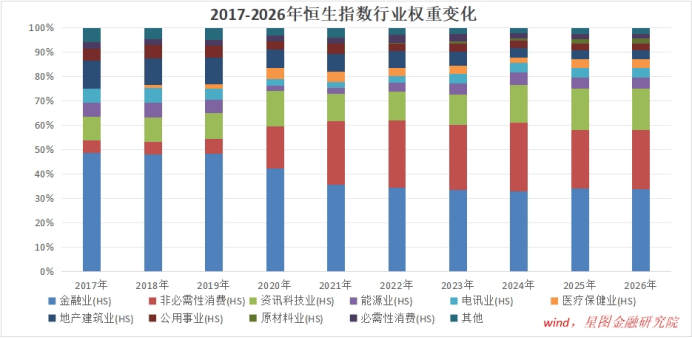
Core Viewpoint - The A-share market is performing strongly, while the Hong Kong stock market is lagging behind due to mismatched market structure and current capital preferences, alongside a weak liquidity environment [1] Group 1: Market Performance - As of January 12, 2026, the Wind All A Index has risen by 6.92%, with the Sci-Tech Innovation Index up by 13.39%, significantly outperforming the Hang Seng Index (3.82%) and Hang Seng Tech Index (6.29%) [1] - The Hang Seng Index saw a 27.77% increase in 2025, driven by global liquidity easing, valuation recovery in the financial sector, and sustained inflows from southbound capital [3] - The Hang Seng Composite Index increased by 30.98%, reflecting higher elasticity in small and mid-cap stocks favored by southbound capital [3] Group 2: Sector Analysis - Resource, technology manufacturing, and consumer services sectors have emerged as leading growth areas, with other metals and mining sectors rising by 198.56% due to global copper supply shortages and strong lithium demand [4] - The semiconductor sector surged by 136.89%, driven by breakthroughs in advanced processes and increased demand for AI servers [4] - The healthcare provider and service sector declined by 17.85% due to policy cost control and intensified industry competition [4] Group 3: Future Outlook - The Hong Kong stock market is expected to continue its recovery in 2026, transitioning from strong broad-based growth in 2025 to a more moderate recovery with structural differentiation [5] - Key drivers for market resilience include improving liquidity, steady recovery of the Chinese economy, and a rebalancing of domestic and foreign capital structures [6] - The Hang Seng Index's earnings per share is projected to grow by 9.64% in 2026, with the Hang Seng Tech Index expected to see a 34.63% increase, supported by a mild recovery in the Chinese macroeconomy [7] Group 4: Structural Changes - The composition of the Hang Seng Index has fundamentally changed from 65.85% in traditional sectors (finance, energy, real estate) to 42.02%, while new economy sectors (consumer discretionary, information technology, healthcare) have increased from 20.83% to 48.87% [8] - This shift aligns with China's "14th Five-Year Plan" focusing on technological self-reliance, indicating a new growth phase with improved visibility and sustainability in profit growth [8] Group 5: Investment Opportunities - The market is expected to be highly structured in 2026, with AI software and hardware as the main themes, driven by breakthroughs in hard technology and the practical application of AI [10] - The cyclical resource theme will benefit from supply-side optimization and demand recovery, with industrial metals likely to see price strength due to ongoing supply constraints [11] - High-dividend assets may still provide absolute returns, but the focus should shift to sectors with strong supply barriers and pricing power, such as infrastructure-related sectors and the insurance industry [12]
2025 年 12 月美国非农数据点评:失业率回落:1月降息门槛仍高
Haitong Securities International· 2026-01-14 12:28
Employment Market Overview - The unemployment rate in the U.S. fell to 4.4% in December, better than the expected 4.5%[6] - The unemployment rate for November was revised down to 4.5%, interrupting the previous upward trend[6] - The U6 unemployment rate decreased by 0.3 percentage points to 8.4%, indicating reduced pressure on marginally employed groups[10] Job Creation and Market Conditions - Non-farm payrolls added only 50,000 jobs in December, falling short of the market expectation of 65,000[19] - Job additions for October and November were revised down by a total of 76,000, with October's figures adjusted from -105,000 to -173,000[19] - The average weekly hours worked decreased to 34.2 hours, while average hourly earnings increased by 0.3% month-over-month and 3.8% year-over-year, slightly above the expected 3.6%[13] Federal Reserve Outlook - The Federal Reserve has room to pause interest rate cuts in January, with a current market expectation of only a 5% probability for a rate cut[26] - The market anticipates two rate cuts in 2026, now pushed to June and September[26] Risks and Considerations - Political pressure from Trump could further threaten the independence of the Federal Reserve[27]
午评:沪指涨超1%逼近4200点,半导体、券商等板块强势
Zheng Quan Shi Bao Wang· 2026-01-14 04:32
Market Performance - The A-share market experienced a strong surge, with the Shanghai Composite Index rising over 1% and approaching 4200 points, while the ChiNext Index increased by over 2% [1] - By midday, the Shanghai Composite Index was up 1.2% at 4188.24 points, the Shenzhen Component Index rose by 1.98%, the ChiNext Index increased by 2.24%, and the STAR 50 Index surged by 3.71% [1] - The total trading volume across the Shanghai and Shenzhen markets reached approximately 2.25 trillion yuan [1] Sector Performance - Key sectors that saw significant gains included semiconductors, healthcare, brokerage, non-ferrous metals, and retail [1] - Active themes in the market included AI applications, industrial software, and data elements [1] Investment Outlook - Huaxi Securities indicated that the A-share market's upward breakout from its oscillation center suggests a favorable spring trading window, supported by better-than-expected PMI and inflation data for December 2025 [1] - There is a notable increase in the willingness of external funds to enter the market, with accelerated inflows of financing and foreign capital since the beginning of the year [1] - Anticipation of technology industry events around the Spring Festival is expected to maintain market risk appetite [1] Sector Focus - The focus for industry allocation includes the expansion of themes related to the technology sector, such as AI applications, commercial aerospace, robotics, domestic substitution, and nuclear fusion [1] - Sectors benefiting from "anti-involution" and price increases, such as chemicals and non-ferrous metals, are also highlighted [1]
港股午评:恒指涨0.92%重回27000点,AI应用相关概念股再度飙升,银行保险部分走低
Ge Long Hui· 2026-01-14 04:06
港股上午盘三大指数高开高走,实现4连升行情。恒生科技指数一马当先,午间收涨1.54%,恒生指 数、国企指数分别上涨0.92%及0.89%,恒指重回27000点上方。权重科技股普遍上涨,尤其是阿里巴巴 再度涨超5%并且录得4连涨,AI应用相关概念股再度飙升,AI医疗方向涨幅明显,其中阿里健康大涨近 16%,月内更是累计升幅高达50%。另外,航空股、电力股、保险股、内银股部分走低。(格隆汇) ...
七部门出台指导意见推动康养气象服务 天气预报正成为“健康助手”
Xin Lang Cai Jing· 2026-01-14 01:03
Core Viewpoint - The article discusses the development of health-oriented meteorological services in China, emphasizing their role in managing health risks associated with weather conditions and promoting public health through targeted meteorological guidance [2][3]. Group 1: Health Meteorological Services - Health meteorological services focus on the impact of weather conditions on human health, providing precise meteorological information to the public, healthcare sector, and wellness industry [2][3]. - The services aim to transform weather risks into visible health guidance, addressing issues such as heatwaves and cold spells that can exacerbate health problems [2][3]. Group 2: Policy and Implementation - A joint guideline issued by multiple government departments aims to enhance the quality of health meteorological services, integrating them into public health management [3][5]. - The guideline emphasizes the need for refined risk communication tailored to different demographics and health conditions, including pollen monitoring for allergy sufferers [3][4]. Group 3: Climate Wellness Resources - The initiative includes a nationwide survey to map climate wellness resources, allowing regions to identify and leverage their unique climatic advantages for health and wellness tourism [4][5]. - The goal is to create a diverse landscape of wellness services across different geographical areas, avoiding homogenization in offerings [4]. Group 4: Technological Innovation - Continuous technological advancements are crucial for the integration of health meteorology, with efforts to develop risk warning systems and collaborative platforms for data sharing [6]. - By 2027, a coordinated framework for health meteorological technology and services is expected to be established, enhancing the effectiveness of health and wellness initiatives [6].