
债券

Search documents
8月债券市场发债超过7.4万亿元
Ren Min Ri Bao Hai Wai Ban· 2025-10-09 22:03
Core Insights - The People's Bank of China reported that in August, a total of 74,281.4 billion yuan in various bonds were issued [1] Bond Market Issuance - Government bonds amounted to 13,277.6 billion yuan [1] - Local government bonds issued totaled 9,776.4 billion yuan [1] - Financial bonds reached 11,550.3 billion yuan [1] - Corporate credit bonds issued were 12,391.4 billion yuan [1] - Credit asset-backed securities issued were 212.2 billion yuan [1] - Interbank certificates of deposit issued totaled 26,956.5 billion yuan [1] Foreign Participation - As of the end of August, the custody balance of foreign institutions in the Chinese bond market was 39,000 billion yuan, accounting for 2% of the total custody balance [1] - The custody balance of foreign institutions in the interbank bond market was 38,000 billion yuan [1]
风险偏好较高 债市偏空震荡
Qi Huo Ri Bao· 2025-10-09 18:31
Monetary Policy - The monetary policy is shifting towards "precise drip irrigation," focusing on structural tools to enhance key areas, while expectations for interest rate cuts are cooling down [1][6] - The central bank maintains a stance of "moderate easing," emphasizing the implementation of previously announced measures rather than increasing stimulus [6] Market Conditions - After adjustments in August, the bond yield curve has steepened, with the 10-year government bond yield rising to 1.86%, reflecting mixed market signals and a lack of clear turning points [4][9] - Investor risk appetite remains high, leading to cautious sentiment in the bond market, which is expected to continue in a volatile downward trend [1][9] Funding Situation - The funding environment is reasonably ample, with the central bank taking measures such as restarting 14-day reverse repos and maintaining low interest rates [5] - A total of 17,633 billion yuan in 7-day reverse repos and 9,000 billion yuan in 14-day reverse repos are set to mature, indicating a stable funding outlook [5] Economic Indicators - Economic recovery continues at a moderate pace, with travel and consumption remaining stable during the National Day holiday, although movie box office and real estate sales are relatively weak [7] - The manufacturing PMI rose to 49.8% in September, indicating improved economic activity, while the non-manufacturing PMI saw a slight decline [7]

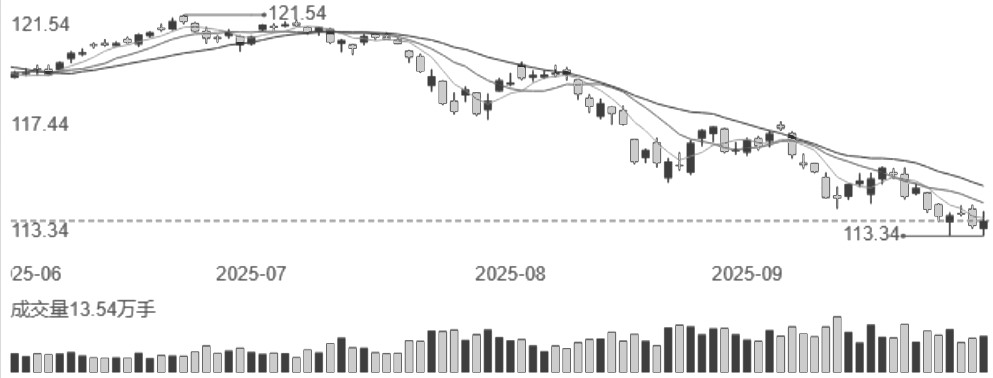
10 月债市展望
2025-10-09 14:47
Summary of Key Points from the Conference Call Industry Overview - The conference call primarily discusses the bond market outlook for October 2025, with a focus on credit bonds and interest rate bonds [2][7][12]. Core Insights and Arguments - **Travel Data and Real Estate Sales**: Strong travel data during the National Day holiday indicates robust activity, but real estate sales were slightly weaker than the previous year, leading to a neutral impact on the bond market [2][5]. - **U.S. Economic Indicators**: The U.S. government shutdown has resulted in the absence of key non-farm payroll data, while the ADP employment report showed a decrease of 32,000 jobs, raising expectations for a potential interest rate cut by the Federal Reserve in October [2][6]. - **Monetary Policy Outlook**: The central bank is expected to maintain a supportive monetary policy stance, utilizing various tools to ensure liquidity, while being cautious of risks associated with fund idling [2][7]. - **Interest Rate Trends**: The overall low interest rate environment is leading to a decline in the profitability of pure bond assets, making it difficult for long-term rates to decrease significantly in October [2][7]. - **Credit Bond Market Performance**: The credit bond market experienced volatility in September, with a steepening yield curve and fluctuating credit spreads. A defensive strategy focusing on short-duration bonds is recommended for October [2][8][12]. Important but Overlooked Content - **Impact of Regulatory Changes**: The introduction of new public fund sales regulations in early September caused significant market disruptions, leading to a sell-off of government bonds to maintain liquidity, which resulted in a passive narrowing of credit spreads [2][10]. - **Seasonal Factors**: Concerns over institutional redemptions at the end of September led to a significant rise in credit bond yields and widening credit spreads [2][11]. - **Investment Recommendations**: - For institutions with moderate stability, focus on 2-3 year credit varieties, particularly 3-year bank subordinated capital instruments, while being cautious of liquidity risks [3][14]. - For stable institutions, consider participating in 4-5 year bank subordinated capital instruments, but be aware of potential volatility [3][14]. - Avoid excessive participation in ultra-long-term non-financial bonds due to their lower liquidity and potential for significant price adjustments [3][14].
四季度债市展望:纯债的左侧拐点,转债的右侧机会
2025-10-09 14:47
Summary of Key Points from the Conference Call Industry Overview - The conference call primarily discusses the bond market outlook for the fourth quarter of 2025, focusing on government bonds and convertible bonds [1][2][3]. Core Insights and Arguments 1. **Interest Rate Trends**: The interest rate trajectory is expected to exhibit an asymmetric U-shape due to various risk factors and year-end allocation demands. The 30-year government bond yield is around 2.1%, 10-year at 1.8%, and 5-year at 1.6%, indicating significant allocation value for institutional investors [1][6][10]. 2. **Convertible Bond Market**: The convertible bond market remains bullish, with high premium rates. Investors are advised to focus on stock characteristics and structural opportunities, particularly in technology sectors such as AI, domestic computing power, and AR glasses [1][5][21][25]. 3. **Regulatory Impact**: Regulatory changes are anticipated to lead to a contraction in certain products, such as short-term bond funds, while other products like money market funds may see growth. The coordination between the central bank and regulatory bodies is crucial for market stability [1][7][12]. 4. **Bank Capital Regulations**: New capital regulations for commercial banks are expected to have limited impact on certificates of deposit (CDs) and will likely manifest in the market 3-4 quarters before formal implementation [1][8][10][9]. 5. **Economic Indicators**: GDP growth is projected at 4.8%-4.9% for Q3 and 4.5%-4.6% for Q4, indicating a downward trend. The upcoming Fourth Plenary Session is expected to introduce incremental policies, but short-term pressures remain manageable [1][12][13]. 6. **Cross-Year Allocation**: Financial institutions are driven by early investment for early returns, with historical data showing significant interest rate declines in Q4 during various years due to policy and fundamental factors [1][11]. 7. **Credit Bond Market Outlook**: The credit bond market is expected to exhibit seasonal characteristics, with credit spreads likely to fluctuate around current levels without significant compression [1][15]. Additional Important Insights 1. **Investment Strategies**: A barbell strategy is recommended, focusing on short-term assets with stable yields and mid-term secondary capital bonds. The current market environment favors short-term assets with good downside protection [1][16][17]. 2. **Market Sentiment**: Institutional investors have increased asset allocations, particularly state-owned banks, while insurance companies remain stable. The sentiment is generally optimistic, awaiting a final dip to establish common expectations [1][18]. 3. **Convertible Bond Valuation**: Current valuations of convertible bonds show limited downside potential and significant upside potential, with a median elasticity of 70% and a remaining median term of approximately 2.5 years [1][21][24]. 4. **Specific Recommendations**: The call recommends specific stocks in the technology and renewable energy sectors, including companies involved in AI, domestic computing, and solar energy components, as they are expected to perform well in the upcoming quarter [1][25][27]. This summary encapsulates the key points discussed in the conference call, providing a comprehensive overview of the bond market outlook and investment strategies for the fourth quarter of 2025.
超长信用债探微跟踪:超长债利差触及新高
SINOLINK SECURITIES· 2025-10-09 14:42
Group 1: Report Industry Investment Rating - No information provided Group 2: Core View of the Report - The spread of ultra-long bonds has reached a new high. The yield center of ultra-long credit bonds has continued to rise, the primary issuance has stopped, and the secondary market has shown weak performance. Due to the lack of incremental capital support, the duration strategy still needs to be cautious before the market sentiment significantly recovers [2][3][4] Group 3: Summary According to the Directory 1. Stock Market Characteristics - The yield center of ultra-long credit bonds has continued to rise. During the week of September 29 - September 30, 2025, the bond market sentiment remained weak, and the interest rate center of stock ultra-long credit bonds further increased. Compared with the previous week, the number of stock ultra-long credit bonds with a yield of 2.6% - 2.7% increased to 248 [2][11][12] 2. Primary Issuance Situation - There was no issuance of ultra-long credit bonds in the week before the National Day [3][20] 3. Secondary Trading Performance - The decline of the ultra-long credit bond index was greater than that of other mainstream bond varieties. This week, the index prices of medium - short - term credit bonds and bank sub - debt showed signs of stabilization, but the ultra-long credit bond index still led the decline. The index of AA + credit bonds with a maturity of over 10 years decreased by 0.24% month - on - month [4][21] - The liquidity of ultra-long credit bonds was under pressure. Within two trading days this week, the total number of transactions of general credit bonds with a maturity of over 7 years was 62, and the trend of weakening liquidity continued. In terms of long - bond pricing, the yield and spread of ultra-long credit bonds both increased in the latest week. The increase in the transaction yield of general credit bonds with a maturity of over 10 years was at the forefront, and the spread with 20 - 30 - year treasury bonds widened to over 50bp [4][24] - The trading sentiment of ultra-long credit bonds was weak. The TKN ratio of varieties with a maturity of over 10 years was at a low level, and the deviation of high - valuation transactions was much higher than that of long - term bonds with a maturity of less than 10 years [4][28] - In terms of the investor structure, funds continued to sell ultra-long credit bonds. Concerns about controlling duration risk and the liquidity flaws of the varieties still affected the allocation behavior of trading desks. The purchasing power of institutions such as insurance and wealth management was limited, and the allocation desks had not formed effective support. It was difficult to reverse the adjustment trend of ultra-long credit bonds in the short term [4][32] - From a more microscopic perspective, the spread between active ultra-long credit bonds of each maturity and treasury bonds of similar maturities rose to a 24 - year high this week, and the spread of varieties around 10 years widened to a new high this year. Looking forward, although the coupon advantage of ultra-long credit bonds is apparent after the adjustment, due to the lack of incremental capital support, the duration strategy still needs to be cautious before the market sentiment significantly recovers [4][34]
美国国债收益率微涨:政府停摆背景下投资者静待突破性进展及美联储线索
Sou Hu Cai Jing· 2025-10-09 14:08
Core Viewpoint - The U.S. Treasury yields remain stable as investors focus on the ongoing government shutdown, which has entered its ninth day, while awaiting a breakthrough in the situation [1] Group 1: Treasury Yields and Market Reactions - The yields on the benchmark 10-year, 2-year, and 30-year U.S. Treasury bonds have all increased by less than 1 basis point [1] - Despite the government shutdown, the auction of 10-year Treasury bonds on Wednesday went relatively smoothly, boosting market confidence in U.S. Treasuries [1] Group 2: Federal Reserve and Monetary Policy - Investors are looking towards the minutes from the Federal Reserve's recent meeting for clues about future policy directions, with a consensus among officials on the rate cut in September but differing views on future cuts [1] - The current money market indicates a 95% probability of another rate cut by the Federal Reserve in October [1] Group 3: Government Shutdown Impacts - The ongoing government shutdown is causing a continuous expansion of the U.S. fiscal deficit, leading traders to closely monitor investor demand for U.S. Treasuries [1] - The shutdown has resulted in a halt to the release of official data, adding uncertainty to the market and increasing risks [1] - Investors are weighing their options carefully, considering the implications of the government shutdown on future policies and market trends [1]
产业债发行规模持续增长,信用利差保持走阔态势:——信用债月度观察(2025.09)-20251009
EBSCN· 2025-10-09 12:03
1. Report Industry Investment Rating No relevant content provided. 2. Core View of the Report - As of the end of September 2025, the balance of outstanding credit bonds in China was 30.49 trillion yuan. In September 2025, the issuance of credit bonds increased month - on - month, with a net financing of 1398.89 billion yuan. The issuance of industrial bonds showed significant growth, while the net financing of urban investment bonds was negative [1][9]. - In September 2025, the trading volume of urban investment bonds increased month - on - month but decreased year - on - year, and the trading volume of industrial bonds decreased both month - on - month and year - on - year. The credit spreads of both urban investment bonds and industrial bonds widened compared to the previous month [2][41]. 3. Summary According to the Directory 3.1 Credit Bond Issuance and Maturity 3.1.1 Credit Bond Issuance - As of the end of September 2025, the balance of outstanding credit bonds was 30.49 trillion yuan. From September 1 to 30, 2025, the issuance of credit bonds was 12355.38 billion yuan, a month - on - month increase of 10.27%, with a total repayment of 10956.49 billion yuan and a net financing of 1398.89 billion yuan [1][9]. - **Urban Investment Bonds**: As of the end of September 2025, the balance of outstanding urban investment bonds was 15.31 trillion yuan. In September 2025, the issuance was 5039.05 billion yuan, a month - on - month increase of 0.84% and a year - on - year increase of 9.78%. The net financing of urban investment entities was - 105.01 billion yuan. In terms of regions, Jiangsu had the highest issuance, and in terms of ratings, AA + and AAA - rated bonds accounted for a relatively high proportion [10][13][20]. - **Industrial Bonds**: As of the end of September 2025, the balance of outstanding industrial bonds was 15.18 trillion yuan. In September 2025, the issuance was 7316.33 billion yuan, a month - on - month increase of 17.85% and a year - on - year increase of 15.04%. The net financing of industrial entities was 1503.9 billion yuan. In terms of industries, the public utilities sector had the highest issuance, and in terms of ratings, AAA - rated bonds accounted for 90.52% [22][24][29]. 3.1.2 Credit Bond Maturity - **Urban Investment Bonds**: From October to December 2025, Jiangsu, Shandong, and Zhejiang had relatively large maturity scales of urban investment bonds, all exceeding 100 billion yuan [29]. - **Industrial Bonds**: From October to December 2025, the public utilities, non - banking finance, building decoration, transportation, and real estate industries had relatively large maturity scales of credit bonds, all exceeding 100 billion yuan [33]. 3.2 Credit Bond Trading and Spreads 3.2.1 Credit Bond Trading - **Urban Investment Bonds**: In September 2025, the trading volume of urban investment bonds was 10210.31 billion yuan, with a month - on - month increase and a year - on - year decrease. The turnover rate was 6.67% [37]. - **Industrial Bonds**: In September 2025, the trading volume of industrial bonds was 12677.1 billion yuan, with both month - on - month and year - on - year decreases. The turnover rate was 8.35% [41]. 3.2.2 Credit Bond Spreads - **Urban Investment Bonds**: In September 2025, the credit spreads of urban investment bonds of all levels widened compared to the previous month. For example, the average credit spread of AAA - rated urban investment bonds was 57bp, 6bp wider than in August 2025. Regionally, different regions showed different spread levels and changes [41][44]. - **Industrial Bonds**: In September 2025, the credit spreads of credit bonds of all levels of industrial entities widened compared to the previous month. For example, the average credit spread of AAA - rated industrial entities was 53bp, 3bp wider than in August 2025. By industry, different industries had different spread levels and changes [47][49].
对《地方政府专项债券相关业务会计处理暂行规定》的点评:统一标准立新规,权责划分更清晰
Lian He Zi Xin· 2025-10-09 11:18
Report Overview - The Ministry of Finance recently issued the "Interim Provisions on the Accounting Treatment of Local Government Special Bond - Related Business" (Caikuai [2025] No. 17), aiming to improve the accounting treatment of special bond - related business, optimize the management mechanism, and strengthen the full - process management of special bonds [4]. Core Viewpoints - The pre - setting of the process for confirming the main body of special bond repayment obligations helps enterprises be more cautious when applying for special bond projects [8]. - After the implementation of the "Provisions", if the conditions for "project units not bearing the repayment obligations of special bonds" are not met, it may be unsustainable to include existing special bonds in capital reserves and recognize subsidies, and the debt - servicing pressure of such enterprises may increase to varying degrees [9]. - The "Special Bond Project Investment Table" helps strengthen the management of special bond funds, and the "Special Bond Fund Repayment Situation Table" helps monitor the principal and interest repayment of special bonds in real - time and prevent local government debt risks [15]. Specific Requirements of the "Provisions" Accounting Treatment of Special Bond Funds for Enterprise - Type Project Units - If an enterprise - type project unit is required to bear the principal and interest repayment obligations of special bond funds according to the project implementation plan or financing balance plan, it should recognize them as liabilities and conduct subsequent accounting treatment in accordance with relevant regulations; if not, it should conduct accounting treatment in accordance with relevant enterprise accounting standards [5]. - Starting from January 1, 2026, enterprises should compile the "Special Bond Project Investment Table" and the "Special Bond Fund Repayment Situation Table", collecting and organizing various information such as the amount of special bond funds received, repaid, and spent, and the situation of asset formation [6][7]. Accounting Treatment Details - **Accounting for obtaining special bond funds with repayment obligations**: When receiving funds, debit "Bank Deposit" and credit "Long - term Payable - Special Bonds (Principal)"; when accruing interest, debit relevant cost accounts and credit "Long - term Payable - Special Bonds (Interest)"; when repaying principal and interest, debit "Long - term Payable - Special Bonds (Principal, Interest)" and credit "Bank Deposit" [6]. - **Accounting for constructing assets related to special bond projects**: Use special bond funds for project construction and form relevant assets according to enterprise accounting standards, and conduct auxiliary accounting according to the source of project funds [6]. - **Accounting for obtaining special bond project income**: Account for income in accordance with relevant regulations. If project income is used to repay special bond principal and interest, set up a secondary detailed account or use auxiliary accounting to mark the source of debt - servicing funds [6]. Impact on Enterprises Project Application - The pre - setting of the confirmation process for special bond repayment obligation subjects makes enterprises more cautious when applying for special bond projects, as they need to carefully calculate project investment, income, and their own funds [8]. Financial Statements and Debt - Servicing Ability - **Impact on liability - related indicators**: If special bonds transferred to capital reserves need to be borne by the enterprise, the asset - liability ratio of sample enterprises will increase by 0.55 - 3.59 percentage points, and the debt burden will rise [11]. - **Impact on corporate profitability**: If special bond subsidies in other income no longer meet the requirements for being included in profit and loss accounts, it may have a significant impact on corporate profits. For example, a certain urban investment enterprise would have suffered losses without government subsidies related to special bonds in 2024 [14]. - **Impact on debt - servicing pressure**: If the income of special bond investment projects fails to meet expectations, the debt - servicing pressure of project units will increase to varying degrees according to the scale of existing special bonds [14].
超长债利差触及新高
SINOLINK SECURITIES· 2025-10-09 11:11
1. Report Industry Investment Rating There is no information provided regarding the report industry investment rating in the given content. 2. Core Viewpoints of the Report - The yield spread of ultra - long bonds has reached a new high. The adjustment trend of ultra - long credit bonds is difficult to reverse in the short term, and the duration strategy needs to be cautious [4][34] - Although the coupon advantage of ultra - long credit bonds is apparent after adjustment, due to the lack of incremental funds and the weak market sentiment, investors should be prudent in adopting the duration strategy [4][34] 3. Summaries According to the Directory 3.1存量市场特征 - The yield center of ultra - long credit bonds has been continuously rising. From September 29 to 30, 2025, the interest rate center of existing ultra - long credit bonds further increased. The number of existing ultra - long credit bonds with a yield of 2.6% - 2.7% increased to 248 compared to the previous week [2][12] 3.2一级发行情况 - There was no issuance of ultra - long credit bonds in the week before the National Day [3][20] 3.3二级成交表现 - The decline of the ultra - long credit bond index was greater than that of other mainstream bond varieties. From September 29 to 30, 2025, the index prices of medium - short - term credit bonds and bank sub - debt showed signs of stabilization, but the ultra - long credit bond index continued to lead the decline. The index of AA + credit bonds with a term of over 10 years decreased by 0.24% week - on - week [4][21] - The liquidity of ultra - long credit bonds was under pressure. In two trading days of the week, the total number of transactions of general credit bonds with a term of over 7 years was 62, indicating a weakening trend. The yield and spread of ultra - long credit bonds both increased, and the spread between general credit bonds with a term of over 10 years and 20 - 30 - year treasury bonds widened to over 50bp [4][24] - The trading sentiment of ultra - long credit bonds was weak. The TKN ratio of varieties with a term of over 10 years was at a low level, and the deviation of high - valuation transactions was much higher than that of bonds with a term of less than 10 years [4][28] - In terms of investor structure, funds continued to sell ultra - long credit bonds. Concerns about duration risk and liquidity flaws affected the allocation decisions of trading desks. The support from insurance and wealth - management institutions was limited, and the adjustment trend of ultra - long credit bonds was difficult to reverse in the short term [4][32] - From a more microscopic perspective, the spread between active ultra - long credit bonds of each term and treasury bonds of similar terms reached a 24 - year high this week, and the spread of varieties around the 10 - year term reached a new high for the year [34]
渤海证券研究所晨会纪要(2025.10.09)-20251009
BOHAI SECURITIES· 2025-10-09 09:01
Macro and Strategy Research - The report discusses the evolution of exchange rate systems globally, categorizing them into four types: hard peg, soft peg, floating exchange rates, and others. It highlights that the choice of exchange rate systems is influenced by various constraints, including trade development and financial stability, alongside monetary policy independence [3] - The Chinese yuan's exchange rate mechanism is based on market supply and demand, referencing a basket of currencies, and follows a managed floating exchange rate system. This system has evolved through four stages, balancing government guidance and market demand while ensuring financial stability [3][4] Yuan Exchange Rate Analysis Framework - A "3+1" framework is established for analyzing the yuan's exchange rate from long, medium, and short-term perspectives, incorporating institutional regulation. Long-term factors focus on purchasing power parity, interest rate parity, and behavioral equilibrium exchange rate models. Medium-term factors emphasize the impact of the balance of payments, while short-term factors consider market sentiment and investor psychology [4] - The People's Bank of China plays a crucial role in stabilizing the foreign exchange market through various counter-cyclical adjustment measures to prevent market volatility and herd behavior [4] Yuan Exchange Rate Model Prediction - The report constructs a prediction model for the yuan's spot exchange rate using key indicators such as the US-China 2-year bond yield spread, PMI export orders, and the US dollar index. The model shows a good fit with an R^2 of 0.92, indicating a strong predictive capability for exchange rate turning points, although it notes limitations during periods of policy changes and external shocks [4] Fixed Income Research - The report indicates that the issuance guidance rates for credit bonds have generally increased, with a change of -13 basis points from the end of Q2 2025 to the end of Q3 2025. The total issuance scale in Q3 2025 saw a slight decrease, with corporate bonds and medium-term notes experiencing reduced issuance, while short-term financing bonds and targeted tools saw increases [6][7] - The credit bond market showed a slight increase in transaction volume in Q3 2025, with corporate bonds and medium-term notes seeing decreased transaction amounts. The overall yield on credit bonds has been on the rise, particularly in September [7] - The report suggests that despite market fluctuations, the conditions for a comprehensive bear market in credit bonds are insufficient, and a long-term downward trend in yields is anticipated. The strategy recommends increasing allocations during adjustments, focusing on the trend of interest rate bonds while considering individual bond coupon values [7][8] Fund Research - The report notes that all major equity market indices rose, with the largest increase in the Sci-Tech 50 index, which rose by 6.47%. The report also highlights that the public fund scale reached a new high [10][11] - In the ETF market, there was a net inflow of 103.12 billion yuan, with bond ETFs receiving the most significant inflow due to the establishment of new Sci-Tech bond ETFs. The average daily trading volume in the ETF market reached 476.15 billion yuan [11][12]