券商

Search documents
全球多数股市杀跌,金价为何逆势走强?哪些主线有抄底机会?高手这样看
Mei Ri Jing Ji Xin Wen· 2025-10-17 10:25
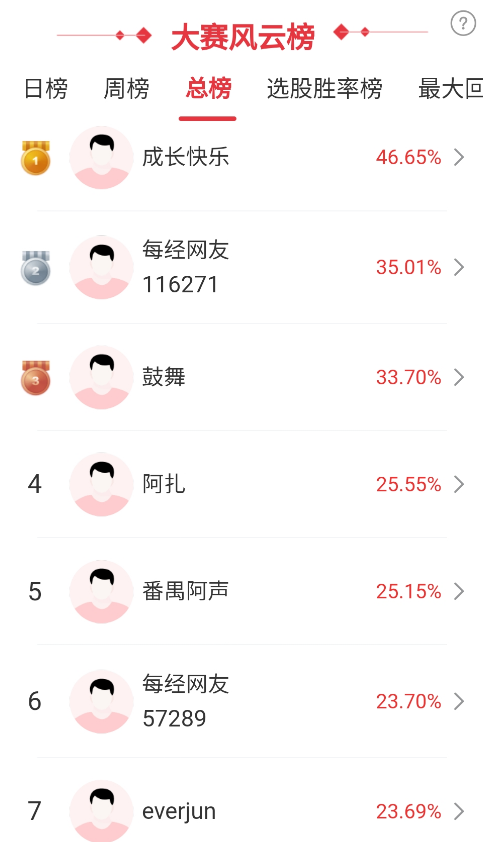
Group 1 - Global stock markets experienced a decline, with the Shanghai Composite Index falling by 1.95%, and only 602 stocks rising against 4783 stocks that fell [1] - In the recent stock trading competition, the top three participants achieved impressive returns, with the champion's return at 46.65%, the runner-up at 35.01%, and the third place at 33.70% [1] - The competition had a total of 336 participants who achieved positive returns and will receive cash rewards [1] Group 2 - The 76th trading competition will start registration on October 18, with a simulated capital of 500,000 yuan, and the competition will run from October 20 to October 31 [3][13] - Cash rewards for the competition include 688 yuan for the first place, 188 yuan for the second to fourth places, and 88 yuan for the fifth to tenth places, with additional rewards for monthly point leaders [3][13] - Participants who register will receive free access to the "Fire Line Quick Review" for six trading days, which includes market insights and investment logic [4][12] Group 3 - The A-share market is experiencing significant volatility, with 1622 stocks rising and 3763 stocks falling since October [5] - Notable stocks that performed well include Hefei Urban Construction and Dayou Energy, while stocks like Hainan Huatech and Shangwei New Materials saw significant declines [5][6] - Market experts suggest that the Shanghai Composite Index is facing resistance at 3950 points and support at 3750 points, indicating a range-bound trading environment [7] Group 4 - Experts believe that the current market adjustment presents opportunities in sectors such as optical switches and undervalued brokerage firms [8] - The rising gold prices are attributed to factors such as U.S. government shutdown concerns and expectations of interest rate cuts by the Federal Reserve [9] - The Ministry of Industry and Information Technology announced a plan to achieve a 70% coverage rate for millisecond latency in urban computing power centers by 2027 [9]

9月资金流向月报:科技赛道为主线,黄金股成新宠儿-20251017
Guohai Securities· 2025-10-17 09:36
Equity Market - The technology sector continues to show strong momentum, with a significant net inflow of 340 billion CNY in technology-themed ETFs in September, up from 413 billion CNY in August[18] - The total net inflow for industry and thematic ETFs reached a one-year high of 964 billion CNY in September, with notable increases in financial and real estate sectors[18] - The top net outflow was from the CSI 300 ETF, which saw a reduction of 146.46 billion CNY, as some investors sought structural opportunities near the 3900-point mark of the Shanghai Composite Index[12] Bond Market - Bond ETFs have gained popularity, with a net inflow of 921 billion CNY in September, primarily driven by the Sci-Tech bond ETFs[58] - Major banks net purchased 3302 billion CNY in interest rate bonds, while other banks showed net selling behavior[66] - Insurance companies increased their net purchases of long-term interest rate bonds to 2561 billion CNY, up from 2046 billion CNY in August[69] Commodity Market - Gold ETFs experienced a net inflow of 55.98 billion CNY in September, although this was lower than the monthly inflows seen from February to April 2025[73] - Domestic investors shifted their focus from gold to gold stocks, with gold stock ETFs seeing significant performance improvements[73] Market Sentiment - The margin trading balance increased by 1674.06 billion CNY in September, marking the highest level since 2019, indicating a sustained high risk appetite among investors[47] - Southbound trading reached a record high of 1726.53 billion CNY in September, with Alibaba contributing significantly to the net purchases in the retail sector[53]
A股大幅调整,资源股逆市拉升,免税概念活跃
Zheng Quan Shi Bao· 2025-10-17 09:04
Market Overview - A-shares experienced a significant decline on October 17, with the Shanghai Composite Index dropping nearly 2% and the ChiNext Index falling over 3% [1] - The Hong Kong market also saw a sharp drop, with the Hang Seng Index closing down 2.48% and the Hang Seng Tech Index down 4.05% [1] - The total trading volume in the Shanghai and Shenzhen markets was approximately 19.547 billion yuan, consistent with the previous day's volume [1] Sector Performance - The semiconductor sector led the declines, with companies like Zhaoxin and Hongwei Technology falling over 10% [1] - The charging pile concept also retreated, with Sunshine Power dropping over 10% and several other companies hitting the daily limit down [1] - Conversely, resource sectors such as gas, oil, and coal saw gains, with Dayou Energy achieving five consecutive limit-up days and Guo Xin Energy gaining three limit-up days in four days [3] - The banking sector remained relatively stable, with Agricultural Bank of China reaching new highs [1] Coal Sector Insights - The coal sector is experiencing upward momentum due to increased demand for coal as temperatures drop across China, with average temperature declines of 4°C to 8°C expected [3] - Analysts noted that the coal industry's profitability is recovering, and supply tightness is anticipated in the fourth quarter, enhancing market confidence [3] - The sector is expected to see a rise in both volume and price, leading to improved profitability [3] Duty-Free Concept Activity - The duty-free sector saw significant activity, with companies like Pingtan Development and Xiamen Port reaching their daily limit up [5] - New policies announced by the Ministry of Finance and other authorities will expand the range of duty-free goods and adjust shopping age limits, effective November 1 [5] - The changes include allowing more domestic products to be sold in duty-free shops and increasing the annual duty-free shopping limit for residents with departure records [5] ZTE Corporation's Stock Performance - ZTE Corporation's stock plummeted to its daily limit down, closing at 48.63 yuan per share, with its Hong Kong shares also dropping over 13% [7] - The decline is attributed to reports that the FCC has removed millions of Chinese electronic products from major e-commerce platforms, affecting ZTE's home security cameras and smartwatches [7] - Market attention is focused on the FCC's potential vote to expand the ban on devices containing components from blacklisted companies [7]

港股收评:恒生科技大跌4%,科技金融齐跌,半导体军工齐挫,黄金股逆势上涨!阿里巴巴跌4%,新华保险跌7.16%,广发证券跌近7%
Ge Long Hui· 2025-10-17 08:38
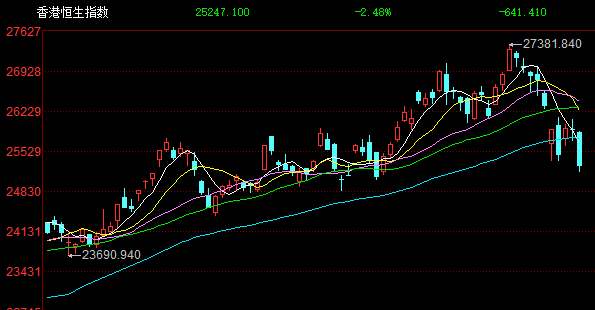
Core Points - The Hong Kong stock market experienced a significant decline, with the Hang Seng Technology Index dropping by 4.05% to close at 5760 points, the Hang Seng Index falling by 2.48% to 25247 points, and the National Enterprises Index decreasing by 2.67%, barely holding above the 9000-point mark [1][3] Group 1: Market Performance - The three major indices in Hong Kong reached recent adjustment lows due to a collective downturn in large technology stocks, major financial stocks (banks, insurance, securities), and state-owned enterprises [1][3] - Notable declines included Meituan and Alibaba, both dropping over 4%, while Xinhua Insurance fell by 7.16%, GF Securities by nearly 7%, and Industrial and Commercial Bank of China by 1.2% [3] Group 2: Sector Performance - Various sectors faced declines, including semiconductor stocks, Apple-related stocks, military industry stocks, automotive stocks, nuclear power stocks, lithium battery stocks, high-speed rail infrastructure stocks, coal stocks, and domestic real estate stocks [3] - Conversely, retail stocks and gold and silver jewelry stocks saw gains, with Chow Tai Fook rising by 5% after announcing its third price increase of the year, and Lao Pu Gold increasing by over 3% [3] Group 3: Notable Stock Movements - Biopharmaceutical stocks showed strength, with Yaojie Ankang surging over 22% after a previous increase of over 46%, and Xuan Zhu Biotechnology reaching a new high with a 16.9% rise on its third day of listing [3]

港股收评:单边下挫!恒科指大跌4%,科技金融齐跌,半导体军工齐挫,金银首饰股逆势上涨
Ge Long Hui· 2025-10-17 08:30
Market Performance - The Hong Kong stock market experienced a significant decline, with the Hang Seng Technology Index dropping by 4.05% to close at 5760 points, while the Hang Seng Index fell by 2.48% to 25247 points, and the National Enterprises Index decreased by 2.67%, barely holding above the 9000-point mark [1] Sector Performance - Major sectors such as large technology stocks, financial stocks (including banks, insurance, and brokerages), and state-owned enterprises collectively contributed to the market downturn. Notable declines included Meituan and Alibaba, both down over 4%, and Xinhua Insurance dropping by 7.16%. Additionally, GF Securities fell nearly 7%, and Industrial and Commercial Bank of China decreased by 1.2% [1] - Other sectors such as semiconductors, Apple-related stocks, military industry stocks, automotive stocks, nuclear power stocks, lithium battery stocks, high-speed rail infrastructure stocks, coal stocks, and domestic real estate stocks also experienced declines [1] Gold and Retail Stocks - In contrast, retail stocks and gold and silver jewelry stocks saw gains, with Chow Tai Fook rising by 5% after announcing its third price increase of the year. Lao Pu Gold surged over 3%, and luxury goods stock Prada increased by over 2% [1] - The biopharmaceutical sector showed strength, with Jiayuan Health surging over 22% after a previous increase of over 46%, and Xuan Bamboo Biotechnology reaching a new high with a 16.9% rise on its third day of trading [1]
收评:沪指跌近2%,券商、酿酒等板块走低,免税概念逆市活跃
Zheng Quan Shi Bao Wang· 2025-10-17 07:32
Core Viewpoint - The major stock indices in China experienced a significant decline, with the Shanghai Composite Index dropping nearly 2%, reflecting a decrease in market risk appetite and a mixed performance across various sectors [1]. Market Performance - The Shanghai Composite Index closed down 1.95% at 3839.76 points, the Shenzhen Component fell 3.04% to 12688.94 points, and the ChiNext Index decreased by 3.36% to 2935.37 points [1]. - The total trading volume in the Shanghai and Shenzhen markets reached 19.547 trillion yuan [1]. Sector Analysis - Sectors such as semiconductors, automobiles, non-ferrous metals, brokerage firms, and liquor companies saw declines, while gas, oil, coal, and banking sectors performed positively [1]. - The duty-free concept stocks were notably active despite the overall market downturn [1]. Market Sentiment - The recent trading volume has significantly shrunk, reaching a new low, indicating a decrease in overall market risk appetite and a prevalent wait-and-see attitude among investors [1]. - The market's focus is expected to shift towards corporate earnings and fundamentals as the third-quarter earnings reporting period approaches [1]. Monetary Policy Context - Data from the central bank indicates that new social financing and credit data for September maintained a high growth rate, reflecting a moderately loose monetary policy stance and continued financial support for the real economy [1].
港股中资券商股集体走低 广发证券跌5.15%
Mei Ri Jing Ji Xin Wen· 2025-10-17 06:12
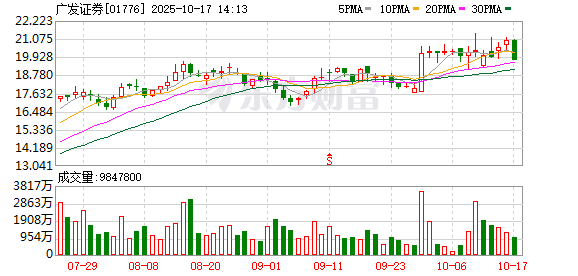
每经AI快讯,10月17日,港股中资券商股集体走低,截至发稿,广发证券(01776.HK)跌5.15%,报19.88 港元;中信建投证券(06066.HK)跌4.23%,报13.37港元;国泰海通(02611.HK)跌3.07%,报15.18港元; 光大证券(06178.HK)跌2.22%,报10.58港元。 (文章来源:每日经济新闻) ...


港股异动 | 中资券商股集体走低 非银存款下半年首现负增长 市场关注存款搬家进程
智通财经网· 2025-10-17 06:04
智通财经APP获悉,中资券商股集体走低,截至发稿,广发证券(01776)跌5.15%,报19.88港元;中信建 投证券(06066)跌4.23%,报13.37港元;国泰海通(02611)跌3.07%,报15.18港元;光大证券(06178)跌 2.22%,报10.58港元。 消息面上,最新发布的9月金融数据显示,存款结构呈现显著分化,住户存款与非银金融机构存款呈 现"一增一减"。其中,住户存款新增2.96万亿元,同比多增7600亿元;非银存款减少1.06万亿元,同比 少增1.97万亿元。爱建证券发布研报称,该格局并非意味着存款向资本市场迁移进程的逆转,而是受到 季节性因素与去年同期高基数的共同扰动,尚不能据此断定"存款搬家"趋势的终结,其持续性仍需后续 月份数据的进一步验证。 广发证券则表示,市场风偏波动但不改增量资金入市趋势,券商板块景气度有望震荡上行,但估值滞 涨,资本市场稳定性提升下券商板块兼具工具属性,建议关注Q3业绩弹性催化以及华泰证券(A/H)、东 方证券(A/H)、中金公司(H)、国泰海通(A/H)、中信证券(A/H)等投资机会。 ...
几次牛市的回顾以及本次的比对
雪球· 2025-10-17 04:23
Core Viewpoint - The article analyzes historical bull markets in China, identifying key reasons for their end and drawing parallels to the current market situation, suggesting that the ongoing bull market may continue due to supportive policies and favorable economic conditions [3][6]. Historical Bull Markets Analysis - The bull market from 1996 to 2000 ended due to several factors: the end of deflation, a shift in policy focus from stimulating the economy to regulating development, excessive stock supply from state-owned enterprises, and a crackdown on speculation [3][4]. - The 2005-2007 bull market was characterized by a depreciating dollar and appreciating RMB, leading to a revaluation of RMB assets, alongside a period of simultaneous high growth in both the stock market and the economy [4]. - The 2014-2015 bull market was driven by interest rate cuts from the central bank, which lowered risk-free returns, leading to a surge in bank stocks and subsequently lifting the broader market. However, it ended due to regulatory tightening and external economic pressures [4][5]. Current Market Conditions - The current bull market is seen as necessary for boosting the economy, addressing local government debt, and attracting global capital into technology innovation [6]. - The central bank's monetary policy is crucial; a shift from easing to tightening could signal the end of the bull market [7]. - The relationship between the RMB and USD exchange rates is highlighted, with RMB appreciation during USD depreciation leading to increased demand for RMB assets, while the opposite could result in capital outflows [7]. - Historical financial crises in the U.S. may impact China's bull market, but recent decoupling trends suggest that a U.S. crisis could benefit Chinese markets as capital flows away from Wall Street [7]. - Currently, with ample liquidity from the central bank, supportive policies, and a depreciating dollar, there are no clear signals indicating the end of the bull market [7].

离披露完毕只剩10个交易日!掘金三季报窗口期,需要注意什么?
Mei Ri Jing Ji Xin Wen· 2025-10-17 03:56
Core Insights - The A-share market has shown an upward trend since October, with the Shanghai Composite Index recovering above 3900 points, coinciding with the third-quarter earnings report disclosure period [1] - As of October 15, 126 companies have released earnings forecasts, with 105 of them expecting year-on-year profit growth, indicating a strong market focus on financial data [1] Group 1: Earnings Forecasts - Two main reasons for companies' positive earnings forecasts are price increases and the ramp-up of product production [2] - Companies like Xianda Co., ShuoBeide, and Chujian New Materials are leading the earnings growth forecast, with increases exceeding 2000% [2] - Resource cycle companies have benefited from significant price increases, while certain tech companies are entering a phase of mass production, driving their earnings growth [2][4] Group 2: Notable Companies - Xianda Co. expects a net profit increase of 2807% to 3211% for the first three quarters, driven by rising market prices for its main product, and operational reforms [2] - Shenghe Resources anticipates a net profit of approximately 740 million to 820 million yuan, reflecting a year-on-year increase of 696.82% to 782.96%, due to favorable market conditions and price increases [3] - ShuoBeide's net profit is projected to increase by 2836.86% to 3203.96%, attributed to enhanced production capacity and successful collaborations with major clients [4] Group 3: Market Trends and Reporting Schedule - The third-quarter earnings report window is short, with only ten trading days left until the reports are due by October 31 [6] - A total of 2352 companies are expected to disclose their earnings in the final week of October, marking a peak in reporting activity [6][11] - Key companies such as NIO, China Telecom, and major banks are scheduled to release their earnings reports between October 21 and October 31 [7][8]