铜

Search documents
有色金属周报:宏观波动加剧,坚定看好金属行情-20260118
SINOLINK SECURITIES· 2026-01-18 11:51
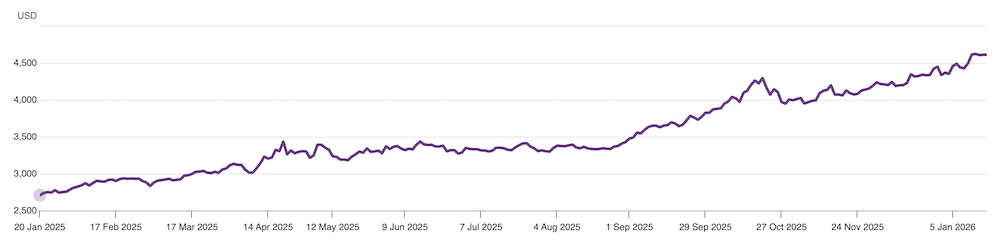
Group 1: Copper - LME copper price increased by 1.41% to $13,148.5 per ton, while Shanghai copper decreased by 0.63% to ¥100,800 per ton [1] - Domestic copper inventory increased by 17.2% week-on-week, with total inventory up by 21,280 tons year-on-year [1] - The operating rate of waste anode plate enterprises rose to 75.90%, with expectations of a slight decrease next week [1] Group 2: Aluminum - LME aluminum price rose by 0.71% to $3,171.5 per ton, while Shanghai aluminum fell by 1.66% to ¥23,900 per ton [2] - The operating rate of domestic aluminum processing enterprises increased by 0.2% to 60.2% due to pre-holiday inventory demand [2] - The total production capacity of metallurgical-grade alumina is 11,032 million tons/year, with an operating capacity of 8,916 million tons/year [2] Group 3: Gold - COMEX gold price increased by 2.26% to $4,620.5 per ounce, with SPDR gold holdings rising by 10.24 tons to 1,074.8 tons [3] - Geopolitical risks have led to a strong fluctuation in the gold market, with concerns over U.S. military actions against Iran [3] - The 10-year TIPS decreased by 0.02 percentage points to 1.88% [3] Group 4: Rare Earths - The price of praseodymium and neodymium oxide increased by 8.01%, with exports of rare earth permanent magnets reaching a historical high [4] - The expectation of more relaxed export policies is anticipated to boost future demand [4] - Key companies to watch include China Rare Earth, Guangsheng Nonferrous, and Northern Rare Earth [4] Group 5: Tungsten - Tungsten concentrate price rose by 6.33%, with supply remaining tight due to pre-holiday clearances [4] - The establishment of a $2.5 billion "strategic resilience reserve" in the U.S. may increase tungsten's priority [4] - Companies to focus on include China Tungsten High-Tech and Xiamen Tungsten [4] Group 6: Tin - Tin price increased by 7.55%, with inventory levels still acceptable despite recent accumulation [4] - Supply from Indonesia and Myanmar remains below expectations, supporting an upward price trend [4] - Companies to consider include Yunnan Tin and Huaxi Nonferrous [4] Group 7: Lithium - The average price of lithium carbonate rose by 20.1% to ¥158,300 per ton, while lithium hydroxide increased by 21.2% to ¥153,700 per ton [4] - Total lithium carbonate production reached 22,600 tons, with a slight increase week-on-week [4] - The market is expected to maintain a strong upward trend due to low inventory and high demand [4] Group 8: Cobalt - Cobalt price decreased by 1.3% to ¥454,000 per ton, while cobalt intermediate prices increased by 0.6% to $25.38 per pound [5] - The market is experiencing cautious purchasing behavior due to high cost pressures [5] - The price of cobalt salts continues to rise, providing support for electric cobalt prices [5]
BCA Research首席新兴市场策略师:金价年底冲刺5000美元,大宗商品与美元逻辑生变
Di Yi Cai Jing· 2026-01-18 10:28
Core Viewpoint - The article discusses the diverging fates of gold compared to cyclical commodities like copper and oil, predicting a significant rise in gold prices driven by structural demand, U.S. macroeconomic policies, and the need to suppress real interest rates [1][2]. Group 1: Key Drivers of Gold Prices - The first key driver is the structural increase in global demand, particularly from central banks, with China's diversification of foreign reserves significantly impacting the market [4]. - The second driver is the "currency devaluation cycle," where institutional investors favor gold as the U.S. seeks to devalue its currency amid a dual crisis of public debt and fiscal deficits [4]. - The third and most critical variable is the suppression of real interest rates, which the U.S. government aims to achieve to manage public debt repayment pressures [5]. Group 2: Divergence from Other Commodities - The traditional correlation between a weak dollar benefiting all commodities is deemed ineffective, with gold and cyclical commodities like copper and oil heading towards different outcomes [2][6]. - Despite a weak dollar, the correlation logic between the dollar and cyclical commodities is breaking down, indicating that the expected commodity supercycle may not materialize [6][8]. - The article emphasizes that in a period of weak global growth and a declining dollar, emerging markets and cyclical commodities may not perform well, as their key driver is growth rather than currency [8].

有色金属大宗商品周报(2026/1/12-2026/1/16):库存累积叠加关税预期推迟,铜价短期或迎来高位震荡-20260118
Hua Yuan Zheng Quan· 2026-01-18 07:58
Investment Rating - The investment rating for the non-ferrous metals industry is "Positive" (maintained) [4] Core Views - Copper prices may experience high-level fluctuations in the short term due to inventory accumulation and delayed tariff expectations. Recent price changes for copper include a decrease of -0.50% for LME copper, -0.63% for SHFE copper, and -0.71% for COMEX copper. The significant inventory accumulation includes LME copper at 144,000 tons (+3.31%), COMEX copper at 54,300 short tons (+4.81%), and SHFE copper at 214,000 tons (+18.3%). The domestic electrolytic copper social inventory is at 321,000 tons (+17.20%). The operating rate for electrolytic copper rods increased to 57.47% (+9.65 percentage points) [4] - Aluminum prices are also expected to face high-level fluctuations due to inventory accumulation. The price of alumina has decreased by 1.12% to 2,655 CNY/ton, while SHFE aluminum rose by 0.83% to 24,185 CNY/ton. The operating capacity for metallurgical-grade alumina is at 89.16 million tons/year with an operating rate of 80.82% (+0.31 percentage points). Domestic aluminum production capacity is nearing its ceiling, and demand is expected to grow, potentially leading to a shortage [4] - Lithium demand remains strong despite seasonal trends, with carbonate lithium prices rising by 12.86% to 158,000 CNY/ton. The production of lithium carbonate is at 22,600 tons, with a slight increase of 0.3%. The demand for lithium battery materials continues to grow, and the supply-demand dynamics are expected to reverse, leading to an upward price trend [4] - Cobalt prices are expected to continue rising due to tight raw material supply. The price of MB cobalt increased by 0.59% to 25.68 USD/pound, while domestic cobalt prices fell by 1.31% to 452,000 CNY/ton. The supply structure remains tight, and prices are likely to rise further [4] Summary by Sections 1. Industry Overview - The macroeconomic indicators show that the US December CPI year-on-year rate is at 2.70%, matching expectations. Retail sales for November increased by 0.6%, exceeding expectations of 0.4% [8] - The overall performance of the non-ferrous metals sector shows an increase of 3.03%, outperforming the Shanghai Composite Index by 3.48 percentage points, ranking third among the Shenwan sectors [10] 2. Industrial Metals - Copper: LME copper price decreased by 0.50%, SHFE copper by 0.63%, and COMEX copper by 0.71%. Inventory levels increased significantly, with LME copper inventory up by 3.31% and SHFE copper inventory up by 18.26% [24] - Aluminum: LME aluminum price fell by 0.73%, while SHFE aluminum rose by 0.83%. The inventory situation shows a mixed trend, with LME aluminum inventory down by 1.97% and SHFE aluminum inventory up by 29.24% [34] - Lead and Zinc: LME lead price increased by 1.03%, and SHFE lead by 1.62%. LME zinc price rose by 3.17%, and SHFE zinc by 4.38%. The mining profit for zinc increased by 5.77% to 11,284 CNY/ton [48] - Tin and Nickel: LME tin price rose by 11.68%, and SHFE tin by 18.70%. LME nickel price increased by 0.14%, and SHFE nickel by 5.77% [62] 3. Energy Metals - Lithium: The price of lithium carbonate increased by 12.86% to 158,000 CNY/ton, with lithium spodumene rising by 5.32% to 1,980 USD/ton. The profit margins for lithium production are showing significant fluctuations [78] - Cobalt: The price of MB cobalt increased by 0.59% to 25.68 USD/pound, while domestic cobalt prices decreased by 1.31% to 452,000 CNY/ton. The supply dynamics remain tight, supporting price increases [90]


信达证券:涨价或是重要的景气主线
Xin Lang Cai Jing· 2026-01-18 07:29
Core Conclusion - The market's upward momentum has slowed down this week, with active trading funds causing turnover rates to spike, surpassing the high point of August 2025. The spring market is still in progress, and a period of sideways consolidation after excessive short-term trading is normal. Although there are indications of a short-term cooling in policy, the overall stance remains accommodative [1][5]. Market Trends - The market style is shifting, with thematic sentiment cooling and strong sectors returning to the prosperity line. In the liquidity bull market phase, the profit effect is spreading, and price increases are considered a key prosperity line. The current narrative around commodities is driven by de-globalization and supply chain restructuring, leading to a re-pricing of key resource products [1][5]. Commodity Price Dynamics - Long-term, commodity prices tend to move in tandem, even during periods of economic downturn, as seen from 1970 to 1980 when prices continued to rise until 1980. There is optimism for a new super cycle in commodity prices. In the short to medium term, the focus should be on supply constraints, with potential expansion from emerging industry demand to the recovery of traditional demand. Beneficiaries on both supply and demand sides include non-ferrous metals (precious metals, copper, aluminum, strategic metals, rare earths), new energy (new energy materials, power batteries), chemical products (phosphate chemicals, fluorine chemicals), and storage chips [1][3][6]. Supply and Demand Factors - The current commodity price cycle is primarily driven by supply chain security. On the supply side, the control of strategic resources is intensifying amid great power competition, leading to increased scarcity in key mineral sectors. On the demand side, real needs driven by the AI technology revolution, energy transition, and military spending are boosting demand for strategic metals like copper, aluminum, lithium, and rare earths. A weak dollar cycle may support the elevation of commodity price levels [2][6]. Price Movement Patterns - Historically, during a commodity price increase, there are price rotations among commodities due to their interdependencies and relationships within the supply chain. For instance, during the demand expansion-driven price increase from 2009 to 2011, copper led the rise, followed by crude oil and soybeans. In the supply constraint-driven price increase from 2016 to 2018, oil and black commodities rose first, with chemical products showing sustained price increases [2][6]. Future Outlook - There is a strong belief in the potential for a new super cycle in commodity prices. The focus for the current price increase should be on supply constraint elasticity, with expansion likely moving from emerging industry demand to the recovery of traditional demand. Key supply constraints include production capacity limits for critical resources like copper and rare earths, capacity restrictions driven by "anti-involution" policies, and supply shortages driven by high AI demand. Demand opportunities are expected to arise from the transition between new and old driving forces in sectors like new energy vehicles, photovoltaics, and AIDC [3][7].

有色金属周报-20260116
Jian Xin Qi Huo· 2026-01-16 13:09
1. Report Information - Report Title: Non-ferrous Metals Weekly Report [1] - Date: January 16, 2026 [2] - Researcher: Zhang Ping, Yu Feifei, Peng Jinglin [3][4] 2. Industry Investment Ratings - Not provided in the report. 3. Core Views - Copper prices are expected to enter a high - level adjustment in the short term due to the dual pressure of short - term demand and a strong US dollar, but the medium - term demand is still positive [7]. - The downward space of lithium carbonate futures prices is limited, considering the limited growth of supply and the recovery of short - term demand [28]. - Aluminum prices have a downward adjustment demand in the short term due to the cooling of the macro - market sentiment and the large increase in the early stage [41][44]. - The operating center of nickel prices is expected to gradually rise, but the long - term space depends on the demand side, and investors need to pay attention to the Indonesian policy [77][78]. - Zinc prices are supported by macro - sentiment and a tight industrial pattern, but high prices have suppressed consumption, and there is a risk of a high - level callback [103][104]. 4. Summary of Each Metal Copper Market Review and Operation Suggestions - The main contract of Shanghai copper fluctuated between 100,060 and 105,650 this week, with a 5.3% decrease in total positions. The price first rose and then fell. LME copper also fluctuated in a certain range, and the overseas funds' enthusiasm for going long decreased [7]. - In the short term, high copper prices suppress downstream consumption, and the inventory accumulation accelerates. However, the medium - term demand is positive, such as the increase in the State Grid's fixed - asset investment and TSMC's capital expenditure. It is expected that copper prices will enter a high - level adjustment in the short term [7]. Fundamental Analysis - **Supply**: The import TC of copper concentrates continues to decline, but the supply of cold materials is abundant. The production of smelters in January is expected to decrease slightly. The import window of refined copper is closed [7][10][13]. - **Demand**: The operating rates of waste copper rods and refined copper rods have rebounded, but the downstream purchasing sentiment is still cautious. The operating rate of wire and cable has decreased slightly, and the operating rate of enameled wire has increased [14][15][16][17]. - **Spot**: The domestic inventory has increased, and the LME + COMEX market has also increased. It is expected that the inventory may decline next week [18][20]. Lithium Carbonate Market Review and Operation Suggestions - The futures price of lithium carbonate first rose and then fell this week, with a 17% decrease in total positions. The spot price also fluctuated. The downstream has stocked up in advance, and the social inventory has started to decline [27]. - The supply growth is limited, and the demand is expected to recover. It is expected that the downward space of futures prices is limited [28]. Fundamental Analysis - **Supply**: Lithium ore prices have risen significantly this week. The weekly production of lithium carbonate has increased slightly, but it is expected to decline in January. The production cost has also increased [31]. - **Demand**: The prices of ternary materials, lithium iron phosphate, cobalt acid lithium, and lithium batteries have all risen. The demand for cathode materials is expected to recover [32][33][34]. - **Spot**: The price difference between battery - grade and industrial - grade lithium carbonate is at a low level, and the inventory has decreased [35][36]. Aluminum Market Review and Operation Suggestions - Aluminum prices fluctuated at a high level this week, reaching new highs and then falling. The market sentiment cooled down, and the import window was closed. The inventory increased, and the spot premium was in a certain range [41]. - The supply pressure is expected to increase slightly in the short term, and the demand may be stimulated by the decline in aluminum prices. It is expected that aluminum prices will have a downward adjustment in the short term [44]. Fundamental Changes - **Bauxite**: The domestic bauxite production is gradually recovering, and the overseas market is trading lightly. The price of domestic bauxite is stable, and the price of imported bauxite has declined slightly [45]. - **Alumina**: The price has adjusted downward this week, and the import window is open. The domestic alumina plant is operating at a high level [49][50]. - **Electrolytic Aluminum**: The profit of the smelting industry remains at a high level. The import window of aluminum ingots is closed, and the net import in November has declined. The operating rate of downstream processing has increased slightly due to pre - holiday stocking, but it is expected to be weak in the short term. The inventory of aluminum ingots has increased significantly [55][62][65][70]. Nickel Market Review and Operation Suggestions - Nickel prices fluctuated widely at a high level this week, rising first and then falling. The spot trading was light, and the import window was closed [74][77]. - Nickel prices are affected by Indonesian policies. Although the short - term surplus pressure still exists, the operating center is expected to rise. Investors need to pay attention to the final quota of Indonesia [77][78]. Fundamental Changes - **Nickel Ore**: The price of Philippine nickel ore is stable, the price of Indonesian wet - process nickel ore has decreased, and the price of pyrometallurgical nickel ore is stable. The import volume of nickel ore in November 2025 decreased month - on - month [79]. - **Ferronickel**: The production of domestic and Indonesian ferronickel has decreased. The market has some activity, but there is still a difference between the upstream and downstream [86]. - **Electrolytic Nickel**: The production capacity of electrowon nickel is rapidly releasing. The production in December has increased, and the import and export volumes have changed [91]. - **Nickel Sulfate**: The price of nickel salts has risen significantly this week. The production in December has decreased, and the industry's operating load is at a certain level [96]. - **Stainless Steel**: The inventory of the stainless steel market has decreased, and the pattern of low inventory and strong expectation will continue, but there are potential risks [99]. Zinc Market Review and Operation Suggestions - Zinc prices fluctuated this week, reaching a new high and then falling back. The import window is not fully open, and the premium has declined [101][102]. - The short - term bullish funds are loose, the supply pressure is limited, and the demand is weak. It is necessary to be vigilant against the high - level callback of zinc prices [103][104]. Fundamental Analysis - **Supply**: The domestic zinc ore supply is tight, the import processing fee continues to decline, and the import window is open but the trading is light. The zinc ingot production in January is expected to increase slightly [109][110][111]. - **Demand**: The operating rates of galvanizing, die - casting zinc alloy, and zinc oxide have all decreased. It is expected that the operating rates will rise slightly next week, but the recovery is limited [112][113]. - **Spot Market**: The domestic zinc inventory has increased slightly, and the LME zinc inventory has decreased [114].
百利好晚盘分析:市场共识疲劳 金价窄幅震荡
Sou Hu Cai Jing· 2026-01-16 10:18
黄金方面: 近期贵金属市场仅在周一和周二出现了较为明确的趋势行情,随后市场陷入震荡,主要推手是当前市场陷入共识疲劳,年初市 场共识一直看涨,而现在市场跌幅有限,是在等待新一轮的市场变化。 虽然特朗普表示,伊朗在镇压抗议活动中的行为正在缓解,暗示可能采取观望态度。但是受到特朗普一贯政策左右改变的影 响,现在市场不敢断定,美国一定不会干预伊朗的局势,仍有变数。 百利好特约智昇研究投资策略师麦东认为,近期伊朗问题的缓解,一定程度上削弱了黄金的避险属性,金价有所回落。但是跌 幅有限,一定程度上又反映了,市场处在共识疲劳期,仍需要等待确定的答案。 技术面分析:昨日收十字线。日线级别,金价维持在4600美元附近震荡。1小时级别,价格跌破60日均线,向下试探120日均 线,市场处于弱转势阶段。今日多空分水岭在4575美元一线,关注市场在此的变化。 原油方面: 随着委内瑞拉原油改革推进,更多的原油供应进入市场。在美国介入后,北美生产商可能会急于通过整合来对冲油价的下行风 险。在当前低油价环境下,规模效应可以降低成本。2026年,全球原油仍会面临过剩压力。 地缘政治对油价的影响是阶段性的,在库存压力逐步走高的背景下,原油大概率 ...

ETF盘中资讯|铜资源争夺加剧!力拓专供亚马逊,AI大战抢完芯片抢铜矿!有色ETF华宝(159876)再涨2.2%创历史新高!
Sou Hu Cai Jing· 2026-01-16 02:18
Core Viewpoint - The non-ferrous metal sector is experiencing a strong upward trend, with significant capital inflows and record high ETF performance, indicating a bullish outlook for the industry in the coming years [1][4]. Group 1: Market Performance - The non-ferrous ETF Huabao (159876) saw a peak intraday increase of 2.2%, currently up 1.41%, reaching a new all-time high since its listing [1]. - As of January 15, the latest scale of the non-ferrous ETF Huabao is 1.453 billion, marking a historical high, and it ranks first among three ETFs tracking the CSI Non-Ferrous Metal Index [1]. - The ETF has attracted a net subscription of 50.4 million units, with a total net inflow of 473 million over the past ten days [1]. Group 2: Stock Performance - Key stocks in the non-ferrous sector include Hunan Silver, which surged over 6%, and other companies like Chihong Zn & Ge, Jiangxi Copper, and Jinchuan Group, all rising over 5% [6]. - The total market capitalization of leading stocks in the sector varies, with notable companies like Jiangxi Copper at 196 billion and Chihong Zn & Ge at 48.2 billion [2]. Group 3: Industry Outlook - Analysts predict that the non-ferrous metal sector will continue to thrive due to factors such as global capital expenditure cycles, manufacturing recovery, and improved domestic macro expectations [4]. - China Galaxy Securities suggests that copper prices have significant upward potential, driven by historical trends and the current global economic landscape [3]. - The demand for strategic metals is expected to rise due to new technological revolutions and geopolitical factors, indicating a new cycle for strategic metal demand [3]. Group 4: Investment Opportunities - The non-ferrous ETF Huabao and its linked funds cover a wide range of metals, including copper, aluminum, gold, rare earths, and lithium, allowing investors to capture the overall sector's performance [5]. - The industry is anticipated to benefit from the convergence of AI advancements and global economic shifts, creating a "super cycle" for non-ferrous metals [3][4].

建信期货铜期货日报-20260116
Jian Xin Qi Huo· 2026-01-16 01:36
Report Information - Report Title: Copper Futures Daily Report [1] - Date: January 16, 2026 [2] - Researcher: Zhang Ping, Yu Feifei, Peng Jinglin [3] Investment Rating - Not provided Core View - The Shanghai copper market showed a volatile decline, but the decline narrowed in the afternoon as risk appetite recovered. After the market closed, the People's Bank of China announced a 0.25 percentage point cut in the monetary policy tool rate and indicated there is room for further interest rate cuts and reserve requirement ratio cuts this year. The supply of copper is expected to contract, and demand may pick up as copper prices correct. It is expected that the inventory will start to decline next week. Although the short - term spot pressure is increasing, the loose Chinese monetary policy will offset the pressure, and copper prices will oscillate to digest the inventory pressure [10] Summary by Directory 1. Market Review and Operation Suggestions - **Market Performance**: Shanghai copper fluctuated and declined. Trump postponed the tariff increase on key minerals, leading to significant selling in the metal sector. The main contract of Shanghai copper fell below the trend line. However, risk appetite recovered in the afternoon, and the decline in copper prices narrowed. After the market closed, the central bank cut the monetary policy tool rate [10] - **Spot Market**: The copper spot price dropped by 1340 to 102,575. The spot premium rose to 200, and the monthly spread in the last trading month widened with a stronger premium. The social inventory increased by 2.75 to 32.09 million tons compared to Monday due to the concentrated arrival of domestic copper during the delivery cycle [10] - **Import and Supply Outlook**: The loss of spot copper imports narrowed to 1465. The arrival of imported copper will remain low, and the arrival of domestic copper will also decrease after the delivery. Supply is expected to contract [10] - **Demand and Inventory Outlook**: Demand may pick up as copper prices decline. It is expected that the inventory will start to decline next week. The current spot C - L prices are basically the same. The high inventory in the COMEX market may impact the LME market, and the LME 0 - 3 back structure has declined, increasing short - term spot pressure [10] 2. Industry News - **Jiangxi Copper**: Jiangxi Copper's subsidiary signed an investment option agreement with a subsidiary of First Quantum Minerals Limited for exploration project cooperation. The signing of this agreement does not constitute a related - party transaction or a major asset restructuring [10] - **Elemental Group**: The largest recycling company in Poland plans to invest $8 billion in two core projects named "Polvolt", with two - thirds of the funds for a copper smelting and refining plant and the rest for a power battery metal refinery. The projects have received EU and Polish government subsidies, and the company is looking for minority - equity partners, likely from Asia [10][11] - **US Policy**: US President Trump decided to temporarily refrain from imposing new tariffs on key mineral imports. He will seek to negotiate agreements with foreign countries and is considering a "price floor" mechanism. He also warned that import restrictions including tariffs may be imposed if satisfactory agreements cannot be reached [11]
小摩:2026年中国基础材料行业料保持强势 维持中国宏桥“增持”评级并上调目标价至40港元
Zhi Tong Cai Jing· 2026-01-15 03:16
Industry Outlook - Morgan Stanley forecasts that the MSCI China Materials Index will outperform the MSCI China Index by 65 percentage points in 2025, driven by supply dynamics [1] - The index is expected to continue its outperformance in 2026 due to supply disruptions and increased merger activities [1] - The preference order for the Chinese basic materials industry in 2026 is copper/gold, aluminum, lithium, coal, and steel [3] Company Performance - China Hongqiao's rating is maintained at "Overweight," with the target price raised from HKD 34 to HKD 40, citing its integrated model as a cost advantage [1][4] - Zijin Mining is highlighted as a top pick for 2026 due to its exposure to copper/gold [4] - Jiangxi Copper's rating is upgraded to "Neutral," despite a recent stock price increase of over 40% [4] - Baosteel's rating is downgraded to "Neutral," while Angang Steel's rating is downgraded to "Underweight" due to expected declines in steel profit margins [5] Supply Chain Dynamics - Ongoing supply disruptions include maintenance at South32's Mozal aluminum smelter and a strike at Capstone Copper's Mantoverde copper-gold mine, which is expected to reduce copper supply by 77,000 tons [2] - The demand growth for basic metals in China is projected to stabilize, with copper and aluminum demand growth rates expected at 2.5% and 1.5%, respectively [3]

电工合金涨2.03%,成交额9920.94万元,主力资金净流出360.93万元
Xin Lang Zheng Quan· 2026-01-15 02:43
Core Viewpoint - The company, Jiangyin Electric Alloy Co., Ltd., has shown a positive performance in stock price and financial results, indicating growth potential in the copper and copper alloy industry. Financial Performance - As of September 30, the company achieved a revenue of 2.293 billion yuan, representing a year-on-year growth of 25.11% [2] - The net profit attributable to shareholders reached 127 million yuan, reflecting a year-on-year increase of 38.45% [2] Stock Performance - On January 15, the stock price increased by 2.03%, reaching 18.06 yuan per share, with a trading volume of 99.2094 million yuan and a turnover rate of 1.68% [1] - Year-to-date, the stock price has risen by 7.63%, with a 4.33% increase over the last five trading days and a 12.03% increase over the last 20 days [1] Shareholder Information - The number of shareholders as of September 30 is 40,500, an increase of 2.75% from the previous period [2] - The average number of circulating shares per shareholder is 8,181, which has decreased by 2.68% from the previous period [2] Dividend Distribution - Since its A-share listing, the company has distributed a total of 451 million yuan in dividends, with 186 million yuan distributed over the last three years [3] Business Overview - The company specializes in the research, production, and sales of copper and copper alloy products, with its main revenue sources being copper busbars (66.21%), electrified railway contact network products (29.90%), and high-voltage connectors for new energy vehicles (3.29%) [1] - The company is categorized under the non-ferrous metals industry, specifically in industrial metals and copper [1] Market Position - The company is associated with several concept sectors, including Xiaomi automotive, NIO automotive, railway infrastructure, new energy vehicles, and small-cap stocks [1]