双焦

Search documents
光大期货:1月26日矿钢煤焦日报
Xin Lang Cai Jing· 2026-01-26 01:28
Steel Industry - The national rebar production increased by 9.25 thousand tons to 1.9955 million tons week-on-week, with a year-on-year increase of 254.2 thousand tons [2] - Social inventory rose by 77.1 thousand tons to 3.0312 million tons week-on-week, with a year-on-year decrease of 433.7 thousand tons [2] - The overall rebar demand is strong externally but weak internally, with significant growth in overseas demand compensating for domestic shortfalls [2] Hot Rolled Steel - National hot rolled steel production decreased by 2.95 thousand tons to 3.0541 million tons week-on-week, with a year-on-year decrease of 172.3 thousand tons [3] - Social inventory fell by 4.66 thousand tons to 2.8114 million tons week-on-week, with a year-on-year increase of 241.8 thousand tons [3] - Domestic demand for hot rolled steel is average, and overseas demand has declined [4] Iron Ore - Iron water production slightly increased by 0.09 thousand tons to 228.1 thousand tons, with steel mill profitability rising by 0.86% to 40.69% [5][18] - Global iron ore shipments from Australia and Brazil continued to decline, with Australian shipments at 16.88 million tons, down 2.436 million tons week-on-week [5][18] - Port and steel mill inventories continue to accumulate, with increases of 2.08 million tons and 1.27 million tons respectively [19] Coking Coal and Coke - Coking coal prices remained stable for low-sulfur coal, while medium-sulfur coal prices increased by 100 yuan/ton [21] - Coking enterprises are experiencing production losses, with an average loss of 70 yuan/ton, leading to reduced production enthusiasm [20] - The overall demand for coke remains weak, with a slight increase in steel mill utilization rates [20] Scrap Steel - The national scrap steel price index rose by 0.6 yuan/ton to 2198.6 yuan/ton [22] - Scrap steel demand has decreased, with daily consumption falling by 0.47 thousand tons to 50.8 thousand tons [22][23] - Short-process steel mills are experiencing expanded losses, with electricity costs turning from profit to loss [22][23] Ferroalloys - Manganese silicon production slightly increased by 0.29% to 191.1 thousand tons, with demand supported by steel mills' final bidding before the holiday [24] - Silicon iron production decreased by 0.3% to 98.4 thousand tons, remaining at a five-year low [25] - Inventory levels for manganese silicon remain high, with a year-on-year increase of 22 thousand tons [24]


商品日报(1月19日):贵金属再现强势国内外金价齐创历史新高 情绪降温沪锡连续第二日大幅回调
Xin Lang Cai Jing· 2026-01-19 08:58
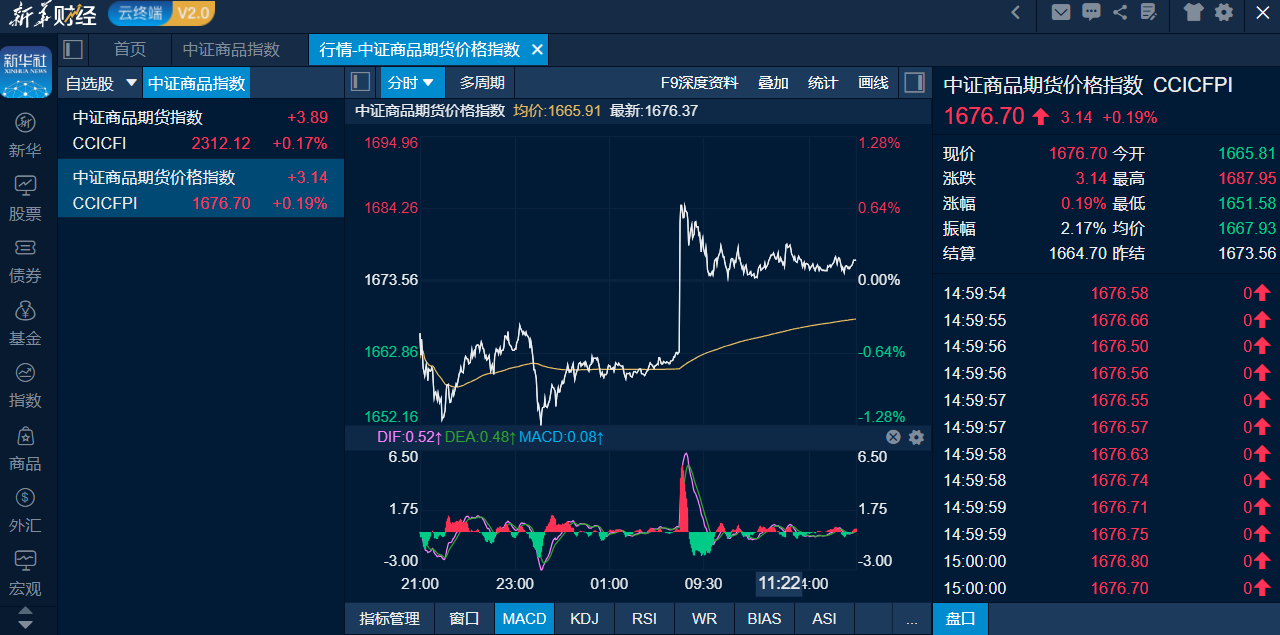
Market Overview - The domestic commodity futures market experienced a weak trend on January 19, with significant differentiation among sectors, resulting in most varieties closing lower. The China Securities Commodity Futures Price Index closed at 1676.70 points, up 3.14 points or 0.19% from the previous trading day, while the China Securities Commodity Futures Index closed at 2312.12 points, up 3.89 points or 0.17% [1]. Precious Metals - The precious metals sector was notably active, with international gold and silver prices reaching historical highs, which boosted domestic gold and silver futures. Shanghai gold hit a new historical high, while Shanghai silver rose nearly 3% by the end of the day [1][3]. Chemical Sector - In the chemical sector, pure benzene and styrene showed strong performance, closing up 3.48% and 1.84% respectively, leading the chemical sector. The strong performance of styrene is attributed to multiple maintenance shutdowns and export factors, which have increased its profitability [4]. Industrial Metals - The industrial metals sector faced widespread pressure, with Shanghai tin leading the decline, falling 5.98% after a significant drop of over 6% the previous Friday. The market sentiment cooled rapidly, leading to a correction in tin prices after reaching historical highs [5]. Other major industrial metals, including copper, aluminum, and zinc, also saw declines ranging from 0.39% to 2.33% [5]. Agricultural Products - The agricultural products sector, particularly rapeseed meal and oil, experienced significant declines, with rapeseed meal dropping 2.37% and rapeseed oil falling 1.50%. Concerns over potential increases in supply due to improved Sino-Canadian relations contributed to this downturn [6]. The overall weak supply-demand dynamics are expected to keep rapeseed meal prices under pressure [6].
行业周报:黑色金属周报:钢厂补库仍稳,原料支撑行情趋缓-20260118
SINOLINK SECURITIES· 2026-01-18 12:05
Investment Rating - The report does not explicitly state an investment rating for the steel industry, but it implies a cautious outlook based on current market conditions and price trends [93]. Core Insights - The steel industry is experiencing a stable bottom in its fundamentals, with a current profit margin of 39.8% and a loss of 34.6 yuan per ton [11][12]. - The market is facing weak and steady demand, leading to a slight price correction in iron ore due to a lack of further catalysts [11][12]. - The overall sentiment in the steel market is influenced by seasonal inventory replenishment expectations and external factors such as commercial aerospace adjustments [11]. Summary by Sections 1. Steel Industry Overview & Index Performance - Iron ore port inventories have reached high levels, leading to cautious replenishment by steel mills, which has resulted in a slight price correction [11]. - The steel price gap has increased by 4 yuan, indicating a stable bottom in the steel industry fundamentals [11]. 2. Sub-industry Fundamentals Overview - **Steel**: The hot-rolled coil price has shown a slight increase, with an average price of 3317 yuan/ton across 24 major markets [12]. - **Coke and Coal**: The market is stable, with prices for various grades of coke and coal reported, and a cautious recovery in coal mine operations [13]. - **Iron Ore**: The price of imported iron ore has weakened, with a current index of 976 yuan/ton for 66% fines, reflecting a cautious purchasing approach by steel mills [14]. 3. Price Data Updates - **Steel Prices**: The report highlights the price trends for various steel products, including hot-rolled and cold-rolled sheets, indicating a narrow fluctuation in prices [39][45]. - **Raw Material Prices**: The prices for iron ore and coke are detailed, showing stability in the market despite recent fluctuations [46][51]. 4. Supply and Demand Data Updates - **Steel**: The report provides insights into the supply and demand dynamics within the steel industry, noting a cautious approach to inventory replenishment [68]. - **Iron Ore**: The total inventory of imported iron ore at 45 ports is reported at 16555.10 million tons, indicating a slight increase [14]. - **Coke and Coal**: The report discusses the supply situation for coke and coal, with a focus on inventory levels and production rates [80][81].
光大期货:1月12日矿钢煤焦日报
Xin Lang Cai Jing· 2026-01-12 01:34
Group 1: Steel Market Overview - Rebar production increased by 28,200 tons week-on-week to 1.9104 million tons, but decreased by 83,700 tons year-on-year [3][16] - Social inventory of rebar rose by 75,200 tons week-on-week to 2.9018 million tons, a year-on-year decrease of 21,300 tons [3][16] - Factory inventory of rebar increased by 85,600 tons week-on-week to 1.4793 million tons, a year-on-year increase of 223,900 tons [3][16] - Rebar demand fell by 25,480 tons week-on-week to 1.7496 million tons, a year-on-year decrease of 150,900 tons [3][16] - Overall supply and demand data for rebar is weak, with inventory entering an accumulation phase [3][16] Group 2: Hot Rolled Coil Market - Hot rolled coil production increased by 10,000 tons week-on-week to 3.0551 million tons, a year-on-year increase of 16,200 tons [4][17] - Social inventory of hot rolled coil rose by 21,700 tons week-on-week to 2.9081 million tons, a year-on-year increase of 580,600 tons [4][17] - Factory inventory of hot rolled coil decreased by 50,000 tons week-on-week to 773,200 tons, a year-on-year increase of 1,700 tons [4][17] - Demand for hot rolled coil fell by 24,300 tons week-on-week to 3.0834 million tons, a year-on-year increase of 72,500 tons [4][17] Group 3: Iron Ore Market - Iron water production increased by 20,700 tons week-on-week to 2.296 million tons [5][18] - Global iron ore shipment volumes from Australia and Brazil decreased significantly, with Australia shipping 19.396 million tons, down 1.741 million tons week-on-week [5][18] - Port inventory of imported iron ore rose by 3.2265 million tons week-on-week to 170.4444 million tons [5][18] - Steel mill inventory of imported iron ore increased by 430,000 tons, mainly in North China, East China, and along the Yangtze River [5][18] Group 4: Coke Market - Coke prices in various regions decreased by 50-55 yuan/ton, while some prices increased by 30 yuan/ton [7][20] - Demand for coke remains weak, with rebar demand falling significantly [7][20] - Independent coke enterprises increased daily production by 850 tons, while steel mills' daily coke production increased by 50 tons [7][20] - Total coke inventory increased by 2,200 tons, with independent coke enterprises reducing inventory by 45,300 tons [7][20] Group 5: Scrap Steel Market - Scrap steel prices increased by 9.6 yuan/ton to 2,187.4 yuan/ton [9][22] - Daily average scrap steel arrival at steel mills decreased to 476,000 tons, a week-on-week decrease of 7,600 tons [10][23] - Scrap steel demand fell, with daily consumption decreasing to 505,000 tons [10][23] - Long-process steel mills' scrap steel inventory increased by 16,900 tons to 3.16 million tons [10][23] Group 6: Ferroalloy Market - Manganese silicon production decreased by 1.39% week-on-week to 191,000 tons [11][24] - Demand for manganese silicon remains limited, with major northern steel mills not actively purchasing [11][24] - Inventory levels remain high, with a week-on-week decrease of 11,000 tons to 382,500 tons [11][24] Group 7: Silicon Iron Market - Silicon iron production increased by 0.2% week-on-week to 99,100 tons, remaining at a five-year low [12][25] - Demand for silicon iron is limited, with consumption levels at historical lows [12][25] - Inventory increased by 4,550 tons week-on-week to 68,910 tons [12][25]
黑色金属行业研究:黑色金属周报:出口两项政策落地,冬储预期继续升温-20260111
SINOLINK SECURITIES· 2026-01-11 13:35
Investment Rating - The report indicates a stable bottom for the steel industry with a profit rate of 37.7% for steel companies, suggesting a neutral to positive outlook for the sector [10][11]. Core Insights - The iron ore prices have increased due to expectations of spring replenishment by port traders, while the reduction of 19 million tons of capacity in Yulin has led to expectations of a reversal in coking coal prices [10][11]. - The domestic hot-rolled coil prices are showing a weak trend, with an average price of 3,306 RMB/ton, up by 16 RMB/ton from December 31 [11]. - The steel industry is experiencing a price increase across the black industrial chain due to raw material inflation, although the steel segment is currently facing a loss of 38.6 RMB per ton [10][11]. Summary by Sections 1. Steel Industry Overview & Index Performance - The report highlights a 3.3% increase in the CITIC Steel Index, which underperformed the market by 0.5% [10]. - The steel industry is at a fundamental bottom, with expectations of price stability in the near term [10]. 2. Subsector Fundamentals Overview Steel - The hot-rolled coil prices are fluctuating, with a slight increase in social inventory to 3.9524 million tons, up by 50,400 tons week-on-week [11]. - The demand for steel is supported by macroeconomic expectations, but actual high-level transactions remain low, leading to a forecast of narrow price adjustments in the coming week [11]. Coking Coal - Coking coal prices have slightly increased from a recent bottom, with some coal types experiencing price adjustments due to improved auction results [12]. - The supply side remains loose as previously reduced coal mines have resumed production, while demand is limited due to the traditional off-season for steel [12]. Iron Ore - Iron ore prices have risen, with the average price for 61.5% PB powder at Qingdao Port reaching 826 RMB/ton, an increase of 24 RMB/ton (+3%) from the previous week [13]. - The report anticipates that the replenishment by steel mills will remain restrained due to weak demand in real estate and infrastructure investments [13].
光大期货:12月29日矿钢煤焦日报
Xin Lang Cai Jing· 2025-12-29 01:30
Steel Industry - The national rebar production increased by 27,100 tons week-on-week to 1,843,900 tons, but decreased by 319,100 tons year-on-year [3][15] - Social inventory of rebar decreased by 188,100 tons week-on-week to 2,941,900 tons, but increased by 159,800 tons year-on-year [3][15] - The demand for rebar showed resilience with a funding availability rate of 59.71% for construction sites, up 0.18 percentage points week-on-week [3][15] - Exports of rebar and steel billets significantly increased, with rebar exports up 44.05% and steel billets up 140.64% year-on-year [3][15] Hot-Rolled Steel - National hot-rolled steel production increased by 16,300 tons week-on-week to 2,935,400 tons, but decreased by 136,000 tons year-on-year [4][16] - Social inventory of hot-rolled steel decreased by 106,000 tons week-on-week to 2,967,000 tons, but increased by 699,500 tons year-on-year [4][16] - Hot-rolled steel exports in November increased by 11.5% month-on-month but decreased by 3.2% year-on-year [4][16] Iron Ore - Global iron ore shipments decreased, with Australia and Brazil both showing declines [6][17] - Iron water production slightly increased by 300 tons week-on-week to 2,265,800 tons [6][17] - Port inventories of imported iron ore increased by 3,944,300 tons week-on-week to 166,199,600 tons [6][17] Coking Coal and Coke - Coking coal prices remained stable, while coke prices decreased by 50-55 yuan/ton in several regions [7][18] - The production of independent coking enterprises decreased, while steel mills' coke production slightly increased [7][18] - Total coke inventory increased by 121,600 tons, indicating a supply-demand imbalance [7][18] Scrap Steel - The national scrap steel price index increased by 1 yuan/ton to 2,182 yuan/ton [9][20] - Daily average scrap steel arrivals at steel mills increased to 487,200 tons, up 6,800 tons week-on-week [9][20] - Scrap steel demand showed a slight recovery, with daily consumption increasing to 507,000 tons [9][20] Ferroalloys - Manganese silicon production increased by 2.31% week-on-week to 192,600 tons, but inventory levels remain high [11][21] - Silicon iron production decreased by 1.3% week-on-week to 98,500 tons, with a slight decrease in demand [12][22] - Cost pressures are easing, but overall market support remains weak, leading to expectations of continued price fluctuations [11][21][12][22]
白银涨势重起:申万期货早间评论-20251226
申银万国期货研究· 2025-12-26 00:35
Core Viewpoint - The article discusses the current market trends and economic indicators, highlighting the mixed signals in various sectors, including precious metals, stock indices, and crude oil, while emphasizing the potential for policy support and market recovery in the near future [1][2][3][4]. Precious Metals - Silver prices have surged to a historical high, driven by lower-than-expected U.S. CPI data, which stands at 2.7% year-on-year, below the anticipated 3.1% [2][17]. - The overall downtrend in CPI provides room for interest rate cuts, supporting the long-term upward trend in precious metals due to factors like weakened dollar credit and central bank gold purchases [2][17]. Stock Indices - U.S. stock markets were closed, but previous trading saw an increase in stock indices, particularly in the defense and military sectors, with a total market turnover of 1.94 trillion yuan [3][10]. - The financing balance increased by 10.127 billion yuan, indicating a positive outlook for A-shares, supported by policy backing, capital influx, and industrial empowerment [3][10]. Crude Oil - Crude oil prices saw a slight increase of 0.38%, with Saudi Arabia's average daily crude oil exports reaching a two-and-a-half-year high of 7.1 million barrels in October, up from 6.46 million barrels in September [4][13]. - Despite geopolitical tensions and potential sanctions on Russia, the overall trend for crude oil remains downward [4][13]. Economic Indicators - The U.S. non-farm payroll data showed a mixed picture, with an addition of 64,000 jobs, surpassing the expected 50,000, but the unemployment rate rose to 4.6% [2][17]. - The People's Bank of China is expected to maintain a moderately loose monetary policy to support economic stability and reasonable price recovery [7][12]. Industry News - The Shenzhen Stock Exchange issued a notice to Sunflower regarding its asset acquisition plan, indicating ongoing corporate activities and market dynamics [8]. Shipping Index - The European shipping index showed fluctuations, with expectations for price stability as shipping companies prepare for increased demand ahead of the Lunar New Year [30].

绿肥红瘦,涨势暂歇:申万期货早间评论-20251225
申银万国期货研究· 2025-12-25 00:25
Core Viewpoint - The article discusses the current economic environment, highlighting the Chinese central bank's continued implementation of a moderately loose monetary policy and the recent adjustments in the Beijing housing market to support home purchases by non-local families and families with multiple children [1][8]. Group 1: Financial Markets - The U.S. stock indices rose, with the defense and military sector leading gains, while the agriculture sector lagged behind. The market turnover reached 1.90 trillion yuan, and the financing balance increased by 14.859 billion yuan to 25,145.96 billion yuan [2][12]. - The A-share market is expected to maintain a long-term bullish trend supported by policy backing, capital influx, and industrial empowerment, with the upcoming Federal Reserve rate cut likely to enhance global capital flow and risk appetite [2][12]. Group 2: Oil Market - Saudi Arabia's average daily crude oil exports reached 7.1 million barrels in October, the highest level in two and a half years, up from 6.46 million barrels in September [3][15]. - The overall trend in the oil market remains downward, influenced by geopolitical tensions and potential sanctions on Russia's energy sector [3][15]. Group 3: Agricultural Products - Palm oil prices are expected to improve due to better export data from Malaysia, while soybean oil faces downward pressure from high production expectations [4][30]. - The domestic soybean market is experiencing a supply surplus, with auction prices declining, leading to a bearish outlook for soybean meal prices [29][30]. Group 4: Metals - Gold and silver prices are stabilizing, supported by lower-than-expected U.S. inflation data, which may provide room for further interest rate cuts [20]. - Copper prices are under pressure due to tight supply conditions and fluctuating demand from various sectors, including automotive and construction [21]. Group 5: Shipping Index - The European shipping index has shown a slight decline, with expectations for price stabilization as shipping companies adjust their pricing strategies ahead of the upcoming Chinese New Year [33].

有色新高,能化亮眼:申万期货早间评论-20251223
申银万国期货研究· 2025-12-23 00:28
Core Viewpoint - The article highlights the recent performance of precious metals and energy commodities, noting that gold, silver, and copper have reached historical highs, while oil prices have also increased due to geopolitical tensions and supply dynamics [1][2][3]. Precious Metals - International gold and silver prices have reached historical highs, with gold rising over 2% and silver increasing by more than 3% [1][2]. - The U.S. November CPI was reported at 2.7%, lower than the expected 3.1%, and the core CPI at 2.6%, below the anticipated 3%, which raises questions about inflation but provides room for potential interest rate cuts [2][20]. - The U.S. non-farm payroll data showed an increase of 64,000 jobs, better than the expected 50,000, but the unemployment rate rose to 4.6%, supporting the expectation of continued monetary easing by the Federal Reserve, which is bullish for precious metals [2][20]. Energy Commodities - Oil prices have seen a significant increase, with the SC night market rising by 2.01%. Saudi Arabia's average daily crude oil exports reached 7.1 million barrels in October, the highest in two and a half years, up from 6.46 million barrels in September [3][14]. - Geopolitical tensions, particularly regarding potential sanctions on Russia's energy sector, are influencing oil prices, although the overall trend remains uncertain [3][14]. Agricultural Products - The palm oil market is experiencing upward pressure due to Malaysia's reduction of export tax rates, although inventory levels remain high, and a significant improvement in the supply-demand balance is not expected until December [29]. - The soybean market is under pressure from slow export sales and strong production expectations in South America, leading to a bearish outlook for soybean prices [28]. Financial Markets - The U.S. stock indices have shown an upward trend, with significant market activity and a financing balance increase, indicating a potential long-term bullish trend supported by favorable policies and liquidity [11]. - The bond market is experiencing a general decline, with the 10-year government bond yield rising to 1.845%, reflecting a mixed economic outlook and expectations of future monetary policy adjustments [12][13]. Shipping Index - The European shipping index has shown a strong upward movement, with a reported increase of 8.77% in the EC contract, reflecting positive market sentiment and expectations for price stability in the near future [32][33].

白银再创新高:申万期货早间评论-20251218
申银万国期货研究· 2025-12-18 00:30
Group 1: Core Insights - The global silver market is experiencing a historic surge, with spot silver prices recently breaking through $65 and $66 per ounce, approaching $67 per ounce, marking a year-to-date increase of approximately 130%, which is double the increase in gold futures [1][2] - Factors contributing to this surge include supply-demand imbalance, Federal Reserve interest rate cuts, and increased capital inflow [1][2] - The Federal Reserve has room for further rate cuts of 50 to 100 basis points, as indicated by Governor Waller, due to a weakening job market and controlled inflation [1][5] Group 2: Key Commodities - **Silver**: The price of silver has reached new historical highs, supported by a 25 basis point rate cut by the Federal Reserve and a $40 billion reserve management purchase, which improves market liquidity and boosts risk appetite [2][16] - **Coking Coal and Coke**: The market for coking coal remains stable, with slight increases in construction and hot-rolled steel production. However, there is a downward trend in iron production, and the market is expected to stabilize due to seasonal demand [2][21] - **Glass and Soda Ash**: Glass production is in a phase of inventory digestion, with a decrease in glass inventory and a slight increase in soda ash inventory. The market is closely monitoring potential changes in industry operations [3][15] Group 3: Financial Market Trends - The U.S. stock indices experienced significant declines, with the S&P 500 dropping by 1.16%. However, the A-share market is expected to maintain a long-term bullish trend supported by policy and capital flow [8] - The bond market saw a general increase, with the 10-year treasury yield falling to 1.8425%, indicating a continued loose monetary policy environment [9][10] Group 4: International and Domestic News - Internationally, the Federal Reserve's policy direction indicates a likelihood of maintaining interest rates in January, with a 77% probability of no change and a 21% chance of a 25 basis point cut [5] - Domestically, the Ministry of Finance reported a slight increase in public budget revenue, with tax revenue growing by 1.8% year-on-year [6]