
银行业

Search documents
海外地缘冲突持续,关注中国3月官方PMI
Hua Tai Qi Huo· 2026-03-31 07:02
Report Summary 1. Report Industry Investment Rating - Not provided in the given content. 2. Core Viewpoints - Overseas geopolitical conflicts, especially in the Middle East, are having a significant impact on the global market, with the Iran - Israel conflict affecting energy prices and related industries. - Global interest rate hike expectations are rising, which, combined with the impact of the Middle East conflict on the economy, has led to a "recession" pricing scenario in the market. - China's domestic policies are taking the lead, and the economic structure shows differentiation, with different performance in various economic indicators. - The short - term fluctuations of commodities are mainly dominated by the Iran situation and oil prices, and different commodity sectors have different investment opportunities and risks. [1][2][3] 3. Summary by Related Catalogs Market Analysis - **Iran Situation**: The Iran - Israel conflict has escalated, with attacks on key energy facilities. The US proposed a one - month cease - fire, and Iran responded to the 15 - point cease - fire plan. The situation mainly affects crude oil, LPG, and the shipping sector, and has a far - reaching impact on the energy and agricultural product markets. [1] - **Global Interest Rate**: The Fed, the Bank of England, and the European Central Bank have different stances on interest rates. Global interest rate hike expectations are rising, and the market is in a "recession" pricing situation due to factors such as rising oil prices and supply chain disruptions. [2] - **Domestic Economy**: China's February economic data shows that exports and imports have increased significantly. The consumer and industrial sectors are growing, while the real estate sector is in decline. Different commodity sectors have different performance and influencing factors. [3] Strategy - For commodities and stock index futures, investors can buy on dips in stocks, precious metals, and some chemical products. [4] To - do List - The US Senate Banking Committee plans to hold a hearing on Kevin Warsh, the nominee for the Fed Chair, starting in the week of April 13. - The EU Energy Minister will discuss the EU's energy coordination plan for the Middle East situation on Tuesday. [2][6]
宝城期货资讯早班车-20260331
Bao Cheng Qi Huo· 2026-03-31 02:55
1. Report Industry Investment Rating No information provided in the given content. 2. Core Viewpoints - The macro - economic data shows a mixed picture. GDP growth has slowed, manufacturing and non - manufacturing PMIs are below 50, but there are improvements in some indicators such as export and CPI [1]. - In the commodity market, there are changes in margins and price limits for precious metals, and significant impacts on the aluminum industry due to attacks on factories [2][5]. - In the financial market, the bond market is affected by the complex Middle - East situation and the stock market has different performances in A - shares and Hong Kong stocks [22][32]. 3. Summary by Directory 3.1 Macro Data - GDP growth in Q4 2025 was 4.5% year - on - year, lower than the previous quarter and the same period last year [1]. - Manufacturing PMI in February 2026 was 49.0%, down from the previous month and the same period last year; non - manufacturing PMI was 49.5%, unchanged from the previous month but lower than last year [1]. - Social financing scale in February 2026 was 2385.5 billion yuan, slightly lower than the previous month but higher than the same period last year [1]. - M0, M1, and M2 growth rates in February 2026 increased compared to the previous month and the same period last year [1]. - New RMB loans in February 2026 were 900 billion yuan, higher than the previous month but lower than the same period last year [1]. - CPI in February 2026 increased to 1.3% year - on - year, PPI was - 0.9% year - on - year, an improvement from the previous month and the same period last year [1]. - Fixed - asset investment in the first two months of 2026 increased by 1.8% year - on - year, compared to a decline in the previous period and an increase in the same period last year [1]. - Social consumer goods retail sales in the first two months of 2026 increased by 2.8% year - on - year, lower than the previous period and the same period last year [1]. - Exports in February 2026 increased by 39.6% year - on - year, and imports increased by 13.8% year - on - year [1]. 3.2 Commodity Investment Reference 3.2.1 Comprehensive - Shanghai Gold Exchange adjusted margins and price limits for gold and silver contracts from April 2 [2]. - There were 38 positive and 31 negative basis values for domestic commodities on March 30, with significant differences in basis values among different varieties [2]. - Tensions between the US and Iran are high, with the US threatening to destroy Iranian facilities if no agreement is reached, and Iran having its own counter - measures [3]. - The Fed may maintain interest rates but warns of action if inflation expectations change [4]. 3.2.2 Metals - UAE's EGA aluminum plant was attacked, leading to expected large - scale production cuts, and three aluminum plants' combined production cuts will reach about 2.63 million tons [5]. - London Metal Exchange inventory data shows different trends for various metals on March 27 [5]. - The global largest gold ETF SPDR Gold Trust's holdings decreased by 3.43 tons [5]. 3.2.3 Coal, Coke, Steel, and Minerals - The coke market is expected to see a price increase starting April 1, driven by factors such as poor profitability in some regions, increased downstream demand, and low inventories [6]. 3.2.4 Energy and Chemicals - National natural gas consumption from January to February 2026 decreased by 0.9% year - on - year [7]. - G7 is concerned about the impact of the Middle - East situation on the energy market and is ready to take action [8]. - The US estimates a daily oil supply shortage of 10 - 12 million barrels [8]. - Japan calls on G7 and IEA to be ready to release oil reserves [8]. - Saudi Arabia is redirecting oil exports to offset losses [8]. - The Egyptian president warns that oil prices may exceed $200 per barrel due to the Middle - East conflict [9]. 3.2.5 Agricultural Products - National spring sowing of grain has completed 5.5% of the planned area, with different progress in different regions [9]. - Pig prices have stopped falling and rebounded in the north, mainly due to the entry of second - fattening farmers, while the southern market remains weak [9]. - Henan aims to achieve certain agricultural development goals by 2027 [10]. 3.3 Financial News Compilation 3.3.1 Open Market - The central bank conducted 269.5 billion yuan of 7 - day reverse repurchase operations on March 30, with a net injection of 261.5 billion yuan [11]. 3.3.2 Important News - The US and Iran are in talks on a cease - fire, with the US threatening and Iran having its own stance [12][13]. - China is promoting the legislation of local surtax [13]. - The Ministry of Commerce will introduce measures to optimize duty - free shopping and promote consumption [13]. - Market regulators will prevent "involution" competition in key industries [13]. - The 6th China International Consumer Products Expo will be held in April with many international participants [14]. - Local government debt replacement is accelerating, with nearly half of the planned issuance completed by March 30 [14]. - Changchun Development Rural Commercial Bank will suspend interest payment and redemption of a bond [15]. - China's national debt is becoming a viable alternative reserve asset [16]. - Bank of China aims to maintain stable asset quality [16]. - Longfor Group has reduced its debt and plans to transform its business [17]. - Country Garden achieved profitability in 2025 after previous losses [18]. - The Fed may maintain interest rates but warns of action if inflation expectations change [18]. - The New York Fed believes the current interest rate is appropriate [19]. - The Bank of Japan warns of potential long - term interest rate increases [19]. - The US Treasury will discuss private credit market risks [19]. - S&P may adjust Japan's sovereign debt rating [19]. - There are bond - related events such as companies being listed as defaulters and rating changes [20][21]. 3.3.3 Bond Market Summary - The inter - bank bond market is heating up, with bond yields falling and futures rising [22]. - Exchange - traded bonds have different price changes [22]. - Convertible bond indices declined, with some bonds having significant price changes [23]. - Money market interest rates mostly declined [23][24]. - Shibor short - term rates mostly declined [24]. - Repurchase fixed - rate indices mostly fell [24]. - Bond issuance and trading had specific results [25]. - European and US bond yields fell [25]. 3.3.4 Foreign Exchange Market - The on - shore RMB depreciated against the US dollar, and the dollar index rose [26]. - Non - US currencies mostly fell against the dollar [26][27]. - CFETS and BIS RMB exchange rate indices rose, while the SDR index fell [27]. 3.3.5 Research Report Highlights - CITIC Securities believes that industrial enterprise profits improved in the first two months of 2026, but future development depends on multiple factors [28]. - Huatai Fixed - Income suggests maintaining a low position in convertible bonds in the short term [28]. - Huatai Fixed - Income's survey shows investors' concerns about geopolitics and inflation [29]. - S&P warns of pressure on Asia - Pacific issuers due to energy shocks [29]. 3.3.6 Today's Reminders - Many bonds will be listed, issued, have payments made, or have principal and interest repaid on March 31 [31]. 3.4 Stock Market News - A - shares rebounded, with the Shanghai Composite Index rising 0.24%, and different sectors having different performances [32]. - Hong Kong stocks fell, with the Hang Seng Index down 0.81%, and some new stocks performing well [32]. - The Hong Kong Securities and Futures Commission plans to implement a paperless securities market system in November [32].
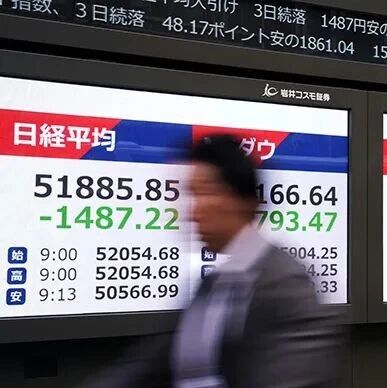
利率迅速上升的影响波及全球金融市场
日经中文网· 2026-03-31 02:50
Group 1 - The core issue driving stock market declines is the instability of long-term interest rates, which have reached new highs in the UK, Germany, and Japan due to rising oil prices and inflation concerns [2][4]. - Japan's 10-year government bond yield rose to 2.39% on March 30, marking a 0.275% increase for March, the largest since April 2008 [4]. - The UK and Germany also saw significant increases in bond yields, with the UK's rising by 0.73% and Germany's by 0.44%, both reflecting heightened inflation fears linked to oil price increases [4]. Group 2 - South Korea's 10-year bond yield reached 3.9%, the highest since November 2023, prompting the government to announce a 5 trillion won bond repurchase to curb rising rates [6]. - The European Central Bank is expected to raise interest rates 2-3 times within the year, while the U.S. Federal Reserve's rate cut expectations have diminished significantly [6]. - Short-term interest rates are also rising, with the U.S. 2-year Treasury yield surpassing 4%, indicating a tightening monetary policy outlook [6]. Group 3 - There is growing concern over the risks of financial market turmoil, particularly regarding the trends in private credit from non-bank financial institutions [7]. - High-interest loans to lower-rated small and medium-sized enterprises may lead to increased bankruptcies, impacting financial institutions that provide funding [9]. - The rising interest rates are causing significant bond accounting losses, with estimates suggesting that local banks in Japan could see a 2 trillion yen increase in losses by February 2026 [9]. Group 4 - The Nikkei index fell over 2800 points on March 30, closing at 51,885 points, a 3% drop, as financial institutions began to sell profitable stocks to offset losses [9][10]. - Local banks in Japan are expected to gradually implement strategies to offset losses by selling profitable assets before the fiscal year-end [10].

国泰君安期货-商品研究晨报:贵金属及基本金属-20260331
Guo Tai Jun An Qi Huo· 2026-03-31 02:44
Report Industry Investment Rating No information provided. Core Viewpoints of the Report - Gold: Geopolitical tensions ease [2][4]. - Silver: Drops from the trading range [2][4]. - Copper: A stronger US dollar restricts price recovery [2][7]. - Zinc: Shows a slightly bullish trend [2][10]. - Lead: Lacks driving forces and prices fluctuate [2][13]. - Tin: Trades within a range [2][16]. - Aluminum: Supply issues continue to escalate [2][20]. - Alumina: Shows a slightly bearish trend [2][20]. - Cast aluminum alloy: Follows the trend of electrolytic aluminum [2][20]. - Platinum: Mainly trades in a sideways range [2][24]. - Palladium: Trades in a narrow range [2][24]. - Nickel: Inventory accumulation slows down marginally, and the mining end supports the upward shift of pyrometallurgical costs [2][36]. - Stainless steel: Prices fluctuate as demand and cost factors compete [2][37]. Summary by Relevant Catalogs Gold and Silver - **Price and Trading Volume**: For gold, the closing prices of Shanghai Gold 2602 and Gold T+D increased by 1.59% and 1.66% respectively, with trading volumes decreasing. For silver, the closing prices of Shanghai Silver 2602 and Silver T+D increased by 1.13% and 0.54% respectively, with trading volumes showing different trends [4]. - **Inventory**: The inventory of Shanghai Gold remained unchanged, while the inventory of Comex Gold decreased by 192,945 ounces. The inventory of Shanghai Silver increased by 2,628 kilograms, and the inventory of Comex Silver decreased by 250,587 ounces [4]. - **Macro - News**: Powell stated that the Fed's interest rates are in a "favorable position", and traders expect a possible rate cut this year. The White House said Trump hopes to reach an agreement by April 6, but Iran denies the negotiation [4][6]. Copper - **Price and Trading Volume**: The closing price of the Shanghai Copper main contract decreased by 0.18%, with trading volume and open interest decreasing. The closing price of LME Copper 3M increased by 0.44%, with trading volume and open interest also decreasing [7]. - **Inventory**: The inventory of Shanghai Copper decreased by 6,105 tons, and the inventory of LME Copper increased by 2,350 tons [7]. - **Macro - News**: Similar to gold, including Powell's remarks and US - Iran negotiation news. Industry news shows that China's refined copper production from January to February increased by 9% year - on - year, and Peru's copper production in January increased by 3% year - on - year [7][9]. Zinc - **Price and Trading Volume**: The closing price of the Shanghai Zinc main contract increased by 0.68%, with trading volume and open interest decreasing. The closing price of LME Zinc 3M increased by 1.07%, with trading volume and open interest decreasing [10]. - **News**: Trump said Iran has agreed to "most of the content" in the "15 - point plan", and the Iran - related war is changing the energy pattern [11]. Lead - **Price and Trading Volume**: The closing price of the Shanghai Lead main contract decreased by 0.36%, with trading volume and open interest decreasing. The closing price of LME Lead 3M increased by 0.69%, with trading volume decreasing and open interest increasing [13]. - **News**: Similar to copper, including Powell's remarks and US - Iran negotiation news [14]. Tin - **Price and Trading Volume**: The closing price of the Shanghai Tin main contract increased by 4.20%, with trading volume increasing and open interest increasing. The closing price of LME Tin 3M increased by 0.35%, with trading volume decreasing and open interest decreasing [17]. - **Macro - News**: Similar to other metals, including Powell's remarks and some policy - related news [19]. Aluminum, Alumina, and Cast Aluminum Alloy - **Price and Trading Volume**: For electrolytic aluminum, the closing price of the Shanghai Aluminum main contract increased, with trading volume and open interest showing different trends. For alumina, the closing price of the Shanghai Alumina main contract decreased, and for cast aluminum alloy, the closing price of the main contract increased [20]. - **Inventory**: The domestic social inventory of aluminum ingots increased, and the inventory of LME aluminum ingots decreased [20]. - **News**: Powell's remarks and Trump's threat to Iran [22]. Platinum and Palladium - **Price and Trading Volume**: The prices of platinum futures and related spot increased, while the prices of palladium futures and related spot showed mixed trends. Trading volumes and open interests also changed differently [25]. - **Macro - News**: Policy is in a favorable position, and private credit does not pose a systemic risk. Market expectations for Fed rate hikes have changed, and there are various events related to the Iran situation [27][28]. Nickel and Stainless Steel - **Price and Trading Volume**: The closing price of the Shanghai Nickel main contract increased slightly, and the closing price of the stainless - steel main contract decreased slightly. Trading volumes and open interests showed different trends [37]. - **Industry News**: Indonesia plans to adjust the benchmark price of nickel ore, and some nickel - related companies have production - related news. Inventory data shows changes in refined nickel, new - energy, and nickel - iron - stainless - steel inventories [37][43].
2026年中国宏观经济及大宗商品展望:通胀被动抬升,衰退交易处于酝酿中
Shan Jin Qi Huo· 2026-03-31 02:14
1. Report Industry Investment Rating No relevant content provided. 2. Core Viewpoints of the Report - The macro - economy in 2026 will be a year of real weak recovery, with the macro - economy consolidating its bottom, exports supporting, investment stabilizing, consumption remaining weak, prices rising moderately, and global recession risks accumulating [79]. - Policy will remain positive, with fiscal policy staying active and the low - interest - rate environment unchanged. The central bank may cut interest rates ahead of other central banks when the market turns to recession trading [79]. - In asset allocation, in the short term, commodities > bonds > stocks; in the medium - to - long term, stocks > bonds > commodities [79]. 3. Summary by Directory 3.1 Macro - economic Fundamentals - **Industrial Value - added**: In the first two months, the growth rate of industrial value - added accelerated, and the high - tech manufacturing industry grew by 13.1%, 6.8 percentage points faster than all industrial enterprises above a designated size [8][11]. - **Fixed - asset Investment**: At the beginning of the year, the growth rate of fixed - asset investment rebounded. In the first year of the 15th Five - Year Plan, many projects that should have started last year will start in 2026 [13][16]. - **Total Retail Sales of Consumer Goods**: The growth rate of total retail sales of consumer goods declined. Consumers' consumption is restricted by factors such as weak income and income expectations, high household leverage, imperfect social security, and low proportion of disposable income in GDP [17][19]. - **Inflation**: Inflation rebounded, mainly due to the base effect. The prices of eggs and pigs decreased year - on - year, while the year - on - year increase in crude oil prices drove up CPI and PPI, with PPI expected to rise faster [20][23]. - **Unemployment Rate**: The overall unemployment rate increased, but the youth unemployment rate decreased. The use of AI and robots and the increase in structural unemployment make it more difficult to create new jobs [24][27][28]. - **Manufacturing PMI**: The manufacturing PMI continued to be weak. In the PMI sub - items, the purchase price of main raw materials was above the boom - bust line, the ex - factory price sub - item remained stable, and other sub - items were below the boom - bust line [29][33]. - **Production and Inventory**: Production was significantly stronger than demand, the inventory of finished products was rising, and downstream demand was weaker [34][37]. - **Construction Industry**: The PMI and important sub - items of the construction industry were at a low level in recent years, indicating the downturn of the construction industry [39]. - **Exports**: Import and export growth rates were much better than expected, and exports were very resilient. In the first two months of this year, the growth rate of exports to the US was stable, and the trade surplus in the first two months exceeded $20 billion, expected to exceed last year's level, which will support the RMB exchange rate [41][43]. - **Chip Industry**: In recent years, the effect of chip import substitution has emerged. The growth rate of chip exports is much higher than that of imports, and the scale of chip exports is increasing year by year. It is expected that China will become a net exporter of chips in 5 - 10 years [45]. - **Automobile Industry**: The production, sales, and export volume of automobiles reached new highs last year. Although the sales growth rate of domestic automobiles may face pressure due to the reduction of subsidies, the overall sales scale can probably be maintained. This year, automobile exports are expected to reach 9 - 10 million vehicles, with a year - on - year growth rate of over 10% [48]. - **Profits of Industrial Enterprises above Designated Size**: The profit growth rate of industrial enterprises above designated size rebounded, mainly due to the rapid recovery of profits in the upstream mining industry, but the profit margins of the mid - and downstream manufacturing and energy industries declined [49][53]. - **M1 and M1 - M2 Scissors Difference**: The growth rate of M1 rebounded, and the M1 - M2 scissors difference converged rapidly. Historically, when the M1 - M2 scissors difference turns positive, PPI will also turn positive, and the current stock market may be accompanied by a commodity bull market [54][56]. - **Real Estate**: The data reflecting the scale of real - estate under construction has returned to the level of 2005, and housing prices continued to decline month - on - month. The real - estate market is still in the bottom - building process. There is almost no demand for "speculating in real estate" among residents, and the stock market may be the only large - scale asset that can absorb a large amount of liquidity [58]. - **Deposit Transfer**: There is still room for deposit transfer. The ratio of the total market value of the stock market to household deposits is still at a low level, and the trend of households allocating more assets to the stock market has just begun [59][61]. - **Government Leverage**: The government department's leverage ratio is relatively low, and there is still room for increasing leverage. The loose fiscal policy is expected to last for a long time [64]. - **Macro - capital**: The macro - capital will remain loose for a long time. The 7 - day reverse repurchase rate has remained low for a long time, and the capital interest rate still has room to decline [66][68]. - **Bank Settlement and Sale of Foreign Exchange**: The bank settlement and sale of foreign exchange has been in a large - scale surplus, and the RMB exchange rate is likely to remain stable [69]. 3.2 China's Energy System and Industrial Chain Advantages Highlighted by the US - Israel - Iran Conflict No detailed content provided in the given text. 3.3 Commodity Outlook in 2026: Caught between Supply - driven Inflation and Recession - **Crude Oil**: The conflict between the US and Iran makes it difficult to reach a peace agreement in the short term. Even if an agreement is reached, the damaged crude - oil production facilities cannot be repaired in the short term. High oil prices will push up inflation and suppress demand, eventually leading to an economic recession, but the market has not yet priced in the economic recession [77]. - **Other Commodities**: For commodities closely related to consumption, such as pigs and eggs, there are few opportunities. Crude - oil chemical products may continue to strengthen driven by rising crude - oil prices. Precious metals and non - ferrous metals are weak due to the digestion of interest - rate hike expectations, and high - priced varieties will face great callback pressure when the market enters recession trading [79]. 3.4 Main Conclusions and Suggestions - **Macroeconomic Outlook**: The macro - economy will consolidate its bottom, with exports supporting, investment stabilizing, consumption remaining weak, prices rising moderately, and global recession risks accumulating. Policy will remain positive, and the central bank may cut interest rates ahead of other central banks when the market turns to recession trading [79]. - **Asset Allocation**: In the short term, commodities > bonds > stocks; in the medium - to - long term, stocks > bonds > commodities. Do not have high expectations for consumption - related commodities, and pay attention to crude - oil chemical products and some under - performing varieties [79].
美股存储板块,集体重挫
财联社· 2026-03-30 23:54
Group 1: Market Overview - The U.S. stock market faced pressure due to conflicting signals from President Trump regarding Iran, with oil prices rising significantly, as WTI crude oil futures surpassed $100 per barrel for the first time since July 2022 [1] - The Dow Jones Industrial Average closed up 49.50 points, or 0.11%, at 45,216.14; the Nasdaq fell 153.72 points, or 0.73%, to 20,794.64; and the S&P 500 dropped 25.12 points, or 0.39%, to 6,343.73 [3] Group 2: Sector Performance - Among the 11 sectors of the S&P 500, the industrial sector fell by 1.61%, technology by 1.49%, and energy by 0.87%, while the financial sector rose by 1.1% [4] - In sector-specific ETFs, the semiconductor ETF declined by 3.13%, global airline ETF by 2.03%, and technology ETFs by up to 1.86%, while the banking and financial ETFs saw slight increases of 0.36% and 1.15%, respectively [4] Group 3: Notable Stock Movements - Major tech stocks mostly declined, with Meta up 2.03%, Amazon up 0.81%, and Microsoft up 0.61%, while Tesla fell by 1.81% and Nvidia by 1.4% [5] - U.S. aluminum companies saw significant gains, with Alcoa up over 8% and Century Aluminum up over 7%, following attacks on a major aluminum production facility in the UAE [6] - Fannie Mae surged by 51% and Freddie Mac by 47%, as investor Bill Ackman highlighted their undervaluation [7] - Sysco, the largest food distributor in the U.S., dropped 15% after announcing a $29 billion acquisition of Restaurant Depot [8]

Fed's Williams: Labor market not adding to inflation pressures
Youtube· 2026-03-30 20:52
Economic Outlook - The New York Fed President John Williams highlights substantial risks and high uncertainty in the economic outlook due to the conflict in the Middle East, which could lead to a significant supply shock, raising inflation while dampening economic activity [2][3] - Williams notes that supply chain disruptions in energy and related goods are already being observed, with tariffs and high energy prices expected to raise headline inflation in the short term, although he remains optimistic that these effects will reverse if prices decrease and hostilities end [3][4] Inflation and Employment - The labor market is not contributing to inflationary pressures, and Williams sees a resilient economy with GDP growth projected at close to 2.5% for the year, supported by favorable fiscal policy and AI investments [5] - Inflation is expected to be at 2.75% this year, with a decline to 2% anticipated by 2027, while unemployment is expected to edge down [5] Monetary Policy and Financial Stability - Williams did not provide specific insights on monetary policy, reiterating previous statements without offering new guidance [6][10] - There are no current indications of systemic risk in private credit markets, and Fed officials are monitoring the situation but do not see it leading back to the banking system at this time [10][11]

资产配置日报:低量能,蓄力中-20260330
HUAXI Securities· 2026-03-30 15:22
Group 1 - The core viewpoint of the report indicates that the current market is characterized by weak trading volume, suggesting a cautious stance among investors, with many adopting a hold strategy rather than actively trading [1][2] - The report highlights that the A-share market saw a slight increase of 0.05% on March 30, with a trading volume of 1.93 trillion yuan, which is an increase of 63.8 billion yuan compared to the previous Friday [1] - In the Hong Kong market, the Hang Seng Index fell by 0.81%, while the Hang Seng Tech Index dropped by 1.84%, indicating a divergence in performance between sectors [1][3] Group 2 - The report notes that when trading volume decreases significantly, a rebound in the market is likely, with historical data suggesting that trading volume at the bottom typically ranges from 30% to 50% of the previous peak [2] - It is mentioned that the current trading volume has fallen to a range of 1.2 to 2 trillion yuan, which could signal an approaching turning point for a short-term rebound [2] - The report emphasizes that even if a rebound occurs, it is expected to be moderate due to the dominance of medium to long-term investors holding the majority of shares [2] Group 3 - In the Hong Kong market, the innovative pharmaceutical sector continues to rise, with the Hang Seng Innovative Drug Index increasing by 1.09%, contrasting with the decline in the internet sector [3] - The report indicates that the innovative drug index has shown resilience, not breaking below previous lows, which suggests a relatively favorable chip structure compared to the internet sector [3] - The report also discusses the bond market, which has experienced a significant downward trend, with various bond yields declining as market sentiment shifts towards risk aversion due to geopolitical tensions [4][5] Group 4 - The report highlights that the short-term and long-term bonds have shown strong performance, with yields on 2-5 year government bonds decreasing by 2-3 basis points [4] - It is noted that the central bank has increased its net reverse repurchase operations to 261.5 billion yuan, contributing to a supportive environment for the bond market [4][5] - The report mentions that the demand for medium to long-term bonds has increased, as indicated by a rise in the net subscription intensity index for bond funds [5] Group 5 - The commodity market is showing signs of recovery, with energy and metals experiencing upward trends, particularly in crude oil and precious metals [6][7] - The report states that crude oil prices have seen significant inflows, with a net inflow of 2.1 billion yuan, reflecting strong investor interest in the sector [7] - Additionally, the report notes that the market is reacting to geopolitical events, with fluctuations in oil prices influenced by developments in the Middle East [7][8]
流动性与机构行为跟踪:基金增长,大行买存单
ZHONGTAI SECURITIES· 2026-03-30 13:04
1. Report Industry Investment Rating No information provided in the content. 2. Core View of the Report - This week (March 23 - March 27), the fund slightly reduced leverage, and the large - scale banks decreased their average daily lending. The maturity of certificates of deposit decreased, and the yield curve of certificates of deposit steepened. In the spot bond trading, the main buyers were funds, with funds increasing their holdings of 7 - 10Y interest - rate bonds and short - term credit bonds. Large - scale banks increased their holdings of certificates of deposit, money market funds were the main sellers and net - sold certificates of deposit, securities firms and small and medium - sized banks mainly sold bonds, and insurance companies increased their holdings of interest - rate bonds [4]. 3. Summary by Directory 3.1 Monetary Fundamentals - **Liquidity Injection**: From March 23 - 27, there were 17.65 billion yuan of reverse repurchase maturities. The central bank respectively injected 0.8 billion, 1.75 billion, 7.85 billion, 22.4 billion, and 14.62 billion yuan of reverse repurchase from Monday to Friday, with a total injection of 47.42 billion yuan. On Wednesday, there were 50 billion yuan of MLF injection and 45 billion yuan of MLF maturity. The net liquidity injection for the whole week was 28.19 billion yuan [4][7]. - **Funding Rates**: As of March 27, R001, R007, DR001, and DR007 were 1.39%, 1.51%, 1.32%, and 1.44% respectively, changing by - 0.9BP, 3BP, - 0.28BP, and 1.89BP compared to March 13, and were at the 18%, 9%, 14%, and 3% historical quantiles respectively [4][9]. - **Large - scale Bank Lending**: From March 23 - 27, the total lending scale of large - scale banks was 24.99 trillion yuan, with a maximum daily lending scale of 5.4 trillion yuan and an average daily lending scale of 5.0 trillion yuan, a decrease of 0.57 trillion yuan compared to the previous week's daily average [4][14]. - **Pledged Repurchase**: The average daily trading volume of pledged repurchase was 7.94 trillion yuan, with a maximum daily volume of 8.29 trillion yuan, a 5.21% decrease compared to the previous week's daily average. The average daily proportion of overnight repurchase transactions was 88.4%, with a maximum daily proportion of 91.7%, a decrease of 2.83 percentage points compared to the previous week's daily average, and as of March 27, it was at the 78.5% quantile [4][15]. 3.2 Certificates of Deposit and Bills - **Issuance and Maturity of Certificates of Deposit**: The issuance scale of inter - bank certificates of deposit increased week - on - week, with a total issuance of 77.052 billion yuan, an increase of 1.183 billion yuan compared to the previous week. The maturity volume was 69.82 billion yuan, a decrease of 46.466 billion yuan compared to the previous week. The net financing was 7.23 billion yuan, an increase of 47.649 billion yuan compared to the previous week. In the next week (March 30 - April 5), the maturity of certificates of deposit was 54.687 billion yuan [4][19][23]. - **Issuance by Bank Type**: The issuance scale of joint - stock banks was the highest. The issuance scales of state - owned banks, joint - stock banks, city commercial banks, and rural commercial banks were 22.982 billion yuan, 26.255 billion yuan, 25.077 billion yuan, and 1.987 billion yuan respectively, changing by 10.525 billion yuan, 2.651 billion yuan, - 8.782 billion yuan, and - 1.29 billion yuan compared to the previous week [19]. - **Issuance by Maturity Type**: The 9M issuance scale was the highest. The issuance scales of 1M, 3M, 6M, 9M, and 1Y inter - bank certificates of deposit were 7.975 billion yuan, 8.77 billion yuan, 13.193 billion yuan, 24.299 billion yuan, and 22.815 billion yuan respectively, changing by 2.543 billion yuan, 0.071 billion yuan, - 7.044 billion yuan, 9.114 billion yuan, and - 3.501 billion yuan compared to the previous week. The 9M certificates of deposit accounted for the highest proportion (31.54%) of the total issuance of certificates of deposit by different types of banks, mainly issued by state - owned banks; the 1Y maturity accounted for 29.61%, mainly issued by joint - stock banks [19]. - **Issuance and Yield Rates**: Most of the issuance rates of certificates of deposit of each bank increased, and the issuance rates of certificates of deposit of each maturity showed differentiation. As of March 27, the one - year issuance rates of joint - stock banks, state - owned banks, city commercial banks, and rural commercial banks changed by 0.49BP, - 0.5BP, 4.37BP, and 7.12BP respectively compared to March 20, and were at the 0%, 1%, 0%, and 1% historical quantiles. The issuance rates of 1M, 3M, and 6M certificates of deposit changed by 1.59BP, - 0.5BP, and - 0.65BP respectively compared to March 20, and were at the 3%, 0%, and 0% historical quantiles. The yield curve of certificates of deposit steepened. As of March 27, the 1M, 3M, 6M, 9M, and 1Y maturity yields of AAA - rated inter - bank certificates of deposit of commercial banks were 1.42%, 1.46%, 1.48%, 1.51%, and 1.53% respectively, changing by - 4BP, - 1BP, 0.75BP, 1BP, and 1BP compared to March 20 [25][29]. - **Shibor Rates**: Most of the Shibor rates decreased. As of March 27, the overnight, 1 - week, 2 - week, 1M, and 3M Shibor rates changed by - 0.2BP, 1.1BP, - 2.1BP, - 1.55BP, and - 1.3BP respectively compared to March 20, reaching 1.32%, 1.43%, 1.5%, 1.5%, and 1.51% [27]. - **Bill Rates**: The bill rates decreased. As of March 27, the 3M direct discount rate of national - share bills, 3M transfer discount rate of national - share bills, 6M direct discount rate of national - share bills, and 6M transfer discount rate of national - share bills were 1.5%, 1.35%, 1.17%, and 1.11% respectively, changing by - 4BP, - 5BP, - 6BP, and - 6BP compared to March 20 [33]. 3.3 Institutional Behavior Tracking - **Leverage Ratio**: The inter - bank leverage ratio decreased slightly week - on - week. As of March 27, the total inter - bank leverage ratio in the bond market decreased by 0.08 percentage points to 105.15% compared to March 20, and was at the 15.90% historical quantile since 2021. The leverage ratios of banks, securities firms, insurance companies, and broad - based funds were 103.6%, 200.1%, 130.4%, and 104% respectively, changing by - 0.33BP, - 1.17BP, 1.1BP, and - 0.05BP compared to March 20, and were at the 15%, 11%, 82%, and 1% historical quantiles as of March 27 [35][37]. - **Net Buying Duration**: The net - buying weighted average duration of funds increased compared to the previous week, while that of insurance companies decreased. As of March 27, the net - buying weighted average duration (MA = 10) of funds was 1.36 years, recovering from - 1.13 years on March 20, and was at the 40% historical quantile. The net - buying weighted average duration (MA = 10) of wealth management products was 0.70 years, showing an increase compared to March 20, and was at the 49% historical quantile. The net - buying weighted average duration (MA = 10) of securities firms was - 1.35 years, showing an increase compared to March 20, and was at the 55% historical quantile. The net - buying weighted average duration (MA = 10) of insurance companies was 10.08 years, showing a decrease compared to March 20, and was at the 64% historical quantile [39]. - **Duration of Bond Funds**: The duration of medium - and long - term pure - bond funds recovered. As of March 27, the duration of medium - and long - term pure - bond funds recovered by 0.07 years to 3.10 years compared to March 20, and was at the 13% historical quantile since 2025. The duration of short - term pure - bond funds recovered by 0.10 years to 1.57 years compared to March 20, and was at the 56% historical quantile since 2025 [43].
——光研之声2026年4月联合月报:市场的三个潜在拐点-20260330
EBSCN· 2026-03-30 11:48
Current Strategy Viewpoints - The market experienced significant volatility in March, primarily influenced by external uncertainties, particularly the US-Iran conflict, which affected global capital markets and led to noticeable adjustments in Chinese assets [1] - Despite the adjustments, market liquidity remained stable, indicating resilience in the trading structure, with current market corrections reflecting a certain degree of overseas risk impact [1] Potential Market Turning Points - Potential turning points in April may arise from three directions: 1. Better-than-expected performance from listed companies, with improvements anticipated in overall earnings, particularly in technology and cyclical sectors [2] 2. Continued support for medium- to long-term capital inflows into the market, which may be triggered by previous market corrections [2] 3. Easing of external risk factors, which could serve as a direct catalyst for market upward momentum, although predictability remains low [2] Sector Recommendations - Focus on sectors that have previously experienced significant declines, those benefiting from rising commodity prices, and industries likely to exceed performance expectations [3] - Recommended sectors include resources, essential consumption, hard technology, and government investment-related areas, with particular attention to high-growth industries in annual and quarterly reports, mainly in resources and technology [3] Macro Perspective - The report highlights a structural advantage for Chinese exports amid high global energy prices, which may drive orders back to China, as seen in previous years [9] - The first quarter economic data is expected to show slight year-on-year declines due to high base effects, but underlying economic momentum is recovering, supported by investment policies and signs of recovery in major real estate markets [9] Financial Engineering - The A-share market has shown wide fluctuations since March, with a cautious risk appetite among leveraged funds, indicating a potential continuation of "high-low cut" trading strategies [13] - The report notes a divergence in market sentiment, with some sectors experiencing increased crowding, particularly in transportation, construction, and utilities [13] Fixed Income Market - The bond market's future trajectory will depend on marginal changes in economic fundamentals and monetary policy, with expectations of potential easing measures earlier than anticipated [15][16] - The report suggests that inflation's impact on bond yields will be limited, with temporary pressures manageable and unlikely to push yields significantly above current levels [16] Industry Insights - The report emphasizes the importance of the AI sector, particularly in the context of the GTC conference, where advancements in AI technology are expected to drive significant demand and investment opportunities [20][24] - The renewable energy sector is highlighted for its growth potential, particularly in light of geopolitical tensions affecting energy security, with significant increases in exports of solar inverters and electric vehicles [28][29] High-End Manufacturing - The report identifies key opportunities in high-end manufacturing, particularly in robotics and the North American AI supply chain, with significant developments expected in production capabilities and market demand [32][34] - Recommendations include focusing on companies involved in advanced robotics, AI-driven technologies, and mining machinery, which are poised to benefit from increased capital expenditures in these areas [34] Mechanical Manufacturing - The report notes a rise in demand for data center equipment driven by increased power needs, with significant growth in related sectors such as generators and cooling systems [38] - The focus on controlled nuclear fusion and low-altitude economy is expected to create investment opportunities in infrastructure and equipment manufacturing [39]

