
纯碱

Search documents
2025-12-23:黑色建材日报-20251223
Wu Kuang Qi Huo· 2025-12-23 01:24
Report Summary 1. Report Industry Investment Rating No information provided in the reports. 2. Core Viewpoints - The overall sentiment in the commodity market was positive yesterday, and the prices of finished steel products continued to fluctuate. Terminal demand remains weak, and steel prices are expected to oscillate within the bottom range. Winter storage has started in some areas, but the willingness to store this year is low, and large - scale restocking may not occur. The macro - level is in a policy window period, and attention should be paid to whether the "dual - carbon" policy will be strengthened again and have a marginal impact on the steel industry [2]. - For iron ore, the recent market environment is relatively mild. After the decline of hot metal to the current level, the marginal pressure may ease. The Spring Festival in 2026 is late, and the restocking time is postponed. The current low inventory of steel mills provides some room for restocking demand. It is expected that the iron ore price will mainly operate within the oscillation range [5]. - Regarding manganese silicon and ferrosilicon, the future market will be led by the direction of the black sector. For manganese silicon, the cost push from manganese ore is a key factor, and for ferrosilicon, supply contraction due to losses is important. Attention should be paid to possible disruptions from the "dual - carbon" policy [9][10]. - For industrial silicon, its own driving force is not strong. The price is expected to fluctuate in the short term, and attention should be paid to new supply - side disturbances in the northwest [13]. - For polysilicon, the gap between expectations and reality and the differentiation between the upstream and downstream of the industrial chain continue. The futures price trend is unstable, and attention should be paid to actual spot transactions and warehouse receipt registration [16]. - For glass, the demand recovery is still weak, and it is expected to continue to oscillate narrowly in the short term [19]. - For soda ash, the supply - demand contradiction has not been significantly alleviated, and the market rebound is limited. Short positions can be considered [21]. 3. Summary by Related Catalogs Steel Products - **Market Information**: The closing price of the rebar main contract was 3126 yuan/ton, up 7 yuan/ton (0.224%) from the previous trading day. The registered warehouse receipts were 60684 tons, with no change. The main contract's open interest increased by 23108 lots. The closing price of the hot - rolled coil main contract was 3277 yuan/ton, up 8 yuan/ton (0.244%). The registered warehouse receipts increased by 889 tons, and the main contract's open interest decreased by 2627 lots [1]. - **Strategy**: Rebar's supply and demand both increased this week, and inventory continued to decline, showing off - season characteristics. The output of hot - rolled coils decreased significantly, apparent demand declined slightly, and inventory continued to fall. Overall, terminal demand is weak, and steel prices are expected to oscillate at the bottom [2]. Iron Ore - **Market Information**: The main iron ore contract (I2605) closed at 781.50 yuan/ton, up 0.19% (+1.50). The open interest increased by 17048 lots to 55.20 million lots. The weighted open interest was 93.42 million lots. The spot price of PB powder at Qingdao Port was 794 yuan/wet ton, with a basis of 62.04 yuan/ton and a basis ratio of 7.36% [4]. - **Strategy**: Overseas iron ore shipments decreased in the latest period. The daily average hot - metal output continued to decline, and the environmental protection restrictions in Hebei increased. The port inventory continued to rise, and the steel mills' imported ore inventory reached the lowest level in the same period in the past five years. It is expected that the iron ore price will mainly operate within the oscillation range [5]. Manganese Silicon and Ferrosilicon - **Market Information**: On December 22, the manganese silicon main contract (SM603) closed up 0.55% at 5840 yuan/ton. The spot price in Tianjin was 5720 yuan/ton, with a basis of 70 yuan/ton. The ferrosilicon main contract (SF603) closed up 0.07% at 5644 yuan/ton. The spot price in Tianjin was 5700 yuan/ton, with a basis of 56 yuan/ton [8]. - **Strategy**: The supply - demand pattern of manganese silicon is not ideal, but most factors have been priced in. For ferrosilicon, supply has decreased due to losses. The future market will be affected by the black sector, manganese ore cost for manganese silicon, and supply contraction for ferrosilicon. Attention should be paid to the "dual - carbon" policy [9][10]. Industrial Silicon and Polysilicon - **Industrial Silicon** - **Market Information**: The main industrial silicon contract (SI2605) closed at 8595 yuan/ton, down 1.09% (-95). The weighted open interest increased by 9649 lots to 416714 lots. The spot prices of 553 and 421 in East China were stable, with basis values of 605 yuan/ton and 255 yuan/ton respectively [12]. - **Strategy**: The industrial silicon price oscillated downward. The weekly output decreased slightly, and the demand support from polysilicon weakened. It is expected to fluctuate in the short term, and attention should be paid to new supply - side disturbances in the northwest [13]. - **Polysilicon** - **Market Information**: The main polysilicon contract (PS2605) closed at 58845 yuan/ton, down 2.32% (-1400). The weighted open interest decreased by 13275 lots to 234572 lots. The spot prices of N - type granular silicon, N - type dense material, and N - type re - feeding material were stable, with a basis of - 6445 yuan/ton [14]. - **Strategy**: The polysilicon output is expected to continue to decline in December, but the decline may be limited. The downstream demand is weak, and the inventory accumulation pressure is difficult to relieve before the Spring Festival. The futures price trend is unstable, and attention should be paid to actual spot transactions and warehouse receipt registration [16]. Glass and Soda Ash - **Glass** - **Market Information**: The glass main contract closed at 1031 yuan/ton on Monday, down 0.96% (-10). The prices in North China and Central China were stable. The weekly inventory of float glass sample enterprises increased by 331000 boxes (+0.57%). The top 20 long - position holders reduced 18027 long positions, and the top 20 short - position holders reduced 29200 short positions [18]. - **Strategy**: The demand recovery is weak, and it is expected to continue to oscillate narrowly in the short term [19]. - **Soda Ash** - **Market Information**: The soda ash main contract closed at 1169 yuan/ton on Monday, down 0.60% (-7). The price in Shahe decreased by 11 yuan. The weekly inventory of soda ash sample enterprises increased by 0.50 million tons (+0.57%), with the heavy - soda inventory decreasing and the light - soda inventory increasing. The top 20 long - position holders reduced 10809 long positions, and the top 20 short - position holders reduced 10322 short positions [20]. - **Strategy**: The downstream demand is weak, and the cost support is weakening. The supply - demand contradiction has not been significantly alleviated, and the market rebound is limited. Short positions can be considered [21].
供给扰动叠加冬储补库预期,盘?反弹延续
Zhong Xin Qi Huo· 2025-12-23 00:47
1. Report Industry Investment Rating - The mid - term outlook for the black building materials industry is "oscillation" [5] 2. Core View of the Report - The policy tone remains positive, with the "15th Five - Year Plan" draft planning major projects. In the current off - season, supply and demand are both weak. The steel rebar fundamentals are still resilient, while hot - rolled coils face inventory pressure. Supported by winter storage and cost, the futures market continues to rebound. The iron ore futures perform strongly, and the valuation of coking coal and coke continues to recover due to supply disturbances. The glass - soda ash prices are suppressed by the oversupply situation. Overall, there is a chance of a low - level rebound in the futures market [1] 3. Summary by Relevant Catalogs 3.1 Iron Element - Iron ore: Iron ore shipments and arrivals have decreased slightly, and port inventories are accumulating. Iron water production continues to decline, weakening the rigid demand. Steel mills' restocking is slow, and there is strong game between upstream and downstream. Short - term ore prices are expected to oscillate [2][7] - Scrap steel: The supply of scrap steel has decreased, and demand remains stable. Steel mills' inventories are high, and restocking has slowed down. However, the profit of electric furnaces is good, and the demand from long - and short - process steel enterprises still provides support. The spot price is expected to oscillate [2][9] 3.2 Carbon Element - Coke: The cost of coke has shown signs of stabilization, and the expectation of further spot price cuts is low. As winter storage by coke and steel enterprises begins, the spot price will be more strongly supported, and the futures valuation still has room for repair, expected to follow coking coal and oscillate [2][11] - Coking coal: As the year - end approaches, the intensity of winter storage increases, and the fundamentals of coking coal will continue to improve marginally. The futures valuation has room for repair, and the short - term trend is expected to be oscillating and slightly stronger [2][12] 3.3 Alloys - Manganese silicon: The market supply and demand of manganese silicon remain loose, and the upstream inventory pressure is large. The upward movement of the futures price may face selling pressure, and the upside space is limited. In the medium term, it will oscillate at a low level around the cost valuation [2][15] - Ferrosilicon: The high cost supports the price bottom. Currently, the upstream supply pressure is not large, but in the off - season of terminal demand, the market supply and demand are both weak. The upside space of the futures price is not overly optimistic, and it is expected to oscillate at a low level around the cost valuation [2][16] 3.4 Glass and Soda Ash - Glass: There are still expectations of supply disturbances, but the inventories of middle and downstream are moderately high. Currently, the supply and demand are in an oversupply situation. If there is no more cold - repair by the end of the year, high inventories will suppress the price, expected to oscillate weakly; otherwise, the price will rise [2][12] - Soda ash: Recently, the coal price recovery has strengthened the cost support. However, the overall supply and demand are still in an oversupply situation. In the short term, it is expected to oscillate, and in the long term, the oversupply pattern will intensify, and the price center will decline [2][15] 3.5 Specific Analysis of Each Variety - Steel: The cost support is strong, and the futures market continues to rebound. The spot market trading is average. Steel production is decreasing, but rebar production has stabilized and rebounded. Demand is weak in the off - season but still has support. Steel inventories are decreasing, but the current inventory level is still high year - on - year, and demand may weaken. The upside space of the futures market is limited [6] - Iron ore: The spot price is weakly oscillating. Overseas shipments have decreased, arrivals have declined, and iron water production has dropped significantly. Port inventories are accumulating, and steel mills' restocking demand is slow to release. Short - term ore prices are expected to oscillate [7] - Scrap steel: The supply is at a low level, and demand is stable. Steel mills' inventories are high, and restocking has slowed down. The spot price is expected to oscillate [9] - Coke: The third round of price cuts has been implemented, and coking enterprises' profits have turned negative. The production enthusiasm is okay, but some are restricted by environmental protection. Steel mills' inventories are increasing, and the overall market is stabilizing. The futures valuation has room for repair and is expected to follow coking coal and oscillate [11] - Coking coal: Affected by the earthquake, the market sentiment is high. Domestic supply is at a low level, and imports are high. The downstream has started to restock, and the futures valuation has room for repair [12] - Glass: The spot price is still weak, and the futures market is oscillating. The policy is positive, but the supply may decline in the long term and is difficult to have a large - scale cold - repair in the short term. The demand is weak, and middle - stream inventories are large, suppressing the valuation. If there is no more cold - repair by the end of the year, the price will oscillate weakly; otherwise, it will rise [12] - Soda ash: The supply has slightly decreased, and demand is expected to weaken. The overall supply and demand are in an oversupply situation, and the market is at the bottom of the cycle. In the short term, it is expected to oscillate, and in the long term, the price center will decline [13][15] - Manganese silicon: The futures price is strongly oscillating, and the spot price has slightly increased. The cost has slightly loosened, demand is weak, and supply is difficult to significantly reduce inventory. The upside space of the futures price is limited, and it will oscillate at a low level in the medium term [15] - Ferrosilicon: The futures market is oscillating, and the spot price has little change. The cost is high, demand is weak, supply pressure has been alleviated, and the supply - demand relationship is balanced. The futures price is expected to oscillate at a low level [16] 3.6 Index Information - On December 22, 2025, the comprehensive index of CITIC Futures commodities, the specialty index (Commodity Index, Commodity 20 Index, Industrial Products Index) all increased, with increases of 1.10%, 1.34% and 0.79% respectively. The steel industry chain index increased by 0.30% on the day, 2.44% in the past 5 days, - 0.06% in the past month, and - 6.26% since the beginning of the year [104][106]
《能源化工》日报-20251222
Guang Fa Qi Huo· 2025-12-22 03:10
1. Report Industry Investment Ratings No information about industry investment ratings is provided in the reports. 2. Core Views of the Reports - **Natural Rubber**: With geopolitical tensions affecting supply in Thailand and domestic产区 entering the off - season, there is support at the bottom of rubber prices. However, due to high production and sales pressure and the seasonal demand slump, the market is weak. Rubber prices are expected to fluctuate widely between 15,000 - 15,500 yuan/ton [1]. - **Glass and Soda Ash**: For soda ash, the supply may increase with the potential output from new projects, and demand is shrinking, so the price is expected to continue to decline with occasional technical rebounds. For glass, the spot price is stable but facing weakening demand in the north and high inventory in the middle - stream, so the futures price may be under pressure and continue to oscillate at the bottom [3]. - **PVC and Caustic Soda**: The caustic soda industry still has supply - demand pressure, and prices are expected to be weak. The PVC market is affected by high supply, low demand, and cost pressure, and is expected to maintain range - bound trading and then weaken after a rebound [4]. - **Polyolefins**: The market is trading on the expectation of high production in 2026 and weak current conditions. Both PE and PP are facing downward pressure on prices, with the price center expected to decline further [6]. - **Methanol**: Although the port may face inventory accumulation in December, there is an expected shift to inventory reduction in the first quarter of the next year. The inland market is expected to be stable with prices fluctuating slightly [10]. - **Pure Benzene and Styrene**: The short - term driving force for pure benzene is weak due to weak downstream demand and cost support, but there is an expectation of improvement after the spring maintenance. Styrene is expected to oscillate between 6300 - 6700 yuan/ton due to sufficient supply and weak cost support [13]. - **LPG**: The LPG market shows a pattern of stable prices, inventory reduction, and some improvement in downstream demand. The price is expected to be relatively stable with some fluctuations [15]. - **Polyester Industry Chain**: For PX, it may continue to be strong unless there is substantial production reduction in the polyester sector. PTA is expected to follow the raw material price with limited independent movement. MEG is expected to oscillate at a low level. Short - fiber prices follow the raw material, and the processing fee of bottle - chips is expected to be compressed [17]. - **Crude Oil**: The market is dominated by geopolitical factors. With high supply and weak demand, the price is expected to oscillate, and attention should be paid to the price of Brent crude at $60 per barrel [18]. - **Urea**: The futures price is weak, while the spot price is rising. The Indian tender is beneficial for exports, but high supply and weak demand in the domestic market lead to a difficult price trend. The futures price is expected to oscillate between 1680 - 1730 yuan/ton [20]. 3. Summary According to Relevant Catalogs Natural Rubber - **Price and Spread**: The prices of Yunnan state - owned rubber, Thai - standard mixed rubber, etc. have decreased. The basis and inter - contract spreads have also changed. For example, the all - milk basis decreased by 25.93% [1]. - **Production and Supply**: Thailand's production decreased slightly in October, while India's increased. China's production decreased. The opening rates of semi - steel and all - steel tires changed slightly, and tire production and exports increased in November [1]. - **Inventory**: The bonded - area inventory increased, while the factory - warehouse futures inventory of natural rubber on the SHFE decreased [1]. Glass and Soda Ash - **Price and Spread**: The prices of glass and soda ash in different regions were mostly stable, with some futures prices decreasing. The basis of some contracts increased [3]. - **Supply**: The soda ash production rate and weekly output decreased slightly, while the melting volume of float glass and photovoltaic glass remained unchanged [3]. - **Inventory**: The glass inventory increased slightly, the soda ash factory inventory increased slightly, and the soda ash delivery - warehouse inventory decreased [3]. - **Real Estate Data**: The new construction area, construction area, and sales area decreased year - on - year, while the completion area increased [3]. PVC and Caustic Soda - **Price and Spread**: The prices of PVC and caustic soda in different forms decreased, and the basis and inter - contract spreads changed. For example, the V - basis increased by 2600% [4]. - **Supply and Demand**: The caustic soda industry's supply - demand pressure remains, and the PVC industry has high supply and low demand. The opening rates of related industries changed slightly [4]. - **Inventory**: The caustic soda inventory in some regions decreased, and the PVC upstream factory inventory increased while the total social inventory decreased [4]. Polyolefins - **Price and Spread**: The prices of LLDPE, PP futures and spot decreased, and the spreads between different contracts and varieties changed. For example, the LP01 spread decreased by 39.39% [6]. - **Inventory and Production**: The PE and PP enterprise inventories and social inventories changed, and the device opening rates of PE and PP also changed [6]. Methanol - **Price and Spread**: The prices of methanol futures and spot decreased, and the basis and inter - contract spreads changed. For example, the MA15 spread increased by 23.81% [8]. - **Inventory**: The enterprise inventory increased, while the port inventory decreased, and the social inventory increased [9]. - **Production and Supply**: The upstream and downstream opening rates of methanol changed slightly [10]. Pure Benzene and Styrene - **Price and Spread**: The prices of pure benzene and styrene futures and spot changed slightly, and the spreads between different contracts and varieties changed. For example, the EB02 - EB03 spread increased by 0.3% [13]. - **Inventory and Production**: The pure benzene inventory remained unchanged, and the opening rates of related industries decreased [13]. LPG - **Price and Spread**: The prices of LPG futures and spot changed slightly, and the basis and inter - contract spreads changed. For example, the PG01 - 02 spread decreased by 0.83% [15]. - **Inventory and Production**: The LPG refinery inventory ratio remained stable, the port inventory decreased, and the upstream and downstream opening rates changed [15]. Polyester Industry Chain - **Price and Spread**: The prices of upstream raw materials such as PX and downstream polyester products changed. The spreads between different contracts and varieties also changed. For example, the PX - naphtha spread increased by 12.4% [17]. - **Inventory and Production**: The MEG port inventory increased, and the opening rates of various industries in the polyester industry chain changed [17]. Crude Oil - **Price and Spread**: The prices of Brent, WTI, and SC crude oil changed, and the spreads between different contracts and varieties changed. For example, the Brent - WTI spread increased by 3.40% [18]. - **Refined Oil**: The prices of refined oil products such as RBOB, ULSD, and Gasoil changed, and the spreads between different contracts also changed [18]. Urea - **Price and Spread**: The futures price of urea decreased slightly, and the spreads between different contracts changed. The spot price increased [20]. - **Inventory and Production**: The urea production is at a high level, the factory inventory decreased, and the port inventory increased slightly [20].
黑色建材日报-20251222
Wu Kuang Qi Huo· 2025-12-22 02:06
1. Report Industry Investment Rating No relevant content provided. 2. Core Viewpoints of the Report - The overall sentiment in the commodity market was positive on Friday, and the prices of finished steel products continued to fluctuate. The supply and demand of rebar both increased this week, and the inventory continued to decline. The output of hot-rolled coils decreased significantly, the apparent demand decreased slightly, and the inventory continued to decline. The steel prices are expected to remain volatile at the bottom. Affected by the export license management, the prices of finished steel products are under short - term pressure, and they are expected to gradually digest the policy impact later. The willingness for winter stockpiling is not strong this year, and large - scale replenishment may not occur. The macro - level is still in a policy window period, and attention should be paid to whether the "dual carbon" policy will be strengthened again and have a marginal impact on the steel industry [2]. - The latest overseas iron ore shipments continued to increase. The daily average hot metal output continued to decline, and the port inventory continued to increase while the steel mill's imported ore inventory dropped to the lowest level in the same period of the past five years. The iron ore price is expected to mainly operate within the oscillation range [5]. - The macro - sentiment fluctuations in the market have temporarily ended, and the atmosphere in the black chain index has clearly warmed up. The supply - demand pattern of manganese silicon is still not ideal, and the supply - demand structure of ferrosilicon is basically balanced. The future market trends of manganese silicon and ferrosilicon are mainly led by the direction of the black sector, the cost - push problem of manganese ore in the manganese - silicon segment, and the supply - contraction problem of ferrosilicon due to losses. Attention should be paid to the "dual carbon" policy and possible emergencies in the manganese - ore segment [9][10]. - The industrial silicon price is expected to fluctuate in the short term, and attention should be paid to whether there are new supply - side disturbances in the northwest. The polysilicon market has a weak balance between the upstream and downstream, and the futures price trend is expected to be unstable. Attention should be paid to the actual spot transactions and warehouse - receipt registration [13][16]. - The glass market is expected to continue the narrow - range oscillation trend in the short term due to weak demand and limited production capacity contraction. The soda - ash market's rebound strength is limited, and short positions can be considered for timely layout [19][21]. 3. Summary by Relevant Categories Steel Products Rebar - **Market Data**: The trading volume was 84,173 tons, a decrease of 8,030 tons. The main - contract open interest was 1.568866 million lots, a decrease of 7,077 lots. The Tianjin aggregated price was 3,170 yuan/ton, and the Shanghai aggregated price was 3,300 yuan/ton, both unchanged from the previous day [1]. - **Strategy Viewpoint**: The supply and demand both increased this week, and the inventory continued to decline, in line with off - season characteristics. The terminal demand is still weak, and the steel price is expected to oscillate at the bottom. Affected by the export license management, the price is under short - term pressure [2]. Hot - Rolled Coils - **Market Data**: The main - contract closing price was 3,269 yuan/ton, a decrease of 8 yuan/ton (- 0.24%). The daily registered warehouse receipts were 103,404 tons, unchanged. The main - contract open interest was 1.191178 million lots, an increase of 1,622 lots. The Lecong aggregated price was 3,270 yuan/ton, and the Shanghai aggregated price was 3,270 yuan/ton, both decreasing by 10 yuan/ton from the previous day [1]. - **Strategy Viewpoint**: The output decreased significantly, the apparent demand decreased slightly, and the inventory continued to decline. The inventory pressure of hot - rolled coils is relatively prominent, and the steel price is expected to oscillate at the bottom [2]. Iron Ore - **Market Data**: The main - contract (I2605) of iron ore closed at 780.00 yuan/ton on Friday, with a change of + 0.32% (+ 2.50), and the open interest increased by 16,750 lots to 534,900 lots. The weighted open - interest was 920,400 lots. The spot price of PB powder at Qingdao Port was 795 yuan/wet ton, with a basis of 64.63 yuan/ton and a basis rate of 7.65% [4]. - **Strategy Viewpoint**: The overseas shipments continued to increase, the daily average hot - metal output continued to decline, the port inventory increased, and the steel mill's imported ore inventory dropped to the lowest level in the same period of the past five years. The iron ore price is expected to mainly operate within the oscillation range [5]. Manganese Silicon and Ferrosilicon - **Market Data**: On December 19th, the main contract of manganese silicon (SM603) closed up 0.48% at 5,808 yuan/ton. The spot - market quotation of 6517 manganese silicon in Tianjin was 5,720 yuan/ton, converted to the futures price of 5,910 yuan/ton, an increase of 20 yuan/ton from the previous day, with a premium of 102 yuan/ton over the futures price. The main contract of ferrosilicon (SF603) closed up 0.86% at 5,640 yuan/ton. The spot - market quotation of 72 ferrosilicon in Tianjin was 5,700 yuan/ton, an increase of 50 yuan/ton from the previous day, with a premium of 60 yuan/ton over the futures price [8]. - **Strategy Viewpoint**: The macro - sentiment fluctuations have ended, and the black chain index has warmed up. The supply - demand pattern of manganese silicon is not ideal, and that of ferrosilicon is basically balanced. The future market trends are affected by the black sector, manganese - ore cost, and ferrosilicon supply contraction. Attention should be paid to the "dual carbon" policy and manganese - ore emergencies [9][10]. Industrial Silicon and Polysilicon Industrial Silicon - **Market Data**: The main - contract (SI2605) of industrial silicon closed at 8,690 yuan/ton on Friday, with a change of + 0.52% (+ 45). The weighted - contract open interest decreased by 2,503 lots to 407,065 lots. The spot price of non - oxygen - blown 553 in East China was 9,200 yuan/ton, unchanged; the basis of the main contract was 510 yuan/ton. The price of 421 was 9,650 yuan/ton, unchanged; the basis of the main contract was 160 yuan/ton [12]. - **Strategy Viewpoint**: The price is expected to fluctuate in the short term, and attention should be paid to new supply - side disturbances in the northwest [13]. Polysilicon - **Market Data**: The main - contract (PS2605) of polysilicon closed at 60,245 yuan/ton on Friday, with a change of + 1.59% (+ 945). The weighted - contract open interest decreased by 2,718 lots to 247,847 lots. The average price of N - type granular silicon was 50 yuan/kg, the average price of N - type dense material was 51 yuan/kg, and the average price of N - type re - feeding material was 52.4 yuan/kg, all unchanged. The basis of the main contract was - 7,845 yuan/ton [14][15]. - **Strategy Viewpoint**: The market has a weak balance between the upstream and downstream, and the futures price trend is expected to be unstable. Attention should be paid to actual spot transactions and warehouse - receipt registration [16]. Glass and Soda Ash Glass - **Market Data**: The main glass contract closed at 1,041 yuan/ton on Friday, a decrease of 1.98% (- 21). The North China large - plate quotation was 1,030 yuan, unchanged; the Central China quotation was 1,080 yuan, unchanged. The weekly inventory of float - glass sample enterprises was 58.558 million boxes, an increase of 331,000 boxes (+ 0.57%). The top 20 long - position holders reduced their long positions by 26,289 lots, and the top 20 short - position holders reduced their short positions by 28,730 lots [18]. - **Strategy Viewpoint**: The demand recovery is weak, and the market is expected to continue the narrow - range oscillation trend in the short term [19]. Soda Ash - **Market Data**: The main soda - ash contract closed at 1,176 yuan/ton on Friday, a decrease of 1.42% (- 17). The Shahe heavy - soda quotation was 1,130 yuan, a decrease of 17 yuan from the previous day. The weekly inventory of soda - ash sample enterprises was 1.4993 million tons, an increase of 5,000 tons (+ 0.57%), including 771,700 tons of heavy - soda ash inventory (a decrease of 18,800 tons) and 727,600 tons of light - soda ash inventory (an increase of 23,800 tons). The top 20 long - position holders reduced their long positions by 10,996 lots, and the top 20 short - position holders reduced their short positions by 8,502 lots [20]. - **Strategy Viewpoint**: The downstream demand is weak, and the market's rebound strength is limited. Short positions can be considered for timely layout [21].
【智库研报】纯碱工业“变天”了
Xin Lang Cai Jing· 2025-12-20 08:47
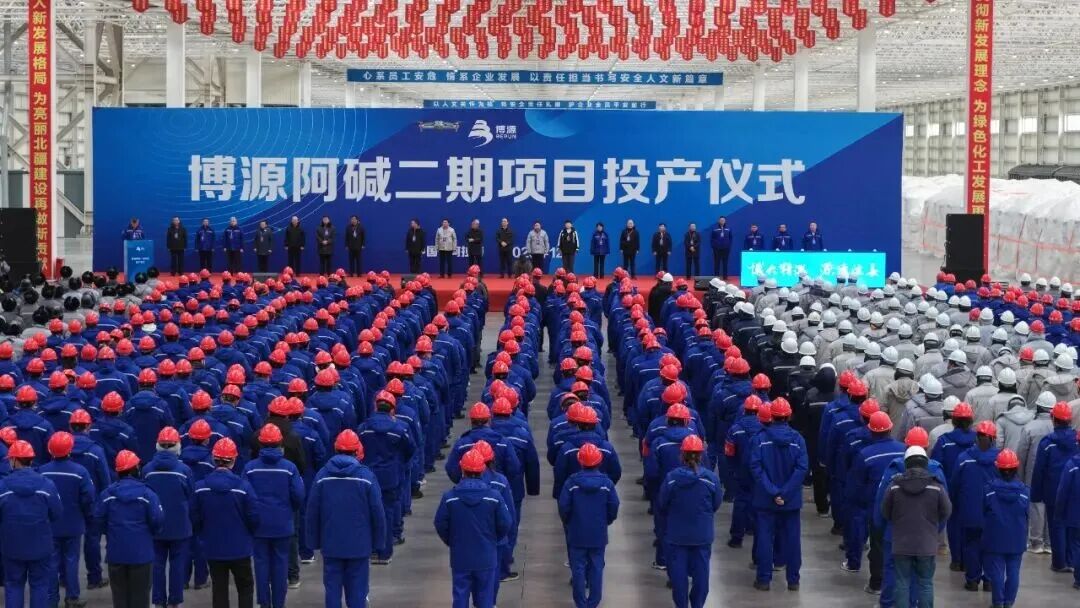
Core Viewpoint - The natural soda industry in China is rapidly evolving, transitioning from a supporting role to a leading position, marking an irreversible shift towards natural soda as the primary source of soda ash production, while traditional chemical methods face significant challenges and decline [1][22]. Group 1: Industry Development - The Bohyuan Alkaline project in Inner Mongolia has been completed and is now producing high-quality natural soda, with a total investment of 24.6 billion yuan and a designed capacity of 7.8 million tons of soda ash and 2 million tons of sodium bicarbonate annually [2][4]. - The first phase of the project has already produced over 11 million tons of products, generating more than 15 billion yuan in revenue and over 1 billion yuan in taxes [2][4]. - The second phase of the project is set to start construction in December 2023, aiming for full production capacity exceeding 10 million tons by mid-2024, with expected revenues of over 12 billion yuan and tax contributions exceeding 2 billion yuan [2][4]. Group 2: Technological Innovations - The Bohyuan Alkaline project incorporates significant technological advancements, including self-developed deep decolorization and purification technology for brine, enhancing product quality and production stability [4]. - Innovations in the project include advanced crystallization techniques and automated logistics systems, which significantly improve production efficiency and reduce labor intensity [4][7]. Group 3: Environmental and Social Impact - The project has invested over 2 billion yuan in a dedicated water supply system from the Yellow River, supporting both the project and local ecological restoration efforts, transforming the surrounding desert into a green oasis [5][7]. - The Bohyuan Group is also planning to integrate renewable energy sources such as solar and wind power into the project, aiming to achieve a near-zero carbon footprint and contribute to the green transformation of the region [7][9]. Group 4: Market Dynamics - The price of soda ash has dropped significantly, with light soda ash prices falling by 45.23% and heavy soda ash by 43.3% in 2024, leading to a challenging market environment for traditional chemical soda producers [14][17]. - The total domestic soda ash production capacity reached 39.13 million tons by mid-2025, with natural soda accounting for 18.2% of this capacity, indicating a growing trend towards natural soda production [19][20]. - The Bohyuan project is expected to meet nearly one-third of the national soda ash market demand, potentially displacing traditional chemical soda producers and reshaping the market landscape [21][22]. Group 5: Future Outlook - The transition to natural soda as the dominant production method is seen as inevitable, with historical precedents in other countries indicating a rapid shift away from traditional methods [22][24]. - The long-term outlook for the soda ash industry remains positive, driven by demand in key sectors such as glass manufacturing, particularly with the growth of photovoltaic glass and electric vehicle markets [24][25].

建信期货能源化工周报-20251219
Jian Xin Qi Huo· 2025-12-19 11:48
Report Information - Report Title: Energy and Chemical Weekly Report [1] - Date: December 19, 2025 [2] - Research Team: Energy and Chemical Research Team [4] Report Industry Investment Rating No information provided. Core Views - Crude oil: Short - term fundamentals are neutral, with prices expected to fluctuate. Medium - term supply pressure may lead to price declines. Consider reverse arbitrage [7][8]. - Asphalt: Without obvious drivers, it is expected to continue to fluctuate [29][30]. - Polyester: PTA is expected to run warmly, while ethylene glycol will maintain low - level fluctuations [58][59]. - Short - fiber: Prices may increase due to improved cost support and stalemate in supply and demand [68][70]. - Soda ash: In the short term, the market may continue to grind at the bottom and fluctuate. In the medium - to - long term, adopt a bearish view on rebounds [72][75]. - Polysilicon: Continue to run cautiously and strongly in the short term, with support at around 58,000 yuan/ton [94][95]. - Industrial silicon: The spot price remains stable, and the supply - demand pattern is loose. The price of the 05 contract is expected to move between 8,500 - 9,000 yuan, and a bearish approach should be taken above 9,000 yuan [116][117]. - Rubber: The natural rubber market may show range - bound fluctuations. Pay attention to inventory and downstream开工 rate changes [129][133]. Summary by Directory Crude Oil - **Market Review and Operation Suggestion** - WTI, Brent, and SC crude oil prices all declined this week. Geopolitical factors and inventory data are neutral. In the short term, prices are expected to fluctuate, and in the medium term, there is downward pressure. Consider reverse arbitrage [7][8]. - **Fundamental Changes** - Geopolitical situation: The US strengthened sanctions on Venezuelan crude oil, affecting about 400,000 barrels per day. Other buyers may increase purchases of other sanctioned oil types [9]. - Inventory data: US crude oil inventories declined, while refined oil inventories increased. The IEA and EIA have different views on supply and demand forecasts, and the supply surplus in the fourth quarter has deepened [10][11]. Asphalt - **Market Review and Operation Suggestion** - The asphalt futures price declined slightly this week. The supply side may see a slight decline in the start - up rate, and the demand side is weak due to cold weather. It is expected to continue to fluctuate [29][30]. - **Fundamental Changes** - Cost side: US sanctions on Venezuelan crude oil have a greater impact on the asphalt market. Crude oil prices are expected to fluctuate in the short term and decline in the medium term [31]. - Spot market: Prices in most regions declined, with sufficient supply in the south and weakening demand in the north [31][32]. - Supply side: The overall start - up rate of asphalt plants declined slightly, but it is expected to rise slightly next week [32]. - Profit side: Production profits increased slightly in the short term but are under pressure in the medium - to - long term [33]. - Demand side: Demand shows regional differentiation, with "stable in the north and weak in the south" [33]. - Inventory side: Factory inventories increased slightly, while social inventories decreased slightly [33]. Polyester - **Market Review and Operation Suggestion** - PTA was weak last week but may run warmly this week. Ethylene glycol prices declined last week and are expected to maintain low - level fluctuations this week [58][59]. - **Main Driving Forces** - Downstream consumption: Demand is expected to be stable this week, and polyester load may increase slightly in the short term but has a seasonal weakening trend [60]. - PTA: Supply may increase slightly this week. PX prices are expected to be firm, and PTA is expected to run warmly [61][62]. - MEG: The start - up rate decreased slightly last week, and port inventories may increase slightly. It is expected to maintain low - level fluctuations [63][64]. Short - fiber - **Market Review and Operation Suggestion** - The price of polyester short - fiber fluctuated narrowly last week and may increase this week due to improved cost support and stalemate in supply and demand [68]. - **Main Driving Forces** - Downstream consumption: The start - up rate of short - fiber downstream yarn mills is expected to weaken, and consumption support is expected to decline [69]. - Short - fiber: The start - up rate was stable last week and is expected to remain so this week. Supply is sufficient, but cost support has improved, so prices may increase [70]. Soda Ash - **Market Review and Operation Suggestion** - The soda ash futures price was weak this week. The supply side is increasing, and the demand side is weak. It is not recommended to go long in the short term, and a bearish view on rebounds should be adopted in the medium - to - long term [72][75]. - **Soda Ash Market Situation** - Supply: The start - up rate and output have increased, and supply pressure is rising. Pay attention to policy changes [76]. - Inventory: The inventory has decreased, but the sustainability is uncertain, and the core contradiction of supply - demand imbalance remains [78][84]. - Spot: The spot price is expected to fluctuate narrowly between 1,200 - 1,300 yuan/ton, with a weak balance in supply and demand [85]. - Downstream: The demand for soda ash is limited due to the weak supply - demand situation of float glass. The photovoltaic glass market is also under pressure [87][88]. Polysilicon - **Polysilicon Market Review and Outlook** - The polysilicon price fluctuated narrowly this week. The futures price showed a bullish pattern, but the short - term spot price increase faces downstream resistance. It is expected to run cautiously and strongly in the short term [94][95]. - **Photovoltaic Industry Fundamentals** - The "polysilicon capacity integration and acquisition platform" has been established. The prices of some products in the photovoltaic industry chain are strong, but the terminal demand has not recovered [96][98]. Industrial Silicon - **Industrial Silicon Futures Review and Outlook** - The industrial silicon futures price rebounded in a "V" shape this week. The spot price is stable, and the supply - demand pattern is loose. The price of the 05 contract is expected to move between 8,500 - 9,000 yuan [116][117]. - **Industrial Silicon Fundamentals** - Supply: Production has entered a seasonal low, and the output in the southwest has limited room for further decline [118]. - Demand: The demand for polysilicon and organic silicon has decreased, and the supply - demand pattern is loose. Exports are stable [119][120]. - Inventory: The spot inventory is slowly accumulating, and the futures inventory is out of storage [120]. Rubber - **Market Review and Operation Suggestion** - The Shanghai rubber price fluctuated narrowly this week. The supply side is decreasing in China but increasing overseas. The demand side is weak, and the inventory is high. It is expected to show range - bound fluctuations [129][133]. - **Rubber Market Situation** - Supply: Domestic production has decreased, while overseas production is increasing. The supply surplus overseas suppresses the market [135][136]. - Import and Export: The import volume in November increased, and the arrival pressure is high [141]. - Inventory: The inventory of the Shanghai Futures Exchange and the social inventory have increased [146]. - Downstream Enterprises: The start - up rate of all - steel tires increased slightly, while that of semi - steel tires decreased slightly. The terminal demand is weak [148][151]. - Terminal Consumption: The automobile production and sales in November increased year - on - year and month - on - month [155].
黑色产业链日报-20251219
Dong Ya Qi Huo· 2025-12-19 09:26
Report Industry Investment Rating No relevant content provided. Core Viewpoints - Steel prices are supported by the cost side but suppressed by weakening demand and potential tightening of steel export expectations, maintaining a volatile trend [3] - After macro - events are settled, the trading logic of iron ore returns to fundamentals. With restrained shipments, steel mills' restocking needs, and coking coal price concessions, the downside space of iron ore prices is expected to be limited [20] - As the terminal winter - storage replenishment approaches, the inventory structure of coking coal is expected to improve. Coke spot still has room for price cuts from a valuation perspective, and attention should be paid to the progress of the steel mills' third - round price cut [29] - The fundamentals of ferroalloys are currently weak. Although the futures prices rebounded due to relevant policies, the rebound may stimulate enterprises to hedge and suppress prices [45] - With the strengthening expectation of new capacity production, the over - supply expectation of soda ash is intensifying. The weakening demand from glass and high inventories restrict the price of soda ash [59] - From December to before the Spring Festival, some glass production lines may undergo cold - repair, which may affect long - term pricing and market expectations. Currently, high intermediate inventories and off - season demand put pressure on the spot market [82] Summary by Directory Steel - **Futures Prices and Spreads** - On December 19, 2025, the closing prices of rebar 01, 05, and 10 contracts were 3120, 3119, and 3151 yuan/ton respectively; the closing prices of hot - rolled coil 01, 05, and 10 contracts were 3276, 3269, and 3282 yuan/ton respectively [4] - The month - spreads of rebar and hot - rolled coil showed different changes compared to the previous day [4] - **Spot Prices and Basis** - Rebar and hot - rolled coil spot prices in different regions had minor changes on December 19, 2025. For example, the rebar summary price in China was 3325 yuan/ton, and the hot - rolled coil summary price in Shanghai was 3270 yuan/ton [8][10] - The basis of rebar and hot - rolled coil also changed slightly [8][10] - **Other Ratios** - The 01, 05, and 10 contract ratios of rebar to iron ore were all 4; the ratios of rebar to coke were all 2 on December 19, 2025 [17] Iron Ore - **Price Data** - On December 19, 2025, the closing prices of 01, 05, and 09 contracts were 798, 780, and 758 yuan/ton respectively, with daily changes of 1, 2.5, and 3 yuan/ton respectively [21] - The basis of different contracts showed a downward trend [21] - **Fundamental Data** - The daily average pig iron output was 226.55 tons, a week - on - week decrease of 2.65 tons; the 45 - port inventory was 15512.63 tons, a week - on - week increase of 81.21 tons [24] Coking Coal and Coke - **Futures Spreads and Ratios** - On December 19, 2025, the spreads of coking coal and coke contracts showed different changes compared to the previous day. For example, the coking coal 09 - 01 spread was 195 yuan/ton [32] - The coking profit, mine - coke ratio, etc. also changed [32] - **Spot Prices and Profits** - The spot prices of coking coal and coke in different regions had minor changes. The immediate coking profit was 24 yuan/ton [35] Ferroalloys - **Silicon Iron** - On December 19, 2025, the silicon iron basis in Ningxia was - 90 yuan/ton, a daily decrease of 48 yuan/ton; the silicon iron spot price in Ningxia was 5300 yuan/ton [46] - **Silicon Manganese** - The silicon manganese basis in Inner Mongolia was 82 yuan/ton, a daily decrease of 28 yuan/ton; the silicon manganese spot price in Ningxia was 5500 yuan/ton [47] Soda Ash - **Futures Prices and Spreads** - On December 19, 2025, the closing prices of soda ash 01, 05, and 09 contracts were 1120, 1176, and 1236 yuan/ton respectively, with daily decreases of 17, 17, and 14 yuan/ton respectively [60] - The month - spreads also changed [60] - **Spot Prices and Basis** - The spot prices of heavy and light soda ash in different regions remained stable. The basis of soda ash in different regions showed a downward trend [60] Glass - **Futures Prices and Spreads** - On December 19, 2025, the closing prices of glass 01, 05, and 09 contracts were 941, 1041, and 1138 yuan/ton respectively, with daily decreases of 12, 21, and 18 yuan/ton respectively [83] - The month - spreads and basis of glass contracts changed [83] - **Sales and Production Data** - The sales - to - production ratios of glass in different regions such as Shahe, Hubei, etc. showed different trends in December 2025 [84]
纯碱行业向“新”行
Zhong Guo Hua Gong Bao· 2025-12-19 03:29
Core Insights - The pure soda industry is facing challenges such as rising raw material costs, low profits from traditional production methods, increasing environmental regulations, and high energy consumption. Experts at the 2025 Soda Ash Technology Conference emphasized that resource optimization, energy reduction, and intelligent development will be key to enhancing quality and efficiency in the industry [1] Resource Efficiency and Cost Reduction - Inner Mongolia's Alxa region has abundant natural soda ash reserves, but water scarcity poses a challenge. Baoyuan Yingen Chemical Co. has implemented a "dry cooling" system to save water during the cooling phase of production, successfully achieving water and energy savings [2] - Guangdong Southern Soda Industry Co. has adopted high-pressure diaphragm filter presses to efficiently produce low-chloride white mud, facilitating resource recycling and significantly reducing solid waste emissions [2] - Hannen (Suzhou) Energy-Saving Technology Co. has designed cooling equipment tailored to different water qualities, achieving over 90% waste heat recovery efficiency [2] - Solex China has introduced a cooling technology that ensures uniform cooling or heating of product particles, promoting resource conservation [2] Technological Innovations for Energy Reduction and Emission Control - Chengdu Tianbao Energy-Saving Environmental Protection Engineering Co. proposed using rotary ammonium dryers instead of fluidized beds, which reduces energy consumption and tail gas emissions significantly [3] - Dalian Chemical Machinery Co. developed a steam rotary ammonium dryer that maintains outlet temperatures between 85°C and 95°C, enhancing operational efficiency and reducing heat loss [3] - China Salt Anhui Hong Sifang Co. upgraded its coal crushing system to improve fuel utilization and explored energy cascading to achieve significant energy and water savings [3] - Southern Soda Industry shared its experience in optimizing lime kiln feeding systems to lower production energy consumption and developing efficient dust removal devices to reduce emissions [3] Intelligent Empowerment for Quality and Efficiency Improvement - The pure soda industry is leveraging intelligent systems as accelerators for quality and efficiency enhancement. Shandong Haohua Co. has implemented a smart system that stabilizes production processes, monitors equipment health, and manages production information centrally [4] - Hangzhou Holley Technology Co. has adopted full-process intelligent control to reduce energy consumption in steam and water systems while ensuring real-time product quality monitoring [4] - The intelligent dosing system ensures precise measurement control, while the evaporation crystallization optimization system dynamically adjusts temperatures [4] Smart Logistics in Material Transport - Kaos Intelligent Equipment Technology Co. has introduced industrial robot loading systems for smart loading of raw materials, equipment, and products, enhancing loading efficiency, safety, and cost-effectiveness in the final logistics of the pure soda industry [5]


日度策略参考-20251219
Guo Mao Qi Huo· 2025-12-19 02:45
1. Report's Industry Investment Ratings - **Bullish**: BR Rubber [1] - **Bearish**: Industrial Silicon, Palm Oil [1] - **Neutral (Oscillation)**: Bonds, Agricultural Products, Alumina, Zinc, Stainless Steel, Tin, Precious Metals (Gold, Silver, Platinum, Palladium), Rebar, Hot - Rolled Coil, Iron Ore, Manganese Ore, Ferrosilicon, Glass, Soda Ash, Coking Coal, Coke, Soybeans, Rapeseed Oil, Cotton, Sugar, Wheat, Corn, Pulp, Logs, Live Pigs, Crude Oil, Fuel Oil, Bitumen, Ethylene Glycol, Benzene - Naphtha, Urea, Propylene, PVC, Caustic Soda, LPG, Container Shipping to Europe [1] 2. Core Views of the Report - In the short term, the stock index is expected to continue its weak trend, but the market adjustment since mid - November has opened up space for the upward movement of the stock index next year [1] - Asset shortage and weak economy are beneficial to bond futures, but the central bank has recently warned about interest - rate risks [1] - The market sentiment is volatile, and there are opportunities to go long at low levels for some products [1] 3. Summary by Industry Macro - Financial - **Stock Index**: Short - term weak operation, long - term upward potential. Investors can gradually establish long positions during the adjustment period [1] - **Bonds**: Asset shortage and weak economy are favorable, but short - term interest - rate risks are warned. Pay attention to the Bank of Japan's interest - rate decision [1] Non - Ferrous Metals - **Aluminum**: High - level wide - range oscillation due to limited industrial drive and fluctuating macro sentiment [1] - **Alumina**: Weak domestic fundamentals, short - term price rebound but limited upward drive [1] - **Zinc**: Fundamentals improved, cost center shifted up, but price is under pressure. Pay attention to low - buying opportunities [1] - **Nickel**: After a sharp decline, there is a demand for position - reduction repair. Short - term trading is recommended, and the long - term supply of primary nickel is in surplus [1] - **Stainless Steel**: Short - term trading is recommended, waiting for opportunities to sell on rallies [1] - **Tin**: Short - term oscillation, long - term bullish. Pay attention to low - buying opportunities during corrections [1] Precious Metals and New Energy - **Precious Metals**: Supported by the cooling of the US CPI in November, but short - term volatility risks need to be vigilant [1] - **Industrial Silicon**: Bearish due to increased production in the northwest, reduced production in the southwest, and decreased production schedules of polysilicon and organic silicon in December [1] - **Polysilicon**: There is an expectation of capacity reduction in the long - term, marginal improvement in terminal installation in the fourth quarter, and strong price - holding and low - delivery willingness of large enterprises [1] - **Lithium**: In the traditional peak season of new energy vehicles, with strong energy - storage demand, increased production on the supply side, and the potential to break through previous highs [1] Ferrous Metals - **Rebar and Hot - Rolled Coil**: Roll over and take profits on cash - and - carry positions. Valuation is not high, and short - selling is not recommended [1] - **Iron Ore**: Near - month contracts are restricted by production cuts, but far - month contracts have upward potential [1] - **Manganese Ore and Ferrosilicon**: Prices are under pressure due to weak direct demand, high supply, and inventory accumulation [1] - **Glass and Soda Ash**: Supply and demand provide support, valuation is low, but short - term price fluctuations are strong [1] - **Coking Coal and Coke**: After a decline, there are signs of stabilization. Pay attention to winter - storage replenishment by downstream enterprises this week [1] Agricultural Products - **Palm Oil**: Short - term short - selling is recommended due to continuous negative high - frequency data and high pressure on the origin [1] - **Soybeans**: Pay attention to the negative impact of imported soybean auctions on the supply side [1] - **Rapeseed Oil**: It is recommended to short the 05 contract as the near - term raw - material shortage theme is expected to be exhausted [1] - **Cotton**: The market is currently supported but lacks a driving force. Pay attention to relevant policies and market conditions in the future [1] - **Sugar**: There is a consensus on short - selling, but there is strong cost support below. Pay attention to changes in the capital side [1] - **Wheat and Corn**: The short - term decline is limited by farmers' price - holding sentiment and downstream stocking demand before the Spring Festival [1] - **Pulp**: Unilateral trading is recommended to wait and see, and consider the 1 - 5 reverse spread [1] - **Logs**: The 01 contract is expected to oscillate weakly as it approaches the delivery month [1] - **Live Pigs**: Production capacity still needs to be further released [1] Energy and Chemical Industry - **Crude Oil and Fuel Oil**: Affected by OPEC+ production - suspension, the uncertainty of the Russia - Ukraine peace agreement, and US sanctions on Venezuelan oil exports [1] - **Bitumen**: Follows crude oil in the short term, with high profit and possible falsification of the 14th - Five - Year Plan's rush - demand [1] - **BR Rubber**: Bullish due to improved cost - side support, increased sales, and high operating rates [1] - **PTA and Short - Fiber**: The PTA device operates at a high load, and short - fiber prices follow costs closely [1] - **Ethylene Glycol**: Prices decline due to inventory accumulation and weakening cost support [1] - **Benzene - Naphtha**: There is slight cost - side support, but overall production economy is negative, and inventory is high [1] - **Urea, Propylene, PVC, and Caustic Soda**: Prices oscillate due to factors such as supply - demand imbalance, cost changes, and reduced anti - involution sentiment [1] - **LPG**: The market is affected by geopolitical factors, and prices oscillate after a decline. Pay attention to the impact of natural gas on near - month prices [1] Other - **Container Shipping to Europe**: The price increase in December was less than expected, and the supply of shipping capacity was relatively loose [1]
市场情绪谨慎,钢价持续震荡
Hua Tai Qi Huo· 2025-12-19 02:18
Group 1: Investment Ratings - Glass: Oscillating weakly [2] - Soda Ash: Oscillating [2] - Ferrosilicon Manganese: Oscillating [3] - Ferrosilicon: Oscillating [3] Group 2: Core Views - The market sentiment is cautious, and steel prices continue to oscillate. The macro - atmosphere for glass and soda ash is warm, with a slight rebound. The consumption of steel products is fair, and ferroalloys have a slight rebound [1][2] Group 3: Market Analysis Glass and Soda Ash - Glass futures oscillated upward with active trading. Spot prices were generally weak, with low - price and rigid - demand purchases. This week, the total inventory of float glass was 58.558 million heavy boxes, a 0.57% week - on - week increase. Glass production is oscillating at a high level, supply contraction is insufficient, and there is still a supply - demand contradiction. Rigid demand lacks improvement and is expected to decline further with the arrival of the off - season. Attention should be paid to cold - repair situations and the impact of macro - policies on speculative demand [1] - Soda ash futures oscillated upward, supported by cost. Spot market quotes were weakly stable, with overall mixed price changes and mainly rigid - demand purchases. This week, soda ash production was 721,400 tons, a 1.9% week - on - week decrease; inventory was 1.4993 million tons, a 0.33% week - on - week increase. Soda ash production is at a relatively high level in the same period, and with the commissioning of new production lines, supply is expected to increase further. Inventory is oscillating at a high level, and considering the expected increase in the cold - repair plan of float glass, the demand for heavy soda ash faces challenges. Attention should be paid to the impact of downstream demand on soda ash prices [1] Double Silicon (Ferrosilicon Manganese and Ferrosilicon) - For ferrosilicon manganese, although it is the off - season, the consumption of building materials is still fair, and ferrosilicon manganese futures oscillated upward. The spot market of ferrosilicon manganese oscillated, with cost - side ore prices remaining firm. The price of 6517 in the northern market was 5,490 - 5,550 yuan/ton, and in the southern market was 5,600 - 5,650 yuan/ton. Currently, ferrosilicon manganese enterprises are in a continuous loss situation, with production and operating rates at relatively low levels. However, the reduction in production is insufficient, resulting in continuously new high enterprise inventories. The inventory of manganese ore at ports has slightly increased, and the total inventory of manganese elements has remained stable, providing cost support for ferrosilicon manganese. Attention should be paid to the cost support of manganese ore and production changes [2] - For ferrosilicon, ferrosilicon futures rose first and then fell. The spot market of ferrosilicon was weak. The ex - factory price of 72 - grade ferrosilicon natural lumps in the main production areas was 5,100 - 5,200 yuan/ton, and the price of 75 - grade ferrosilicon was 5,600 - 5,650 yuan/ton. This week, ferrosilicon production decreased slightly, enterprises remained in a loss situation, actively adjusted the production rhythm, demand declined marginally, and ferrosilicon enterprise inventories were at a high level. High inventories will continue to suppress ferrosilicon prices. Attention should be paid to changes in cost - side coal and electricity prices and regional policies [2]