
铜

Search documents
云南铜业涨2.02%,成交额6.43亿元,主力资金净流入1079.64万元
Xin Lang Zheng Quan· 2025-10-20 02:25
Core Viewpoint - Yunnan Copper's stock price has shown significant volatility, with a year-to-date increase of 52.13%, but a recent decline of 4.57% over the last five trading days [1] Group 1: Stock Performance - As of October 20, Yunnan Copper's stock price rose by 2.02% to 18.18 CNY per share, with a trading volume of 643 million CNY and a turnover rate of 1.79%, resulting in a total market capitalization of 36.426 billion CNY [1] - The stock has experienced a 52.13% increase year-to-date, a 4.57% decrease in the last five trading days, an 8.93% increase over the last 20 days, and a 40.17% increase over the last 60 days [1] Group 2: Financial Performance - For the first half of 2025, Yunnan Copper reported a revenue of 88.913 billion CNY, representing a year-on-year growth of 4.27%, and a net profit attributable to shareholders of 1.317 billion CNY, which is a 24.32% increase compared to the previous year [2] Group 3: Shareholder Information - As of September 30, the number of shareholders for Yunnan Copper was 167,500, a decrease of 0.94% from the previous period, while the average number of circulating shares per person increased by 0.95% to 11,965 shares [2] - Since its A-share listing, Yunnan Copper has distributed a total of 4.019 billion CNY in dividends, with 1.944 billion CNY distributed over the last three years [3] - As of June 30, 2025, the largest circulating shareholder was Hong Kong Central Clearing Limited, holding 33.0629 million shares, a decrease of 10.1395 million shares from the previous period [3]

特朗普会见泽连斯基,印尼能矿部恢复4家企业的采矿许可证
Dong Zheng Qi Huo· 2025-10-20 00:44
1. Report Industry Investment Ratings No specific industry investment ratings are provided in the report. 2. Core Views of the Report - **Financial Markets**: - Gold: Short - term price is in a volatile phase, with a risk of decline. [14][15] - U.S. Stock Index Futures: Market risk preference is expected to improve, but volatility remains high. It is recommended to take a bullish approach and buy on dips. [21] - Treasury Bond Futures: The bond market has strengthened, but risks exist. It is recommended to take a cautious approach in short - term trading. [27][29] - Foreign Exchange Futures (USD Index): The USD is expected to be volatile in the short term. [18][19] - Stock Index Futures: It is recommended to allocate evenly among various stock indices. [25] - **Commodity Markets**: - Agricultural Products: - Sugar: ICE raw sugar is not expected to continue to decline significantly. Zhengzhou sugar is expected to be weak and volatile in the short term, and excessive short - selling is not recommended. [36][37] - Cotton: The upside of Zhengzhou cotton is limited, and it is under pressure in the short term. [41][42] - Soybean Meal: The price of soybean meal is expected to be weak and volatile. [47] - Corn Starch: The price difference between rice and flour may be repaired when approaching delivery. [51] - Red Dates: It is recommended to wait and see before the red dates are harvested and priced. [54] - Corn: The 11 - contract is expected to decline, and the 01 - contract should be approached with a short - term bearish and long - term bullish strategy. [55] - Black Metals: - Rebar/HRC: Steel prices are expected to be volatile and weak in the short term, and a volatile approach is recommended. [45][46] - Coking Coal/Coke: The price of coking coal in the Changzhi market is expected to be stable and slightly strong in the short term, but the sustainability of demand needs to be observed. [49][50] - Non - ferrous Metals: - Copper: The price of copper is expected to be volatile in the short term. It is recommended to wait for opportunities to buy on dips for mid - term long positions. [57][58] - Polysilicon: It is expected that the spot price will remain flat in October. It is not recommended to chase the rise, and attention should be paid to buying on dips when the price is at a discount to the spot. [61][62] - Industrial Silicon: It is more cost - effective to buy on dips. [64] - Lead: Unilateral trading should be observed with a volatile perspective, and mid - term positive spreads between domestic and foreign markets can be considered. [65][66] - Zinc: It is recommended to wait and see for unilateral trading, and pay attention to mid - term positive spreads for arbitrage. [68] - Lithium Carbonate: Short - term trading should be range - bound, and mid - term short - selling opportunities should be considered after the peak demand season. [69][70] - Nickel: It is recommended for the allocation portfolio to buy mid - to long - term long positions on dips, and for the speculative portfolio to consider selling near - the - money puts and buying deep - out - of - the - money calls. [72][73] - Energy Chemicals: - Carbon Emissions: CEA is expected to be volatile and weak in the short term. [74][75] - Crude Oil: The price of crude oil is expected to be volatile and bearish in the short term. [75][76] - Methanol: It is recommended to wait and see. [77][78] - PVC: The price is expected to be volatile and weak in the short term, and the downside space is limited. [80] - Caustic Soda: The price of caustic soda futures is expected to be weak in the short term. [82] - Bottle Chips: The supply - demand contradiction may accumulate in the fourth quarter, and there is pressure on the processing fee. [85] - Urea: It is not recommended to be overly bearish when the 2601 contract falls below 1600 yuan/ton. [88] - Soda Ash: A mid - term strategy of shorting on rallies is recommended, and attention should be paid to the progress of new capacity. [90] - Float Glass: It is recommended to pay attention to the opportunity of long glass and short soda ash when the spread widens. [92] - Shipping Index: For the 12 - contract, continue to pay attention to low - buying opportunities, and pay attention to risk management due to geopolitical disturbances. [94][95] 3. Summary by Directory 1. Financial News and Comments 1.1 Macro Strategy (Gold) - **News**: Trump met with Zelensky, and the Shanghai Futures Exchange raised the margin for precious metals. [13][14] - **Comment**: Gold prices fluctuated sharply on Friday, reaching a new high before falling back. The market's bullish sentiment cooled down, and profit - taking occurred. Short - term gold is overbought, and attention should be paid to the risk of decline. [14] - **Investment Advice**: Gold prices will enter a volatile phase in the short term, and attention should be paid to the risk of decline. [15] 1.2 Macro Strategy (Foreign Exchange Futures - USD Index) - **News**: The Bank of Japan's governor did not disclose whether to raise interest rates before the October policy meeting. The ECB's Lagarde advocated a unified approach to Russian assets. Trump urged Zelensky to accept a cease - fire. [16][17] - **Comment**: Trump pressured Ukraine to end the conflict, but a cease - fire along the current front line faces significant resistance. The USD is expected to be volatile in the short term. [18] - **Investment Advice**: The USD is expected to be volatile in the short term. [19] 1.3 Macro Strategy (U.S. Stock Index Futures) - **News**: Trump signed an executive order to impose tariffs on imported trucks, and Fed's Musalem supported a rate cut in October. [20][21] - **Comment**: With the start of the earnings season, the profit forecast of U.S. stocks has been revised upwards, and the risk of regional banks has not further spread. The Sino - U.S. negotiation situation has improved marginally, which is positive for risk assets. U.S. stocks may continue to recover their previous losses next week. [21] - **Investment Advice**: It is expected that market risk preference will continue to improve, but volatility remains high. A bullish approach should be taken, and buying on dips is recommended. [21] 1.4 Macro Strategy (Stock Index Futures) - **News**: Vice - Premier He Lifeng held a video call with U.S. officials, and the Ministry of Finance announced measures to consolidate economic recovery. [22][23] - **Comment**: Tariff escalation has a long - tail effect. Next week, attention should be paid to the progress of Sino - U.S. negotiations and the Fourth Plenary Session. Stock indices are in a high - level volatile pattern. [24][25] - **Investment Advice**: It is recommended to allocate evenly among various stock indices. [25] 1.5 Macro Strategy (Treasury Bond Futures) - **News**: The central government allocated 500 billion yuan from the local government debt balance limit, and the central bank conducted 164.8 billion yuan of 7 - day reverse repurchases. [26][27] - **Comment**: The bond market has strengthened as expected, but risks exist. It is recommended to realize the floating profits of some unilateral trading positions next week. [27] - **Investment Advice**: A cautious approach is recommended for short - term trading. [29] 2. Commodity News and Comments 2.1 Agricultural Products (Soybean Oil/Rapeseed Oil/Palm Oil) - **News**: The actual soybean crushing volume of domestic oil mills in the 42nd week was 2.1662 million tons, and the expected volume in the 43rd week is 2.3335 million tons. [30] - **Comment**: The palm oil market lacks a clear driver, and the soybean oil market lacks data and policy guidance and continues to fluctuate. [30] - **Investment Advice**: For palm oil, pay attention to production, inventory, and replenishment in India. A long - allocation approach is recommended. Soybean oil is expected to fluctuate, and rapeseed oil is recommended to be observed. [30][31] 2.2 Agricultural Products (Sugar) - **News**: The Philippines suspended sugar imports until the end of the 2025/26 season. China's cumulative sugar imports in the 2024/25 season were 4.63 million tons. The number of sugar - carrying ships in Brazilian ports increased to 90. Brazilian sugar production in the second half of September was 3.14 million tons, a year - on - year increase of 10.8%. [32][33][34][35] - **Comment**: Brazilian sugar production is strong, but the sugar - making ratio has declined for three consecutive weeks, indicating that sugar mills are more willing to produce ethanol. ICE raw sugar is not expected to continue to decline significantly. [36] - **Investment Advice**: Zhengzhou sugar is expected to be weak and volatile in the short term, and excessive short - selling is not recommended. [37] 2.3 Agricultural Products (Cotton) - **News**: The cumulative public inspection of Xinjiang cotton was 560,000 tons, a year - on - year increase of 124%. India's cotton production and imports were adjusted. Cotton prices stabilized, and the downstream market was weak. [38][39][40] - **Comment**: The purchase price of Xinjiang seed cotton is stable, which supports Zhengzhou cotton. However, the pressure of hedging and weak downstream demand limit the upside. [41] - **Investment Advice**: The upside of Zhengzhou cotton is limited, and it is under pressure in the short term. [42] 2.4 Black Metals (Rebar/HRC) - **News**: China's shipbuilding indicators ranked first globally in the first three quarters. The daily average pig iron output of 247 steel mills was 2.4095 million tons. [44][45] - **Comment**: The inventory of five major steel products has declined, but the absolute inventory is still high. The demand for building materials is weak, and the supply pressure of finished steel exists. Steel prices are expected to be volatile and weak. [45] - **Investment Advice**: A volatile approach is recommended for steel prices in the short term. [46] 2.5 Agricultural Products (Soybean Meal) - **News**: The soybean crushing volume of domestic oil mills is expected to increase. [47] - **Comment**: The U.S. government shutdown has led to a lack of data. The domestic supply of imported soybeans in the fourth quarter is sufficient, and the inventory of soybean meal is high. [47] - **Investment Advice**: The price of soybean meal is expected to be weak and volatile. [47] 2.6 Black Metals (Coking Coal/Coke) - **News**: The price of coking coal in the Changzhi market is stable. [48][49] - **Comment**: The production of coking coal is normal, and the demand for replenishment exists. The price of coking coal is expected to be stable and slightly strong in the short term, but the sustainability of demand needs to be observed. [49] - **Investment Advice**: The price of coking coal is expected to be stable and slightly strong in the short term, but the sustainability of demand needs to be observed. [50] 2.7 Agricultural Products (Corn Starch) - **News**: The operating rate of starch sugar products has increased slightly after the holiday. [51] - **Comment**: The theoretical profit of starch enterprises has improved, and the operating rate has increased, and the inventory has accumulated seasonally. The price difference between rice and flour may be repaired when approaching delivery. [51] - **Investment Advice**: The price difference between rice and flour may be repaired when approaching delivery. [51] 2.8 Agricultural Products (Red Dates) - **News**: The price of red dates in the Hebei Cuierzhuang market fluctuated slightly. [52] - **Comment**: The futures price of red dates rose, and the supply is about to enter the harvesting period, while the demand is weak. [53][54] - **Investment Advice**: It is recommended to wait and see before the red dates are harvested and priced. [54] 2.9 Agricultural Products (Corn) - **News**: The inventory of major corn processing enterprises increased by 5.48%. [55] - **Comment**: The inventory of deep - processing enterprises has entered the seasonal increase stage. The spot price is expected to be weak and volatile, and the futures price is expected to follow the decline. [55] - **Investment Advice**: The 11 - contract is expected to decline, and the 01 - contract should be approached with a short - term bearish and long - term bullish strategy. [55] 2.10 Non - ferrous Metals (Copper) - **News**: Codelco raised the copper premium in Europe in 2026 to a record high. Zijin Mining's net profit in the third quarter increased by 52.25% year - on - year. [56][57] - **Comment**: The market will focus on Sino - U.S. trade negotiations and U.S. inflation data. The macro factors may cause short - term fluctuations in copper prices. The domestic and LME inventories show different trends. The price of copper is expected to be volatile. [57][58] - **Investment Advice**: It is recommended to wait for opportunities to buy on dips for mid - term long positions. Arbitrage should be observed. [58] 2.11 Non - ferrous Metals (Polysilicon) - **News**: Hebei plans to adjust the time - of - use electricity price. The price of polysilicon products is stable, and the demand is weakening at the end of October. [59][60][61] - **Comment**: The price of polysilicon is expected to be flat. Although there are many negative factors in the fundamentals, the upstream has no obvious inventory pressure, and production restrictions and sales restrictions are still being implemented. [61] - **Investment Advice**: It is expected that the spot price will remain flat in October. It is not recommended to chase the rise, and attention should be paid to buying on dips when the price is at a discount to the spot. [62] 2.12 Non - ferrous Metals (Industrial Silicon) - **News**: The operating rate of silicon enterprises in Xinjiang has increased, while that in the south has decreased. The social inventory has increased. [63][64] - **Comment**: The fundamentals are weakening, and the price is under pressure. However, the price needs to break through 10,000 yuan/ton to increase supply significantly. Buying on dips is more cost - effective. [64] - **Investment Advice**: Buying on dips is more cost - effective. [64] 2.13 Non - ferrous Metals (Lead) - **News**: The LME 0 - 3 lead was at a discount of $44.99/ton on October 16. [65] - **Comment**: The prices of domestic and LME lead showed different trends last week. The supply of primary and secondary lead is expected to recover. The inventory of lead ingots has increased, but the short - term supply - demand mismatch may continue. The internal - external price ratio is expected to return. [65] - **Investment Advice**: Unilateral trading should be observed with a volatile perspective, and mid - term positive spreads between domestic and foreign markets can be considered. [66] 2.14 Non - ferrous Metals (Zinc) - **News**: The LME 0 - 3 zinc was at a premium of $137.2/ton on October 16. Bolivia's zinc concentrate production decreased in 2025, while Peru's increased in August. [67][68] - **Comment**: The high premium of LME zinc has stimulated a small amount of overseas warehousing, and the zinc ingot export window has opened briefly. The global low - inventory situation is difficult to improve. The price of Shanghai zinc is expected to be volatile, and the price difference may turn positive. [68] - **Investment Advice**: It is recommended to wait and see for unilateral trading, and pay attention to mid - term positive spreads for arbitrage. Positive - spread positions should be closed in batches on dips. [68] 2.15 Non - ferrous Metals (Lithium Carbonate) - **News**: Tianqi Lithium's 30,000 - ton lithium hydroxide project in Zhangjiagang, Jiangsu, reached the standard. [69] - **Comment**: The inventory of lithium carbonate has decreased, which supports the price. The price may be supported by the de - stocking in the peak season, but further upward momentum depends on supply disruptions. [69] - **Investment Advice**: Short - term trading should be range - bound, and mid - term short - selling opportunities should be considered after the peak demand season. [70] 2


【光大研究每日速递】20251020
光大证券研究· 2025-10-19 23:04
Market Strategy - The market is likely still in a bull phase, but may enter a wide fluctuation stage in the short term. The current market correction aligns with historical patterns, with a maximum drawdown of 4.01%, which is within historical levels. Short-term focus should be on defensive and consumer sectors, while mid-term attention should be on TMT and advanced manufacturing [4] Quantitative Analysis - The market is exhibiting a small-cap style, with momentum factors yielding a positive return of 0.43%. Conversely, Beta, market capitalization, and non-linear market capitalization factors recorded negative returns of -1.50%, -0.91%, and -0.54% respectively. The large transaction portfolio achieved an excess return of 1.56% relative to the CSI All Share Index [5] Fixed Income - The convertible bond market and equity market both experienced significant adjustments, with the CSI Convertible Bond Index declining by 2.3% and the CSI All Share Index by 3.5%. Year-to-date, the CSI Convertible Bond Index has increased by 14.4%, while the CSI All Share Index has risen by 19.0%. Despite the convertible bond market underperforming relative to the equity market, it remains a relatively high-quality asset in the long term, although current valuation levels are generally high [5] Commodity Analysis - Global inventories of electrolytic copper at the three major exchanges reached a near five-year high for the same period. Short-term fluctuations in copper prices may arise from changes in US-China trade relations. Freeport's reduction of copper production for 2025-2026 will keep supply tight, while improved production of air conditioning units in Q4 is expected to boost demand [8] Oil and Gas Sector - The outlook for the "Big Three" oil companies remains positive, with oil price resilience expected despite recent declines driven by geopolitical easing and supply-demand concerns. The IEA has lowered global oil demand forecasts, indicating potential oversupply risks. However, the "Big Three" demonstrate strong performance during price downturns, showcasing their ability to navigate through cycles. Anticipated cold weather this winter may enhance natural gas consumption, further supporting the sector [9] Chemical Industry - The supply-demand dynamics for hexafluorophosphate lithium are showing marginal improvement, with prices expected to continue rising. The primary drivers for this price increase are robust demand recovery and tight supply conditions. Downstream demand from electrolyte and battery manufacturers has significantly rebounded, while upstream producers have not expanded capacity significantly during the industry's downturn, leading to most manufacturers operating at full capacity [9]


有色:短暂休息,把握回调机会
2025-10-19 15:58
Summary of Conference Call on Non-Ferrous Metals Industry Industry Overview - The non-ferrous metals industry is currently experiencing a high-level fluctuation, awaiting demand recovery and liquidity easing to trigger a main upward trend in prices [1][3][13] - The expectation of a soft landing for the US economy, along with the first interest rate cut, has stabilized overseas demand, but the main upward wave in non-ferrous metal prices has not yet started [1][3] Key Points and Arguments Market Outlook - The performance expectations for various non-ferrous sub-sectors in 2026 are generally optimistic, with an expected increase of approximately 20% or more [1][4] - The anticipated main upward wave is expected around the end of Q1 2026, driven by interest rate cuts, the end of the US balance sheet reduction, and overseas reconstruction demand [1][5] Supply and Demand Dynamics - The ongoing US-China geopolitical tensions have normalized, reducing their impact on market sentiment, but the supply-side constraints are stronger than demand influences [1][6] - It is expected that most metals will remain in a supply-demand imbalance in 2026, with supply constraints being more definitive [1][6] Specific Metal Insights - **Gold**: Short-term trading is overheated, with valuations stretched. A potential adjustment is expected after geopolitical events cool down, but long-term prospects remain positive due to economic recovery and inflation [1][7] - **Copper**: Short-term demand is suppressed by high prices, but mining and smelting companies may reduce production, leading to a supply-demand imbalance from Q4 2025 through 2026 [1][8][9] - **Aluminum**: The electrolytic aluminum sector is recommended as a top investment choice due to its strong dividend attributes and resilience in profits, with a significant upside potential if prices rise [1][10][11] Small Metals Perspective - **Cobalt**: Inventory is decreasing, indicating potential for price increases [2][12] - **Lithium**: Currently under pressure but nearing a bottom in supply-demand dynamics, strategic positioning is advised [2][12] - **Tungsten**: Long-term outlook is positive due to supply shortages and geopolitical factors [2][12] Additional Important Insights - The overall sentiment for the non-ferrous metals industry remains optimistic, with recommendations to actively monitor and allocate resources to various metal sectors to capitalize on future growth opportunities [1][14] - The copper market is expected to see a price increase and earnings per share (EPS) growth, with mainstream companies' valuations returning to reasonable levels [1][9][14]
【十大券商一周策略】市场风格切换已起,短期调整后或迎来修复行情
券商中国· 2025-10-19 14:30
Group 1 - The core viewpoint is that the current structural fundamental clue in A-shares is the outbound expansion of Chinese enterprises, influenced by the ongoing US-China tensions, which may affect market pricing for outbound investments [2] - The new focus is on China's long-term strategy to ensure resource security, industrial chain safety, and leading technology security, indicating a shift in investment themes post-dividend rotation [2] - The adjustment in the leading industries, such as optical modules, PCB, and innovative pharmaceuticals, is expected to continue, with potential for new highs as the third-quarter reports approach [3][4] Group 2 - The market is currently in a bull market consolidation phase characterized by high-low fund rotation and index stagnation, with the expectation that the bull market logic remains intact [6] - The market's recent adjustments are attributed to high valuations and uncertainties in US-China relations, but historical patterns suggest that such corrections are common in bull markets [7] - The upcoming policy expectations and the focus on the "15th Five-Year Plan" are likely to provide new investment opportunities, particularly in sectors with strong performance certainty [8][10] Group 3 - The recent market adjustments are seen as the beginning of a structural shift, with a focus on domestic industries that are experiencing a recovery in demand [9] - The investment strategy should prioritize sectors with strong growth potential, such as new consumption, military industry, and advanced manufacturing, while also considering defensive sectors [11] - The fourth quarter is anticipated to see continued upward movement in indices, driven by policy catalysts and stable earnings expectations [14]

策略周报20251019:调整空间有限,保持信心-20251019
Orient Securities· 2025-10-19 14:14
Group 1 - The report concludes that the adjustment space for the index is limited, maintaining a judgment of sideways fluctuations and continued strength. The recent market pullback is attributed to strong short-term profit-taking motivation and a cautious stance amid uncertainties between China and the US. However, the report believes that the factors driving profit-taking are temporary, and the attractiveness of the equity market and long-term investor confidence remain unchanged. It is anticipated that the situation between China and the US will stabilize, with limited adverse effects on the market [3][12]. Group 2 - The report emphasizes continued high attention to technology as the main theme for investment opportunities. It suggests focusing on low-positioned self-controlled sectors (such as software), technology related to the 14th Five-Year Plan (including quantum technology, deep-sea economy, and brain-computer interfaces), and innovative pharmaceuticals. The report advises avoiding equipment-related sectors and previously high-performing technology companies, which have seen significant pullbacks recently. This ongoing correction is expected to enhance the attractiveness of core companies within these sectors, gradually attracting funds for reallocation [4][13]. Group 3 - In non-technology sectors, the report expresses a positive outlook on strategic metals, ranking them as follows: gold > rare earths and other minor metals > copper. For gold, the dual benefits of deteriorating fiat currency credit and safe-haven demand are expected to continue driving prices, despite short-term pullback risks. The strategic value of rare earths is anticipated to rise due to upgraded export controls on items and technologies. In the case of copper, demand is expected to increase in the medium term due to global grid upgrades, data center expansions, and the proliferation of electric vehicles, while ongoing disruptions in upstream mining will significantly exacerbate supply shortages, leading to a potential rise in copper prices [5][14].
三大因素驱动金价暴走!华尔街惊呼,金价可能还不是终点!有色龙头ETF(159876)一度涨超2%
Xin Lang Ji Jin· 2025-10-19 12:10
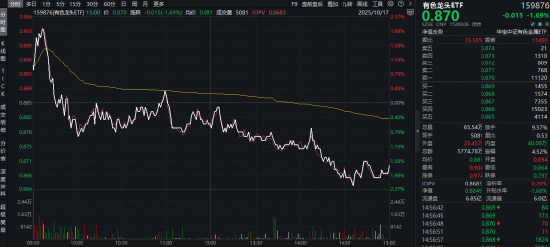
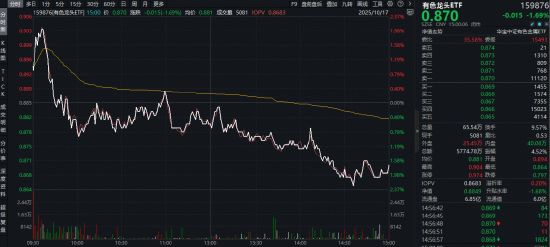
Core Viewpoint - The market is experiencing fluctuations, with the Nonferrous Metal Leader ETF (159876) showing a high of over 2% before closing down 1.69% on October 17, 2023, indicating volatility in the sector [1]. Market Performance - The Nonferrous Metal Leader ETF (159876) had a total trading volume of 57.74 million yuan and a current scale of 606 million yuan as of October 16, 2023, with an average daily trading volume of 12.2 million yuan in October [1]. - Among the top-performing stocks, silver nonferrous leader Baiyin Nonferrous hit the daily limit, while lithium leaders Shengxin Lithium and Zhongfu Industrial both rose over 2% [3]. Key Stocks and Trends - The top ten stocks in the ETF's index include five gold leaders, with Western Gold rising over 3% and Zhongjin Gold increasing over 2% [3]. - Conversely, stocks like Bowei Alloy and Chuangjiang New Materials saw declines exceeding 6%, negatively impacting the index [3]. Gold Price Influences - International gold prices are approaching 4,400 USD/ounce, driven by three main factors: 1. The historical performance of gold during the Federal Reserve's interest rate cut cycles, with an average increase of 6% within 60 days of such announcements [4]. 2. Increased demand for gold due to heightened risk aversion from the U.S. government shutdown, which began on October 1, 2023 [5]. 3. Ongoing de-dollarization trends and credit risks associated with U.S. debt, leading to increased gold purchases by central banks, with global official gold reserves reaching a record high of 36,274 tons by June 2023 [5]. Future Gold Price Predictions - Some institutions, including Bank of America, predict that gold prices could reach 6,000 USD in the spring of 2024, citing low current allocations of gold in investment portfolios [6]. - The World Gold Council indicates that both retail and central bank gold holdings remain significantly below historical highs, suggesting potential for future growth [6]. Sector Opportunities - The rare earth sector is expected to perform well, with companies like Northern Rare Earth and Shenghe Resources projecting substantial profit increases in their upcoming quarterly reports [7]. - In the lithium sector, advancements in solid-state lithium battery technology are anticipated to boost demand, with leading companies maintaining a high self-sufficiency rate in lithium production [7]. - The copper market is facing supply disruptions, particularly from the Grasberg mine in Indonesia, which may tighten global copper supply and drive prices higher [7]. Investment Strategy - The Nonferrous Metal Leader ETF (159876) offers a diversified exposure to various nonferrous metals, including copper, gold, aluminum, rare earths, and lithium, which can mitigate risks compared to investing in single metal sectors [9].
有色金属周报:铜铝价格上行,看好后续铝补涨行情-20251019
SINOLINK SECURITIES· 2025-10-19 08:33
Group 1: Copper - LME copper price increased by 2.41% to $10,624.00 per ton, while Shanghai copper decreased by 1.77% to 84,400 yuan per ton [1][12] - Domestic copper inventory increased by 0.55 thousand tons to 17.75 thousand tons due to weak downstream consumption and replenishment of imported sources [1][12] - The operating rate of domestic major refined copper rod enterprises rose to 62.5%, up 19.06% week-on-week, but down 16.39% year-on-year, indicating a recovery post-holiday but still below pre-holiday levels [1][12] Group 2: Aluminum - LME aluminum price rose by 1.82% to $2,796.00 per ton, while Shanghai aluminum decreased by 0.33% to 20,900 yuan per ton [2][13] - Domestic electrolytic aluminum ingot inventory decreased by 2.3 thousand tons, indicating a slight recovery in demand [2][13] - The operating rate of domestic aluminum processing enterprises remained stable at 62.5%, with a year-on-year decline of 1.4% [2][13] Group 3: Gold - COMEX gold price increased by 7.65% to $4,344.30 per ounce, influenced by U.S. government shutdown and geopolitical risks [3][14] - SPDR gold holdings increased by 17.46 tons to 1,034.62 tons, reflecting increased demand amid market uncertainties [3][14] - The U.S. government shutdown has led to delays in key economic data releases, impacting the economy and the dollar's position [3][14] Group 4: Rare Earths - The price of praseodymium and neodymium oxide decreased by 9.01% to 507,100 yuan per ton, with expectations of price recovery due to overseas replenishment [4][32] - The strategic importance of rare earths has increased due to regulatory changes, with a positive outlook for major companies in the sector [4][32] - The implementation of new regulations is expected to gradually show positive effects on supply and pricing [4][32] Group 5: Antimony - Antimony price decreased by 4.08%, but demand is expected to recover due to the stabilization of photovoltaic glass production [4][33] - The implementation of stricter standards for flame-retardant cables may provide a demand boost for antimony [4][33] - Global antimony prices are expected to trend upward due to resource scarcity and reduced supply from major mines [4][33] Group 6: Lithium - The average price of lithium carbonate decreased by 0.63% to 73,100 yuan per ton, while lithium hydroxide decreased by 0.43% to 78,200 yuan per ton [5][60] - Total lithium carbonate production increased to 21,100 tons, reflecting a slight recovery in supply [5][60] - Strong demand from the energy storage sector is expected to support lithium prices despite recent supply increases [5][60] Group 7: Cobalt - Cobalt price increased by 9% to 381,000 yuan per ton, driven by tight supply conditions [5][61] - The market is characterized by a "price without market" phenomenon, with strong upward pressure on prices due to raw material shortages [5][61] - Future price increases are anticipated as supply constraints from Congo continue to affect the market [5][61] Group 8: Nickel - LME nickel price increased by 0.1% to $15,200 per ton, while Shanghai nickel price decreased by 0.6% to 121,200 yuan per ton [5][62] - Concerns over the stability of nickel ore supply due to regulatory changes in Indonesia are providing short-term support for prices [5][62] - The market is expected to remain volatile due to the interplay between supply disruptions and weak fundamentals [5][62]



金价冲击4400美元
Xin Lang Cai Jing· 2025-10-17 12:00
Core Viewpoint - The market is currently consolidating, with the Nonferrous Metal Leaders ETF (159876) experiencing fluctuations, ultimately closing down by 1.69% despite an early gain of over 2% [1][3]. Market Performance - The Nonferrous Metal Leaders ETF (159876) had a total trading volume of 57.74 million yuan and a latest scale of 606 million yuan as of October 16, with an average daily trading volume of 12.2 million yuan in October [1]. - Among the three ETFs tracking the same index, this ETF leads in both scale and liquidity [1]. Component Stocks - Notable performers include the copper leader Baiyin Nonferrous Metals, which hit the daily limit, and lithium leaders Shengxin Lithium and Zhongfu Industrial, both rising over 2% [3]. - The top ten gainers included five gold leaders, with Western Gold rising over 3% and Zhongjin Gold increasing over 2% [3]. - Conversely, stocks like Bowei Alloy and Chuangjiang New Materials saw declines exceeding 6%, negatively impacting the index [3]. Gold Price Influences - International gold prices are approaching 4,400 USD/ounce, driven by three main factors: 1. Historical trends show gold prices typically rise during the Federal Reserve's rate-cutting cycles, with an average increase of 6% within 60 days of such announcements [4]. 2. The recent U.S. government shutdown has heightened risk aversion, increasing demand for gold [5]. 3. The ongoing trend of de-dollarization and diversification of reserve currencies is expected to sustain global central bank gold purchases, with global official gold reserves reaching a record high of 36,274 tons as of June [5]. Future Gold Price Predictions - Some institutions remain optimistic about gold prices, with Bank of America predicting a potential rise to 6,000 USD in spring 2024 [6]. - Current allocations of gold in global investment portfolios are relatively low, indicating room for growth [6]. Sector Opportunities - The rare earth sector is expected to see significant performance in Q3, with companies like Northern Rare Earth and Shenghe Resources projecting substantial profit increases due to rising prices and capacity releases [6]. - In lithium, advancements in solid-state battery technology are anticipated to boost demand, with leading companies maintaining a high self-sufficiency rate in lithium supply [7]. - Copper prices are expected to rise due to supply disruptions, particularly from the Grasberg mine in Indonesia, which is crucial for energy transition and new production capabilities [7]. Long-term Outlook - The nonferrous metals sector is positioned as a key player in the current commodity bull market, driven by long-term capital expenditure cycles and increasing demand for strategic metal resources [8]. - The Nonferrous Metal Leaders ETF (159876) offers a diversified investment approach across various metals, including copper, gold, aluminum, rare earths, and lithium, which can mitigate risks associated with investing in a single metal [10].
贵金属有色金属产业日报-20251017
Dong Ya Qi Huo· 2025-10-17 10:21
1. Report Industry Investment Rating There is no information about the industry investment rating in the report. 2. Core Views of the Report - **Precious Metals**: The international spot gold price has reached a record high of over $4380 per ounce, driven by increased trade tensions, the US government shutdown, and dovish statements from Fed officials. The value of gold as a hedge has been further enhanced by geopolitical risks and the trend of central bank gold purchases and de - dollarization. The large capital inflow into the Shanghai gold futures contract indicates strong market sentiment [3]. - **Copper**: Demand is suppressing copper price increases, but rising expectations of interest rate cuts may lead to a rebound. The 86,000 yuan per ton level is a key resistance point [15]. - **Aluminum**: In the short - term, macro factors are the core drivers of aluminum prices. With the expansion of China's core CPI in September and expectations of Fed rate cuts, and the reduction of inventory, the Shanghai aluminum futures may show a slightly upward trend. Alumina is in an oversupply situation, and its price is declining. Cast aluminum alloy has strong support due to raw material shortages and policy factors [37][38]. - **Zinc**: The fundamentals of domestic and overseas zinc markets are different, with the domestic market showing a pattern of strong supply and weak demand. Low inventory provides short - term price support, and attention should be paid to the opening of export windows and potential macro - driven factors [63]. - **Nickel and Stainless Steel**: In the nickel industry chain, the quota for nickel ore in 2026 is expected to decrease. The new energy sector is in a peak season, while nickel iron prices are weakening. Stainless steel sales are sluggish after the holiday, but export prospects are positive. Macro factors such as Sino - US tariffs and interest rate cut expectations should be monitored [77]. - **Tin**: The tin market has a pattern of tight supply and differentiated demand. Supply is constrained by the delayed resumption of Burmese mines and Indonesia's crackdown on illegal mining, while demand is divided between weak traditional electronics and strong high - end solder demand from AI servers and new energy vehicles. Low inventory supports prices, but high prices are suppressing trading [91]. - **Lithium Carbonate**: Market demand is good, and warehouse receipts are decreasing. The demand from downstream lithium - battery material enterprises is expected to increase, which may support the futures price [106]. - **Silicon Industry Chain**: For industrial silicon, as the dry season approaches, production cuts may increase, and prices may rise slightly, but inventory pressure limits the upside. The polysilicon market is affected by news and has weak fundamentals [117]. 3. Summary by Related Catalogs Precious Metals - **Price Movement**: The international spot gold price has broken through $4380 per ounce, and the Shanghai gold futures contract has the largest capital inflow in the domestic commodity futures market [3]. - **Influencing Factors**: Trade tensions, the US government shutdown, Fed officials' dovish statements, geopolitical risks, and central bank gold purchases are the main factors driving the rise in gold prices [3]. Copper - **Price Data**: The latest price of Shanghai copper futures main contract is 84,390 yuan per ton, with a daily decline of 0.78%. London copper has a daily increase of 0.45% [16]. - **Market Outlook**: Demand restricts price increases, but interest rate cut expectations may lead to a rebound. The 86,000 yuan per ton level is a key resistance point [15]. Aluminum - **Price Data**: The latest price of Shanghai aluminum futures main contract is 20,910 yuan per ton, with a daily decline of 0.31%. Alumina futures main contract price is 2,800 yuan per ton, with a daily increase of 0.36% [39]. - **Market Outlook**: Macro factors drive short - term price trends. Aluminum inventory is decreasing, while alumina is in an oversupply situation [37]. Zinc - **Price Data**: The latest price of Shanghai zinc futures main contract is 21,815 yuan per ton, with a daily decline of 0.57%. London zinc has a daily increase of 0.85% [64]. - **Market Outlook**: The domestic and overseas zinc markets have different fundamentals, and low inventory provides short - term price support [63]. Nickel and Stainless Steel - **Price Data**: The latest price of Shanghai nickel futures main contract is 121,160 yuan per ton, with a daily decline of 0%. The stainless steel futures main contract price is 12,630 yuan per ton, with a daily increase of 0% [78]. - **Market Outlook**: The nickel ore quota in 2026 is expected to decrease. The new energy sector is booming, while nickel iron prices are weakening. Stainless steel sales are slow, but export prospects are positive [77]. Tin - **Price Data**: The latest price of Shanghai tin futures main contract is 280,750 yuan per ton, with a daily decline of 0.21%. London tin has a daily increase of 1.01% [92]. - **Market Outlook**: The tin market has a pattern of tight supply and differentiated demand, and low inventory supports prices [91]. Lithium Carbonate - **Price Data**: The latest price of lithium carbonate futures main contract is 75,700 yuan per ton, with a daily increase of 760 yuan [107]. - **Market Outlook**: Market demand is good, and warehouse receipts are decreasing, which may support the futures price [106]. Silicon Industry Chain - **Price Data**: The latest price of industrial silicon futures main contract is 8,430 yuan per ton, with a daily decline of 2.03%. Polysilicon and other product prices are also provided in the report [117]. - **Market Outlook**: As the dry season approaches, industrial silicon production cuts may increase, and prices may rise slightly. The polysilicon market is affected by news and has weak fundamentals [117].