
必需消费

Search documents
盐津铺子(002847):魔芋势能持续,盈利提升可期
GUOTAI HAITONG SECURITIES· 2025-07-09 07:17
Investment Rating - The report maintains a "Buy" rating for the company [12] Core Views - The company is expected to sustain its growth momentum due to its competitive supply chain advantages and a multi-channel, multi-category strategy, which is likely to enhance profitability [2][12] - The company has achieved significant sales milestones with its differentiated konjac product, indicating strong market potential [12] - The company is expanding its overseas market presence with localized products under its own brand, "Mowon," which is expected to contribute to revenue growth [12] Financial Summary - Total revenue is projected to grow from 4,115 million RMB in 2023 to 9,694 million RMB in 2027, reflecting a compound annual growth rate (CAGR) of 26.3% [4] - Net profit attributable to the parent company is expected to increase from 506 million RMB in 2023 to 1,264 million RMB in 2027, with a CAGR of 24.3% [4] - Earnings per share (EPS) is forecasted to rise from 1.85 RMB in 2023 to 4.63 RMB in 2027 [4] Market Position and Strategy - The company has established a comprehensive multi-channel matrix in the domestic market, enhancing brand strength for its "Big Demon King" konjac products [12] - The company is focusing on optimizing its product mix and channel structure, which is anticipated to improve profitability [12] - The company is leveraging its efficient organizational management and supply chain capabilities to capture market trends effectively [12]

交银国际:南向资金近月主力配置集中医疗和金融板块 反映对高息防御价值重视
智通财经网· 2025-07-07 02:00
Group 1 - The Hong Kong stock market has shown strong performance in the first half of the year, with the Hang Seng Index and Hang Seng Tech Index recording semi-annual returns of 20% and 18.7% respectively, ranking among the top global indices [1] - The rebound in the Hong Kong stock market is primarily driven by a decrease in risk premium, while contributions from risk-free interest rates and fundamental earnings improvement are relatively limited [1] - Current favorable conditions for the Hong Kong stock market include a reduction in external environmental disturbances, a shift in Trump's policy focus from tariffs to tax cuts, and a supportive liquidity environment for capital allocation [1] Group 2 - The technology sector is highlighted as having significant investment value, with foreign capital showing sustained confidence through increased allocations to the information technology sector [2] - The adjustment in the technology sector's valuation narrative has led to a moderate level of crowding, indicating potential for upward elasticity and positioning it as a key driver for the next market rally [2] - There is a notable rotation of southbound capital across various sectors, with recent focus shifting towards healthcare and financial sectors, reflecting market interest in high-growth sectors and defensive value in high-dividend stocks [2] Group 3 - The short-selling landscape shows high levels of short interest in cyclical and consumer sectors, while the technology sector is experiencing a convergence of long and short positions [3] - The consumer sector is witnessing a clear divergence, with essential consumption remaining stable while discretionary consumption has seen increased short-selling activity [3] - The concentration of short-selling in the information technology sector is decreasing, supported by continued foreign investment and appropriate allocation from southbound capital [3]
东南亚消费行业5月跟踪报告:多数地区商品价格走低
Haitong Securities International· 2025-07-01 07:39
Investment Rating - The report does not explicitly provide an investment rating for the Southeast Asia Staples and Discretionary sectors, but it highlights various performance metrics and trends across different countries in the region. Core Insights - Commodity prices have generally fallen across most regions, contributing to a decrease in inflation rates in several Southeast Asian countries [2][9] - Economic growth in Southeast Asia is expected to maintain a moderate pace in the second half of 2025, with overall growth rates projected between 4% and 5% [3] - Consumer confidence varies significantly across the region, with Indonesia experiencing a notable decline in consumer sentiment [20] Economic Overview - In May 2025, Thailand's CPI decreased by 0.57%, marking two consecutive months of deflation, primarily driven by lower food and energy prices [2][23] - Malaysia's inflation rate fell to 1.2%, the lowest in 51 months, while Vietnam's CPI increased by 3.24%, indicating moderate inflation [2][9] - The overall economic activity in Indonesia showed signs of slowing, with GDP growth in 1Q25 at 4.87%, the lowest since 3Q21 [15] Consumer Sector Performance - In May 2025, Indonesia's essential and discretionary consumption sectors saw increases of 6.55% and 6.17%, respectively, outperforming the index [4] - The consumer confidence index in Indonesia dropped to 117.50, the lowest since September 2022, reflecting concerns about job availability and economic conditions [20] - Singapore's food and beverage sales reached SGD 9.5 billion in May 2025, marking a year-on-year growth of 1.9% [34] Market Trends - The report indicates that most consumer sectors in May 2025 experienced valuation increases, with Indonesia's essential and discretionary consumption PE historical percentiles at 5% and 17%, respectively [4] - The stock market performance in May showed mixed results, with Indonesia's essential consumption sector outperforming the index, while Thailand's discretionary consumption sector lagged [4][14] - Vietnam's essential and discretionary consumption sectors underperformed the index, with growth rates of 2.64% and 3.72%, respectively [4] Inflation and Pricing Trends - In May 2025, Indonesia's CPI rose by 1.60% year-on-year, with core inflation dropping to 2.40%, providing room for monetary policy adjustments [18] - Thailand's consumer price index showed a significant decline, while Singapore's core inflation remained low at 0.6% [31][23] - Vietnam's CPI increased by 3.24% in May, driven by rising costs in housing, utilities, and food services [39]
高盛:注意了!近期对冲基金名义卖空规模接近5年高点
Zhi Tong Cai Jing· 2025-06-24 12:33
Group 1 - The global fundamental long/short hedge funds experienced a loss of 50 basis points last week, but gained 103 basis points in June and are up 425 basis points year-to-date [1] - The total leverage ratio for fundamental long/short strategies decreased by 0.3 percentage points to 206.2%, which is in the 94th percentile for the past year, while the net leverage ratio fell by 1.7 percentage points to 50.2%, placing it in the 14th percentile for the same period [1] - Asian emerging markets faced significant net selling, primarily driven by the Chinese market, with hedge funds net selling Chinese stocks for the fourth consecutive week at the fastest pace in two and a half months, entirely driven by short selling [1] Group 2 - Macro products and individual stocks were both net sold, with a roughly equal share in the nominal net selling total; the sectors with the highest net selling were non-essential consumer, essential consumer, healthcare, and financials [2] - H-shares experienced net selling throughout the week, while A-shares and American Depositary Receipts (ADRs) saw relatively smaller net selling [2] - The total holdings/net holdings of Chinese stocks, as a percentage of the total risk exposure of major brokerage accounts, are currently at 4.8% and 6.8%, respectively, which are in the 52nd and 26th percentiles compared to the past year, and in the 11th and 7th percentiles compared to the past five years [2]


美国消费行业5月跟踪报告:多扰动因素仍在,不确定性难消
Haitong Securities International· 2025-06-20 11:17
Investment Rating - The report maintains a cautious investment stance on the consumer sector, particularly for low-priced consumer goods and imported durable goods due to ongoing uncertainties and potential economic risks [5]. Core Insights - The consumer confidence index rebounded significantly in June, reaching 60.5, up 15.9% from May's 52.2, indicating a recovery from previous declines [8][9]. - Retail sales in May 2025 were $715.42 billion, a 0.9% month-over-month decline, marking the largest single-month drop since March 2023 [9]. - Inflation data showed a mild increase in May, with the CPI rising 2.4% year-over-year, below market expectations, but long-term inflation risks remain [11][13]. - Employment data showed a mixed picture, with non-farm payrolls adding 139,000 jobs in May, exceeding expectations, but revisions indicated a slowdown in job growth [15][19]. Summary by Sections Macro Overview - The consumer confidence index rebounded in June, reflecting a recovery from previous declines, with inflation expectations decreasing from 6.6% to 5.1% [8]. - Retail sales data for May showed a significant decline, particularly in durable goods, as the demand normalized following a previous surge [9]. - Inflation data indicated a mild increase, with CPI rising 2.4% year-over-year, but long-term inflation concerns persist due to potential tariff impacts [11][13]. - Employment data showed a stable job market, but with signs of sectoral divergence, particularly in manufacturing and services [15][17]. Essential Consumption - Beverage and tobacco sectors outperformed the market, with beverage sales showing resilience, while alcoholic beverages and dairy products continued to underperform [2][34]. - Alcoholic beverage retail sales in April were $5.63 billion, with a year-over-year increase of 1.6%, but overall sales volume continued to decline [2][29]. - Dairy product shipments totaled $13.61 billion in April, with a year-over-year increase of 2.5%, indicating a stable but lackluster performance [34]. - Beverage shipments reached $11.97 billion in April, with a year-over-year increase of 4.7%, showcasing strong demand in essential categories [34]. Optional Consumption - The restaurant sector showed resilience with retail sales of $97.36 billion in May, a year-over-year increase of 5.3%, but a month-over-month decline of 0.9% [39]. - Department store sales in May were $76.76 billion, reflecting a year-over-year increase of 2.2%, but a continued weakening trend [42]. - Apparel retail sales reached $26.18 billion in May, with a year-over-year increase of 3.7%, but a decline in momentum due to the end of pre-tariff purchasing [44]. Market Performance - The consumer sector saw a broad rally in May, with significant gains in essential and discretionary categories, although valuations remain at historical highs [4]. - The consumer discretionary ETF saw a net inflow of $553 million, while the essential consumer ETF had a net inflow of $522 million, indicating investor interest [4]. Investment Recommendations - The report advises maintaining a cautious approach towards the consumer sector, particularly in light of ongoing uncertainties related to tariffs and economic growth [5].
市场更新:预期提振有待政策进一步加力
Bank of China Securities· 2025-06-19 09:46
Market Overview - Investment demand is expected to be boosted by further policy support, with a focus on the defensive value of consumption and dividend sectors[1] - In May, retail sales growth was strong, particularly in dining and retail goods, driven by "two new" policies, with notable performance in home appliances and communication equipment[2] - Fixed asset investment growth weakened marginally due to real estate investment drag, while government bonds remained a key support for new social financing in May[2] Market Sentiment - The A-share market is likely to continue a consolidation pattern in the short term, with risk premium levels nearing the 10-year average plus one standard deviation, indicating market sentiment is close to a short-term peak[2] - Short-term market dynamics are expected to remain volatile with rapid sector rotation, requiring patience for policy acceleration and sustained macroeconomic support[2] Investment Style - The market is anticipated to be dominated by low valuation factors in the short term, with small-cap, high-profit, and high-valuation stocks expected to outperform[2] - Credit growth and fundamental recovery in May were relatively weak, suggesting a continued preference for low-risk investments until policy release points arrive[2] Sector Focus - Attention should be given to essential consumption and dividend sectors during the risk disturbance window, with the top 10 industries for AI sector allocation including light industry manufacturing, public utilities, and pharmaceuticals[2] - The industry distribution primarily aligns with essential consumption and dividend styles, indicating a defensive investment strategy[2] Risk Factors - Risks include weaker-than-expected policy implementation and potential global recession risks exceeding expectations[2]
A股的3400点突围战开始了丨智氪
36氪· 2025-06-15 09:41
Core Viewpoint - The article discusses the challenges faced by the Shanghai Composite Index in breaking through the 3400-point barrier, highlighting the current high valuation levels and the lack of supportive policies or improved earnings expectations as key obstacles [4][10]. Valuation Analysis - The static PE ratio of the Wind All A (excluding financials) is currently at 31.51 times, which is at the 49th percentile since 2000, the 54th percentile over the past decade, and the 100th percentile over the last three years, indicating that the market is nearing its high tolerance for valuations [6][10]. - Compared to global equity markets, the valuation of Wind All A (excluding financials) is relatively high, with the Nasdaq at 44 times, S&P 500 (excluding financials) at approximately 30 times, and the Hang Seng Tech Index at 21 times, suggesting that A-shares lack a solid foundation to maintain levels above 3400 points [9][10]. Market Conditions - The article emphasizes that without new incremental policy support or significant improvements in earnings expectations, the market is unlikely to sustain levels above 3400 points. Current trade environment pressures limit the feasibility of large-scale policy stimulus [10]. - The Producer Price Index (PPI) has shown a continuous decline, with a year-on-year drop of 3.3% in May, indicating that A-share earnings are unlikely to improve in the near term [10]. Future Market Outlook - The market is expected to experience volatility, with a higher probability of downward movement. The focus will likely shift towards sectors with more predictable earnings, suggesting a strategy of seeking certainty and avoiding underperforming stocks [10][11]. - In the absence of significant changes in policies or PPI, a notable rise in the Shanghai Composite Index above 3400 points would be seen as a signal to reduce positions rather than increase them [11]. Structural Opportunities - The article outlines different market styles based on historical data since 2015, indicating that stable styles (e.g., utilities, consumer staples) are favored during external risks or tightening policies, while cyclical styles (e.g., materials, industrials) thrive in improving economic conditions [13][14]. - Growth styles (e.g., technology, emerging industries) depend on upward industry trends, policy support, and liquidity, while consumer styles are closely tied to economic recovery and consumer confidence [15][16]. - Currently, the market environment is characterized by weak earnings and low capital inflows, which is unfavorable for cyclical, growth, and consumer styles, but relatively beneficial for stable and financial styles [19]. Investment Recommendations - The article suggests a balanced allocation strategy, focusing on sectors with potential marginal improvements such as petrochemicals, brokerages, non-ferrous metals, military, and electric power, as well as industries aligned with policy and industry trends like AI applications, gaming, communication, and semiconductors [19].
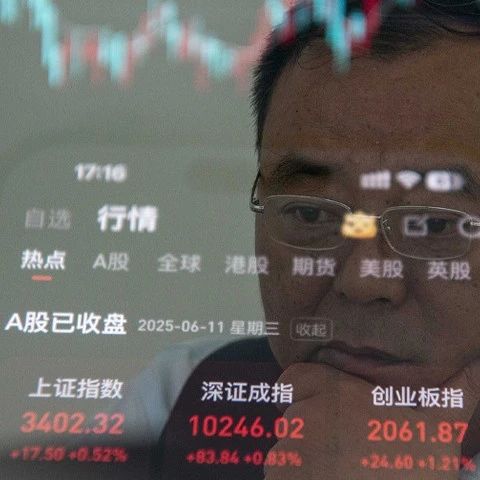
️ 美联储会议纪要发出“风暴警告”:通胀与失业的“滞胀”困境
Sou Hu Cai Jing· 2025-05-29 00:47
——从关税冲击到降息迷途,全球市场屏息以待 一份凌晨发布的会议纪要,撕开了美联储面对的两难困局:一面是关税助推的通胀火焰,一面是就业市 场的降温预警,而夹在中间的,是全球资本市场的剧烈波动。 北京时间5月29日凌晨2点,美联储公布了5月货币政策会议纪要,首次将"关税冲击"纳入核心议题,并 罕见警告未来可能面临通胀与失业"双升"的艰难权衡。这份被市场称为"风暴预警"的文件,不仅揭示了 美国经济政策的内部分歧,更暴露了全球金融体系在政治不确定性下的脆弱性。 一、会议纪要核心信号:三重压力下的"政策悬崖" 1. 通胀顽固性远超预期 长期通胀预期脱锚风险:核心PCE通胀率仍达2.6%,美联储预计2027年前难回2%目标,滞胀阴影笼 罩。 关税成为新推手:几乎所有与会官员指出,特朗普政府加征的关税正被企业转嫁给消费者,甚至非关税 影响企业也借机提价,导致通胀"向上漂移风险加剧"。 2. 就业市场韧性面临考验 尽管当前失业率稳定在4.2%,但企业因贸易不确定性已开始冻结招聘,制造业、农业等关税敏感行业 首当其冲。纪要直言"劳动力市场疲软风险正在累积"。 3. 金融稳定警报拉响 美元避险地位动摇:长期美债收益率上升与美元贬 ...
[4月28日]指数估值数据(消费类指数有哪些;月薪宝发薪日;黄金星级更新)
银行螺丝钉· 2025-04-28 13:42
文 | 银行螺丝钉 (转载请注明出处) 今天大盘整体微跌,截止到收盘,还在5.1星。 沪深300微跌,小盘股下跌略多。 遇到市场下跌的时候,红利等价值风格相对坚挺,略微上涨。 必需消费通常受经济周期的影响相对小一些。 上周港股上涨超2.5%,港股科技指数上涨超5%。 遇到回调的时候港股一般波动比A股大,反弹的时候弹性也会更高。 1. 有朋友问,消费类指数有哪些呢? 消费行业,主要分为必需消费和可选消费。 (1)必需消费 主要是食品饮料,包括酒、乳制品、肉制品等。 A股对应的指数,就是中证消费。 中证消费,主要投资沪深300、中证500中的大中盘必需消费股票。 成长风格下跌。 港股最近比A股表现好一些。 最近比较受关注的关税,影响全球股票市场出现较大波动。 但必需消费因为主营业务在内地,不太受关税提升的影响,最近3个月中证消费指数连续三个月上涨。 必需消费行业下面,还有食品饮料指数、白酒指数等。 (2)可选消费 主要是汽车、家电、传媒娱乐等。 像一些新能源汽车,属于可选消费;游戏、广告属于传媒娱乐。 这里面比较有意思的是,很多港股科技股,按照行业划分,也属于消费行业。 例如腾讯,属于互联网科技公司。 但主营业务 ...
日本消费行业3月跟踪报告:必选提价激发囤货,可选趋缓龙头突围
Haitong Securities International· 2025-04-27 05:40
Investment Rating - The report suggests a focus on Japanese consumer companies with optimistic profit growth prospects, including Asics, Pan Pacific International Holdings, Fast Retailing, and Asahi Group [6]. Core Insights - The Japanese consumer confidence index fell for the fourth consecutive month to 34.1 in March, the lowest since March 2023, indicating a decline in consumer sentiment amid rising inflation [2][8]. - Essential consumer goods saw a surge in stockpiling due to anticipated price hikes in April, leading to a significant increase in sales, particularly in beer, which saw a year-on-year increase of over 30% [3][14]. - Discretionary consumption faced a slowdown, with mixed performance among companies; brands like Salia, Uniqlo, and Muji managed to attract consumers despite the overall decline in demand [3][5]. Macro Overview - Inflation in Japan is rising, with the Consumer Price Index (CPI) increasing by 3.6% year-on-year in March, while core CPI (excluding fresh food) rose by 3.2% [2][10]. - Real wages fell by 1.5% year-on-year in February, reflecting that wage growth is not keeping pace with inflation [2][8]. - The Producer Price Index (PPI) rose by 4.2% year-on-year in March, marking the highest level since 1980 [12]. Essential Consumption - Retail sales for essential goods increased primarily due to higher average transaction values, with notable growth in companies like PPIH (+5.9%), 7-Eleven (+1.0%), and Aeon (+2.9%) [4][16]. - The stockpiling trend was driven by consumers preparing for upcoming price increases, significantly boosting sales in food and daily necessities [3][14]. Discretionary Consumption - Discretionary spending showed varied performance, with restaurants like Salia and McDonald's increasing prices due to rising raw material costs, leading to year-on-year sales growth of 13.9% and 11.0%, respectively [5][26]. - Department store sales declined for the second consecutive month, with a year-on-year drop of 2.8% in March, influenced by a strong previous year's performance [33][37]. - The duty-free sales sector experienced its first negative growth in 36 months, reflecting a broader trend of reduced spending on high-priced items due to the appreciating yen and economic uncertainties [5][37]. Company Performance - Asahi and Kirin reported significant revenue increases in March, with Asahi's beer sales up 37% and Kirin's up 30%, driven by stockpiling ahead of price hikes [20][23]. - Uniqlo's same-store sales rose by 11.5% in March, benefiting from strong demand for seasonal products and effective marketing strategies [30][35]. - The performance of specialty stores like Muji and Nitori varied, with Muji seeing a 20.5% increase in same-store sales while Nitori experienced an 8.6% decline [35].