
纺织

Search documents
特朗普“制造业回流梦碎”:美国警察花原来4倍价格买制服,还到处开线
凤凰网财经· 2025-07-23 13:58
Core Viewpoint - The "reciprocal tariff" policy introduced by the Trump administration in April 2025 aimed to bring manufacturing back to the U.S. but resulted in increased costs and lower quality products, creating a paradox of "high price, low quality" in various sectors [1][2][5]. Group 1: Impact on Specific Industries - The steel industry saw a 7.5% increase in shipment volume and a 6.5% rise in revenue due to tariff protection, providing local companies with a 15% cost advantage [2]. - In contrast, the textile industry faced significant challenges, with local police reporting that U.S.-made uniforms were of inferior quality compared to previously imported ones, leading to a situation where they paid four times more for subpar products [3][4]. - The pharmaceutical sector expressed concerns over potential 200% tariffs on imported drugs, with companies like Novartis highlighting the lengthy timeline required for manufacturing relocation [5]. Group 2: Labor and Supply Chain Issues - The U.S. manufacturing sector is experiencing a severe labor shortage, with nearly 500,000 job vacancies reported, and over 65% of companies citing difficulties in hiring and retaining workers [7][8]. - The lack of skilled labor is compounded by an aging workforce, with many skilled workers retiring and few new ones entering the field [8]. - The supply chain for U.S. manufacturing has become "hollowed out," lacking a robust industrial ecosystem, which complicates the return of manufacturing as companies face challenges in sourcing components domestically [9][11].


第一创业晨会纪要-20250723
First Capital Securities· 2025-07-23 02:23
Industry Overview - On July 22, Trump announced trade agreements with Japan, the Philippines, and Indonesia, with Japan's tariff set at 15%, lower than the previously mentioned 25%. Japan will invest $550 billion in the U.S. and open markets including automobiles and rice. The U.S. will impose a 19% tariff on goods from the Philippines and Indonesia, which will also open their markets to the U.S. The remaining major economy, the EU, has yet to finalize tariff negotiations with the U.S., making the differences in tariff rates between China and these countries a potential market focus and risk point [1]. Company Performance - Jiepu Te, primarily engaged in power laser components, announced a semi-annual performance forecast for 2025, expecting revenue between 840 million to 920 million yuan, a year-on-year increase of approximately 41.50% to 54.98%. The net profit attributable to shareholders is expected to be between 86 million to 100 million yuan, with a year-on-year growth of about 57.03% to 82.60%. The growth is attributed to increased global demand for lasers, particularly in the precision processing of new energy power batteries and consumer-grade laser fields [2]. - Xiamen Tungsten, focusing on new energy battery materials, projected a revenue of 7.534 billion yuan for the first half of 2025, representing a year-on-year increase of 18.04%. The expected net profit attributable to shareholders is 307 million yuan, up 27.76%. The second quarter alone is anticipated to generate 4.557 billion yuan in revenue, a 51.85% increase year-on-year. The growth is driven by the lithium cobalt oxide business benefiting from replacement subsidies and AI demand in 3C devices, alongside a strong market position in the power battery sector [5]. - Keda Li, specializing in precision components for lithium-ion batteries and automotive structures, forecasted a net profit of 750 million to 820 million yuan for the first half of 2025, reflecting a year-on-year increase of 15.73% to 26.53%. The second quarter's net profit is expected to be around 398 million yuan, a 28.80% increase year-on-year. The growth is primarily due to increased orders for precision components driven by rising sales of new energy vehicles and cost-reduction measures enhancing operational efficiency [6]. - Bailong Oriental announced a performance forecast for the first half of 2025, expecting a net profit of 350 million to 410 million yuan, a year-on-year increase of 50% to 76%. The net profit after deducting non-recurring items is projected to be between 323 million to 383 million yuan, with a significant year-on-year growth of 202% to 258%. The growth is attributed to robust orders in the yarn business and improved capacity utilization domestically and internationally [8].
对当前市场的看法:估值不低,但谈泡沫还太早了
3 6 Ke· 2025-07-23 01:40
Core Insights - The article discusses investment philosophies, emphasizing the importance of practical methodologies over abstract theories [2][3] - It introduces the book "Big Money Thinks Small" by Joel Tillinghast, a notable public fund manager, focusing on stock selection strategies [4][5] Investment Methodologies - Tillinghast advocates for a bottom-up stock selection approach, prioritizing company-specific characteristics over macroeconomic factors [6][8] - The article contrasts top-down and bottom-up investment strategies, explaining that top-down approaches start with macroeconomic analysis before narrowing down to specific companies [7] Critique of Macroeconomic Analysis - Tillinghast expresses skepticism towards macroeconomic theories, arguing that they often lack objectivity and scientific validity [9][10] - He highlights the subjective nature of economic models and their inability to consistently predict economic outcomes [11][12][13] Stock Selection Criteria - Tillinghast emphasizes the importance of low price-to-earnings (P/E) ratios in stock selection, suggesting that lower initial P/E ratios correlate with higher long-term returns [31][33] - Historical data indicates that stocks with initial P/E ratios below 15 yield significantly higher returns over 10 years compared to those with P/E ratios above 25 [33][39] Industry Performance Insights - The article references a study on industry performance from 1900 to 2016, identifying consumer goods and tobacco as historically strong sectors, while shipping and textiles performed poorly [40][41] - It suggests that industries with stable consumer demand tend to yield better investment returns due to brand loyalty and market stability [40] Current Market Observations - The article notes a challenging investment environment in 2025, characterized by rapid style rotation and a lack of sustainable trends [44][46] - It discusses the potential impact of stablecoins on wealth transfer and market dynamics, suggesting that their proliferation could significantly influence global financial systems [46][47]
周度经济观察:三季度供需或将趋于平衡-20250722
Guotou Securities· 2025-07-22 06:31
Economic Overview - In Q2, the actual GDP growth was 5.2% year-on-year, while nominal GDP growth fell to 3.9%, marking a decline of 0.2 and 0.7 percentage points from Q1 respectively[4] - The nominal GDP growth rate has dropped below 4%, the lowest in nearly three years, primarily due to strong supply and weak demand characteristics[23] Supply and Demand Balance - Q3 is expected to see a balance between supply and demand, driven by the implementation of "anti-involution" policies and improved confidence in the real sector[2] - The recovery in consumption is gradually being confirmed, with "anti-involution" policies likely being a key factor influencing Q3 economic performance[4] Investment Trends - Fixed asset investment in Q2 grew by only 1.8% year-on-year, a significant drop of 2.4 percentage points from Q1, with infrastructure and manufacturing investments experiencing widespread contraction[11] - In June, fixed asset investment saw a month-on-month decline of 0.1%, marking a historical low[11] Consumer Behavior - The nominal growth rate of social retail sales in Q2 was 4.5%, slightly down by 0.1 percentage points from Q1, indicating a moderate increase in consumer spending[19] - In June, social retail sales growth fell to 4.8%, a significant drop of 1.6 percentage points from the previous month, with most categories experiencing a broad decline[20] Inflation and Market Dynamics - The report suggests that moderate inflation positively impacts corporate operations and household balance sheets, with expectations of a gradual recovery in nominal GDP growth[2] - The bond market is currently benefiting from a low inflation environment and ample liquidity, although the upward potential for bond prices is limited in the short term[27] Geopolitical and Policy Risks - Risks include geopolitical tensions and the potential for policy changes that exceed expectations, which could impact economic stability[3]
广西推动特色轻工产业转型升级
Guang Xi Ri Bao· 2025-07-21 02:26
Group 1 - The 2025 China Industrial Transfer Development Docking Event (Guangxi) focused on the light industry sector, with 211 signed projects and an investment amount of 63.7 billion yuan since the 2024 event [1] - The recent event resulted in 12 signed projects with a total investment of 3.9 billion yuan [1] - Guangxi's production of sugarcane, silkworm cocoons, timber, and jasmine flowers ranks first in the country, providing a solid foundation for the development of the light textile industry [1] Group 2 - Guangxi is actively supporting the transformation and upgrading of the light industry towards intelligence and digitization, encouraging enterprises to enhance cooperation in production, education, and research [1] - The event featured key promotions from cities like Guigang, Fangchenggang, Guilin, Wuzhou, Hezhou, and Laibin, highlighting their resource endowments and industrial characteristics [1] - A list of key investment opportunities for the light industry in Guangxi for 2025 was released, facilitating regional industrial cooperation [1] Group 3 - The event also marked the launch of the 2025 National Consumption Brand Tour in Nanning, with Guangxi's brands recognized in the first batch of China's consumer brand list [2] - Notable brands include "Southern Silk Nest" by Guangxi Jialian Silk Co., Ltd., awarded as a rising brand in the textile industry, and "Danquan" by Guangxi Danquan Liquor Co., Ltd., recognized as a quality brand in the food industry [2] - Regional brands such as "Liuzhou Luosifen," "Qinzhou Ni Xing Pottery," and "Yizhou Silk" were also acknowledged [2]
【风物郑州】厚重中原 工业基地焕发新活力
Zheng Zhou Ri Bao· 2025-07-21 01:57
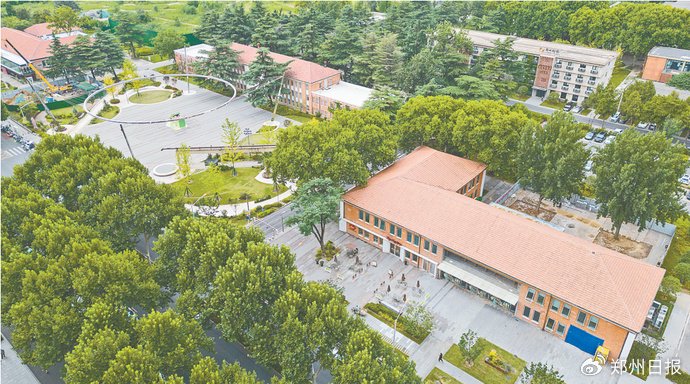
Core Viewpoint - The article highlights the transformation and revitalization of the Zhongyuan District in Zhengzhou, showcasing its historical significance as an industrial base and its current evolution into a vibrant urban area with modern amenities and cultural richness [1][9][10]. Industrial Development - Zhongyuan District is recognized as an old industrial base, having been home to significant industrial achievements such as the production of China's first artificial diamond in 1963 and the first cubic boron nitride in 1966 [3][4]. - The district was a hub for numerous state-owned enterprises, contributing to a substantial portion of Zhengzhou's industrial output, with cotton mills accounting for 36.22% of the city's industrial value in 1957 [3][4]. - The area has transitioned from traditional manufacturing to a more dynamic industrial landscape, with the "One Road Four Streets" area now bustling with commercial activity and tourism [9][10]. Cultural Heritage - Zhongyuan District is rich in cultural heritage, with archaeological sites dating back to the Yangshao and Erlitou cultures, as well as remnants from the Shang and Zhou dynasties [4][5]. - The district's historical significance is emphasized through its numerous cultural relics and sites, which have been developed into ecological cultural parks for public engagement [5][6]. Urbanization and Governance - The establishment of Zhongyuan District has been pivotal in the urbanization of Zhengzhou, evolving through various administrative changes since the Qing Dynasty [6][7]. - The district has undergone significant urban development, with all areas now fully urbanized and organized into street-level governance structures [8][10]. Future Development and Innovation - The district is focusing on high-quality development, aiming to integrate technology and industry, with plans to enhance its modern industrial system and promote innovation [10][11]. - There is a strategic emphasis on developing a digital economy and fostering industries such as advanced manufacturing and artificial intelligence, with a target of achieving a future industry scale of 40 billion yuan by 2030 [11].
宏观量化经济指数周报20250720:科创债ETF扩容加快结构性政策工具投放-20250720
Soochow Securities· 2025-07-20 13:03
Economic Indicators - As of July 20, 2025, the ECI supply index is at 50.13%, down 0.01 percentage points from last week, while the demand index is at 49.91%, also down 0.01 percentage points[8] - The monthly ECI supply index for July is 50.12%, a decrease of 0.04 percentage points from June, and the demand index is at 49.92%, down 0.01 percentage points from June[9] - The ELI index is at -0.91%, up 0.01 percentage points from last week, indicating a potential acceleration in structural policy tool deployment[12] Investment and Financing - In the first half of 2025, China’s bond market issued various bonds totaling 44.3 trillion yuan, a year-on-year increase of 16%[15] - Net financing from bonds reached 8.8 trillion yuan, accounting for 38.6% of the increase in social financing scale[15] - The average issuance rate for corporate credit bonds in June 2025 was 2.08%, down 32 basis points from the previous year[15] Consumer Trends - The average daily sales of passenger cars for the week ending July 13, 2025, was 47,548 units, an increase of 4,218 units year-on-year[22] - Retail sales of passenger cars from July 1-13, 2025, totaled 571,000 units, a 7.0% increase year-on-year, but a 5.0% decrease month-on-month[22] Construction and Real Estate - The area of land supplied in 100 major cities decreased by 18.63% week-on-week, totaling 12.75 million square meters[26] - The transaction area of commercial housing in 30 major cities fell by 15.63% week-on-week, amounting to 1.0916 million square meters[26] Inflation and Prices - The average wholesale price of pork is 20.65 yuan/kg, up 0.04 yuan/kg from last week, while the average price of 28 monitored vegetables remains at 4.38 yuan/kg[38] - Brent crude oil futures settled at $69.05/barrel, down $0.74 from the previous week, while COMEX gold futures rose to $3,351.70/ounce, up $17.62[38]
国内高频 | 基建开工连续回升(申万宏观·赵伟团队)
赵伟宏观探索· 2025-07-19 03:24
Group 1: Industrial Production - Industrial production remains relatively stable, with the blast furnace operating rate maintaining at 0.7% year-on-year [2][5][8] - The chemical production chain shows a slight decline, with soda ash and PTA operating rates down by 2.6 percentage points to 6% and 0.9 percentage points to 1.3%, respectively [2][15] - The automotive sector's semi-steel tire operating rate is still below last year's level, increasing by 2.7 percentage points to -6.3% [2][15] Group 2: Construction Industry - The construction industry shows a mixed performance, with the nationwide grinding operating rate down by 2.4 percentage points to 3.7% [2][27] - Cement shipment rates remain low, with a year-on-year increase of 1.2% to -3% [2][27] - Asphalt operating rates have seen a recovery, increasing by 0.6 percentage points to 7.4% [2][35] Group 3: Real Estate Transactions - Real estate transactions are at a low point, with the average daily transaction area for new homes down by 19.1% year-on-year, despite a 13.1% increase [2][44] - First-tier cities continue to see a decline in transactions, down by 18.6% to 39.9% [2][44] - Third-tier cities show significant improvement, with transaction volumes increasing by 72.4% to 17% [2][44] Group 4: Transportation and Shipping - National railway and highway freight volumes have decreased, with year-on-year declines of 1.3% to 1.2% and 0.9% to 0.8%, respectively [2][54] - Port cargo throughput and container throughput have also shown a decline, down by 9.3% to 6.8% and 4.7% to 0.9%, respectively [2][54] - The overall intensity of human mobility remains high, with a slight year-on-year decrease of 2% to 12.6% [2][63] Group 5: Price Trends - Agricultural product prices are mixed, with pork and vegetable prices rising by 0.1% and 0.8% respectively, while egg and fruit prices fell by 2.2% and 0.1% [3][85] - Industrial product prices have generally increased, with the South China industrial price index rising by 1.1% [3][93] - The energy and chemical price index increased by 1.3%, while the metal price index rose by 0.7% [3][93]

消息人士:英国和印度可能在下周公布贸易协议,包括威士忌、电动汽车和纺织品。
news flash· 2025-07-18 13:27
Group 1 - The UK and India are expected to announce a trade agreement next week, which will include sectors such as whisky, electric vehicles, and textiles [1]
重大利好!汽车、钢铁等十大重点行业稳增长方案即将出台
Zheng Quan Shi Bao· 2025-07-18 09:49
Group 1 - The core viewpoint of the news is the significant growth in China's industrial and information technology sectors in the first half of 2025, with a focus on digital technology advancements and manufacturing performance [1] - In the first half of 2025, the industrial added value of large-scale enterprises in China increased by 6.4% year-on-year, with the manufacturing sector accounting for 25.7% of GDP [1] - The number of large-scale industrial enterprises reached 520,000, and profits in the manufacturing sector grew by 5.4% year-on-year [1] - The digital industry saw a business revenue increase of 9.3% year-on-year, with a growth rate improvement of 3.4 percentage points compared to the previous year [1] - Significant advancements in technology and industry integration were noted, including the certification of the AG600 amphibious firefighting aircraft and the rapid application of humanoid robots across various fields [1] - The production of industrial robots and service robots increased by 35.6% and 25.5% year-on-year, respectively [1] - The equipment manufacturing sector accounted for 35.5% of the total industrial added value, demonstrating its role as a stabilizer in industrial development [1] - Fixed asset investments in key manufacturing sectors such as railways, shipbuilding, aerospace, and automobiles achieved double-digit growth [1] - Investment in equipment and tools increased by 17.3% year-on-year, contributing 86% to the overall investment growth [1] Group 2 - In the automotive industry, production and sales reached 15.621 million and 15.653 million units, respectively, with year-on-year growth of 12.5% and 11.4% [2] - New energy vehicles saw production and sales of 6.968 million and 6.937 million units, with year-on-year growth of 41.4% and 40.3%, respectively, making up 44.3% of new car sales [2] - The Ministry of Industry and Information Technology plans to ensure stable industrial economic operations and promote the integration of technological and industrial innovation [2] - Upcoming growth stabilization plans for key industries such as steel, non-ferrous metals, petrochemicals, and building materials are expected to be released [2] - The Ministry will also issue digital transformation plans for various industries, focusing on 82 typical scenarios for intelligent upgrades [2] - Future industry innovations will include the development of humanoid robots, the metaverse, and brain-computer interfaces, aiming to cultivate new industries and drive new growth [2]