原油

Search documents
偏空氛围压制,能化震荡偏弱:橡胶甲醇原油
Bao Cheng Qi Huo· 2025-10-20 09:38
Report Industry Investment Rating No relevant content provided. Core Viewpoints - The domestic Shanghai rubber futures 2601 contract is in a weak state. The market has returned to a situation dominated by a weak supply - demand structure, and under a weak macro - expectation, the contract remains weak. The contract showed a trend of increasing volume, reducing positions, oscillating weakly, and slightly closing lower on Monday, with the price closing 0.07% lower at 14810 yuan/ton, and the 1 - 5 month - spread premium narrowing to 5 yuan/ton [6]. - The domestic methanol futures 2601 contract is also in a weak state. The domestic methanol market is in a stage of oversupply and weak demand. The contract showed a trend of increasing volume, increasing positions, oscillating weakly, and slightly closing lower on Monday, with the price closing 1.00% lower at 2266 yuan/ton, and the 1 - 5 month - spread discount widening to 26 yuan/ton [6]. - The domestic crude oil futures 2512 contract showed a trend of increasing volume, increasing positions, rebounding but being blocked, and slightly closing lower on Monday, with the price closing 0.86% lower at 435.8 yuan/barrel. Systemic risks have occurred due to the continuous shutdown of the US federal government and Trump's resumption of the trade tariff war. At the same time, OPEC+ oil - producing countries continue to increase production, and the geopolitical premium of crude oil is being reversed due to the possible end of the Palestine - Israel conflict in the Middle East [7]. Summary by Related Catalogs 1. Industry Dynamics Rubber - As of October 12, 2025, the total inventory of natural rubber in bonded and general trade in Qingdao was 45.6 million tons, a decrease of 0.05 million tons (0.11%) from the previous period. The bonded area inventory increased by 2.02% to 7.08 million tons, and the general trade inventory decreased by 0.49% to 38.52 million tons. The inbound rate of bonded warehouses increased by 3.74 percentage points, and the outbound rate increased by 1.40 percentage points; the inbound rate of general trade warehouses decreased by 4.11 percentage points, and the outbound rate decreased by 4.91 percentage points [9]. - As of the week of October 17, 2025, the capacity utilization rate of China's semi - steel tire sample enterprises was 71.07%, a week - on - week increase of 28.92 percentage points and a year - on - year decrease of 8.57 percentage points; the capacity utilization rate of China's full - steel tire sample enterprises was 63.96%, a week - on - week increase of 22.43 percentage points and a year - on - year increase of 4.98 percentage points. Most enterprises' capacity utilization rates have returned to pre - holiday levels, but the overall shipment performance varies [9]. - In September 2025, China's logistics industry prosperity index was 51.2%, a 0.3 - percentage - point increase from the previous month. The new order index of logistics enterprises was 53.3%, a 1 - percentage - point increase from the previous month, remaining in a high - prosperity range above 52% for four consecutive months. In September, China's automobile production and sales were 3.276 million and 3.226 million vehicles respectively, with year - on - year increases of 17.1% and 14.9% [10]. - In September 2025, the sales volume of China's heavy - truck market was 105,000 vehicles, a year - on - year increase of about 82% and a month - on - month increase of 15%, achieving six consecutive months of growth. From January to September 2025, the cumulative sales volume of the heavy - truck market was about 821,000 vehicles, a year - on - year increase of 20% [10]. Methanol - As of the week of October 17, 2025, the average domestic methanol operating rate was 84.38%, a week - on - week increase of 4.00%, a month - on - month increase of 4.99%, and a year - on - year increase of 2.95%. The average weekly methanol production was 1.9837 million tons, a week - on - week decrease of 49,300 tons, a month - on - month increase of 64,400 tons, and a significant increase of 118,600 tons compared to the same period last year [11]. - As of the week of October 17, 2025, the domestic formaldehyde operating rate was 30.95%, a slight week - on - week decrease of 0.03%; the dimethyl ether operating rate was 6.68%, a week - on - week decrease of 1.52%; the acetic acid operating rate was 71.61%, a week - on - week decrease of 10.04%; the MTBE operating rate was 54.89%, a week - on - week decrease of 3.00%. The average operating load of domestic coal (methanol) to olefin plants was 88.36%, a slight week - on - week increase of 0.39 percentage points and a month - on - month increase of 5.48% [11]. - As of October 17, 2025, the domestic methanol - to - olefin futures market profit was - 252 yuan/ton, a week - on - week decrease of 53 yuan/ton and a month - on - month decrease of 106 yuan/ton [11]. - As of the week of October 17, 2025, the methanol inventory in ports in East and South China was 1.2589 million tons, a week - on - week decrease of 14,100 tons, a month - on - month decrease of 70,900 tons, and a significant increase of 324,600 tons compared to the same period last year. As of the week of October 16, 2025, the total inland methanol inventory was 359,900 tons, a week - on - week increase of 20,400 tons, a month - on - month increase of 19,400 tons, and a significant decrease of 109,700 tons compared to the same period last year [12]. Crude Oil - As of the week of October 10, 2025, the number of active US oil drilling platforms was 418, a week - on - week decrease of 4 and a decrease of 83 compared to the same period last year. The average daily US crude oil production was 13.636 million barrels, a slight week - on - week increase of 0.7 million barrels per day and a significant year - on - year increase of 1.36 million barrels per day [12]. - As of the week of October 10, 2025, the US commercial crude oil inventory (excluding strategic petroleum reserves) was 424 million barrels, a week - on - week increase of 3.524 million barrels and a slight year - on - year increase of 3.235 million barrels. The crude oil inventory in Cushing, Oklahoma was 22.001 million barrels, a week - on - week decrease of 703,000 barrels; the US strategic petroleum reserve (SPR) inventory was 407.7 million barrels, a week - on - week increase of 760,000 barrels. The US refinery operating rate was 85.7%, a week - on - week decrease of 6.7 percentage points, a month - on - month decrease of 7.6 percentage points, and a slight year - on - year decrease of 2.0 percentage points [13]. - As of September 23, 2025, the average non - commercial net long positions in WTI crude oil were 102,958 contracts, a week - on - week increase of 4,249 contracts and a significant decrease of 19,105 contracts (a 15.65% decrease) compared to the August average. As of October 17, 2025, the average net long positions of Brent crude oil futures funds were 110,311 contracts, a week - on - week decrease of 31,345 contracts and a significant decrease of 106,044 contracts (a 49.01% decrease) compared to the September average [13]. 2. Spot Price Table | Variety | Spot Price | Change from Previous Day | Futures Main Contract | Change from Previous Day | Basis | Change | | ---- | ---- | ---- | ---- | ---- | ---- | ---- | | Shanghai Rubber | 14,250 yuan/ton | - 50 yuan/ton | 14,810 yuan/ton | + 115 yuan/ton | - 560 yuan/ton | - 115 yuan/ton | | Methanol | 2,290 yuan/ton | + 0 yuan/ton | 2,266 yuan/ton | - 6 yuan/ton | + 24 yuan/ton | + 6 yuan/ton | | Crude Oil | 421.2 yuan/barrel | + 0.1 yuan/barrel | 435.8 yuan/barrel | + 0.8 yuan/barrel | - 14.6 yuan/barrel | + 0.7 yuan/barrel | [15] 3. Related Charts - Rubber: Related charts include rubber basis, Shanghai Futures Exchange rubber futures inventory, Qingdao bonded area rubber inventory, full - steel tire operating rate trend, and semi - steel tire operating rate trend [16][18][19]. - Methanol: Related charts include methanol basis, methanol 1 - 5 month - spread, methanol domestic port inventory, methanol inland social inventory, methanol - to - olefin operating rate change, and coal - to - methanol cost accounting [31][33][35]. - Crude Oil: Related charts include crude oil basis, Shanghai Futures Exchange crude oil futures inventory, US crude oil commercial inventory, US refinery operating rate, WTI crude oil net position holding change, and Brent crude oil net position holding change [44][46][48].
金融期货早评-20251020
Nan Hua Qi Huo· 2025-10-20 05:44
Report Industry Investment Rating No information provided in the given reports. Core Views of the Report - The core logic of the domestic market is that after the escalation of Sino-US trade frictions last week, the asset reaction this week was weaker than in April. A-shares showed a "high-low switch" feature. Before the APEC meeting, the market was still affected by friction news. Although both sides were likely to negotiate cautiously, an unexpected escalation could trigger risks. Commodity prices were unlikely to show a trend upward. Overseas, the US government shutdown led to a data vacuum, and market concerns about the economy eased but risks remained. The Fed was expected to cut interest rates by 25 basis points in October, but the actual impact might be limited due to market pre-pricing [2]. - The RMB exchange rate was expected to remain basically stable within a reasonable range under the policy tone of "stability first", especially before the important meeting at the end of October [4]. - Stock index fluctuations were expected to intensify, but there was support below. The market was likely to be dominated by large-cap stock indices [7]. - Treasury bonds needed to focus on whether risk sentiment would recover. If risk sentiment recovered and the stock market rebounded, the bond market might not rise further. But before the Sino-US negotiation results were finalized, it was generally favorable for the bond market [9]. - The container shipping index (European line) futures were expected to continue to fluctuate widely in the short term. The main contract EC2512 was expected to be supported at 1600 points and resisted near 1750 points [11]. - Precious metals were recommended to be cautious in the short term and bullish in the medium term [16]. - Copper prices were expected to be in a high-level consolidation if the bullish factors did not ferment. For downstream enterprises, a combination strategy of "selling put options + buying futures at low prices" was recommended [19]. - Aluminum was expected to fluctuate at a high level; alumina was expected to run weakly; cast aluminum alloy was expected to fluctuate at a high level [21]. - Zinc was expected to fluctuate mainly, with the long and short sides still unclear [22]. - Nickel and stainless steel were expected to fluctuate repeatedly due to prominent inventory accumulation [24]. - Tin was expected to fluctuate narrowly. From a fundamental perspective, the supply was weaker than the demand, and it was still regarded as a long position [25]. - Lead was expected to fluctuate narrowly, with limited upside space [26]. - Steel prices might rebound slightly, but the rebound height was limited due to the weak fundamentals of steel, and the possibility of subsequent decline was relatively large [28]. - Iron ore prices were under short-term pressure, and the focus of the market in the next two weeks might be on the Fourth Plenary Session and possible Sino-US talks [30]. - Coking coal and coke were expected to be treated with a volatile mindset, with coking coal in the range of (1100, 1350) and coke in the range of (1600, 1850) [32]. - Ferrosilicon and ferromanganese were under pressure due to high inventory and weak downstream demand. If there were no unexpected stimulus policies, their prices would still be under pressure [33]. - Crude oil was expected to face downward risks in the short and medium term, with the support at $60 being crucial [37]. - LPG was relatively strong in the domestic market due to restricted arrivals, but the overall situation was still affected by the weak fundamentals of crude oil [39]. - PTA-PX was recommended to be observed in the short term, paying attention to domestic and foreign macro nodes [40]. - MEG was expected to fluctuate widely in the short term, following the macro sentiment. If there was an oversell, selling put options could be considered [46]. - Methanol was expected to fluctuate under pressure, with the price range maintaining at 2250 - 2350 [47]. - PP was under pressure due to the supply-demand imbalance and macro factors. Attention should be paid to macro trends and cost fluctuations [50]. - PE was also under pressure due to the supply-demand imbalance and macro factors. Attention should be paid to macro trends and cost fluctuations [54]. - Pure benzene and styrene were mainly affected by macro factors. Short-term observation was recommended until the macro situation became clear [57]. - Fuel oil's cracking upside space was limited [58]. - Low-sulfur fuel oil's cracking was expected to remain at a low level, with limited upward drive [59]. - Asphalt was expected to decline weakly. Short-term observation was recommended, paying attention to whether there were new demand growth points in the domestic macro meeting [62]. - Rubber and 20 rubber were expected to fluctuate weakly. RU2601 was expected to fluctuate in the range of 14600 - 15300, and NR2511 in the range of 12000 - 12500 [64]. - Urea was expected to fluctuate under pressure. Attention should be paid to new export quotas and macro sentiment [65]. - Soda ash was expected to be volatile due to the increase in supply pressure and inventory. The price was limited by high inventory but supported by cost [66]. - Glass was under pressure due to high inventory and weak demand. Attention should be paid to industrial policies [67]. - Caustic soda was expected to wait for the spot to bottom out to stimulate speculative demand. The long-term production pressure continued [69]. - Pulp was expected to continue the oscillatory pattern, and offset paper was still under pressure [70]. - Logs needed to pay attention to the marginal bullish impact on the far-month contracts under the influence of shipping sanctions [70]. Summary by Relevant Catalogs Financial Futures Macro - The Fourth Plenary Session of the 20th CPC Central Committee was held from October 20th to 23rd to study the suggestions for formulating the "15th Five-Year Plan". - He Lifeng had a video call with US Treasury Secretary Bezant and Trade Representative Greer, and both sides agreed to hold a new round of Sino-US economic and trade consultations as soon as possible. - The State Council Executive Meeting proposed to promote logistics cost reduction, improve the green trade policy system, and support market entities to increase grain purchases. - The US imposed tariffs on medium and heavy trucks and buses starting from November 1st, and the Trump administration adjusted its strategy to hedge legal risks. - Japan's ruling coalition was basically reached, but the future of the "Hayashi deal" was uncertain [1]. RMB Exchange Rate - The onshore RMB against the US dollar closed at 7.1265 at 16:30 on the previous trading day, down 16 basis points from the previous trading day, and closed at 7.1277 at night. The central parity rate of the RMB against the US dollar was reported at 7.0949, up 19 basis points. - The RMB exchange rate was expected to remain stable due to policy guidance and the influence of external factors [3][4]. Stock Index - The stock index fluctuated more due to external factors, but there was support below. The market was likely to be dominated by large-cap stock indices. Attention should be paid to Sino-US trade negotiations, the Fourth Plenary Session, the Financial Street Forum Annual Meeting, and the Fed's interest rate meeting [6][7]. Treasury Bonds - Treasury bonds needed to focus on whether risk sentiment would recover. If risk sentiment recovered and the stock market rebounded, the bond market might not rise further. But before the Sino-US negotiation results were finalized, it was generally favorable for the bond market. Low-position long orders could be held in small quantities, and those with empty positions could wait for the price to fall to build positions [9]. Container Shipping European Line - The container shipping index (European line) futures were expected to continue to fluctuate widely in the short term. The main contract EC2512 was expected to be supported at 1600 points and resisted near 1750 points. Trend traders could try to go long lightly at the support of 1600 points, and arbitrage traders could pay attention to the positive spread opportunity of EC2512 - EC2602 [10][11]. Commodities Precious Metals - Precious metals were recommended to be cautious in the short term and bullish in the medium term. Silver was affected by spot shortages and short squeeze pressure, and the "232 investigation" on silver and palladium in the US also had an impact. The US government shutdown, trade tariff conflicts, and rising banking risks increased economic and financial risks, leading to an increase in the demand for precious metals as a safe-haven asset [13][16]. Copper - Copper prices were expected to be in a high-level consolidation if the bullish factors did not ferment. For downstream enterprises, a combination strategy of "selling put options + buying futures at low prices" was recommended. The downstream enterprises generally resisted high copper prices, and the destocking was the main theme at present [17][19]. Aluminum Industry Chain - Aluminum was expected to fluctuate at a high level; alumina was expected to run weakly; cast aluminum alloy was expected to fluctuate at a high level. The domestic aluminum market was supported by inventory destocking, while alumina was in an oversupply situation, and cast aluminum alloy had strong followability to aluminum [20][21]. Zinc - Zinc was expected to fluctuate mainly, with the long and short sides still unclear. The export window was open, and attention should be paid to the opening of the export window and the possibility of macro upward drive [22]. Nickel and Stainless Steel - Nickel and stainless steel were expected to fluctuate repeatedly due to prominent inventory accumulation. The supply and demand of nickel and stainless steel were affected by factors such as tariffs, production capacity, and inventory. Attention should be paid to Sino-US tariff issues and the expectation of interest rate cuts [23][24]. Tin - Tin was expected to fluctuate narrowly. From a fundamental perspective, the supply was weaker than the demand, and it was still regarded as a long position. The support was expected to be around 276,000 yuan [25]. Lead - Lead was expected to fluctuate narrowly, with limited upside space. The supply was affected by silver prices and raw material restrictions, and the demand was affected by domestic consumption and export demand. Attention should be paid to inventory changes [26]. Black Metals - Steel prices might rebound slightly, but the rebound height was limited due to the weak fundamentals of steel, and the possibility of subsequent decline was relatively large. Iron ore prices were under short-term pressure, and the focus of the market in the next two weeks might be on the Fourth Plenary Session and possible Sino-US talks. Coking coal and coke were expected to be treated with a volatile mindset, with coking coal in the range of (1100, 1350) and coke in the range of (1600, 1850). Ferrosilicon and ferromanganese were under pressure due to high inventory and weak downstream demand. If there were no unexpected stimulus policies, their prices would still be under pressure [28][30][32]. Energy and Chemicals - Crude oil was expected to face downward risks in the short and medium term, with the support at $60 being crucial. LPG was relatively strong in the domestic market due to restricted arrivals, but the overall situation was still affected by the weak fundamentals of crude oil. PTA - PX was recommended to be observed in the short term, paying attention to domestic and foreign macro nodes. MEG was expected to fluctuate widely in the short term, following the macro sentiment. If there was an oversell, selling put options could be considered. Methanol was expected to fluctuate under pressure, with the price range maintaining at 2250 - 2350. PP and PE were under pressure due to the supply - demand imbalance and macro factors. Attention should be paid to macro trends and cost fluctuations. Pure benzene and styrene were mainly affected by macro factors. Short - term observation was recommended until the macro situation became clear. Fuel oil's cracking upside space was limited. Low - sulfur fuel oil's cracking was expected to remain at a low level, with limited upward drive. Asphalt was expected to decline weakly. Short - term observation was recommended, paying attention to whether there were new demand growth points in the domestic macro meeting [36][37][39]. Rubber and 20 Rubber - Rubber and 20 rubber were expected to fluctuate weakly. The supply was affected by weather and inventory, and the demand was affected by factors such as tire sales, export, and automobile inventory. RU2601 was expected to fluctuate in the range of 14600 - 15300, and NR2511 in the range of 12000 - 12500 [63][64]. Urea - Urea was expected to fluctuate under pressure. The demand was weak, and the inventory increased. Attention should be paid to new export quotas and macro sentiment [65]. Glass, Soda Ash, and Caustic Soda - Soda ash was expected to be volatile due to the increase in supply pressure and inventory. The price was limited by high inventory but supported by cost. Glass was under pressure due to high inventory and weak demand. Attention should be paid to industrial policies. Caustic soda was expected to wait for the spot to bottom out to stimulate speculative demand. The long - term production pressure continued [66][67][69]. Pulp and Offset Paper - Pulp was expected to continue the oscillatory pattern, and offset paper was still under pressure. Pulp was affected by high inventory and cost support, and offset paper was affected by supply - demand mismatch [70]. Logs - Logs needed to pay attention to the marginal bullish impact on the far - month contracts under the influence of shipping sanctions [70].
聚酯周报:原油延续下跌趋势,聚酯供给端有所收缩-20251020
Guo Mao Qi Huo· 2025-10-20 05:20
1. Report Industry Investment Rating - The investment view is "oscillating", with no obvious driving force, and it is expected to mainly oscillate [4] 2. Core View of the Report - The report analyzes the polyester industry from multiple aspects including supply, demand, inventory, etc. It points out that the supply side of polyester has shrunk, the downstream load of polyester remains at about 90%, and the PTA port inventory has slightly increased. The PTA basis has stabilized, but the profit has continued to shrink. The PX - naphtha spread is at $250, and the PTA processing fee remains at around 200 yuan. The PTA price is at a neutral - low level, and the absolute price has further declined due to the fall in crude oil prices. The overall market is expected to oscillate mainly due to the lack of obvious driving factors [4] 3. Summary According to Relevant Catalogs 3.1 Main Views and Strategy Overview - **Supply**: It is bearish. The trade war may escalate, slightly affecting China's crude oil imports. The supply of domestic PTA devices has slightly shrunk, the PTA basis has stabilized, the PX device operating rate is stable, the cost has weakened, and although the PXN has expanded, polyester has followed the decline in crude oil [4] - **Demand**: It is bearish. The downstream load of polyester remains at about 90%, the inventory of polyester factories is optimistic, and it is necessary to pay attention to whether the weaving can maintain the load after the "Golden September and Silver October" [4] - **Inventory**: It is neutral. The port inventory of PTA has slightly increased, and the physical goods in the Ningbo direction are slightly in short supply [4] - **Basis**: It is bearish. The PTA basis has quickly stabilized, the PTA profit has continued to shrink, and the liquidity in the PTA market is still very loose [4] - **Profit**: It is bearish. The spread between PX and naphtha is $250, the PTA processing fee remains at around 200 yuan, and the PTA processing fee has expanded [4] - **Valuation**: It is neutral. The PTA price is at a neutral - low level. After the end of the domestic maintenance season, the reforming devices are gradually recovering, and the absolute price of PTA has further declined due to the fall in crude oil prices [4] - **Macro Policy**: It is neutral. On October 15, Fed Chairman Powell hinted that the Fed is planning to cut interest rates by 25 basis points later this month [4] - **Investment View**: It is oscillating. There is no obvious driving force, and it is expected to mainly oscillate [4] - **Trading Strategy**: For unilateral trading, it is recommended to wait and see, and pay attention to geopolitical risks [4] 3.2 Oil Product Fundamentals Overview - **Macro Situation**: On October 15, Fed Chairman Powell said that the US economy seems to be in a stable state, but the government shutdown may affect data collection. On October 17, major European stock indexes fell in early trading, with concerns about the banking industry spreading, and the European defense stocks also attracted attention [8] - **Gasoline**: The shutdown of the US government may affect demand in the off - season. The North American refinery load has declined, the total gasoline inventory has decreased by 1.6 million barrels, indicating strong terminal demand. The price of high - octane aromatics has remained relatively stable, and its spread with RBOB gasoline has remained stable at 68 cents [22] 3.3 Aromatic Hydrocarbon Fundamentals Overview - **Supply Increase**: With the commissioning of Yulong Petrochemical, the supply of MX is expected to increase in October. The future domestic xylene capacity will continue to be put into production at a high speed, with 1.7 million tons of xylene devices in Jiujiang Petrochemical, Huajin Aramco, and Zhongsha Gulei waiting to be put into production in 2026 [62] - **Market Situation**: The cross - regional arbitrage space for aromatics has opened, but physical trade has not occurred. The profit of selective disproportionation has declined, and the pure benzene price has suppressed the disproportionation profit. After the end of the maintenance season, the floating spread of PX has continued to weaken, the operating rate has significantly recovered, and the load has reached a very high level [40][54][62] - **Outlook**: Mixed xylene is facing continuous downward pressure. The profit of both gasoline reforming and aromatic hydrocarbon reforming has recovered, but the PTA supply side has shrunk, the processing fee has remained low, and the industry profit is still restricted by over - capacity [52][66] 3.4 Polyester Fundamentals Overview - **Ethylene Glycol**: The supply of ethylene glycol has increased, and the price is running weakly. The inventory in East China ethylene glycol ports is still at a low level, the arrival volume at ports is limited, the import volume in the overseas market is expected to decline, and the new domestic devices have put pressure on the price. The coal - to - ethylene glycol operating rate has continued to recover, and the profit has been repaired [80] - **Gasoline**: The load of major refineries may decline due to port transportation [81] - **Polyester**: Polyester continues to maintain a high load, but the weaving load may decline. The polyester production has increased, and the downstream has entered the off - season [88][90]
能源化工期权策略早报:能源化工期权-20251020
Wu Kuang Qi Huo· 2025-10-20 03:43
Group 1: General Information - The report is an Energy Chemical Options Strategy Morning Report dated October 20, 2025 [2] - It covers energy, polyolefin, polyester, alkali chemical, and other energy chemical options [3] - The recommended strategy is to construct an option combination strategy mainly for sellers and a spot hedging or covered strategy to enhance returns [3] Group 2: Underlying Futures Market Overview - The report provides the latest price, change, change rate, trading volume, volume change, open interest, and open interest change of various option underlying futures contracts [4] Group 3: Option Factor - Volume and Open Interest PCR - The report presents the volume, volume change, open interest, open interest change, volume PCR, volume PCR change, open interest PCR, and open interest PCR change of various option varieties [5] Group 4: Option Factor - Pressure and Support Levels - The report shows the at-the-money strike price, pressure point, pressure point deviation, support point, support point deviation, maximum call open interest, and maximum put open interest of various option varieties [6] Group 5: Option Factor - Implied Volatility - The report lists the at-the-money implied volatility, weighted implied volatility, weighted implied volatility change, annual average implied volatility, call implied volatility, put implied volatility, historical volatility, and implied - historical volatility difference of various option varieties [7] Group 6: Strategy and Recommendations for Different Options Energy Options (Crude Oil and LPG) - For crude oil, OPEC maintains a 137,000 - barrel - per - day increase. The market has been weak with pressure. Implied volatility is near the mean, and the open interest PCR indicates a weak market. Strategies include a neutral call + put option selling combination and a long collar strategy for spot hedging [8] - For LPG, the domestic commodity volume decreased in September. The market has been in a weak rebound with pressure. Implied volatility is below the mean, and the open interest PCR shows a weak market. Similar strategies to crude oil are recommended [10] Alcohol Options (Methanol and Ethylene Glycol) - For methanol, port inventory decreased, and enterprise inventory increased. The market has been weak. Implied volatility is near the mean, and the open interest PCR indicates a weak - oscillating market. Strategies include a bearish call + put option selling combination and a long collar strategy for spot hedging [10] - For ethylene glycol, port inventory is expected to decrease slightly, and it is in a stock - building cycle. The market has been weak. Implied volatility is below the mean, and the open interest PCR shows strong bearish power. Strategies include a bear spread of put options, a short - volatility strategy, and a long collar strategy for spot hedging [11] Polyolefin Options (Polypropylene) - For polypropylene, production enterprise, trader, and port inventories have decreased. The market has been weak. Implied volatility is near the mean, and the open interest PCR indicates a weak market. Strategies include a long collar strategy for spot hedging [11] Rubber Options - For rubber, the social inventory has decreased. The market has been in a weak consolidation. Implied volatility is near the mean, and the open interest PCR indicates a weak market. Strategies include a bearish call + put option selling combination [12] Polyester Options (PTA) - For PTA, the social inventory has increased slightly, and it is expected to accumulate more. The market has been weak. Implied volatility is above the mean, and the open interest PCR indicates an oscillating market. Strategies include a bearish call + put option selling combination [12] Alkali Chemical Options (Caustic Soda and Soda Ash) - For caustic soda, the capacity utilization rate has decreased. The market has been in a weak bearish trend. Implied volatility is high, and the open interest PCR indicates a weak - oscillating market. Strategies include a bear spread strategy and a long collar strategy for spot hedging [13] - For soda ash, the factory inventory has increased. The market has been in a low - level weak oscillation. Implied volatility is above the historical level, and the open interest PCR shows strong bearish pressure. Strategies include a short - volatility combination and a long collar strategy for spot hedging [13] Urea Options - For urea, enterprise and port inventories have increased. The market has been in a low - level weak oscillation. Implied volatility is near the historical mean, and the open interest PCR shows strong bearish pressure. Strategies include a bear spread of put options, a bearish call + put option selling combination, and a long collar strategy for spot hedging [14] Group 7: Option Charts - The report includes various charts for different option varieties, such as price trends, trading volume and open interest, open interest - PCR, turnover - PCR, implied volatility, historical volatility cones, and pressure and support levels [15 - 204]
能源化工日报 2025-10-20:原油,甲醇,尿素-20251020
Wu Kuang Qi Huo· 2025-10-20 01:07
Report Industry Investment Rating No relevant content provided. Core Viewpoints of the Report - For crude oil, although the geopolitical premium has dissipated and OPEC's production increase is minimal with supply not yet surging, short - term oil prices are not advisable to be overly bearish. A range - trading strategy of buying low and selling high is maintained, but it's recommended to wait and see for now to test OPEC's export price - support willingness [3]. - For methanol, the peak - season demand has disappointed, and the pattern of high domestic inventory and weak reality remains. However, the port pressure has eased due to the delay in unloading imported goods. Future upward price drivers may come from the expected improvement brought by winter gas restrictions. It's advisable to focus on supply - side disturbances and look for long 1 - short 5 spread opportunities at low prices [6]. - For urea, there is still a lack of effective positive factors in the domestic market, but the price is at a low level with low valuation. It's recommended to wait and see or look for long - position opportunities at low prices [9][11]. - For rubber, the rubber price has stabilized in the short term. It's recommended to set a stop - loss for short - term long positions and enter and exit quickly. Partial positions can be established for the strategy of buying RU2601 and selling RU2609 [14]. - For PVC, the domestic supply is strong while demand is weak, and the export expectation is weakening. It's recommended to look for short - position opportunities in the medium term [18]. - For pure benzene and styrene, the port inventory of styrene is decreasing significantly, and the price may stop falling temporarily [21]. - For polyethylene, the price may maintain a low - level oscillation in the long term [24]. - For polypropylene, under the background of weak supply and demand, the overall inventory pressure is high, and the cost - side supply surplus pattern suppresses the market [27]. - For PX, currently, there is a lack of driving factors, and it's recommended to wait and see [28]. - For PTA, the supply is increasing slightly, and the demand shows signs of weakness. It's recommended to wait and see [29]. - For ethylene glycol, the supply is high, and the port is starting to accumulate inventory. It's recommended to look for short - position opportunities [31]. Summary According to Related Catalogs Crude Oil - **Market Information**: The main INE crude oil futures closed down 10.60 yuan/barrel, a 2.39% decline, at 432.60 yuan/barrel. Related refined oil futures also declined. The U.S. EIA weekly data showed changes in various oil inventories, such as a 3.52 - million - barrel increase in commercial crude oil inventory [2]. - **Strategy Viewpoint**: Despite the disappearance of geopolitical premiums and minimal OPEC production increase, short - term oil prices are not advisable to be overly bearish. A range - trading strategy of buying low and selling high is maintained, but short - term waiting and seeing is recommended [3]. Methanol - **Market Information**: The price in Taicang decreased by 25 yuan, in Inner Mongolia by 12.5 yuan, and in southern Shandong by 2.5 yuan. The 01 - contract on the futures market decreased by 47 yuan to 2272 yuan/ton, with the basis at par [5]. - **Strategy Viewpoint**: Import unloading is delayed, leading to a short - term decline in arrivals and a reduction in port inventory. Domestic supply has slightly decreased, and coal prices are rising, reducing coal - to - methanol profits. Demand remains weak. The peak - season demand has disappointed, but the port pressure has eased. Future upward drivers may come from winter gas restrictions. Focus on supply - side disturbances and long 1 - short 5 spread opportunities at low prices [6]. Urea - **Market Information**: Spot prices in Shandong and Henan remained stable. The 01 - contract on the futures market decreased by 2 yuan to 1602 yuan, with a basis of - 72 [8]. - **Strategy Viewpoint**: Short - term malfunctioning devices have increased, and the operating rate has significantly declined. The demand is weak, but the price is at a low level. It's recommended to wait and see or look for long - position opportunities at low prices [9]. Rubber - **Market Information**: The rubber price is oscillating and recovering, with RU stabilizing and NR being relatively strong. Typhoon Fengshen may affect rubber - producing areas. There are different views among bulls and bears. As of October 16, 2025, the operating rates of all - steel and semi - steel tires in domestic enterprises have changed, and some all - steel tire enterprises have issued price - increase notices [10][11]. - **Strategy Viewpoint**: The rubber price has stabilized in the short term. It's recommended to set a stop - loss for short - term long positions and enter and exit quickly. Partial positions can be established for the strategy of buying RU2601 and selling RU2609 [14]. PVC - **Market Information**: The PVC01 contract decreased by 6 yuan to 4688 yuan. The spot price in Changzhou increased by 20 yuan/ton. The overall operating rate decreased, and both factory and social inventories decreased [16]. - **Strategy Viewpoint**: The comprehensive profit of enterprises has continued to decline, and the supply is strong while demand is weak. The export expectation is weakening. It's recommended to look for short - position opportunities in the medium term [18]. Pure Benzene and Styrene - **Market Information**: The cost of pure benzene in East China remained unchanged, while the styrene spot price increased and the futures price decreased. The basis strengthened. Supply - side operating rates decreased, and port inventory decreased. Demand - side operating rates increased [20]. - **Strategy Viewpoint**: The port inventory of styrene is decreasing significantly, and the price may stop falling temporarily [21]. Polyethylene - **Market Information**: The futures price decreased, and the spot price also decreased. The upstream operating rate decreased slightly, and production enterprise inventory increased while trader inventory decreased. The downstream operating rate increased slightly [23]. - **Strategy Viewpoint**: The cost - side support for crude oil has weakened. The PE valuation has limited downward space, but the high number of warehouse receipts suppresses the market. The overall inventory is decreasing from a high level, and demand is gradually picking up. The price may maintain a low - level oscillation in the long term [24]. Polypropylene - **Market Information**: The futures price decreased, and the spot price also decreased. The upstream operating rate decreased, and inventories at production enterprises, traders, and ports all decreased. The downstream operating rate increased slightly [26]. - **Strategy Viewpoint**: The cost - side supply surplus is expected to expand. The supply pressure is high, and demand is weak. The overall inventory pressure is high, and the cost - side situation suppresses the market [27]. PX, PTA, and Ethylene Glycol PX - **Market Information**: The PX01 contract decreased by 84 yuan. The load of PX decreased, and multiple devices were under maintenance. The load of PTA increased, and imports from South Korea to China increased in early October. Inventory increased in August [27]. - **Strategy Viewpoint**: Currently, the PX load remains high, and the downstream PTA has many short - term maintenance operations. There is a lack of driving factors, and it's recommended to wait and see [28]. PTA - **Market Information**: The PTA01 contract decreased by 54 yuan. The load of PTA increased, and some devices adjusted their loads. The downstream load decreased slightly, and inventory increased [28]. - **Strategy Viewpoint**: The supply is increasing slightly, and the demand shows signs of weakness. It's recommended to wait and see [29]. Ethylene Glycol - **Market Information**: The EG01 contract decreased by 86 yuan. The supply - side load increased, and multiple devices had changes in operation. The downstream load decreased slightly, and port inventory increased [30]. - **Strategy Viewpoint**: The supply is high, and the port is starting to accumulate inventory. It's recommended to look for short - position opportunities [31].
海外高频 | 海外无风险利率悉数下行,黄金大涨续创新高 (申万宏观·赵伟团队)
Sou Hu Cai Jing· 2025-10-19 14:52
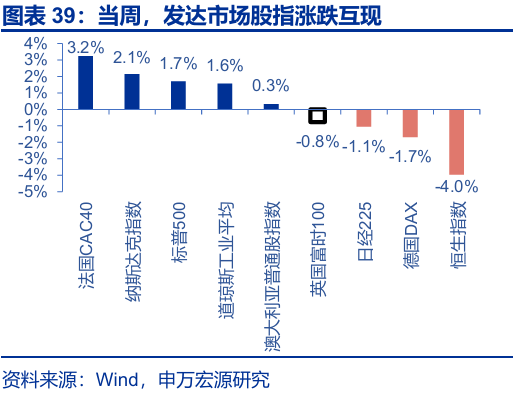
Group 1 - The core viewpoint of the articles indicates a downward trend in overseas risk-free interest rates, leading to a significant rise in gold prices, which reached a new high [1][3] - The S&P 500 index increased by 1.7%, and the Nasdaq index rose by 2.1% during the week, while the 10-year U.S. Treasury yield fell by 3 basis points to 4.02% [1][3] - The U.S. government shutdown has entered its third week, with expectations that it may last over 30 days, impacting various sectors and government operations [54][55] Group 2 - In the developed markets, stock indices showed mixed results, with the French CAC40 rising by 3.2% and the Nikkei 225 declining by 1.1% [3] - Emerging market indices mostly rose, with the South Korean Composite Index increasing by 3.8% and the Brazilian IBOVESPA rising by 1.9% [3] - The Hang Seng Index and its sub-indices, including the Hang Seng Tech Index, experienced declines of 8.0% and 4.0%, respectively [13] Group 3 - The U.S. Treasury yields for developed countries fell, with the French 10-year yield down by 11.8 basis points to 3.36% and the German yield down by 13.0 basis points to 2.62% [17] - Emerging market 10-year yields showed mixed results, with Turkey's yield rising by 76 basis points to 29.8% while South Africa's yield fell by 11.0 basis points to 9.0% [21] Group 4 - The U.S. dollar index decreased by 0.3% to 98.56, while several other currencies appreciated against the dollar, including the euro and the British pound [25] - The offshore Chinese yuan appreciated to 7.13 against the dollar, indicating a stable exchange rate [30] Group 5 - Commodity prices mostly declined, with WTI crude oil down by 2.3% to $57.5 per barrel, while COMEX gold surged by 6.2% to $4,234.9 per ounce [35][41] - Precious metals saw an overall increase, with COMEX silver rising by 6.3% to $50.4 per ounce [41] Group 6 - The geopolitical tensions, particularly the ongoing Russia-Ukraine conflict, are expected to exacerbate oil price volatility and disrupt global inflation control efforts [64] - The U.S. economy is showing signs of unexpected slowdown, raising concerns about employment and consumer spending [64] - The Federal Reserve's shift towards a more hawkish stance may impact future interest rate cuts if inflation remains resilient [64]

原油价格连续三周下滑,生猪价格创年内新低|期货周报
2 1 Shi Ji Jing Ji Bao Dao· 2025-10-19 14:25
Group 1: Commodity Market Overview - Domestic commodity futures showed significant divergence in performance from October 13 to October 17, with precious metals, black metals, and base metals leading gains, while energy, chemicals, and agricultural products experienced collective declines [1] - In the energy and chemical sector, fuel oil fell by 5.54% and crude oil by 6.34% for the week; in the black metal sector, iron ore dropped by 3.02%, while coking coal and coking coke rose by 1.55% and 0.57%, respectively [1] - Precious metals saw substantial increases, with Shanghai gold rising by 10.90% and Shanghai silver by 10.53% [1] Group 2: Oil Market Dynamics - The oil market faced multiple bearish pressures, with WTI crude futures falling below $80 and Brent crude near $82 per barrel; domestic crude oil prices dropped by 12.41% over the week [2] - OPEC+ continued its production increase plan, adding 137,000 barrels per day, while U.S. shale oil production showed resilience, slightly increasing to 13.636 million barrels per day [2][3] - Demand weakened significantly, with U.S. refinery utilization dropping by 6.7 percentage points to 85.7%, and Chinese refinery utilization at a low of 81.23% [2] Group 3: Pork Market Trends - Domestic live pig futures continued to decline, with the main contract dropping 3.87% to a three-month low, driven by slow trading sentiment and increased outflow from large-scale farms [4] - The supply side remains robust, with the number of breeding sows at 40.38 million, indicating a sufficient long-term supply base [4][5] - Despite expectations for improved demand due to cooler temperatures, actual sales of pork have not met expectations, leading to continued price pressure [4] Group 4: Economic Indicators - In September, the Consumer Price Index (CPI) fell by 0.3% year-on-year, while the Producer Price Index (PPI) decreased by 2.3%, with core CPI rising by 1.0% [6][7] - The decline in CPI was primarily driven by a 4.4% drop in food prices, which accounted for a significant portion of the overall decrease [6] - The export growth rate for September was 8.3%, with a cumulative growth of 6.1% for the first three quarters, indicating a recovery in trade despite challenges with U.S. exports [10][11]
行业比较周跟踪:A股估值及行业中观景气跟踪周报-20251019
Shenwan Hongyuan Securities· 2025-10-19 12:18
Investment Rating - The report does not explicitly provide an overall investment rating for the industry but highlights various sectors with their respective valuation metrics [1][2]. Core Insights - The report tracks A-share valuations and industry sentiment, indicating that the overall market is experiencing varied valuation levels across different indices and sectors [1][2]. - Key sectors such as real estate, steel, and IT services are noted for their high PE ratios, suggesting potential overvaluation, while white goods are highlighted as undervalued [1][2]. Valuation Comparisons - The report provides a detailed comparison of PE and PB ratios across major indices, with the CSI All Share (excluding ST) PE at 21.3x and PB at 1.8x, indicating historical percentiles of 79% and 39% respectively [1][4][5]. - The report identifies industries with PE ratios above the historical 85th percentile, including real estate, steel, and IT services, while white goods are noted for being below the 15th percentile [1][7]. Industry Sentiment Tracking - **New Energy**: The report notes a slight decline in downstream prices for photovoltaic products, while upstream polysilicon prices have increased by 6.3%. The demand for lithium materials remains strong due to stable orders in the traditional peak season [1][2]. - **Real Estate Chain**: Steel prices have decreased, with rebar prices down by 1.7% and iron ore prices down by 1.4%. Cement prices are also under pressure due to insufficient demand [2]. - **Consumer Goods**: Pork prices have seen a slight decline, while liquor prices have stabilized. Agricultural products like corn and wheat have mixed price movements [2]. - **Midstream Manufacturing**: Excavator sales have increased by 25.4% year-on-year, driven by infrastructure projects and equipment upgrades. Heavy truck sales have surged by 82.9% year-on-year, reflecting strong demand [2]. - **Cyclical Industries**: The report highlights fluctuations in metal prices due to geopolitical tensions and economic concerns, with precious metals seeing significant price increases [2]. Key Industry Valuations - The report lists specific industry valuations, with real estate at a PE of 120.0 and a PB of 16.6, indicating a high valuation relative to historical norms. In contrast, the white goods sector has a PE of 10.4, suggesting it is undervalued [1][7].
印度签署更多煤电采购协议
GOLDEN SUN SECURITIES· 2025-10-19 08:39
Investment Rating - The report maintains an "Overweight" rating for the coal mining industry [4]. Core Insights - India is signing more coal power procurement agreements to meet the growing electricity demand, with over 17GW of coal power capacity entering various stages of contract processes [2][3]. - The report highlights the expected increase in coal power capacity in India from 210GW to 307GW by 2035, a growth of 46% [3]. - The report emphasizes the resilience of certain companies in the coal sector, recommending investments in companies like Lu'an Huanneng, Yanzhou Coal, and Jin Control Coal [3]. Summary by Sections Coal Mining - The report notes a significant increase in coal prices, with European ARA port coal prices rising to $96 per ton (+6.19%) and Newcastle port coal prices reaching $111.45 per ton (+6.60%) [1][34]. - India plans to sign at least 7GW of coal power procurement agreements in the coming months to address peak electricity demand [2]. Investment Recommendations - Recommended companies include Lu'an Huanneng, Yanzhou Coal, Jin Control Coal, and China Shenhua, with a focus on companies showing strong performance and potential for growth [3][6]. - The report suggests monitoring companies like Huayang Co. and Gansu Energy Chemical for future growth opportunities [3]. Industry Trends - The coal mining industry is expected to experience a rebound in demand, driven by India's increasing reliance on coal for electricity generation [3][37]. - The report indicates that despite the push for renewable energy, coal will remain a significant part of India's energy mix for the foreseeable future [3].





【广发宏观团队】如何看宏大叙事对资产定价的影响
郭磊宏观茶座· 2025-10-19 08:21
Group 1 - The article discusses the impact of grand narratives on asset pricing, emphasizing that economic behavior is influenced not only by rational analysis but also by prevailing narratives, as proposed by economist Robert Shiller [1] - It identifies five leading asset classes in 2025: precious metals, non-ferrous metals, emerging market stocks, technology assets, and alternative assets, all influenced by narratives such as the reconstruction of the dollar credit system and the reshaping of global supply chains [1] - The interconnectedness of these narratives creates a "narrative constellation," which is more influential than individual narratives [1] Group 2 - The rise of narratives is linked to changes in global macro variables, where traditional economic assumptions of continuity are challenged by significant non-continuous changes in fiscal and monetary conditions, trade environments, and geopolitical factors [2] - The influence of narratives poses challenges to traditional investment research methodologies, as the long timelines of grand narratives can bypass short-term validations and disrupt mean reversion assumptions [2] Group 3 - To adapt to the influence of narratives, the article suggests differentiating narrative levels for better risk-return matching, utilizing thematic asset categories that align with narratives, and increasing the use of momentum strategies during narrative-driven phases [3] - It also recommends establishing objective indicators for narrative validation and recognizing the potential for narrative bubbles, advocating for a diversified approach to narrative investments [4] Group 4 - The article notes a divergence in asset narratives during the third week of October, with U.S. stock markets rebounding amid the end of the Fed's balance sheet reduction, while Japanese stocks experienced a pullback [5] - Precious metals narratives strengthened, with gold and silver prices reaching new highs, while copper prices showed signs of retreat [6] Group 5 - The article highlights the performance of global stock markets, noting a rebound in U.S. stocks, while European stocks remained subdued due to fiscal expectations and export concerns [5] - It also discusses the dynamics of commodity prices, with gold and silver showing strong performance, while oil prices declined due to geopolitical factors and OPEC+ production increases [7] Group 6 - The article emphasizes the importance of monitoring the U.S. government's ongoing shutdown, which could impact market confidence and policy risks if it extends into November [11] - It also mentions the potential for the Fed to end its balance sheet reduction in the coming months, shifting focus towards employment risks and liquidity stability [13] Group 7 - The article discusses the recent credit fraud incidents in U.S. regional banks, highlighting vulnerabilities in the credit system under high-interest rate conditions [15] - It suggests that these incidents may not pose systemic risks but indicate weaknesses in the credit structure that could lead to further risk reassessment in the market [16] Group 8 - The article outlines the current state of China's asset pricing, noting a rise in the pricing power of Chinese assets amid global market uncertainties [9] - It highlights the performance of various sectors within the Chinese market, with a shift towards value styles and a pullback in high-growth narratives [10] Group 9 - The article reports on the recent developments in China's fiscal and monetary policies, including the expansion of the central bank's balance sheet and the need for effective credit support for the real economy [21] - It emphasizes the importance of infrastructure investment and the government's commitment to enhancing domestic demand and stabilizing the economy [29] Group 10 - The article discusses the ambitious goals set by China's government for electric vehicle charging infrastructure, aiming to significantly increase the number of charging facilities by 2027 [25][26] - It highlights the expected compound annual growth rate of 29.8% for charging facilities from 2025 to 2027, reflecting the government's commitment to supporting the electric vehicle industry [26]