
航空

Search documents
股市和汇率谁“错”了?
Sou Hu Cai Jing· 2025-12-22 00:24
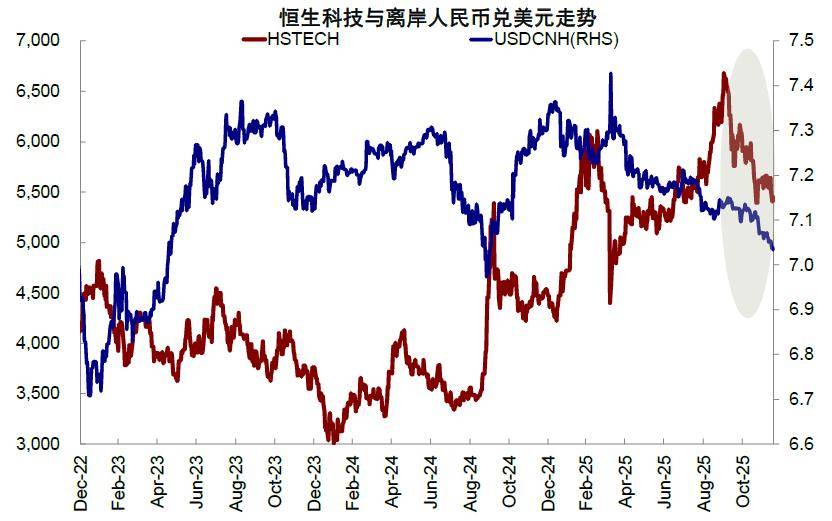
Group 1 - The recent phenomenon of a strong renminbi against the US dollar, appreciating by 1.3% since early October, contrasts with a declining stock market, particularly in Hong Kong where the Hang Seng Index has dropped 15% from its peak [1][4] - Historically, a strong currency correlates positively with stock market performance, as a stronger renminbi typically indicates foreign capital inflow and a favorable economic outlook [1][4] - The current divergence between currency strength and stock market weakness raises questions about whether the currency or the stock market is misaligned, with historical examples indicating that such divergences can occur [4][10] Group 2 - The relationship between the renminbi and the stock market has been predominantly positive, with recent divergence being rare and primarily driven by different underlying factors [8][18] - The renminbi's appreciation is attributed to a record trade surplus of $1.08 trillion and expectations of a weaker US dollar, while the stock market reflects weakening domestic demand and economic pressures [19][31] - The stock market's decline is linked to weak internal demand, with indicators such as PMI remaining below the growth line and fixed asset investment showing negative growth for three consecutive months [25][31] Group 3 - The recent strength of the renminbi is not primarily driven by foreign capital inflow, as evidenced by the stock market's decline and a lack of significant foreign investment in the bond market [19][21] - The central bank's intervention in the foreign exchange market appears to be diminishing, as indicated by changes in the onshore and offshore renminbi swap rates [26][27] - The divergence between the renminbi and the stock market may persist due to differing driving factors, with the potential for the renminbi to continue appreciating based on seasonal capital settlement and external economic conditions [30][32] Group 4 - The implications of a strong renminbi include potential benefits for import-dependent industries and sectors related to service trade, while negatively impacting exports and price pressures [42][49] - A sustained appreciation of the renminbi could lead to a temporary boost in market sentiment, particularly if it breaks key psychological levels, but the sustainability of this trend is uncertain without fundamental support [44][45] - The future trajectory of the renminbi and stock market will depend on the underlying economic fundamentals and whether fiscal policies can effectively stimulate growth [41][44]

十大券商策略:告别单一叙事!人民币升值指引三条配置线索
Zheng Quan Shi Bao Wang· 2025-12-22 00:12
Group 1 - The core viewpoint is that the market is beginning to focus on the potential for a sustained appreciation of the RMB, which could influence asset allocation strategies [1] - Approximately 19% of industries may see profit margin improvements due to RMB appreciation, leading to increased investor interest in these sectors [1] - Key sectors to watch under a strengthening RMB include aviation, gas, and paper industries driven by short-term muscle memory, as well as upstream resources, consumer goods, and services influenced by profit margin changes [1] Group 2 - The 2026 spring market is anticipated to be active, with a focus on non-mainstream sectors such as policy themes and high-dividend stocks, while the mainline structure (AI industry chain, cyclical stocks) may have limited upward potential [2] - A classic "cross-year-spring" market is forming, with significant institutional investors increasing their holdings in broad-based ETFs, indicating stable incremental capital for the market [3] - The A-share market is expected to resonate upward with global markets, driven by clear mid-term policy and liquidity expectations following the Federal Reserve's interest rate decisions [4] Group 3 - The current market is characterized by a narrow range of fluctuations, influenced by external factors such as U.S. AI bubble concerns and Japan's interest rate hikes, with a potential upward trend as investor sentiment improves [4] - The focus for A-share industry allocation includes dividend value, cyclical recovery, and thematic hotspots, particularly in metals, non-bank financials, and AI sectors [4] - The market is entering a critical window for cross-year layout, with attention on potential signals for a small rally around the New Year [5][6] Group 4 - The market is experiencing a structural trend change, with significant discrepancies in expectations for consumption, non-bank finance, and technology sectors as 2026 approaches [10][11] - Key investment themes include AI applications, commercial aerospace, and nuclear power, with a focus on sectors benefiting from domestic demand recovery and structural policy incentives [12] - The upcoming "15th Five-Year Plan" is expected to drive structural opportunities, particularly in AI, renewable energy, and quantum technology sectors [12]

美国还“挑”上了?特朗普宣称愿取消对华关税,但有一个条件
Sou Hu Cai Jing· 2025-12-21 23:36
Group 1 - The U.S. initiated a new round of tariffs on Chinese imports, particularly targeting electronics and machinery, with rates set at 25%, leading to increased costs for American importers and higher prices for consumers [1][3] - The agricultural sector in the U.S. faced significant challenges as China retaliated with tariffs on U.S. soybeans and aircraft parts, resulting in inventory buildup and economic decline in the Midwest [3][10] - The introduction of tariffs on textiles and chemicals further strained U.S.-China trade relations, causing disruptions in the supply chain and impacting U.S. companies like Tesla, which experienced production halts [5][6] Group 2 - The automotive industry was affected by a 20% tariff on imported cars, primarily aimed at protecting the domestic market from Chinese electric vehicles, leading to increased vehicle prices and reduced sales [8][10] - The imposition of tariffs resulted in a 10% drop in production for renewable energy projects due to restrictions on key mineral exports from China, causing significant economic pressure on U.S. companies [10][12] - Negotiations regarding TikTok's U.S. operations became intertwined with tariff discussions, with the U.S. suggesting that a sale to a domestic company could lead to reduced tariffs, highlighting the strategic use of tariffs as leverage [12][18] Group 3 - The ongoing trade tensions have led to a decline in the stock market, with the Nasdaq dropping by 4% and significant losses reported in the technology sector due to increased costs and supply chain disruptions [10][12] - The overall economic growth forecast for the U.S. was adjusted downward by 0.2% in the first quarter, reflecting the adverse effects of the tariff conflict on business operations and consumer spending [3][10] - The situation remains unresolved, with ongoing negotiations and potential future tariffs threatening to further complicate U.S.-China trade relations and impact the technology sector [18]

国泰海通证券:跨年行情资金从再平衡转向再配置 看好AI应用/商业航天/海南自贸/内需消费
智通财经网· 2025-12-21 22:57
Core Viewpoint - The report from Guotai Junan Securities indicates a significant decline in average daily trading volume and turnover rate, with a shift in market focus towards domestic consumption and technology themes, while external factors like interest rate changes are stabilizing market risk appetite [1] Group 1: AI Applications - The domestic computing architecture capabilities have significantly improved, with product iterations accelerating, reinforcing the investment narrative in AI [2] - Notable advancements include the release of the "Huagang" GPU architecture by Moore Threads, which boasts a 50% increase in computing density and a tenfold improvement in energy efficiency [2] - Ant Group's AI health application "Antifufu" has reached 15 million monthly active users, leading the health management AI application sector [2] Group 2: Commercial Aerospace - The upcoming launch of the Long March 12A rocket and the completion of ground verification for the Tianlong 3 rocket highlight advancements in China's commercial aerospace sector [3] - The National Space Administration has issued a plan to support the high-quality and safe development of commercial aerospace from 2025 to 2027, focusing on new technologies and applications [3] - It is projected that China's satellite launch demand will increase more than tenfold by 2030 compared to 2024 [3] Group 3: Hainan Free Trade Zone - The official launch of the full island closure in Hainan has begun, with Siemens Energy establishing a significant foreign investment project [4] - On the first day of customs supervision, zero-tariff imports amounted to 360 million yuan, primarily for crude oil and aviation equipment [4] - The establishment of Siemens Energy (Hainan) Co., Ltd. marks a significant step in the development of Hainan's free trade port [4] Group 4: Domestic Consumption - The central government has initiated actions to boost consumption, including plans to increase income for urban and rural residents [5] - New consumption scenarios are emerging, such as sports events and ice tourism, with significant economic impacts observed in regions like Jiangsu and Liaoning [5] - The consumption scale for ice sports is expected to exceed 187.5 billion yuan in the 2024-2025 season, reflecting a 25% year-on-year growth [5]

东方财富:春季行情演化论与内需机会探讨
智通财经网· 2025-12-21 22:50
Core Viewpoint - The report from the Chen Guo team at Dongfang Caifu indicates that while there are signs of rising US Treasury yields and an imminent interest rate hike by the Bank of Japan, there is a strong willingness among investors to capitalize on the spring market rally, particularly in the domestic demand sector, especially non-durable consumer goods [1] Group 1: Market Dynamics - The spring market has evolved through three distinct phases: the calendar effect phase (before 2017), the preemptive speculation phase (2018-2023), and the reflexive phase expected in 2024-2025 [2] - The current market is characterized by a high level of financing and a tendency for institutional investors to engage in preemptive buying, indicating a strong market sentiment [3] Group 2: Investment Opportunities - Key sectors to focus on include insurance, brokerage, non-ferrous metals, AI computing/semiconductors, retail/personal care/social services/dairy products, aviation, new energy, and innovative pharmaceuticals, as these sectors show sufficient attractiveness and increasing win rates [1] - The domestic policies aimed at expanding domestic demand and reducing internal competition provide a favorable environment for these sectors, with expectations of a stronger RMB exchange rate [3][4] Group 3: Long-term Outlook - Historical data suggests that sectors with lower performance in the previous year may experience a rebound, driven by policy expectations and the end of annual performance assessments for institutions [4] - The gradual appreciation of the RMB and supportive policies from the Central Economic Work Conference are expected to play a significant role in restoring domestic demand and improving economic structure in the medium to long term [4]

交运周专题 2025W51:快递行业提价降速,龙头份额分化加速
Changjiang Securities· 2025-12-21 15:27
Investment Rating - The report maintains a "Positive" investment rating for the transportation industry [9] Core Insights - The express delivery industry is experiencing a slowdown in price increases, leading to accelerated differentiation among leading companies. The average price of express delivery in November has shown signs of recovery, while the growth rate of delivery volume has significantly decreased, driving faster market share differentiation. The report is optimistic about leading companies such as Zhongtong Express and YTO Express. Additionally, SF Express has initiated a "post-advantage" policy to optimize its product structure, with expectations of a profit rebound in Q4 [2][6][16] Logistics Sector Summary - In the logistics sector, the express delivery industry saw a price recovery in November, with the average delivery price decreasing by 8.3% year-on-year. The delivery volume growth rate fell to 5.0%, down 2.9 percentage points month-on-month. Major players like YTO, Yunda, and Shentong reported varying performance, with YTO's volume increasing by 13.6% year-on-year, while Yunda's volume decreased by 4.2% [15][16] - The average daily traffic volume for coal transport in Ganci Maodu was 1,388 vehicles, a decrease of 93 vehicles from the previous week, while the average price for short-distance transport remained stable [19] Passenger Transport Sector Summary - In the passenger transport sector, domestic passenger volume showed a 4% year-on-year increase, while international passenger volume increased by 9%. The average seat occupancy rate for domestic flights improved by 0.8 percentage points year-on-year, and the same for international flights also increased by 0.8 percentage points [7][31] - The report anticipates a gradual recovery in travel demand, with expectations of marginal revenue improvement due to tightening supply and significant cost improvements [7][29] Maritime Sector Summary - In the maritime sector, oil transportation rates have decreased, with the average VLCC-TCE rate dropping by 11.2% to $102,000 per day. The market is currently experiencing limited new cargo availability, leading to a cautious outlook. The SCFI index for foreign trade container shipping rose by 3.1% to 1,553 points, while the domestic container shipping index also saw an increase [8][55] - The report highlights the impact of the reopening of the Red Sea on long-distance shipping routes and suggests monitoring regional small and medium-sized shipping companies like Haifeng International due to changes in regional shipping patterns following the closure of Hainan Island [8][55]



【十大券商一周策略】告别单一叙事!A股跨年行情+春季躁动或将拉开帷幕
Zheng Quan Shi Bao Wang· 2025-12-21 15:11
Group 1 - The core viewpoint is that a classic "cross-year-spring" market trend is brewing, with significant signals indicating its commencement [3] - Factors driving the appreciation of the RMB are increasing, and investors should adapt their asset allocation accordingly, focusing on industries that may benefit from this trend [1] - The market is expected to see a structural shift with a focus on cyclical sectors, particularly industrial metals, non-bank financials, and sectors related to domestic consumption [3][4] Group 2 - The investment strategy should consider three key clues: dividend value, layout of prosperous industries, and thematic hotspots [4] - The anticipated spring market in 2026 is expected to be driven by a combination of fundamental cyclical improvements and new technological trends [2] - The current market is characterized by a narrow range of fluctuations, influenced by external factors such as U.S. monetary policy and investor sentiment [4][6] Group 3 - The focus on AI and advanced manufacturing is expected to dominate the market, with a potential shift towards value and cyclical styles in the first half of 2026 [2] - The market is likely to experience a "value on stage, growth in action" dynamic, particularly as the Lunar New Year approaches [9] - There is a notable expectation for structural opportunities in sectors like AI, new energy, and controlled nuclear fusion, which are aligned with the "14th Five-Year Plan" [6][10]
A股年底怎么买?六大机构最新策略来了
Zhong Guo Zheng Quan Bao· 2025-12-21 14:33
临近年底,A股市场整体维持高位震荡态势。本周,上证指数周线翻红,深证成指、创业板指再现调 整。 在业内机构看来,A股市场进入跨年布局的关键窗口,结构性机会将集中在政策导向与产业景气共振的 赛道,后续春季行情值得期待。 具体配置上,人工智能、具身智能、资源品、锂电、创新药等多个品种均值得关注。此外,随着近期人 民币呈现升值趋势,航空、燃气、免税等品种配置价值或逐渐凸显。 影响后市投资大事件 网信办、证监会:严打资本市场谣言 网信办12月19日消息,近期,国家网信办会同中国证监会深入整治涉资本市场网上不实信息,依法处置 一批炮制谣言、非法荐股的账号。包括"八姐无敌"等账号散布涉资本市场监管政策谣言;"财报风云"等 账号集纳炒作上市公司和金融机构不实信息;"财经周末老师"等账号利用AI编造资本市场虚假信 息;"爱在深秋-郑老师"等账号炒作股市走势,随意预测涨跌,博取流量;"热点牛股王"等账号非法推 荐股票,牟取利益。 国务院国资委:"十五五"时期超前谋划量子科技、具身智能、6G等前沿赛道 向关注应用端的AI医疗、AI端侧、智能驾驶、具身智能等;二是"十五五"时期政策可能涉及到的重点产 业分支,关注商业航天与6G、核 ...
【十大券商一周策略】告别单一叙事!人民币升值指引三条配置线索
券商中国· 2025-12-21 14:27
中信证券:如果人民币开始持续升值 推动人民币升值的因素逐渐增多,市场关注度也开始升温,投资者要逐步适应在一个人民币持续升值的环境下 去做资产配置。从过去20年间7轮人民币升值周期来看,汇率并不是主导行业配置的决定性因素。然而,部分 行业在持续升值预期形成的初期确实会有更好表现,市场可能会复制这样的肌肉记忆,同时从成本收入分析来 看,约19%的行业会因为升值带来利润率提升,这些行业也会逐步被投资者重视起来。此外,为抑制过快单边 升值趋势而做出的政策应对,反而是影响行业配置的更重要因素。 行业配置上,在人民币持续升值的背景下,可以关注短期肌肉记忆驱动(航空、燃气、造纸等行业)、利润率 变化驱动(上游资源品和原材料、内需消费品、服务业相关品种、制造设备等)以及政策变化驱动(免税、地 产开发商、券商、保险等)三条线索。 申万宏源:非主战场的春季躁动 2026年有春季行情,且启动在即。但机构重点关注的主线结构(AI产业链,顺周期)向上空间有限,而非主 战场上(产业和政策主题,博弈高股息,各种超跌反弹),市场可能非常活跃。2025年牛市1.0(科技结构 牛)已处于高位区域,当前处于季度级别的高位震荡阶段,后续还需关注触发 ...
A股分析师前瞻:备战躁动行情的共识正在凝聚,只待一个有效信号?
Xuan Gu Bao· 2025-12-21 13:39
Core Viewpoint - The brokerage strategy analysts remain optimistic about the spring market rally, awaiting an effective signal to initiate the movement [1] Group 1: Market Signals and Economic Indicators - Analysts from Xingzheng Strategy highlight that the liquidity expectations are shifting positively due to recent overseas events and a supportive domestic policy environment, indicating a transition from cautious behavior to actively seeking opportunities [1] - Key signals to watch for the potential market rally include the possibility of interest rate cuts and reserve requirement ratio reductions at the end of the year and early next year, with observation windows in early next week and January [1][2] - Important economic indicators such as PPI, PMI, M1, social financing, and annual reports from listed companies are expected to uplift the basic economic outlook [1][2] Group 2: Investment Trends and Sector Focus - The Guangfa Strategy team anticipates that 2026 will resemble an enhanced version of 2025, with continued support from insurance capital and regulation, alongside an acceleration in the migration of deposits from residents, particularly among high-net-worth individuals [1][2] - The trend of high-net-worth residents moving their deposits has already begun to accelerate, with new private equity fund registrations reaching 386 billion yuan from January to October 2025, with monthly registration sizes nearing levels seen in 2021 [1][2] - The Xinda Strategy team emphasizes the increasing elasticity of non-bank financial sectors, suggesting a potential rotation of market focus from banks to non-bank financials, with insurance valuations appearing more attractive [1][3] Group 3: Sectoral Opportunities and Predictions - Analysts suggest that sectors benefiting from policy support, such as AI, advanced manufacturing, and consumer services, are likely to see significant growth, with a projected net profit growth rate exceeding 30% in 2026 [2] - The market is expected to experience structural opportunities driven by policy guidance and industrial momentum, particularly in the context of the upcoming "14th Five-Year Plan" [3] - The spring market rally is anticipated to be influenced by the performance of cyclical sectors, with a focus on commodities and consumer sectors benefiting from increased consumption and fiscal stimulus [3]
