
有色

Search documents
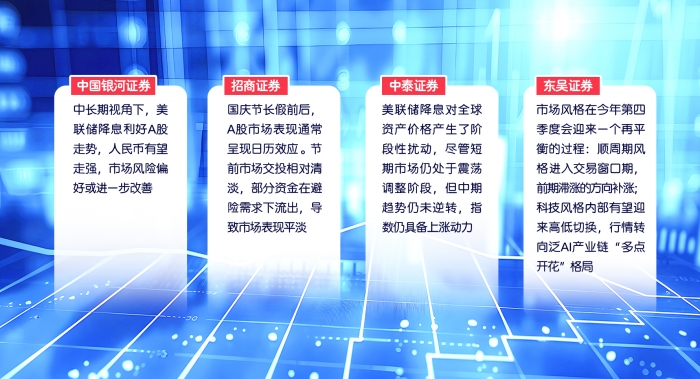
国庆前后市场怎么走?日历效应如何?十大券商最新研判
Ge Long Hui· 2025-09-21 23:32
Market Overview - The market experienced fluctuations last week, with the Shanghai Composite Index falling by 1.30%, while sectors like power equipment, electronics, and communications continued to lead in gains, contrasting with stagnant performance in banking, non-banking, and food and beverage sectors [1] Broker Insights - Guotai Junan Securities believes that the recent market adjustment presents an opportunity, asserting that the Chinese stock market will not stagnate and is expected to reach new highs, driven by favorable conditions such as a stable short-term risk outlook and potential capital market reforms [1] - Guojin Securities indicates that a bull market may be in the making, with opportunities arising from the easing of liquidity constraints and a shift towards cyclical manufacturing sectors like non-ferrous metals, machinery, and chemicals [2] - Zheshang Securities suggests a period of consolidation for the Shanghai Composite Index, recommending a cautious approach to investment and a focus on sectors like hard technology and infrastructure [3] - Everbright Securities anticipates continued market fluctuations leading up to the National Day holiday, with a tendency for funds to secure profits amid uncertainties [4] - According to China Merchants Securities, historical patterns suggest that financing activities typically contract before the holiday and surge afterward, with a focus on sectors like solid-state batteries and AI [5] - Industrial rotation is emphasized by Industrial Securities, advocating for a diversified approach to investment to navigate market volatility [6][7] - CITIC Construction Investment highlights the clarity in future market trends following the Federal Reserve's interest rate cuts, with a focus on AI and domestic demand recovery [8] - Huaxia Securities maintains a positive long-term outlook despite short-term fluctuations, emphasizing the importance of sectors like AI and essential materials [9] - Galaxy Securities recommends four investment themes in the construction sector, focusing on urban renewal and digital transformation in construction [10]
十大券商一周策略:下一波的线索是什么?股市不会止步于此,外资继续流入
Zheng Quan Shi Bao· 2025-09-21 22:19
Group 1 - The overall industry selection framework focuses on resources, new productive forces, and globalization [1][2] - Resource stocks are shifting from cyclical attributes to dividend attributes due to supply constraints and global geopolitical tensions [1] - The globalization of China's manufacturing leaders is expected to enhance pricing power and profit margins, leading to market capitalization growth beyond domestic economic fundamentals [1][2] Group 2 - The Chinese stock market is expected to continue its upward trajectory, driven by the demand for assets and capital market reforms aimed at improving investor returns [2][3] - Recent communication between Chinese and U.S. leaders indicates a stabilization of short-term risks, while a weak dollar and overseas rate cuts favor China's monetary easing [2] - The market is anticipated to experience adjustments that present opportunities, with A/H indices likely to reach new highs [2][3] Group 3 - The current market remains in a consolidation phase, with active trading and a positive funding environment [3][4] - The key to sustaining the market's upward momentum lies in the profitability of investments, with a focus on sectors like domestic computing, innovative pharmaceuticals, and consumer goods [3][4] - The market is still in a bull phase, with three main drivers for the current upward trend remaining unchanged [4][5] Group 4 - Foreign capital continues to flow into the Chinese stock market, with significant inflows from both domestic and foreign investors [5][6] - The recent decline in high-priced options indicates a cautious approach among investors regarding the upward potential of the market [5][6] - The overall sentiment remains bullish for the long term, despite short-term adjustments [5][6] Group 5 - The market is characterized by sector rotation rather than a simple switch from high to low positions, focusing on industry trends and profitability [6][9] - The emphasis is on identifying opportunities within sectors that are experiencing growth and have not been fully priced in [9][10] - The potential for low-position stocks to experience a rebound is increasing as the market transitions into the fourth quarter [10][11] Group 6 - The recovery of cash flow in export-oriented manufacturing is expected to continue, driven by anti-involution policies and global re-industrialization [11] - The valuation system for China's advantageous manufacturing sectors is likely to be systematically reshaped [11] - The main investment themes include hard currency assets, hard technology, and manufacturing benefiting from anti-involution policies [11]
A股短期或延续震荡立足景气逻辑挖掘主线机会
Shang Hai Zheng Quan Bao· 2025-09-21 18:07
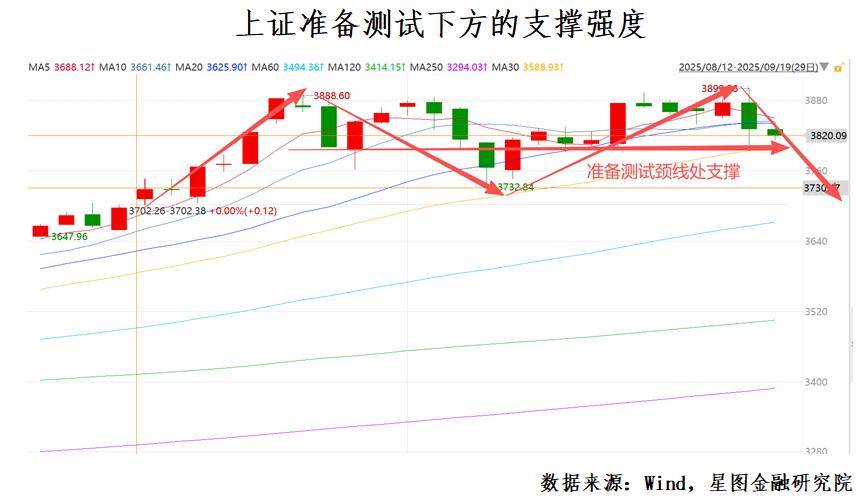
Market Overview - A-shares experienced a mixed performance last week, with the Shanghai Composite Index declining by 1.30% to close at 3820.09 points, while the Shenzhen Component Index rose by 1.14% and the ChiNext Index increased by 2.34% [2] - The market showed overall volatility in the first half of the week, but retreated towards the end as investors reacted to the Federal Reserve's interest rate cut [2][3] Federal Reserve Impact - The Federal Reserve's decision to cut interest rates by 25 basis points was in line with market expectations, leading to a temporary cooling of investor sentiment and risk appetite [3][4] - Despite short-term fluctuations, the long-term outlook remains positive for A-shares, with expectations of a stronger RMB and improved market risk appetite [3][4] Calendar Effects - Historical data indicates that A-shares typically exhibit a calendar effect around the National Day holiday, with a tendency for the market to perform poorly before the holiday and rebound afterward [5][6] - Over the past decade, indices such as the Shanghai Composite and CSI 300 have shown over 60% probability of rising in the week following the National Day holiday [5] Sector Performance - Certain sectors, particularly technology-related industries such as computers, communications, and electronics, have a higher probability of rising in the five trading days following the holiday [6] - Financial sectors, including banks and non-bank financials, are also expected to perform well in the weeks following the holiday [6] Investment Strategy - The fourth quarter is anticipated to see a shift in investment styles, with a potential rotation from previously high-performing sectors to more defensive ones [7] - Investors are encouraged to focus on sectors driven by economic recovery and industry trends, such as AI, innovative pharmaceuticals, new energy, and consumer sectors [7]

A股分析师前瞻:聚焦高低切,四季度风格,居民存款入市节奏等焦点问题
Xuan Gu Bao· 2025-09-21 14:00
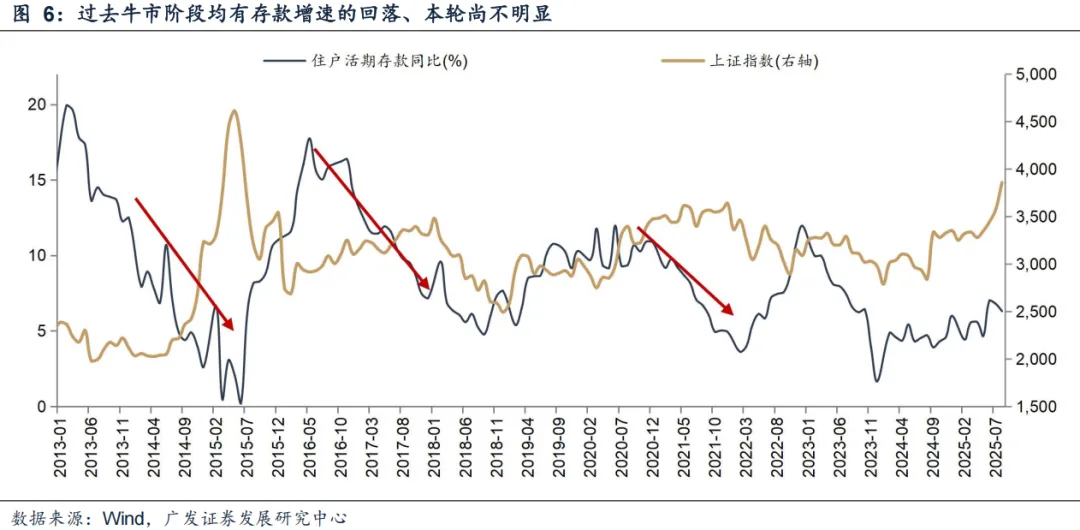
Group 1 - The brokerage strategies remain positive, addressing market concerns such as high-low switching, market style in Q4, and the pace of retail investor entry [1] - The strategy team from Xingzheng emphasizes that the current market rotation is driven by incremental funds and economic advantages, focusing on identifying opportunities based on economic logic and industry trends rather than simple position switching [1][7] - The Citic strategy team highlights the importance of the globalization of leading Chinese manufacturing firms, which is expected to enhance pricing power and profit margins, leading to market capitalization growth beyond domestic economic fundamentals [1][7] Group 2 - The strategy team from招商策略 notes that the Federal Reserve's interest rate cut in September historically correlates with a higher probability of A/H shares rising in the future [4] - Historical data indicates that the market tends to be relatively flat before the National Day holiday, but risk appetite improves significantly afterward, with over 60% probability of gains in major indices during the week following the holiday [4][8] - The strategy team from广发分析 suggests that the current rise in retail investor sentiment is still in its early stages, with various indicators showing that the market is not yet experiencing significant capital outflow from savings [1][9] Group 3 - The strategy from信达 suggests that the market is likely to continue its upward trend, with the current environment favoring strong industry trends while maintaining flexibility in high-low switching strategies [8] - The analysis indicates that the market is currently in a bull phase, with expectations of increased retail investment in the coming year, supported by a favorable policy environment [8] - The strategy team from国全策略 believes that the true bull market has not yet begun, but signs of recovery in corporate earnings and the potential for a new market cycle are emerging [9]
国泰海通 · 晨报0922|宏观、策略、海外策略、固收
国泰海通证券研究· 2025-09-21 13:55
Macro Overview - Overall consumption is improving, with notable increases in automobile retail and high-end liquor prices due to seasonal demand and base effects [4] - Service consumption indicators such as urban population flow and movie box office revenues are also showing improvement, although inter-city migration indices have turned negative year-on-year [4] - Investment in infrastructure is accelerating with special bond issuance, while real estate sales are recovering during the peak season, despite a cooling land market and low construction start data [4] - Production across most industries is declining, with sectors like power generation and steel adjusting due to demand or profit impacts [4] - Inventory levels are primarily focused on replenishment, with industrial prices rising and CPI showing divergence [4] - The dollar index has slightly increased, while the RMB has appreciated moderately [4] Strategy Insights - Market adjustments present opportunities, and the Chinese stock market is expected to continue its upward trajectory [7] - The "transformation bull market" is driven by the demand for assets and capital market reforms aimed at improving investor returns [7] - Recent communication between Chinese and U.S. leaders indicates a stabilization of short-term risks, while a weak dollar and overseas interest rate cuts favor Chinese monetary easing [7] - The consensus on economic expectations is overly cautious, but there are signs of stabilization in revenue and inventory growth for Chinese listed companies [8] - Emerging industries are entering a new capital expenditure expansion cycle, indicating increased certainty in economic development [9] Industry Comparisons - The technology sector remains a key focus, with recommendations for investments in internet, semiconductor, innovative pharmaceuticals, and robotics [9] - Financial stocks are suggested for gradual allocation due to potential increases in dividend returns after recent adjustments [9] - The shift in economic governance is expected to improve supply-demand dynamics for cyclical goods such as non-ferrous metals, chemicals, real estate, and new energy [9] - Recommendations for consumer sectors include national brands in retail and cosmetics, as well as traditional categories like agriculture and food and beverage [9] Thematic Recommendations - Positive outlook on domestic computing power infrastructure and increased penetration of domestic supply chains [10] - Favorable conditions for commercial aerospace investments due to satellite communication license issuance [10] - Anticipation of improved pricing expectations in sectors benefiting from economic governance changes, such as lithium batteries and energy storage [10] - Growth in embodied intelligence with accelerated equity financing in robotics and logistics [10] Hong Kong Dividend Assets - Hong Kong dividend assets are characterized by stable performance and sustainable cash flows, offering higher dividend yields compared to A-shares [15] - The average cash dividend payout ratio for Hong Kong stocks from 2017 to 2024 is 44%, significantly higher than A-shares at 36% [15] - The dividend yield for the Hang Seng Index is 2.9%, compared to 1.9% for the Wind All A Index, indicating a clear advantage for Hong Kong stocks [15] - Hong Kong dividend assets have a lower valuation level, with PE and PB ratios of 7.2x and 0.6x, respectively, compared to 7.9x and 0.8x for the CSI Dividend All Return Index [15] Market Dynamics - Both Hong Kong and A-share dividend assets exhibit defensive characteristics in weak markets, but absolute returns are positively correlated with market performance [16] - Hong Kong dividend assets face higher taxation and are more sensitive to U.S. Treasury yields compared to A-shares [16] - Current market conditions suggest that Hong Kong dividend assets may offer better value for allocation, especially as institutional demand for dividend stocks increases [17] - Long-term trends indicate a strengthening of dividend policies and a low-interest environment, enhancing the appeal of Hong Kong dividend assets for sustained investment [17]

兴业证券:A股“健康牛”是切换还是扩散?
智通财经网· 2025-09-21 11:49
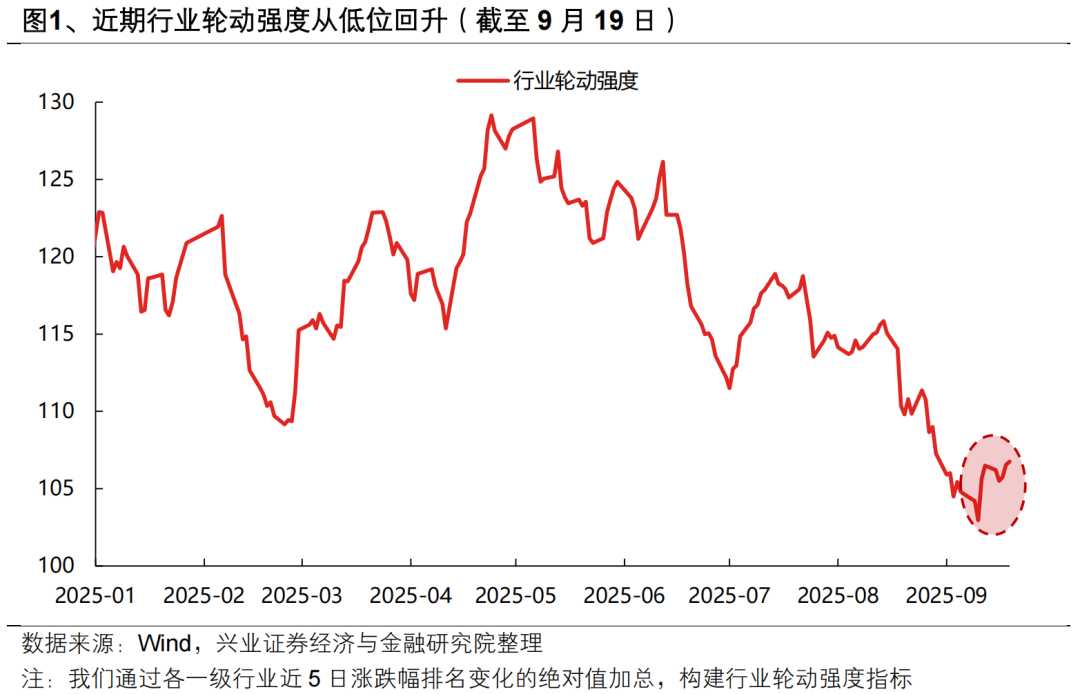
Core Viewpoint - The report from Industrial Securities emphasizes the importance of sector rotation in the A-share market, suggesting that a diverse market with multiple sectors performing well is essential for sustainable growth. The current market environment, driven by incremental capital and favorable economic conditions, requires a focus on sector expansion rather than simple high-to-low switching strategies [1][3][6]. Group 1: Market Dynamics - Recent fluctuations in growth sectors indicate increased volatility and high-level oscillation, prompting discussions on whether to switch from high to low positions [1][3]. - The market's structural differentiation and concentrated consensus need to be digested and consolidated, with a recommendation for a rotational approach to manage rhythm fluctuations [3][6]. - The current market is characterized by an "incremental market" where capital behavior has shifted from "moving house" in a stock market to "expanding" in an incremental market, making the "expansion logic" more applicable [3][6]. Group 2: Sector Focus - Key sectors to watch include Hong Kong internet, military industry, innovative pharmaceuticals, new energy, new consumption, and "anti-involution" & cyclical sectors (non-ferrous metals, chemicals) [11][20][36]. - The Hong Kong internet sector is highlighted for its potential rebound, driven by external liquidity and AI expansion, with significant room for growth compared to A-share TMT sectors [11][14]. - The military sector is expected to benefit from upcoming five-year planning meetings, historically showing strong performance leading up to such events [17][20]. Group 3: Innovative Pharmaceuticals - The innovative pharmaceutical sector is experiencing a reduction in crowding, with a notable release of pressure and a shift towards commercialization, leading to improved performance from leading companies [24][25]. - The sector is witnessing a surge in product approvals and international licensing deals, indicating a strengthening global competitive position for domestic pharmaceutical companies [24][25]. Group 4: New Energy Sector - The new energy sector is positioned for growth due to technological breakthroughs and a focus on "anti-involution" policies, which are expected to attract funds seeking flexible returns [26][29]. - The sector's recovery is supported by improved supply-demand dynamics and a significant reduction in inventory levels, indicating a potential for performance stabilization [29][30]. Group 5: New Consumption Trends - New consumption sectors are anticipated to benefit from seasonal catalysts and improved economic outlooks, with a focus on structural changes driven by the rise of Generation Z [31][34]. - The current low crowding levels in new consumption sectors present opportunities for rotation and potential growth as consumer trends evolve [31][34]. Group 6: Anti-Involution and Cyclical Sectors - The "anti-involution" policy is seen as a long-term theme that will influence various sectors, particularly those with historical low profitability and capital expenditure [36][37]. - The report highlights the importance of evaluating sectors based on their willingness to participate in anti-involution efforts, with a focus on traditional industries like steel, glass, and new energy supply chains [36][37].

2025年四季度策略:三擎拱牛市
CAITONG SECURITIES· 2025-09-21 08:18
Economic Outlook - The overall economy is expected to stabilize with structural reforms accelerating, supported by continuous fiscal efforts and a recovery in the real estate sector [3][11][19] - The "反内卷" (anti-involution) policy is anticipated to drive a rebound in PPI, benefiting industries such as coal and photovoltaics [5][30] - The technology sector is experiencing a significant surge, with new technologies like AI expected to empower a growth cycle lasting over a decade [3][6][45] Old Economy Insights - The "反内卷" policy is likely to push PPI to a turning point, with historical data indicating that PPI recoveries correlate with economic cycles [5][30] - During PPI upturns, stock market trends generally rise, with the greatest elasticity observed during the initial stages of PPI recovery [35][37] New Economy Insights - The current technology sector trend is still in its early stages, with historical patterns showing that industry trends require a conducive macroeconomic environment and liquidity [6][45] - Emerging technologies such as AI, low-altitude economy, deep-sea technology, and quantum technology are at a critical juncture, with potential for explosive growth in the next two years [6][45] Funding Landscape - In a low-interest-rate environment, there is a significant shift of household savings towards equity assets, with the current allocation in stocks and funds at 15%, compared to 40% in developed markets [7][19] - Public fund issuance is expected to see a turning point as net asset values recover, with a historical correlation indicating that 80% of funds reaching positive net values leads to increased issuance [7][19] Investment Strategy - The investment strategy should focus on three main lines: old economy sectors benefiting from PPI recovery, new economy sectors driven by AI and overseas expansion, and consumer sectors emphasizing emotional consumption [8][45] - Specific sectors to watch include metals, coal, and new energy for the old economy, while AI hardware and applications are key for the new economy [8][45]
A股走出标准的M顶,这一点特别要注意!
Sou Hu Cai Jing· 2025-09-19 11:53
Market Overview - The three major indices experienced narrow fluctuations and collectively closed lower, with the Shanghai Composite Index down 0.3%, Shenzhen Index down 0.04%, and ChiNext Index down 0.16% [1] - The total trading volume in the Shanghai and Shenzhen markets was 23,494 billion yuan, a significant decrease of 8,172 billion yuan compared to the previous day, with over 3,400 stocks declining [1] Sector Performance - Sectors such as excavators, coal mining, photolithography machines, major infrastructure in the West, and industrial enterprises saw notable gains, while sectors like humanoid robots, reducers, and Xiaomi's automotive sector experienced significant declines [1] - The decline in the robotics sector was influenced by Elon Musk's denial of Tesla's Optimus robot receiving 10,000 orders, leading to a pullback in previously strong-performing robotics stocks [1] Investment Focus - There is a continued positive outlook on the computing hardware sector, with a potential shift in market focus. The computing hardware sector has shown resilience during market downturns, indicating strong market preference [7] - The semiconductor industry also performed well, suggesting that these sectors are part of the broader AI industry chain, with computing hardware showing better growth potential due to high demand from North American tech giants and local internet companies [7] Consumer Sector Insights - The tourism and hotel sector surged in anticipation of the upcoming National Day and Mid-Autumn Festival, reflecting market reactions to seasonal demand [8] - With retail sales growth slowing to 3.4% year-on-year in August, the necessity for incremental stimulus policies is increasing, with a focus likely on consumer spending, particularly in services like tourism, education, and gaming [8] Commodity Outlook - The long-term investment value in the non-ferrous metals sector remains high, despite recent pullbacks. The potential for two interest rate cuts by the Federal Reserve this year could support rising prices for gold and copper [9] - Current gold prices have reached historical highs, and copper prices have shown a breakthrough trend, indicating that price increases will eventually translate into improved corporate earnings and stock performance [9]
港股收盘 | 恒指平收 博彩、有色股表现亮眼 劲方医药-B首挂股价翻倍
Zhi Tong Cai Jing· 2025-09-19 08:51
Market Overview - The Hong Kong stock market showed mixed performance today, with the Hang Seng Index closing flat at 26,545.1 points and a total turnover of HKD 3,768.12 million. The Hang Seng China Enterprises Index rose by 0.17% to 9,472.35 points, while the Hang Seng Tech Index increased by 0.37% to 6,294.42 points. For the week, the Hang Seng Index gained 0.59%, the China Enterprises Index rose by 1.15%, and the Tech Index saw a 5.09% increase [1]. Blue Chip Performance - Sands China (01928) led the blue-chip stocks, rising by 6.19% to HKD 21.6, contributing 4.77 points to the Hang Seng Index. The upcoming National Day and Mid-Autumn Festival holidays have driven demand for gaming stocks, with strong expectations for the Golden Week based on nearly full hotel bookings [2][4]. - Other notable blue-chip performers included China Hongqiao (01378) up 4.67% to HKD 26.46, Galaxy Entertainment (00027) up 4.22% to HKD 42.46, while Hansoh Pharmaceutical (03692) fell by 2.62% to HKD 35, dragging the index down by 1.74 points [2]. Sector Highlights Gaming Sector - The gaming sector saw significant gains, with Melco International Development (00200) up 6.6%, Sands China (01928) up 6.19%, and Wynn Macau (01128) up 6.02%. Macau's gross gaming revenue (GGR) for August reached MOP 22.16 billion, marking a new monthly high, with a year-on-year increase of 12.2% [3][4]. Gold Sector - Gold stocks rebounded, with Shandong Gold (01787) rising by 6.13% to HKD 35.68, Lingbao Gold (03330) up 3.98% to HKD 16.46, and Zijin Mining (02899) up 2.76% to HKD 29.08. The price of spot gold has stabilized above USD 3,650 following the Federal Reserve's interest rate cuts [4]. Coal Sector - Coal stocks performed well, with Yanzhou Coal Mining (01171) up 6.51% to HKD 10.63, and China Shenhua Energy (01088) up 1.42% to HKD 38.46. Recent investigations into overproduction in Inner Mongolia are expected to curb excess supply [5][6]. Robotics Sector - The robotics sector showed mixed results, with Sanhua Intelligent Control (02050) down 6.21% while DCH Holdings (00179) rose by 5.78%. Recent rumors regarding Tesla's robot orders were denied by Elon Musk, but the Chinese government is pushing for the application of humanoid robots in various industries [7]. Notable Stock Movements - Jinfang Pharmaceutical-B (02595) debuted with a remarkable increase of 106.47% to HKD 42.1. The company focuses on developing new treatment solutions for tumors and autoimmune diseases [8]. - Hongteng Precision (06088) surged by 21.44% to HKD 5.89, benefiting from Nvidia's investment in Intel for AI infrastructure [9]. - Cloudfin Financial (00376) rose by 10.55% to HKD 6.39 after appointing a former Ant Group executive to lead its Web3 development [10]. - Weimob Group (02013) increased by 10% to HKD 2.86 following a significant share placement [11]. - Ganfeng Lithium (01772) saw a rise of 9.51% to HKD 37.3, with the company announcing full production capacity for its energy storage cells [12]. - Changfei Optical Fiber (06869) reached a new high, increasing by 8.55% to HKD 61.6, driven by interest in hollow core fiber technology [13][14].


【华闻日度观点0918】产量存回升预期,橡胶走弱
Xin Lang Cai Jing· 2025-09-18 13:00
Steel Industry - The supply-demand contradiction in the steel market is strengthening, making it easier for prices to rise than to fall. The demand is gradually recovering as the peak season approaches, with high demand for plate steel and a low recovery in rebar demand. On the supply side, steel mills are facing narrowing profits, leading to a decrease in overall supply. Plate steel supply remains high, while rebar production has significantly decreased, alleviating supply pressure. Overall, with the arrival of the peak demand season and stricter implementation of industrial policies, the supply-demand contradiction and cost support for steel are expected to gradually strengthen. Short-term steel prices are anticipated to continue a trend of fluctuating increases [1][2]. Iron Ore - The expectations for supply and demand are improving, enhancing price support for iron ore. Steel mills are gradually resuming production, leading to a recovery in iron ore demand. On the supply side, overseas mine shipments have significantly increased, resulting in a moderate growth in overall supply. Iron ore inventories are stabilizing at low levels, indicating minimal inventory pressure. Overall, with the continuous warming of macro policy expectations and the recovery of downstream demand, the outlook for iron ore supply and demand is expected to continue improving, with prices likely to maintain a trend of fluctuating increases [1][2]. Coking Coal - The capacity utilization rate of 523 coking coal mines has increased by 1.9% to 84.7%, with daily raw coal output reaching 1.9 million tons, a month-on-month increase of 44,000 tons. The demand side shows strong rigid support, driven by increased washing plant operating rates and a rebound in iron water production. However, the market is still focused on "anti-involution," and the space for further increases in coal mine operating rates is limited due to strong safety supervision policies. Overall, the coking coal supply-demand structure may be optimized, maintaining a trend of fluctuating strength [2]. Shipping Industry - The European shipping index is currently showing a weak trend. On the spot market, major shipping companies are continuously lowering their quotes, with the average price for a large container around $1,650, indicating a slight discount to the market. The supply-demand imbalance is prominent, with demand entering a low season and a lack of new shipping volume. The average weekly capacity in September has increased by 16% year-on-year, but the scale of empty classes in October is not sufficient to alleviate the oversupply situation. The market sentiment remains pessimistic, and the index is expected to continue running weakly in the short term [3]. Methanol - Methanol futures prices have continued to decline. Domestic methanol capacity utilization and output have unexpectedly decreased this week. However, the operating rates of traditional demand products have mostly increased, with significant recoveries in DME and MTBE. The market is expected to maintain a trend of inventory reduction due to pre-holiday stocking and upstream companies actively reducing inventory to avoid accumulation risks during the holiday. Overall, the methanol market is expected to continue a downward trend in the short term, with some support from supply-side reductions and recovering downstream operating rates [4]. Urea - Urea prices have shown a downward trend this week, with capacity utilization and weekly output increasing. The upcoming recovery in production is expected to exceed maintenance, leading to a significant increase in daily output. However, domestic urea demand remains tepid, and the overall supply-demand imbalance persists, with companies facing challenges related to inventory and costs. Without policy changes, urea futures prices are likely to continue fluctuating downward in the short term [4]. Soda Ash & Glass - Soda ash and glass prices are experiencing a downward trend. The overall supply of soda ash is decreasing slightly, with a capacity utilization rate of 85.53%. The weekly output has dropped by 1.54 million tons. The glass market is stable, but demand is insufficient, leading to a gradual decline in production and sales. The overall supply pressure for soda ash remains high, and prices are expected to continue fluctuating weakly [5]. Asphalt - Asphalt prices are showing a weak trend, influenced by the end of the traditional fuel consumption season in the U.S. and ongoing OPEC+ production increases. However, the inventory of asphalt plants and social stocks continues to decline, which may positively impact prices. The upcoming National Day holiday is expected to drive demand, particularly in northern regions, while southern regions face supply pressures [6][7]. Caustic Soda - Caustic soda prices are experiencing a downward trend, with average capacity utilization at 81.9%. The inventory of liquid caustic soda has increased, and demand from downstream aluminum oxide enterprises remains stable. Overall, the caustic soda market is expected to continue fluctuating weakly due to increased supply and limited demand [8]. Polyolefins - Polyolefin prices are declining, with limited demand from downstream sectors. Despite some replenishment activities, the overall purchasing momentum remains insufficient. The supply side is increasing due to more operational facilities, leading to a rise in inventory levels. The market sentiment is cautious, and prices are expected to continue fluctuating downward [9]. Polyester - The polyester market is stable, with supply and demand remaining balanced. The operating rates of PTA and downstream polyester production have increased slightly, but overall demand remains below expectations. The inventory levels of PTA are at historical lows, indicating a tight supply situation. Prices are expected to fluctuate based on cost movements [10][11]. Nonferrous Metals - The copper market is influenced by the recent Fed rate cut, with domestic supply tightening due to maintenance at smelting plants. The market is closely monitoring consumption patterns leading up to the National Day holiday, with expectations of increased purchasing from large enterprises [14]. Agricultural Products - The oilseed market is under pressure due to high domestic soybean inventories and slow demand recovery. The cotton market is experiencing price pressure from low demand and high import levels, while the sugar market is facing downward pressure from increased production in India and Brazil [18][19]. Rubber - The rubber market is experiencing a weak trend, with increased imports and stable production levels. The demand from processing plants remains strong, but overall market sentiment is affected by macroeconomic factors [22][23].
