Hua Er Jie Jian Wen

Search documents
小鹏汇天秘密递表,闯关IPO
Hua Er Jie Jian Wen· 2026-01-13 03:23
Core Viewpoint - The news highlights the potential IPO of XPeng's flying car subsidiary, Huitian, which aims to establish itself as a leader in the low-altitude economy by leveraging its unique product strategy and manufacturing capabilities [2][3][7]. Group 1: IPO and Market Position - Huitian has reportedly submitted a confidential IPO application in Hong Kong, with JPMorgan and Morgan Stanley as joint sponsors, aiming for a listing by the end of the year [2]. - The company is positioned to become the largest flying car company in Asia, potentially benefiting from a "first stock" mentality that could lead to a higher valuation premium [3]. Group 2: Product Strategy - Huitian's product strategy includes the "Land Carrier," a modular flying car designed to address the limitations of traditional eVTOLs, such as range and ground transportation connectivity [4]. - The "Land Carrier" allows users to drive it like a regular car and deploy the flying unit for aerial experiences, thus lowering the usage barrier [4]. Group 3: Manufacturing and Cost Efficiency - Huitian aims to utilize automotive manufacturing techniques to reduce costs, with plans to produce flying vehicles at a rate of one per hour, potentially scaling to 10,000 units annually [6]. - The company intends to lower the price of flying cars to the "million-level" or even lower, disrupting the current pricing structure in the industry [6]. Group 4: Market Strategy and Target Audience - Huitian is adopting a "To C" approach, targeting high-net-worth individuals as early adopters of flying cars, rather than focusing solely on B2B or government markets [6]. - The company is also working on establishing flying camps to create a supportive infrastructure for users, similar to Tesla's supercharging network [6]. Group 5: Industry Challenges and Future Outlook - Despite the innovative approach, flying cars remain a novel concept for the general public, and building trust in their safety and affordability will be crucial for market acceptance [7]. - If Huitian successfully leverages capital market support and delivers the "Land Carrier" this year, it could redefine the flying vehicle market and establish itself as a key player in the industry [7].


鲍威尔被起诉后,美联储三把手发声:美联储没有面临改变利率的强大压力
Hua Er Jie Jian Wen· 2026-01-13 03:10
Core Viewpoint - The current monetary policy stance is robust, with no immediate need for interest rate adjustments, as stated by New York Fed President John Williams [1][2]. Group 1: Monetary Policy Stance - Williams emphasized that the Federal Open Market Committee (FOMC) has adjusted its "moderately restrictive monetary policy stance" closer to a neutral level [2]. - He noted that the current monetary policy effectively supports labor market stability and aims to bring inflation back to the long-term target of 2% [1][2]. - The expectation for GDP growth is optimistic, projected at 2.5% to 2.75%, with the unemployment rate remaining stable [1]. Group 2: Inflation and Employment Outlook - Williams anticipates inflation will peak between 2.75% and 3% in the first half of the year, averaging 2.5% for the year, and returning to the 2% target by 2027 [1]. - He acknowledged that while inflation remains high, the labor market shows signs of cooling, leading to increased downside risks for employment [2]. Group 3: Defense of Powell and Independence Risks - Williams defended Fed Chair Jerome Powell, asserting his integrity and leadership during challenging times, amidst attacks on the Fed's independence [3]. - He warned against undermining the central bank's independence, stating that such attacks could lead to unfortunate economic consequences, including high inflation [3]. Group 4: Market Reactions - The market's response to the ongoing political and legal issues surrounding the Fed has been relatively calm, attributed to the uncertainty of how these matters will resolve [3][4]. - Williams described the current market volatility as moderate, indicating that the lack of certainty regarding the outcomes limits significant asset level changes [4].
大涨之际,芝商所又出手!贵金属合约保证金由“固定”改为“浮动”!
Hua Er Jie Jian Wen· 2026-01-13 03:10
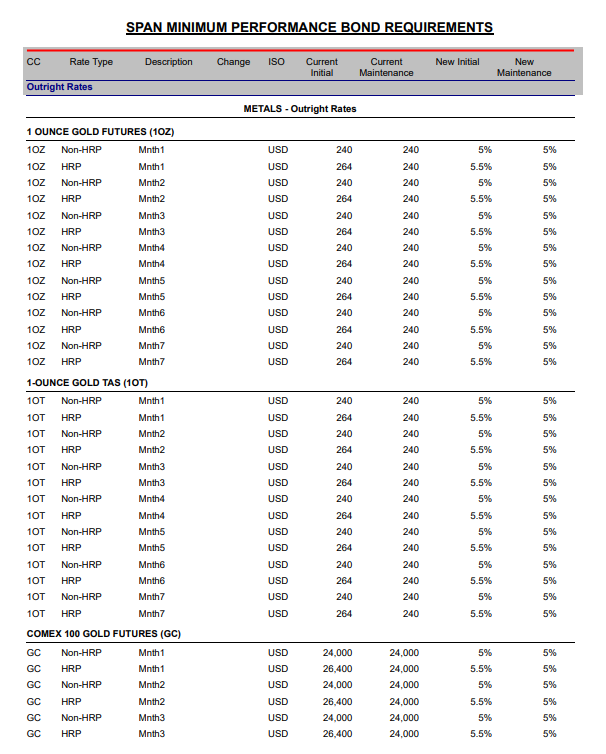
昨日白银、黄金纷纷创下新高,面对贵金属市场的剧烈波动,芝商所正在改变游戏规则,将贵金属保证 金收取方式从"固定"改为"浮动"! 根据芝商所1月12日发布的通知,根据对市场波动性的正常审查,为确保充足的抵押品覆盖,将改变黄 金、白银、铂、钯合约的保证金设定方式,由此前的按照固定金额收取保证金,改为按照合约名义价值 的一定比例计算保证金。相关费率将从1月13日收盘后生效。 部分非高风险组合黄金合约的保证金比例将调整为名义价值的约5%,白银约为9%。交易所表示,这一 决定基于对市场波动性的正常审查,旨在确保充足的抵押品覆盖。 | CC | Rate Type | Description | Change ISO | Current | Current | New Initial | New | | --- | --- | --- | --- | --- | --- | --- | --- | | | | | | Initial | Maintenance | | Maintenance | | Outright Rates | | | | | | | | | | | | METALS - Outright Rate ...
花旗喊了:牛市情景下,三个月内金价5000,白银100
Hua Er Jie Jian Wen· 2026-01-13 02:57
花旗集团激进上调贵金属短期展望,在牛市情景下,预计未来3个月内金价将冲至5000美元/盎司,白银 达100美元/盎司。这一预测基于地缘政治风险加剧、实物短缺及美联储政策不确定性。与此同时,摩根 士丹利与摩根大通等华尔街投行亦维持长期看涨共识。 华尔街大行再掀贵金属看涨潮,花旗集团激进上调短期目标价,直指金价5000美元大关。 据花旗集团最新发布的报告,鉴于地缘政治风险加剧、实物短缺以及市场对美联储独立性再次出现不确 定性,该行大幅上调了对贵金属的短期展望。包括Max Layton在内的分析师团队在电邮报告中表示,在 牛市情景下,将未来0-3个月的目标价从每盎司4200美元上调至5000美元,目标价则从每盎司62美元大 幅上调至100美元。 华尔街共识:涨势未尽 主要投行对黄金的长期看涨情绪已形成广泛共识。摩根士丹利在最新预测中,将2026年第四季度的金价 目标设定为4800美元,较此前2025年10月设定的4400美元预测有显著上调。该行指出,投资者不仅将黄 金视为通胀对冲工具,更将其作为观察央行政策与地缘政治风险的"晴雨表"。 摩根大通的预测则更为乐观。该行预计到2026年第四季度金价将达到5000美元,长 ...
价格控制下一个目标是“电价”!特朗普称“科技巨头必须承担数据中心电力成本,微软本周将作出改变”
Hua Er Jie Jian Wen· 2026-01-13 02:37
美国总统特朗普将价格管控目标瞄准电力领域,要求科技巨头为数据中心建设承担全部成本,而非转嫁 给普通消费者。 特朗普当地时间周一在Truth Social上表示,美国政府已与微软就此问题展开谈话,强调尽管数据中心对 人工智能繁荣"至关重要",但建设这些设施的大型科技公司必须"自行买单"。他透露微软将做出"重大 改变",但未提供具体细节。 美国电价涨幅已超过整体通胀水平,加剧了选民对能源等生活必需品成本的不满。数据中心的快速建设 被广泛视为推高美国电价的原因之一,这一议题已成为民主党在11月中期选举中的关键论点。 特朗普在社交媒体帖文中明确表示,政府正在确保消费者不会为"庞大的数据中心"买单。这一表态直接 针对科技行业在AI热潮中的基础设施扩张,要求企业承担相应的电力成本,而非通过电价上涨转嫁给 普通用户。 特朗普称微软将做出改变,但未透露具体措施或时间表。 微软副董事长兼总裁Brad Smith计划周二在华盛顿的活动中发表公告。在特朗普发帖前,微软在活动声 明中表示:"随着美国迎来建国250周年,这个国家正进入一个由AI力量塑造的新机遇时代。这一时刻提 出了关于我们共同构建的未来的根本性问题——谁从AI中受益, ...

铜价分歧加剧!瑞银押注“供给崩塌”,高盛警惕“过热回调”,拐点到了吗?
Hua Er Jie Jian Wen· 2026-01-13 02:17
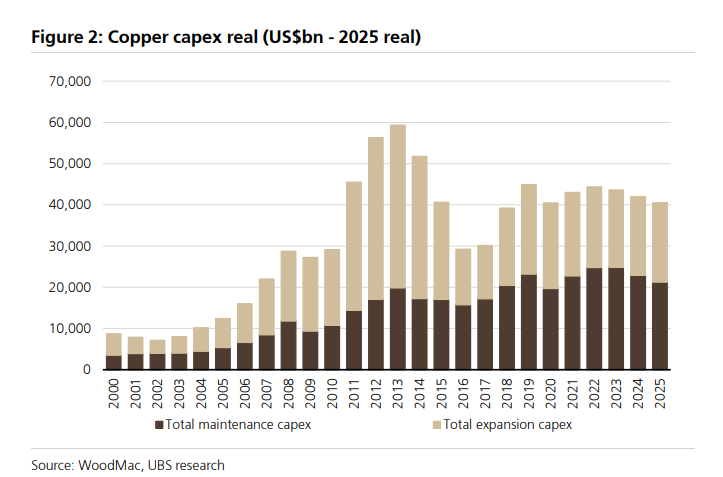
Core Viewpoint - There is a significant divergence in Wall Street's outlook on copper prices following a 22% surge, with UBS warning of a structural shortage by 2026/27 due to low project approvals, contrasting with Goldman Sachs and Citigroup's short-term caution regarding price sustainability driven by U.S. tariff fears [1][11][12] Group 1: Supply and Demand Dynamics - UBS analysts predict that despite a mixed demand outlook, the copper market will face a shortage by 2026/27, supported by declining inventories [5][12] - UBS's long-term model indicates that global mining supply will peak between 2028-2030 and then decline, with a projected supply-demand gap of 7 million tons by 2035 [5][6] - To address this gap, the industry needs to invest over $175 billion in new projects, with capital expenditures needing to rise significantly by 2026 and 2030 [6][8] Group 2: Capital Expenditure Challenges - UBS highlights that while nominal capital expenditures in the copper industry remain around $40 billion, real expenditures adjusted for inflation are only about 30% of the peak levels seen in 2013 [2][5] - The capital intensity of new projects is increasing, with potential projects from 2025-2030 requiring an average of $25,000 per ton, a 50% increase compared to previous projects [2][5] Group 3: Short-term Market Sentiment - Goldman Sachs and Citigroup express concerns that the recent price surge is primarily driven by speculative "stockpiling" in anticipation of U.S. tariffs, warning of a potential price correction once policy clarity is achieved [11][12] - Goldman Sachs maintains a forecast of a price drop to $11,200 per ton by Q4 2026, while Citigroup suggests that January may represent the peak price for 2026 [11][12] Group 4: Investment Strategies of Major Players - UBS notes that major mining companies like BHP and Rio Tinto are prioritizing mergers and acquisitions over high-risk new project developments, despite current prices being at levels that could incentivize new investments [8][12] - Key projects that may receive final investment decisions in the next 2-3 years include expansions in Chile and Argentina, as well as projects in the U.S. [8][12]
还记得去年“AI大崩盘”的导火索吗?Coreweave有了“显著进展”,股价应声大涨
Hua Er Jie Jian Wen· 2026-01-13 01:45
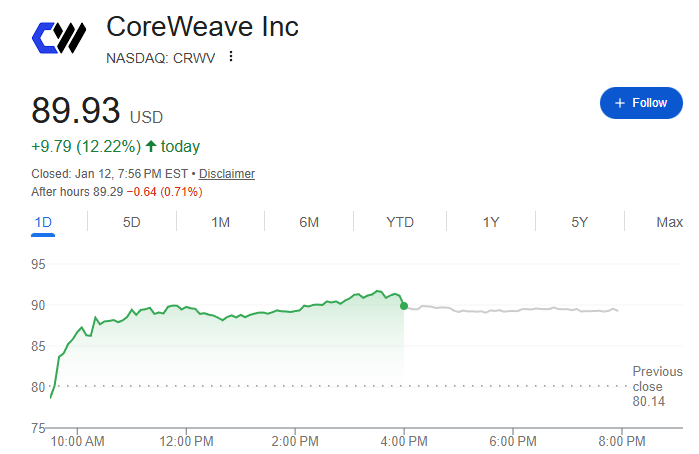
Core Points - CoreWeave has achieved a significant milestone in delivering chips for its data center project in Denton, Texas, for OpenAI, with over 16,000 GPUs delivered by the end of December, up from several racks delivered in mid-November [1] - The company experienced a stock surge of over 12% following the news, with a year-to-date increase exceeding 20% [1] - The Denton project faced delays due to severe weather conditions, which postponed the construction by approximately 60 days [4] Financial Challenges - Despite the recent delivery progress, CoreWeave is facing severe financial challenges, with analysts describing its balance sheet as one of the worst in the tech industry [6] - The company's revenue doubled year-over-year to nearly $1.4 billion in the most recent quarter, but it still reported a loss of $110 million [6] Market Impact - The delays in the Denton project have contributed to a broader trend of blame-shifting within the AI infrastructure sector, impacting not only CoreWeave but also causing significant stock declines for partners like Broadcom and Oracle [3] - Following the initial announcement of the delays, CoreWeave's stock plummeted from $105.61 to $88.39, a drop of 16.3%, and continued to decline into December [5]
花旗喊了:牛市情景下,三个月内金价5000,白银100!
Hua Er Jie Jian Wen· 2026-01-13 01:27
Core Viewpoint - Major investment banks, led by Citigroup, are bullish on precious metals, significantly raising short-term price targets for gold and silver due to geopolitical risks, physical shortages, and uncertainties surrounding the Federal Reserve's independence [1] Group 1: Citigroup's Price Target Adjustments - Citigroup has raised its short-term gold price target from $4,200 to $5,000 per ounce and silver from $62 to $100 per ounce, citing strong investment momentum and favorable factors expected to persist in Q1 [1] - The bank highlights that the ongoing physical shortages, particularly in silver and platinum group metals, may worsen in the short term due to uncertainties surrounding U.S. tariffs [1] Group 2: Broader Wall Street Consensus - A growing consensus among major banks indicates that the bullish trend for gold is not yet exhausted, with Morgan Stanley raising its 2026 gold price target to $4,800 and JPMorgan forecasting $5,000, with a long-term outlook of $6,000 [3] - Factors driving this bullish sentiment include the perception of gold as a hedge against inflation and geopolitical risks, alongside a weak U.S. dollar, which has declined approximately 9% in 2025, marking its worst annual performance since 2017 [3] Group 3: Silver and Base Metals Performance - Silver has seen a remarkable increase, with a 147% rise in 2025, attributed to structural supply deficits and industrial demand from sectors like solar panels and battery technology [4] - Analysts from ING and Morgan Stanley express optimism for silver's outlook in 2026, supported by ongoing investment inflows and supply constraints in base metals like aluminum and copper [4]



恒指高开1.32%,恒生科技指数涨1.93%
Hua Er Jie Jian Wen· 2026-01-13 01:25
阿里健康、阿里巴巴涨近5%,小鹏汽车涨超4%,比亚迪股份涨超3%。 市场有风险,投资需谨慎。本文不构成个人投资建议,也未考虑到个别用户特殊的投资目标、财务状况或需要。用户应考虑本文中的任何 意见、观点或结论是否符合其特定状况。据此投资,责任自负。 风险提示及免责条款 ...
债券巨头警告:“起诉鲍威尔”是特朗普的“乌龙球”,只会抬高利率
Hua Er Jie Jian Wen· 2026-01-13 01:05
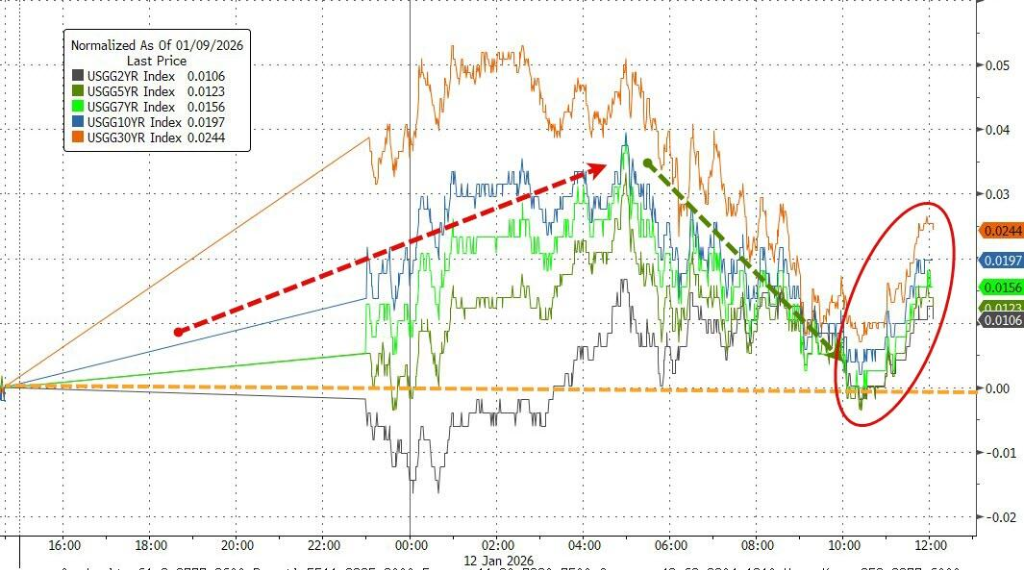
Core Viewpoint - Major bond investment institutions warn that the Trump administration's attacks on the Federal Reserve's independence contradict its goal of lowering interest rates [1][7]. Group 1: Market Reactions and Sentiment - The market remains resilient but risks persist, indicating investor confidence in legal and political processes protecting the Fed's independence [4][6]. - Despite concerns over the Fed's credibility, the bond market maintains recent ranges, suggesting buyers are willing to enter at appropriate price levels [4]. - The futures market shows traders still expect only two rate cuts this year, each by 25 basis points, indicating that government pressure is unlikely to affect the Fed's near-term rate decisions [4][6]. Group 2: Implications of Government Pressure - The pressure from the Trump administration is creating market instability, with the potential to keep Treasury yields elevated, thus increasing costs for mortgages, corporate loans, and other forms of credit [7]. - The government's actions contradict its goal of lowering long-term yields, as questioning the Fed's independence may lead to higher yields instead [7]. - Analysts believe that if investors fear inflation eroding investment value, they will demand higher long-term yields as compensation, which could drive key foreign buyers away from the U.S. market [8].