
Qi Huo Ri Bao

Search documents
期货圈“最强大脑”齐聚西安! 2025全球期货交易者大会精华盘点
Qi Huo Ri Bao· 2025-11-16 22:51
Group 1 - The 2025 Global Futures Traders Conference and the 19th National Futures (Options) Real Trading Competition attracted nearly 170,000 traders, with 196 outstanding participants emerging after months of competition [1] - The competition has evolved beyond a simple contest to become a core platform connecting market demand, talent cultivation, and industry ecosystem development, fostering a multi-win ecological value chain [2][3] - The competition serves as a mirror reflecting the dynamics and needs of traders, showcasing the evolution of trading behaviors and the modern risk management market [2][3] Group 2 - The futures industry is tasked with high-quality development and the creation of a specialized talent pool to provide efficient risk management services for the real economy [3] - The competition assists futures companies in grasping market trends and pressures them to innovate in technology and services, acting as a comprehensive stress test for their capabilities [3] - The event is positioned as a historical mission to promote the healthy development of the futures market, with future iterations expected to incorporate financial technology and artificial intelligence [3] Group 3 - The competition is recognized as a significant platform for observing market dynamics and driving industry innovation, having been held for 19 years [4] - The event provides an opportunity for futures companies to showcase their professional service capabilities and attract talented traders, enhancing brand recognition [5] - The competition is seen as a microcosm of the Chinese futures market, facilitating the exchange of diverse trading styles and strategies, and promoting overall improvement in derivative trading levels [6] Group 4 - Gold has become a focal point for traders, with significant central bank actions supporting its price increase, and a structural low allocation in asset management portfolios indicating potential for future growth [7] - The market dynamics suggest that gold's bullish trend is likely to continue unless significant geopolitical or monetary policy changes occur [7] - The recognition of the importance of understanding market logic and personal risk tolerance is emphasized as crucial for successful trading strategies [8] Group 5 - The CTA strategy is characterized by low correlation with traditional assets, providing a diversified source of returns and opportunities in both bull and bear markets [9] - The recent shift from a tightening to a loosening monetary policy environment is favorable for trading strategies, particularly for CTA products [9] - The performance of CTA products has shown a diversification in sources of returns across various sectors, including equities, bonds, and commodities [9]
中金所10月处理违反交易限额行为20起
Qi Huo Ri Bao· 2025-11-16 18:06
Core Viewpoint - The China Financial Futures Exchange (CFFEX) has disclosed its self-regulatory measures for October 2025, aimed at preventing market risks, maintaining market order, and protecting the legitimate rights of traders [1] Summary by Categories Self-Regulatory Measures - In October, CFFEX handled 6 cases of exceeding self-trading limits, 11 cases of frequent order cancellations beyond limits, 1 case of large order cancellations exceeding limits, and 1 case of exceeding combined positions due to actual control relationships, involving a total of 52 clients [1] - 24 clients faced restrictions on opening new positions, while 28 clients' members received telephone warnings [1] Violations of Trading Limits - CFFEX processed 20 cases of violations related to trading limits, resulting in restrictions on opening new positions for 79 clients [1] Maintenance of Position Requirements - There were 4 cases where clients maintained positions exceeding their corresponding asset allocation requirements, leading to measures such as requiring adjustments within a specified period and reporting situations for the 4 involved clients [1]
特朗普,下调关税!原油价格大起大落,发生了什么?
Qi Huo Ri Bao· 2025-11-15 23:46
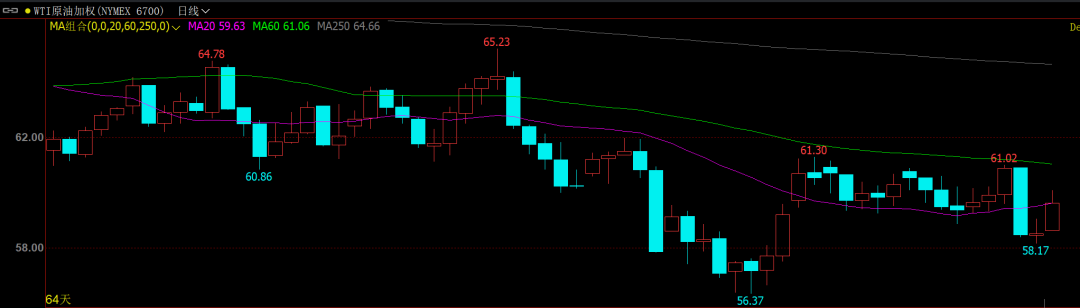
Group 1: Tariff Reduction and Economic Impact - The U.S. President Trump signed an order to lower tariffs on various goods including beef, tomatoes, coffee, and bananas to reduce grocery costs in response to voter pressure [1] - The tariff reductions apply to products that the domestic supply cannot meet, including hundreds of food items like coconuts, nuts, avocados, and pineapples, effective from November 13 [1] - This decision reflects a shift in Trump's policy focus towards affordability measures amid growing voter concerns about the economy and acknowledges that previous tariff policies increased consumer price pressures [1] Group 2: Oil Market Volatility - The oil market has experienced significant fluctuations due to various complex factors, with WTI and Brent crude oil prices dropping sharply before rebounding [3] - The initial drop was attributed to OPEC's monthly report indicating a supply surplus, while the subsequent rebound was linked to increased sanctions on Russia and drone attacks on Russian energy facilities, creating supply uncertainties [3][4] - A key Russian port, which accounts for 20%-30% of its crude oil exports, was attacked, impacting short-term exports and driving oil prices up [3] Group 3: Supply and Price Outlook - The oil market is facing a definitive supply surplus pressure, but geopolitical conflicts and sanctions are causing supply disruptions, leading to volatile price movements [4] - Analysts predict that oil prices may test previous lows and could potentially drop below $50 per barrel in the coming months due to ongoing supply concerns and economic pressures [4] - OPEC's forecast indicates a potential supply surplus by 2026, with the International Energy Agency (IEA) raising its supply surplus expectations for next year to approximately 4 million barrels per day [4] Group 4: Investment Strategies - Traders are advised to maintain short positions and monitor opportunities arising from rising oil shipping rates and cross-regional price spreads [5]

我国进口原油市场结构及前瞻分析
Qi Huo Ri Bao· 2025-11-15 11:11
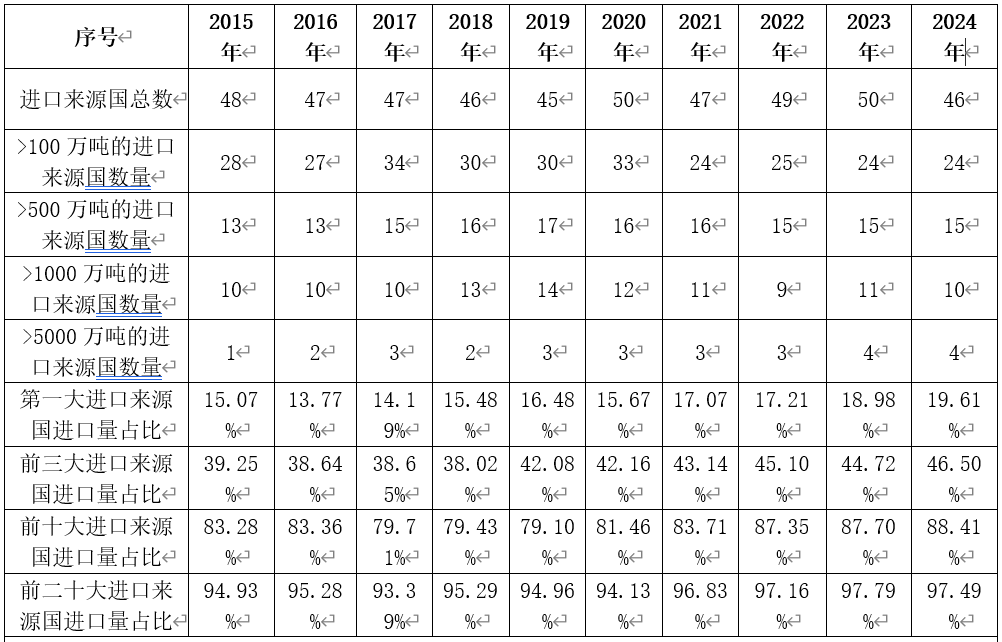
Core Viewpoint - The article discusses the significant role of crude oil in China's economy, highlighting the country's high dependence on oil imports and analyzing the trends and sources of crude oil imports over the past decade [1][2]. Group 1: Crude Oil Import Trends - From 2015 to 2024, China's annual crude oil import volume is projected to increase from approximately 336 million tons in 2015 to 553 million tons in 2024, representing a 1.65 times increase [2]. - The import volume is expected to exceed the historical peak of 564 million tons in 2023, with a year-on-year increase of about 3% in the first nine months of 2025 [2]. - The acceleration in import volume growth is attributed to rapid industrialization and urbanization, alongside the reform of the crude oil import quota system post-2015 [2]. Group 2: Characteristics of Import Sources - The number of countries supplying crude oil to China has remained above 45, indicating a diversification in import sources [3]. - The median share of oil supplied by individual countries ranges from 0.15% to 0.50% of total imports, enhancing energy supply security [3]. - The concentration of imports has increased, with the top ten source countries' share rising from 83.28% in 2015 to 88.41% in 2024 [9]. Group 3: Major Import Sources - The top ten crude oil suppliers to China include Saudi Arabia, Russia, Angola, Iraq, Oman, Kuwait, and Brazil, with Malaysia emerging as a significant supplier by 2024 [6][11]. - The import volume from Malaysia surged from 270,000 tons in 2015 to over 70 million tons in 2024, marking a 260-fold increase [11]. - Russia has become the largest supplier, with imports increasing by 24% in 2023, reaching 107 million tons, and is expected to maintain a significant share in the coming years [10][11]. Group 4: Future Outlook - The future import landscape is expected to be stable yet dynamic, with countries like Saudi Arabia and Oman maintaining steady export levels due to their stable geopolitical situations [16]. - The geopolitical tensions affecting countries like Russia, Iran, and Venezuela may lead to fluctuations in their export volumes to China, while countries like Brazil and Canada are likely to see increased exports due to rising production [17][18]. - China's energy strategy emphasizes the need for continued diversification of import sources to mitigate risks associated with geopolitical events [20].
昨夜今晨 金价下挫!美调整“对等关税”清单!多次空袭 中东战火又起!集运期货价格承压
Qi Huo Ri Bao· 2025-11-15 01:50
Market Overview - As of November 14, gold prices fell by 2.20% to $4080.04 per ounce, with a weekly increase of 1.98% from $3998.67 to $4245.23 before the decline [1] - COMEX gold futures dropped by 2.70% to $4081.00 per ounce, with a weekly rise of 1.75% [1] - U.S. stock indices showed mixed results, with the Dow Jones down 0.65%, Nasdaq up 0.13%, and S&P 500 down 0.05% [1] - The Nasdaq China Golden Dragon Index fell over 1.6%, with Alibaba down nearly 4% and JD.com and Xpeng Motors down over 4% [1] U.S. Tariff Adjustments - The U.S. government has removed certain agricultural products from the "reciprocal tariff" list as per a new executive order signed by President Trump [3] - The adjustments are based on domestic product demand and capacity assessments, with the updated tariff exemptions effective from November 13, 2025 [3] Geopolitical Tensions - Russian Foreign Ministry spokesperson Zakharova warned NATO against any potential attacks, stating that Russia is prepared to respond with all necessary force [5] - The situation remains tense with ongoing military activities near the Russian border [5] Shipping and Freight Market - The shipping futures market is under pressure due to spot market conditions and the situation in the Red Sea, with near-term freight rates showing weakness [10] - Several shipping companies have lowered their quotes for the second half of November, with Maersk reducing its Week 48 opening price to $2000-$2100 per FEU [11] - The overall sentiment for December pricing remains uncertain, with some companies announcing price increases while others maintain a cautious approach [12][13] - The potential for resuming shipping routes through the Red Sea is increasing, but most companies remain cautious due to ongoing geopolitical tensions [14]
印度突然撤销BIS认证!我国聚酯、PVC出口风向生变?
Qi Huo Ri Bao· 2025-11-14 23:43
Core Viewpoint - The Indian government's sudden withdrawal of BIS certification for 14 chemical products, including PTA and PVC, is expected to significantly impact the polyester and PVC industries, potentially reviving export growth and market dynamics [1][2]. Group 1: Policy Changes - On November 12, 2025, the Indian Bureau of Indian Standards (BIS) announced the immediate cancellation of BIS certification for PTA, MEG, PSF, FDY, POY, and PVC homopolymer, which had been in place for nearly two years [1][2]. - The BIS certification process for PVC has undergone multiple delays, with the original certification requirements announced on February 26, 2024, and subsequently postponed several times until the final cancellation in November 2025 [2]. Group 2: Export Impact - The implementation of BIS certification had a drastic negative effect on PTA exports from China to India, plummeting from 960,000 tons in 2022 to 380,000 tons in 2024, representing a decline from 28% to 8% of total PTA exports [3]. - Polyester exports, particularly for PTA and polyester filament yarn, were significantly affected, with monthly exports of polyester filament yarn dropping from over 70,000 tons in September 2023 to approximately 160,000 tons for the entire year of 2024 [3]. Group 3: Market Dynamics - Despite the challenges in the Indian market, other Asian countries have shown increased demand, with China's total polyester exports reaching 10.23 million tons in the first nine months of 2025, a year-on-year increase of 16.3% [4]. - The cancellation of BIS certification is expected to eliminate key barriers to entry for Chinese polyester products, potentially reversing the decline in PTA exports and providing support to the domestic polyester industry facing oversupply pressures [5][6]. Group 4: Future Outlook - Analysts believe that while the immediate impact of the BIS certification cancellation is positive, the long-term growth of polyester exports will still depend on overall demand in the Indian market and competition from overseas suppliers [6]. - For PVC, the cancellation is seen as a stabilizing factor for exports to India, although there may be a temporary decline in export volumes due to previous "export rush" phenomena and seasonal factors [6][7].

定了!铂、钯期货11月27日上市,铂、钯期权11月28日上市
Qi Huo Ri Bao· 2025-11-14 12:56
Core Viewpoint - The Shanghai Futures Exchange (SHFE) has announced the listing of platinum and palladium futures and options, set to begin trading on November 27 and 28, 2025, respectively [2]. Group 1: Trading Details - Platinum and palladium futures contracts will be listed with the first contracts being PT2606, PT2608, PT2610 for platinum and PD2606, PD2608, PD2610 for palladium [2]. - The trading unit for both platinum and palladium futures contracts is 1000 grams per lot, with a minimum price fluctuation of 0.05 yuan per gram [2]. - The initial margin requirement for trading on the first day will be 9% of the contract value, with a price limit of 14% from the listing benchmark price [2]. - If a contract is traded, the margin and price limit will adjust to 9% and 7% of the previous day's settlement price, respectively, for the following trading day [2]. Group 2: Fees and Trading Hours - The trading fee for platinum and palladium futures is set at 0.01% of the transaction amount, with no fees for intra-day closing trades and a hedging fee of 0.0005% [3]. - Trading hours are scheduled from Monday to Friday, with specific time slots: 9:00-10:15, 10:30-11:30, and 13:30-15:00, along with other times as designated by the exchange [3]. Group 3: Industry Significance - Platinum and palladium are crucial raw materials for green industries, particularly in automotive exhaust treatment, with approximately 60% of platinum and nearly 80% of palladium used in catalytic converters in China [3]. - These metals are also essential for renewable energy sectors such as wind power and hydrogen energy, making them representative of new energy metals [3]. - The listing of these futures and options aligns with the demand for risk management tools in the real economy and signifies the expansion of the SHFE's new energy metal sector [4].

广期所:铂、钯期货合约将于11月27日上市交易
Qi Huo Ri Bao· 2025-11-14 09:42
Core Insights - The Guangzhou Futures Exchange has received approval from the China Securities Regulatory Commission to register platinum and palladium futures, with trading set to begin on November 27, 2025 [1][2] - The initial trading contracts for platinum are PT2606, PT2608, and PT2610, while for palladium, they are PD2606, PD2608, and PD2610 [1] - Both platinum and palladium futures will have a trading unit of 1000 grams per contract and a minimum price fluctuation of 0.05 yuan per gram [1] Trading Details - The margin requirement for the first trading day will be 9% of the contract value, with a price limit of 14% based on the listing price [1] - If there are transactions, the margin will remain at 9% for the next trading day, with a price limit of 7% based on the previous day's settlement price; if no transactions occur, the initial margin and price limit will continue [1] - The trading fee for platinum and palladium futures is set at 0.01% of the transaction amount, with no fees for intra-day closing positions and a reduced fee of 0.005% for hedging transactions [2] Industry Significance - Platinum and palladium are crucial raw materials for green industries, particularly in automotive exhaust treatment, with approximately 60% of platinum and nearly 80% of palladium used in catalytic converters [2] - These metals are also essential for renewable energy sectors such as wind power and hydrogen energy, making them representative of new energy metals [2] - The launch of platinum and palladium futures and options aligns with the demand for risk management tools in the real economy and signifies the expansion of the new energy metal sector at the Guangzhou Futures Exchange [3]
期货工具为制造业装上“稳压器” | “期货赋能产业创新”优秀投教案例
Qi Huo Ri Bao· 2025-11-14 07:50
Group 1 - The core viewpoint of the articles emphasizes the role of futures companies in providing innovative financial tools to help manufacturing enterprises manage market volatility and enhance their operational resilience [1][2][3][4][5] Group 2 - A lithium carbonate wet recovery company in East China faced significant profit erosion due to price fluctuations in lithium carbonate, a key raw material for the booming electric vehicle industry [1] - Nanhua Futures customized a hedging system for the lithium carbonate company, enabling them to achieve a selling price of 82,490 yuan/ton through an options strategy, which was 490 yuan/ton higher than direct futures selling [2] - Dongwu Futures provided a "price lock without quantity lock" trade solution for a cable company, helping them save 1.2 million yuan in procurement costs by delivering 2,600 tons of aluminum ingots [3] - Guotai Junan Futures assisted a group company in Ningbo, Zhejiang, in managing high funding costs by recommending the use of 30-year government bond futures, which could lower annual funding costs by 0.95% [4][5] - The shift in mindset from passive risk acceptance to proactive risk management is highlighted, showcasing the transformative impact of futures tools on enterprise operations [5]

短暂调整后重拾强势!金银再成市场关注焦点
Qi Huo Ri Bao· 2025-11-14 00:20
截至今晨收盘,美股三大股指普跌,道指跌1.65%,纳指跌2.29%,标普跌1.65%。英伟达跌超3%,谷 歌跌超2%,特斯拉跌超6%,甲骨文跌超4%。热门中概股收盘普跌,纳斯达克中国金龙指数跌1.59%。 贵金属再现强势 11月13日纽约尾盘,现货黄金跌0.54%,报4172.84美元/盎司,北京时间11月13日20:59刷新日高至 4245.23美元/盎司,北京时间11月14日02:23出现一波短线跳水——从4200美元/盎司关口跌至4145.55美 元/盎司。COMEX黄金期货跌0.96%,报4173.00美元/盎司。 近期,黄金与白银价格在短暂调整后重拾强势,特别是周四白银表现亮眼:沪银价格创下上市新高,外 盘银价也一度逼近前期高点。期货日报记者了解到,这是宏观经济预期与品种自身基本面因素共振的结 果。 据金瑞期货研究所贵金属研究员吴梓杰介绍,贵金属强势上行最核心的驱动力,源于市场对美联储货币 政策即将转向的强烈预期。近期披露的一些非官方经济数据,例如降温的劳动力市场和持续疲软的消费 者信心指数,被市场普遍解读为美国经济活力放缓的明确信号,这极大地强化了投资者对美联储将在不 久后降息以应对潜在衰退风险的 ...