Qi Huo Ri Bao

Search documents
齐盛期货刘旭峰:商品属性接棒驱动,转折点或出现在明年年中
Qi Huo Ri Bao· 2025-12-23 23:52
白银供应短缺或延续 在"期货大家谈——2025期货业盘点"系列访谈第七期中,齐盛期货贵金属首席分析师刘旭峰就2026年贵金属市场走势进行了深 度解读。他认为,贵金属的商品属性有望取代金融与货币属性,成为驱动价格的主导力量,白银供需缺口的扩大或对价格形成 支撑,结合海外宏观环境变化,投资者需重点关注流动性风险。 多重风险交织 刘旭峰表示,美元信用体系的长期影响力呈现弱化趋势,全球央行持续的购金行为是非美国家货币实力增强的体现,也反映了 对美元资产的分散化需求。值得注意的是,2025年中国央行购金力度已有所放缓,2026年是否暂停增持有待关注。 "尽管中长期宏观环境对贵金属价格构成一定支撑,但多重风险点不容忽视。"刘旭峰认为,重点应防范流动性风险,2020年3月 的市场波动表明,在极端流动性紧缩的情况下,黄金、白银等资产亦难以独善其身。此外,通胀反弹、经济实现软着陆及美联 储货币政策边际收紧的可能性,均可能扭转当前的市场预期。 刘旭峰建议,投资者策略上应关注向上的机会,在把握结构性行情的同时,对短线极端波动保持警惕。若海外经济在降息周期 中企稳反弹,则需重新评估中长期看多白银的逻辑基础。 刘旭峰表示,2021年— ...


多空因素并存 沪胶区间震荡为主
Qi Huo Ri Bao· 2025-12-23 23:22
Group 1 - The core viewpoint of the articles indicates that the domestic natural rubber market is experiencing a phase of inventory consumption, with supply pressures easing due to the seasonal cessation of rubber tapping in major production areas like Yunnan and Hainan [1][2] - As of December 2025, the two main production areas for natural rubber in China, Yunnan and Hainan, have entered the cessation phase, leading to a significant reduction in raw material output and a reliance on inventory for market circulation [1] - The domestic automotive market shows positive trends, with production and sales of vehicles in November 2025 reaching 3.532 million and 3.429 million units respectively, marking a month-on-month increase of 5.1% and 3.2% [2] Group 2 - The tire market in China is characterized by stable growth in total volume, structural optimization, and internal-external coordination, with the production of rubber tire outer casings showing a slight year-on-year decline of 2.6% in November 2025 [3] - As of December 21, 2025, the total inventory of natural rubber in the Qingdao area reached 515,200 tons, reflecting a weekly increase of 1,630 tons, indicating a continuous rise in inventory for eight consecutive weeks [3] - The heavy truck market, a key indicator of natural rubber demand, has shown a strong recovery, with November 2025 sales reaching approximately 100,000 units, a 46% increase compared to the same month last year [2]
铁矿石保持短多中空思路
Qi Huo Ri Bao· 2025-12-23 23:21
Core Viewpoint - Despite weak fundamentals, iron ore prices have rebounded due to macroeconomic positive expectations, with short-term price resilience anticipated, while medium-term downward pressure remains due to oversupply concerns in 2026 [1][2][4] Supply and Demand Summary - The current iron ore market is characterized by increasing supply and decreasing demand, with port inventories continuing to accumulate. Global iron ore shipments have risen, reaching a year-to-date high with a year-on-year increase of 17.3% [1] - Daily average pig iron production from 247 steel mills has decreased by 1.16% week-on-week to 2.2655 million tons, marking a continuous five-week reduction and a year-on-year decline of 1.2%. Steel mills are cautious in purchasing imported iron ore, leading to a 1.2% decrease in inventory week-on-week and an 8.9% year-on-year reduction [1] - Port iron ore inventories have increased by 0.5% week-on-week to 155.1263 million tons, marking a four-week accumulation and a year-on-year increase of 3.6% [1] Price Movements - Despite weak fundamentals, iron ore prices have shown resilience, with the price of the most suitable delivery warehouse receipt rising by 10 yuan/ton to 796 yuan/ton, and the main iron ore futures contract increasing by 19.5 yuan/ton to 780 yuan/ton, narrowing the spot-futures spread from 22 yuan/ton to 16 yuan/ton [1] Policy and Economic Outlook - The recent rebound in iron ore prices is primarily driven by macroeconomic policy expectations, with the government planning to introduce more incremental policies in 2026 to boost consumption and stabilize investment [2] - The first quarter of 2026 is expected to exhibit a "good start" effect due to the commencement of the 14th Five-Year Plan, alongside potential seasonal weather disruptions affecting supply from the Southern Hemisphere [2] Demand Projections - China's crude steel demand is projected to decline by 1.5% year-on-year in 2026, with a significant drop in real estate-related steel consumption expected to decrease by 10.4% [3] - Non-real estate steel consumption is anticipated to decrease marginally by 2.0% due to reduced steel intensity in investment, despite potential increases in infrastructure and manufacturing investments [3] - Crude steel exports are expected to rise by approximately 1 million tons, reflecting a year-on-year increase of about 7.2% due to optimized export strategies and competitive pricing [3] Supply Projections - Global iron ore supply is expected to increase by approximately 56 million tons in 2026, marking the beginning of a loose supply cycle, with significant contributions from major mining companies [3] - The Simandou iron ore project in Guinea is expected to add about 20 million tons of supply, while major mining companies like Vale, Rio Tinto, BHP, and FMG are projected to contribute an additional 29 million tons collectively [3] Market Balance - The supply-demand balance indicates a projected decrease in China's iron ore demand by approximately 27 million tons, with a global oversupply of about 60 million tons expected in the maritime market [4] - Port prices for the most suitable delivery warehouse receipts may test the $85/ton threshold [4]
白银价格持续走高
Qi Huo Ri Bao· 2025-12-23 23:14
Group 1 - The core driver of the recent surge in silver prices includes macro liquidity easing, intensified supply-demand conflicts, and increased investment demand [1][2][3] - The Federal Reserve's three interest rate cuts this year and expectations for further cuts in 2026 have led to a decline in the 10-year U.S. Treasury yield to 4.16%, enhancing the appeal of non-yielding assets like silver [1] - Structural supply shortages in the global silver market have persisted for several years, with industrial demand from sectors like photovoltaics and AI growing rapidly, while mineral supply remains constrained [1][2] Group 2 - As of December 18, the largest silver ETF, iShares Silver Trust (SLV), reported a holding of 16,018.29 tons, an increase of 760.37 tons or 4.98% from the low on November 21 [2] - The upcoming results of the U.S. "232 investigation" on silver, expected on January 17, 2026, have created uncertainty regarding tariff policies, prompting investors to stockpile physical silver [2][3] - The recent price increase in silver futures is attributed to a combination of macroeconomic easing, structural supply shortages, and heightened investment demand, with expectations for silver prices to remain above $60 per ounce [3]
玻璃价格反弹空间有限
Qi Huo Ri Bao· 2025-12-23 11:32
Core Viewpoint - The glass industry is experiencing a significant reduction in production capacity amid ongoing profit compression, leading to a generally loose supply-demand balance in the future [1] Industry Overview - As of the end of November, there are a total of 283 float glass production lines in the country, with 217 lines in operation and a daily melting capacity of 155,155 tons, which is a decrease of 5,400 tons from the previous month and a year-on-year decline of 2.71% [1] - The industry's capacity utilization rate stands at 80.13% [1] Market Dynamics - Throughout the year, glass prices have shown multiple instances of rapid rebounds due to the implementation of anti-involution policies and the cold repair of certain production lines; however, these supply-side changes often lead to short-term market shocks [1] - The overall market for glass prices has remained sluggish, with weak downstream orders contributing to a lack of sustained price increases [1] Inventory Situation - High inventory levels have been a key factor hindering the stabilization of glass futures prices, with current inventories at float glass factories significantly higher than the same period last year [1] Future Outlook - The overall supply-demand pattern for glass is expected to remain loose, and without policy measures to stimulate demand, the potential for price rebounds appears limited [1]
“乘势而上,革故鼎新” !国泰海通旗下国泰君安期货2026年年度策略会成功召开
Qi Huo Ri Bao· 2025-12-23 08:45
王笑对2026年衍生品市场进行了展望。他表示,2026年全球地缘局势进入缓和期,经济结构的修复要关 注政策导向及落地情况、内外部的经济共振机会和内生性的自然修复。2026年资产价格可能"抢跑",但 基本面的绝对变化或体现在2027年。在资产表现上,在经济结构调整的背景下,企业净资产收益率 (ROE)修复有望推动估值上涨。对商品而言,2026年基本面没有较大改变,不同品种的分化走势仍将持 续,关注价格反转的可能性。风险因素方面,需关注地缘局势缓和不及预期对资产价格的负面影响。 王笑随后主持以"大咖面对面——全域资产配置与跨境投资新机遇"为主题的圆桌论坛。论坛邀约不同领 域的行业专家,以不同的资产视角对2026年宏观经济和资产变化进行了探讨。在跨市场、跨行业的大咖 对话中,4位行业顶尖专家针对明年的经济周期定位、大类资产配置机会、固收和债券的投资观点、量 化市场发展结构等进行了热烈的讨论。 会议为期2天,共设1场主论坛和9场分论坛,分论坛议题涵盖有色金属及贵金属板块、黑色和能化板 块、新能源板块、"十五五"产业规划、资产配置等,各路专家、分析师与嘉宾围绕热点问题进行了深入 讨论。 本次会议的视频回放将于12月29 ...

乘势而上,革故鼎新——国泰海通旗下国泰君安期货2026年年度策略会成功召开
Qi Huo Ri Bao· 2025-12-23 06:55
Core Insights - The annual strategy conference of Guotai Junan Futures was held on December 22, 2026, focusing on macro trends, industrial upgrades, asset allocation, and the development of the derivatives market [1] - Experts from various fields provided insights on China's economic recovery, the outlook for the A-share market, and the future of the derivatives market [2][3] Group 1: Economic Outlook - Sheng Songcheng, the director of the China Chief Economist Forum, emphasized the need for continuous policy support for economic recovery, balancing investment and consumption, and the impact of RMB appreciation on asset performance [1] - The overall economic operation is stable, but further recovery requires sustained policy efforts [1] Group 2: A-Share Market Perspective - Fang Yi, Chief Strategist at Guotai Haitong Securities, expressed optimism about the A-share market, predicting a significant development cycle starting in 2025, with the Shanghai Composite Index potentially reaching new highs [2] - The transformation of the underlying logic of the Chinese stock market is evident, as concerns over U.S.-China conflicts and economic visibility are diminishing, leading to a more favorable environment for capital markets [2] Group 3: Derivatives Market Forecast - Wang Xiao, Research Director at Guotai Junan Futures, projected that 2026 would be a year of adjustment and recovery in the global geopolitical landscape, with a focus on policy guidance and economic resonance [3] - The K-shaped economic divergence will continue, with high-growth industries and traditional economic cycles showing distinct trends, while the potential for price reversals should be monitored [3] Group 4: Forum Discussions - A roundtable forum was held to discuss macroeconomic and asset changes for 2026, featuring industry experts who explored economic cycle positioning, asset allocation opportunities, and developments in quantitative markets [4] - The conference included one main forum and nine sub-forums covering topics such as precious metals, black energy, new energy, and asset allocation strategies, fostering in-depth discussions among experts and analysts [4]
国内天胶产业演进将呈现四大趋势
Qi Huo Ri Bao· 2025-12-23 02:48
Core Insights - Hainan is a crucial natural rubber production base in China, facing significant challenges due to typhoons and climate anomalies affecting supply and prices [1][2] - The natural rubber industry in Hainan is experiencing structural contradictions, with competition from other crops and aging rubber trees impacting production [3] - Different companies are adopting varied strategies to navigate the challenging environment, with state-owned enterprises focusing on global resource allocation and technology innovation, while private firms are implementing defensive measures [4][5] Group 1: Industry Challenges - Typhoon "Mojia" caused substantial damage to rubber plantations in Hainan, leading to a tight supply of raw materials and rising prices [1] - The aging tree structure and adverse weather conditions have resulted in reduced rubber production, with local processing capacity facing fierce competition [2][3] - The economic benefits of alternative crops like betel nut and agarwood are leading to decreased willingness among farmers to harvest rubber, further exacerbating supply issues [3] Group 2: Company Strategies - A leading state-owned enterprise is focusing on global resource layout and technological innovation, including the promotion of smart tapping technology to reduce labor costs [4] - Private processing companies are adopting a defensive strategy by reducing production to control losses and seeking to import raw materials from lower-cost regions [5] - Some companies are extending their operations downstream to enhance product value and cope with high local raw material prices [5] Group 3: Future Trends - The natural rubber industry in China is expected to undergo a significant transformation, balancing strategic resource security with economic realities [6] - The planting area and raw material output in Hainan are projected to decline slowly, while processing capacity will undergo consolidation due to strict environmental regulations [6] - The industry is likely to evolve into a dual-circulation model, combining domestic resource security with overseas resource expansion [6]
“保险+期货”持续守护胶农幸福
Qi Huo Ri Bao· 2025-12-23 02:13
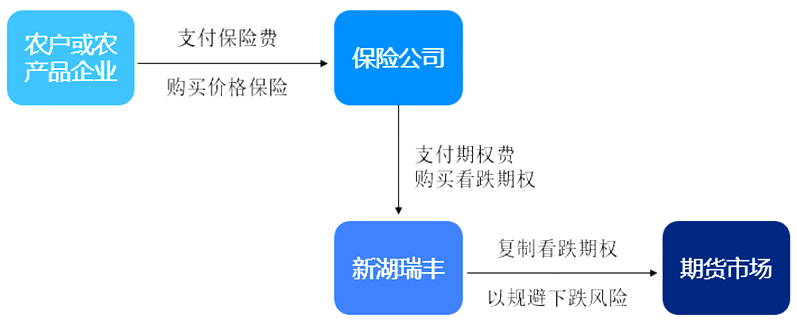
2017年国家启动"两区"划定,将天然橡胶作为重要农产品,要求划定保护区,海南省规划保护面积840万亩。其 中,白沙黎族自治县(简称白沙县)是原国家级少数民族贫困县,以种植业为主,橡胶是其支柱产业,种植面积达 104万亩,人均橡胶种植面积和人均产量分别名列海南第一和全国第二。 2011年以来胶价的持续低迷导致胶农收入锐减,橡胶树弃管、弃割现象严重。为稳定胶农收入、助力橡胶产业发 展,在白沙县政府和上期所的支持下,新湖期货携手中国人民财产保险股份有限公司海南省分公司(简称人保财 险海南省分公司)于2017年首次将"保险+期货"精准扶贫创新模式引入海南,将全国首单天然橡胶"保险+期货"试点 项目落地白沙县,创新应用金融工具管理橡胶价格波动风险。 服务方案与开展过程 业务模式 在白沙县开展的天然橡胶项目采用"保险+期货"模式,这是一种将农户和期货市场通过保险公司进行间接联结的 具有中国特色的金融模式,为农业产业的风险管理提供了有效的金融手段。这一模式打造了"农民买价格保险或 收入保险保收益,保险公司购买场外期权对冲风险,期货公司风险管理公司复制期权覆盖风险"的闭环。 图为"保险+期货"模式流程 方案设计 胶水是生产 ...
东证期货“IF公益”:党建引领金融创新 产业帮扶护航长征沿线地区乡村振兴
Qi Huo Ri Bao· 2025-12-23 02:07
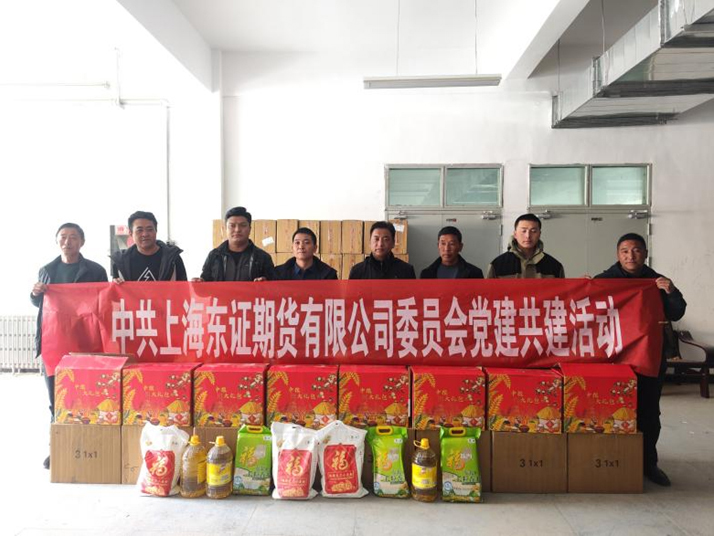
2017年以来,东证期货在重视自身经营发展的同时,一直坚守初心,将行业发展融入服务国家战略中, 在20个省份的74个乡村振兴地区开展帮扶项目,投入资金超8700万元,涉及产业、教育、消费、场外期 权、"保险+期货"和"订单收购+期货"等多种帮扶形式。 项目背景 为积极响应习近平总书记提出的"走好新时代长征路"的号召,2021年,东证期货打造了公益品牌"IF公 益",意在通过"保险+期货"的新兴金融模式扶持乡村农业经济,以公益"反哺"的力量,推动成就了中国 革命的红色地标收获来自新农村的富裕果实,践行"如期收获好成果,只为乡村更美好"的口号。截至目 前,"IF公益"项目覆盖江西省瑞金市和井冈山市、贵州省安龙县、广西全州县、四川省泸定县、广东省 南雄市、云南省宣威市、宁夏西吉县等地,共计投入近1240万元,从"保险+期货"、消费、产业、文化 及党建等领域对长征沿线地区进行帮扶。 服务方案 2024年下半年,东证期货"IF公益"继续沿着红军长征足迹,来到隶属甘南藏族自治州的迭部县,与迭部 县政府就帮扶意向项目进行深入交流,并签署了乡村振兴战略合作协议。根据迭部县产业发展特色及实 际需求,东证期货"IF公益"从党建共 ...