Wen Hua Cai Jing

Search documents
印尼贸易部:印尼7月精炼锡出口量同比增加11.2%
Wen Hua Cai Jing· 2025-08-19 07:33
Group 1 - Indonesia's Ministry of Trade reported that refined tin exports in July reached 3,792.22 tons, an increase of 11.2% compared to 3,408.96 tons in the same month last year [2] - However, July's exports were lower than June's figure of 4,465 tons [2]


印度最大精炼锌生产商将投资4.38亿美元建造处理厂 自尾矿中提取金属
Wen Hua Cai Jing· 2025-08-19 02:21
Core Viewpoint - Hindustan Zinc, India's largest refined zinc producer, announced a $438 million investment to build a metal processing plant as part of its capacity expansion plan [1] Group 1: Investment and Capacity Expansion - The new plant will have an annual processing capacity of 10 million tons, recovering metals from tailings, which are waste piles left after metal extraction from ore [1] - This facility aims to enhance the company's overall mineral recovery rate and support its larger goal of doubling annual production capacity to 2 million tons [1] - In June, the company announced a $1.39 billion investment plan to establish a metal complex in Rajasthan, where it already operates a zinc smelter [1]
两大交易所锌库存表现分化 沪锌库存增至近五个月新高
Wen Hua Cai Jing· 2025-08-19 02:21
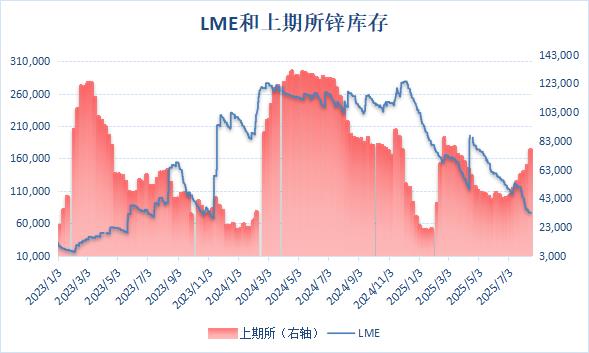
Group 1 - LME zinc inventory decreased to 75,850 tons, marking a near two-year low [1] - SHFE zinc inventory increased by 16.51% to 76,803 tons, reaching a near five-month high [1] - The trend of declining inventories in domestic and international exchanges generally supports futures prices, while increasing inventories may exert downward pressure [3] Group 2 - Comparison of LME and SHFE zinc inventories since 2023 shows significant fluctuations [4]
金属和矿业公司面临数百万美元关税成本
Wen Hua Cai Jing· 2025-08-19 02:19
Core Viewpoint - The tariffs imposed by President Trump on various trade partners have significantly increased cost pressures and operational challenges for metal and mining companies, particularly affecting copper and aluminum producers while benefiting steel manufacturers [1][5]. Group 1: Impact of Tariffs on Companies - North American aluminum producers, including Alcoa and Rio Tinto, reported millions in tariff costs due to the doubling of aluminum import tariffs from 25% to 50% [2]. - Alcoa incurred $115 million in tariff costs in Q2, as 70% of its Canadian production is sold to the U.S. [3]. - Rio Tinto faced a total cost of $321 million for its Canadian aluminum exports due to U.S. tariffs [3]. - Freeport-McMoRan, the largest copper producer in the U.S., indicated that tariffs would increase costs by 5% [3]. - Caterpillar estimated the tariff impact in Q2 to be between $250 million and $350 million, leading to a 22% decline in adjusted operating profit [3]. Group 2: Steel Industry Perspective - The U.S. steel industry supports the increase in steel import tariffs from 25% to 50%, viewing it as a means to boost domestic demand and stabilize prices [5][6]. - Executives from Cleveland-Cliffs emphasized the necessity of strict enforcement of tariffs to maintain a strong domestic steel industry [7]. - Despite rising raw material costs, steel companies believe they can adjust their supply chains to cope with the changes [7]. - Steel companies expect improved operating conditions and profitability by the second half of 2025 due to stable demand [8]. Group 3: Operational Adjustments and Future Planning - Companies are reassessing their operational decisions in light of the tariff policies [9]. - Teck Resources reported an increase in capital requirements for its Highland Valley copper mine expansion project, raising its budget from CAD 2.1 billion to CAD 2.4 billion, reflecting a 14.3%-16.7% increase due to inflation and rising input costs [10]. - Grupo Mexico is evaluating U.S. investment opportunities, focusing on increasing smelting and refining capacity in response to tariff policies over the next 3-5 years [12].





秘鲁1-6月铜产量同比增长3.5%
Wen Hua Cai Jing· 2025-08-19 02:01
Core Insights - Peru's copper production in June increased by 7.1% year-on-year, reaching 228,932 tons [1] - The Las Bambas mine, controlled by MMG, saw a production increase of 63.5% in June, while Chinalco's output more than doubled [1] - A decline in Las Bambas' production is expected in July due to a two-week blockade of a major road used for copper transportation, caused by protests from informal miners [1] - For the first six months of 2025, Peru's copper production is approximately 1.34 million tons, reflecting a year-on-year growth of 3.5% [1] - Peru ranks as the third-largest copper producer globally [1] Production Data - June's major metal production data from Peru is sourced from the Ministry of Energy and Mines [1]
金属多飘绿 期铜收低,受美元走强打压【8月18日LME收盘】
Wen Hua Cai Jing· 2025-08-19 00:48
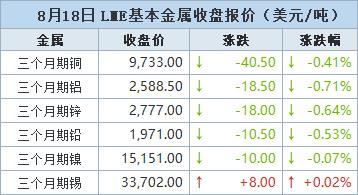
Group 1 - LME copper prices fell by $40.5, or 0.41%, closing at $9,733.0 per ton on August 18, influenced by a stronger dollar and uncertainty surrounding key events in the U.S. [1] - The three-month aluminum price decreased by $18.5, or 0.71%, closing at $2,588.5 per ton, while zinc and lead also saw declines of 0.64% and 0.53% respectively [2][6] - The only metal to see an increase was tin, which rose by $8, or 0.02%, closing at $33,702 per ton, supported by low inventory levels [6] Group 2 - ING commodity strategist Ewa Manthey noted that the market is cautious ahead of the meeting between Trump and Zelensky, as well as the upcoming Federal Reserve's Jackson Hole meeting [4] - The U.S. has expanded tariffs on steel and aluminum, which officially took effect on August 18, impacting various products and potentially affecting metal prices [6] - Peru's copper production increased by 7.1% year-on-year in June, reaching 228,932 tons, indicating a positive trend in copper supply [5]
沪铝库存有所回升 增至逾两个月新高
Wen Hua Cai Jing· 2025-08-18 10:34
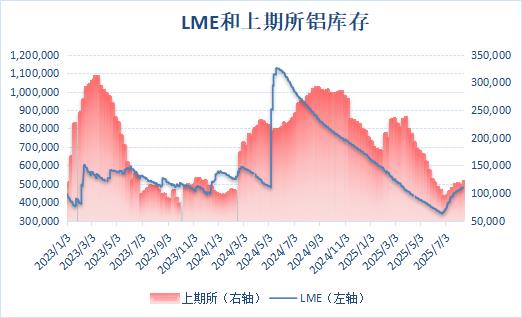
Group 1 - The London Metal Exchange (LME) reported an increase in aluminum inventory, reaching a four-month high of 479,550 tons on August 14, followed by a slight decrease on the following Friday [1] - The Shanghai Futures Exchange (SHFE) also saw a rise in aluminum inventory, with a weekly increase of 6.2% to 120,653 tons, marking a two-month high as of August 15 [1] - Generally, a continuous decline in inventories on domestic and international exchanges supports futures prices, while an increase tends to exert downward pressure on prices [3] Group 2 - The inventory data comparison between LME and SHFE shows that as of August 15, 2025, LME inventory was 479,550 tons, while SHFE inventory was 120,653 tons [5] - The LME inventory has shown a consistent upward trend from 462,800 tons on August 1 to 479,675 tons on August 14, indicating a significant increase over the period [5]
海关:中国7月铝矿砂及其精矿进口量同比增加34.20%
Wen Hua Cai Jing· 2025-08-18 10:34
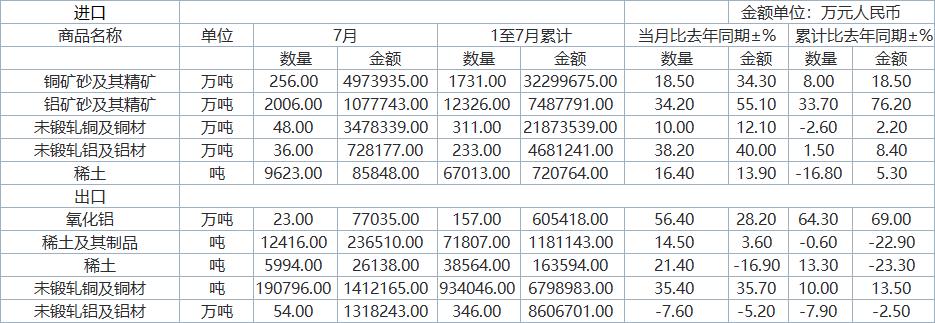
Group 1: Import Data - In July 2025, China's import volume of aluminum ore and its concentrates reached 20.06 million tons, representing a year-on-year increase of 34.20% [1] - From January to July 2025, the total import volume of aluminum ore and its concentrates was 123.26 million tons, showing a year-on-year increase of 33.7% [1][2] Group 2: Export Data - In July 2025, China's exports of unwrought copper and copper products amounted to 190,796 tons, marking a year-on-year increase of 35.4% [1][2] - From January to July 2025, the total export volume of unwrought copper and copper products was 934,046 tons, reflecting a year-on-year growth of 10.00% [1][2] - In July 2025, the export volume of alumina was 23,000 tons, which is a significant year-on-year increase of 56.40% [1][2] - From January to July 2025, the total export volume of alumina reached 157,000 tons, indicating a year-on-year increase of 64.3% [1][2]
铝价下跌 因美国将更多铝衍生产品列入50%关税清单
Wen Hua Cai Jing· 2025-08-18 10:34
Group 1 - LME aluminum prices declined due to the US expanding the 50% import tariff to more aluminum derivative products, creating uncertainty in demand [1] - The main aluminum contract in Shanghai reached a low of 20,550 yuan per ton, the lowest since August 6 [1] - The three-month aluminum price fell by 0.65% to $2,590 per ton, hitting a low since August 12 [1] Group 2 - The US government announced on August 15 that it would add 407 product codes to the tariff list, affecting various aluminum and steel-containing products [1] - The expanded tariff list will officially take effect on August 18 [1] - China's aluminum production in July 2025 was 3.78 million tons, a year-on-year increase of 0.6%, with a cumulative production of 26.38 million tons from January to July, up 2.8% year-on-year [1] Group 3 - China's aluminum ore and concentrate imports in July 2025 reached 20.06 million tons, a year-on-year increase of 34.2%, with a cumulative import of 123.26 million tons from January to July, up 33.7% [2] - In July, China's exports of unwrought copper and copper products were 190,796 tons, a year-on-year increase of 35.4%, with a cumulative export of 934,046 tons from January to July, up 10% [2] Group 4 - A Singapore aluminum trader noted that the new tariff plan has negatively impacted market sentiment for base metals [3] - Technical analysts predict that three-month copper may test support levels between $9,567 and $9,620 per ton, with potential further declines if these levels are breached [3] - The three-month aluminum price may test support around $2,547 per ton, with further declines possible if this support is broken [3]
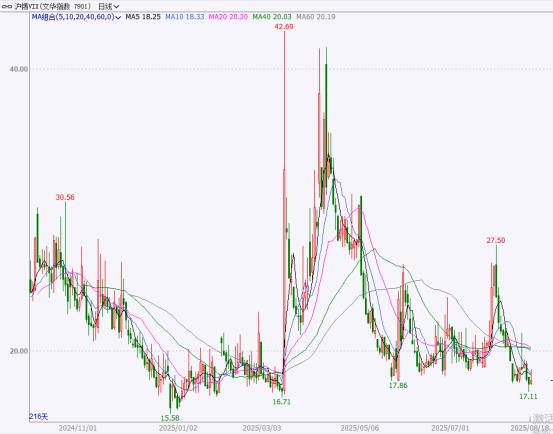
基本面供需双弱 沪锡走势僵持【文华观察】
Wen Hua Cai Jing· 2025-08-18 10:04
Group 1: Market Overview - Since the end of June, the price of tin in Shanghai has fluctuated between 260,000 and 270,000 CNY per ton, with a significant reduction in trading volume and market attention [1] - The volatility index (VIX) for Shanghai tin options has dropped to its lowest level in nearly a year, indicating a lack of market movement [1] Group 2: Supply Factors - The recovery of tin mining in Myanmar is progressing slowly, with actual output expected to be delayed until the fourth quarter due to seasonal rains and other logistical challenges [1] - Tin ore imports in China remain low, with a total of approximately 62,100 tons imported in the first half of 2025, a year-on-year increase of 3.04% [2] - Imports from Africa have increased, compensating for some of the supply gaps from Myanmar, particularly after Alphamin Resources resumed production in the Democratic Republic of Congo [2] Group 3: Smelting and Production Challenges - Smelting enterprises are operating at low capacity due to tight raw material supplies, with the operating rate in Yunnan and Jiangxi provinces at 59.23% as of August 15 [4] - The shortage of tin ore and rising costs have led some smelting companies to consider temporary shutdowns to manage production levels [4] - The recycling of tin scrap has been disrupted, leading to a significant reduction in the supply of secondary materials, which is further constraining refined tin production [4] Group 4: Demand Dynamics - Downstream demand for tin is currently weak, with a decline in orders, particularly in the home appliance sector, as the third quarter is typically a low season for consumption [5] - The semiconductor market is experiencing mixed signals, with overall growth but specific segments facing declines due to trade tensions and economic conditions [8][10] - The photovoltaic sector has seen a significant drop in new installations in June, impacting the demand for tin solder used in solar panels [9] Group 5: Price Outlook - The overall market is characterized by weak supply and demand fundamentals, with tin prices expected to continue fluctuating within a limited range [13] - The low inventory levels in the London Metal Exchange (LME) could lead to increased price volatility, necessitating caution against speculative trading [10][13] - In the medium to long term, as Myanmar's tin supply gradually recovers, the tight supply-demand balance may ease, potentially leading to a downward adjustment in tin prices [13]