Tai Mei Ti A P P

Search documents
当京东举起镰刀
Tai Mei Ti A P P· 2025-11-05 01:50
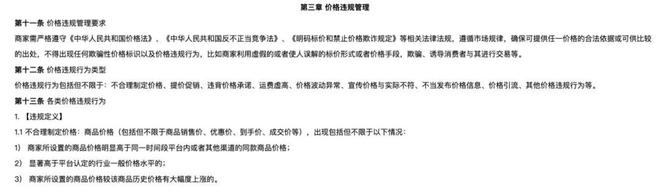
Core Viewpoint - The ongoing controversy surrounding "choose one" practices has resurfaced during this year's Double Eleven shopping festival, with JD.com being accused of imposing price restrictions on merchants, particularly targeting Midea for alleged price violations [1][2][3]. Group 1: Incident Overview - JD.com recently fined Midea 5 million RMB for price violations, claiming that Midea's prices were significantly higher than those on other platforms [4][5]. - Following Midea's appeal, JD.com retracted the fine and lifted the freeze on the funds, but the incident raised questions about JD.com's pricing policies and practices [6][7]. - JD.com has implemented new operational requirements for major brands during Double Eleven, including prohibiting them from offering better deals on competing platforms, which has been interpreted as a form of "choose one" pressure [7][8]. Group 2: Pricing Policies and Merchant Impact - JD.com's new pricing management rules, effective October 16, require merchants to ensure their prices on JD.com are not higher than those on other channels, with severe penalties for violations [9][10]. - Merchants face significant fines for pricing discrepancies, with reports indicating penalties could reach ten times the purchase price for violations [10]. - JD.com employs a "gross profit protection" strategy, ensuring that the platform retains a certain percentage of profits, which can lead to merchants subsidizing JD.com's profits during promotional events like Double Eleven [11][12]. Group 3: Competitive Landscape and Challenges - The competitive landscape for JD.com has intensified, with rival platforms like Tmall and Douyin reporting substantial growth in sales and user engagement during the Double Eleven period [16][18]. - JD.com's sales report for the Double Eleven period lacked key metrics such as GMV and the number of brands achieving significant sales, indicating potential struggles in maintaining market share [17][18]. - The company's reliance on government subsidies has raised concerns about sustainability, as these subsidies may become standard across platforms, limiting JD.com's competitive edge [18][19].


AI数据中心的万亿大基建时代:美国GDP增长全靠它
Tai Mei Ti A P P· 2025-11-05 01:31
Group 1 - The core argument of the article highlights the extreme economic divergence in the U.S., with GDP growth in 2025 primarily driven by data centers and information technology, while other sectors show minimal growth [1] - OpenAI plans to invest approximately $1.4 trillion to build over 30 gigawatts of computing infrastructure, aiming to add 1 gigawatt weekly [1][3] - Musk's xAI aims to achieve AI computing power equivalent to 50 million H100 units within five years, indicating a significant push in AI infrastructure [1][3] Group 2 - Major AI companies are aggressively investing in data centers, with OpenAI and Microsoft leading with projects worth hundreds of billions [3][4] - OpenAI's ambition includes a potential 10-gigawatt Stargate project, which could represent a $5 trillion industry over the next 5 to 10 years [3][4] - The investment in data center infrastructure is projected to reach $5 to $7 trillion over the next five years, reflecting the urgency in scaling AI capabilities [5][4] Group 3 - The U.S. electricity system has been growing slowly, with an annual increase of less than 1%, leading to a significant gap between electricity supply and the demand from data centers [25][26] - It is estimated that the U.S. will need to add approximately 80 gigawatts of power annually to meet the growth demands from data centers, electric vehicles, and manufacturing [26][29] - Currently, there is a projected annual shortfall of about 20 gigawatts in electricity supply, which could lead to a cumulative deficit of 100 gigawatts over the next five years [26][27] Group 4 - The competition for energy resources is intensifying, with companies like xAI acquiring a significant portion of available gas turbine generators to power their data centers [37][38] - The supply chain for gas turbines is currently strained, with GE's production capacity being insufficient to meet the rising demand from AI data centers [37][38] - Companies are also facing challenges in sourcing transformers, which have long lead times and are critical for data center operations [41][42] Group 5 - The shift towards high-voltage direct current (HVDC) systems is being explored to improve efficiency in data centers, with NVIDIA advocating for an 800-volt standard [43][44] - The current electricity supply architecture in data centers is primarily based on lower voltage systems, which leads to significant efficiency losses [44][45] - The transition to higher voltage systems is seen as essential for meeting the growing power demands of AI applications and improving overall operational efficiency [48][49]
净利润下滑超48%,“黑马”今世缘,业绩失速
Tai Mei Ti A P P· 2025-11-05 00:44
Core Insights - The company, Jinshiyuan, has experienced significant growth over the past decade, with revenue increasing from approximately 2 billion to over 10 billion [1][4] - However, the company is currently facing challenges due to a downturn in the industry, with revenue and net profit declining in the first three quarters of the year [2][8] - Jinshiyuan's stock price has also suffered, dropping nearly 12% this year, significantly underperforming compared to the Shanghai Composite Index [3][10] Financial Performance - In the first three quarters of this year, Jinshiyuan reported revenue of 8.882 billion and net profit of 2.549 billion, with declines of 10.66% and 17.39% respectively [2][10] - The third quarter alone saw revenue and net profit of 1.931 billion and 320.3 million, reflecting a steep decline of 26.68% and 48.69% [2][10] - The company's stock price closed at 38.79 yuan per share as of November 3, with a total market capitalization of 48.36 billion [3] Strategic Overview - Jinshiyuan has built a multi-brand matrix with three main brands: Guoyuan, Jinshiyuan, and Gaogou, targeting different market segments [5] - The company has focused on deepening its presence in Jiangsu province, where it holds over 17% market share, with provincial revenue consistently accounting for over 90% [5][9] - However, the current economic downturn has severely impacted these strategies, particularly in the high-end product segment [8][10] Market Challenges - The company faces intensified competition in its core Jiangsu market, with other brands increasing their presence [9] - Jinshiyuan's attempts to expand into provincial markets have been slow, with less than 10% of revenue coming from outside Jiangsu [9] - The decline in consumer demand and government austerity measures are further constraining the company's high-end product sales [8][10]

购置税变天之前,汽车公司“撒钱买量”
Tai Mei Ti A P P· 2025-11-04 11:37
Group 1 - The core point of the articles highlights the impact of the upcoming reduction in new energy vehicle purchase tax subsidies on the automotive industry, particularly in the fourth quarter sales strategies of car manufacturers [1][6] - Car manufacturers are aggressively offering purchase tax subsidies to stimulate sales, especially during the National Day holiday, which is seen as a critical sales period [2][6] - New models are being launched in large numbers, with over 80 new car release events reported in September alone, indicating a competitive market environment [1][3] Group 2 - NIO was one of the first companies to announce purchase tax subsidies for new models, ensuring that customers who place orders by December 31 will not bear additional tax costs [2][6] - Zeekr's new model, the Zeekr 9X, saw significant sales during the National Day holiday, attributed to its purchase tax subsidy program [2][3] - The AITO M7 model gained substantial attention, with a reported order volume significantly higher than its competitors during the holiday period [3][4] Group 3 - Li Auto's i6 model achieved impressive pre-order numbers, with concerns about potential purchase tax liabilities driving consumer interest [4][5] - Despite the success of the i6, other models from Li Auto did not perform as well, impacting the overall delivery numbers for October [5][6] - The competitive landscape shows that other new energy vehicle brands, such as Leap Motor and Xpeng, are also achieving high delivery volumes, surpassing Li Auto [5][6] Group 4 - Many car manufacturers are expected to incur significant costs due to the purchase tax subsidies, with estimates suggesting Xiaomi may need to spend over 2 billion yuan in subsidies by 2026 [7] - The new vehicle transportation regulations may affect delivery capabilities, further complicating the financial implications of the purchase tax subsidies for manufacturers [7][8] - Some manufacturers, like BYD, are not offering purchase tax subsidies, relying instead on short delivery times to attract customers [8]


中国半导体的下一程
Tai Mei Ti A P P· 2025-11-04 11:20
Core Insights - The Chinese semiconductor industry is transitioning from a phase of rapid growth driven by policy and capital to a more complex stage focused on sustainability, strength, and true innovation [1] - The future of the industry will emphasize "strong chain and supplementary chain" strategies, marking a pivotal shift in development [1] Investment Strategy Evolution - The investment landscape is expanding from chip design to upstream areas of the supply chain, with a focus on materials, advanced packaging, and emerging technologies [2][3] - Materials are identified as a key investment area due to their long validation cycles and the potential for creating a strong competitive moat [2] - Advanced packaging is becoming increasingly important as a high-value business, especially in light of the slowing of Moore's Law [3] - Emerging fields like photonic quantum technology are seen as promising areas for growth, with China positioned to compete globally [3] Entrepreneurial Ecosystem Shift - The number of semiconductor companies in China has grown significantly, indicating a shift towards industry consolidation and mergers and acquisitions [6] - Founders are increasingly open to the idea of being acquired, recognizing that there are multiple paths to success beyond independent IPOs [6] - New entrepreneurs are more inclined to innovate rather than replicate existing products, reflecting a shift in market dynamics [6] Industry Drivers - AI is becoming a central driver of demand for new chips, particularly in data centers and IoT applications [7] - The market for GPUs is expanding rapidly, driven by the increasing investment in data center infrastructure [7] - Storage solutions are also seeing significant growth, with domestic companies improving their capabilities and increasing their market share [7] Future Outlook - The next decade will focus on "strong chain and supplementary chain" strategies, with an emphasis on core areas like computing chips and critical materials [9] - Mergers and acquisitions will play a crucial role in industry consolidation, with plans for a dedicated fund to facilitate this process [9] - Original innovation will be prioritized, with investments aimed at transforming research outcomes into commercial products [9] - AI will continue to redefine the semiconductor industry, influencing everything from data centers to smart hardware [9]
安徽“AI+制造”创新实践:算力、数据与模型协同驱动的产业升级路径
Tai Mei Ti A P P· 2025-11-04 09:37
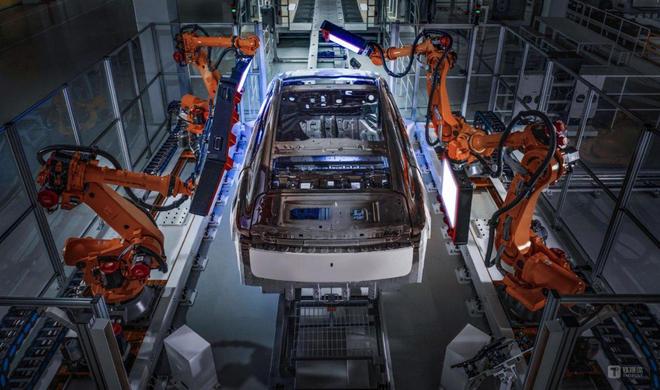
Core Insights - Anhui province is redefining automotive manufacturing standards with AI-driven factories, showcasing significant advancements in automation and quality control [1][3] - The province has achieved an 83% digital transformation coverage among industrial enterprises, with 20 national-level smart manufacturing demonstration factories and 5 "lighthouse factories" [3] - The AI manufacturing landscape in Anhui is characterized by a robust ecosystem that integrates computing power, data resources, and model development to enhance industrial capabilities [11][20] Group 1: AI and Manufacturing Integration - Anhui's automotive factories utilize over 1,800 intelligent robots and AI visual quality monitoring to meet stringent quality standards [1] - The province's AI-driven initiatives have led to a significant increase in computing power, from 838P in early 2023 to over 37,000P by mid-2025 [4] - The integration of AI in manufacturing processes has resulted in real-time data transmission and improved operational efficiency [1][3] Group 2: Data and Model Development - Anhui has established a comprehensive data support system, including a data circulation platform with 1,127 data products and a transaction volume nearing 200 million [6] - The province focuses on developing practical AI models tailored to industry needs, with 95 industry-specific models currently in use [8] - AI models are being applied in various manufacturing scenarios, enhancing quality control and optimizing production processes [8] Group 3: Ecosystem and Industrial Growth - Anhui has attracted 1,076 AI projects with a proposed investment exceeding 403.9 billion, establishing a strong industrial cluster [9] - The province's AI industry is supported by a multi-layered fund system, with over 250 billion in total fund size aimed at strategic emerging industries [13] - The establishment of "Keda Silicon Valley" serves as a hub for AI innovation, fostering collaboration between research and industry [12][20] Group 4: Future Prospects - The ongoing integration of AI with IoT and digital twin technologies is expected to create advanced industrial systems capable of real-time decision-making [21] - Anhui's strategic initiatives position it as a leader in the AI manufacturing sector, contributing to the broader transformation of China's manufacturing landscape [21]

从SKP到星巴克:博裕的“高端消费闭环”野心
Tai Mei Ti A P P· 2025-11-04 09:36
图 片来源:网络 这场历时半年的资本招亲终于落下了帷幕,博裕资本在博弈中击败了凯雷、EOT和红杉中国,成为星巴 克中国的新合伙人。 2025年11月4日一大早, 星巴克正式官宣与博裕资本达成战略合作,双方将成立合资企业,共同运营星 巴克在中国市场的零售业务。这也是继2017年星巴克收回中国大陆全面运营权之后,再一次接受外部股 东入驻。 根据协议,博裕斥资约40亿美元持有合资企业至多60%股权,星巴克保留40%股权,并将继续作为星巴 克品牌与知识产权的所有者和授权方,向新成立的合资企业进行授权。星巴克预计其中国零售业务的总 价值将超过130亿美元,完成此次交易后,星巴克计划在中国扩张至多达2万家门店,这一数字将超过其 目前在北美的门店数量。 博裕投资合伙人黄宇铮表示:"我们既认同这一品牌的持久生命力,也看到了为中国顾客带来更创新、 更本土化体验的巨大机遇。基于这一共同的信念,我们将与星巴克协作,融合星巴克在全球咖啡行业的 领导力与博裕深度的本地市场洞察,致力于加速增长,为更广大的中国消费者缔造卓越的咖啡体验。" 星巴克咖啡公司董事长兼首席执行官倪睿安(Brian Niccol)表示:"博裕在本地市场的经验与专长 ...


一边涨停,一边停涨,光伏前景愈发难料
Tai Mei Ti A P P· 2025-11-04 06:34
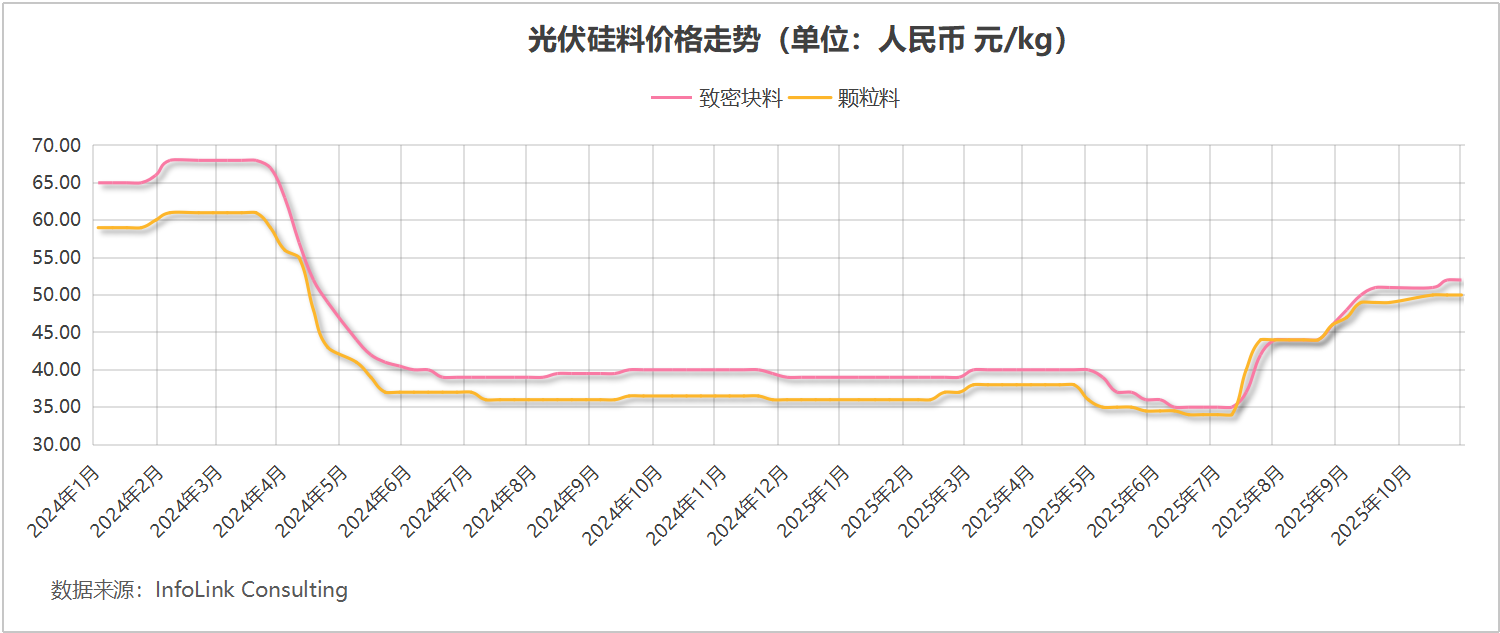
Core Viewpoint - The A-share photovoltaic equipment sector has seen significant gains in late October, with a 4.5% increase from October 29 to October 31, followed by a 2.3% rise on November 3, despite overall market challenges [1] Summary by Category Market Performance - The photovoltaic equipment sector achieved nearly a 3% increase in October, contrasting with the overall market downturn, particularly the Shenzhen Composite Index [1] - Leading companies such as Longi Green Energy, Canadian Solar, and JA Solar have experienced consecutive trading halts due to rising stock prices [1] Price Trends - In Q3, the prices of key photovoltaic materials (silicon materials, silicon wafers, battery cells, and modules) saw their largest increase in nearly three years, with silicon materials and wafers rising over 40% [1] - However, in October, prices for silicon wafers and battery cells declined, while silicon materials saw only a slight increase amid low transaction volumes [1] Silicon Material Insights - As of the end of October, the average trading price for dense silicon was 52 CNY/kg, up 1.96% month-on-month and 33.33% year-to-date, but down 20% compared to early 2024 [2] - Granular silicon's average trading price was 50 CNY/kg, with a monthly increase of 2.04% and a year-to-date increase of 38.89% [2] Silicon Wafer Insights - The average trading price for N-type 182-183.75mm silicon wafers remained unchanged at 1.35 CNY/piece, with a year-to-date increase of 28.57% [5] - The 182*210mm N-type silicon wafers saw a price drop of 3.57% in October, with a year-to-date increase of only 20.54% [5] Battery Cell Insights - The average trading price for N-type 182-183.75mm TOPCon battery cells fell by 3.13% in October to 0.31 CNY/W, although it remains 10.71% higher than at the beginning of the year [10] - The N-type 182*210mm TOPCon battery cells also experienced a price drop, with a month-on-month decrease of 1.72% [8] Module Insights - TOPCon module prices remained stagnant at 0.693 CNY/W, while HJT modules were priced at 0.83 CNY/W, indicating no change in October [12] - The current price of TOPCon modules is only slightly above the historical low of 0.68 CNY/W, reflecting ongoing struggles in the module segment [12] Financial Performance - The photovoltaic sector reported a net profit of 758 million CNY in Q3, a significant recovery from previous losses, although many companies still face challenges in their component businesses [14] - Despite some companies expecting to turn profits in Q4 or next year, uncertainties remain regarding price trends and overall performance [14]



效率提升VS安全暴露,企业级AI落地如何应对“双刃剑”丨ToB产业观察
Tai Mei Ti A P P· 2025-11-04 06:08
Core Insights - The rise of AI models has led to significant security risks, with incidents of prompt injection attacks increasing dramatically in the financial sector from 12% in 2024 to 47% by Q3 2025 [2] - The AI industry in China surpassed 900 billion yuan in 2024, growing by 24% year-on-year, with 5,300 AI companies by September 2025, accounting for 15% of the global total [2] - Security vulnerabilities in AI models are primarily due to traditional security systems being unable to cover over 60% of these unique risks, highlighting a shift in the security landscape [3] Industry Trends - The security industry is undergoing a significant transformation, with global cybersecurity IT investment projected to reach $377 billion by 2028, reflecting a compound annual growth rate (CAGR) of 11.9% [3] - In China, cybersecurity spending is expected to grow from $11 billion in 2023 to $17.1 billion by 2028, with a CAGR of 9.2% [3] - Prompt injection vulnerabilities are the most common risks associated with large models, characterized by low barriers to entry and high success rates for attackers [4] Security Risks - Content safety has escalated to a public safety concern, with 83% of multimodal models capable of generating violent content, and some models able to provide instructions for creating explosive devices [5] - New risks have emerged with the transition from large models to intelligent agents, including issues related to sandbox permissions and the lack of comprehensive security measures [5][6] - Data leakage remains a critical risk, with incidents of attackers using gradient reverse engineering to extract sensitive user data from financial models [6] AI in Security Defense - AI is increasingly being integrated into security operations, enhancing threat detection and response capabilities, with predictions indicating that by 2027, 25% of enterprises will use generative AI to formulate security strategies [7][8] - The shift from static to dynamic defense models is becoming essential, as traditional methods are inadequate against AI-driven threats [8][9] - AI's role in security operations is maturing, with efficiency improvements of 20% to 30% reported in security operations through the use of large models [10] Market Dynamics - A majority of security vendors are incorporating generative AI capabilities into their products, with over half of the exhibitors at the RSAC2024 security summit already integrating AI into their core offerings [10] - The evolution of AI in the security industry is moving from manual responses to intelligent automation, fundamentally reshaping defense paradigms and improving operational efficiency [10]


硅谷大裁员,组织变天了
Tai Mei Ti A P P· 2025-11-04 05:55
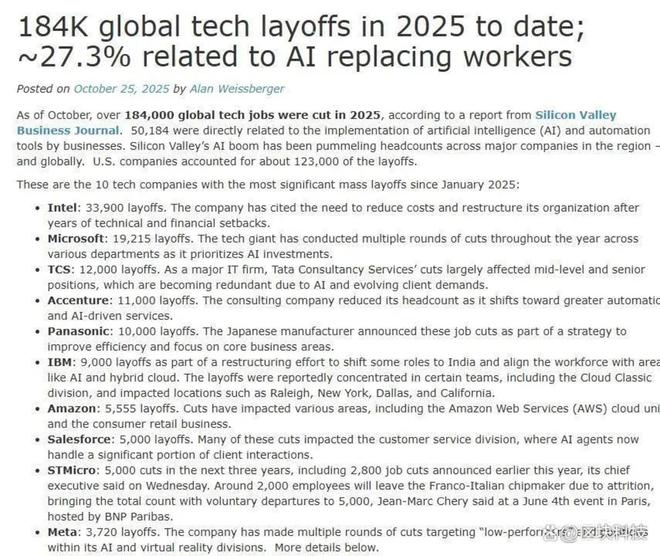
Group 1 - Major layoffs in Silicon Valley tech companies have exceeded 184,000 employees as of October 2025, with significant cuts from companies like Intel (33,900), Microsoft (19,215), and Accenture (11,000) [2][4] - Companies are undergoing organizational adjustments to adapt to the AI era, with YouTube introducing a Voluntary Exit Program to encourage employees to leave for new challenges [4][10] - Despite the layoffs, many of these companies are experiencing rising stock prices, indicating that their value is driven by factors other than headcount [4][13] Group 2 - The layoffs are primarily targeting non-essential roles and middle management, as AI technology reduces the need for positions that merely relay information [10][12] - The motivation behind these layoffs differs from those in China, where layoffs are often due to survival pressures, while in Silicon Valley, they are driven by market capitalization pressures [13][14] - Companies previously created redundant positions to showcase potential to capital markets, but now face pressure to demonstrate efficiency and high productivity with fewer employees [13][15] Group 3 - The future organizational structure may rely on a small number of elite employees utilizing AI tools to achieve significant growth, leading to a reduction in job opportunities for others [16][18] - Core talent will be essential for building and evolving intelligent systems within organizations, while other roles may become obsolete if they do not contribute to decision-making processes [16][17] - The demand for core talent will continue to evolve, requiring individuals to keep pace with advancements in AI and organizational needs [17][18]