CHINA RES BEER(00291)

Search documents
“偏科”华润迎考白酒旺季
Bei Jing Shang Bao· 2025-08-26 16:24
Core Viewpoint - The performance of China Resources Beer’s liquor business, particularly the brand Jinsha Liquor, has significantly declined, with a reported revenue drop of over 30% in the first half of the year, highlighting challenges in the market and pricing issues [1][3][5]. Revenue Performance - In the first half of the year, the liquor business of China Resources Beer generated revenue of 7.81 billion yuan, a decrease of 33.7% compared to 11.78 billion yuan in the same period last year [3][4]. - The core product, Jinsha Liquor, contributed nearly 80% of the liquor business's revenue, indicating its critical role in overall performance [3]. Market Challenges - The decline in sales is attributed to a combination of factors, including a significant drop in domestic dining market activity due to policy impacts and increased competition in the liquor sector [3][5]. - The pricing strategy has led to a situation where the retail price of Jinsha Liquor has fallen below production costs, creating a "price inversion" issue [6][7]. Pricing Issues - The retail price for the 53-degree 500ml Jinsha Liquor has been observed at 488 yuan in physical stores and as low as 450 yuan on e-commerce platforms, indicating a downward trend in pricing [1][6]. - The company has acknowledged the need to address high inventory levels and pricing discrepancies, with plans to establish a national price management committee to oversee pricing strategies [7]. Strategic Adjustments - To combat the declining performance, Jinsha Liquor is focusing on expanding its product flow and cash flow, with an emphasis on group purchases and banquet markets [8][9]. - The company is implementing measures such as targeted marketing strategies and enhancing customer experiences to improve sales performance [9]. Future Outlook - Industry experts suggest that the challenges faced by China Resources Beer’s liquor business stem from a mismatch between aggressive capital-driven strategies and the inherent dynamics of the liquor market [9]. - For future success, the company may need to consider restructuring its approach, focusing on brand culture and genuine consumer engagement rather than relying solely on fast-moving consumer goods marketing strategies [9].


“啤强白弱” 华润偏科迎考白酒旺季
Bei Jing Shang Bao· 2025-08-26 13:41
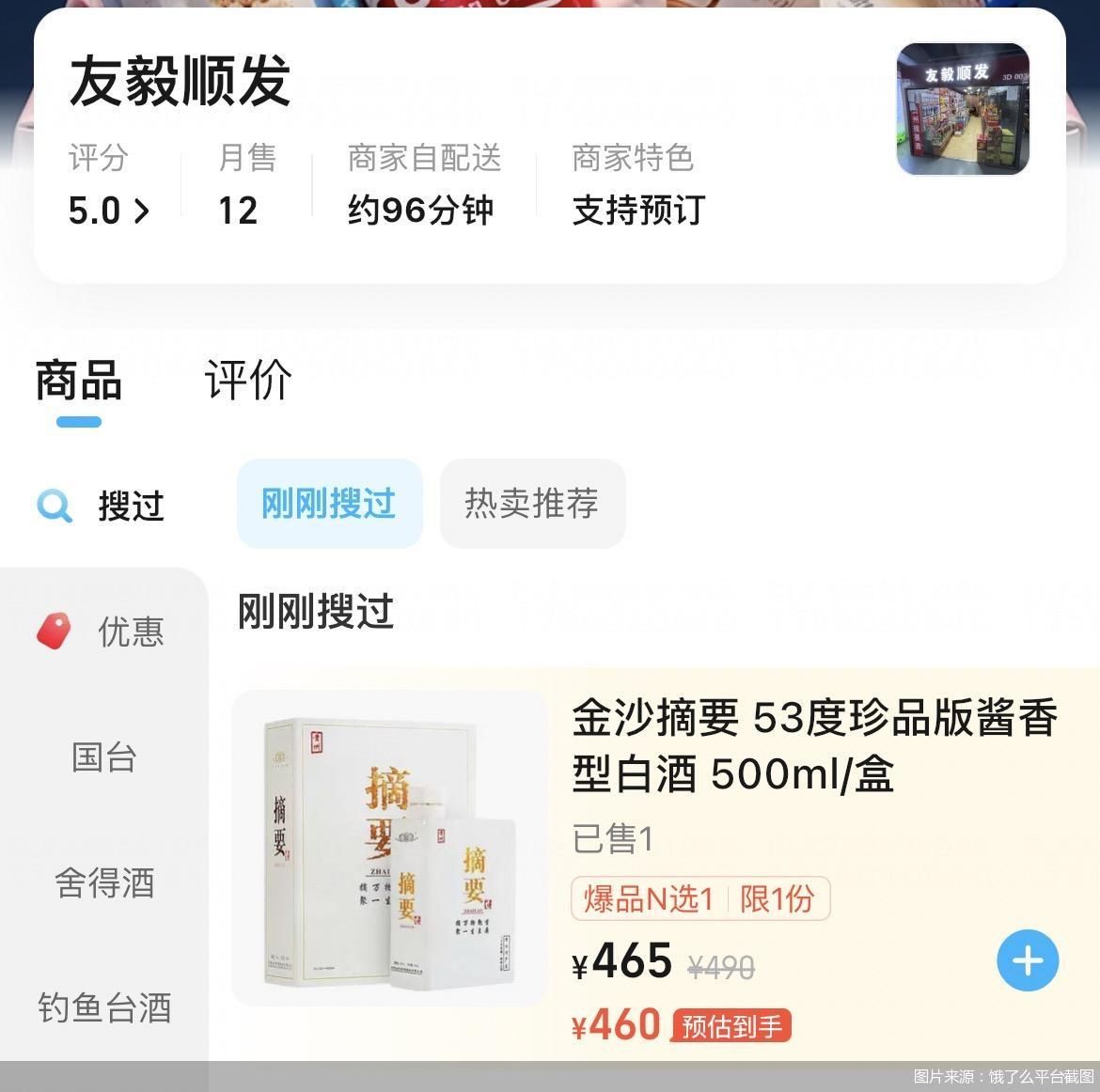
Core Viewpoint - The continuous price cuts by金沙酒业 have not alleviated the downward trend in terminal market prices, with significant declines in sales and revenue reported for华润啤酒's white liquor business [1][3][4] Group 1: Financial Performance -华润啤酒's white liquor business revenue for the first half of the year was 7.81 billion yuan, a decline of over 30% compared to the same period last year [3] - The core product "摘要" contributed nearly 80% of the white liquor business revenue, which saw a year-on-year decrease of 33.7% from 11.78 billion yuan [3][5] - Since the acquisition,金沙酒业's performance has decreased by approximately 60%, with revenue dropping from 57.66 billion yuan pre-acquisition to 21.49 billion yuan post-acquisition [5][6] Group 2: Market Challenges - The white liquor market is facing challenges due to weakened consumer demand and increased competition among brands, leading to a decline in investment expectations [4][6] - Price inversion issues are prevalent, with the core product "摘要" being sold at prices as low as 450 yuan on e-commerce platforms, indicating a significant price drop [7][10] - The management team at金沙酒业 is actively working to address high inventory and price inversion issues, including the establishment of a national price management committee [10][11] Group 3: Strategic Adjustments - To combat the current challenges,金沙酒业 is focusing on expanding product flow and cash flow, as well as targeting group purchases and banquet markets [12][13] - The company plans to implement five major initiatives to enhance market competitiveness, including deepening engagement in group purchase channels and improving customer experiences [12][13] - Industry experts suggest that华润啤酒 may need to restructure its approach to the white liquor market, emphasizing long-term strategies and professional management rather than relying on fast-moving consumer goods marketing [13]
华润啤酒(00291):啤酒成本改善明显,利润稳增长
Xinda Securities· 2025-08-26 08:21
Investment Rating - The investment rating for the company is "Buy" [1] Core Views - The report highlights significant improvements in beer cost management, leading to stable profit growth. The company achieved a revenue of 239.42 billion RMB in the first half of 2025, a year-on-year increase of 0.83%, with a net profit attributable to shareholders of 57.89 billion RMB, up 23.04% year-on-year [1][2] Summary by Sections Beer Business Performance - In H1 2025, the company reported beer revenue of 240.75 billion RMB, a year-on-year increase of 6.69%, with sales volume reaching 6.487 million kiloliters, up 2.19% year-on-year. The high-end product segment showed steady growth, with revenue per kiloliter increasing by 4.4% year-on-year. Notably, sales of premium and above beers grew by over 10%, Heineken sales surged by over 20%, and sales of Snow Beer increased by over 70% [2] - Regional performance showed that the East region generated 112.92 billion RMB in revenue, up 3.05% year-on-year; the Central region achieved 66.27 billion RMB, up 2.11%; and the South region reached 61.56 billion RMB, up 1.95% [2] Cost Management and Profitability - The company experienced continuous cost improvements, with a gross margin of 48.88%, an increase of 1.97 percentage points year-on-year. The beer business gross margin rose by 2.50 percentage points to 48.3%. The overall selling expense ratio decreased by 2.03 percentage points to 15.62% [2] - The EBITDA for the beer business in H1 2025 was 72.41 billion RMB, reflecting a year-on-year increase of 13.76%, with an EBITDA margin of 30.08%, up 1.87 percentage points year-on-year. Excluding one-time impacts, the EBITDA margin would have been 31.08% [2] White Spirit Business Performance - The white spirit segment faced challenges, with revenue declining to 7.83 billion RMB, down 33.53% year-on-year, primarily due to reduced business banquet demand. The segment reported an EBITDA loss of 1.52 billion RMB [2] Earnings Forecast and Dividend Policy - The report forecasts earnings per share (EPS) for 2025, 2026, and 2027 to be 1.93 RMB, 1.97 RMB, and 2.09 RMB, respectively. The corresponding price-to-earnings ratios are projected to be 14, 13, and 13 times based on the closing price of 26.29 RMB per share on August 25, 2025. The company plans to maintain a dividend of 0.464 RMB per share, with a payout ratio of 26.07%, reflecting a year-on-year increase of 0.34 percentage points [2][3]
华润啤酒(00291):啤酒高端化有序推进,白酒业务持续筑根基
Hua Yuan Zheng Quan· 2025-08-25 13:14
Investment Rating - The report assigns an "Accumulate" rating for the company, indicating a positive outlook for its stock performance in the near term [5]. Core Views - The company is experiencing rapid growth in its fundamentals, with a notable increase in revenue and net profit for the first half of 2025. Revenue reached 239.42 billion RMB, a year-on-year increase of 0.83%, while net profit rose by 23.04% to 57.89 billion RMB [6]. - The beer segment is showing strong performance, particularly in high-end products, while the white liquor business is currently under pressure but has potential for recovery [5][6]. - The company is actively adapting to market changes, enhancing brand visibility, and leveraging its resources in the beer sector to support its white liquor business [6]. Summary by Sections Market Performance - The closing price of the stock is 28.58 HKD, with a market capitalization of 92,718.58 million HKD. The stock has seen a one-year high of 36.00 HKD and a low of 21.60 HKD [3]. Financial Performance - For the first half of 2025, the company achieved a gross margin of 48.88%, an increase of 1.97 percentage points year-on-year. The EBITDA, excluding special items, increased by 18.69% to 89.22 billion RMB [6]. - The beer segment generated revenue of 231.61 billion RMB, up 2.64% year-on-year, while the white liquor segment saw a decline of 33.7% to 7.81 billion RMB [6]. Sales and Strategy - The company’s beer sales volume reached 648.7 million tons, a 2.2% increase year-on-year, with high-end products showing significant growth. The average selling price for beer increased by 0.4% to 3,570 RMB per ton [6]. - The company is embracing new consumer trends by developing various specialty beers and has established strategic partnerships with major online platforms to enhance its sales channels [6]. Profit Forecast and Valuation - The forecasted net profits for 2025-2027 are 53.58 billion RMB, 58.6 billion RMB, and 63.84 billion RMB, respectively, with corresponding P/E ratios of 16, 15, and 13 [6][7].
食品饮料行业跟踪报告:中报陆续落地,板块仍处低位
Shanghai Aijian Securities· 2025-08-25 12:49
Investment Rating - The food and beverage industry is rated as "stronger than the market" [1] Core Viewpoints - The industry is currently at a historical low valuation, with a PE-TTM of 21.92x, which is at the 17th percentile over the past 15 years [13][19] - The white liquor sector is expected to see a weak recovery in demand due to the gradual easing of policy pressures and the impact of infrastructure projects [2][19] - The report highlights the strong performance of leading companies like Kweichow Moutai and Wuliangye, which are expected to attract investment due to their stable pricing and solid dividend yields [2][19] Summary by Sections Market Overview - The food and beverage industry rose by 3.29% in the week of August 18-22, slightly underperforming the Shanghai Composite Index, which increased by 3.49% [6][7] - Among the sub-sectors, other liquor categories saw the highest increase at 8.21%, followed by soft drinks at 5.06% and white liquor at 3.62% [9][10] White Liquor Sector - The collaboration between JiuGuiJiu and the retail chain Pang Dong Lai is expected to significantly boost annual performance, with the new product "JiuGui·ZiYouAi" gaining popularity due to its quality and transparent pricing [21][23] - The average price of Kweichow Moutai has decreased to 1845 RMB, reflecting market adjustments [20][24] Beer Sector - China Resources Beer reported a revenue of 23.942 billion RMB for the first half of the year, a 0.8% increase year-on-year, with a net profit of 5.789 billion RMB, up 23% [25][26] - The company's gross margin improved to 48.9%, driven by a high-end product strategy and reduced raw material costs [26][27] Cost Indicators - The report includes various cost indicators, such as the prices of soybeans and sugar, which are relevant for the food and beverage industry [28][30]

大悦城撤出长沙;全国首座华润“万象里”落子济南;LV美妆全球首店开业;盒马鲜生四地同开
Sou Hu Cai Jing· 2025-08-25 05:27
Group 1 - Traditional retail giants are facing significant performance challenges, with major players like Baisheng Group reporting an 18.4% drop in same-store sales and announcing the closure of its Beijing store by year-end [3][4] - Other retailers such as Xinhua Department Store and Tianhong reported revenue declines of 0.99% and 1.79% respectively, while Nanning Department Store experienced a net loss of 13.38 million yuan, a 653.3% increase in loss [3][4] Group 2 - The outlet mall sector is experiencing a growth spurt, with multiple new projects announced, including the opening of Wuhan Shanshan Outlet on September 25, which will be the first "Lakeside Outlet" in Central China [5][6] - The emergence of differentiated concepts like "Lakeside Outlet" and "Warehouse-style Outlet" indicates that this sector is effectively targeting various consumer needs amid a backdrop of consumption downgrade [6] Group 3 - A wave of renaming among shopping centers reflects strategic shifts and the need for brand upgrades, with examples including the rebranding of "Changsha Beichen Triangular Deyue City" to "Changsha Beichen Hui" [7][8] - The rebranding of "Shenyang Vanke Plaza" to "Wan Qian Hui" resulted in a 15% increase in foot traffic and a 26% rise in sales, demonstrating the effectiveness of targeted brand revitalization [8] Group 4 - China is becoming a testing ground for global brand innovations, with notable first stores like LV Beauty opening in Nanjing and Haidilao launching an innovative concept store in Beijing [10][11] - This trend indicates a shift in China's market position from a follower to a leader in global brand innovation, as brands increasingly prioritize launching new products in China [11] Group 5 - There is a dual acceleration in the internationalization of brands in China and the globalization of local brands, with companies like Anta and Li Ning deepening market penetration through themed stores [12][13] - The significant growth of brands like Pop Mart, which reported a 204.4% increase in revenue, highlights China's market as a critical battleground for both international and domestic brands [13]






茅台1935高端款预售;29度五粮液新品将上市|观酒周报
2 1 Shi Ji Jing Ji Bao Dao· 2025-08-25 02:38
Group 1: Industry Overview - More than 10 listed liquor companies reported their semi-annual results, showing a general decline in performance among second-tier liquor brands, with many experiencing significant setbacks [1] - First-tier liquor brands continue to launch new products and upgrade existing ones to capture market share [1] Group 2: New Product Launches - Moutai's new product, Moutai 1935, is positioned as a high-end offering with a price of 998 yuan for 500ml, set to launch on August 28 [2] - Wuliangye is set to launch a new 29-degree product called "Wuliangye·Yijianqingxin" this week, with three different flavor samples previously tested [3] - Shede Liquor will introduce its first low-alcohol, high-flavor aged liquor, "Shede Zizai," also at 29 degrees, on August 30 [3] - Gujing Gongjiu has launched a new low-alcohol product, "Gujing Gongjiu·Nianfen Yuanjiang Qingdu 20," with an alcohol content of 26 degrees, priced at 375 yuan for 375ml [3] Group 3: Company Performance - China Resources Beer reported a 0.8% increase in revenue to 23.942 billion yuan, with a 23% rise in net profit to 5.789 billion yuan, while beer sales grew by 2.2% [6] - Jinhui Liquor achieved a revenue of 1.759 billion yuan, a slight increase of 0.31%, and a net profit of 298 million yuan, up 1.12% [7] - Shede Liquor's revenue fell by 17.41% to 2.701 billion yuan, with a net profit decrease of 24.98% [9] - Jiu Gui Jiu reported a 43.54% drop in revenue to 561 million yuan and a 92.6% decline in net profit [10] - Tian You De Jiu's revenue decreased by 11.24% to 674 million yuan, with a net profit drop of 35.37% [10] - Huazhi Liquor's revenue fell by 33.55% to 3.949 billion yuan, with a net profit decline of 63.75% [11] - Kouzi Jiao's revenue decreased by 20.07% to 2.531 billion yuan, with a net profit drop of 24.63% [12] - Kuaijishan reported an 11.03% increase in revenue to 817 million yuan, with a net profit increase of 3.41% [13] - Zhenjiu Lidu's revenue fell by 39.6% to 2.497 billion yuan, but the gross margin increased to 59% [14]




华润啤酒(00291.HK):喜力、老雪增势延续 盈利能力持续提升
Ge Long Hui· 2025-08-23 02:40
Group 1 - The core viewpoint of the article highlights the resilience and growth of the beer business, while the white wine segment is undergoing adjustments due to stricter policies and market conditions [1][2][3] - In H1 2025, the company reported a revenue of 23.942 billion yuan, a year-on-year increase of 0.8%, and a net profit attributable to shareholders of 5.789 billion yuan, up 23.0% year-on-year [1] - The beer segment generated revenue of 23.161 billion yuan, with a volume of 6.487 million tons, reflecting a year-on-year increase of 2.6% in revenue and 2.2% in volume [1] Group 2 - The white wine segment saw a revenue decline of 33.7% in H1 2025, with major products accounting for nearly 80% of white wine revenue, significantly impacted by stricter policies affecting high-end banquets [2] - The overall sales gross margin increased by 2.0 percentage points to 48.9%, with the beer business gross margin rising by 2.4 percentage points to 48.3% [2] - The company implemented a "three precision" strategy, resulting in a reduction of the sales expense ratio by 2.0 percentage points to 15.6% [2] Group 3 - The company updated its net profit forecasts for 2025-2027 to 6.017 billion, 6.106 billion, and 6.548 billion yuan, respectively, reflecting a positive outlook driven by beer premiumization and cost advantages [3] - The current price-to-earnings ratios for the updated forecasts are 14.0, 13.8, and 12.9 times [3]
招商研究一周回顾(0815-0822)





CMS· 2025-08-22 15:25
Macro Insights - The economic growth rate in August is expected to be supported by exports and consumption policies, despite a significant slowdown in the real estate sector, with a target of 5% annual growth remaining achievable [1][15][12] - The industrial added value in July grew by 5.7% year-on-year, with the manufacturing sector showing resilience, particularly in high-tech products and equipment manufacturing [12][13] - Fixed asset investment growth slowed to 1.6% year-on-year in the first seven months, primarily due to a decline in real estate investment, which fell by 12% [13][14] Strategy Insights - Current channels for resident capital entering the market include increasing financing balances and active personal investor accounts, leading to a positive feedback loop in the market [2] - The "anti-involution" market trend can be analyzed through policy expectations and real-world transmission, indicating a shift from theme-driven to profit-driven market dynamics [2] - The technology and small-cap sectors are expected to continue outperforming as more external funds enter the market [2] Industry Reports - The consumer electronics sector is anticipated to see significant opportunities with the upcoming release of new products, particularly in AI-related applications [8] - The coal mining industry is experiencing a continuous improvement in fundamentals, with the price of thermal coal expected to rise [8] - The healthcare sector, particularly innovative drugs, is projected to maintain a positive outlook due to improved profitability [8]
食饮吾见 | 一周消费大事件(8.18-8.22)
Cai Jing Wang· 2025-08-22 07:39
Group 1: China Resources Beer - China Resources Beer reported a revenue of RMB 23.942 billion for the first half of 2025, a year-on-year increase of 0.8% [1] - The company's profit before interest and tax and net profit attributable to shareholders were RMB 7.691 billion and RMB 5.789 billion, respectively, showing year-on-year growth of 20.8% and 23.0% [1] - The beer sales volume reached approximately 6.487 million kiloliters, up 2.2% year-on-year, with high-end beer products seeing over 10% growth [1] Group 2: Miao Ke Lan Duo - Miao Ke Lan Duo's revenue increased by 7.98% to RMB 2.567 billion in the first half of 2025, with net profit rising by 86.27% to RMB 133 million [2] - The cheese business generated RMB 2.136 billion, a 14.85% increase year-on-year, accounting for 83.67% of total revenue [2] - The restaurant industrial cheese series saw a revenue increase of 36.26% to RMB 816 million [2] Group 3: Qiaqia Food - Qiaqia Food's revenue for the first half of 2025 was RMB 2.752 billion, a decrease of 5.05% year-on-year, with net profit down 73.68% to RMB 88.6416 million [3] - The decline was attributed to external channel changes and the timing of the Spring Festival [3] - The company expanded its overseas market presence and e-commerce channels, achieving breakthroughs in various international markets [3] Group 4: Tianwei Food - Tianwei Food is planning to issue H-shares and apply for listing on the Hong Kong Stock Exchange to enhance its international strategy and capital structure [4] Group 5: Muyuan Foods - Muyuan Foods reported a revenue of RMB 76.463 billion for the first half of 2025, a 34.46% increase year-on-year, with net profit soaring by 1169.77% to RMB 10.53 billion [5] - The company achieved a complete cost of pig farming below RMB 12.1 per kg by June 2025 [6] Group 6: Estée Lauder - Estée Lauder's net sales for the fiscal year 2025 were USD 14.326 billion, a decrease of 8% year-on-year [7] - The company reported an operating loss of USD 785 million due to increased impairment and restructuring costs [7] - The brand La Mer achieved double-digit growth in organic sales in mainland China for two consecutive quarters [7] Group 7: Walmart China - Walmart's total revenue for the second quarter of fiscal year 2026 was USD 177.4 billion, a 4.8% increase year-on-year [8] - Walmart China reported net sales of USD 5.8 billion, a 30.1% increase year-on-year, with comparable sales up 21.5% [8] - E-commerce sales grew by 39%, accounting for over 50% of total sales [8] Group 8: Yonghui Superstores - Yonghui Superstores reported a revenue of RMB 29.948 billion for the first half of 2025, a decrease of 20.73% year-on-year [9] - The company incurred a net loss of RMB 241 million, attributed to strategic transformations and store closures [9] - Online business revenue reached RMB 5.49 billion, accounting for 18.33% of total revenue, with a reduction in losses compared to the previous year [9]