CHANGAN AUTOMOBILE-B(000625)

Search documents
首批3个号牌落户北汽极狐 北京L3级自动驾驶获准合法上路
Bei Jing Shang Bao· 2025-12-23 15:37
Core Insights - The development of L3 conditional autonomous driving in China is reaching a critical breakthrough, with the issuance of special license plates for L3 vehicles in Beijing, marking a transition from testing to commercial use [2][3] Group 1: Policy and Implementation - Beijing has issued the first special license plates for L3 level autonomous vehicles, allowing models like the BAIC Arcfox Alpha S (L3 version) to operate legally on the roads [2] - The Ministry of Industry and Information Technology has granted approval for the first batch of L3 conditional autonomous driving models, including vehicles from Changan Automobile and BAIC Arcfox, to conduct road trials in designated areas [2][3] - The first L3 special license plate "渝AD0001Z" was issued in Chongqing, indicating a shift to compliant commercial use of autonomous vehicles [2] Group 2: Technical Advancements - The BAIC Arcfox Alpha S (L3 version) is the only model in the first batch equipped with LiDAR technology, which is crucial for its autonomous capabilities [3] - The vehicle can perform dynamic driving tasks under specific conditions, achieving speeds of up to 80 km/h on designated highways and urban expressways, although a driver must remain in the seat to take control in emergencies [3] Group 3: Industry Impact - The rollout of L3 autonomous driving is expected to accelerate the iteration of core technologies such as sensors, chips, and algorithms, fostering an integrated infrastructure of "vehicle-road-cloud" [5] - New business models, including subscription services and data services, are anticipated to emerge, shifting the profit focus from hardware to software and services [5] - The competitive landscape is likely to change, with companies possessing full-stack self-research capabilities expected to dominate the market as L3 functionalities become more mainstream [5]



渝AD0001Z,国内首块!
Xin Hua Wang· 2025-12-23 12:31
Group 1 - The first official license plate for L3 level autonomous driving, "渝AD0001Z," was issued in Chongqing, marking a significant milestone for the industry [1] - Changan Automobile is the first company in China to officially enter the L3 level autonomous driving era [1] - The L3 level autonomous driving system from Changan has completed over 5 million kilometers of real road testing in Chongqing [1]
智能汽车系列报告(七):首批L3级自动驾驶车型获准入
Shanghai Aijian Securities· 2025-12-23 12:15
Investment Rating - The report assigns an "Outperform" rating for the automotive industry, particularly focusing on the advancements in L3 autonomous driving technology [3]. Core Insights - The approval of the first batch of L3 autonomous driving vehicles in China marks a significant transition from testing to commercial application, with the responsibility for driving during system activation shifting to the vehicle manufacturers or system suppliers [3][4]. - The L3 level is expected to enhance the value chain within the automotive industry, as it requires advanced perception, computing power, and system integration, leading to increased value per vehicle in components such as cameras, LiDAR, and high-performance driving chips [3][10]. - The report highlights a shift in market focus from L2 penetration rates to the reliability of L3 technology, indicating a new phase characterized by engineering implementation and regulatory oversight [4][7]. Summary by Sections Event Overview - On December 15, the Ministry of Industry and Information Technology officially announced the approval of the first batch of L3 autonomous driving vehicles, specifically the Arcfox Alpha S5 and Changan Deep Blue SL03, for trial operations in designated areas of Beijing and Chongqing [4][10]. Policy Insights - The L3 regulations stipulate that the responsibility during system activation lies with the vehicle manufacturers or system suppliers, addressing the ambiguity present in L2 systems where the driver is the sole responsible party [15][22]. Technical Aspects - The report discusses the technological requirements for L3 autonomous driving, emphasizing the need for enhanced sensor configurations, data transmission capabilities, and computing power, which are critical for the successful deployment of L3 vehicles [23][24]. - The anticipated increase in the number of cameras and the integration of LiDAR technology are expected to significantly elevate the value of components in L3 vehicles, with projections indicating a doubling of the value of high-frequency connectors and chips [25][26]. Global Comparison - The report notes the differentiated progress in L3 development across countries, with Germany leading in legislation and responsibility clarity, while the U.S. focuses on L4 commercial applications, and Japan adopts a more conservative approach [31][34]. Investment Recommendations - The report suggests that companies with leading smart technology, system engineering capabilities, and strong supply chain management are likely to benefit from the commercialization of L3 autonomous driving. Recommended companies include Xpeng Motors, Li Auto, Xiaomi, and Changan Automobile, along with component suppliers like Horizon Robotics and Baolong Technology [3][31].

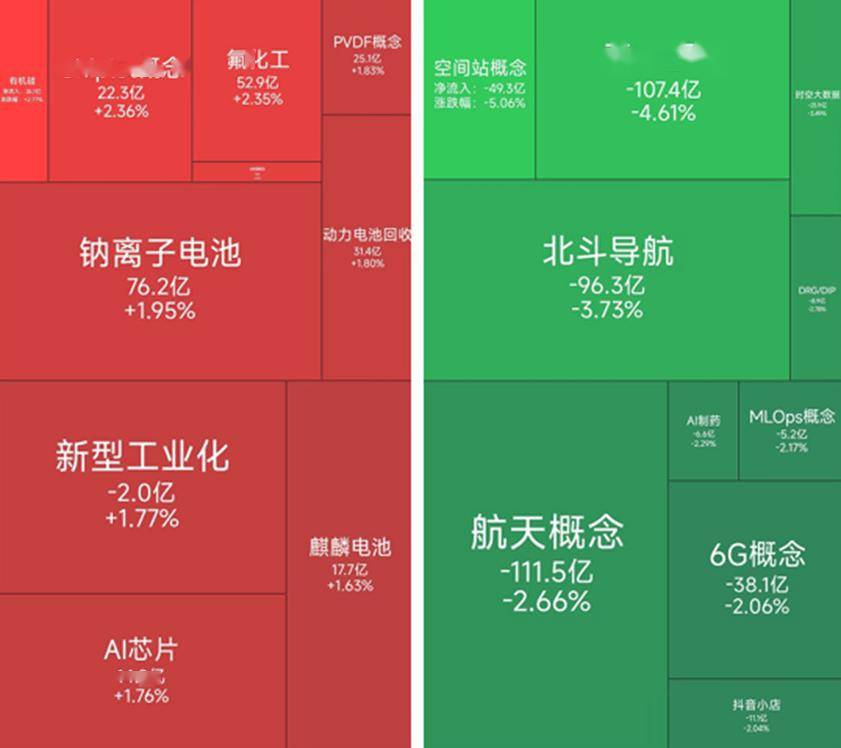
钠离子电池概念涨幅居前,49位基金经理发生任职变动
Sou Hu Cai Jing· 2025-12-23 08:21
Market Performance - On December 23, A-shares saw collective gains with the Shanghai Composite Index rising by 0.07% to 3919.98 points, the Shenzhen Component Index increasing by 0.27% to 13368.99 points, and the ChiNext Index up by 0.41% to 3205.01 points [1] Fund Manager Changes - On December 23, a total of 49 fund managers experienced changes in their positions, with 55 fund products announcing manager departures, involving 19 fund managers [3] - Over the past 30 days (November 23 to December 23), 634 fund products had manager changes, with 12 managers leaving due to job changes and 7 due to product expirations [3] Fund Manager Performance - Fund manager Yan Fei, currently managing assets totaling 392 million yuan, achieved a return of 144.93% on the Rongtong Blue Chip Growth Mixed A/B fund during her tenure of 8 years and 111 days [4] - New fund manager Zheng Yingli, managing assets of 646 million yuan, achieved a return of 140.22% on the Huabao Core Advantage Mixed C fund over 3 years and 122 days [5] Fund Research Activity - In the past month, Bosera Fund conducted the most company research, engaging with 39 listed companies, followed by Southern Fund with 36, Huatai-PineBridge with 33, and China Universal with 32 [6][7] - The most researched industry was specialized equipment, with 166 instances, followed by chemical products with 126 [6][7] Recent Company Focus - In the last month, the most scrutinized company by public funds was Zhongke Shuguang, with 117 fund management companies participating in its research, followed by Haiguang Information and Changan Automobile [7][8] - In the past week (December 16 to December 23), Changan Automobile was the most researched company, with 68 fund institutions involved [8][9]


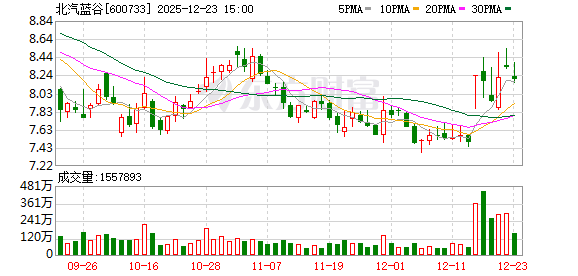
中国L3级自动驾驶“持证上岗”,关注恒生汽车ETF(159121)等产品布局机会
Mei Ri Jing Ji Xin Wen· 2025-12-23 06:56
有市场分析称,L3自动驾驶牌照落地意味着从车辆准入、责任界定到上路许可的完整监管链条被打 通,为后续更多车型和城市推广扫清了核心障碍。中国成为全球第二个为L3真正放行的国家,且由于 放行车型已上市,中国有望成为全球首个规模化应用L3的国家。在智能化下半场,中国在高级别自动 驾驶的法规和规模化应用上已取得全球并行甚至领先身位,有望为整个产业带来估值锚。 (文章来源:每日经济新闻) 消息面上,长安汽车旗下深蓝SL03获颁国内首块L3级自动驾驶专用正式号牌。这标志着中国L3级自动 驾驶汽车正式获准上路,L3逐渐步入合法规模化商用新阶段。 ...
——金融工程市场跟踪周报20251222:基本面驱动或为当前主要交易方向-20251223
EBSCN· 2025-12-23 05:35
- **Quantitative sentiment tracking includes volume timing signals** The volume timing signals for major indices as of December 19, 2025, indicate a cautious outlook across all indices, including the Shanghai Composite Index, Shanghai 50, CSI 300, CSI 500, CSI 1000, ChiNext Index, and Beijing 50 Index [22][23] - **Market sentiment indicator: CSI 300 rising stock ratio** The CSI 300 rising stock ratio is calculated as the proportion of constituent stocks with positive returns over the past N days. This indicator captures market sentiment, identifying opportunities during market bottoms and potential risks during overheated phases. As of December 19, 2025, the indicator rose above 60%, reflecting high market sentiment [23][24] - **CSI 300 rising stock ratio timing strategy** The timing strategy smooths the indicator using two different windows (N1=50, N2=35). When the short-term smoothed line exceeds the long-term smoothed line, it signals a bullish market outlook. Conversely, when the short-term line falls below the long-term line, it indicates a neutral stance. As of December 19, 2025, the short-term line was below the long-term line, suggesting a cautious market outlook [25][27] - **Moving average sentiment indicator** The moving average sentiment indicator uses eight moving averages (8, 13, 21, 34, 55, 89, 144, 233) to assess the trend state of the CSI 300 Index. The indicator assigns values based on the position of the current price relative to the moving averages. As of December 19, 2025, the CSI 300 Index was in a non-prosperous sentiment zone [31][34] - **Cross-sectional volatility analysis** Cross-sectional volatility for CSI 300, CSI 500, and CSI 1000 indices showed mixed trends. Over the past week, CSI 300 volatility decreased, indicating a deteriorating short-term alpha environment, while CSI 500 and CSI 1000 volatility increased, suggesting improved short-term alpha conditions. Quarterly averages for these indices were in the upper-middle range of the past six months, reflecting a favorable alpha environment [35][36] - **Time-series volatility analysis** Time-series volatility for CSI 300, CSI 500, and CSI 1000 indices increased over the past week, indicating an improved alpha environment. Quarterly averages for these indices were also in the upper-middle range of the past six months, suggesting a relatively favorable alpha environment [36][39]



车圈俩月换了6个CEO,29家企业327名高管变动,掀起年终人事巨变
3 6 Ke· 2025-12-22 23:18
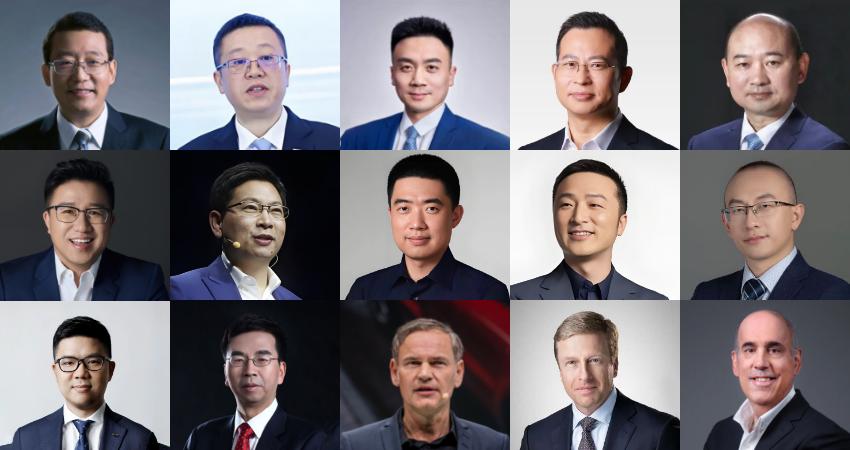
Core Insights - The automotive industry is experiencing a significant wave of executive changes, with over 327 high-level personnel adjustments reported in the last two months, including six CEOs [2][3][4] - The restructuring reflects a strategic shift among companies as they prepare for intensified competition in 2026, focusing on leadership renewal, efficiency, and core business enhancement [4][5][6] Group 1: Executive Changes in State-Owned Enterprises - Major state-owned automotive groups such as Dongfeng, Changan, GAC, and BAIC have undergone frequent personnel changes, aiming for younger and more professional decision-making teams [5][6][7] - GAC has appointed its first "post-70s" general manager, indicating a move towards clearer internal responsibilities and optimized decision-making [7] - Dongfeng has brought in external talent to drive its smart transformation, while Changan has filled its long-vacant president position, reflecting a commitment to leadership stability [11][13][15] Group 2: Executive Departures in Private Enterprises - Private automakers like BYD, Geely, and Great Wall have seen significant executive turnover, with key figures leaving amid fierce market competition [17][19] - Chery has emerged as an active talent poacher, recruiting from competitors to enhance its marketing and technology capabilities [19][21] Group 3: New Forces in the Automotive Sector - New energy vehicle companies are making urgent personnel adjustments to tackle pressing challenges, with Li Xiang of Li Auto taking direct control of human resources to streamline operations [22][24] - Xiaomi's automotive division is focusing on sales growth, with top executives taking on additional responsibilities to drive performance [26][28] - XPeng Motors is enhancing its technical capabilities by hiring AI experts, indicating a strategic focus on core technology development [29] Group 4: Changes in Foreign and Joint Venture Brands - Major foreign automotive companies, including GM and Tesla, are undergoing significant executive changes, with GM's software and AI teams experiencing notable turnover [32][34][36] - German luxury brands are also reshuffling their leadership, with key executives transitioning to new roles to align with future strategic goals [38][40][42] Group 5: Supply Chain and Component Manufacturers - The supply chain sector is also witnessing high-frequency personnel changes, with Huawei's Yu Chengdong taking on additional leadership roles to strengthen its market position [46][49] - Traditional component manufacturers like Continental and ZF are focusing on efficiency and business concentration through their leadership adjustments [51][52] Conclusion - The recent wave of personnel changes in the automotive industry signifies a critical reassessment of survival strategies amid the ongoing transition towards electrification and intelligence [53]




本月超470家上市公司获机构调研
2 1 Shi Ji Jing Ji Bao Dao· 2025-12-22 23:12
Core Viewpoint - The A-share market is experiencing increased volatility as the year-end approaches, but institutional research activity remains strong, focusing on companies with performance certainty and technological iteration potential [1][5]. Group 1: Institutional Research Activity - As of December 21, at least 472 A-share listed companies have undergone institutional research in December, with a focus on sectors such as computer equipment, integrated circuits, automotive manufacturing, and pharmaceuticals [1]. - The top five companies attracting the most institutional attention include Zhongke Shuguang, Haiguang Information, Changan Automobile, Jereh Group, and Boying Tehan, each receiving over 200 institutional visits [2]. - Companies like Aobi Zhongguang-UW and Weicai Technology also received significant attention, with institutional visits ranging from 73 to 77 [3]. Group 2: Industry Focus and Trends - The companies under research predominantly belong to high-tech sectors, including integrated circuits, computer equipment, and aerospace, aligning with the Wind New Quality Productivity Index [3]. - Institutions are particularly interested in companies with core patents and independent innovation capabilities in fields such as semiconductors, AI computing power, humanoid robots, and high-end medical technology [3][4]. - Recent policy initiatives encourage investment in hard technology sectors, with a focus on integrating technological and industrial innovation [4]. Group 3: Investment Strategies and Future Outlook - Institutions are adjusting their strategies for the upcoming year, focusing on companies with clear performance paths and technological barriers, particularly in hard technology sectors [4][7]. - The research activities reflect institutions' expectations for structural market opportunities in 2026, emphasizing technology innovation and traditional industry upgrades [7]. - Key investment areas identified for 2026 include domestic chips, artificial intelligence, humanoid robots, and the lithium battery supply chain, which align with national policies favoring hard technology [8].

2026年汽车出海展望
2025-12-22 15:47
Summary of Key Points from the Conference Call Records Industry Overview - The records focus on the **Chinese automotive industry**, particularly the overseas expansion of Chinese car manufacturers and their strategies for entering various international markets [1][2][3][5][7][8]. Core Insights and Arguments 1. **Profitability Disparity**: Chinese automakers show varied profitability in overseas markets, with an average gross margin of **20.7%** for passenger cars in 2024, compared to **15%** domestically. Companies like BYD, Changan, and Chery maintain high margins through premium and multi-brand strategies, while SAIC and Great Wall face profit declines due to policy impacts [1][13]. 2. **Regional Growth Drivers**: - **Southeast Asia**: Benefiting from ASEAN zero tariffs and subsidies, it is a major growth area. Local production is ramping up with factories established by BYD and Geely in Thailand and Vietnam [1][2][7]. - **Middle East**: High purchasing power and supportive policies for new energy vehicles (NEVs) drive demand for high-end SUVs from Chinese brands [1][2][7]. - **Russia**: The exit of Western brands and government subsidies create significant opportunities for companies like Chery and Great Wall, which are establishing local production [1][2][7]. - **Europe**: Expected to remain a high-margin market, especially for PHEV and BEV segments, with favorable regulatory changes [2][3][5]. 3. **Sales Targets**: - BYD aims for **1.5 to 1.6 million** overseas sales by 2026, focusing on Europe, the Middle East, Latin America, and Southeast Asia [4]. - Chery targets **1.5 to 1.8 million** sales, with a gradual exit from the Russian market [4]. - Great Wall anticipates **800,000** sales, emphasizing high-end and NEV strategies [5]. - Geely aims for **600,000** sales, focusing on Europe and Southeast Asia [5]. - SAIC plans for **1 million** sales, with new factories in Morocco [5]. 4. **Strategic Approaches**: - **Chery**: Implements an embedded localization strategy, adapting products to local regulations and competition [2][11]. - **BYD**: Focuses on vertical integration and local production to address charging infrastructure issues [4][12]. - **Geely**: Utilizes acquisitions to enter international markets while maintaining brand identities [9][11]. - **Great Wall**: Adopts a multi-brand strategy to cater to different regional markets [12]. 5. **Risks and Challenges**: - Regulatory barriers and the need for continuous investment in high-demand regions like Europe and the Middle East [6]. - Competition from Japanese brands in Southeast Asia and potential tariff adjustments [6][8]. - Low penetration rates in South America and the need for market cultivation [6][8]. Other Important Insights - **Chery's Competitive Edge**: Chery has over **3,000** channels and has maintained its position as the top Chinese brand exporter for **22 consecutive years**, with cumulative exports exceeding **5.7 million** vehicles [1][15]. - **Technological Leadership**: Chinese NEV products lead the market by **20%-30%** in hybrid, electric, and smart cockpit technologies compared to European and American counterparts [9]. - **Market Penetration Strategies**: Different companies adopt various strategies based on market conditions, such as Chery's balanced development approach and BYD's focus on high localization rates [11][12]. This summary encapsulates the key points from the conference call records, highlighting the dynamics of the Chinese automotive industry's overseas expansion and the strategies employed by various companies.



化“整”为“零”再出发——重庆合川破产整车企业资产盘活观察
Xin Hua She· 2025-12-22 15:27
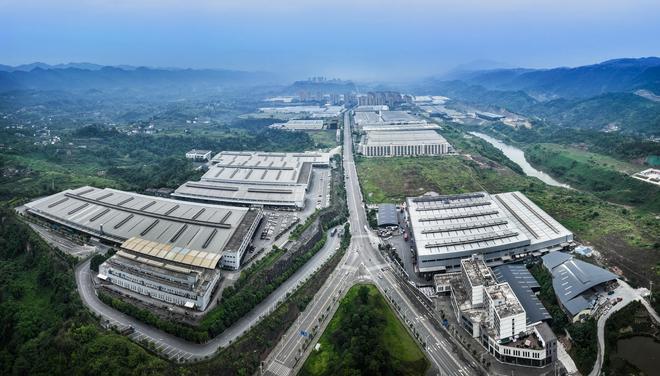
Core Viewpoint - The Chongqing Hechuan District government has shifted its focus from developing complete vehicle manufacturing to the automotive parts sector, successfully revitalizing 741,000 square meters of idle factory space by attracting 14 automotive parts projects over two years [1]. Group 1: Background and Transition - The "complete vehicle dream" in Hechuan began in the early 2000s, with two vehicle manufacturers establishing operations in the area, reaching a peak production capacity of 300,000 vehicles annually [1]. - Due to intensified market competition and industry transformation, both manufacturers faced production stagnation between 2017 and 2018, leading to bankruptcy [1]. - Initially, there was a strong desire to attract another complete vehicle manufacturer, but after analysis, it was determined that the high barriers to entry and intense competition made this unfeasible for Hechuan [1]. Group 2: Strategic Development of Automotive Parts - Hechuan has established a specialized team for attracting automotive parts industries, creating a "chain master - chain subordinate" map to address supply chain gaps for major manufacturers like Changan and Seres [3]. - The district has successfully attracted projects in lightweight structural components, chassis systems, and interior/exterior trim, with plans to further develop the smart connected new energy vehicle parts sector by early 2025 [3]. Group 3: Asset Revitalization and Government Support - The local government has implemented a strategy to categorize and optimize the use of idle factory spaces, creating a digital asset ledger to match production needs with available facilities [3]. - The government has demonstrated efficiency in modifying factory spaces, allowing companies to begin production much faster than traditional construction methods, saving 6 to 8 months [5]. - By 2026, Hechuan aims to attract over 20 quality projects to achieve full operational capacity, forming a billion-level automotive parts industry cluster that could create 6,500 jobs [5].