
YTL(000960)

Search documents
有色金属行业2026年年度策略报告-20251208
Ping An Securities· 2025-12-08 05:34
Group 1: Precious Metals - Gold - The weakening of the US dollar credit remains the core logic for gold pricing in 2025, with a notable negative correlation between gold prices and the dollar's share in global foreign exchange reserves [11][12] - The Federal Reserve is expected to continue its rate-cutting cycle into 2026, which may support gold prices, especially with concerns over the independence of monetary policy due to potential changes in leadership [13][15] - The long-term trend of weakening US dollar credit is not expected to change, with the US fiscal deficit projected to reach 6.9% of GDP in 2024, indicating ongoing structural issues in the US fiscal system [16][17] Group 2: Industrial Metals - Supply constraints for copper are expected to intensify, with significant disruptions in overseas copper mining projects leading to a projected decrease in output by over 100,000 tons in 2025 [23][24] - The demand for copper is anticipated to grow significantly due to the rise of AI and data centers, with each MW of installed capacity requiring approximately 27 tons of copper [27][28] - The macroeconomic environment, characterized by a weak dollar and continued rate cuts by the Federal Reserve, is expected to drive copper prices upward [29][31] Group 3: Energy Metals - The supply of lithium and cobalt is expected to improve significantly due to the end of overseas capacity clearances and the implementation of supply constraint policies by major producing countries [33] - The demand for energy metals is projected to benefit from the resilience of battery technologies and the growth of the energy storage sector, leading to a positive supply-demand dynamic [33][34] Group 4: Tin - The supply of tin is tightening due to regulatory changes in Indonesia and ongoing production disruptions in Myanmar, with exports from Indonesia declining by approximately 20% year-on-year [45][46] - The global demand for refined tin is expected to grow, particularly in the electronics sector, driven by high semiconductor sales and the increasing use of tin solder in AI and high-performance computing applications [51]





研判2025!中国高纯铟行业政策、产业链上下游、市场规模及发展趋势分析:短期承压后回暖,高纯铟行业迎稳健增长新阶段[图]
Chan Ye Xin Xi Wang· 2025-12-08 01:04
Core Insights - The high-purity indium industry in China has experienced rapid growth, becoming a crucial support for semiconductor materials, photovoltaic industries, and electronic device manufacturing. However, in 2023, the market faced a significant downturn due to a deep destocking cycle in the semiconductor market and a persistent slump in the consumer electronics market, leading to a 25% year-on-year decline in market size. A recovery is expected in 2024, with the market size projected to reach 2 billion yuan, a 6% increase year-on-year. The industry is anticipated to continue growing, driven by high-end manufacturing and the expansion of the new energy sector, particularly in semiconductor materials as reliance on high-purity indium increases with advancements in 5G communication, artificial intelligence, and data center construction [1][6]. Industry Overview - High-purity indium is a silver-white metal material purified through processes such as electrolysis, chemical cleaning, and vacuum distillation, achieving purity levels from 5N (99.999%) to 7N8 (99.999998%). It is primarily used in the preparation of III-V semiconductor compounds like indium phosphide (InP) and indium antimonide (InSb), as well as in ITO targets and high-purity alloys. The main production methods include electrolysis, vacuum distillation, zone melting, metal-organic compound methods, and low-halogen compound methods [2][3]. Industry Chain - The upstream raw materials for the high-purity indium industry include primary indium and recycled indium. Primary indium is mostly a byproduct of zinc mining, with China being rich in zinc reserves, particularly in Yunnan, Guangxi, and Hunan. Recycled indium is becoming increasingly important due to stricter environmental policies and tight primary indium supply, with secondary resources like waste ITO targets and liquid crystal panel dismantling waste becoming key supplements. The midstream refers to the high-purity indium industry, while the downstream includes applications in semiconductors, electronics, and new energy sectors [4][5]. Market Size and Trends - China is the largest producer of primary indium, holding 72% of the global reserves. In 2024, the production of primary indium in China is expected to reach 688 tons, a 6.5% year-on-year increase. This growth in primary indium production will ensure a stable supply of raw materials for high-purity indium production. The semiconductor industry, which has strict purity requirements, is projected to grow significantly, with the Chinese semiconductor market expected to reach $630.5 billion in 2024, a 43% increase from $440.4 billion in 2020 [5][6]. Competitive Landscape - The competitive landscape shows that overseas markets for high-purity indium and its oxides have advanced technology and established companies like Dowa and Rasa. In contrast, China's high-purity indium industry has been developing rapidly in recent years, with companies like Zhuzhou Keno New Materials Co., Ltd., Yunnan Tin Company Limited, and Henan Yuguang Gold and Lead Co., Ltd. making significant strides [6][7]. Development Trends 1. Recycled indium is becoming a critical support for supply, with the domestic recycled indium production accounting for about 30% of the total. The market share of recycled indium is expected to continue increasing, with companies focusing on improving recovery technologies for waste materials [10]. 2. The industry concentration is expected to rise, with smaller companies facing challenges due to outdated technology and increasing environmental costs. Leading companies are expanding capacity and securing stable raw material supplies through investments in overseas mines and long-term supply agreements [11][12]. 3. Domestic companies are advancing in high-purity indium production, particularly in the 7N grade, which has historically been dominated by Japanese and Korean firms. With government support and increased R&D investment, companies are expected to overcome key technological barriers and promote green processes to enhance purity stability while reducing energy consumption and emissions [13].






有色金属周报:铜现货愈发紧张,看好有色春季躁动-20251207
SINOLINK SECURITIES· 2025-12-07 09:35
Investment Ratings - The report maintains a positive outlook on copper, aluminum, and rare earths, indicating high market activity and potential for growth [12][33][34]. Core Insights - Copper prices increased by 4.38% to $11,665.00 per ton on LME, with domestic prices rising by 6.12% to 92,800 yuan per ton, driven by supply constraints and high demand [1][13]. - Aluminum prices rose by 1.24% to $2,900.50 per ton on LME, with domestic prices up 3.4% to 22,300 yuan per ton, reflecting stable demand despite seasonal fluctuations [2][14]. - Gold prices decreased by 0.87% to $4,227.7 per ounce, influenced by geopolitical risks and market volatility, while SPDR gold holdings increased [3][15]. - Rare earth prices, particularly praseodymium-neodymium oxide, rose by 2.79%, with expectations of increased demand due to supply constraints and favorable export conditions [4][34]. - Antimony prices decreased by 1.79%, but the outlook remains positive due to anticipated recovery in exports [4][35]. - Tin prices increased by 4.70%, supported by low inventory levels and supply disruptions in Indonesia and Myanmar [4][36]. Summary by Sections Copper - LME copper price increased by 4.38% to $11,665.00 per ton, with domestic prices at 92,800 yuan per ton [1][13]. - Supply constraints are evident with a decrease in copper inventory and processing fees [1][13]. - Downstream demand is weakening due to high prices, leading to a decline in new orders [1][13]. Aluminum - LME aluminum price rose by 1.24% to $2,900.50 per ton, with domestic prices at 22,300 yuan per ton [2][14]. - Inventory levels remain stable, but processing rates have decreased slightly [2][14]. - Demand is cautious due to high prices affecting transaction volumes [2][14]. Precious Metals - Gold prices fell by 0.87% to $4,227.7 per ounce, with geopolitical factors influencing market dynamics [3][15]. - SPDR gold holdings increased, indicating a slight uptick in investor interest [3][15]. Rare Earths - Praseodymium-neodymium oxide prices increased by 2.79%, with expectations of higher demand due to supply constraints [4][34]. - Export conditions are improving, contributing to a positive outlook for the sector [4][34]. Antimony - Antimony prices decreased by 1.79%, but the long-term outlook remains optimistic due to potential export recovery [4][35]. Tin - Tin prices increased by 4.70%, driven by low inventory levels and supply disruptions [4][36].


铜价一路飙升再创历史新高 精矿加工费却跌至负区间
Cai Jing Wang· 2025-12-05 03:26
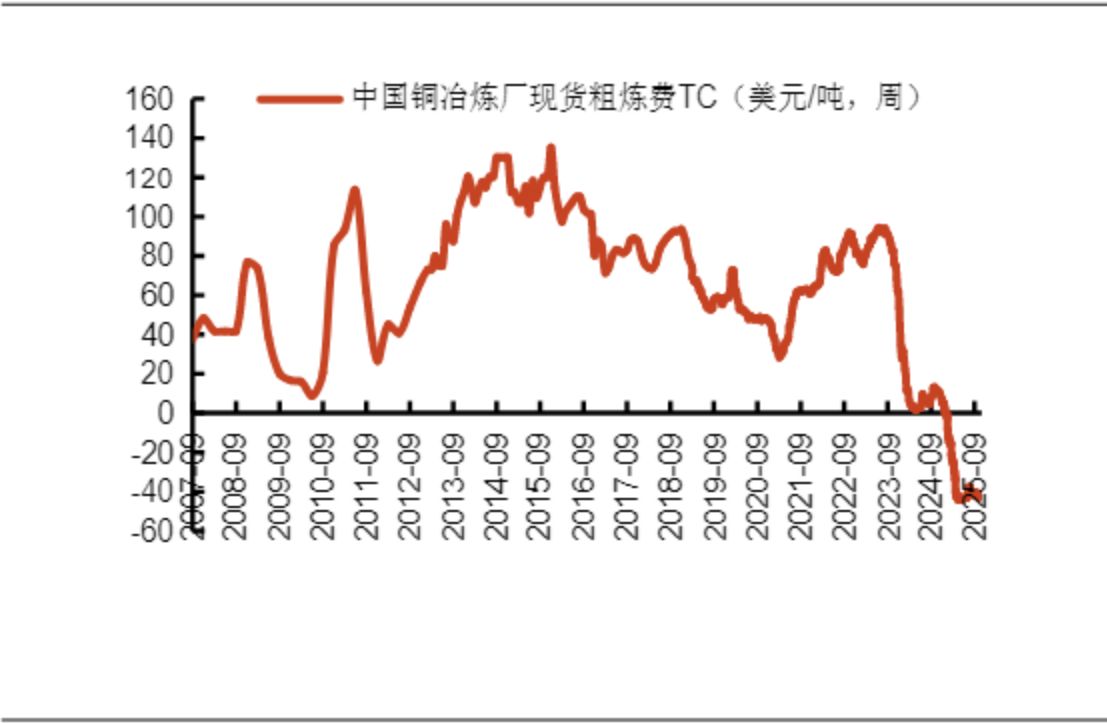
Group 1: Copper Price Surge - Copper prices have reached historical highs due to global supply tightness, explosive demand, and interest rate cut expectations, with domestic spot copper prices exceeding 90,000 yuan/ton for the first time [1][4] - On December 3, LME three-month copper closed at $11,487.50 per ton, marking a significant daily increase of $342.50 [1] - The tight supply in the domestic market has led to a rise in the net value of the China Securities Index Nonferrous Metals Mining Theme ETF [1] Group 2: Supply and Demand Dynamics - The processing fees for copper smelting have dropped to negative territory due to tight copper concentrate supply, causing smelting companies to struggle [2][8] - Fitch Solutions analysts predict a contraction in China's copper mine production by 2030 due to the closure of low-grade mines and delays in capacity expansion plans [2] - Global copper mine production is expected to decline by 0.12% in 2025, while demand continues to rise, particularly from sectors like solar energy and electric vehicles [5][6] Group 3: Market Trends and Future Outlook - The ongoing supply constraints and high demand are expected to lead to a substantial shortage of cathode copper in Asia, potentially triggering further price increases [7] - The TC/RC (treatment and refining charges) have fallen to historical lows, with the current spot price at -$43 per ton, indicating significant pressure on smelting companies [10] - Analysts expect that the growth rate of China's copper mine production will gradually slow down over the next decade, with a focus on overseas investments, particularly in Africa [13]



A股异动丨有色金属股全线上涨,LME期铜创历史新高,LME锡创逾3年新高
Ge Long Hui· 2025-12-04 20:14
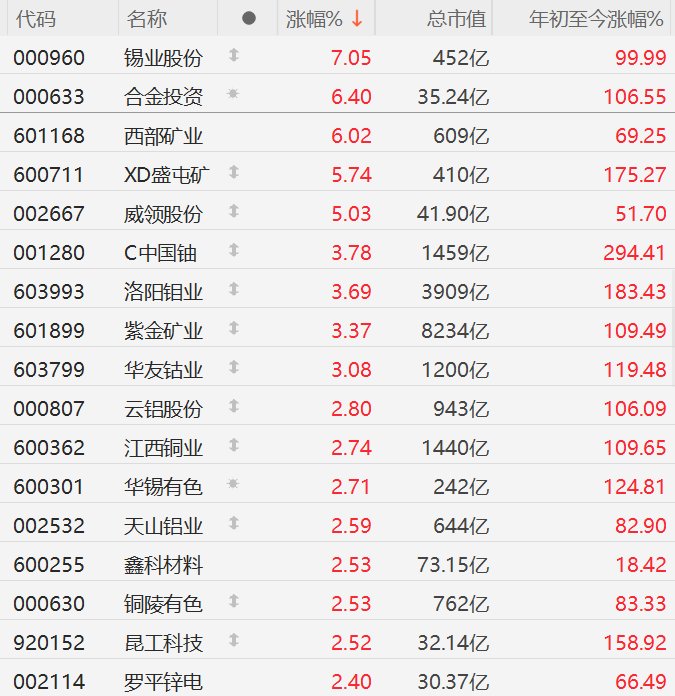
Group 1 - The A-share market saw a significant rise in non-ferrous metal stocks, with notable increases such as 7% for Xiyegongsi, over 6% for Alloy Investment and Western Mining, and over 5% for Shengtun Mining and Weiling Co. [1] - The London Metal Exchange (LME) copper price reached a historical high of $11,540 per ton, influenced by a weaker dollar, supply concerns, and tight supply in LME registered warehouses [1]. - Both Shanghai tin and LME tin prices hit new highs since May 2022, indicating a bullish trend in the market [1]. Group 2 - Industry insiders predict that copper prices may continue to rise, potentially reaching $12,000 per ton, marking the largest annual increase since 2017, with a year-to-date increase of 31% [1]. - The table of stock performance shows significant year-to-date gains for various companies, with Xiyegongsi at 99.99%, Alloy Investment at 106.55%, and Western Mining at 69.25% [2].


价格突破32万元!供需失衡下锡产业链或迎新机遇
Xin Hua Cai Jing· 2025-12-04 11:45
Core Viewpoint - Recent tin prices have reached new highs due to tight supply and macroeconomic expectations, with Shanghai futures hitting 323,000 yuan per ton, a 28% increase year-to-date [1] Supply and Demand Dynamics - Analysts highlight that tin supply remains a core concern, with slow recovery in Myanmar's Wa State mines and a significant drop in Indonesia's refined tin exports in October, leading to continued supply constraints [2] - The geopolitical conflict in the Democratic Republic of Congo is causing logistical disruptions and rising costs, limiting tin imports [2] - Tin is currently one of the most scarce non-ferrous metals, with low static reserve-to-production ratios globally and in China, indicating sustainability challenges [2] Market Trends and Future Outlook - The global supply of tin is under pressure from resource depletion and regulatory changes in major producing countries like Indonesia and Myanmar, which are facing declining grades and increased extraction difficulties [3] - Demand for tin is primarily driven by emerging sectors such as photovoltaics and semiconductors, with a projected compound annual growth rate (CAGR) of 7% for solder demand from 2024 to 2030 [3] - Traditional demand is expected to benefit from global fiscal and monetary easing, with an estimated CAGR of 4.3% for global tin demand from 2024 to 2030 [3] Industry Performance - Companies in the tin industry have reported significant profit growth due to rising tin prices, with several listed companies in the A-share market benefiting from the upward trend [5] - Xiyu Tin Industry reported a revenue of 34.417 billion yuan for the first three quarters of 2025, a 17.81% increase year-on-year, with a net profit of 1.745 billion yuan, up 35.99% [6] - Xingye Silver Tin reported a revenue of 4.099 billion yuan for the first three quarters of 2025, a 24.36% increase year-on-year, with a net profit of 1.364 billion yuan, up 4.94% [6] Strategic Insights - Companies are optimistic about the future of the tin industry, citing tightening policies in Southeast Asia and the strategic importance of tin resources [7] - The demand for tin is expected to grow due to the recovery of the global economy and the rapid development of emerging industries such as semiconductors and photovoltaics [7]


LME铜创十年新高!唯一百亿规模的有色金属ETF(512400)涨1.3%,连续5日获净申购
Ge Long Hui· 2025-12-04 03:39
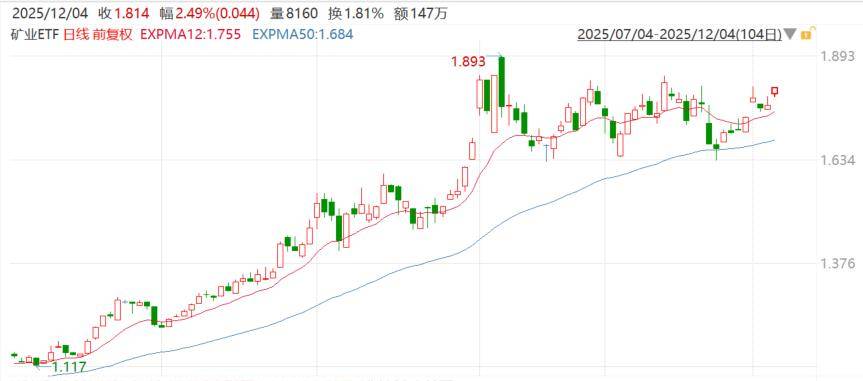
Core Viewpoint - The A-share market for non-ferrous metals continues to rise, driven by factors such as a weakening dollar, supply concerns, and tight supply in LME registered warehouses, leading to record high copper prices [1] Group 1: Market Performance - Non-ferrous metal stocks in the A-share market saw significant gains, with Xiyang Co. rising by 6% and Western Mining increasing by over 5% [1] - The non-ferrous metal ETF (512400) rose by 1.3%, expanding its year-to-date increase to 82% [1] - The ETF has experienced a net inflow of 325 million yuan over the past five days [1] Group 2: Commodity Prices - LME copper prices reached $11,540 per ton, the highest level since 2013, while Shanghai copper futures surpassed 90,000 yuan per ton, marking a historical peak [1] - The ongoing tight supply of refined copper globally, particularly in non-American regions, is contributing to upward price pressure [1] Group 3: Industry Insights - The non-ferrous metal ETF is the only one tracking the Zhongzheng Shenwan Non-ferrous Metal Index, with a current scale of 16.2 billion yuan, covering key sectors such as copper, aluminum, lithium, rare earths, and gold [1] - Key holdings in the ETF include leading companies in the non-ferrous sector such as Zijin Mining, Northern Rare Earth, Luoyang Molybdenum, Huayou Cobalt, and China Aluminum [1] Group 4: Future Outlook - With rising premiums for American copper and ongoing supply tightness in non-American regions, there is a bullish sentiment in the market [1] - The anticipated demand from the artificial intelligence sector is expected to provide a broad demand outlook for copper, suggesting potential upward price movement in the short term [1]

A股,突变!5连板牛股,闪崩跌停!29万手封死!航天股大爆发,300095猛拉,直线20cm涨停
中国基金报· 2025-12-04 03:07
Market Overview - The A-share market experienced fluctuations, with over 4,400 stocks declining, while the non-ferrous metal sector led the gains [1] - As of December 4, the A-share indices showed a mixed performance, with over 3,200 stocks still in decline despite some indices turning positive [1][2] Index Performance - The Shanghai Composite Index was at 3,886.05, up by 0.21% with a trading volume of 355.83 billion CNY [2] - The Shenzhen Component Index rose by 0.61%, and the ChiNext Index increased by 1.12% [4] Sector Performance - Non-ferrous metals, defense and military industry, and non-bank financial sectors showed significant gains, while consumer sectors like Hainan Free Trade Port and ice and snow tourism underperformed [4][22] - The non-ferrous metal sector continued to lead, with individual stocks like Electric Alloy rising over 11% and Alloy Investment hitting the daily limit [11][12] Concept Stocks Activity - Human-robot stocks were notably active, with companies like Junya Technology and Daying Electronics hitting the daily limit, and Huicheng Co. rising over 13% [7][9] - The commercial aerospace index also saw a rise, with Aerospace Universe increasing over 15% [13][14] Notable Stock Movements - Daoming Optical, which had previously seen five consecutive trading limits, faced a trading halt at 14.90 CNY, down 10.02% [18][19] - AI wearable devices sector saw a decline, with companies like Dongshan Precision dropping over 7% [22][23] Future Outlook - The Trump administration is reportedly considering an executive order on robotics technology, which may influence market sentiment in the robotics sector [9][10] - Huawu Co. is focusing on the commercial aerospace sector as a strategic development direction, although its current impact on overall performance is minimal [17]



铜价历史新高,锡价站上30万大关,有色金属矿业公司盈利亮眼
Sou Hu Cai Jing· 2025-12-04 01:57
Core Viewpoint - The expectation of interest rate cuts by the Federal Reserve has boosted overall commodity prices, leading to significant gains in the secondary market for non-ferrous metals and mining sectors [1][3]. Group 1: Commodity Price Movements - On December 3, the main contract for copper futures on the Shanghai exchange surpassed 90,000 yuan/ton, reaching a historical high [3]. - The average price of tin reached 309,700 yuan/ton, remaining above 300,000 yuan for five consecutive days [3]. Group 2: Market Dynamics and Supply Constraints - Analysts indicate that the expectation of a 25 basis point rate cut by the Federal Reserve in December has increased to 89%, which, combined with low domestic inventories and ongoing supply shortages in copper, may support high copper prices [4]. - Supply constraints are exacerbated by incidents at Freeport's Grasberg mine in Indonesia and the Kamoa-Kakula copper mine in the Democratic Republic of Congo, tightening global copper supply forecasts for 2026 [4]. Group 3: Demand Drivers - Copper is a crucial raw material for sectors such as electric power grids, electric vehicles, and AI servers, with demand expected to rise as major economies enter a rate-cutting cycle [4]. - The rise in tin prices is attributed to tight supply from mining and positive macroeconomic expectations, with slow recovery in Myanmar's tin mines and low export volumes contributing to the situation [4]. Group 4: Industry Performance - The non-ferrous metals sector has shown strong performance, with a year-to-date increase of 74.90%, leading among the Shenwan primary industry sectors [5]. - The mining ETF (159690) tracking the non-ferrous metals index has seen a year-to-date increase of 85.34%, indicating better relative elasticity [5]. Group 5: Profitability and Future Outlook - The overall profitability of the non-ferrous metals industry has improved, with a year-on-year net profit growth of 41.43% for the first three quarters of 2025, and a further increase to 50.81% in the third quarter [5]. - The index covers various sub-sectors, including industrial metals, precious metals, energy metals, and minor metals, providing a diversified approach to mitigate price volatility risks [5].
有色板块震荡走强 洛阳钼业、藏格矿业创历史新高
Mei Ri Jing Ji Xin Wen· 2025-12-04 01:53
Group 1 - The core viewpoint of the news is that the non-ferrous metal sector is experiencing a strong upward trend, particularly in copper, with several companies reaching historical highs [1] - Luoyang Molybdenum and Cangge Mining both saw their stock prices increase by over 4%, achieving new historical highs [1] - Shengtun Mining's stock price surged by over 8%, indicating significant investor interest and market momentum [1] Group 2 - Other companies in the sector, such as Xiyexing Co., Jincheng Mining, Western Mining, and Jiangxi Copper, also reported notable gains, contributing to the overall positive performance of the non-ferrous metal industry [1]
