
古茗

Search documents
幸运咖破7000家,皮爷实行消费入座
3 6 Ke· 2025-07-29 02:40
Store Expansion - Luckin Coffee opened 198 new stores domestically, reaching a total of over 7,000 stores, with a target of 10,000 by the end of the year, shifting focus from lower-tier markets to first and second-tier cities in the Yangtze River Delta and Pearl River Delta regions [1] - Other brands also expanded, including Ningji opening four stores in Xinjiang and M Stand opening its first overseas store in Tokyo [1] Product Innovation - Tea and coffee brands are frequently launching new products, with notable releases such as Tea Baidao's ice milk series and BeanStar's red meat apple coffee [3][4] - Brands are also upgrading existing products, with Starbucks introducing a new large cup size and CoCo Douku increasing matcha concentration by 1.3 times [4] Sales Performance - Tea Baidao's ice milk series surpassed 12 million cups sold by July 25, while Ningji's new store in Urumqi generated over 80,000 yuan on its first day [5] - Cross-brand collaborations are on the rise, with partnerships like 1点点 and 卡士 launching new products [5] Technological Integration - Brands are leveraging AI technology for operational efficiency, with沪上阿姨 partnering with Ant Group's subsidiary for AI store supervision [6] - Some brands are differentiating their customer experience, with Starbucks introducing free study rooms while皮爷咖啡 implements a purchase-required seating policy [6] Supply Chain Management -库迪咖啡's new global supply chain base in Anhui has an annual capacity of 4 billion cups, while Ningji is establishing lemon bases in Guangdong and Guangxi [6] - Brands are effectively managing raw material price fluctuations, with Luckin Coffee maintaining a coffee bean price of no more than 70 yuan per kilogram, ensuring high margins for franchisees [6] Financial Insights - Nestlé reported a decline in global coffee market share and an 80 basis point drop in operating profit margin due to rising raw material costs [8] - The company爷爷不泡茶 expects a net profit of approximately 700 million yuan in 2024, aiming for a valuation of 2 to 2.5 billion yuan in upcoming financing [8]

QuestMobile2025 中国移动互联网半年大报告:产业韧性增长已现,一二梯队格局成型但核心玩家战火再燃!
QuestMobile· 2025-07-29 02:00
Core Insights - The article highlights the robust growth of China's mobile internet sector, with a total of 1.267 billion monthly active users as of June 2025, reflecting a year-on-year increase of 2.5% [3][11]. - User engagement metrics show an increase in average daily usage time to 7.97 hours and frequency of use to 117.9 times per day, representing growth of 7.8% and 2.6% respectively [3][13]. - The competitive landscape among top internet companies is intensifying, with significant user growth for JD and Douyin at 13% and 12% year-on-year, while Pinduoduo and Baidu show minimal growth [3][18]. Group 1: Mobile Internet Growth - The overall economic environment in China is stabilizing, with digital economy policies boosting consumer confidence and market activity [9][15]. - The mobile internet user base continues to grow steadily, maintaining an increase of over 2% in the first half of 2025 [11]. - The increase in user engagement is primarily driven by younger and elderly demographics, with a notable shift of users towards first-tier cities [15][17]. Group 2: AI Applications - The AI application market is experiencing fierce competition, with 66.7% of the top 30 AI applications coming from the leading internet companies [4][22]. - The growth of AI applications is evident across various sectors, with significant user increases in AI native apps and plugins [4][26]. - The AI search engine segment has shown the largest growth, indicating a shift in user preferences towards AI-integrated solutions [4][32]. Group 3: Advertising and Marketing - The online advertising market in China surpassed 200 billion yuan in the second quarter of 2025, with a year-on-year growth rate of 6.8% [45][53]. - Brands are increasingly investing in marketing to enhance brand image, with a notable rise in advertising expenditure among beauty brands [59][61]. - The "618" shopping festival remains a critical marketing period, significantly impacting advertising spend and consumer engagement [57][63]. Group 4: Industry Insights - The short video industry continues to consolidate around platforms like Douyin and Kuaishou, with Douyin reaching 900 million users [76][78]. - The online travel sector has seen a 4.4% year-on-year increase in user numbers, reaching 156 million users by June 2025 [107][109]. - The integration of technology in the travel sector is enhancing user experiences, with AI and AR applications becoming more prevalent [111][113]. Group 5: Consumer Behavior Trends - The trend of "lightweight travel" is growing, with consumers favoring immediate purchase options and personalized experiences [116][118]. - The rise of "pet-friendly" services in the travel industry reflects changing consumer preferences, particularly among younger demographics [120][122]. - The demand for experiential consumption is driving innovation in the hospitality sector, with hotels offering unique service combinations [114][116].




高盛不裁员了
投资界· 2025-07-28 07:24
Core Viewpoint - Goldman Sachs has decided to halt large-scale performance-related layoffs this year due to a stronger-than-expected recovery in investment banking, particularly in stock trading revenues, which have set new records on Wall Street [1][6]. Group 1: Business Recovery - Goldman Sachs has seen a significant recovery in its investment banking business, with a total of $5.6 billion (approximately 40 billion RMB) in IPO and stock issuance transactions led by the firm this year, including notable companies like CATL and Mixue Ice City [1][3]. - The firm reported a second-quarter revenue of $14.58 billion, with earnings per share of $10.91, reflecting a year-on-year growth of 26.57% [3][4]. - Stock trading revenue reached $4.3 billion in the second quarter, exceeding analyst expectations by approximately $600 million and marking the highest quarterly trading profit in the company's history [4]. Group 2: Investment Banking Activity - Goldman Sachs' investment banking division has been particularly active, with announced merger and acquisition volumes up 30% year-on-year, surpassing the average of the past five years by 15% [4]. - The firm has completed 11 IPOs in the last three months, including significant listings like Circle and Chime, which have performed well post-IPO [4][5]. Group 3: Hong Kong Market Engagement - Goldman Sachs has been highly active in the Hong Kong IPO market, participating in 5 out of 6 IPOs exceeding $1 billion this year, solidifying its position as the top international investment bank in Hong Kong [10]. - The firm played a crucial role in several high-profile IPOs, including the $2.15 billion IPO of Bruker and the $2.33 billion IPO of Gu Ming, both of which saw overwhelming demand [8][9]. Group 4: Market Outlook - The firm anticipates continued growth in transaction volumes, supported by a 70% year-on-year increase in consulting revenue and a growing backlog of orders [5][6]. - The overall sentiment in the market is positive, with a notable increase in IPO applications in Hong Kong and a resurgence in the A-share market, indicating a potential new cycle of growth [12][14].


社会服务行业双周报(第111期):海南封关、雅下水电双轮驱动,关注顺周期边际信号-20250728
Guoxin Securities· 2025-07-28 05:14
Investment Rating - The report maintains an "Outperform the Market" rating for the social services sector [3][5][36]. Core Viewpoints - The Hainan Free Trade Port is set to officially start operations on December 18, 2025, with a significant increase in the number of zero-tariff goods from 1,900 items (21%) to 6,600 items (74%), which is expected to enhance the attractiveness of Hainan for businesses and tourists [1][14]. - The investment of 1.2 trillion CNY in the Yajiang hydropower project is anticipated to stimulate regional economic cycles and boost related industries such as education, business travel, catering, and tourism [1][16][17]. - The report suggests that the social services sector is likely to benefit from favorable national policies aimed at expanding domestic demand, leading to a potential valuation recovery [3][36]. Summary by Sections Industry Insights - The consumer services sector outperformed the market, rising by 4.41% during the reporting period, exceeding the market benchmark by 1.61 percentage points [22][25]. - The report highlights various industry dynamics, including the launch of AI educational products by Dou Shen Education and JD's new "Dish Partner" initiative, which aims to disrupt traditional restaurant franchising [28][29]. Company Performance Predictions - Key companies such as Mijia Group, Atour, and Ctrip are rated as "Outperform the Market," with projected earnings per share (EPS) for 2025E and 2026E showing positive growth [4][36]. - The report includes a detailed table of investment ratings and financial metrics for various companies in the sector, indicating strong growth potential [4]. Investment Recommendations - The report recommends focusing on companies like Atour, China Oriental Education, and Meituan, among others, as they are expected to perform well in the current economic environment [3][36]. - Mid-term selections include China Duty Free Group, Meituan, and Huazhu Group, reflecting a diversified investment strategy across the social services sector [3][36].

背靠“蜜雪”供应链,与瑞幸前后脚诞生的幸运咖要“起势”了
Mei Ri Jing Ji Xin Wen· 2025-07-26 08:32
Core Insights - The article highlights the competitive landscape of the coffee market in China, focusing on the growth and strategies of Luckin Coffee and its positioning against established players like Luckin Coffee and Kudi Coffee [1][6][9] Group 1: Company Overview - Luckin Coffee aims to expand its store count to over 10,000 by 2025, having already established over 6,000 stores in lower-tier markets [2][4] - The company has a strong supply chain, with its roasting capacity reaching 8,000 tons annually at its main factory and an additional 20,000 tons from a new facility [4][10] - The brand's pricing strategy positions its products at around 5.9 yuan for a cup of coffee, allowing for a 50% gross margin for franchisees [10][11] Group 2: Market Positioning - Luckin Coffee is adopting a "rural encircling urban" strategy, focusing on lower-tier markets before expanding into first-tier cities [9][10] - The coffee market is becoming increasingly competitive, with major brands like Starbucks, Kudi Coffee, and McDonald's also expanding their coffee offerings [6][7] - The brand's marketing efforts are intensifying, with a notable increase in franchise inquiries by over 300% in July [12][13] Group 3: Franchise and Support - Luckin Coffee is implementing supportive measures for franchisees, including waiving fees for two years in major cities and offering significant discounts for existing franchisees [11][12] - The company emphasizes the importance of a robust supply chain to maintain competitive pricing and operational efficiency [13][14] - The brand's growth strategy is underpinned by the trust franchisees have in the parent company, Mixue Group, which has a well-established market presence [11][13]
古茗(1364.HK):深渠长流 万店耕新
Ge Long Hui· 2025-07-26 05:39
Core Viewpoint - The company, Gu Ming, has established itself as a leading player in the ready-to-drink tea market, leveraging supply chain efficiency to drive store expansion and achieve significant revenue growth in a competitive environment [1][2]. Company Overview - Gu Ming was founded in 2010 in Zhejiang, China, and has focused on supply chain as a core driver of growth, implementing a self-distribution system in 2013 and cold chain logistics in 2017 [1]. - By 2023, the company has developed a cold storage capacity exceeding 60,000 cubic meters and operates over 300 cold chain transport vehicles, creating an industry-leading warehousing and distribution network [1]. - In 2024, Gu Ming achieved revenue of 8.791 billion yuan, a year-on-year increase of 14.54%, and an adjusted net profit of 1.493 billion yuan, up 5.69% year-on-year [1]. Industry Insights - The ready-to-drink tea market has surpassed a trillion yuan in scale, evolving into a new consumption arena where tea products serve as a medium for lifestyle expression among young consumers [2]. - Gu Ming holds a 9% market share in overall GMV and an 18% share in the mass market, ranking second overall and first in the mass market segment in 2023 [2]. - The company has demonstrated resilience amid industry slowdowns, with average daily GMV per store reaching 6,800 yuan in 2023 and projected to be 6,500 yuan in 2024 [2]. Competitive Advantages - Gu Ming's competitive edge lies in its comprehensive support for franchisees and deep optimization of its supply chain, allowing for store expansion without sacrificing profit margins or quality [2]. - The company boasts the largest cold chain storage and logistics infrastructure in the industry, utilizing temperature-controlled vehicles to deliver fresh ingredients to 97% of its stores every two days [2]. - With an average delivery cost of 0.9% of GMV, Gu Ming's logistics efficiency is significantly better than the industry average of 2% [2]. - The company achieved a quarterly repurchase rate of 53% in 2023, surpassing the industry average of 30%, and has launched over 100 new products in 2024, leading the industry in product innovation [2]. Future Growth Potential - Gu Ming employs a regional density strategy for store openings, targeting 500 stores per province as a key scale node, and currently holds a 25% market share in the ready-to-drink tea market across eight provinces [3]. - The company has achieved the highest market share in Zhejiang, Fujian, and Jiangxi provinces, with a 45% share in the mass ready-to-drink tea market [3]. - By June 2025, Gu Ming aims to have a total of 10,403 stores across 20 provinces, with significant potential for expansion into untapped regions [3]. - The company has identified a potential store opening space of approximately 9,866 stores under a neutral assumption, with a 5-year CAGR of 15%, and up to 19,314 stores if it expands into currently unentered cities, with a 5-year CAGR of 25% [3].
福建三兄弟卖茶,要IPO了
创业家· 2025-07-25 10:04
Core Viewpoint - Baima Tea Industry is preparing for an IPO on the Hong Kong Stock Exchange, marking a significant step after multiple attempts to list on the A-share market. The company aims to leverage its extensive retail network and brand positioning to attract investors in a competitive market [4][24][29]. Group 1: Company Background - Baima Tea Industry was founded by three brothers from a century-old tea family in Anxi, Fujian, and has grown to over 3,500 stores, primarily through a franchise model [4][16]. - The company initially struggled with sales but pivoted to offer individually packaged tea bags to cater to younger consumers' preferences for convenience [9][10]. - By 2012, Baima Tea had nearly 1,000 stores and began to attract significant investment, leading to its listing on the New Third Board [10][21]. Group 2: Financial Performance - Baima Tea's revenue reached RMB 18.18 billion in 2022, RMB 21.22 billion in 2023, and RMB 16.47 billion in the first three quarters of 2024, with net profits of RMB 1.66 billion, RMB 2.06 billion, and RMB 2.08 billion respectively [18]. - The company relies heavily on marketing, with sales and marketing expenses accounting for over 30% of revenue, while R&D spending remains low [19]. Group 3: Market Position and Challenges - The tea industry in China faces challenges, including a lack of standardized quality and a predominance of small family-run businesses, which limits brand recognition and pricing power [27]. - Baima Tea's IPO journey reflects broader trends in the industry, as many traditional tea companies have struggled to go public, prompting a shift towards the Hong Kong market [24][26]. - The recent success of new tea beverage brands in the IPO market highlights a growing interest in innovative consumer companies, contrasting with the struggles of traditional tea brands [28].

咖啡茶饮新品频出、全球圈粉 茶饮市场持续扩张
Yang Shi Wang· 2025-07-25 03:07
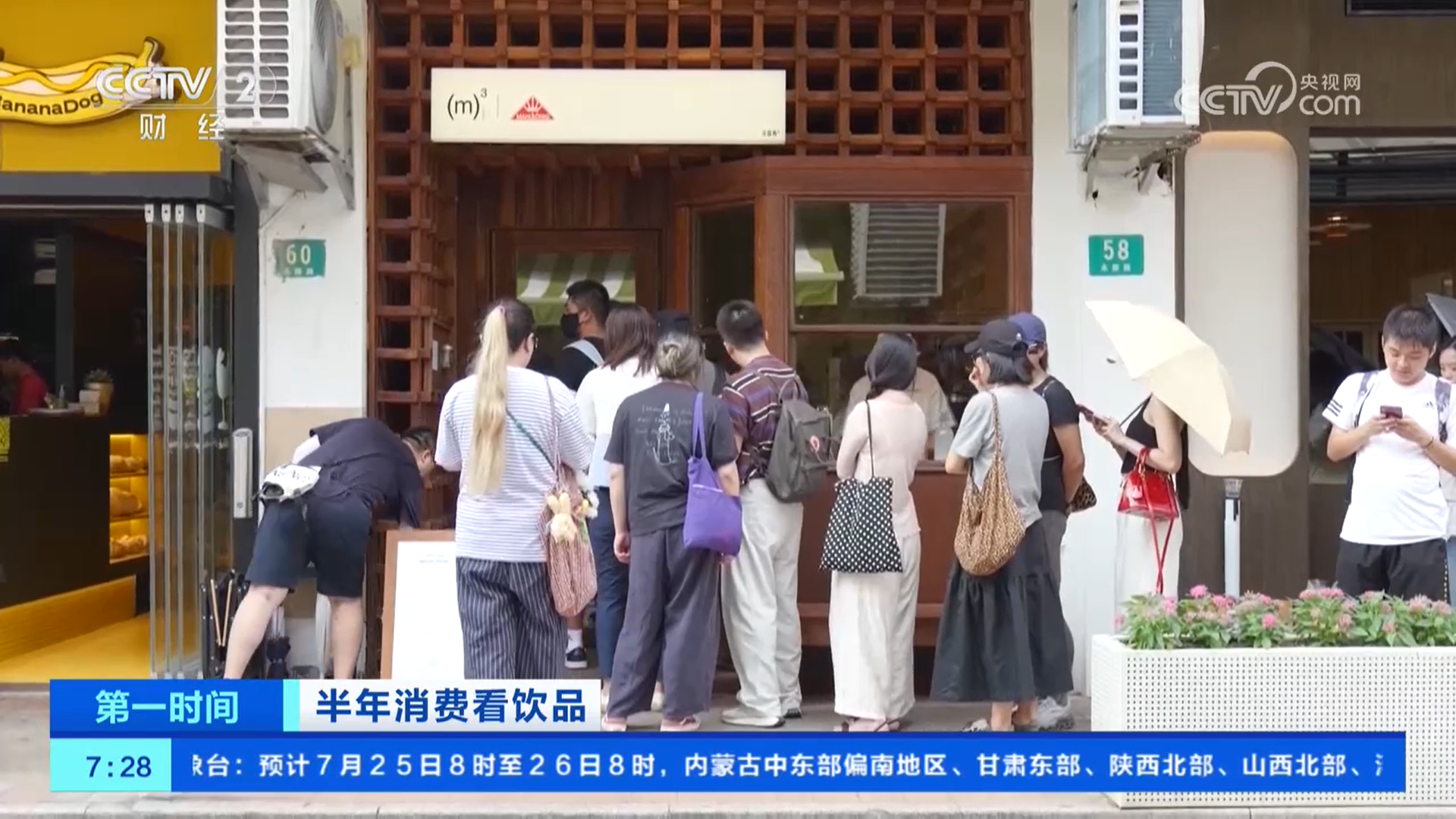
Group 1: Coffee Industry Insights - The coffee consumption trend is rising, with over 9,100 coffee shops in Shanghai, showcasing a diverse range of offerings from simple American coffee to creative specialty drinks [2][4] - A new coffee shop in Shanghai has gained popularity by offering unique frozen coffee drinks at an affordable price, attracting significant customer traffic [2][4] - A coffee brand that started from a small shop has expanded to over 800 locations in Shanghai, indicating strong growth in the coffee chain sector [4] - The rise of affordable coffee options and unique "village coffee" shops is contributing to the growth of the coffee market, with a notable presence in rural areas [5][7] - The coffee industry in China is projected to reach a market size of 313.3 billion yuan in 2024, with a year-on-year increase in per capita consumption of 33% [7] Group 2: Tea Industry Developments - The new tea drink sector is experiencing a surge in popularity, particularly among younger consumers, with a focus on health-conscious options [9][11] - The first half of the year saw a significant number of new tea drink companies going public, indicating a robust market environment [12] - The total number of tea drink outlets in China reached 116,978 by June, with a rapid introduction of new products, averaging 1.3 new items daily [12] - Chinese tea drink brands are expanding internationally, with a growing presence in markets like Southeast Asia, projected to reach a market size of 50 billion USD by 2028 [16] - The Chinese ready-to-drink tea market is expected to grow to 312.7 billion yuan in 2024, maintaining a growth rate of 20.97% [17]
蜜雪冰城重新调整第二曲线,幸运咖进攻一线城市
晚点LatePost· 2025-07-24 14:20
Core Viewpoint - Luckin Coffee, a sub-brand of Mixue Ice Cream, aims to open 10,000 stores by the end of the year, despite facing challenges in expansion and competition in the coffee market [2][15]. Expansion Strategy - Luckin Coffee plans to focus on one province at a time for market entry, using successful provinces like Shandong to drive growth in neighboring areas [3]. - The new CEO, Pan Guofei, emphasizes a slower, more strategic approach to expansion, contrasting with the rapid growth of competitors like Luckin Coffee and Kudi [3][12]. - The brand has seen an increase in store count, surpassing 7,000 locations, with daily average sales reaching 5,700 yuan in July [3]. Market Positioning - Luckin Coffee positions itself as a high-quality yet affordable option, with a price point of 5.9 yuan for an Americano, significantly lower than competitors [6][8]. - The brand utilizes a semi-automatic coffee machine to enhance flavor while keeping equipment costs low, which requires more skilled operation [5][7]. Supply Chain and Cost Management - Since being fully acquired by Mixue Group in 2019, Luckin Coffee has integrated into its supply chain, benefiting from economies of scale with over 46,000 stores [8][9]. - The cost of coffee beans for franchisees is kept low, allowing for a 50% gross margin on a 5.9 yuan Americano [8]. - The supply chain's robustness has helped the brand withstand price fluctuations in raw materials without raising prices [9][12]. Training and Operations - A dedicated market management team of 400 and a training team of 100 have been established to support franchise operations and ensure quality [4][6]. - Franchisees and baristas must undergo training at the Luckin Coffee Academy to ensure consistent product quality and operational standards [6]. Competitive Landscape - The coffee market is highly competitive, with brands like Starbucks, Luckin, and Kudi rapidly expanding their footprints [13][15]. - Luckin Coffee aims to differentiate itself by leveraging its supply chain and focusing on affordability, while also adapting to consumer preferences shaped by the competitive landscape [14][15].
古茗(01364):深度报告:深渠长流,万店耕新
Changjiang Securities· 2025-07-24 11:11
Investment Rating - The report assigns a "Buy" rating for the company [5][14]. Core Insights - The current landscape of the tea beverage industry is thriving, driven by the delivery battle and the peak season, with the company positioned as a leading player in the ready-to-drink tea market. The company is expected to achieve significant revenue growth, with projected revenues of 110.3 billion, 127.5 billion, and 147.0 billion yuan for 2025-2027, and net profits of 19.4 billion, 22.8 billion, and 26.5 billion yuan respectively [5]. Company Overview - The company, founded in 2010 in Zhejiang, has established itself as a leader in the ready-to-drink tea market, focusing on supply chain efficiency to support store expansion. As of 2024, the company achieved revenues of 87.91 billion yuan, a year-on-year increase of 14.54%, with adjusted net profits reaching 14.93 billion yuan, up 5.69% [9][21]. Market Position - The ready-to-drink tea market has evolved beyond basic product functionality, becoming a medium for young consumers to express lifestyle and values. The company holds a 9% and 18% market share in the overall and mass market segments respectively, ranking second overall and first in the mass market [10]. Competitive Advantages - The company has built a robust competitive edge through comprehensive support for franchisees and optimized supply chain management, allowing for profitable expansion without sacrificing quality. The company boasts the largest cold chain logistics infrastructure in the industry, with an average delivery cost of 0.9% of GMV, lower than the industry average of 2% [11]. Future Growth Potential - The company employs a regional density strategy, aiming for 500 stores per province as a key scale node. It currently operates in eight provinces, capturing 25% of the mass ready-to-drink tea market. The company has significant room for expansion, with estimates suggesting over 9,866 potential new stores in a neutral scenario and up to 19,314 if it continues to expand into currently unentered cities [12]. Financial Overview - The company has demonstrated resilient financial performance, with revenues of 87.91 billion yuan in 2024, driven by store expansion and increased demand for products. The revenue structure remains stable, with product sales accounting for nearly 80% of total revenue [38]. The adjusted net profit margin has shown fluctuations but remains competitive within the industry [43].