
天山铝业

Search documents
2025年1-9月中国原铝(电解铝)产量为3396.8万吨 累计增长2.2%
Chan Ye Xin Xi Wang· 2025-12-02 03:11
Core Viewpoint - The report highlights the growth and production statistics of China's primary aluminum (electrolytic aluminum) industry, indicating a steady increase in output and potential investment opportunities in the sector [1] Group 1: Industry Overview - As of September 2025, China's primary aluminum (electrolytic aluminum) production reached 3.81 million tons, reflecting a year-on-year growth of 1.8% [1] - Cumulative production from January to September 2025 totaled 33.968 million tons, with a cumulative growth rate of 2.2% [1] Group 2: Companies Involved - Listed companies in the aluminum sector include China Aluminum (601600), Nanshan Aluminum (600219), Yun Aluminum (000807), Xinjiang Zhonghe (600888), Shenhuo Co. (000933), Zhongfu Industrial (600595), Jiaozuo Wanfang (000612), Dongyangguang (600673), Tianshan Aluminum (002532), and Minfa Aluminum (002578) [1] Group 3: Research and Consulting - The report is published by Zhiyan Consulting, a leading industry consulting firm in China, which specializes in providing in-depth industry research reports, business plans, feasibility studies, and customized services [1] - Zhiyan Consulting emphasizes its commitment to delivering comprehensive industry solutions to empower investment decisions through professional insights and market intelligence [1]


政策与产业会议成市场发展关键,500质量成长ETF(560500)调整蓄势
Sou Hu Cai Jing· 2025-12-02 02:55
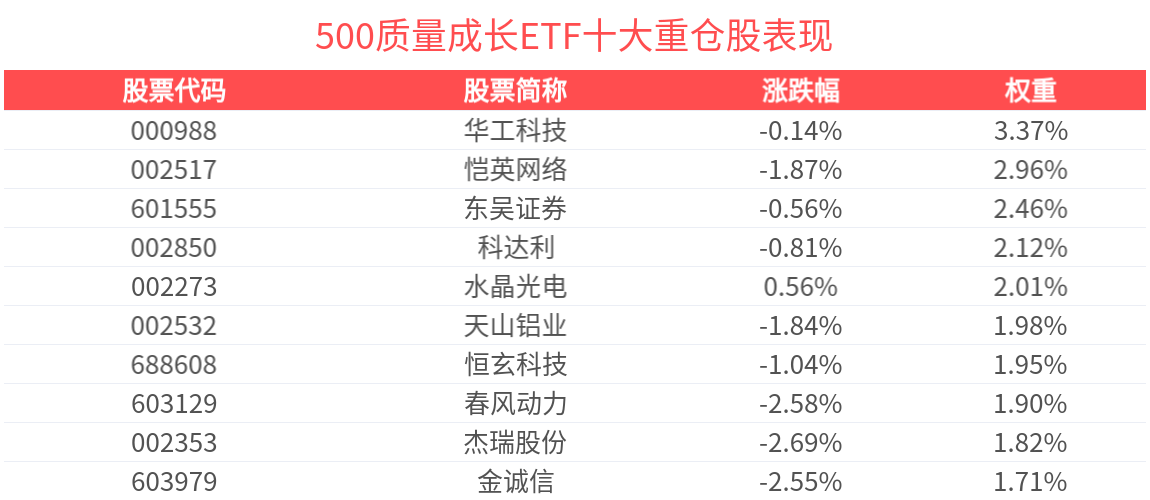
Group 1 - The core point of the news is that the CSI 500 Quality Growth Index has experienced a decline of 0.79% as of December 2, 2025, with Yifeng Pharmacy leading the gains among constituent stocks, while Shanghai Electric faced the largest losses [1] - The A-share market has shown increased volatility since November, with the Shanghai Composite Index, Shenzhen Component Index, and ChiNext Index declining by 1.67%, 2.95%, and 4.23% respectively during the month [1] - In terms of industry performance, sectors such as comprehensive, banking, and textile and apparel indices have shown positive growth, while previously high-performing sectors like computers, automobiles, and electronics have seen significant pullbacks [1] Group 2 - The CSI 500 Quality Growth ETF (560500) closely tracks the CSI 500 Quality Growth Index, selecting 100 companies with strong profitability, sustainable earnings, and robust cash flow from the CSI 500 Index [2] - As of November 28, 2025, the top ten weighted stocks in the CSI 500 Quality Growth Index include Huagong Technology, Kaiying Network, Dongwu Securities, and others, collectively accounting for 21.53% of the index [2] - The individual performance of the top ten stocks shows varied results, with Huagong Technology declining by 0.14% and Kaiying Network down by 1.87%, among others [3]
2025年12月02日:期货市场交易指引-20251202
Chang Jiang Qi Huo· 2025-12-02 02:40
1. Report Industry Investment Ratings Macro - Finance - Index: Long - term optimistic, buy on dips [1][5] - Treasury bonds: Range - bound [1][5] Black Building Materials - Coking coal: Range trading [1] - Rebar: Range trading [1][7] - Glass: Hold off from chasing high prices, wait and see [1][9] Non - ferrous Metals - Copper: Short - term range trading [1][10] - Aluminum: Reduce long positions when it rebounds to a high level [1][11] - Nickel: Wait and see or short on rallies [1][13] - Tin: Range trading [1][14] - Gold: Range trading [1][16] - Silver: Hold long positions, be cautious about new positions [1][16] - Lithium carbonate: Bullish - leaning range - bound [1][18] Energy and Chemicals - PVC: Range trading [1][18] - Caustic soda: Wait and see for now [1][20] - Soda ash: Wait and see for now [1][25] - Styrene: Range trading [1][20] - Rubber: Range trading [1][21] - Urea: Range trading [1][22] - Methanol: Range trading [1][24] - Polyolefins: Bearish - leaning range - bound [1][24] Cotton Textile Industry Chain - Cotton and cotton yarn: Range - bound [1][28] - PTA: Range - bound [1][28] - Apples: Bullish - leaning range - bound [1][29] - Jujubes: Bearish - leaning range - bound [1][30] Agricultural and Livestock - Pigs: Near - term contracts may adjust weakly at low levels, be cautious about chasing high prices in far - term contracts [1][32] - Eggs: Limited upside [1][33] - Corn: Hedge on rallies, be cautious about chasing high prices in the short - term; expect support in the long - term, but limited upside [1][35] - Soybean meal: Range trading [1][37] - Oils: Rebound from lows, adopt a buy - on - dips strategy [1][42] 2. Core Views of the Report The report provides investment strategies for various futures products in different sectors. It analyzes the market situation of each product based on factors such as supply and demand, macro - economic data, and geopolitical events. For most products, it suggests range trading or a wait - and - see approach, while for some, it gives clear long or short signals according to their specific fundamentals [1][5][7]. 3. Summaries by Related Catalogs Macro - Finance - **Index**: A - shares showed a volatile upward trend on Monday. The market is affected by factors such as PMI data, policy discussions, and international negotiations. The index may be range - bound in the short - term but is optimistic in the long - term [5]. - **Treasury bonds**: Treasury futures mostly rose. The market may focus on the actual scale of the central bank's treasury bond trading operations at the end of the month. With weak profit - making effects in the bond market, the downward space for yields is limited [5]. Black Building Materials - **Coking coal**: The coal market is in a downward trend with weak demand, and most market participants are waiting and seeing [7]. - **Rebar**: The price of rebar futures was strong on Monday. In the short - term, there is no significant supply - demand contradiction, and the price is expected to oscillate at a low level [7]. - **Glass**: Although the futures price has rebounded due to production line shutdown rumors, the social inventory pressure is huge, and the year - end demand is weak. It is not advisable to chase high prices for near - term contracts [9]. Non - ferrous Metals - **Copper**: The situation in Congo (Kinshasa) needs attention. The market consumption has improved, and the social inventory has decreased. The long - term demand for copper is optimistic, but in the short - term, it is necessary to beware of the impact of high prices on consumption and policy changes [10]. - **Aluminum**: The price of bauxite is stable, and the supply of imported ore is expected to increase. The operating capacity of alumina and electrolytic aluminum has changed. The downstream demand is gradually entering the off - season. It is recommended to reduce long positions when the price rebounds to a high level [11]. - **Nickel**: The price of nickel ore is firm, but the supply may be loose in the future. The refined nickel market is in a surplus, and the price of nickel iron has limited upside. It is recommended to wait and see or short on rallies [13]. - **Tin**: The supply of tin ore is tight, and the downstream consumption is weak. The inventory is at a medium level. It is necessary to pay attention to the supply recovery and downstream demand [14]. - **Silver**: Fed officials' dovish remarks have increased the market's expectation of interest rate cuts, and silver prices have rebounded. It is recommended to hold long positions and be cautious about new positions [16]. - **Gold**: Similar to silver, the gold price has rebounded due to interest rate cut expectations and safe - haven demand. Range trading is recommended [16]. - **Lithium carbonate**: The supply is in a tight balance, and the downstream demand is strong. It is necessary to pay attention to the progress of mines in Yichun and the resumption of production of the Ningde Jixiawo lithium mine [18]. Energy and Chemicals - **PVC**: The cost is under pressure, the supply is high, and the demand is weak. It is recommended to conduct range trading and pay attention to policy and cost changes [18]. - **Caustic soda**: The alumina industry may affect the demand for caustic soda. The supply is high in winter. The valuation is suppressed by the expectation of alumina production cuts [20]. - **Styrene**: The recent rebound is due to the "blending oil" narrative, but the fundamentals are weak. It is recommended to conduct range trading and pay attention to the price of pure benzene and crude oil [20]. - **Rubber**: The overseas raw material price has fallen, and the inventory in Qingdao has increased. The demand for tires is limited. The rubber price may continue to decline without strong positive factors [21]. - **Urea**: The supply has increased, the agricultural demand has weakened, and the industrial demand has strengthened. The inventory is decreasing. It is expected to be range - bound [22]. - **Methanol**: The supply has recovered, the demand for methanol - to - olefins has increased slightly, and the traditional demand is weak. The port inventory has decreased [24]. - **Polyolefins**: The supply has changed, the demand is weak, and the inventory has decreased. The PE contract is expected to oscillate within a range, and the PP contract is expected to be bearish - leaning [24]. - **Soda ash**: The supply is in excess, but the cost support is strong. It is recommended to wait and see [25]. Cotton Textile Industry Chain - **Cotton and cotton yarn**: The global cotton supply - demand data is loose, but the strong yarn price has driven the cotton price to rebound [28]. - **PTA**: The international oil price has fallen, the PTA price has decreased, and the supply - demand situation is such that the inventory is decreasing. It is expected to oscillate at a low level [28]. Agricultural and Livestock - **Pigs**: In the short - term, the supply pressure is high, and the demand increase is not significant. In the long - term, the production capacity reduction is accelerating but still above the normal level. It is recommended to short near - term contracts on rallies and be cautious about far - term contracts [32]. - **Eggs**: In the short - term, the spot price fluctuates slightly, and the futures price is range - bound. In the medium - term, the supply - demand situation is improving marginally. In the long - term, the supply pressure still exists [33]. - **Corn**: In the short - term, the price has rebounded, but there is still selling pressure. In the long - term, the demand is gradually recovering, but the supply - demand pattern is relatively loose [35]. - **Soybean meal**: The domestic and international soybean prices have fallen. It is recommended to conduct range trading and for spot enterprises to price the basis from November to January on dips [37]. - **Oils**: The short - term performance of oils is under pressure, but there is support in the long - term. It is recommended to buy on dips and pay attention to relevant data and reports [42].
第七届金麒麟煤炭行业最佳分析师第一名长江证券肖勇最新行研观点:重视白银新高的信号意义(附投资机会)
Xin Lang Zheng Quan· 2025-12-01 07:28
Core Viewpoint - The analysis highlights the positive outlook for precious metals, particularly silver and gold, driven by expectations of interest rate cuts and macroeconomic conditions, while also emphasizing the potential for industrial metals like copper and aluminum due to similar monetary policy shifts [2][3]. Precious Metals - The weakening US dollar and overall recovery in risk assets have led to a significant rise in precious metals, with silver leading the charge, breaking historical highs due to futures market dynamics [2]. - The expectation of continued economic recession in the US supports the view that interest rates will remain low, which is favorable for gold prices, with a potential breakout above previous highs anticipated [2]. - The analysis suggests a shift in stock selection strategy from current earnings to future reserves valuation for gold and silver stocks, recommending specific companies such as Zhaojin Mining and Shandong Gold [2]. Industrial Metals - Enhanced expectations for interest rate cuts have positively impacted copper and aluminum prices, with recent price increases noted (LME copper up 3.7%, aluminum up 2%) [3]. - The supply dynamics for copper and aluminum are highlighted, with copper inventories increasing while aluminum inventories are decreasing, indicating a mixed supply outlook [3]. - The analysis indicates that the copper and aluminum sectors are well-positioned for both short-term gains and long-term value appreciation, driven by macroeconomic factors and supply constraints [3]. Energy and Strategic Metals - The lithium market is expected to see a supply turning point by 2026, with increasing demand from domestic power and energy storage sectors, while supply growth is anticipated to slow down [4]. - The rare earth sector is poised for a recovery, with government policies supporting the industry and improving demand dynamics, particularly in applications like robotics [5]. - The cobalt market is projected to face shortages from 2025 to 2027, with price increases expected due to supply constraints, particularly from the Democratic Republic of Congo [5]. Summary of Recommendations - Companies to watch in the copper sector include Luoyang Molybdenum and Zijin Mining, while aluminum companies like Zhongfu Industrial and Hongqiao Group are highlighted for their growth potential [3][5]. - In the lithium space, companies such as Tianhua New Energy and Ganfeng Lithium are recommended due to their strategic positioning in the market [5].

铝产业链周报-20251201
Chang Jiang Qi Huo· 2025-12-01 03:54
Report Industry Investment Rating No relevant content provided. Core Viewpoints of the Report - The macro sentiment has improved, with the market remaining stable during the week and experiencing a significant increase in positions on Friday night. It may continue the short - term rebound trend. It is recommended to reduce long positions after the price rebounds to a high level [3]. - The overall demand is gradually entering the off - season, and the start - up rate is expected to remain under pressure [3]. Summary by Relevant Catalogs 1. Fundamental Analysis - Bauxite: The bauxite prices in Shanxi and Henan are temporarily stable. The mainstream transaction price of Guinea's bulk ore remained stable at $70.5 per dry ton week - on - week. The spot supply of imported ore is expected to increase in December, and the ore price is expected to be under pressure [3][10]. - Alumina: The operating capacity increased by 600,000 tons week - on - week to 96.7 million tons, and the national alumina inventory increased by 71,000 tons week - on - week to 4.415 million tons. Most alumina enterprises still maintain high - yield and full - production operations [3][13]. - Electrolytic Aluminum: The operating capacity increased by 10,000 tons week - on - week to 44.434 million tons. Some electrolytic cells in Shanxi Shuozhou Energy were shut down for technological transformation, and individual aluminum plants in Xinjiang reduced production due to environmental protection control. New production capacities are being put into operation [3][22]. - Demand: The start - up rate of domestic aluminum downstream processing leading enterprises increased by 0.3% week - on - week to 62.3%. The aluminum cable industry continued to recover moderately, and the start - up rates of the profile and primary aluminum alloy industries increased. However, the overall demand is entering the off - season [3]. - Inventory: The social inventory of aluminum ingots decreased during the week. In the recycled cast aluminum alloy sector, the full orders in the automobile sector drove up the capacity utilization rate [3]. 2. Strategy Recommendations - Alumina: It is recommended to trade in the bottom range [4]. - Shanghai Aluminum: It is recommended to reduce long positions after the price rebounds to a high level [4]. - Cast Aluminum Alloy: It is recommended to reduce long positions after the price rebounds to a high level [4]. 3. Aluminum Bauxite - The bauxite prices in Shanxi and Henan are stable. Issues such as mining rectification, mine reclamation requirements, and enhanced safety and environmental protection supervision still restrict the resumption of production of many mines [10]. - The mainstream transaction price of Guinea's bulk ore remained stable, but the expected increase in supply in December will put pressure on the price. December is the time for signing long - term contracts for 2025 and determining the first - quarter price, and the supply - demand expectation is poor [10]. 4. Alumina - As of last Friday, the built - up capacity was 114.62 million tons (unchanged week - on - week), the operating capacity was 96.7 million tons (an increase of 600,000 tons week - on - week), and the start - up rate was 83.8%. The domestic spot weighted price was 2,831.9 yuan per ton, a decrease of 2 yuan per ton week - on - week [13]. - The national alumina inventory increased, and most enterprises maintained high - yield operations. High - cost alumina enterprises are in a dilemma of deciding whether to reduce production [13]. 5. Electrolytic Aluminum - As of last Friday, the built - up capacity was 45.242 million tons (an increase of 10,000 tons week - on - week), and the operating capacity was 44.434 million tons (an increase of 10,000 tons week - on - week) [22]. - There were capacity reductions and new capacity investments. Shanxi Shuozhou Energy carried out technological transformation, and Xinjiang had production cuts. New capacities of Tianshan Aluminum and Zha Aluminum are being put into operation [22]. 6. Cast Aluminum Alloy - The start - up rate of recycled aluminum alloy leading enterprises increased by 0.9% week - on - week to 61.5%. The orders in the automobile field are full, but the industry's overall start - up rate is restricted by high raw material prices and short - term supply shortages [36]. 7. Downstream Start - up - The start - up rate of domestic aluminum downstream processing leading enterprises increased by 0.3% week - on - week to 62.3% [48]. - Aluminum Profiles: The start - up rate increased by 0.4% week - on - week to 52.5%. The demand for automotive profiles is good, but the construction profiles are still in a downturn [48]. - Aluminum Plate and Strip: The start - up rate remained stable at 66.4%. The environmental protection restrictions in the Central Plains were temporarily lifted, but the year - end air pollution control affected transportation and orders [48]. - Aluminum Cables: The start - up rate increased by 0.6% week - on - week to 63%. The current orders have improved slightly, but the grid's提货persistence is expected to weaken [51]. - Primary Aluminum Alloy: The start - up rate increased by 0.4% week - on - week to 60.2%. The downstream manufacturing orders increased slightly, and the industry is in the traditional peak season [51].
有色钢铁行业周观点(2025年第48周):金铜的跨年行情或将展开,有色布局正当时-20251201
Orient Securities· 2025-12-01 01:43
Investment Rating - The report maintains a "Buy" rating for the non-ferrous and steel sectors, indicating a positive outlook for investment opportunities in these industries [9][10]. Core Viewpoints - The report suggests that a cross-year market for gold and copper may unfold, making it an opportune time to invest in non-ferrous metals [9][10]. - It highlights that the copper supply shortage is expected to continue, which may drive up copper prices, while strict control over smelting capacity could lead to improved profitability for midstream players [9][10]. - The report also emphasizes the bullish outlook for gold prices, projecting a rise to $4,500 per ounce by the end of 2025 and potentially exceeding $5,000 per ounce in 2026 [9][10]. - For the electrolytic aluminum sector, the report suggests that despite recent stock dilution, the overall supply-demand dynamics remain intact, presenting opportunities for investment [9][10]. Summary by Sections Non-Ferrous Metals - The report notes a 3.37% increase in the non-ferrous metals sector, driven by a significant rise in copper prices due to supply constraints and inflation expectations [9][10]. - It highlights the historical high copper premium set by Codelco, which is expected to further tighten supply [9][10]. - The report recommends focusing on investment opportunities in copper, gold, and aluminum sectors [9][10]. Steel Industry - The report indicates a slight decrease in iron and steel production, with rebar consumption at 2.28 million tons, down 1.23% week-on-week but up 1.15% year-on-year [16][21]. - It mentions that overall steel inventory continues to decline, with total social and steel mill inventories down by 2.15% [23][24]. - The profitability of most steel products has significantly improved due to rising costs, with the average price index for common steel rising by 0.42% [26][35]. New Energy Metals - The report states that lithium carbonate production in October 2025 saw a significant year-on-year increase of 67.28%, indicating strong supply growth [39][40]. - It also notes that the production of new energy vehicles continues to grow, with October 2025 production reaching 1.68 million units, up 19.94% year-on-year [43][46]. - The report highlights price increases in lithium and cobalt, with lithium carbonate priced at 93,300 yuan per ton, reflecting a slight decrease of 0.27% week-on-week [49][50].



2025年12月01日:期货市场交易指引-20251201
Chang Jiang Qi Huo· 2025-12-01 01:42
Report Industry Investment Ratings - **Macro Finance**: Index futures are favored in the medium to long term, with a strategy of buying on dips; treasury bonds are expected to trade sideways [1][5]. - **Black Building Materials**: Coking coal and rebar are recommended for range trading; glass is advised to be observed without chasing high prices [1][7][8]. - **Non - ferrous Metals**: Copper is suitable for short - term range trading; aluminum suggests reducing long positions at high levels after a rebound; nickel advises waiting and watching or shorting on rallies; tin is for range trading; gold is for range trading; silver recommends holding long positions and being cautious about new positions; lithium carbonate is expected to be in a relatively strong sideways trend [1][11][14]. - **Energy Chemicals**: PVC, caustic soda, soda ash, styrene, rubber, urea, and methanol are for range trading; polyolefins are expected to be in a weak sideways trend [1][19][21]. - **Cotton Textile Industry Chain**: Cotton and cotton yarn are expected to trade sideways; PTA is for range - bound trading; apples are expected to be in a slightly strong sideways trend; jujubes are expected to be in a weak sideways trend [1][27][29]. - **Agricultural and Livestock**: Pigs in the near - term are in a weak adjustment at low levels, and caution is advised when chasing high prices in the far - term; eggs' price increase is restricted; corn suggests hedging on rallies; soybean meal is mainly for range trading; oils are expected to stop falling and rebound, with a strategy of buying on dips [1][31][35]. Core Views The report provides trading suggestions for various futures products based on their current market conditions, supply - demand fundamentals, and macro - economic factors. It analyzes each product's situation in detail, including factors such as production, consumption, inventory, and policy, and offers corresponding investment strategies [1]. Summaries by Category Macro Finance - **Index Futures**: China's November official manufacturing PMI rebounded, and the external environment improved. However, the market's main line rotates quickly, so index futures may trade sideways. In the medium to long term, they are favored, and a strategy of buying on dips is recommended [5]. - **Treasury Bonds**: After continuous callbacks, the yields of 10 - year and 30 - year active bonds have basically retreated to the level before the announcement of treasury bond trading operations. The market may focus on the actual scale of the central bank's treasury bond trading operations at the end of the month. Treasury bonds are expected to trade sideways [5]. Black Building Materials - **Coking Coal**: The coal mine market is in a continuous price - cut trend, with weak demand. Market participants are generally in a wait - and - see state. It is recommended for range trading [8]. - **Rebar**: The futures price of rebar strengthened last Friday. In the short term, it is in a policy vacuum period. The supply and demand contradiction is not significant, and the price increase and decrease drivers are both weak. It is recommended for range trading [8]. - **Glass**: The suspension of production rumors caused the futures price to rebound, but the social inventory pressure of glass is huge, and the demand is gradually weakening at the end of the year. It is not advisable to chase high prices for the near - term contract, and it is necessary to wait for the peak - forming signal [10]. Non - ferrous Metals - **Copper**: The safety situation in the Democratic Republic of the Congo is complex and severe. The market consumption has shown a good momentum recently, and the social inventory has decreased. The long - term demand for copper is still optimistic, but in the short term, it is necessary to be vigilant against the suppression of consumption by high copper prices and the pressure brought by changes in the Fed's policy expectations. It is recommended for short - term range trading [11]. - **Aluminum**: The prices of bauxite in Shanxi and Henan are temporarily stable. The supply of imported ore is expected to increase in December, and the price may be under pressure. The demand is gradually entering the off - season. It is recommended to reduce long positions at high levels after a rebound [12]. - **Nickel**: The price of nickel ore remains firm, and the supply of nickel ore may be relatively loose. The refined nickel is in a surplus pattern, and the price of nickel iron has limited upward space. It is recommended to wait and watch or short on rallies moderately [15]. - **Tin**: The domestic refined tin production increased in October, and the consumption of the semiconductor industry is expected to continue to recover. The supply of tin ore is tight, and the downstream consumption is weak. It is necessary to pay attention to the supply resumption and downstream demand [15]. - **Silver and Gold**: Fed officials' dovish speeches have increased the market's expectation of interest rate cuts. Precious metals prices have rebounded. It is recommended to hold long positions in silver and be cautious about new positions, and to conduct range trading in gold [17]. - **Lithium Carbonate**: The supply is in a tight balance, and the downstream demand is strong. It is necessary to pay attention to the progress of the mining license in Yichun and the resumption of production of the Ningde lithium mine. It is expected to be in a relatively strong sideways trend [19]. Energy Chemicals - **PVC**: The cost is in a low - profit state, the supply is high, the demand is weak, and the export support may weaken. The overall supply and demand is still weak, but it has a low valuation. It is expected to be in a weak sideways trend [19]. - **Caustic Soda**: The alumina end has high production and high inventory, compressing profits. The supply of caustic soda is high in winter. It is recommended to wait and watch [21]. - **Soda Ash**: The spot trading is stable, and the upstream has a strong mentality of holding prices. The supply is expected to shrink, and the cost support is strong. It is recommended to wait and watch [27]. - **Styrene**: The overseas blending logic is difficult to change the weak fundamentals in the short term. It is mainly in a sideways trend, and it is necessary to pay attention to the price of pure benzene in January and the change of the crude oil pricing center [21]. - **Rubber**: The supply is expected to increase in the peak - season, and the terminal demand improvement is weak. However, there may be speculation about the shortage of delivery products. It is recommended for range trading [22]. - **Urea**: The daily output has increased, the agricultural fertilizer demand is gradually weakening, and the demand from compound fertilizer enterprises has increased. The inventory is in a state of high production and high inventory. It is expected to be in a sideways trend [23]. - **Methanol**: The domestic supply has recovered, the demand from the methanol - to - olefins industry has increased slightly, and the traditional downstream demand is weak. The port inventory has decreased significantly. It is expected to be in a sideways trend [24]. - **Polyolefins**: The inventory has continued to decline, mainly due to downstream replenishment at low prices. The demand is in a state where the peak season has ended, and the upward pressure is large. PE is expected to trade sideways in the range, and PP is expected to be in a weak sideways trend [25]. Cotton Textile Industry Chain - **Cotton and Cotton Yarn**: The global cotton supply and demand data is relatively loose, but the recent strong yarn price has driven the rebound of cotton. It is expected to trade sideways [27]. - **PTA**: The international oil price has fallen, and the PTA price is in a low - level sideways trend. The supply and demand is in a state of inventory reduction. It is recommended to pay attention to the range of 4500 - 4800 [27]. - **Apples**: The trading of late - Fuji apples on the ground and in storage is coming to an end. The price is expected to be in a slightly strong sideways trend [29]. - **Jujubes**: The acquisition progress of gray jujubes in Xinjiang is about 40% - 50%, and the enterprise acquisition enthusiasm is average. The price is expected to be in a weak sideways trend [29]. Agricultural and Livestock - **Pigs**: In the short term, the supply pressure still exists, and the demand increase is not obvious. In the medium to long term, the production capacity reduction has accelerated but is still above the equilibrium level. It is recommended to short on rallies in the near - term and be cautious about bullish in the far - term [32]. - **Eggs**: In the short term, the spot price fluctuates slightly, and the futures price trades in a range. In the medium term, the supply - demand relationship has marginally improved. In the long term, the production capacity clearance still takes time. It is necessary to pay attention to external factors [34]. - **Corn**: In the short term, the market supply slowdown supports the spot price rebound, but the terminal demand recovery is limited. In the medium to long term, the cost has strong support, but the supply - demand pattern is relatively loose. It is recommended to hedge on rallies [34]. - **Soybean Meal**: The U.S. soybean price is supported at 1120 cents, and the domestic supply from November to January is abundant. It is mainly for range trading, and spot enterprises can fix prices at low points for the November - January basis [35]. - **Oils**: In the short term, the three major oils are expected to stop falling and rebound, but the rebound height is limited. In the long term, it is necessary to pay attention to potential positive factors. It is recommended to buy on dips and focus on Malaysian palm oil high - frequency data [40].
降息预期提升贵金属与铜铝并举,重视白银新高的信号意义
Changjiang Securities· 2025-11-30 14:56
Investment Rating - The report maintains a "Positive" investment rating for the metal, non-metal, and mining industry [6]. Core Insights - The weakening dollar and rising expectations for interest rate cuts have led to a recovery in risk assets, with silver leading the way. The probability of a rate cut in December has surged to 80%, benefiting precious metals and industrial metals like copper and aluminum [2][4]. - The report emphasizes the importance of silver, which has recently reached a new historical high due to futures market dynamics. The outlook for gold remains positive amid expectations of continued economic recession in the U.S. and attractive valuations in the A-share market for gold stocks [4]. - Industrial metal prices have strengthened, driven by enhanced rate cut expectations, with copper and aluminum showing significant price increases [4]. Summary by Sections Precious Metals - The report highlights that the weakening dollar and the anticipated rate cuts are driving precious metals, particularly silver, to new highs. The analysis suggests that the macroeconomic environment and trading structures favor silver's continued rise [4]. - For gold, the report maintains a bullish stance, predicting that if gold prices break previous highs, the sector will see significant recovery in valuations. The report recommends focusing on specific stocks such as Zhaojin Mining, Chifeng Jilong Gold Mining, and Shandong Gold Mining [4]. Industrial Metals - The report notes that the enhanced expectations for interest rate cuts are likely to improve the short-term outlook for copper and aluminum. Recent price movements include a 3.7% increase in LME copper and a 2% increase in LME aluminum [4][21]. - The report also discusses the supply dynamics, indicating that copper and aluminum inventories have shown mixed trends, with copper inventories increasing while aluminum inventories have decreased [4][36]. Energy and Minor Metals - The report identifies 2026 as a pivotal year for lithium, with supply and demand dynamics expected to shift positively. The recovery in lithium prices is anticipated as production constraints and rising demand from electric vehicles and energy storage continue [4]. - Strategic metals like rare earths and tungsten are highlighted for their potential value appreciation, particularly in light of government policies affecting supply and ongoing demand recovery [4]. Market Performance - The report indicates that the metal materials and mining sector has outperformed the broader market, with a 3.16% increase compared to a 1.40% rise in the Shanghai Composite Index over the past week [12][15].
几内亚矿价持稳,氧化铝供应继续修复
Dong Zheng Qi Huo· 2025-11-30 11:42
1. Report Industry Investment Rating - The rating for alumina is "Oscillation" [4] 2. Core Viewpoints of the Report - Guinea's bauxite prices remain stable, and alumina supply continues to recover. The alumina market is in an oversupply stage. Although there is theoretical downward space for prices, excessive speculation is not advisable. A bearish approach can be considered if there is a price rebound [1][4][15] 3. Summary by Relevant Catalogs 3.1 Alumina Industry Chain Weekly Overview - **Raw Materials**: Domestic ore prices remained stable last week. Shanxi's 58/5 bauxite was priced at 700 yuan/ton, Henan's at 658 yuan/ton, and Guizhou's 60/6 bauxite at 596 yuan/ton. After the rainy season in Shanxi and Henan, some mines resumed production, but the increase was limited. During the heating season, production and environmental supervision in northern mines tightened, with few mines over - producing. Domestic ore supply is difficult to improve in the short term, and the actual market circulation of ore is extremely limited. Guinea's bauxite is priced at 70 - 71 dollars/dry ton. After the rainy season, its shipping volume is recovering. 398.7 million tons of new ore arrived, including 301.2 million tons from Guinea and 97.5 million tons from Australia. The reference price of Cape ships from Guinea to China is 24.5 dollars/ton [1][11] - **Alumina**: Last week, alumina spot prices declined slightly. The ALD northern comprehensive price was 2800 - 2850 yuan/ton, unchanged from last week; the domestic weighted index was 2831.9 yuan/ton, down 2 yuan/ton from last week. Imported alumina port quotes were 2820 - 2880 yuan/ton, unchanged from last week. Aluminum plants have high inventories and sufficient long - term orders, resulting in limited spot transactions. In terms of imports, 30,000 tons of alumina from East Australia were sold at FOB 311.50 dollars/ton, equivalent to about 2760 yuan/ton, and the import window opened. As of last week, the full cost of domestic alumina was 2817 yuan/ton, with a real - time profit of 45 yuan/ton. In terms of supply, the operating capacity, which had decreased due to maintenance, environmental protection, and other factors, began to rise again after the end of maintenance. The national alumina production capacity is 114.62 million tons, with an operating capacity of 96.7 million tons, an increase of 600,000 tons from last week, and an operating rate of 84.4% [2][12] - **Demand**: Domestically, Xinjiang Tianshan Aluminum's new production capacity started power - on on November 21. The first stage plans to put into operation 60 electrolytic cells, equivalent to about 66,000 tons of production capacity, and 100,000 tons are planned to be launched this year. The domestic electrolytic aluminum operating capacity is 44.243 million tons, an increase of 10,000 tons week - on - week. Overseas, Indonesia's KAI electrolytic aluminum plant was officially put into production in late November, planning to start 2 electrolytic cells per day, with an annualized operating capacity of about 8000 tons. India's Vedanta's Balco electrolytic aluminum plant expansion project is slowly being put into production, with an operating capacity of about 610,000 tons and an additional 50,000 tons. The latest overseas electrolytic aluminum operating capacity is 29.596 million tons, an increase of 38,000 tons week - on - week [13] - **Inventory**: As of Thursday (November 27), the national alumina inventory was 4.415 million tons, an increase of 71,000 tons from last week. Remote electrolytic aluminum enterprises continue to absorb the current oversupply pressure by slightly increasing alumina inventories. In the Xinjiang region, some industrial chain groups' alumina inventories are increasing steadily. In the western region, some industrial chain and single - entity electrolytic aluminum enterprises are still in the process of increasing inventories through hedging and tax - included purchases. Although the winter storage actions of electrolytic aluminum enterprises are relatively small, the intention for winter storage is concentrated in the industry, especially in remote aluminum plants. Quantitatively, the inventories of electrolytic aluminum enterprises are steadily increasing. Alumina enterprises' inventories are relatively low, while port inventories of imported alumina are relatively high [14] - **Warehouse Receipts**: The registered warehouse receipts of alumina on the Shanghai Futures Exchange were 258,413 tons, an increase of 7,503 tons from last week. Last week, the alumina futures price continued to be weak. Fundamentally, alumina enterprises in Shanxi and Henan are in a loss situation, but their determination to cut production is still weak, and the industry remains oversupplied, with inventories continuing to accumulate. Considering the current supply and demand, there is theoretical downward space for alumina prices, but excessive speculation is not advisable. Since the industry is still in an oversupply stage, a bearish approach can be considered if there is a price rebound [15] 3.2 Weekly Summary of Key Events in the Industry Chain - **Increase in Theoretical Import Profit of Alumina**: As of Friday (November 28), the Australian alumina quotation was about 313.5 dollars/ton, a decrease of 6.5 dollars/ton from November 21. According to real - time data, the cost of reaching northern Chinese ports is about 2796 yuan/ton, a decrease of 52 yuan. Affected by the decline in the Australian FOB price, the northern theoretical import profit rose to 52 yuan/ton [16] - **End of 9 - Month Net Export of Chinese Alumina**: In October 2025, China's alumina imports were 189,000 tons, a significant month - on - month increase of 215% and a year - on - year surge of 2923%; alumina exports were 176,000 tons, a month - on - month decrease of 28.6% and a year - on - year increase of 3.4%. The net import of alumina in October was 13,000 tons, ending the 9 - month continuous net export pattern in 2025 [16] - **Alumina Enterprises in Dilemma**: ALD believes that after mid - December, the market supply pressure is expected to be more intense. Although strong price fluctuations are not expected for the time being, the inventory changes of alumina enterprises and electrolytic aluminum enterprises will be the main dynamic reference variables for later judgment [16] 3.3 Key Data Monitoring of the Upstream and Downstream of the Industry Chain - **Raw Materials and Cost Side**: The report provides charts on domestic bauxite prices, imported bauxite prices, domestic bauxite port inventories, port shipping volumes of major bauxite - importing countries, sea - floating inventories of major bauxite - importing countries, domestic caustic soda price trends, domestic thermal coal price trends, and alumina production costs in various provinces [17][19][25][27][29] - **Alumina Price and Supply - Demand Balance**: It includes charts on domestic provincial alumina spot prices, imported alumina prices, domestic electrolytic aluminum spot prices, the futures price ratio of electrolytic aluminum to alumina on the Shanghai Futures Exchange, and the weekly supply - demand balance of domestic alumina [32][34][35][40] - **Alumina Inventory and Warehouse Receipts**: The report presents charts on electrolytic aluminum plants' alumina inventories, alumina plants' alumina inventories, domestic alumina yard/platform/in - transit inventories, alumina port inventories, domestic total social alumina inventories, the amount and holding volume of alumina warehouse receipts on the Shanghai Futures Exchange, and the ratio of alumina holding volume to warehouse receipts on the Shanghai Futures Exchange [42][45][50]