
地缘政治

Search documents
中辉能化观点-20260109
Zhong Hui Qi Huo· 2026-01-09 05:06
1. Report Industry Investment Ratings - **Bullish**: PTA, methanol [29][35] - **Bearish with Rebound**: Crude oil, LPG, L, PP, LNG, asphalt, glass [1][13][18][44][48][53] - **Bearish with Consolidation**: PVC, soda ash [26][57] - **Oscillating**: Urea [40] - **Cautiously Bearish**: Ethylene glycol [32] 2. Core Views of the Report - **Crude Oil**: Short - term price rebounds due to Middle East geopolitical disturbances, but medium - to long - term prices are pressured by supply surplus [1][10] - **LPG**: The price rebounds due to cost - side support, but in the long run, it is pressured by the oversupply of upstream crude oil [13][17] - **L**: The cost support improves, and the price continues to rebound, but there is still pressure to destock [18][21] - **PP**: The high - level maintenance in the short term eases the supply pressure, and the short - term supply - demand contradiction is not prominent [22][25] - **PVC**: The upstream and mid - stream inventory accumulates rapidly, and there is a risk of short - term correction [26][28] - **PTA**: The supply - demand pattern is expected to be good, and attention should be paid to the opportunity to buy on dips [29][31] - **Ethylene Glycol**: There is an expectation of inventory accumulation, and attention should be paid to the opportunity to short on rebounds [32][34] - **Methanol**: There is a game between weak reality and strong expectation, and the rebound height may be limited [35][37] - **Urea**: It oscillates at a high level, and attention should be paid to the changes in port collection and exports [40][41] - **LNG**: The supply is sufficient, and the gas price is under downward pressure [44][47] - **Asphalt**: Attention should be paid to the import situation of raw materials, and the price still has room to compress [48][52] - **Glass**: The short - term cold repair of the device supports the price, but there is a risk of emotional correction [53][56] - **Soda Ash**: The demand weakens, and the rebound is difficult to be sustainable [57][60] 3. Summaries According to Related Catalogs 3.1 Crude Oil - **Market Review**: Overnight international oil prices rose, with WTI up 3.16%, Brent up 3.39%, and SC down 1.60% [9] - **Basic Logic**: Short - term price is affected by geopolitical factors, but the supply surplus situation remains unchanged. The core driver is the supply surplus in the off - season, and the inventory is accelerating to accumulate [10] - **Fundamentals**: Geopolitical uncertainty in the Middle East has increased, and Indian fuel consumption has reached a record high. US crude oil inventory decreased, while gasoline and distillate inventories increased [11] - **Strategy Recommendation**: Hold short positions and buy call options for risk control. Pay attention to the range of SC [415 - 435] [12] 3.2 LPG - **Market Review**: On January 8, the PG main contract closed at 4218 yuan/ton, down 0.26% [15] - **Basic Logic**: Saudi Arabia raised the CP contract price, which supported the gas price in the short term. The medium - to long - term price is anchored to the oil price and is under pressure. The supply has decreased, and the downstream demand has resilience [16] - **Strategy Recommendation**: In the long run, the price has room to compress. Pay attention to the range of PG [4150 - 4250] [17] 3.3 L - **Futures and Spot Market**: The L05 basis is - 108 yuan/ton, and the L59 spread is - 37 yuan/ton [20] - **Basic Logic**: The basis has strengthened, and the device maintenance has increased. The upstream and mid - stream have started to accumulate inventory. The parking ratio has risen to 13%, and the weighted gross profit has been compressed [21] - **Strategy Recommendation**: Pay attention to the range of L [6500 - 6750] [21] 3.4 PP - **Futures and Spot Market**: The PP05 basis is - 145 yuan/ton, and the PP59 spread is - 52 yuan/ton [24] - **Basic Logic**: The total commercial inventory has accumulated, and the high - level maintenance will be maintained in the short term. The supply - demand is weak, and the parking ratio has risen to 22% [25] - **Strategy Recommendation**: Pay attention to the range of PP [6400 - 6550] [25] 3.5 PVC - **Futures and Spot Market**: The V05 basis is - 255 yuan/ton, and the V59 spread is - 137 yuan/ton [27] - **Basic Logic**: The upstream and mid - stream inventory has accumulated rapidly. The domestic start - up has increased to 80%, and the demand is in the off - season. The cost support has strengthened [28] - **Strategy Recommendation**: Pay attention to the range of V [4800 - 4900] [28] 3.6 PTA - **Futures and Spot Market**: As of December 31, TA05 closed at 5110 yuan/ton, and the basis is - 13 yuan/ton. The TA5 - 9 spread is 100 yuan/ton [30] - **Basic Logic**: The valuation has improved, and the processing fee and profit have increased. The supply is relatively stable, and the downstream demand is good but expected to weaken. There is an expectation of inventory accumulation in January [30] - **Strategy Recommendation**: Pay attention to the opportunity to buy TA05 on dips. Pay attention to the range of TA05 [5030 - 5110] [31] 3.7 Ethylene Glycol - **Futures and Spot Market**: The EG05 basis is - 125 yuan/ton, and the EG5 - 9 spread is - 93 yuan/ton [32] - **Basic Logic**: The main contract closing price is at a low valuation. The domestic start - up load has increased, and the overseas device maintenance has increased. The downstream demand is good but expected to weaken, and there is an expectation of inventory accumulation [33] - **Strategy Recommendation**: Close short positions and pay attention to the opportunity to short on rebounds. Pay attention to the range of EG05 [3790 - 3880] [34] 3.8 Methanol - **Futures and Spot Market**: The main contract has reduced positions and risen, and the East China basis and the 1 - 5 spread have strengthened [37] - **Basic Logic**: The valuation is not low. The domestic and overseas device start - up loads have increased. The supply pressure is expected to ease in January, and the demand has weakened slightly [37] - **Strategy Recommendation**: Pay attention to the opportunity to buy methanol 05 on dips. Pay attention to the range of MA05 [2210 - 2250] [39] 3.9 Urea - **Futures and Spot Market**: The urea main contract closed at 1749 yuan/ton, and the Shandong small - particle basis is - 39 yuan/ton [42] - **Basic Logic**: The Shandong small - particle urea spot price has stabilized. The supply pressure is expected to increase in mid - January, and the demand has weakened recently. The social inventory has decreased but is still at a relatively high level [41] - **Strategy Recommendation**: Pay attention to the opportunity to go long on UR05 on dips. Pay attention to the range of UR05 [1750 - 1780] [43] 3.10 LNG - **Market Review**: On January 7, the NG main contract closed at 3.525 US dollars/million British thermal units, up 5.22% [46] - **Basic Logic**: The short - term rebound is due to an accident in a US energy company. The supply is relatively abundant, and the gas price is under pressure [47] - **Strategy Recommendation**: In winter, the demand has support, but the supply is sufficient, and the gas price is under downward pressure. Pay attention to the range of NG [3.263 - 3.695] [47] 3.11 Asphalt - **Market Review**: On January 8, the BU main contract closed at 3117 yuan/ton, down 1.08% [49] - **Basic Logic**: The South American geopolitics has affected the raw material supply. The production has decreased, and the demand has increased slightly. The inventory has increased [51] - **Strategy Recommendation**: The valuation has returned to normal, but there is still room for compression. Pay attention to the range of BU [3100 - 3250] [52] 3.12 Glass - **Futures and Spot Market**: The FG05 basis is - 143 yuan/ton, and the FG59 spread is - 86 yuan/ton [55] - **Basic Logic**: The factory inventory has decreased for two consecutive times, and the daily melting volume has continued to decline. The short - term cold repair of the device supports the price, but there is a risk of emotional correction [56] - **Strategy Recommendation**: Pay attention to the range of FG [1100 - 1150] [56] 3.13 Soda Ash - **Futures and Spot Market**: The SA05 basis is - 34 yuan/ton, and the SA59 spread is - 66 yuan/ton [59] - **Basic Logic**: The factory inventory has started to accumulate, and the demand has weakened. The restart of the device has increased, and the long - term supply is loose [60] - **Strategy Recommendation**: Pay attention to the range of SA [1180 - 1230] [60]
美欧地缘对峙升级 黄金止跌慢涨
Jin Tou Wang· 2026-01-09 03:01
Group 1 - The current trading price of London gold is around 1003.70 yuan per gram, with a slight decline of 0.14% [1] - The highest price reached 1006.41 yuan per gram, while the lowest was 999.48 yuan per gram, indicating a short-term oscillating trend [1] Group 2 - The upcoming U.S. non-farm payroll report is a focal point for the market, with economists predicting an addition of 60,000 jobs in December, slightly lower than the previous month's 64,000 [3] - The unemployment rate is expected to decrease to 4.5%, despite signs of a cooling labor market, such as an increase in unemployment claims and a significant drop in job vacancies [3] - If the non-farm data meets or falls below expectations, it may strengthen market expectations for interest rate cuts, supporting gold prices [3] Group 3 - Key support levels for gold are identified at 4445 and 4435, which correspond to Fibonacci retracement levels and previous price action [4] - The primary resistance level to watch is at 4500/4501, with further resistance at 4550, which is a previous high [4]
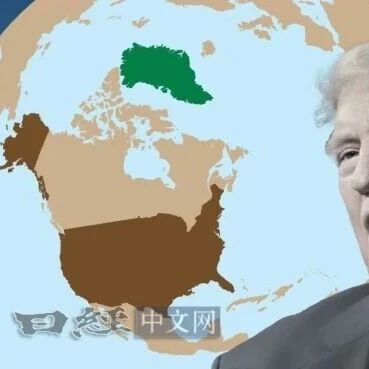
鼓动特朗普取得格陵兰的6个人
日经中文网· 2026-01-09 02:36
Group 1 - The initial idea of acquiring Greenland was not a priority for President Trump but became a strategic necessity due to the hardline stance against China [2] - Ronald Lauder, a friend of Trump and a significant supporter, proposed the acquisition as a political legacy, comparing it to the historic purchases of Louisiana and Alaska [3] - Senator Tom Cotton advocated for the acquisition to prevent Chinese influence in Greenland, emphasizing the need for the U.S. to act before China [3][4] Group 2 - Greenland is a geopolitical hotspot between the Arctic and North Atlantic, with a 40% increase in ship traffic over the past decade and the world's 8th largest rare earth reserves [5] - Cotton highlighted that acquiring Greenland would provide both geographical and economic benefits, which piqued Trump's interest in the purchase plan announced in August 2019 [5] - Following Denmark's refusal to sell Greenland, Trump canceled a state visit, further deepening the rift between the two nations [6]

加元偏强震荡政策原油成关键
Jin Tou Wang· 2026-01-09 02:25
Core Viewpoint - The USD/CAD exchange rate is expected to maintain a strong oscillating trend until January 9, 2026, influenced by the divergence in monetary policies between the US and Canada, changes in oil supply expectations, and differences in economic growth rates [1][2]. Monetary Policy Divergence - The divergence in monetary policy is the primary driver of the exchange rate. In 2025, the Federal Reserve cut rates by a total of 75 basis points, bringing the federal funds rate to a range of 3.5%-3.75% by year-end, with expectations of two more cuts in 2026. In contrast, the Bank of Canada was more aggressive, cutting rates by 100 basis points over four occasions, ending the year at 2.25%, with no further cuts expected before March 2026 [1][2]. Economic Growth Disparities - Economic growth differences and oil supply expectations exacerbate exchange rate volatility, creating a "policy support" versus "commodity suppression" dynamic. The OECD forecasts US GDP growth at 1.6% for 2025 and 1.5% for 2026, while Canada is projected to grow by 1% in 2025 and slightly increase to 1.1% in 2026. Both countries face slowing growth pressures, but Canada is more vulnerable due to its high dependency on US exports [2]. Oil Supply Sensitivity - The Canadian dollar, as a commodity currency, is highly sensitive to oil supply and demand dynamics. Recent signals from the US regarding the potential re-importation of Venezuelan oil have raised concerns about increased competition for Canadian oil demand, significantly suppressing the performance of the Canadian dollar [2]. Geopolitical and Global Risk Factors - Geopolitical issues and global risk sentiment are currently influencing exchange rate movements. Concerns over the return of Venezuelan oil have led to a risk-averse stance towards the Canadian dollar, providing temporary upward momentum for the USD/CAD exchange rate. However, the potential for further rate cuts by the Federal Reserve limits the upside for the dollar [2]. Outlook for 2026 - The USD/CAD exchange rate is likely to remain in a high oscillating trend, with three core variables influencing this outlook: uncertainty in the Federal Reserve's rate-cutting pace, changes in oil supply dynamics, and differences in the monetary policy paths of the US and Canada. Additionally, potential changes in the Federal Reserve chairmanship and reviews of the US-Mexico-Canada Agreement could trigger short-term volatility [3].
每人发10万美金,白宫购格陵兰岛方案流出
Xin Lang Cai Jing· 2026-01-09 01:15
特朗普政府正在以非常严肃的态度确定并入丹麦海外属地格陵兰岛。 据消息人士透露,白宫助理正在考虑向每个居民支付10万美元,一次性发放,作为说服他们脱离丹麦并可能加入美国计划的一部分。 另据央视新闻报道,特朗普本人在美东时间1月8日表示美国必须拥有整个格陵兰,而不仅仅是依据现有条约在当地行使军事和防务权利,所有权本身具有无 法通过租赁或条约获得的战略价值。 地广人稀的格陵兰岛蕴藏着全球近三分之一的稀土储量,以及175亿桶石油和4.15万亿立方米天然气。格陵兰岛拥有5.7万人口,以因纽特人为主,美国仅需 付出57亿美元。 另外从地缘优势上看,格陵兰岛扼守北大西洋与北冰洋的航道,是北约反潜作战体系的关键一环,一旦控制了格陵兰岛,美国就能制约其他大国在北极的扩 张。 美国和丹麦于1951年签署双边防务协议,美军得以名正言顺在格陵兰岛驻军。目前皮图菲克太空基地设有弹道导弹预警和卫星跟踪系统。但特朗普认为这种 安排不足以满足其战略需求。 据悉其他策略包括中情局策动格陵兰独立,以及绕过丹麦与格陵兰当局达成协议。美国官员曾讨论向格陵兰岛提供所谓"自由联系条约",允许美军在签约国 境内自由行动,并附带免税贸易等优惠条件。 丹麦、 ...

国际金融市场早知道:1月9日
Xin Hua Cai Jing· 2026-01-09 01:03
Group 1 - President Trump has ordered the purchase of $200 billion in mortgage-backed securities, aimed at reducing housing costs ahead of the midterm elections [1] - The Federal Reserve's interest rate is projected to decrease to 3.4% by the fourth quarter of 2026, according to the Congressional Budget Office [3] - The unemployment claims in the U.S. rose to 208,000, slightly below market expectations, remaining in a historically low range [2] Group 2 - The Bank of Japan maintained its economic assessment across all nine regions, with many companies indicating a need for significant wage increases in 2026 [4] - The CME Group has raised margin requirements for precious metals futures for the third time in a month, effective January 9 [5] - A survey by Goldman Sachs revealed that geopolitical factors have led institutional investors to hold the most pessimistic outlook on oil in nearly a decade [5] Group 3 - The Dow Jones Industrial Average increased by 270.03 points, closing at 49,266.11, a rise of 0.55% [6] - COMEX gold futures rose by 0.57% to $4,487.90 per ounce, while silver futures fell by 1.19% to $76.69 per ounce [6] - The U.S. 2-year Treasury yield rose by 1.86 basis points to 3.488% [6]

美国突袭委内瑞拉分析
2026-01-08 16:02
Summary of Key Points from the Conference Call Industry and Company Involved - The discussion primarily revolves around the **Venezuelan oil industry** and the geopolitical implications of **U.S. intervention in Venezuela**. Core Insights and Arguments - **U.S. Intervention Strategy**: The U.S. intervention in Venezuela has evolved from long-arm jurisdiction to direct regime change efforts, including support for opposition and military blockades, which have drawn international criticism [1][5]. - **Economic Ties with China**: Venezuela maintains close economic and political ties with China and other South American countries, with significant Chinese investments in oil and mining sectors [1][6]. - **Impact of Sanctions**: U.S. sanctions peaked during the Trump administration, severely impacting Venezuela's economy by prohibiting oil sales to the U.S. and targeting the Maduro regime [1][7]. - **Economic Challenges**: Venezuela's economy is heavily reliant on oil, facing challenges such as lack of diversification and severe inflation, despite having rich natural resources [1][10]. - **Military and Intelligence Operations**: The U.S. has conducted military operations and intelligence activities aimed at undermining the Maduro regime, including the training of special forces for targeted actions [1][9]. - **Oil Production Costs**: Venezuela has the largest oil reserves globally, but the high extraction costs of heavy oil limit its competitiveness in the global market [2][23]. - **Potential U.S. Control of Assets**: There are discussions about the U.S. potentially taking control of Venezuelan oil assets, which could pose risks to Chinese investments in the region [2][24]. - **Geopolitical Tensions**: The U.S. intervention has heightened geopolitical tensions in South America, particularly with countries like Colombia, which has a strategic alliance with the U.S. [1][6]. Other Important but Possibly Overlooked Content - **Historical Context**: The political landscape in Venezuela has shifted significantly since Hugo Chávez's presidency, with the nationalization of foreign oil assets paving the way for increased Chinese involvement in Latin America [3][6]. - **Future Scenarios**: If the U.S. supports a pro-right regime in Venezuela, it could lead to the repeal of oil laws from the Chávez era, allowing foreign investments and potentially increasing oil production significantly [23][24]. - **Regional Dynamics**: The relationship between Venezuela and other leftist governments in Latin America is complex, with varying degrees of cooperation and opposition to U.S. influence [14][29]. - **Inflation and Population Decline**: Venezuela has faced hyperinflation, with rates reaching as high as 1,000,000%, and a significant population decline from over 40 million to 28 million, indicating severe economic distress [32][10]. This summary encapsulates the critical points discussed in the conference call, highlighting the intricate dynamics of Venezuela's oil industry, U.S. intervention strategies, and the broader geopolitical landscape.
美股异动 | 军工股盘前集体大涨 诺斯罗普格鲁曼(NOC.US)涨近8%
Xin Lang Cai Jing· 2026-01-08 14:09
Group 1 - U.S. defense stocks saw a significant pre-market surge, with Northrop Grumman (NOC.US) rising nearly 8%, Lockheed Martin (LMT.US) over 6%, and Raytheon Technologies (RTX.US) over 3% [1] - President Trump proposed increasing the U.S. military budget for fiscal year 2027 from $1 trillion to $1.5 trillion, emphasizing the need for a stronger military amid current global tensions [1] - The geopolitical landscape is expected to dominate global affairs this year, with indications of U.S. military actions in Venezuela and potential military involvement regarding Greenland [1]


全球军工股齐飙:特朗普5000亿美元年增军费计划成最强催化剂
智通财经网· 2026-01-08 13:38
智通财经APP获悉,美国总统唐纳德·特朗普有意提出增加美国军事预算的计划,此举措正为全球国防 类股票注入全新活力。新的一年伊始,欧洲国防股表现格外强劲,种种迹象表明,今年全球局势似乎将 由地缘政治因素主导。 周四,高盛集团编制的一篮子欧洲国防股上涨了多达3.8%,本周涨幅扩大至约13%。在美国,诺斯罗普 ·格鲁曼(NOC.US)和洛克希德·马丁(LMT.US)在盘前交易中上涨超过8%,从前一天特朗普呼吁限制该行 业的高管薪酬和股东回报导致的下跌中反弹。 亚洲的国防股也有所上涨,其中包括韩国的韩华航空航天公司、中国台湾的航空工业发展公司以及日本 的防卫机械株式会社。 "地缘政治是2026年迄今无法回避的主题,"盛宝市场(Saxo Markets)英国投资策略师尼尔·威尔逊(Neil Wilson)表示。在欧洲,涨幅最大的公司包括英国的BAE系统公司。该公司近半数收入来自美国,其股 价涨幅高达7%。德国的重型装备制造商莱茵金属公司股价涨幅高达4.1%,达到去年10月以来的最高水 平。 "对资本回报的限制是一个渐进式的负面影响,但规模可控,"摩根士丹利分析师克里斯汀·利瓦格在一 份报告中表示。她还补充道,如果对股息 ...
特朗普宣布扩军计划 重燃全球军工行情
Ge Long Hui A P P· 2026-01-08 12:50
格隆汇1月8日|特朗普增加美国军事预算的计划,为全球国防股注入了新动力。在这一注定由地缘政治 主导的年份里,欧洲国防股的开局表现尤为强劲。高盛集团的一篮子欧洲国防股周四上涨多达3.8%, 使本周涨幅扩大至约13%。在美国,诺斯罗普·格鲁曼公司和洛克希德·马丁公司的股价在盘前交易中飙 升超过6%,从前一天的跌势中回升;此前特朗普曾呼吁限制该行业的行政薪酬和股东回报。亚洲国防 股亦录得上涨。Saxo Markets英国投资策略师Neil Wilson表示:"地缘政治是2026年迄今为止不可回避的 主题。"在欧洲,涨幅最大的是英国航空航天系统公司,该公司近一半的收入来自美国,其股价上涨多 达7%。德国防务巨头莱茵金属上涨多达4.1%,触及10月以来的最高水平。 ...