
风险偏好

Search documents
研究所晨会观点精萃-20251024
Dong Hai Qi Huo· 2025-10-24 02:38
Report Summary 1. Report Industry Investment Rating No relevant information provided. 2. Core Viewpoints of the Report - The upcoming China-US trade negotiations from October 24 - 27 have boosted market optimism. However, the new US sanctions on a Russian oil company have led to a sharp rise in oil prices, increasing inflation expectations, and causing the US dollar index and US Treasury yields to rebound. The domestic economy is growing faster, and the impending trade negotiations have lifted domestic market sentiment. The Fourth Plenary Session of the CPC Central Committee emphasized supply security, with manufacturing and technological self - reliance taking the lead, which is expected to enhance domestic risk appetite. The short - term macro - upward drive has strengthened, and attention should be paid to the progress of China - US trade negotiations and the implementation of domestic incremental policies [2]. - For assets, the stock index is expected to fluctuate in the short term, with a cautious long - position approach. Treasury bonds are also expected to fluctuate, and it is advisable to observe cautiously. In the commodity sector, black metals are expected to rebound with short - term fluctuations, and a cautious long - position is recommended; non - ferrous metals are expected to fluctuate, and a cautious long - position is also suggested; energy and chemicals are expected to rebound with short - term fluctuations, and a cautious long - position is appropriate; precious metals are experiencing a short - term correction at high levels, and it is advisable to observe cautiously [2]. 3. Summary by Relevant Catalogs 3.1 Macro - finance - **Macro - situation**: Overseas, the upcoming China - US trade negotiations have boosted global risk appetite, but US sanctions on a Russian oil company have increased inflation expectations. Domestically, the economy is growing faster, and the trade negotiations are expected to lift the domestic market. Policy - wise, the Fourth Plenary Session of the CPC Central Committee's stance is favorable for domestic risk appetite. The short - term macro - upward drive has strengthened, and attention should be paid to trade negotiation progress and domestic policy implementation [2]. - **Asset suggestions**: Stock index: short - term fluctuation, cautious long - position; Treasury bonds: short - term fluctuation, cautious observation; commodities - black metals: short - term rebound with fluctuation, cautious long - position; non - ferrous metals: short - term fluctuation, cautious long - position; energy and chemicals: short - term rebound with fluctuation, cautious long - position; precious metals: short - term high - level correction, cautious observation [2]. 3.2 Stock Index - The domestic stock market rose slightly driven by sectors such as coal, energy metals, and film and television theaters. The improving domestic economy and upcoming trade negotiations have boosted market sentiment. Policy support from the Fourth Plenary Session of the CPC Central Committee has enhanced risk appetite. The short - term macro - upward drive has strengthened, and it is advisable to take a cautious long - position in the short term [3]. 3.3 Precious Metals - The precious metals market rose on Thursday night. Geopolitical risks and anticipation of US inflation data drove the increase. Spot gold rose 0.76% to $4125 per ounce. In the short term, precious metals are expected to rebound with fluctuations, and the long - term upward trend remains unchanged. Short - term investors should reduce long - positions and observe, while long - term investors should buy on dips [3]. 3.4 Black Metals - **Steel**: On Thursday, the steel futures and spot markets rebounded to varying degrees, with low trading volumes. The upcoming China - US trade negotiations have maintained strong macro expectations. The real - world demand for steel has improved marginally, with a 27.41 - million - ton decrease in inventory and a 17.32 - million - ton increase in apparent consumption this week. Supply has increased slightly but is expected to decline due to compressed steel mill profits. The steel market has no clear trend, with limited upward and downward space in the short term [4]. - **Iron Ore**: On Thursday, iron ore futures and spot prices continued to rebound. Steel mill profits are compressed, leading to a three - week decline in pig iron production, and further decline is expected. Steel mills are mainly making just - in - time purchases. Global iron ore shipments increased by 126 million tons this week, while arrivals decreased by 526.4 million tons. The price difference between Carajas fines (Carajás) and PB fines has narrowed. Iron ore prices are expected to fluctuate within a range [6]. - **Silicon Manganese/Silicon Ferro - alloy**: On Thursday, the spot prices of silicon ferro - alloy and silicon manganese were stable, while the futures prices rebounded slightly. The production of five major steel products increased slightly, and the demand for ferro - alloys is currently stable. The开工 rate of silicon manganese enterprises increased, and the daily output rose. The prices of silicon ferro - alloy and silicon manganese are expected to continue to fluctuate within a range [7]. 3.5 Chemicals - **Soda Ash**: On Thursday, the main soda ash contract fluctuated within a range. Supply is in a capacity - expansion phase, with plans for new capacity in the fourth quarter, resulting in high supply and inventory. Although there are anti - involution policies, the industry lacks clear policy implementation. In the long term, supply - side contradictions will suppress prices, and a bearish outlook is maintained [8]. - **Glass**: On Thursday, the main glass contract fluctuated within a range. Glass production increased slightly, and the number of operating production lines remained stable. As the "Golden September and Silver October" season ends, downstream procurement has slowed down. With anti - involution policies providing some support, but limited demand growth, short - term range - bound trading is recommended [8]. 3.6 Non - ferrous Metals and New Energy - **Copper**: Overnight, LME copper reached its highest level since October 9. High US copper inventories may limit future imports. The suspension of Indonesia's second - largest copper mine has tightened the global copper supply, but it is a temporary situation, and next year is expected to be a year of increased copper supply. China's refined copper inventory reduction has been less than expected. Copper prices are expected to remain high and fluctuate [9]. - **Aluminum**: On Thursday, SHFE aluminum rose significantly due to a positive macro environment and a general increase in commodity prices. An overseas aluminum smelter's accident has a limited impact on production. China's aluminum fundamentals are weak, with slow inventory reduction. However, market expectations are positive, and short - selling should be cautious [10]. - **Tin**: On the supply side, Indonesia's actions have tightened the global tin supply in the short term, and the mining approval cycle adjustment has added uncertainty. The smelting start - up rate has recovered. On the demand side, the start - up rate of tin solder is low, and demand in traditional and emerging industries is weak. High tin prices have suppressed consumption, but inventory has decreased due to some downstream replenishment. Tin prices are expected to remain high and fluctuate [11]. - **Lithium Carbonate**: On Thursday, the main lithium carbonate contract rose 4.17%. The market is experiencing both increased supply and demand, with strong seasonal demand and continuous inventory reduction. The market is strengthening with fluctuations, and attention should be paid to the upper pressure zone [12]. - **Industrial Silicon**: On Thursday, the main industrial silicon contract rose 2.72%. Production reached a new high, but there has been no inventory accumulation during the wet season. The market is expected to fluctuate within a range, and attention should be paid to the cash - flow cost support of large enterprises [12]. - **Polysilicon**: On Thursday, the main polysilicon contract rose 1.07%. The market is facing high supply and low demand. Expectations of policies such as state purchases are awaited, and attention should be paid to spot price support [13][14]. 3.7 Agricultural Products - **US Soybeans**: The CBOT soybeans rose overnight. Brazil's soybean sowing is progressing smoothly, and Argentina's weather conditions are favorable. The market is expected to remain stable with narrow fluctuations, and attention should be paid to China - US soybean trade developments [15]. - **Soybean and Rapeseed Meal**: The oil mill operating rate is high, and there is a widespread phenomenon of hastening the delivery of soybean meal. Oil mills are facing losses, increasing their willingness to support prices. There is a potential supply gap in the domestic market before the arrival of South American new soybeans next year. After a sharp decline, soybean meal is expected to stabilize with fluctuations. Rapeseed meal is in a state of balanced supply and demand, and its price is mainly influenced by soybean meal [15]. - **Soybean and Rapeseed Oil**: The short - term prices of soybean and rapeseed oil may be dragged down by palm oil. Soybean oil is in the peak season, but trading volume has not changed significantly. Palm oil is weak due to increased production in Malaysia. The price difference between soybean oil and palm oil is expected to continue to adjust. Rapeseed oil is supported by inventory reduction before new supplies arrive [16]. - **Palm Oil**: Malaysia's palm oil production has increased in October, and China's palm oil inventory has increased due to concentrated arrivals. MPOC expects palm oil prices to remain stable above 4400 ringgit per ton for the rest of 2025 [16]. - **Corn**: The price of corn in the Northeast region is stable. The China - US trade negotiations have an impact on the market, and traders' willingness to build inventories is relatively low. The price is approaching the cost of production, and farmers may be more reluctant to sell as the weather cools. The buying sentiment in the futures market has increased [17]. - **Hogs**: The price of hogs in the north has risen, increasing the cost of secondary fattening and reducing the enthusiasm of secondary fatteners. The breeding industry is facing losses, and the supply peak has not yet arrived. The price is expected to remain weak before the winter solstice consumption peak. The LH2601 futures contract is expected to fluctuate weakly [17].
金荣中国:黄金大跳后预显多头机会
Sou Hu Cai Jing· 2025-10-22 04:35
Group 1 - The core viewpoint indicates that gold prices are experiencing a downward trend due to technical selling pressure and optimistic expectations regarding the US-China trade negotiations and the potential end of the US government shutdown [1][3] - The market is expected to remain weak until the government shutdown is resolved, with a focus on trade conditions and interest rate expectations [3] - Historical context suggests that optimistic sentiments regarding trade are often temporary, and the end of the government shutdown may lead to concerns about economic data deterioration and increased expectations for interest rate cuts, which could ultimately support gold prices [3] Group 2 - The daily chart shows a significant drop in gold prices, falling below the 5-10 day moving averages, indicating strengthened bearish momentum [3] - Despite the current downward trend, there are indications of potential support at the Bollinger Band middle line and the 30-day moving average, suggesting a possible opportunity for bullish entry near these support levels [3] - The market is expected to experience a period of consolidation and adjustment, with a bullish outlook remaining intact, particularly if prices dip below the 4000 threshold [3]


黄金跌超5%!道指创历史新高
Zhong Guo Zheng Quan Bao· 2025-10-21 23:22
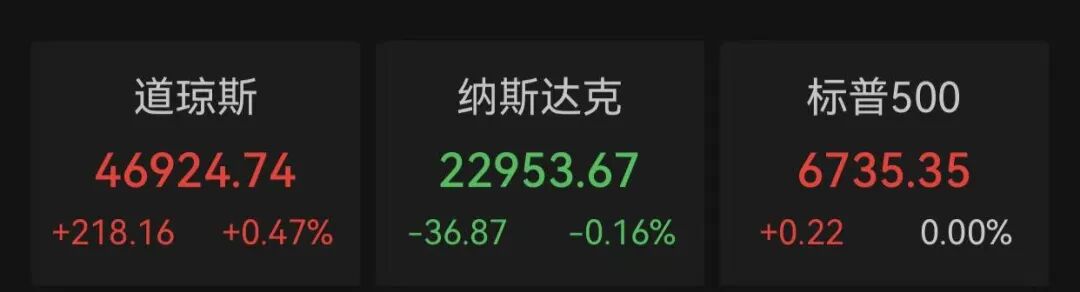
热门中概股涨跌不一,纳斯达克中国金龙指数下跌0.97%,好未来涨逾6%,哔哩哔哩涨逾5%。 当地时间10月21日,美股市场三大指数涨跌不一,道琼斯工业指数上涨0.47%,创历史新高,纳斯达克指数小幅下跌,标普500指数接近收平。大型科技 股涨跌不一,亚马逊涨逾2%,英伟达跌近1%。 大宗商品方面,现货黄金价格跌逾5%,盘中一度跌破4100美元/盎司,现货白银大跌7.11%,国际原油价格上涨。 美股三大指数涨跌不一 当地时间10月21日,美股三大指数涨跌不一,截至收盘,道琼斯工业指数上涨0.47%,创历史新高,纳斯达克指数下跌0.16%,标普500指数上涨0.22点。 大型科技股涨跌不一,Wind美国科技七巨头指数下跌0.21%,亚马逊上涨2.56%,英伟达下跌0.81%。 银行股普遍下跌,摩根大通下跌1.74%,高盛集团下跌0.54%,花旗集团下跌1.06%。 黄金股全线大跌,盎格鲁黄金下跌11.38%,金罗斯黄金下跌11.05%,哈莫尼黄金下跌11.04%。 独立金属交易商Tai Wong表示:"过去一周黄金波动性上升显示谨慎情绪增多,部分投资者短期获利了结。" Kitco Metals高级分析师Jim W ...
研究所晨会观点精萃-20251021
Dong Hai Qi Huo· 2025-10-21 01:03
Macroeconomic and Financial Analysis - Market concerns about trade tensions have eased, leading to an overall increase in global risk appetite. Domestically, economic growth has accelerated, and the softening of the US President's trade stance, along with the introduction of multiple industry stability - growth plans, has boosted domestic risk appetite. The short - term upward macro - drive has strengthened, and attention should be paid to the progress of Sino - US trade negotiations and the implementation of domestic incremental policies [2]. - For assets: The stock index is expected to fluctuate in the short term, and it is advisable to be cautiously bullish. Treasury bonds are expected to fluctuate in the short term, and it is advisable to wait and see. In the commodity sector, the black metal market is expected to fluctuate in the short term, and it is advisable to wait and see; the non - ferrous metal market is expected to fluctuate in the short term, and it is advisable to be cautiously bullish; the energy and chemical market is expected to fluctuate in the short term, and it is advisable to wait and see; precious metals are expected to fluctuate strongly at a high level in the short term, and it is advisable to be bullish [2]. Stock Index - Driven by sectors such as coal and gas, airport shipping, and consumer electronics, the domestic stock market has risen. The acceleration of domestic economic growth, the softening of the US President's trade stance, and the introduction of multiple industry stability - growth plans have boosted domestic risk appetite. The short - term upward macro - drive has strengthened, and attention should be paid to the progress of Sino - US trade negotiations and the implementation of domestic incremental policies. It is advisable to be cautiously bullish in the short term [3]. Precious Metals - The precious metals market declined on Monday. The main contract of Shanghai Gold closed at 970.32 yuan/gram, down 1.63%; the main contract of Shanghai Silver closed at 11742 yuan/kilogram, down 3.99%. Spot gold broke through the record high of last Friday, driven by the expectation of further US interest rate cuts and continuous hedging demand. It is expected to fluctuate strongly at a high level in the short term, and the medium - to - long - term upward trend remains unchanged. It is advisable for short - term bulls to continue holding or reducing positions on rallies, and to buy on dips in the medium - to - long - term [3]. Black Metals Steel - On Monday, the domestic steel market continued to be weak, and market trading volume remained low. The overall economic downward pressure is still large, and market risk - aversion sentiment has increased. The real demand for steel is still weak, but it improved slightly last week. The inventory of five major steel products decreased by 18.46 tons week - on - week, and apparent consumption increased by 139 tons. Supply is likely to decline further as steel mill profits narrow. There is no trending market in the steel market, with upward movement restricted by the supply - demand pattern and downward movement supported by costs. In the short term, the upward and downward space is limited [4]. Iron Ore - On Monday, the spot and futures prices of iron ore both weakened. The molten iron output has been declining for three consecutive weeks but remains at a high level of 240 tons. The logic of compressed steel mill profits continues, and molten iron output is expected to decline further. Steel mill raw material replenishment has temporarily ended. Global iron ore shipments increased by 126 tons this week, while arrivals decreased by 526.4 tons week - on - week. Port inventory increased by 253.77 tons last week. It is advisable to take a bearish view on iron ore prices in the later stage [5]. Silicon Manganese/Silicon Iron - On Monday, the spot and futures prices of silicon manganese and silicon iron rebounded slightly. The output of five major steel products has declined for two consecutive weeks, reducing the demand for ferroalloys. The price of silicon manganese 6517 in the northern market is 5600 - 5650 yuan/ton, and in the southern market is 5650 - 5700 yuan/ton. Manganese ore prices continue to be weak. The national capacity utilization rate of silicon manganese increased slightly, and daily output increased. The price of 72 - grade silicon iron in the main production area is 5100 - 5200 yuan/ton, and 75 - grade is 5800 - 6100 yuan/ton. The price of 75B silicon iron tendered by Hebei Steel in October decreased compared with the previous round. The silicon iron and silicon manganese futures prices are expected to continue to fluctuate within a range [6]. Soda Ash - On Monday, the main contract of soda ash was weak. Supply is in the capacity - release period, with plans for capacity release in the fourth quarter, maintaining a loose supply pattern. Although the anti - involution policy is clear, there is no clear industry document yet, and the price is dragged down by supply - side contradictions in the medium - to - long - term. It is advisable to take a bearish view in the medium - to - long - term [7]. Glass - On Monday, the main contract of glass fluctuated weakly. Glass production increased slightly, and the number of production lines remained stable. As the "Golden September and Silver October" period ends, downstream procurement has slowed down. Although there is some policy support, overall demand is difficult to increase significantly. It is advisable to conduct short - term range operations [7]. Non - Ferrous Metals and New Energy Copper - The US dollar declined last week due to dovish remarks from Powell, increased expectations of Fed rate cuts, and the alleviation of fiscal risk concerns in Japan and France. The suspension of Indonesia's second - largest copper mine has exacerbated the global copper shortage, supporting futures prices. However, the suspension is temporary, and production will resume in the middle of next year. Next year is a year of high copper supply, with an expected output growth rate of 5% (optimistic estimate) or 3% (neutral estimate), and the growth rate will fall below 2% after 2027. There is also a risk of the Panama copper mine restarting. Domestic refined copper de - stocking is less than expected, and social inventory is at a relatively high level. Domestic electrolytic copper production remains high, and demand is facing challenges. US copper inventory is high, restricting future import demand. Copper prices are expected to remain high and fluctuate [8]. Aluminum - On Monday, Shanghai aluminum fluctuated narrowly. The outer market is stronger than the inner market, resulting in a low internal - external price difference, which supports the inner market. Domestic aluminum fundamentals are not good, with slow de - stocking of social inventory and high aluminum rod inventory. London aluminum inventory has decreased recently, and overseas demand is not good. If institutions continue to withdraw aluminum from LME warehouses, it will support aluminum prices. Aluminum prices are expected to fluctuate within a range in the short term [9]. Tin - On the supply side, Indonesia has transferred six previously seized tin smelters to a state - owned enterprise, which plans to increase refined tin output. However, the crackdown on illegal tin mining and the adjustment of the mining approval cycle have exacerbated the global tin shortage in the short term. After the maintenance of large - scale smelters in Yunnan ended, the smelting start - up rate returned to over 50%. On the demand side, the start - up rate of tin solder remains low, and the improvement in downstream and terminal orders is limited. Traditional industries such as consumer electronics and home appliances have weak demand, and photovoltaic demand has declined. Tin prices are at a historical high, which suppresses physical demand. Weekly inventory decreased by 769 tons to 7017 tons. Tin prices are expected to remain high and fluctuate [10]. Lithium Carbonate - On Monday, the main contract of lithium carbonate rose 0.05%. The current supply and demand of lithium carbonate are both increasing, with strong demand in the peak season and continuous de - stocking of social inventory. The fundamentals are improving marginally, and the downward space is limited. The market is expected to fluctuate strongly, and attention should be paid to the upper pressure range [11]. Industrial Silicon - On Monday, the main contract of industrial silicon rose 0.88%. Weekly production reached a new high, but there was no inventory accumulation during the wet season. Attention should be paid to the resumption of production in the north. The 2511 contract faces the pressure of digesting warehouse receipts. The market is expected to fluctuate within a range, and attention should be paid to the cash - flow cost support of large manufacturers [11]. Polysilicon - On Monday, the main contract of polysilicon fell 3.66%. The number of warehouse receipts is increasing, and there will be concentrated cancellations in November, bringing selling pressure. The current situation of high supply and low demand continues. Attention should be paid to the implementation of storage purchase news and the support of spot prices [12][13]. Energy and Chemicals Crude Oil - Against the background of the easing of Sino - US tensions, oil prices declined slightly. The long - expected supply surplus is gradually emerging, and the tanker carrying capacity has reached a recent high. Oil prices will continue to test the lower support in the near future [14]. Asphalt - As oil prices continue to test the lower support, asphalt also has the risk of breaking through the support level. The basis remains low, and the actual shipping volume is low. The pressure of factory inventory accumulation continues, and social inventory is being depleted in the East China region. Profits have recovered slightly, and production has increased significantly, leading to an increase in supply pressure. In the later stage, oil prices will be affected by OPEC+ production increases, and asphalt may face challenges due to increased inventory pressure. Attention should be paid to the support of crude oil costs [14]. PX - Due to the continuous decline of crude oil prices and weak polyester demand, PX prices have followed the downward trend. Although the high start - up rate of PTA provides some demand support, PX is expected to continue to fluctuate weakly in October due to the overall decline of the polyester sector [14]. PTA - Driven by the decline of crude oil prices, the overall energy and chemical sector has declined. Downstream start - up rates are low, orders are scarce, and terminal start - up rates are below the historical average. PTA processing fees have declined, and port and factory inventories are accumulating. The basis has decreased, and short - term trading should focus on short - selling on rallies [15]. Ethylene Glycol - After breaking through the previous low, the port inventory of ethylene glycol has rebounded. With the expectation of new production capacity coming on - stream, ethylene glycol prices will remain low. Downstream start - up rates are weak, and both overseas and domestic demand are sluggish. In October, inventory will continue to accumulate, and prices will remain low. If oil prices continue to decline, there is still a risk of further decline [15]. Short - Fiber - Short - fiber has adjusted following the polyester sector and is expected to continue to fluctuate weakly in the near future. Terminal orders have increased seasonally but with limited amplitude. The increase in short - fiber start - up rates has led to limited inventory accumulation. Further inventory depletion depends on the continuous improvement of terminal orders. In the medium - term, short - selling on rallies may be considered [15]. Methanol - This week, methanol supply has decreased in the short term, and olefin demand remains high, leading to a slight reduction in inventory and an improvement in the short - term supply - demand structure. However, traditional downstream demand is weak, and there are plans for many plants to restart, increasing supply pressure. High inventory and external factors such as tariff upgrades restrict price increases. Methanol prices are expected to fluctuate in the short term [16]. PP - The supply growth rate of the PP market continues to be higher than demand, and inventory levels are high, putting pressure on the market. The decline of crude oil prices has weakened cost support, expanding the downward price space. Attention should be paid to the recovery of downstream demand [17]. LLDPE - This week, the supply of polyethylene has increased, and inventory has accumulated significantly, suppressing prices. Demand is divided, with the start - up rate and orders of agricultural film improving, but the overall downstream start - up rate is still slow to increase. The decline of crude oil prices has weakened cost support, and the polyethylene market will be under pressure in the short term [17]. Urea - The daily output of urea is between 18.1 - 19.1 tons. Industrial procurement is stable, and agricultural demand is recovering after rainfall. Exports are shrinking after the window period closes. The market is cautious, and purchases are mainly made at low prices. The short - term market may be stable after a period of stalemate, but there is still a risk of decline in the later stage [17]. Agricultural Products US Soybeans - The release of USDA reports has been postponed, and concerns about Sino - US soybean trade continue, making the export prospects of US soybeans unclear. However, domestic crushing consumption provides some support. The new - season harvest situation of US soybeans is unknown. The sowing of Brazilian soybeans is progressing smoothly, and the weather conditions in the core production areas of Argentina are good. The CBOT soybean market is expected to remain stable with narrow fluctuations. Attention should be paid to the dynamics of Sino - US soybean trade [18]. Soybean and Rapeseed Meal - Domestic downstream phased replenishment has increased, and soybean meal inventory has decreased significantly. As of October 17, 2025, soybean inventory in major oil mills increased slightly week - on - week and significantly year - on - year, while soybean meal inventory decreased week - on - week and increased year - on - year. Apparent consumption of soybean meal increased significantly. Currently, oil mill profits are generally in the red, increasing their willingness to support spot prices. Although the expected arrival of soybeans in the fourth quarter is sufficient, there may be a supply gap before the new - season South American soybeans are available in the first quarter of next year. After the short - term over - decline, soybean meal prices are expected to stabilize and fluctuate. Rapeseed meal supply is tight due to low factory start - up rates, and the market is in a state of weak supply and demand, with inventory decreasing slightly [19]. Soybean and Rapeseed Oil - Soybean oil has entered the peak season, but trading volume has not changed significantly. The inverted price difference between domestic and foreign soybean and palm oil provides some consumption expectations. The basis of first - grade soybean oil in Zhangjiagang has increased. For rapeseed oil, before the supply of Australian rapeseed and direct imports of Russian oil increases, the de - stocking market supports the stability of the spot basis. As of October 17, 2025, soybean oil commercial inventory decreased week - on - week and increased year - on - year, while rapeseed oil inventory decreased [20]. Palm Oil - A large amount of palm oil arrived in China last week, and the arrival is concentrated recently, leading to an increase in commercial inventory. Malaysian palm oil exports have increased at a slower rate. As of October 17, 2025, domestic palm oil commercial inventory increased week - on - week and year - on - year [20][21]. Corn - The bumper harvest of corn in the Northeast and North China has come onto the market. The harvest weather is not conducive to storage, and farmers are eager to sell due to profitable prices, causing a significant seasonal impact on the market. Currently, corn trading at the grassroots level and ports is light, and the willingness of channels and downstream feed mills to build long - term inventories is still weak. However, the current price is close to the planting cost, and high - quality corn is in short supply. As the temperature drops, farmers may be more reluctant to sell, which will slow down the price decline [21]. Pigs - After the festival, the process of reducing production and inventory has accelerated, and pig prices have fallen to a new low this year, resulting in widespread losses in breeding profits. Recently, the price difference between fat and lean pigs and some regional restocking have supported the market, increasing the reluctance of small - scale farmers to sell and pressuring the market. Large - scale farms plan to increase the pace of slaughter, but supply is expected to decrease in late October, which will stabilize the extreme downward risk of pig prices. The far - month futures are slightly at a premium. Unless there is a significant increase in demand beyond the seasonal norm, it is difficult for pig prices to recover significantly. Attention should be paid to the impact of extreme weather on pig farming in North China this year [22].
金价波动,“上车即站岗”?投资者心态分化
Di Yi Cai Jing· 2025-10-20 14:30
Core Viewpoint - After a nine-week rally, gold prices experienced a significant drop, with international market prices falling by $152 per ounce, leading to a decline in domestic gold prices as well [1][2] Market Dynamics - The recent decline in gold prices is attributed to easing trade tensions and a recovery in global risk appetite, prompting investors to withdraw from safe-haven assets like gold and silver [2] - The adjustment in margin requirements for silver and gold futures by exchanges has forced some long positions to reduce their holdings, contributing to the price drop [2][3] Investor Sentiment - There is a divide in investor sentiment, with some taking profits after the recent surge while others view the price drop as an opportunity to buy [5][6] - Long-term investors continue to accumulate gold, as evidenced by increased holdings in ETFs, despite short-term volatility [8] Supply and Demand Factors - Recent data shows a tightening of gold and silver inventories, with significant outflows from COMEX silver and increases in SPDR gold ETF holdings [8] - The World Gold Council noted that central banks have shown a tendency to buy on dips, indicating ongoing support for gold prices despite short-term fluctuations [8] Risk Management - Exchanges and banks have issued warnings regarding market volatility, advising investors to manage their positions carefully amid the current uncertainty [9][10]
下降逾45%!公募新基金发行环比降温
Guo Ji Jin Rong Bao· 2025-10-20 14:23
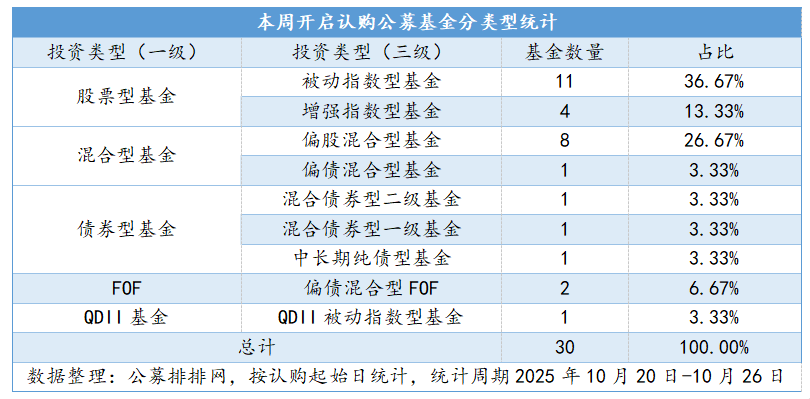
Core Viewpoint - The public fund market is experiencing a significant decrease in new fund subscriptions, with a 45.45% week-on-week decline in the number of funds available for subscription from October 20 to October 26, 2023, and an average subscription period extended to 27.8 days [1]. Fund Type Analysis - A total of 30 public funds are open for subscription this week, with 23 of them being equity funds, accounting for 76.67% of the total [2][3]. - Among the equity funds, passive index funds are particularly popular, with 11 out of 15 stock-type funds being passive index funds, representing 73.33% of the stock-type total [3]. - The bond fund issuance remains stable, with 3 new bond funds opening for subscription this week, maintaining the same level as the previous week [3]. - QDII (Qualified Domestic Institutional Investor) funds have seen a slight recovery, with 1 new QDII fund opening for subscription this week, compared to none the previous week [3]. Institutional Participation - This week, 27 public fund institutions have new funds available for subscription, with 24 institutions offering only 1 new fund each, while 3 institutions have 2 new funds [3]. - Notably, Huatai-PineBridge Fund and Harvest Fund each launched 2 new funds, with a mix of mixed and stock-type funds [3]. Market Sentiment and Strategy - The overall issuance of public products has cooled down, attributed to two main factors: market sentiment pressure due to high previous gains in the technology growth sector and a stable issuance strategy from public funds [3]. - Investors are showing concerns about the sustainability of earnings, leading to a contraction in risk appetite, which has resulted in fewer new products being launched and longer fundraising periods [3].
存款搬家暂缓了吗?
Soochow Securities· 2025-10-19 03:02
Core Insights - The report argues that the recent market uptrend since June is not primarily driven by "residential deposit migration," but rather by an improvement in risk appetite and a shift in earnings expectations [1] - It highlights several misconceptions regarding the migration of residential deposits and emphasizes that the changes in non-bank deposits are more of a consequence than a cause of market movements [1] Misconceptions about Residential Deposit Migration - The decline in wealth management yields due to lower risk-free rates has not significantly prompted residents to shift towards other asset types; instead, they have increased their allocation to medium-term wealth management products [2] - Historical data shows that high growth in non-bank deposits typically corresponds with a booming equity market, while recent trends indicate that new residential deposits have not fluctuated significantly [2] - The report notes that periods of significant residential market entry often coincide with overheated market sentiment, suggesting that such behavior may lead to market tops rather than sustained growth [2] Market Drivers - The primary drivers of the market are identified as changes in narrative, improved risk appetite, and enhanced earnings expectations, with liquidity playing a secondary role [3] - The report utilizes a DDM model to illustrate that since September of the previous year, market gains have been predominantly attributed to improved risk appetite, followed by earnings expectations, while the impact of reduced risk-free rates has been minimal [3] Market Trading Logic - The report indicates a shift in market trading logic from valuation-driven to a "Davis Double Play" approach, where performance is increasingly guided by earnings rather than just valuations [3] - It notes that the strong performance of the overseas computing sector has significantly influenced the domestic market, particularly in the technology and innovation sectors [3] Earnings Recovery Indicators - Two leading indicators suggest that corporate earnings may have bottomed out: credit expansion typically precedes earnings recovery by about nine months, with a turning point expected in November [4] - Additionally, the growth rate difference between corporate and residential deposits serves as an economic activity indicator, with a turning point anticipated around August [4] Current Trading Risks - The report identifies three key trading risks: a decline in financing, high valuations, and geopolitical risks, which have contributed to increased market volatility since September [5] - It emphasizes the need for risk control in the current environment, despite the presence of potential opportunities in various sectors [5] Sector Focus - The report suggests focusing on hard technology sectors, particularly those related to overseas computing and chip manufacturing, which are expected to benefit from increased demand and narrative-driven growth [5] - Specific areas of interest include innovative pharmaceuticals entering commercial phases, AI applications in media and internet sectors, and consumer electronics transitioning into new cycles [5]
中信证券:经济周期回升的预期才是今年大类资产定价的最重要主线
Zheng Quan Shi Bao Wang· 2025-10-18 01:30
Core Viewpoint - The report from CITIC Securities suggests that the expectation of an economic cycle recovery is the most important theme for asset pricing this year, despite various influencing factors such as liquidity, regulatory policies, monetary policies, and risk appetite [1] Group 1: Economic Cycle Indicators - The resistance to the recovery of the economic cycle is diminishing, as indicated by leading indicators [1] - The slope of fundamental changes may be more critical for short-term asset performance [1] Group 2: Policy and Liquidity - The characteristics of short-term policies include a high utilization rate of effective fiscal policies, while incremental policies may focus on small-scale policy financial tools and loose monetary policies [1] - There is a risk of slowing M1 expansion, which may affect the willingness of active funds to enter the market [1]

【笔记20251017— 川普徒手画K线的一周】
债券笔记· 2025-10-17 14:40
Core Viewpoint - The article discusses the dynamics of supply and demand in financial markets, emphasizing that price fluctuations serve as tests for both demand and supply [1]. Group 1: Market Conditions - The funding environment is described as balanced and slightly loose, with a notable decline in long-term bond yields [3]. - The central bank conducted a 7-day reverse repurchase operation of 164.8 billion yuan, with 409 billion yuan maturing, resulting in a net withdrawal of 244.2 billion yuan [3]. - The overnight funding rates are stable, with DR001 around 1.32% and DR007 at approximately 1.41% [3]. Group 2: Credit Market Concerns - Concerns in the U.S. credit market have suppressed risk appetite, leading to a significant drop in the stock market, with rates declining noticeably [5]. - Issues related to U.S. bank loans have raised market fears, causing risk assets to decline while gold prices surged [5]. - The 10-year government bond yield opened at 1.75% and dipped to 1.743% during trading, reflecting a downward trend in interest rates [5]. Group 3: Market Performance - The stock market experienced dramatic fluctuations, with investors who sold at 3800 points facing those who bought at 3930 points, highlighting the volatility [5]. - The gold price approached 4400 USD, while the domestic stock market fell below 3900 points, indicating a shift in investment preferences [5]. - The article notes that the performance of the A-share market is being compared to gold, suggesting a potential trend reversal [5].
程实:货币政策跨境传导的美元渠道︱实话世经
Di Yi Cai Jing· 2025-10-13 12:41
Core Insights - The article emphasizes the importance of the dollar channel as a significant mechanism for the cross-border transmission of monetary policy, highlighting its role in influencing global financial stability and the challenges it poses for central banks [1][6]. Group 1: Limitations of Traditional Monetary Policy Transmission - Traditional theories of monetary policy spillover effects focus on interest rate differentials and trade competitiveness, but these channels are increasingly inadequate in explaining real-world capital flows [2][3]. - The interest rate differential can indicate the direction of capital flows but fails to capture their scale and volatility, as investor behavior is also influenced by risk preferences and market sentiment [2]. - The trade competitiveness channel is limited in a dollar-dominated global trade system, where exchange rate fluctuations do not effectively translate into trade price adjustments [3]. Group 2: Impact of Dollar Appreciation on Financing Costs - Dollar appreciation leads to increased financing costs for U.S. companies, particularly in the leveraged loan market, which is sensitive to changes in risk appetite [4][5]. - A 1% appreciation of the dollar results in an increase of 6-7 basis points in leveraged loan spreads, which can rise to approximately 13.8 basis points when controlling for the Eurozone yield curve [4]. - Higher-risk loans exhibit greater sensitivity to dollar fluctuations, with spreads increasing significantly more than lower-risk loans during dollar appreciation [5]. Group 3: Dollar Channel's Role in Global Monetary Policy and Risk Cycles - The dollar channel serves as both a conduit for policy transmission and an amplifier of risk cycles, potentially limiting the independence of U.S. monetary policy [6]. - Dollar fluctuations create a self-reinforcing cycle between risk sentiment and financing conditions, exacerbating the pro-cyclical nature of the financial system [6]. - The dynamics of a strong or weak dollar complicate policy decisions for central banks, necessitating a careful balance between domestic monetary policy effects and external spillover impacts [7].