
地缘政治

Search documents
美军战机接近,委内瑞拉国防部长:“战争即将来临!”
Yang Shi Wang· 2025-11-30 11:32
近期,美国以"缉毒"为由,在委内瑞拉附近加勒比海域部署多艘军舰,对委施压。9月初以来,美军已在加勒比海和东太平洋击沉超过20艘美方指称 的"贩毒船",造成80余人死亡。美国缉毒署近年报告则显示,委内瑞拉并非流入美国的毒品主要来源地。委内瑞拉政府多次指责美国意图通过军事威胁在 委策动政权更迭,并在拉美进行军事扩张。 委国防部长:"战争即将来临!" 当地时间11月29日,委内瑞拉外交部发布公告,强烈谴责美国企图侵犯其领空主权的殖民主义威胁,此举构成对委内瑞拉人民的新一轮荒谬、非法且 毫无理由的侵略。美国这一言论企图将美国司法管辖权非法越境施加于委内瑞拉,对委内瑞拉领空使用"发号施令",并威胁委内瑞拉国家主权和领土完 整。 当地时间11月29日,委内瑞拉副总统罗德里格斯表示,总统马杜罗已下令启动一项特别计划,协助滞留在境外的委内瑞拉公民回国,并为需要离境的 人员提供便利。委内瑞拉政府已依据国际法,启动所有多边机制,要求立即停止这一非法且不合法的行为。 委内瑞拉国防部长洛佩斯与军事指挥官举行保卫国家军事会议,洛佩斯表示:"战争即将来临!"他表示,将动用所有空海资源进行演习,保卫国家。 美国总统特朗普27日称,美国可能 ...


金价一涨再涨,投资者什么时候可以进场抄底,2026年黄金还会再涨吗?
Sou Hu Cai Jing· 2025-11-30 01:48
Core Viewpoint - The gold market is experiencing a significant bull run, with prices reaching historical highs due to geopolitical tensions, monetary policy changes, and central bank purchases, leading to widespread public interest in gold as a safe-haven asset [1][3][9]. Group 1: Price Trends and Historical Context - Gold prices have surged from approximately $2,600 per ounce at the beginning of the year to over $4,100 per ounce, marking a nearly 58% increase within a year [1]. - In 2024, international gold prices set 40 historical highs, indicating a rare and robust bull market not seen in many years [1][3]. - Predictions for 2026 suggest that gold prices may continue to rise, with estimates from major financial institutions indicating potential prices exceeding $5,000 per ounce [8][9]. Group 2: Factors Driving Gold Prices - Geopolitical instability, including issues in the Middle East and the Russia-Ukraine conflict, has led investors to view gold as a safe-haven asset, increasing demand and driving prices higher [3]. - The Federal Reserve's shift to a rate-cutting cycle has attracted funds to gold, as lower interest rates diminish the opportunity cost of holding non-yielding assets like gold [3][9]. - Central banks globally have significantly increased their gold purchases, with a reported net purchase of 220 tons in Q3 2025, a 28% increase from the previous quarter, indicating strong institutional support for gold [3][9]. Group 3: Investment Considerations - Current gold prices are at a high level, with fluctuations observed, such as a recent drop from $4,150 to $4,090 within two days, suggesting potential volatility for investors [4][5]. - Historical patterns indicate that after rapid price increases, a correction phase typically follows, which may present buying opportunities for investors [5][10]. - The domestic market shows a divergence in pricing, with brand gold jewelry often priced 20% to 25% higher than international market rates, suggesting that investors may benefit from considering investment-grade gold products like ETFs instead of high-premium jewelry [6][10]. Group 4: Consumer Behavior and Market Dynamics - Consumer demand for gold jewelry in China has decreased by 32.5% year-on-year in the first three quarters, indicating that high prices may be deterring purchases [8]. - Investors are advised to prepare for potential short-term volatility and to consider a phased investment approach to mitigate risks associated with market entry at high prices [8][11]. - The long-term appeal of gold as a hedge against inflation and economic uncertainty remains strong, despite potential challenges from high prices and fluctuating dollar strength [9][13].

匈牙利为俄能源将起诉欧盟,美国暗中撑腰,西方阵营分裂加速
Sou Hu Cai Jing· 2025-11-29 08:47
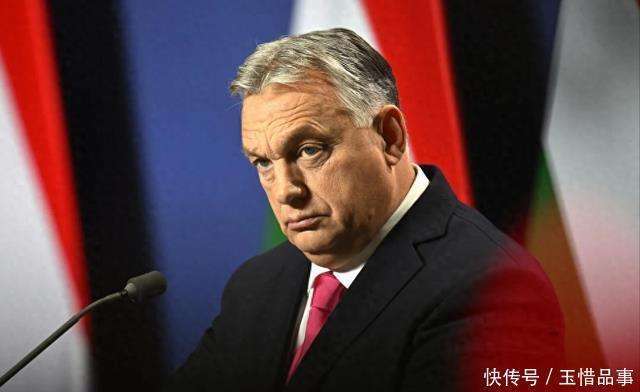
"我们坚决不接受这一明显非法,且与欧洲价值观相违背的解决方案。"匈牙利总理欧尔班在14日接受国 家广播电台采访时,直言不讳地表达了他的立场。他宣布,匈牙利政府将向欧洲法院提出诉讼,挑战欧 盟决定逐步停止从俄罗斯进口天然气的决议。欧尔班的讲话揭示了欧盟在俄罗斯能源问题上的深刻分 歧。这位亲俄的领导人所在国家严重依赖俄罗斯的能源供应,而现在匈牙利正准备通过法律手段对抗欧 盟委员会的这一决定。 在每周的例行采访中,欧尔班毫不掩饰自己对欧盟决定的不满。"布鲁塞尔选择这一方案,实际上是为 了压制那些与他们意见不合的国家政府,"他对匈牙利听众表示。法律争议的焦点主要集中在决策程序 上。欧尔班指出:"这已经不再是制裁,而是一个贸易政策措施。制裁需要欧盟成员国一致同意(通过 投票表决),而贸易政策则只需获得多数票就能通过。"上个月,欧盟各国同意到2027年底前逐步停止 从俄罗斯进口剩余的天然气。根据外交官透露,所有欧盟成员国都支持这一决定,除了匈牙利和斯洛伐 克。欧盟于2025年10月下旬批准的第19轮对俄制裁明确规定,禁止俄液化天然气进入欧洲市场,这使得 匈牙利这个内陆国家面临了巨大的能源供应压力。 对于匈牙利来说,俄罗斯 ...
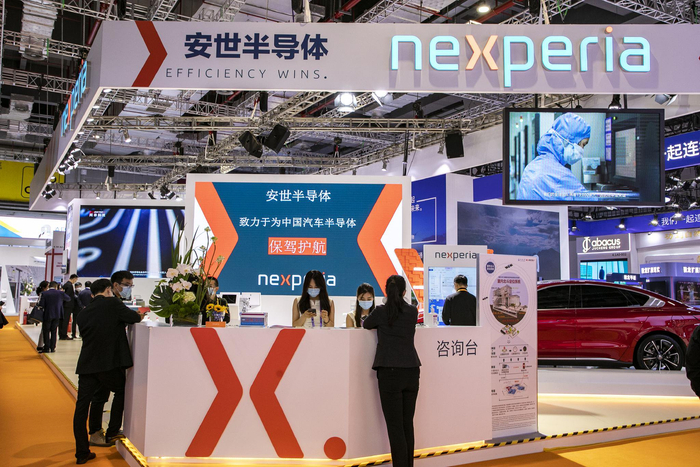
安世之乱:一场撕裂全球芯片命脉的控制权战争
Zhong Guo Jing Ying Bao· 2025-11-28 21:12
Core Viewpoint - The semiconductor supply chain crisis, triggered by a power struggle within a Chinese-controlled semiconductor company, has led to significant production disruptions for major automotive manufacturers like Volkswagen, BMW, and Ford, highlighting the vulnerability of global supply chains to geopolitical interventions [2][3][4]. Summary by Sections 1. Event Overview - The crisis began with a governance dispute at Nexperia (安世半导体), a semiconductor company acquired by a Chinese consortium in 2017, which has become a key supplier for the automotive industry [3][4]. - The U.S. imposed new export controls in September 2025, leading to the Dutch government freezing Nexperia's global assets under the pretext of national security, which resulted in a near collapse of the global automotive chip supply chain [5][6]. 2. Impact on Automotive Industry - Major automakers, including Volkswagen, BMW, and Honda, issued production warnings, with the European Automobile Manufacturers Association predicting a potential 15% reduction in European automotive production capacity within weeks if the supply issue is not resolved [7][8]. - The automotive industry relies heavily on specific components produced by Nexperia, and the lack of these components could halt production lines, as seen with Volkswagen reporting its first quarterly loss in five years [6][7]. 3. Geopolitical Context - The incident illustrates the intersection of geopolitics and high-tech industries, revealing the fragility of global supply chains under political pressure [3][9]. - The U.S. strategy to curb China's technological advancements has been implemented through European allies, as evidenced by the timing of the Dutch government's actions following U.S. directives [9][10]. 4. Corporate Governance Issues - The governance conflict within Nexperia escalated when the Dutch court intervened, leading to the removal of the Chinese CEO and the appointment of a temporary Dutch CEO, which was perceived as a politically motivated takeover [5][6]. - The internal governance issues at Nexperia, including differing strategic priorities between Chinese and European management, contributed to the crisis [11][12]. 5. Future Implications - The semiconductor crisis signals a shift in the global semiconductor landscape from an "efficiency-first" model to a "security-first" approach, prompting companies to reassess their supply chain strategies [15][16]. - The event serves as a wake-up call for Chinese companies regarding the importance of political risk assessment and the need for a more resilient and localized supply chain strategy [15][19].

国投期货贵金属日报-20251128
Guo Tou Qi Huo· 2025-11-28 11:33
Report Investment Ratings - Gold and silver are both rated ★★★, indicating a clearer long trend and relatively appropriate investment opportunities currently [1] Core Views - Overnight, precious metals showed a strong sideways movement. With uncertainties in interest rate cuts and geopolitical prospects, the international gold price is approaching its historical high, and attention should be paid to whether it can break through this level [1] - On the first day of the listing of palladium options, market trading was relatively dull. On the second trading day of platinum futures, market funds clearly returned to rationality. There are signs of a peace negotiation in the Russia - Ukraine conflict. Palladium has limited consumption growth prospects, while platinum has a supply contraction in South Africa, a wide range of end - consumption fields, and a supply - demand gap this year. It is advisable to buy on dips and consider a long - platinum and short - palladium arbitrage strategy [2] - There are ongoing discussions about the peace plan between Ukraine and the US. Different stances are shown by both sides. The European Central Bank's outlook remains unclear, and there is an opinion that the interest rate cut cycle has ended. The market has high expectations for the Fed's interest rate cuts [3] Specific Content Summaries Precious Metals Market - Overnight, precious metals were in a strong sideways trend. The international gold price is approaching its historical high, and uncertainties in interest rate cuts and geopolitical prospects persist [1] - On the first day of palladium option listing, market trading was dull with an implied volatility of around 30% for at - the - money options. On the second trading day of platinum futures, market funds became more rational. Platinum is stronger than palladium, and it is advisable to buy on dips and conduct a long - platinum and short - palladium arbitrage [2] Geopolitical Situation - Ukrainian and US delegations will continue work on the peace plan this weekend. Germany believes Ukraine needs strong armed forces and security guarantees even after a peace agreement. Russia has expressed its stances on issues such as US missile deployment and Ukraine's potential NATO membership. Putin said the US peace plan could be the basis for a Ukraine agreement, and the US delegation will visit Moscow next week [3] Central Bank Policies - The European Central Bank's meeting minutes show that the outlook is still unclear, and there is a view that the interest rate cut cycle has ended [3] - According to CME's "FedWatch", the probability of the Fed cutting interest rates by 25 basis points in December is 86.9%, and the probability of maintaining the interest rate is 13.1%. By next January, the probability of a cumulative 25 - basis - point cut is 67.3%, maintaining the rate is 9.6%, and a cumulative 50 - basis - point cut is 23.1% [3]
沥青月报:需求步入淡季,面临走弱的压力-20251128
Zhong Hang Qi Huo· 2025-11-28 11:19
Report Industry Investment Rating No relevant content provided. Core View of the Report - The asphalt market lacks upward drivers and is expected to continue its weak and volatile trend. The improvement of asphalt fundamentals is poorly anticipated, with the demand side entering a seasonal contraction phase and facing further downward pressure. The supply side has insufficient upward drivers, and the expectations of supply surplus and geopolitical easing suppress the market. The oil price is likely to continue wide - range fluctuations, and attention should be paid to the repeated changes in geopolitics. It is recommended to focus on the range of 2900 - 3150 yuan/ton for the BU2602 contract [6][56]. Summary by Directory 1. Market Review - In November, asphalt showed a unilateral downward trend under the combined influence of the cost side and fundamentals. Demand entered a seasonal contraction phase, some refineries sold spot forward contracts at low prices, and market sentiment was generally weak. The OPEC+ production increase and the rising expectation of geopolitical easing pressured oil prices, weakening cost - side support and intensifying the downward pressure on the market. The market currently lacks upward drivers, and with the seasonal decline in demand, fundamentals are difficult to improve effectively. The cost - side support is limited, and the market is expected to continue its weak and volatile trend [6]. 2. Macroeconomic Analysis - **OPEC+ Production Policy**: OPEC+ will increase production by 137,000 barrels per day in December and pause production increase in the first quarter of 2026. This move is expected to relieve supply pressure in the short term but has limited long - term impact. OPEC's latest monthly report shows that the global crude oil market is expected to shift from balance to surplus, with a surplus of 500,000 barrels per day, and the supply growth forecast of non - OPEC countries in 2025 has been raised by 110,000 barrels per day. The demand for OPEC's crude oil in 2026 has been lowered, indicating a pessimistic outlook on the demand side [9][10][13]. - **Fed's Interest Rate Policy**: Fed officials have made dovish statements, and the market's expectation of a 25 - basis - point interest rate cut in December has risen to 85%. The U.S. labor market shows a "split" situation, with employment exceeding expectations but the unemployment rate reaching a four - year high. The latest Fed "Beige Book" shows that the decline in consumer spending is the main drag on the U.S. economy, and the government "shutdown" has affected consumer decisions [11]. - **Geopolitical Situation**: The U.S. media disclosed a 28 - point peace plan to end the Russia - Ukraine conflict, which was later reduced to 19 points after discussions. Although the short - term expectation of geopolitical easing has increased, there are still significant differences between the two sides on key issues, and the oil price may fluctuate due to geopolitical changes [12]. 3. Supply - Demand Analysis - **Supply Side**: In October, China's asphalt production was 2.12 million tons, a month - on - month decrease of 500,000 tons. In November, the domestic refinery operating rate decreased month - on - month, mainly due to seasonal maintenance and the entry of terminal consumption into the off - season. The weekly data shows that the operating rate of asphalt sample enterprises is at a low level in recent years and is expected to decline further, alleviating supply pressure [15][22]. - **Demand Side**: In November, China's asphalt shipments decreased month - on - month. Road construction demand may further shrink, and winter storage demand remains highly uncertain. The utilization rate of modified asphalt production capacity decreased seasonally, and with the end of the demand peak season, it faces downward pressure [25][27]. - **Import and Export**: In October, asphalt imports were 391,000 tons, a month - on - month increase of 50,000 tons, and the import average price remained stable. Exports were 52,200 tons, a month - on - month decrease of 27,700 tons, and the export average price decreased slightly [32][38]. - **Inventory**: In November, the inventory of domestic sample enterprises decreased, but the decline rate was slower than in previous years. The social inventory of asphalt also decreased, but the decline rate slowed down, indicating weakening downstream demand [44][49]. - **Price Difference**: In November, the asphalt cracking spread declined, and the diluted profit of asphalt processing remained at a low level within the year. As asphalt is expected to continue its weak and volatile trend, the cracking spread may face further downward pressure [53].
有色金属日报2025-11-28-20251128
Wu Kuang Qi Huo· 2025-11-28 05:23
有色金属日报 2025-11-28 从业资格号:F03120988 交易咨询号:Z0023261 0755-23375122 zhangsj3@wkqh.cn 有色金属小组 王梓铧 【行情资讯】 吴坤金 从业资格号:F3036210 交易咨询号:Z0015924 0755-23375135 wukj1@wkqh.cn 曾宇轲 五矿期货早报 | 有色金属 从业资格号:F03121027 交易咨询号:Z0023147 0755-23375139 zengyuke@wkqh.cn 张世骄 铜 从业资格号:F03130785 0755-23375132 wangzh7@wkqh.cn 刘显杰 从业资格号:F03130746 0755-23375125 liuxianjie@wkqh.cn 陈逸 从业资格号:F03137504 0755-23375125 cheny40@wkqh.cn 地缘担忧有所回温,离岸人民币小幅贬值,铜价震荡下滑,昨日伦铜 3M 合约收跌 0.21%至 10930 美 元/吨,沪铜主力合约收至 87050 元/吨。LME 铜库存增加 675 至 157175 吨,注销仓单比例抬升, Cash/3 ...
中辉有色观点-20251128
Zhong Hui Qi Huo· 2025-11-28 05:20
| 品种 | 核心观点 | 主要逻辑 | | --- | --- | --- | | | | 美国数据仍支持降息,俄乌问题再次生变,日元反复不确定较多,黄金有支撑。建 | | 黄金 | 长线持有 | 议黄金长线交易为主,避免陷入情绪交易。黄金中长期地缘秩序重塑,不确定性持 | | ★ | | 续存在,央行继续买黄金,长期战略配置价值不变。 | | | | 高弹性白银 2025 年大涨幅度超 70%,短期特朗普 AI 创世纪计划批准,均对白银有 | | 白银 | 长线持有 | 利。长期来看白银基本面来看全球政策刺激白银需求,供需缺口持续变,宽松货币 | | ★ | | | | | | 投放提供流动性。12000 附近支撑较强。长线多单持有 | | 铜 | | 宏观暖风频吹,美联储 12 月降息概率升至 85%,国内 12 月初政治局会议临近,市 | | | 长线持有 | 场对政策刺激预期走高,国内淡季去库,铜价格中枢稳步上移,建议回调逢低试多, | | ★ | | 中长期,铜依旧看多。 | | | | 宏观情绪缓和,国内淡季去库,出口积极,现货逢低采购提供价格支撑,短期锌宽 | | 锌 | 承压 | 幅震荡,受 ...
贵金属数据日报-20251128
Guo Mao Qi Huo· 2025-11-28 03:42
Group 1: Report Industry Investment Rating - No relevant content provided Group 2: Core Viewpoints of the Report - The market's expectation of the Fed's rate cut in December is still high, which supports the precious metal prices. However, the easing of geopolitical tensions and the neutral economic data in the US limit the upward movement of precious metal prices. The domestic silver inventory is at a near - decade low, causing the silver price to rise against the gold price. In the short - term, gold is expected to fluctuate in a high - level range, and silver may fluctuate strongly, but attention should be paid to inventory changes. In the long - term, due to factors such as the Fed's rate - cut cycle, geopolitical uncertainties, and the continuation of central bank gold purchases, the long - term center of gold prices is likely to move up, and long - term investors are advised to buy on dips [6] Group 3: Summary by Related Catalogs 1. Price Tracking - **Precious Metal Prices**: On November 27, 2025, London gold spot was at $4157.26/ounce, London silver spot at $53.42/ounce, COMEX gold at $4189.80/ounce, and COMEX silver at $53.97/ounce. Compared with November 26, the price of London gold spot increased by 0.2%, London silver spot by 2.9%, COMEX gold by 0.1%, and COMEX silver by 3.2%. The prices of domestic gold and silver futures also showed certain increases, with the Shanghai gold futures main contract rising 0.14% to 947.16 yuan/gram and the Shanghai silver futures main contract rising 3.35% to 12525 yuan/kilogram [3][5] - **Price Spreads and Ratios**: The gold TD - SHFE active price spread was - 1.6 yuan/gram on November 27, with a 15.9% increase compared to the previous day. The silver TD - SHFE active price spread was - 13 yuan/kilogram, a - 35.0% change. The gold and silver price ratios and spreads between domestic and foreign markets also had different degrees of changes [5] 2. Position Data - As of November 26, 2025, the gold ETF - SPDR was 1045.43 tons, with a 0.44% increase compared to November 25. The silver ETF - SLV was 15582.3342 tons, unchanged. The non - commercial long and short positions of COMEX gold and silver also had corresponding changes, with the non - commercial net long position of COMEX gold decreasing by 12.09% [5] 3. Inventory Data - On November 27, 2025, the SHFE gold inventory was 90423.00 kilograms, unchanged from the previous day, and the SHFE silver inventory was 546976.00 kilograms, a 2.97% increase. The COMEX gold and silver inventories also had slight changes [5] 4. Interest Rates, Exchange Rates, and Stock Market Data - On November 27, 2025, the US dollar/Chinese yuan central parity rate was 7.08, a - 0.02% change. The US dollar index was 99.59, a - 0.22% change. The yields of 2 - year and 10 - year US Treasury bonds, VIX, S&P 500, and NYWEX crude oil also had different degrees of changes [5] 5. Market Review - On November 27, the Shanghai gold futures main contract closed up 0.14% to 947.16 yuan/gram, and the Shanghai silver futures main contract closed up 3.35% to 12525 yuan/kilogram [5] 6. Influencing Factors Analysis and Short - Term Outlook - Although the US weekly initial jobless claims dropped to the lowest level since mid - April, the US economic beige book showed that the Trump administration shutdown had a negative impact on consumer purchases. The market's high expectation of the Fed's rate cut in December supports precious metal prices, but geopolitical tensions easing and neutral economic data limit the upward movement. The low domestic silver inventory has led to a rise in silver prices. In the short - term, gold may fluctuate in a high - level range, and silver may fluctuate strongly, but attention should be paid to inventory changes [6] 7. Medium - and Long - Term Viewpoints - In the medium - and long - term, the Fed is still in a rate - cut cycle, global geopolitical uncertainties persist, the US debt is unsustainable, and great - power competition intensifies, increasing the long - term risk of the US dollar's credit. The continuation of central bank gold purchases will likely drive up the long - term center of gold prices. Long - term investors are advised to buy on dips [6]
中辉能化观点-20251128
Zhong Hui Qi Huo· 2025-11-28 01:59
Group 1: Report Industry Investment Ratings - Crude oil: Cautiously bearish [1] - LPG: Cautiously bearish [1] - L: Bearish continuation [1] - PP: Bearish continuation [1] - PVC: Bearish consolidation [1] - PX/PTA: Cautiously bullish [3] - Ethylene glycol: Cautiously bearish [3] - Methanol: Cautiously bullish [3] - Urea: Cautiously bearish [3] - Natural gas: Cautiously bearish [6] - Asphalt: Cautiously bearish [6] - Glass: Bearish rebound [6] - Soda ash: Bearish consolidation [6] Group 2: Core Views of the Report - The geopolitical situation between Russia and Ukraine has eased, leading to a weakening of oil prices. The supply of crude oil is in surplus during the off - season, and the pressure on oil prices is increasing. For various energy - related products, their prices are affected by factors such as cost, supply, and demand [1][9]. - For different chemical products, their market conditions vary. Some products face supply - demand imbalances, while others are affected by cost fluctuations and macro - policies [1][23]. Group 3: Summaries According to Related Catalogs Crude Oil - **Market performance**: Overnight international oil prices rebounded. Brent rose 0.53%, and SC rose 0.52%. As of November 26, the US crude oil rig count decreased by 12 to 407 [7][8]. - **Basic logic**: In the off - season, crude oil supply is in surplus, and global crude oil inventories are accelerating the accumulation. The recent easing of the Russia - Ukraine geopolitical situation has also put downward pressure on oil prices [9]. - **Strategy recommendation**: Partially close short positions. Pay attention to the range of SC [445 - 455] [11]. LPG - **Market performance**: On November 27, the PG main contract closed at 4269 yuan/ton, up 0.23% month - on - month. The downstream chemical demand has certain resilience, and the inventory has improved [12][13]. - **Basic logic**: The price trend is anchored to the cost - end crude oil, and the oil price trend is downward. The downstream chemical demand has support, but the recent high basis indicates over - valuation of the futures price [14]. - **Strategy recommendation**: Do not chase the rise. Go short on rebounds. Pay attention to the range of PG [4250 - 4350] [15]. L - **Market performance**: The L2601 contract closed at 6699 yuan/ton. The basis strengthened, and the futures price was in a premium structure [17][18]. - **Basic logic**: Domestic production has seasonally recovered, and the supply is still sufficient. The downstream start - up rate has declined for 6 consecutive weeks, and the demand support is insufficient. The oil price may decline in the medium - term, and the cost support is weak [19]. - **Strategy recommendation**: Reduce short positions at low absolute prices. Wait for rebounds to go short in the long - term. Pay attention to the range of L [6650 - 6800] [19]. PP - **Market performance**: The PP2601 closed at 6265 yuan/ton. The basis weakened, and the futures price was in a premium structure [21][22]. - **Basic logic**: The cost - end is weak, and the upper - middle - stream inventory is at a high level. The internal and external demand support is insufficient, and there is a high pressure on inventory reduction in the future. The oil price may continue to decline in the medium - term [23]. - **Strategy recommendation**: Reduce short positions at low absolute prices. Wait for rebounds to go short in the long - term. Pay attention to the range of PP [6350 - 6500] [23]. PVC - **Market performance**: The V2601 closed at 4586 yuan/ton. The basis was repaired, and the number of warehouse receipts decreased from a high level [24][25]. - **Basic logic**: In the short - term, the trading returns to the weak fundamentals, and the social inventory remains high. However, the low valuation provides support, and the decline space of the futures price is limited. Pay attention to the rhythm of capital position transfer [26]. - **Strategy recommendation**: The industry should conduct hedging at high prices. Be cautious about short - selling and wait for positive drivers. Pay attention to the range of V [4400 - 4550] [26]. PTA - **Market performance**: The processing fee is generally low, and the supply - side pressure has been alleviated. The downstream demand is relatively good, but the cost - end PX may follow the decline of crude oil [27][28]. - **Basic logic**: The supply - side pressure is expected to ease due to low processing fees and high - intensity device maintenance. The downstream demand is relatively good, but there is an expectation of inventory accumulation in December [28]. - **Strategy recommendation**: Pay attention to the opportunity to go long on dips. Pay attention to the range of TA [4610 - 4680] [28]. Ethylene Glycol - **Market performance**: The domestic start - up load has continued to decline, and the overseas device load has slightly increased. The downstream demand is relatively good, but there is an expectation of inventory accumulation [29][30]. - **Basic logic**: The domestic start - up load is decreasing, and new device production and the recovery of maintenance devices will increase the supply pressure. The downstream demand is relatively good, but the weaving orders are slightly weakening [30]. - **Strategy recommendation**: Pay attention to the opportunity to go short on rebounds. Pay attention to the range of EG [3820 - 3880] [31]. Methanol - **Market performance**: The Taicang spot price has stabilized, and the port basis has slightly strengthened. The inventory has decreased but is still at a high level in the past five years [34]. - **Basic logic**: The domestic and overseas device loads have increased, and the supply pressure is large. The demand has improved month - on - month, and the cost - end has weak support. The fundamentals remain weak [34]. - **Strategy recommendation**: Close short positions at low valuations. Pay attention to the opportunity to go long on the 05 contract on dips [34]. Urea - **Market performance**: The spot price of small - particle urea in Shandong has stopped falling, and the basis has slightly strengthened. The supply pressure remains, and the demand is cold domestically and hot overseas [37][38]. - **Basic logic**: The supply pressure is still high before the gas - head enterprises' maintenance in December. The domestic agricultural demand is weak, but the fertilizer export is relatively good. The inventory has decreased slightly but is still at a high level [38][39]. - **Strategy recommendation**: Pay attention to the opportunity to go short on rebounds. Pay attention to the range of UR [1635 - 1675] [40]. Natural Gas - **Market performance**: On November 26, the NG main contract closed at 4.558 US dollars/million British thermal units, up 1.72% month - on - month [42][43]. - **Basic logic**: The recent easing of the Russia - Ukraine conflict has put downward pressure on gas prices, but the demand has entered the consumption peak season, providing certain support [44]. - **Strategy recommendation**: The demand has support, but the supply is sufficient, and the gas price is under pressure. Pay attention to the range of NG [4.565 - 4.800] [45]. Asphalt - **Market performance**: On November 27, the BU main contract closed at 3007 yuan/ton, down 1.18% month - on - month. The profit has decreased, and the inventory has decreased [47][48]. - **Basic logic**: The price is mainly affected by the cost - end crude oil. The supply is expected to decrease in December, and the demand has increased slightly this week [49]. - **Strategy recommendation**: Continue to hold short positions. Pay attention to the range of BU [2950 - 3050] [50]. Glass - **Market performance**: The FG2601 closed at 1053 yuan/ton. The cold - repair expectation provides support, but the demand is weak [52][53]. - **Basic logic**: The daily melting volume has decreased and remains at 15.82 tons. The demand support is insufficient due to the weak real - estate market [54]. - **Strategy recommendation**: Close short positions in the short - term. Wait for rebounds to go short in the long - term. Pay attention to the range of FG [990 - 1040] [54]. Soda Ash - **Market performance**: The demand has weakened, and the futures price is in a consolidation state [55]. - **Basic logic**: Some devices have been overhauled or reduced production, and the demand has decreased. The supply will remain in a loose pattern in the long - term [6]. - **Strategy recommendation**: Hold short positions on the 01 alkali - glass spread. Wait for rebounds to go short in the long - term [6].