货币政策

Search documents
钢材周报:螺纹库存增加,钢价震荡运行-20260112
Hong Ye Qi Huo· 2026-01-12 11:16
Report Summary 1. Investment Rating No explicit investment rating for the industry is provided in the report. 2. Core View The steel market shows a pattern of increasing supply, weakening demand, and mixed inventory trends. Due to rising raw material costs, narrowing profit margins, and seasonal factors, steel prices are expected to fluctuate in the short term. Macro - level policies aim to maintain liquidity, but terminal demand remains weak, and attention should be paid to inventory accumulation [5]. 3. Summary by Category 3.1 Steel Product Situation - **Supply**: The output of both rebar and hot - rolled coils increased. The weekly output of rebar from major national steel mills was 191.04 million tons (+2.82 million tons), and that of hot - rolled coils was 305.51 million tons (+1 million tons). Some steel mills completed maintenance, leading to increased iron - water output and a significant rise in EAF operating rates [4]. - **Demand**: Demand was seasonally weak. The apparent demand for rebar last week was 174.96 million tons (-25.48 million tons), and that for hot - rolled coils was 308.34 million tons (-2.43 million tons). The weekly average trading volume of rebar as of January 9 was 8.03 million tons, and that of hot - rolled coils was 2.65 million tons [4][46][50]. - **Inventory**: Rebar inventory accumulated, while hot - rolled coil inventory continued to decline but at a slower pace. The total rebar inventory was 438.11 million tons (+16.08 million tons), and the total hot - rolled coil inventory was 368.13 million tons (-2.83 million tons) [4]. - **Basis**: As of January 9, the basis of the rebar main contract was 146 yuan/ton (-32 yuan/ton), and that of the hot - rolled coil main contract was -24 yuan/ton (-24 yuan/ton) [4]. - **Price**: The national average price of rebar was 3337 yuan/ton, a week - on - week increase of 16 yuan/ton, and that of hot - rolled coils was 3306 yuan/ton, also a week - on - week increase of 16 yuan/ton [10]. 3.2 Raw Material Situation The cost - side support strengthened. The price of quasi - first - grade metallurgical coke was 1480 yuan/ton, a week - on - week increase of 30 yuan/ton; the price of main coking coal in Lüliang was 1403 yuan/ton, a week - on - week decrease of 47 yuan/ton; and the price of 61.5% PB powder at Qingdao Port was 826 yuan/ton, a week - on - week increase of 18 yuan/ton [18]. 3.3 Steel Mill Situation - The profitability rate of steel mills declined to 37.66%. The iron - water output was 229.5 million tons, a week - on - week increase of 2.07 million tons. The blast furnace operating rate was 79.31%, a week - on - week increase of 0.37%, and the blast furnace capacity utilization rate was 86.04%, a week - on - week increase of 0.78%. The EAF operating rate was 72.97%, a week - on - week increase of 4.34%, and the EAF capacity utilization rate was 56.91%, a week - on - week increase of 1.76% [4]. - As of January 9, the blast furnace operating rate in Tangshan was 89.99%, a week - on - week decrease of 3.65% [29]. 3.4 Downstream Demand Situation - **Automobile Industry**: In November, automobile production was 3.532 million units, a month - on - month increase of 173,300 units; sales were 3.429 million tons, a month - on - month increase of 106,900 tons. New - energy vehicle production was 1.88 million units, a month - on - month increase of 108,000 units; sales were 1.823 million tons, a month - on - month increase of 108,000 tons [69]. - **Real Estate Industry**: From January to November, real estate investment decreased by 15.9% year - on - year, new housing starts decreased by 20.5% year - on - year, housing completion decreased by 18% year - on - year, commercial housing sales area decreased by 7.8% year - on - year, commercial housing sales revenue decreased by 11.1% year - on - year, and funds in place decreased by 11.9% year - on - year [72][73]. 3.5 Export Situation In November, steel exports were 9.98 million tons, a month - on - month increase of 197,800 tons. From January to November, cumulative steel exports were 107.7 million tons, a cumulative year - on - year increase of 6.7%. In November, hot - rolled coil exports were 1.8303 million tons [65].

Can Bitcoin Price Follow Gold? Fed Chair Investigation Behind Gold's Rise, Peter Schiff Claims
Yahoo Finance· 2026-01-12 10:29
Core Insights - The investigation by the Justice Department has led to a surge in gold prices, reaching record levels, as indicated by Federal Reserve Chair Jerome Powell's disclosure of grand jury subpoenas issued to the central bank [1][5][6] - Peter Schiff, a long-time advocate for gold, attributes the increase in gold prices to safe-haven demand driven by the DOJ investigation, while also raising concerns about the potential impact on Bitcoin [1][6] Group 1: Gold Market - Gold prices hit an all-time high of over $4,600 per ounce following the announcement of the DOJ investigation [5] - Schiff believes that the investigation is a significant factor contributing to the current rally in gold prices [6] Group 2: Bitcoin Market - Analysts caution that Bitcoin's technical signals indicate potential short-term volatility, creating uncertainty regarding its near-term price trajectory [2] - The investigation's implications for Bitcoin's price remain a topic of discussion among market observers [1][6] Group 3: Federal Reserve and Political Pressure - Jerome Powell stated that the subpoenas are part of a broader effort to influence the Federal Reserve's decisions on interest rates, framing the situation as a test of central bank independence [3][4] - Powell emphasized that the matter is not about congressional oversight but rather about maintaining the integrity of monetary policy against political pressure [4]
美联储主席鲍威尔回应遭刑事调查:将继续履行职责
Sou Hu Cai Jing· 2026-01-12 10:26
来源:国际金融报 近日,据美国政府官员透露,美国检察官正对美联储主席鲍威尔展开调查,调查内容涉及其2025年夏季 就美联储总部大楼翻修项目向国会所作的证词。当地时间1月11日,鲍威尔证实,美联储已于1月9日收 到美国司法部发出的大陪审团传票,相关调查可能引发刑事指控。 外界普遍认为,此举是特朗普政府持续向美联储施压、挑战其长期政治独立性的最新举措。 据CCTV国际时讯消息,美国总统特朗普于当地时间1月11日晚接受媒体采访时,否认与司法部向美联 储发出传票有关。他表示:"我对此一无所知。" 美国司法部长帕姆·邦迪(Pam Bondi)的发言人拒绝就调查进展发表评论,但表示邦迪已指示联邦检察 官"优先调查任何滥用纳税人资金的行为"。 1月11日晚间,鲍威尔在一段视频声明中回应,称这项调查是特朗普持续施压美联储降息行动中的一 个"借口"。 鲍威尔指出,当前的核心在于"美联储是否还能基于证据和经济状况来制定利率政策,还是说货币政策 将被政治压力所恐吓和左右"。 他强调,潜在的刑事起诉不会影响其继续履行美联储主席职责。据悉,鲍威尔的主席任期将于2026年5 月15日结束,特朗普预计将在未来数月内决定继任人选。 在货币政 ...
海外焦点:美联储降息博弈与政策不确定性
Mei Ri Jing Ji Xin Wen· 2026-01-12 09:55
站在当前时间点展望2026年市场,我们应跳出市场对2026年各类宏观因素的定价视角,转而审视2026年 真实可能发生的态势。在讨论国内市场之前,我们需简要梳理海外形势:众所周知,美联储作为全球最 主要的央行,2026年仍存在一定的降息空间。市场对2026年美联储降息已形成较强预期,但我们对此持 有略为不同的看法,海外货币政策周期可能会比当前市场预期的更为紧缩。 从时间线来看,特朗普大概率会在2025年底至2026年初公布新任主席人选。随后,新任人选将先担任美 联储理事,待参议院通过听证后,正式出任美联储主席,整体流程大致如此。因此,市场也在依据这一 流程进行定价,市场预期,新任美联储主席上台后的第一次议息会议,降息概率将高于此前几次,这也 是市场对其鸽派货币政策立场的提前定价。 我们认为,哈塞特若出任主席,大概率能推动一次降息,但后续能否实现更多次降息仍存在不确定性, 核心取决于前文提到的劳动力市场与通胀是否会出现明确的边际变化。从当前来看,此前降息的积极效 果仍在逐步显现,因此我们认为,2026年美联储实现一次降息的预期是相对合理的。 十年国债ETF(511260)核心价值突出:跟踪上证十年国债指数,持仓为 ...
【UNforex财经事件】政治不确定性再定价 美元承压主要货币分化
Sou Hu Cai Jing· 2026-01-12 09:39
Group 1 - The core viewpoint of the articles highlights the impact of political risks and macroeconomic data on the USD and JPY, with a focus on the Federal Reserve's independence and the geopolitical tensions affecting market sentiment [1][2][3] Group 2 - The U.S. non-farm payrolls increased by 50,000 in December, which was below market expectations and weaker than the previously revised figure, while the unemployment rate fell from 4.6% to 4.4%, indicating a cooling labor market [2] - The market is divided on the Federal Reserve's short-term policy path, with some expecting aggressive easing due to economic slowdown and political uncertainties, while others see the labor market's resilience as a constraint on such expectations [2] - The USD/JPY pair dipped to around 157 during the Asian session but remained within a low range, influenced by uncertainties in Japan's political environment and monetary policy outlook [2] - Geopolitical tensions in the Middle East and Eastern Europe are rising, with the U.S. signaling potential actions regarding Iran, leading to increased regional security risks and affecting overall market risk appetite [3] - The recent decline in the USD reflects a market re-evaluation of institutional and political risks rather than being solely driven by economic data [3] - The JPY is receiving marginal support from geopolitical risk aversion, but domestic political uncertainties and unclear monetary policy timelines continue to exert structural pressure on the currency [3]
美国制造业疲软,国内物价温和回升
Guo Mao Qi Huo· 2026-01-12 07:10
2012 31 | 影响因素 | 主要逻辑 | | --- | --- | | 回顾 | 元旦假期后的首周国内商品大幅上涨,工业品、农产品均出现了普涨的行情。主要原因,一是美国对委内瑞拉的军事行动引发市场对于大国之间资源争夺的预期; | | | 二是,美国数据好坏参半,美联储降息仍有空间;三是,国内扩大内需+反内卷政策共同推动商品价格重心的抬升。 | | 海外 | 1)ISM公布的数据显示,美国12月ISM制造业PMI降至47.9,创2024年以来最大萎缩幅度,连续10个月低于50荣枯线,表明制造业持续收缩。12月ISM非制造业 指数升至54.4,显著高于预期与前值,反映出美国的服务业的景气度在上升,服务业的扩张一定程度上对冲了制造业疲软对整体经济的拖累。短期来看,制造业 | | | 疲软预计仍将延续,难以快速出现拐点。中长期来看,关税不确定性缓解及相关法案落地或为资本支出提供支撑,但需注意制造业持续疲软对整体经济的影响。2) | | | 美国12月ADP就业人数新增4.1万人,相比11月份减少的2.9万人有所回升,但少于预期的4.9万人,12月份就业出现反弹,主要由教育和健康服务业以及休闲和酒 | | | ...
【环球财经】2025年11月澳大利亚家庭支出增长1%
Xin Hua Cai Jing· 2026-01-12 06:24
Group 1 - Australia's household income increased by 1% month-on-month and 6.3% year-on-year in November 2025, marking the first time since 2022 that this indicator has reached 1% or more for two consecutive months [1] - Household spending on food rose by 0.7%, while spending on tobacco and alcohol decreased by 1.8% in November 2025 [1] - Significant events in November contributed to a 1.2% increase in household spending on services, with "Black Friday" promotions driving a 0.9% increase in spending on goods [1] Group 2 - Despite strong household spending growth in late 2025, the real estate market appears to be slowing down, indicating a complex relationship between consumer and real estate data and monetary policy [2] - The recent cooling in the real estate market may suggest that the Reserve Bank of Australia could adopt a slightly tighter policy, while robust consumer spending indicates a solid private sector demand and genuine recovery in business activity [2] - Changes in consumer confidence data will be crucial in assessing whether the recovery in business activity will accelerate or slow down in 2026 [2]
债市进入“低性价比”时代
21世纪经济报道· 2026-01-12 05:34
Core Viewpoint - The bond market in 2025 faced significant challenges characterized by high volatility, low yield space, and thin returns, leading to a complex environment for investment institutions [2][5][9]. Group 1: Market Conditions - The bond market experienced extreme fluctuations, with a notable decline in interest rates compared to the previous year, resulting in a challenging investment landscape [3][5]. - The 10-year government bond yield started at 1.6% and saw rapid increases, peaking around 1.92% in September, reflecting economic recovery expectations and supply pressures [7][8]. - By the end of 2025, the bond market displayed a mixed performance, with long-term bonds rising while short-term bonds showed slight declines, indicating a steepening yield curve [8][10]. Group 2: Institutional Behavior - Different types of institutions exhibited varied investment behaviors, with large commercial banks and insurance companies showing strong buying interest, while others like city commercial banks and securities firms were net sellers [10][11]. - The investment strategies of institutions shifted towards cautious approaches, focusing on cost reduction and risk management amid a declining attractiveness of the bond market compared to equities and commodities [9][11]. Group 3: Future Outlook - As 2026 begins, the bond market is anticipated to open with a 10-year government bond yield of approximately 1.85%, with expectations for potential interest rate cuts in the first quarter [12][13]. - The market is closely monitoring monetary policy adjustments, with expectations for a gradual approach to easing, influenced by economic recovery goals and structural inflation concerns [14][15]. - Institutions are preparing for a continued volatile environment, with strategies focusing on maintaining trading intensity for excess returns while managing costs effectively [15].


特朗普回应鲍威尔接受调查:“我对此一无所知”
Sou Hu Cai Jing· 2026-01-12 04:24
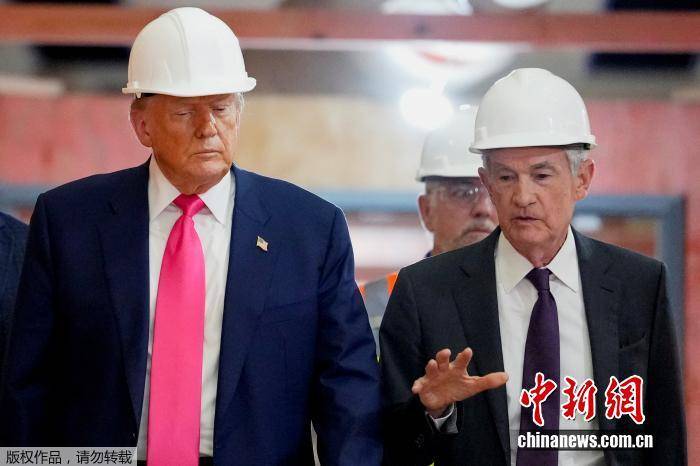
据美国《新闻周刊》报道,特朗普当天在接受采访时表示:"我对此一无所知,但他肯定不擅长管理美 联储,也不擅长建造大楼。"报道称,特朗普这里指的是美联储主席鲍威尔。 据美国《纽约时报》此前报道,美国联邦检察官已对美联储主席鲍威尔展开刑事调查,调查涉及美联储 办公大楼的翻修工程,以及鲍威尔是否就该项目规模向国会作虚假陈述。 中新网1月12日电 据美媒报道,美国总统特朗普当地时间11日表示,他对美联储主席鲍威尔接受调 查"一无所知"。 资料图:当地时间2025年7月24日,美国总统特朗普与美联储主席鲍威尔在美联储大楼。 鲍威尔11日在视频声明中表示,检方对他进行刑事调查是破坏美联储在设定利率方面"独立性"的"借 口"。鲍威尔说:"这关系到美联储是否还能依据证据和经济状况来制定利率——或者说,货币政策是否 会受政治压力或胁迫所左右。" 报道援引知情官员的话说,这项调查由美国哥伦比亚特区联邦检察官办公室展开,调查内容包括分析鲍 威尔的公开言论及审查支出记录。报道指出,此次调查标志着"针对鲍威尔的新一轮重大法律攻势拉开 序幕。" ...
【债市观察】年初“股债跷跷板”凸显 10债能否在1.90%企稳?
Zhong Guo Jin Rong Xin Xi Wang· 2026-01-12 03:53
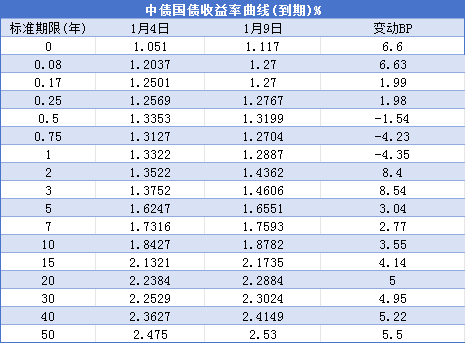
Core Viewpoint - The bond market experienced significant adjustments under multiple negative pressures, while equity and commodity markets rose, with the Shanghai Composite Index surpassing 4100 points. Concerns regarding government bond issuance scale and duration were validated at the beginning of the year, and the central bank's bond purchase announcement fell short of expectations, exacerbating short-term selling pressure [1]. Market Review - From January 5 to January 9, 2026, the bond market saw fluctuations in yields across various maturities, with the 10-year government bond yield approaching 1.90% before stabilizing. The yield curve flattened overall, indicating a shift in market sentiment [2][3]. - On January 9, the yields for different maturities changed as follows: 1-year (-4.35 BP), 2-year (8.4 BP), 3-year (8.54 BP), 5-year (3.04 BP), 7-year (2.77 BP), 10-year (3.55 BP), 30-year (4.95 BP), and 50-year (5.5 BP) [2]. - The bond market faced supply concerns, with the 10-year government bond yield rising to 1.8615% on January 5 and reaching 1.8985% on January 7 before slightly declining [5]. Primary Market - A total of 58 bonds were issued last week, amounting to 763.234 billion yuan, including 6 government bonds (49.5 billion yuan), 26 policy bank bonds (150.57 billion yuan), and 26 local government bonds (117.664 billion yuan) [5]. - The upcoming week (January 12 to January 16, 2026) plans to issue 21 bonds totaling 270.201 billion yuan, including 2 government bonds (167 billion yuan) and 14 local government bonds (70.201 billion yuan) [5]. Economic Indicators - The consumer price index (CPI) for December 2025 rose by 0.2% month-on-month and 0.8% year-on-year, while the core CPI increased by 1.2% year-on-year. The producer price index (PPI) rose by 0.2% month-on-month but fell by 1.9% year-on-year [13]. - As of December 2025, China's foreign exchange reserves stood at 33,579 billion USD, an increase of 115 billion USD from the previous month, reflecting a 0.34% rise [14]. Institutional Perspectives - Financial institutions suggest that the probability of a unilateral rise in interest rates is low, with expectations for the bond market to stabilize after mid-January. Concerns remain regarding long-term bond supply and monetary easing [16]. - Analysts indicate that while there may be short-term adjustments in the market, the overall supply and funding variables remain unclear, necessitating cautious evaluation of downward interest rate potential [17].