
反内卷

Search documents
地产链热度升温-把握建材板块投资机会-建材投资价值解读
2026-03-04 14:17
Summary of Key Points from the Conference Call Industry Overview - The conference call focuses on the **building materials sector**, particularly the **cement industry** and **consumer building materials** such as waterproofing and coatings. The sector is currently at the bottom of a 4-5 year down cycle, with expectations for a recovery in 2026 driven by a combination of supply contraction and demand stabilization [1][2]. Core Insights and Arguments - **Cement Supply Dynamics**: By the end of Q1 2026, it is anticipated that 200-300 million tons of cement capacity will exit the market, potentially increasing the national capacity utilization rate from 50% to 60-65%, with peak seasons in regions like the Yangtze River Delta possibly reaching 80% [1][10]. - **"Anti-Competition" Policies**: Cement is prioritized in the government's "anti-competition" policies, which aim to address overproduction and expand carbon trading, thereby increasing costs for less efficient producers and facilitating market exit for excess capacity [1][2]. - **Consumer Building Materials**: The waterproofing segment has seen a 38% reduction in supply, with leading companies planning multiple price increases starting in 2025. The share of second-hand home transactions has risen to 70%, supporting demand for renovation [1][3]. - **Float Glass Industry**: The float glass sector is entering a loss phase, with high shutdown costs leading to irreversible capacity exits. A wave of cold repairs is expected in the first half of 2026, which may enhance industry conditions [1][20]. Important but Overlooked Content - **Real Estate Policy Expectations**: Recent real estate policies in cities like Shanghai have exceeded expectations, indicating a shift towards more decisive measures rather than incremental adjustments. This is expected to provide strong support for sector valuations and marginal demand [1][4]. - **Infrastructure Demand**: Infrastructure projects, including urban renewal and the renovation of old buildings, are significant sources of demand for building materials. Expectations for increased funding and project acceleration in 2026 are noted [5]. - **Cement Industry Characteristics**: The cement industry is characterized by high product homogeneity, short shelf life, and low storage capability, leading to a regional focus in production and consumption. This creates unique challenges in managing supply and pricing [6][7]. - **Market Dynamics**: The cement demand structure is divided into real estate (30%), infrastructure (50%), and rural (20%). The industry is currently experiencing a significant oversupply, with utilization rates around 50% [7][10]. Investment Opportunities and Risks - **Investment Logic**: The building materials sector is seen as a cyclical investment opportunity, particularly as it is currently undervalued. The sector's performance has been sensitive to real estate policy changes, with notable gains following recent policy announcements [2][4]. - **Potential Risks**: If key narratives around cement production governance, carbon trading, and price increases in consumer building materials do not materialize as expected, the sector may face a pullback. However, given the prolonged period of low expectations, any potential decline is expected to be limited [22][23]. Financial Metrics and ETF Insights - The building materials sector is currently experiencing inflows, with the largest building materials ETF (159,745) showing a significant increase in size since mid-January 2026. The sector's price-to-book ratio is approximately 1.12, placing it in the 23rd percentile of the past decade, indicating a favorable valuation environment for investors [24].
恒逸石化20260304
2026-03-04 14:17
Summary of Conference Call for Hengyi Petrochemical Industry Overview - The overseas refining sector benefits from the US-Iran conflict, leading to a significant expansion in refined oil price differentials, with gasoline and diesel differentials rising to $15 and $43 per barrel respectively, allowing overseas refineries to fully capitalize on the widening cost-price gap [2][4] - The PTA industry is expected to have no new capacity in 2026, with a potential exit of over one million tons, maintaining self-discipline in production cuts [2][5] - The polyester filament sector has a positive supply-demand outlook, with expected price differentials of 300-400 RMB per ton in 2026, supported by a decrease in export tariffs in Southeast Asia and China [2][6] Key Financial Insights - The company aims to restore single-ton profitability in the PTA sector to a range of 0-200 RMB in 2026, improving from a loss of over 100 RMB in 2025 [2][5] - The caprolactam and nylon industry is expected to see significant improvements, with no new capacity in 2026, and potential profitability of 100-200 RMB per ton if demand recovers [2][6] Project Developments - Three core projects (Brunei Phase II, Xinjiang, and Hubei Jingzhou) are expected to commence construction in Q2-Q3 of 2026, with a capital expenditure rhythm planned at a ratio of 3:3:4 over 2026-2028 [2][11] Cost and Profitability Analysis - The complete cost of the Xinjiang coal-to-ethylene glycol project is approximately 3,000 RMB per ton, compared to the current market price of 5,000-6,000 RMB per ton, indicating a profit margin of 1,000-2,000 RMB per ton [3][25] - The Brunei Phase II project will significantly reduce gasoline production while increasing diesel output to optimize economic efficiency [3][21] Market Dynamics - The company’s refining operations are not constrained by domestic refined oil export quotas, allowing for higher operational flexibility and profitability [7][29] - The overall operating rate of the company’s refining facilities remains high at approximately 107%-108%, with crude oil inventory maintained at about one month [7][19] PTA Sector Insights - The PTA sector is currently undergoing production cuts, with a reduction of about 750,000 tons from a total capacity of 21.5 million tons, leading to an expected improvement in profitability for 2026 [5][20] - The current operating rate for PTA facilities is around 70%, with a significant portion of production being self-consumed for polyester production [26][27] Future Outlook - The overall business outlook for 2026 is positive, with expectations of sequential improvement across all business segments, despite potential pressures from rising prices and freight costs due to the US-Iran conflict [29] - The company’s ability to leverage overseas market price differentials provides a competitive advantage over domestic peers constrained by pricing mechanisms [29] Additional Considerations - The company is not planning significant new capacity additions in 2026, with potential increases mainly from existing capacity relocations [10][28] - The investment in the Brunei project is approximately $5 billion, with a capacity of 12 million tons, and is expected to be completed by the end of 2028 [11][28] This summary encapsulates the key points from the conference call, highlighting the company's strategic positioning, market dynamics, and future outlook within the petrochemical industry.

国内观察2026年2月PMI:淡季回落,关注两会定调
Donghai Securities· 2026-03-04 14:12
Group 1: PMI Data Overview - In February, the manufacturing PMI was 49.0%, down from 49.3% in January[2] - The non-manufacturing PMI increased slightly to 49.5%, compared to 49.4% in January[2] - The seasonal decline in manufacturing PMI is less severe compared to similar late Spring Festival years since 2015, with a smaller drop of -0.3 percentage points[2] Group 2: Supply and Demand Insights - The production index fell to 49.6%, a decrease of 1.0 percentage points, but remains slightly stronger than the seasonal average decline of -1.55 percentage points[2] - New orders index decreased to 48.6%, down 0.6 percentage points, aligning closely with the seasonal average decline of -0.55 percentage points[2] - The new export orders index dropped to 45.0%, with a decline of 2.8 percentage points, slightly weaker than the seasonal average of -0.68 percentage points[2] Group 3: Price Index and Sector Performance - The main raw material purchase price index was 54.8%, down 1.3 percentage points, while the factory price index remained stable at 50.6%[2] - High-tech manufacturing PMI was 51.5%, down 0.5 percentage points, while equipment manufacturing PMI was 50.1%, down 0.3 percentage points, both remaining above the growth line[2] - Consumer goods PMI showed a positive trend, increasing to 48.3%, up 0.5 percentage points, indicating improved downstream demand[2] Group 4: Non-Manufacturing Sector and Construction - The non-manufacturing PMI rose by 0.1 percentage points to 49.5%, outperforming the seasonal average decline of -0.25 percentage points[2] - The construction PMI was 48.2%, down 0.6 percentage points, but still stronger than the seasonal average decline of -2.28 percentage points[2] - The construction activity expectation index remained above the growth line at 50.9%, indicating potential stabilization in investment[2]
A股市场2026年3月投资策略报告:市场将延续震荡行情,结构行情关注增量催化-20260304
BOHAI SECURITIES· 2026-03-04 11:13
Group 1: Macroeconomic Situation - The CPI increased by 0.2% month-on-month and year-on-year in January, with expectations for a marginal rise in CPI growth due to sufficient supply and seasonal demand from the Spring Festival [8][10] - The PPI decreased by 1.4% year-on-year in January but showed a narrowing decline, supported by improvements in supply-demand structures in key sectors and rising international metal prices [8][10] - Manufacturing PMI fell to 49.0% in February, indicating a contraction in production and new orders, primarily due to seasonal effects from the Spring Festival [10][12] Group 2: Liquidity Environment - The Federal Reserve is expected to pause interest rate cuts in March due to rising commodity prices from geopolitical tensions, delaying further easing measures [19][20] - Domestic liquidity remains ample, with the central bank using reverse repos and MLF to support market liquidity, although the probability of significant rate cuts is low in the short term [18][21] - February saw a decrease in public fund inflows due to fewer trading days during the Spring Festival, impacting the issuance and growth of equity funds [31][32] Group 3: Market Strategy - The market is currently in a consolidation phase, with limited potential for significant upward movement due to high valuation levels and external risks [48][54] - Post two sessions, the market is expected to shift focus from themes to policy opportunities, with potential sectoral opportunities arising from policy changes [54][55] - Large-cap sectors may benefit from defensive strategies and policy-driven expectations, while small-cap sectors may remain subdued in the short term [55][56] Group 4: Industry Allocation - The resource sector is expected to present investment opportunities due to geopolitical tensions and the importance of resource security, with a focus on oil, gas, and high-dividend stocks [61][63] - The AI sector is anticipated to see growth driven by policy support and capital expenditure from domestic cloud providers, with potential investment opportunities in computing power, robotics, and power grid equipment [70][71] - The upcoming policy details from the two sessions are expected to catalyze growth in various sectors, particularly in technology and infrastructure [68][71]
金属行业3月投资策略展望:关注国内需求复苏,警惕海外地缘扰动
BOHAI SECURITIES· 2026-03-04 08:47
Steel Industry - The demand recovery in the steel sector post-holiday is expected to take time, with attention on the impact of self-imposed emission reductions by steel companies during the "Two Sessions" and related "anti-involution" policies [1][16] - In February 2026, the national steel industry PMI index was 45.4, indicating ongoing operational pressure, with a significant drop in output index to 44.1 and new order index to 39.5, reflecting weak supply and demand [16][19] - The total steel inventory increased by 43.19% to 18.26 million tons by February 27, 2026, indicating accumulated inventory pressure [27] Copper Industry - Domestic downstream enterprises are gradually resuming operations, but market demand remains limited, with high prices suppressing demand [1][36] - In December 2025, domestic refined copper production was 1.326 million tons, a year-on-year increase of 6.76%, while copper material production was 2.229 million tons, a decrease of 1.94% [36] - LME copper inventory increased by 44.99% to 253,700 tons, and SHFE copper inventory rose by 85.27% to 290,600 tons during the period from January 30 to February 27, 2026 [36][38] Aluminum Industry - The aluminum sector faced weak supply and demand in February, with a significant increase in domestic inventory and weak prices for electrolytic aluminum [1][43] - Domestic alumina production in December 2025 was 8.011 million tons, a year-on-year increase of 6.70%, while electrolytic aluminum production was 3.874 million tons, an increase of 2.87% [44] - LME aluminum inventory decreased by 6.09% to 465,600 tons, while SHFE aluminum inventory increased by 99.42% to 289,300 tons during the same period [44][46] Precious Metals - Gold prices initially dropped due to expectations regarding the Federal Reserve's interest rate policies but later rebounded due to geopolitical tensions and uncertainty in U.S. tariff policies [1][52] - From January 30 to February 27, 2026, COMEX gold prices increased by 7.92% to $5,296.40 per ounce, while SHFE gold prices decreased by 1.16% to ¥1,147.90 per gram [52] Lithium Industry - The lithium sector is expected to see optimistic demand in March, with supply likely to remain tight, supporting high carbonate lithium prices [2][54] - The price of battery-grade lithium carbonate increased by 8.83% to ¥172,500 per ton during the period from January 30 to February 27, 2026 [54][55] Rare Earth and Minor Metals - Rare earth prices have risen due to tight supply and strong holding sentiment among sellers, with the price of praseodymium-neodymium oxide increasing by 18.90% to ¥890,000 per ton [2][71] - The price of tungsten concentrate increased by 31.00% to ¥786,000 per ton during the same period [77]





两会聚焦丨全国两会能源电力十大看点前瞻
中关村储能产业技术联盟· 2026-03-04 08:35
Core Viewpoint - The article emphasizes the importance of the energy and electricity sector in supporting economic growth and facilitating a green transition, highlighting key discussions expected at the upcoming National People's Congress and Chinese People's Political Consultative Conference [3]. Group 1: Energy Power Nation - The strategic goal of building an energy power nation has been outlined, with a focus on establishing a new energy system by the end of the 14th Five-Year Plan [4][5]. - Discussions will center on translating national strategies into actionable plans and the implementation of high-quality energy planning [5]. Group 2: Energy Investment - In 2025, national energy investments are projected to exceed 3.5 trillion yuan, with a focus on new energy systems, large-scale wind and solar bases, and clean coal utilization [6]. - The emphasis will be on optimizing investment structures and attracting private capital to key technologies and projects [6]. Group 3: High-Quality Development of New Energy - China has built the world's largest renewable energy system, but the focus is now shifting from quantity to quality, aiming to enhance the reliability of renewable energy [8]. - The goal is to increase the proportion of renewable energy supply while ensuring it can reliably replace fossil fuels [8]. Group 4: National Unified Electricity Market - The establishment of a national unified electricity market is a core task for energy system reform during the 14th Five-Year Plan, aimed at enhancing energy development vitality [10]. - The implementation of a unified market system will be a significant topic of discussion at the upcoming meetings [10]. Group 5: Future Energy Industries - The focus on innovation-driven development will lead to the growth of future energy industries, including hydrogen energy and nuclear fusion [12]. - Local governments are revealing plans to support green industries and advanced low-carbon technologies [12]. Group 6: Collaborative Energy Computing - The integration of digital technology with energy is being promoted, with several provinces establishing collaborative platforms for energy and computing [14]. - This collaboration is expected to enhance the efficiency and sustainability of energy systems [14]. Group 7: Carbon Emission Control - The transition from energy consumption control to carbon emission control is a key mechanism for promoting green development [15]. - The focus will be on ensuring smooth implementation and effective local management of carbon control measures [15]. Group 8: Combating Industry Overcapacity - The article highlights the need to address issues of homogeneous competition and overcapacity in the energy sector [17]. - Discussions will focus on promoting quality competition and preventing low-end capacity expansion [17]. Group 9: Expanding Green Electricity Consumption - The emphasis on expanding green electricity consumption is linked to broader economic strategies and environmental goals [19][20]. - Local governments are encouraged to promote green consumption practices and optimize pricing mechanisms for green electricity [20]. Group 10: Development of Private Economy in Energy - The implementation of the Private Economy Promotion Law is expected to enhance the role of private enterprises in the energy sector [21]. - Local governments are signaling support for private investment in new energy infrastructure and projects [21].


中国银河策略:A股市场波动的“正负手”及投资展望
Xin Lang Cai Jing· 2026-03-04 08:10
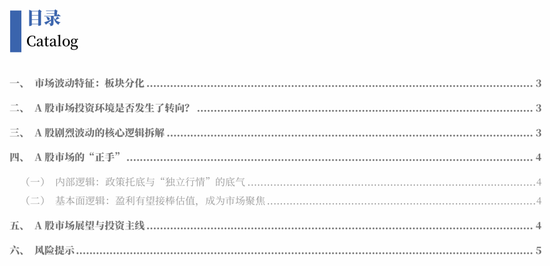
炒股就看金麒麟分析师研报,权威,专业,及时,全面,助您挖掘潜力主题机会! 来源:中国银河策略 A股市场投资机会展望:A股剧烈波动并非趋势性转向,而是外围压力叠加下的短期情绪集中释放,中 长期市场向好趋势未变,后续将逐步从"情绪驱动"回归"基本面驱动",呈现"震荡消化、动能提升、结 构聚焦"的运行格局。一是政策面持续发力,两会期间政策红利将集中释放,为市场提供明确的主线方 向;二是国内经济复苏基础逐步夯实,企业盈利有望持续改善,为市场提供基本面支撑;三是当前A股 估值仍处于合理水平,长线资金逐步入场,市场中长期向好趋势明确。配置机会上,建议重点关注:主 线一,短期确定性,涨价与避险。若地缘冲突短期内难以平息,全球实物资产正经历价值重估过程。霍 尔木兹海峡的紧张局势直接驱动能源及替代性需求走强。油气、石油化工(直接受益于油价上涨)、煤 炭(替代逻辑);有色金属(铜、铝、黄金,受益于通胀预期和避险需求);航运港口(运价飙升及航 线重构)。主线二,供需格局改善与行业盈利修复逻辑,以及估值具备安全边际的红利资产,建议关注 基础化工(业绩边际改善预期加强,如化学制品、化学原料、农化制品等)、钢铁、建筑材料、金融 (尤其是 ...

2026年2月PMI数据解读:2月PMI:春节短期因素扰动较大
ZHESHANG SECURITIES· 2026-03-04 08:07
Group 1: PMI Overview - The manufacturing PMI for February is 49.0%, a decrease of 0.3 percentage points from the previous month, indicating a contraction phase[1] - The production index for manufacturing dropped to 49.6%, down 1.0 percentage points, also reflecting a contraction[3] - The composite PMI output index fell to 49.5%, a decline of 0.3 percentage points from January[8] Group 2: Sector Performance - High-tech manufacturing PMI remains in the expansion zone at 51.5%, despite a 0.5 percentage point decrease from last month[3] - Large enterprises show a PMI of 51.5%, up 1.2 percentage points, indicating strong resilience and competitiveness[3] - The consumer goods sector's PMI improved but remains in contraction at 48.8%[24] Group 3: Demand and Supply Dynamics - The new orders index for manufacturing is at 48.6%, down 0.6 percentage points, indicating a slowdown in domestic demand[4] - The new export orders index dropped to 45.0%, a decrease of 2.8 percentage points, affected by the holiday season[4] - The non-manufacturing business activity index increased slightly to 49.5%, up 0.1 percentage points, supported by holiday-related consumption[7] Group 4: Price Trends - The purchasing price index for raw materials is at 54.8%, down 1.3 percentage points, indicating a slowing increase in raw material costs[6] - The factory price index remains stable at 50.6%, unchanged from the previous month, indicating continued upward pressure on prices[6]
库存持续累积,多晶硅破位下行
Zhong Xin Qi Huo· 2026-03-04 07:57
1. Report Industry Investment Rating - Not provided in the given content 2. Core View of the Report - The polysilicon price has continued to decline after the Chinese New Year, and the market is cautious about the industry's "anti-involution" in the short term. The price is still under pressure and may continue to decline towards the cost support area. However, in the medium term, if the supply side gradually contracts, the supply - demand structure may improve marginally, and the polysilicon price is expected to gradually recover and stabilize. In the medium - long term, it may mainly show wide - range fluctuations [3][5] 3. Summary by Relevant Catalogs Latest Dynamics and Reasons - The polysilicon price has continued to fall after the Chinese New Year. Today, the best - performing main contract has fallen by more than 4% to around 42,000 yuan per ton. On one hand, due to antitrust concerns in January, the "anti - involution" expectation of polysilicon has been continuously shaken, and leading silicon wafer enterprises have planned to strengthen capacity integration and mergers. On the other hand, the demand in the first quarter has been weak, and the industry and warehouse receipt inventories have continued to accumulate, which has dragged down the spot price and in turn affected the futures price [3] Fundamental Situation - Supply side: Leading enterprises have stopped production to consume inventory, and the polysilicon supply in February has further declined. The production in February was 81,000 tons, a month - on - month decrease of 13.9% and a year - on - year decrease of 10%. The cumulative production from January to February was 116,000 tons, a year - on - year decrease of 5%. The production in March is expected to increase slightly, but the overall supply will still remain at a relatively low level of 80,000 - 90,000 tons. - Demand side: With the end of the previous off - season and the approaching window of the cancellation of the photovoltaic tax - refund policy, the production schedules of silicon wafers and battery cells in February after the festival are expected to increase. In the future, the inventory accumulated in the polysilicon industry is expected to be consumed under the pattern of continuous supply contraction [4] Summary and Strategy - Summary: The polysilicon price has broken through the cost support of 45,000 yuan per ton. In the short term, without clear policy positive signals, the market is cautious about the "anti - involution" of the industry, and the price is still under pressure. In the medium term, if the supply side contracts, the supply - demand structure may improve, and the price is expected to recover and stabilize. In the medium - long term, it may show wide - range fluctuations. - Strategy: Considering the short - term price pressure and the factor of concentrated cancellation of warehouse receipts in May, attention can be paid to the reverse arbitrage opportunity between the 06 contract and the far - month contract [5]
2026-03-04:黑色建材日报-20260304
Wu Kuang Qi Huo· 2026-03-04 01:22
Report Industry Investment Rating No relevant content provided. Core Viewpoints of the Report - The overall sentiment in the commodity market declined significantly yesterday, with weakening prices of finished steel products. The conflict between the US, Israel, and Iran has led to concerns about crude oil supply, which has a certain boosting effect on the overall commodity valuation. The fundamentals of the black series are significantly weaker than pre - holiday expectations, and in the short term, inventory digestion and demand verification are the core contradictions. Before the real demand in the peak season is confirmed, prices are likely to continue the range - bound and weak pattern [3]. - In the medium - to - long - term, the upward trend of commodities is expected to continue, but in the short term, the market may continue the cycle of oscillation and volatility reduction, suppressing the overall atmosphere. The black sector remains in a weak state among all commodities and is likely to be short - allocated in the short term [9][16]. Summary by Directory Steel Products 1. Market Quotes - The closing price of the rebar main contract in the afternoon was 3074 yuan/ton, up 7 yuan/ton (0.228%) from the previous trading day. The registered warehouse receipts on that day were 9328 tons, with no change from the previous day. The open interest of the main contract was 1.8819 million lots, a decrease of 21,925 lots. In the spot market, the aggregated price of rebar in Tianjin was 3120 yuan/ton, and in Shanghai was 3190 yuan/ton, both unchanged from the previous day [2]. - The closing price of the hot - rolled coil main contract was 3219 yuan/ton, unchanged from the previous trading day (0%). The registered warehouse receipts on that day were 432,798 tons, an increase of 4410 tons. The open interest of the main contract was 1.4519 million lots, a decrease of 7712 lots. In the spot market, the aggregated price of hot - rolled coils in Lecong was 3240 yuan/ton, and in Shanghai was 3240 yuan/ton, both unchanged from the previous day [2]. 2. Strategy Views - The hot - rolled coil production is basically the same as before the holiday, and the apparent demand has recovered rapidly after the holiday, but the inventory is still in a relatively high range in the past five years. The key is to focus on the inventory reduction rhythm and sustainability. Rebar shows a pattern of weak supply and demand, with the production and sales recovery rhythm not fully restored, and the inventory accumulation speed is relatively fast, but it is still within a controllable range. Overall, the current fundamentals of the black series are significantly weaker than pre - holiday expectations, and in the short term, it is mainly about inventory digestion and demand verification. Before the real demand in the peak season is confirmed, prices are likely to continue the range - bound and weak pattern [3]. Iron Ore 1. Market Quotes - The main contract of iron ore (I2605) closed at 753.50 yuan/ton, with a change of - 0.13% (- 1.00), and the open interest changed by - 9866 lots to 532,900 lots. The weighted open interest of iron ore was 945,500 lots. The spot price of PB fines at Qingdao Port was 754 yuan/wet ton, with a basis of 46.57 yuan/ton and a basis rate of 5.82% [5]. 2. Strategy Views - In terms of supply, overseas ore shipments fluctuate slightly at a high level. The shipments from Australia decreased, while those from Brazil continued to increase, and the shipments from non - mainstream countries also increased. The near - term arrivals continued to decline. In terms of demand, the latest daily average pig iron production increased to 2.3328 million tons. Before the Spring Festival, some blast furnaces resumed production as planned, and most of the blast furnace overhauls started in late February. The profitability of steel mills increased slightly. During the important meeting, pig iron production is expected to be briefly affected. In terms of inventory, port inventories started to accumulate again, and the inventories of steel mills decreased significantly during the holiday, falling to a low level. Overall, after the end of the weather - related impact, overseas supply will recover, and high inventories will suppress price increases. Although the demand for pig iron production has recovered well, prices are expected to oscillate. Attention should be paid to the policy guidance of the important meeting in March [6]. Ferroalloys 1. Market Quotes - On March 3, the main contract of ferromanganese silicon (SM605) continued to rebound, closing up 0.59% at 6118 yuan/ton. In the spot market, the price of 6517 ferromanganese silicon in Tianjin was 5850 yuan/ton, up 50 yuan/ton from the previous day, with a basis of 78 yuan/ton. The main contract of ferrosilicon (SF605) closed up 0.38% at 5786 yuan/ton. In the spot market, the price of 72 ferrosilicon in Tianjin was 6050 yuan/ton, up 100 yuan/ton from the previous day, with a premium of 264 yuan/ton [8]. 2. Strategy Views - Last week, the rise of ferroalloys was mainly driven by market speculation due to rumors of rising power costs in South Africa and the imposition of ecological export tariffs on manganese ore (the ecological export tariff rumor was later refuted), as well as market expectations and speculation related to energy consumption monitoring, energy - consumption dual control, and "anti - involution" rumors around the "Two Sessions" under the background of the central economic work conference in December last year re - emphasizing "dual carbon". - In the medium - to - long - term, the upward trend of commodities is expected to continue, but in the short term, the market may continue the cycle of oscillation and volatility reduction, suppressing the overall atmosphere. The black sector remains in a weak state among all commodities and is likely to be short - allocated in the short term. - In terms of the fundamentals of the varieties themselves, the supply - demand pattern of ferromanganese silicon is still not ideal, with a loose structure, high inventories, and weak downstream demand in the building materials industry. However, these factors have mostly been priced in. The supply - demand structure of ferrosilicon remains basically balanced, with some improvement due to factory overhauls and production conversions. The key factors affecting the market of ferromanganese silicon and ferrosilicon in the future are the direction of the black sector and the overall market sentiment, as well as the cost - push from manganese ore for ferromanganese silicon and the supply contraction (or contraction expectations) due to losses or "dual carbon" policies for ferrosilicon. Attention should be paid to possible restrictions on manganese ore exports from South Africa and Gabon and the impact of "dual carbon" policies on ferroalloy supply [9][10]. Coking Coal and Coke 1. Market Quotes - On March 3, the main contract of coking coal (JM2605) continued to rebound after hitting the bottom, closing up 3.02% at 1127.0 yuan/ton. In the spot market, the price of low - sulfur main coking coal in Shanxi was 1522.5 yuan/ton, with a basis of 204.5 yuan/ton; the price of medium - sulfur main coking coal in Shanxi was 1270 yuan/ton, with a basis of 126 yuan/ton; the price of Mongolian 5 clean coal in Wubulangjinquan Industrial Park was 1197 yuan/ton, with a basis of 45 yuan/ton. The main contract of coke (J2605) closed up 2.54% at 1694.0 yuan/ton. In the spot market, the price of quasi - first - grade wet - quenched coke at Rizhao Port was 1480 yuan/ton, with a basis of 42.5 yuan/ton; the price of quasi - first - grade dry - quenched coke in Lvliang was 1550 yuan/ton, with a basis of 72 yuan/ton [12]. 2. Strategy Views - Last week, the prices of coking coal and coke oscillated weakly. After the pre - holiday restocking of downstream steel mills and coking plants ended, the downstream will enter the active de - stocking stage from after the holiday until mid - April, which restricts consumption. At the same time, coal mines gradually resume production after the holiday, and coal production usually reaches its peak in March. For coke, the downstream also enters the active de - stocking stage, and the weakening price of coking coal reduces the support at the cost end. In addition, the market is still worried about the terminal demand for steel products and has low expectations for the "Two Sessions" policies, which together led to the weak performance of coking coal prices in the first week after the holiday. - In the medium - to - long - term, the upward trend of commodities is expected to continue, but in the short term, the market may continue the cycle of oscillation and volatility reduction, suppressing the overall atmosphere. The black sector remains in a weak state among all commodities and is likely to be short - allocated in the short term. After the Spring Festival, the total inventory of coking coal has decreased, but the downstream steel mills and coking plants are actively de - stocking, while the inventory of upstream mines is increasing, which will restrict the demand for coking coal and coke in the short term until the downstream restocks again in mid - to - late April. On the other hand, coal mines are gradually resuming production after the holiday, increasing the supply pressure. It was previously believed that the short - term upward momentum of coking coal and coke prices was weak, and there was a risk of a phased decline in coking coal prices from March to May. Currently, this view is being gradually verified. Although there is a short - term risk of a phased decline in coking coal prices, it is still expected that coking coal may have a relatively smooth upward trend in 2026, especially from June to October when factors such as the safety production month and the peak consumption season overlap [15][16]. Industrial Silicon and Polysilicon 1. Industrial Silicon - Market Quotes: The closing price of the main contract of industrial silicon (SI2605) was 8205 yuan/ton, with a change of - 1.44% (- 120). The weighted open interest increased by 18,930 lots to 461,419 lots. In the spot market, the price of non - oxygen - blown 553 industrial silicon in East China was 9150 yuan/ton, unchanged from the previous day, with a basis of 945 yuan/ton; the price of 421 industrial silicon was 9600 yuan/ton, unchanged from the previous day, with a basis of 595 yuan/ton [18]. - Strategy Views: The new energy sector declined yesterday, and industrial silicon increased in open interest and decreased in price. The price is oscillating weakly. After the holiday, the number of open furnaces in Xinjiang increased, and the weekly output increased. According to the previous plan, large factories in Xinjiang will resume production in March, and the supply is expected to increase slightly. Currently, the production contraction elasticity in the southwest region is significantly smaller than the expansion elasticity, and the resumption of production is slow, with limited short - term increments. In terms of demand, the polysilicon production schedule in March is higher than that in February, and some bases in the northwest plan to resume production or conduct rotation overhauls. The production of organic silicon has increased. Overall, although the demand side is expected to improve marginally, the supply side also has a slight increase expectation in March. Industrial silicon is expected to show a pattern of increasing supply and demand, and the price will oscillate weakly. Attention should also be paid to the external impact of coal and coke trends on industrial silicon. Future attention should be paid to the resumption of production of large factories in the northwest and changes in downstream demand [19]. 2. Polysilicon - Market Quotes: The closing price of the main contract of polysilicon (PS2605) was 43,700 yuan/ton, with a change of - 2.74% (- 1230). The weighted open interest decreased by 2349 lots to 62,924 lots. In the spot market, the average price of N - type granular silicon was 50 yuan/kg, the average price of N - type dense material was 51 yuan/kg, and the average price of N - type re - feeding material was 51.9 yuan/kg, all unchanged from the previous day. The basis of the main contract was 8200 yuan/ton [20]. - Strategy Views: In terms of supply and demand, some bases in the northwest will resume production or conduct rotation overhauls in March, and the polysilicon production schedule is expected to increase. The inventory of silicon material factories is still at a high level, and the de - stocking amplitude is limited. The prices of battery cells and components have increased due to pre - holiday policies and cost - push, but the silicon wafer sector is still in a state of low prices and high inventory, and the feedback to the silicon material sector is not good. The spot market for silicon materials was quiet after the holiday, with prices slightly loosening and mostly in a wait - and - see state. In terms of policy expectations, there are expectations of "anti - involution", and the anti - monopoly red line is being strengthened in a legalized manner. The open interest and liquidity of the polysilicon futures are still at a relatively low level since listing. The current main contract price has fallen below 45 yuan/kg, and the price is expected to continue to be under pressure. Attention should also be paid to whether there are new "anti - involution" - related statements in the important meeting [21][22]. Glass and Soda Ash 1. Glass - Market Quotes: On Tuesday afternoon at 15:00, the main contract of glass closed at 1054 yuan/ton, up 1.05% (+ 11). The price of large - size glass in North China was 1050 yuan, unchanged from the previous day; the price in Central China was 1090 yuan, unchanged from the previous day. On February 26, the weekly inventory of float glass sample enterprises was 76.008 million cases, an increase of 20.656 million cases (+ 37.32%) from the previous week. In terms of open interest, the top 20 long - position holders reduced their long positions by 10,920 lots, and the top 20 short - position holders reduced their short positions by 30,693 lots [24]. - Strategy Views: There are rumors that a total of 4 glass production lines with a capacity of 2800 tons will be shut down for cold repair this month, and the market rebounded slightly, with the open interest decreasing and the price rising. In terms of demand, downstream processing plants will officially resume work after the Lantern Festival, and the demand release is slow. Traders are mostly in a wait - and - see state. Affected by the blocked shipment of original glass enterprises during the Spring Festival, the industry inventory has increased significantly. After the holiday, the total inventory of sample enterprises increased by 14.71 million weight cases compared with that before the holiday, and the de - stocking pressure is prominent. Although manufacturers generally raised prices during the "good start" window, in the context of weak demand and high inventory, the price increase is difficult. It is expected that the market will maintain a weak and oscillating pattern in the short term. The reference range for the main contract is 1015 - 1100 yuan/ton [25]. 2. Soda Ash - Market Quotes: On Tuesday afternoon at 15:00, the main contract of soda ash closed at 1218 yuan/ton, up 2.53% (+ 30). The price of heavy soda ash in Shahe was 1188 yuan, up 30 yuan from the previous day. On February 26, the weekly inventory of soda ash sample enterprises was 1.8944 million tons, an increase of 306,400 tons (+ 37.32%) from the previous week, including 895,900 tons of heavy soda ash, an increase of 139,500 tons, and 998,500 tons of light soda ash, an increase of 166,900 tons. In terms of open interest, the top 20 long - position holders increased their long positions by 12,825 lots, and the top 20 short - position holders reduced their short positions by 4968 lots [26]. - Strategy Views: There are rumors that a large - scale enterprise plans to overhaul its soda ash production line, and the expectation of supply reduction has increased. In the spot market, the wait - and - see sentiment is still strong. The downstream of light soda ash has not fully resumed production, and the downstream of heavy soda ash mainly purchases on demand, with low overall purchasing enthusiasm. From the demand side, the main consumption industries such as glass and detergents are still in the transition stage of resuming production, and the actual procurement release is slow. It is expected that the market will maintain a narrow - range oscillating pattern. The reference range for the main contract is 1160 - 1240 yuan/ton [27].