
流动性宽松

Search documents
中信期货晨报:国内商品期货多数上涨,航运期货表现强劲-20250926
Zhong Xin Qi Huo· 2025-09-26 01:25
1. Report Industry Investment Rating No relevant content provided. 2. Core Views of the Report - After the overseas Federal Reserve's decision, a new round of global liquidity easing is expected, opening policy space for China's reserve - requirement ratio and interest - rate cuts. In the mid - term from the fourth quarter to the first half of next year, the expected order of asset performance is equities > commodities > bonds. In the short - term of the fourth quarter, the stock market is expected to be volatile, domestic commodities depend on policies, overseas commodities like gold and non - ferrous metals are favored, the weak US dollar trend continues but with a slower slope. The value of bond allocation increases after the rise of domestic interest rates, and it should be balanced with equities in the fourth quarter. Gold has long - term strategic allocation value, and the main logic in the fourth quarter is the interest - rate cut [6]. 3. Summary by Relevant Catalogs 3.1 Macro Highlights - **Overseas Macro**: After the Federal Reserve's decision, a new round of global liquidity easing is coming, providing policy space for China's reserve - requirement ratio and interest - rate cuts. The next FOMC meeting is on October 29, and the market fully expects a 25 - bps rate cut. Attention should be paid to the US September non - farm payrolls and inflation data to be released in early - mid October. Historically, it takes about 2 - 3 months for the Fed's preventive rate cuts to impact the US real economy [6]. - **Domestic Macro**: In the third quarter, China's economic growth slowed down. The funds of existing pro - growth policies are expected to be in place faster, and attention should be paid to the implementation of 500 billion yuan of financial policy tools and new directions in the "14th Five - Year Plan". Investment data in July - August slowed down significantly, especially infrastructure investment. There is a risk of insufficient infrastructure funds in the fourth quarter. However, the expected GDP growth rates in the third and fourth quarters are 4.9% and 4.7% respectively, and the annual 5% target can still be achieved. If investment and exports continue to decline in September, the probability of the implementation of existing funds and incremental policies in the fourth quarter will increase [6]. - **Asset Views**: After the decisions at home and abroad, risk assets may experience a short - term adjustment. In the next 1 - 2 quarters, the global loose liquidity and economic recovery expectations driven by fiscal leverage will support risk assets. In the mid - term from the fourth quarter to the first half of next year, equities > commodities > bonds. In the short - term of the fourth quarter, the stock market is expected to be volatile, domestic commodities depend on policies, overseas commodities like gold and non - ferrous metals are favored, the weak US dollar trend continues but with a slower slope. The value of bond allocation increases after the rise of domestic interest rates, and it should be balanced with equities in the fourth quarter. Gold has long - term strategic allocation value, and the main logic in the fourth quarter is the interest - rate cut [6]. 3.2 View Highlights 3.2.1 Financial Sector - **Stock Index Futures**: Catalyzed by technology events, the growth style is active. The short - term judgment is volatile upward, with the focus on the over - crowdedness of small - cap funds [7]. - **Stock Index Options**: The overall market trading volume declined slightly. The short - term judgment is volatile, with the focus on the insufficient liquidity in the options market [7]. - **Treasury Bond Futures**: The bond market continues to be weak. The short - term judgment is volatile, with the focus on policy surprises, better - than - expected fundamental recovery, and tariff factors [7]. 3.2.2 Precious Metals - **Gold/Silver**: In September, the US interest - rate cut cycle restarted, and the risk of the Fed's loss of independence increased. The short - term judgment is volatile upward, with the focus on the US fundamental performance, the Fed's monetary policy, and the global equity market trends [7]. 3.2.3 Shipping - **Container Shipping to Europe**: In the third quarter, the peak season turned to the off - season, and there is a lack of upward drivers. The short - term judgment is volatile, with the focus on the rate of freight decline in September, the changes in the market, and policy dynamics [7]. 3.2.4 Black Building Materials - **Steel and Iron Ore**: The effect of "anti - involution" still exists, the steel mills' restocking is obvious, and the prices are volatile. The short - term judgment is volatile, with the focus on the progress of special bond issuance, steel exports, iron - water production, overseas mine production and shipment, domestic iron - water production, weather factors, and port ore inventory changes [7]. - **Coke**: The cost support is strong, and the price is volatile. The short - term judgment is volatile, with the focus on steel mill production, coking costs, and macro sentiment [7]. - **Coking Coal**: The supply is stable, and the spot price is rising. The short - term judgment is volatile, with the focus on steel mill production, coal mine safety inspections, and macro sentiment [7]. - **Silicon Iron**: Supported by the peak - season expectation, the futures price recovers from the low level. The short - term judgment is volatile, with the focus on raw material costs and steel procurement [7]. - **Manganese Silicon**: The peak - season expectation is positive, and the price is volatile upward. The short - term judgment is volatile, with the focus on cost prices and overseas quotes [7]. - **Glass**: Driven by the "anti - involution" sentiment, the spot price will rise significantly. The short - term judgment is volatile, with the focus on spot sales [7]. - **Soda Ash**: The supply remains high, and the price is driven by the glass market. The short - term judgment is volatile, with the focus on soda ash inventory [7]. 3.2.5 Non - Ferrous Metals and New Materials - **Copper and Alumina**: There are new disturbances in copper ore supply, and the copper price is volatile upward. The alumina price is under pressure due to weak spot and inventory accumulation. The short - term judgment for copper is volatile upward and for alumina is volatile, with different focus points such as supply disturbances, domestic policies, Fed policies, and demand recovery [7]. - **Aluminum**: The inventory continues to accumulate, and the price is volatile. The short - term judgment is volatile, with the focus on macro risks, supply disturbances, and demand [7]. - **Zinc**: The inventory continues to accumulate, and the price is volatile. The short - term judgment is volatile, with the focus on macro changes and zinc ore supply [7]. - **Lead**: The supply of recycled lead decreases, and the price is volatile upward. The short - term judgment is volatile upward, with the focus on supply disturbances and battery exports [7]. - **Nickel**: Indonesia's crackdown on illegal mining makes the nickel price highly volatile. The short - term judgment is volatile, with the focus on macro and geopolitical changes, Indonesian policies, and supply [7]. - **Stainless Steel**: Supported by costs, the price rises significantly. The short - term judgment is volatile, with the focus on Indonesian policies and demand [7]. - **Tin**: The resumption of production in Wa State is slower than expected, and the price is high and volatile. The short - term judgment is volatile, with the focus on the resumption of production in Wa State and demand improvement [7]. - **Industrial Silicon**: The supply continues to increase, suppressing the price. The short - term judgment is volatile, with the focus on supply reduction and photovoltaic installation [7]. - **Lithium Carbonate**: The fundamental driving force is weak, and the price is volatile. The short - term judgment is volatile, with the focus on demand, supply, and new technologies [7]. 3.2.6 Energy and Chemicals - **Crude Oil**: Geopolitical concerns re - emerge, and supply pressure continues. The short - term judgment is volatile downward, with the focus on OPEC+ production policies and the Middle East geopolitical situation [9]. - **LPG**: The chemical demand weakens, and the price is weak. The short - term judgment is volatile, with the focus on cost factors such as crude oil and overseas propane [9]. - **Asphalt**: The asphalt - fuel oil spread declines rapidly. The short - term judgment is volatile downward, with the focus on sanctions and supply disturbances [9]. - **High - Sulfur Fuel Oil**: Driven by geopolitical factors, the price rises. The short - term judgment is volatile, with the focus on geopolitics and crude oil prices [9]. - **Low - Sulfur Fuel Oil**: It follows the upward trend of crude oil. The short - term judgment is volatile, with the focus on crude oil prices [9]. - **Methanol**: Affected by olefins and port inventory, the contradiction between near - and far - term contracts is large. The short - term judgment is volatile, with the focus on macro - energy and upstream - downstream device dynamics [9]. - **Urea**: The price is under cost pressure, and there is a risk of over - reaction. The short - term judgment is volatile, with the focus on export policies and the seventh Indian tender [9]. - **Ethylene Glycol**: The market sentiment is affected by long - term inventory accumulation. The short - term judgment is volatile, with the focus on coal and oil prices, port inventory, and device implementation [9]. - **PX**: Due to postponed device maintenance and capacity expansion, the supply - demand situation weakens. The short - term judgment is volatile, with the focus on crude oil price fluctuations, macro changes, and demand in the peak season [9]. - **PTA**: Low processing fees lead to more enterprise production cuts, but the long - term oversupply situation remains. The short - term judgment is volatile, with the focus on crude oil price fluctuations, macro changes, and demand in the peak season [9]. - **Short - Fiber**: Terminal orders improve slightly, but high supply poses risks. The short - term judgment is volatile, with the focus on downstream yarn mill purchasing and demand in the peak season [9]. - **Bottle - Chip**: There is short - term replenishment, but the medium - long - term demand recovery is uncertain. The short - term judgment is volatile, with the focus on enterprise production cuts and terminal demand [9]. - **Propylene**: The spread with PP fluctuates between 500 - 550. The short - term judgment is volatile, with the focus on oil prices and domestic macro factors [9]. - **PP**: There may be support near the previous low. The short - term judgment is volatile, with the focus on oil prices and domestic and overseas macro factors [9]. - **Plastic**: The support from maintenance is limited, and the price declines. The short - term judgment is volatile, with the focus on oil prices and domestic and overseas macro factors [9]. - **Styrene**: The commodity sentiment improves, and attention should be paid to policy details. The short - term judgment is volatile, with the focus on oil prices, macro policies, and device dynamics [9]. - **PVC**: With weak reality and strong expectation, the price is volatile. The short - term judgment is volatile, with the focus on expectations, costs, and supply [9]. - **Caustic Soda**: Driven by the expected alumina production increase, the price rebounds. The short - term judgment is volatile, with the focus on market sentiment, production, and demand [9]. - **Oils and Fats**: The risk of price fluctuations increases, and attention should be paid to trade policies. The short - term judgment is volatile, with the focus on US soybean weather and Malaysian palm oil production and demand data [9]. - **Protein Meal**: After the impact of Argentine soybean exports, the price rebounds from the low level. The short - term judgment is volatile, with the focus on US soybean weather, domestic demand, macro factors, and trade frictions [9]. - **Corn/Starch**: The arrival of raw materials at North China deep - processing plants hits a new low, and the price rebounds slightly. The short - term judgment is volatile, with the focus on demand, macro factors, and weather [9]. - **Pig**: The near - term is weak and the long - term is strong, and the reverse spread continues. The short - term judgment is volatile downward, with the focus on breeding sentiment, epidemics, and policies [9]. 3.2.7 Agriculture - **Rubber**: Positions are reduced before the holiday, and a wait - and - see attitude is maintained. The short - term judgment is volatile, with the focus on production area weather, raw material prices, and macro changes [9]. - **Synthetic Rubber**: The price fluctuates within a range. The short - term judgment is volatile, with the focus on crude oil price fluctuations [9]. - **Cotton**: The price continues to be weak, and attention should be paid to the purchase price. The short - term judgment is volatile, with the focus on demand and inventory [9]. - **Sugar**: The price fluctuates at a low level. The short - term judgment is volatile, with the focus on imports and Brazilian production [9]. - **Pulp**: The main contract of pulp is volatile, and the pressure on the 01 contract is more obvious. The short - term judgment is volatile, with the focus on macroeconomic changes and US dollar - based quotes [9]. - **Double - Glued Paper**: Downstream orders are weak, and market contradictions are not prominent. The short - term judgment is volatile, with the focus on production and sales, education policies, and paper mill production [9]. - **Log**: The spot price is stable, and the price is volatile. The short - term judgment is volatile, with the focus on shipment and delivery volumes [9].
中信期货晨报:国内商品期货多数上涨,非金属建材涨幅居前-20250925
Zhong Xin Qi Huo· 2025-09-25 07:02
1. Report Industry Investment Rating No relevant content provided. 2. Core Viewpoints of the Report - Overseas Fed's rate - cut will drive a new round of global liquidity easing, opening policy space for China's reserve - requirement ratio and interest - rate cuts. Liquidity easing trading dominates the market, and the risk of Fed's independence may increase the potential long - term rate - cut elasticity. The next Fed meeting is on October 29, and the market fully expects a 25 - bps rate cut. Attention should be paid to US September non - farm and inflation data released in early - mid October. The transmission of Fed's preventive rate cuts to the US real economy takes about 2 - 3 months [6]. - In Q3, China's economic growth slowed down continuously. The funds of existing pro - growth policies are expected to be in place faster. Attention should be paid to the implementation of 500 billion yuan in financial policy tools and new directions in the "15th Five - Year Plan". Investment data from July to August slowed down significantly, especially infrastructure investment. There is a risk that infrastructure funds in Q4 may fall short of expectations. However, the expected GDP growth rates in Q3 and Q4 are 4.9% and 4.7% respectively, and the annual 5% target can still be achieved. If investment and exports continue to decline in September, the probability of the implementation of existing funds and incremental policies in Q4 will increase [6]. - After the domestic and overseas uncertainties are resolved, risk assets may enter a short - term adjustment phase. In the next 1 - 2 quarters, the global loose liquidity and economic recovery expectations driven by fiscal leverage will support risk assets. In the medium - term from Q4 to H1 next year, the expected performance order is equities > commodities > bonds. In Q4, the stock market is expected to be volatile, domestic commodities depend on policies, overseas commodities such as gold and non - ferrous metals are favored, the weak - dollar trend will continue but at a slower pace. The allocation value of bonds increases after the rise of domestic interest rates, and bonds should be allocated equally with equities in Q4. Gold is for long - term strategic allocation, and rate cuts are the main logic in Q4, with the risk of premature trading of recovery expectations [6]. 3. Summary by Relevant Catalogs 3.1 Macro Highlights - **Overseas Macro**: After the Fed's decision, a new round of global liquidity easing is expected, providing policy space for China's rate cuts. The market is dominated by liquidity - easing trading. The risk of the Fed's independence may increase the potential long - term rate - cut elasticity. Attention should be paid to the impact of rate cuts on the US real economy. The next Fed meeting is on October 29, and market expectations for a 25 - bps rate cut are high. Pay attention to US September non - farm and inflation data. Historically, the transmission of Fed's preventive rate cuts to the US real economy takes 2 - 3 months [6]. - **Domestic Macro**: Q3 economic growth slowed. Existing pro - growth policy funds are expected to be in place faster. Pay attention to 500 billion yuan in financial policy tools and new "15th Five - Year Plan" directions. July - August investment data slowed, especially infrastructure investment. There is a risk of insufficient infrastructure funds in Q4. However, the annual 5% GDP growth target can still be achieved. If September investment and exports decline, the probability of policy implementation in Q4 will increase [6]. - **Asset Views**: After uncertainties are resolved, risk assets may adjust in the short - term. In the next 1 - 2 quarters, loose liquidity and economic recovery expectations will support risk assets. In the medium - term from Q4 to H1 next year, equities > commodities > bonds. In Q4, the stock market is volatile, domestic commodities depend on policies, overseas gold and non - ferrous metals are favored, the weak - dollar trend continues but slows. The allocation value of bonds increases, and they should be allocated equally with equities. Gold is for long - term strategic allocation, with rate cuts as the main Q4 logic and the risk of premature recovery - expectation trading [6]. 3.2 Viewpoint Highlights - **Financial**: For stock index futures, use a dumbbell structure to deal with market divergence; for stock index options, continue the hedging and defensive strategy; for treasury bond futures, the stock - bond seesaw may continue in the short - term. All are expected to be volatile [7]. - **Precious Metals**: Driven by dovish expectations, the prices of gold and silver are expected to rise with a volatile trend, as the Fed restarted the rate - cut cycle in September and the risk of its independence has increased [7]. - **Shipping**: For the container shipping route to Europe, as the peak season in Q3 fades and loading is under pressure, it lacks upward momentum and is expected to be volatile. Attention should be paid to the rate of freight - price decline in September and policy dynamics [7]. - **Black Building Materials**: After the "anti - involution" sentiment cools down, the fundamentals still provide support. Products such as steel, iron ore, coke, coking coal, etc. are expected to be volatile, with different influencing factors for each [7]. - **Non - ferrous Metals and New Materials**: Driven by a weak dollar and the fermentation of reverse - invoicing issues, base metals tend to strengthen. Most products are expected to be volatile, with some showing an upward - trending volatility [7]. - **Energy and Chemicals**: The supply - demand situation of crude oil has weakened significantly, and the decline of coking coal has affected the chemical industry. Most chemical products are expected to be volatile, with different market logics and influencing factors [9]. - **Agriculture**: Affected by Argentina's tariff policy changes, oilseeds and meals have been hit hard. Most agricultural products are expected to be volatile, with different influencing factors for each [9].
有色和贵金属每日早盘观察-20250924
Yin He Qi Huo· 2025-09-24 10:01
1. Report Industry Investment Rating No relevant content provided. 2. Core Views of the Report - The precious metals market remains strong due to expectations of future US liquidity easing, but there are still risks of stagflation in the US and geopolitical conflicts. In the long - term, there is a tendency for global asset allocation to shift towards gold, and short - term fluctuations can be dealt with by a low - buying strategy [2][3]. - The copper market is affected by macro factors and fundamentals. The supply of copper concentrates is tight, and domestic production has declined. The consumption is weak in the peak season, and short - term copper prices are expected to be in a high - level consolidation [5][9][11]. - The alumina market shows a weakening trend. The domestic and overseas spot prices are falling, and the import window is slightly open. The bauxite in Guinea has an incremental expectation, and the fundamentals are weak [13][16]. - The casting aluminum alloy market has a stable and slightly strong alloy ingot spot price. The enterprises in some regions are preparing raw materials for the National Day holiday, and the downstream demand is picking up [18]. - The electrolytic aluminum market is affected by macro factors and supply - demand. The price is expected to be weak in the short term until the consumption side improves significantly [22][25]. - The zinc market may maintain a slight surplus in September. The domestic refined zinc supply may decrease slightly, and the downstream has a replenishment expectation, but the amplitude is limited. The overseas inventory reduction may support the price, but attention should be paid to the overseas delivery situation [27][30]. - The lead market has mixed long and short factors. The supply may increase, and the downstream may stock up before the holiday. The lead price is expected to oscillate at a high level [32][34]. - The nickel market is slightly boosted by the Indonesian policy, but the impact on the supply is limited. The net import is expected to decline, and the price will maintain a wide - range oscillation [36][37]. - The stainless steel market has a supply pressure as the production has increased significantly in September, but the inventory is slowly decreasing, and the cost support is strong. It is expected to maintain an oscillating trend [39][41]. - The industrial silicon market has a "low - at - both - ends, high - in - the - middle" inventory structure. The production of polysilicon in October and market sentiment have a greater impact on the price. It is recommended to participate in long positions [43]. - The polysilicon market has a short - term negative impact on the futures due to the rumor of production resumption. The best strategy is to participate in long positions after the price correction [45][46][47]. - The lithium carbonate market is in a stalemate. The supply increment is limited in the short term, and the demand is strong. The price may oscillate strongly in the short term but will generally maintain an oscillating pattern [48][51][52]. - The tin market has a high - level oscillation. The supply is still tight, and the demand is sluggish. Attention should be paid to the resumption of production in Myanmar and the recovery of electronic consumption [57][58]. 3. Summaries According to Relevant Catalogs Precious Metals Market Review - London gold hit a new high above $3790 and then fell back, closing up 0.46% at $3764.02 per ounce. London silver first rose and then fell, closing down 0.07% at $44.02 per ounce. The Shanghai gold and silver futures contracts also had corresponding price changes [2]. - The US dollar index oscillated above 97, closing down 0.08% at 97.22. The 10 - year US Treasury yield fell to 4.11%. The RMB exchange rate against the US dollar was in a high - level consolidation, closing at 7.1119 [2]. Important资讯 - The Fed officials had different views on interest rates. Powell thought the policy rate was still slightly restrictive, and the market expected further interest rate cuts. The probability of the Fed cutting interest rates in October and December was high [2]. - The US September PMI data showed that the economy had some resilience. Geopolitical conflicts also had an impact on the market [2]. Logic Analysis - The market expected future US liquidity easing, but there were still stagflation risks and geopolitical conflicts. The precious metals maintained a strong trend, but there were profit - taking signs at high levels [3]. Trading Strategy - Unilateral: Adopt a low - buying strategy. - Arbitrage: Wait and see. - Options: Use collar call options [3]. Copper Market Review - The night - session Shanghai copper 2511 contract closed at 79,970 yuan per ton, up 0.04%. The LME copper closed at $9,993.5 per ton, down 0.08% [5]. - The LME copper inventory decreased by 400 tons to 144,900 tons, and the COMEX copper inventory increased by 1,511 tons to 318,200 tons [5]. Important资讯 - Diplomatic activities were carried out between China and the US. Powell warned about the Fed's dual mission and implied that interest rates were still restrictive [5]. - There were differences within the Fed on future monetary policies. Southern Copper expected stable copper production in Peru this year and had some project plans [5][7][8]. Logic Analysis - Macro factors indicated that interest rates were still restrictive, and the market followed the Fed's statements. Fundamentally, the supply of copper concentrates was tight, and domestic production declined. The consumption was weak in the peak season [9]. Trading Strategy - Unilateral: Short - term copper prices will be in a high - level consolidation. - Arbitrage: Hold long - short cross - market arbitrage positions. - Options: Wait and see [11]. Alumina Market Review - The night - session alumina 2601 contract decreased by 18 yuan to 2,881 yuan per ton. The spot prices in different regions decreased [13]. Important资讯 - There were some spot transactions in different regions, and the prices decreased. The national alumina production capacity operation increased slightly, and the Australian alumina price decreased. The import and export volume of alumina in August had corresponding changes [13][14]. Logic Analysis - The domestic and overseas spot prices of alumina were falling, and the import window was slightly open. The bauxite in Guinea had an incremental expectation, and the fundamentals were weak [16]. Trading Strategy - Unilateral: The alumina price will run weakly. - Arbitrage: Conduct reverse calendar spread arbitrage. - Options: Wait and see [16]. Casting Aluminum Alloy Market Review - The night - session casting aluminum alloy 2511 contract increased by 40 yuan to 20,270 yuan per ton. The spot prices in different regions were stable [18]. Important资讯 - A policy on standardizing investment promotion affected the recycled aluminum industry. The social inventory of recycled aluminum alloy ingots changed, and the Shanghai Futures Exchange launched the standard warehouse receipt generation business for casting aluminum alloy [18]. Trading Logic - Some enterprises in Henan, Jiangxi, and Anhui were preparing raw materials for the National Day holiday. The downstream demand was picking up, and the alloy ingot spot price was stable and slightly strong [18]. Trading Strategy - Unilateral: The aluminum alloy futures price will oscillate weakly following the aluminum price. - Arbitrage: Long AD and short AL. - Options: Wait and see [20]. Electrolytic Aluminum Market Review - The night - session Shanghai aluminum 2511 contract decreased by 15 yuan to 20,670 yuan per ton. The spot prices in different regions decreased [22]. Important资讯 - The euro - zone September manufacturing PMI fell into the contraction range, and the US manufacturing PMI was still in the growth range. The electrolytic aluminum inventory in the main markets decreased. An electrolytic aluminum project in Indonesia was expected to be put into production in stages. The import and export volume of aluminum ingots in August had corresponding changes [22][23]. Trading Logic - The Fed was cautious about further interest rate cuts. The European manufacturing PMI was in the contraction range. Domestically, attention should be paid to the downstream's inventory - building sentiment and holiday plans [25]. Trading Strategy - Unilateral: The aluminum price will be weak in the short term until the consumption side improves. - Arbitrage: Wait and see. - Options: Wait and see [25]. Zinc Market Review - The overnight LME zinc market decreased by 0.36% to $2,889.5 per ton. The Shanghai zinc 2511 contract decreased by 0.09% to 21,935 yuan per ton [27]. - The spot price in Shanghai was in a certain range, and the trading was not active [27]. Important资讯 - The domestic zinc inventory decreased in some regions and increased in others. Affected by Typhoon "Hagasa", the operating rate of die - casting zinc alloy enterprises in Guangdong was expected to decline [27][28]. Logic Analysis - The domestic refined zinc supply in September may decrease slightly, but the monthly output was still at a relatively high level. The downstream enterprises bought at low prices, and the inventory decreased slightly. The downstream had a replenishment expectation before the National Day, but the amplitude was limited. The overseas inventory reduction may support the price, but attention should be paid to the overseas delivery situation [28][30]. Trading Strategy - Unilateral: The short - term zinc price will oscillate in a range. Pay attention to the LME inventory change. - Arbitrage: Wait and see. - Options: Wait and see [30]. Lead Market Review - The overnight LME lead market decreased by 0.03% to $1,999 per ton. The Shanghai lead 2511 contract decreased by 0.2% to 17,090 yuan per ton [32]. - The SMM1 lead average price decreased, and the price difference between different regions and types of lead existed. The transaction of recycled refined lead was under pressure [32]. Important资讯 - The SMM lead ingot social inventory decreased. The import volume of lead concentrates in August increased, and the import and export volume of lead - acid batteries decreased [32][33][34]. Logic Analysis - The lead price strengthened, and the loss of domestic recycled lead smelting was repaired. Some enterprises planned to resume production. The downstream lead - storage enterprises may stock up before the holiday. The lead price was expected to oscillate at a high level [34]. Trading Strategy - Unilateral: The short - term lead price will oscillate at a high level. Try short positions at high prices. - Arbitrage: Wait and see. - Options: Wait and see [34]. Nickel Market Review - The overnight LME nickel price increased to $15,340 per ton, and the inventory increased. The Shanghai nickel main contract increased to 121,740 yuan per ton [36]. - The spot premiums of different types of nickel remained unchanged [36]. Important资讯 - Indonesia punished some mining companies, and the Democratic Republic of the Congo was considering extending the cobalt export ban [36]. Logic Analysis - The nickel price was slightly boosted by Indonesia's policy, but the impact on the supply was limited. The net import of refined nickel decreased, and the LME inventory was expected to increase. The positive news from Indonesia and the Philippines supported the nickel ore price, but the upward momentum was insufficient. The nickel price will oscillate in a wide range [37]. Trading Strategy - Unilateral: Wait and see. - Arbitrage: Wait and see. - Options: Wait and see [37]. Stainless Steel Market Review - The main stainless steel SS2511 contract increased to 12,940 yuan per ton. The spot prices of cold - rolled and hot - rolled stainless steel were in a certain range [39]. Important资讯 - Affected by Typhoon "Hagasa", Foshan implemented "five - stop" measures [39]. Logic Analysis - The stainless steel production in September increased significantly, but the demand did not show seasonal peak - season characteristics. The supply pressure existed, but the inventory was slowly decreasing, and the cost support was strong. The price was expected to oscillate [41]. Trading Strategy - Unilateral: Oscillate in a wide range. - Arbitrage: Wait and see [41]. Industrial Silicon Market Review - The Tuesday industrial silicon futures main contract oscillated narrowly, closing down 2.3% at 8,925 yuan per ton. The spot price was stable [43]. Important资讯 - The export volume of industrial silicon products in August increased year - on - year and month - on - month [43]. Comprehensive Analysis - The industrial silicon inventory structure was "low - at - both - ends, high - in - the - middle". The production of polysilicon in October and market sentiment had a greater impact on the price. It was recommended to participate in long positions [43]. Strategy - Unilateral: Participate in long positions. - Options: Sell out - of - the - money put options. - Arbitrage: None [43]. Polysilicon Market Review - The Tuesday polysilicon futures main contract decreased and then rebounded, closing at 50,260 yuan per ton, down 2.745. The spot price was stable [45][46]. Important资讯 - The August全社会用电量 data was released, showing an increase year - on - year [46]. Comprehensive Analysis - The rumor of polysilicon production resumption in October was a short - term negative factor. The spot price was rising, and the best strategy was to participate in long positions after the price correction [46][47]. Strategy - Unilateral: Participate in long positions after sufficient price correction [47]. Lithium Carbonate Market Review - The main 2511 contract decreased to 73,660 yuan per ton, and the index position decreased. The GQEX warehouse receipt increased. The spot prices of electric - grade and industrial - grade lithium carbonate were stable [48]. Important资讯 - India had requirements for the procurement of components, battery cells, and silicon wafers in the ALMM project. Chile submitted the lease agreement for lithium production [49][51]. Logic Analysis - The lithium price was in a stalemate. The short - term supply increment was limited, and the demand was strong. The price may oscillate strongly in the short term but will generally maintain an oscillating pattern [51]. Trading Strategy - Unilateral: Oscillate in a wide range. - Arbitrage: Reverse arbitrage between 2511 and 2512 contracts. - Options: Sell wide - straddle options [49][52]. Tin Market Review - The main Shanghai tin 2510 contract closed at 271,090 yuan per ton, up 0.31%. The LME tin inventory decreased, and the domestic social inventory decreased significantly [54][57]. - The Shanghai metal network spot tin ingot average price decreased. The spot trading atmosphere improved, but the downstream demand was still limited [54]. Important资讯 - Diplomatic activities were carried out between China and the US. Powell warned about the Fed's dual mission, and the Fed officials had different views on interest rates [56]. - An Indonesian tin ore producer planned to increase production next year, and a US tin smelter started construction [57]. Logic Analysis - The Fed had differences on future monetary policies. The tin ore supply was still tight, but there were short - term improvement signs. The demand was sluggish, and the consumption electronics and home appliance industries only slightly recovered. Attention should be paid to the resumption of production in Myanmar and the recovery of electronic consumption [57]. Trading Strategy - Unilateral: Maintain a high - level oscillation. - Options: Wait and see [58].
机构看金市:9月24日
Xin Hua Cai Jing· 2025-09-24 08:46
Core Viewpoint - The global asset allocation is likely to continue shifting towards gold due to various economic factors and geopolitical tensions, with expectations of further liquidity easing in the U.S. market [1][2][4]. Group 1: Market Analysis - Galaxy Futures indicates that Powell's remarks suggest a tight monetary policy, interpreted by the market as opening space for further rate cuts, maintaining high expectations for U.S. liquidity easing [1]. - The latest PMI data points to resilience in the U.S. economy, which may alleviate concerns about economic slowdown, although profit-taking is observed near historical highs in precious metals [1]. - The demand for precious metals, particularly gold and silver, is increasing, driven by ongoing conflicts between the Federal Reserve and the Trump administration, which is reigniting upward momentum in gold prices [4]. Group 2: Price Predictions - Scotiabank forecasts that gold could reach $4,800 per ounce next year under optimistic conditions, with a near-term target of $3,800 and support levels at $3,650 and $3,550 [4]. - Jefferies' Christopher Wood predicts that gold prices could touch $6,600 per ounce, based on historical bull markets and U.S. disposable income analysis, indicating a potential increase of over 76% from current levels [5]. Group 3: Economic Indicators - The recent U.S. PPI data falling below expectations supports the notion of Federal Reserve easing, with market expectations fully pricing in rate cuts starting in September and three cuts within the year [2]. - Political uncertainties, including the collapse of the French government and the resignation of Japan's Prime Minister, are heightening risk aversion, benefiting gold prices [2][4].
774只,翻倍!
Zhong Guo Ji Jin Bao· 2025-09-24 02:15
Group 1 - The A-share market has entered a bull market since September 24, 2024, with major indices significantly rising, such as the North Exchange 50 Index increasing by 158.01% [1] - The average daily trading volume in the market surged from less than 500 billion to over 2 trillion [1] - 13 mutual funds have seen a net value growth rate exceeding 200%, while 774 funds have surpassed 100% [1][2] Group 2 - The performance of equity mixed funds has rebounded, with the index rising by 57.88% since September 24, 2024 [2] - Notable funds include Debon Xinxing Value Mixed Fund, which achieved a net value growth of 280.31% [2] - The strong performance is attributed to the robust market rally and the significant returns from technology stocks [2] Group 3 - Key factors driving the market's rise include ongoing stock market reforms, improved policy expectations, and breakthroughs in various sectors such as innovative drugs and robotics [3] - The market's risk appetite has notably increased, with more retail investors entering the market since June [6][7] Group 4 - The A-share market has shown significant improvement in valuation, liquidity, and investor structure, with the overall valuation rising from 15.63 times to 22.16 times [6] - The market is expected to maintain a "slow bull" trend, supported by continuous policy backing and structural upgrades in industries [7] Group 5 - Investment opportunities are seen in sectors like AI, innovative drugs, and electric new energy, driven by supportive industrial policies and technological breakthroughs [8][9] - The focus on sectors such as AI computing, electric new energy, and innovative pharmaceuticals is expected to yield significant returns [9][10]

周度经济观察:国内财政力度减弱,海外降息周期重启-20250923
Guotou Securities· 2025-09-23 09:35
Group 1: Economic Overview - In August, general public budget revenue growth was 2.0%, a decrease of 0.6 percentage points from the previous month, indicating a weakening fiscal expansion[4] - August public budget expenditure growth was 0.8%, down 2.2 percentage points from the previous month, marking the second-lowest level of the year[6] - Government fund revenue in August fell by 6.0%, a significant drop of 15.4 percentage points from the previous month, primarily due to declining land transfer income[7] Group 2: Market Trends - The bond market is experiencing rising yields, influenced more by risk appetite and trading behavior rather than fundamental economic data[2] - The U.S. Federal Reserve has initiated a rate cut cycle, with expectations for further cuts in October and December, which may support a strong performance in the U.S. stock market[2][17] - The S&P 500 index has been fluctuating around 3800, with TMT sectors showing strong performance while dividend-paying sectors lag behind[11] Group 3: Future Outlook - The effectiveness of growth stabilization policies in the fourth quarter remains uncertain, particularly in the real estate, manufacturing, and consumption sectors[10] - The ongoing liquidity environment and fiscal expansion are expected to provide a basic support for the equity market, especially benefiting small-cap stocks[11][21] - The anticipated U.S. rate cuts and tax reduction policies may further bolster the U.S. economy, leading to a continued strong performance in the stock market[21]
美联储“重启”降息有何影响?
2025-09-23 02:34
Summary of Conference Call Records Industry Overview - The records discuss the impact of the Federal Reserve's interest rate cuts on the global financial markets, particularly focusing on the Chinese economy and its currency dynamics [1][2][4]. Key Points and Arguments 1. **Federal Reserve's Interest Rate Cuts** - The Federal Reserve cut interest rates by 25 basis points, aligning with market expectations, and indicated potential further cuts in October and December, depending on inflation and labor market conditions [1][4]. 2. **Impact on Chinese Yuan and Equity Markets** - The Chinese Yuan is expected to appreciate, with projections of reaching around 7.0 by the end of 2025 and potentially breaking 7 in 2026. This appreciation is supported by exporters accumulating approximately $1.3 trillion in unconverted foreign exchange [2][3]. 3. **Liquidity and Market Sentiment** - The Fed's rate cuts are expected to increase global liquidity, positively impacting risk assets such as U.S. stocks and supporting the Chinese equity market [2][5]. 4. **Potential for Further Rate Cuts by PBOC** - The Fed's actions provide the People's Bank of China (PBOC) with room to lower rates, especially given the current macroeconomic data showing negative CPI and PPI growth [1][2]. 5. **Historical Context of Rate Cuts** - Historical analysis indicates that similar Fed actions typically lead to positive performance in various asset classes, particularly in non-recessionary periods [5][6]. 6. **Market Reactions to Different Economic Contexts** - The effectiveness of the Fed's rate cuts varies based on the economic context, with preemptive cuts generally benefiting emerging markets and growth stocks, while commodity and gold prices may see moderate gains [7][8]. 7. **Current Economic Conditions** - The U.S. economy shows signs of marginal weakening but does not exhibit clear signs of a hard landing. This environment suggests a cautious but upward-trending outlook for global markets, with emerging markets like A-shares benefiting from liquidity expansion [8]. Other Important Insights - The records highlight the importance of monitoring the basic economic conditions as they significantly influence market performance following Fed rate cuts. Historical precedents show that the market's response can vary widely based on the underlying economic health at the time of the cuts [6][8].
【招银研究】海外降息重启,国内股市回调——宏观与策略周度前瞻(2025.09.22-09.26)
招商银行研究· 2025-09-22 11:05
Group 1: Monetary Policy and Market Reactions - The Federal Reserve's interest rate cut has led to a mixed market response, with initial dovish sentiments followed by hawkish tones, resulting in a rebound in U.S. Treasury yields and fluctuations in the dollar [2] - U.S. stock valuations remain high, with corporate earnings showing strong performance, suggesting that future stock market gains will primarily come from earnings growth rather than valuation increases [2][8] - The yield curve has steepened significantly due to market expectations of Fed rate cuts and concerns over U.S. fiscal outlook and Fed independence, indicating potential for further steepening before reaching a peak [2] Group 2: Currency Outlook - The dollar is expected to maintain a volatile range between 95 and 103, influenced by interest rate differentials and the resilience of the U.S. economy [3] - The Chinese yuan may exhibit a strong trend in the short term, but could face disturbances from A-share declines and adjustments in U.S. rate cut expectations [3] Group 3: Chinese Economic Indicators - High-frequency data indicates a recovery in the real estate market, with new home sales in 30 major cities up by 9.8% year-on-year, while second-hand home sales increased by 29.8% [5] - External demand remains resilient, with container throughput at Chinese ports maintaining high levels, and export container freight rates showing a slight recovery [5] Group 4: Fiscal and Monetary Developments - August fiscal revenue showed a slight slowdown, with public budget revenue growth at 2.0%, while land sale revenues turned negative [6] - The People's Bank of China has adjusted its 14-day reverse repurchase operations to better reflect market conditions, indicating a shift towards more flexible liquidity management [7] Group 5: Market Strategies - The bond market is expected to experience weak fluctuations, with short-term bonds outperforming long-term ones, and a recommendation to hold mid-duration bonds while being cautious with long-duration investments [9][10] - In the A-share market, recent adjustments are seen as healthy, with a focus on maintaining liquidity and stability in capital markets, while technology growth stocks continue to perform strongly [10][11] - For Hong Kong stocks, a similar strategy is suggested, with dividend stocks as a stable base and growth sectors as aggressive positions, while monitoring for potential market volatility [11]



黄金股票ETF基金(159322)开盘涨超2%,市场资金投票贵金属行情!
Xin Lang Cai Jing· 2025-09-22 01:46
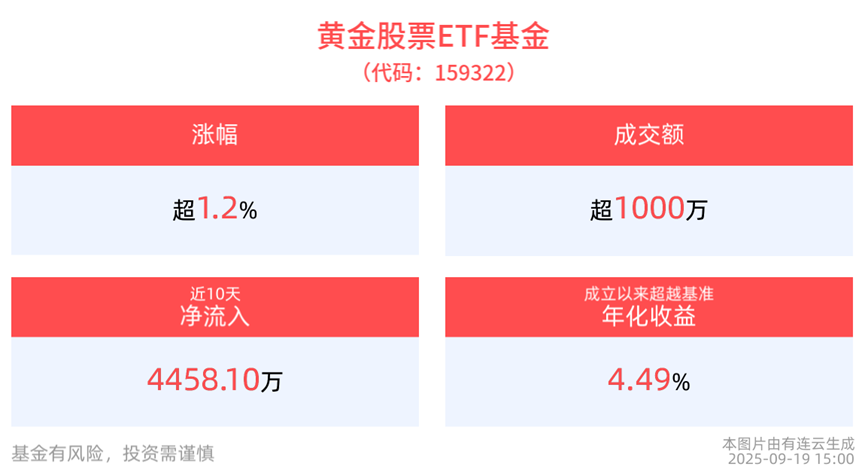
Group 1 - The Federal Reserve lowered interest rates by 25 basis points in September, with potential for two more rate cuts within the year, reinforcing expectations for liquidity easing [1] - Continuous gold purchases by central banks and weakening dollar credit are identified as core drivers for the upward shift in gold prices, presenting opportunities for investment in precious metals [1] - Increased geopolitical risks have led to a significant rise in SPDR gold holdings, indicating accelerated allocation of gold assets by overseas investors, supporting a long-term bullish trend in gold prices [1] Group 2 - As of September 19, 2025, the CSI Hong Kong-Shenzhen Gold Industry Stock Index (931238) rose by 1.65%, with notable increases in constituent stocks such as Deyun Co. (10.01%) and Shandong Gold (6.13%) [3] - The Gold Stock ETF (159322) increased by 1.24%, with a recent price of 1.47 yuan, and has seen a cumulative rise of 17.27% over the past month [3] - The trading activity for the Gold Stock ETF was robust, with a turnover of 10.65% and a total transaction value of 12.35 million yuan on the day [3] Group 3 - The Gold Stock ETF has achieved a net value increase of 34.88% over the past six months, ranking 394 out of 3645 index stock funds, placing it in the top 10.81% [4] - Since its inception, the Gold Stock ETF has recorded a maximum monthly return of 16.59% and a longest consecutive monthly gain of 31.09%, with an average return of 8.13% during up months [4] - The fund has a Sharpe ratio of 2.09 over the past year, ranking it in the top 2 out of 6 comparable funds, indicating higher returns for the same level of risk [4] Group 4 - As of August 29, 2025, the top ten weighted stocks in the CSI Hong Kong-Shenzhen Gold Industry Stock Index accounted for 66.52% of the index, with major companies including Zijin Mining and Shandong Gold [5]

美联储降息落地,持续看好有色金属板块
GOLDEN SUN SECURITIES· 2025-09-21 09:06
Investment Rating - The report maintains a "Buy" rating for several companies in the non-ferrous metals sector, including 山金国际, 赤峰黄金, 洛阳钼业, 中国宏桥, and 中钨高新 [6][7]. Core Views - The report expresses a positive outlook on the precious metals sector, particularly gold and silver, following the Federal Reserve's interest rate cut, which is expected to support prices due to increased liquidity [1][38]. - For industrial metals, the report highlights that copper prices are supported by liquidity easing and seasonal demand, while aluminum prices are expected to fluctuate as demand recovers [2][3]. - In the energy metals segment, lithium prices are anticipated to remain stable due to low factory inventories and increasing demand from the electric vehicle market [3]. Summary by Sections Precious Metals - The Federal Reserve's recent interest rate cut of 25 basis points is expected to boost gold and silver prices, with historical trends indicating that such cuts typically lead to price increases in these metals [1][38]. - Recommended companies in this sector include 兴业银锡, 盛达资源, and 山东黄金 [1]. Industrial Metals - **Copper**: Prices are supported by easing liquidity and seasonal demand, despite a slight pullback due to profit-taking. Global copper inventories increased by 0.83 million tons, with Chinese inventories rising by 0.82 million tons [2]. - **Aluminum**: The report notes stable production capacity in China's aluminum sector, with a theoretical capacity of 44.085 million tons. Short-term price fluctuations are expected as demand recovers [2]. Energy Metals - **Lithium**: The report indicates that factory inventories have dropped to historical lows, with lithium carbonate prices rising by 3.4% to 73,000 yuan/ton. Demand from the electric vehicle sector remains strong [3]. - **Silicon Metal**: The report anticipates price stability in the short term due to increased supply pressures and rising demand ahead of the upcoming holidays [3]. Key Companies - The report highlights several key companies with "Buy" ratings, including: - 山金国际: EPS forecasted to increase from 0.78 yuan in 2024 to 1.75 yuan in 2027 [6]. - 赤峰黄金: EPS expected to rise from 0.93 yuan in 2024 to 2.01 yuan in 2027 [6]. - 洛阳钼业: EPS projected to grow from 0.63 yuan in 2024 to 0.95 yuan in 2027 [6].