
供应缺口

Search documents
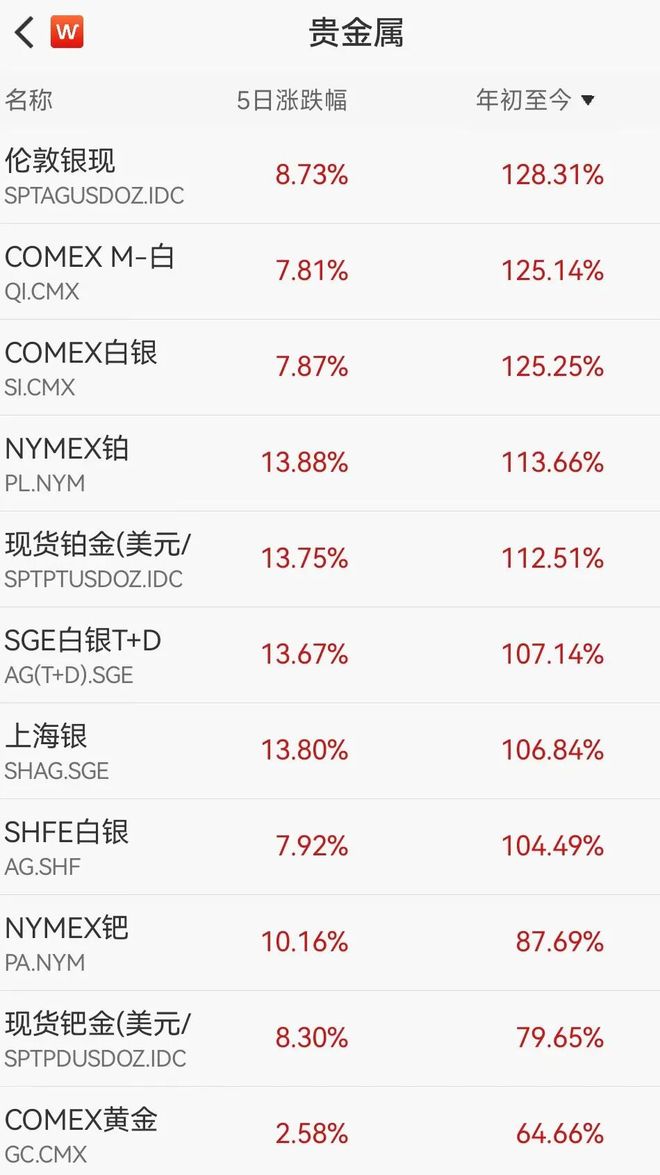
铂金年内飙涨113%,三大因素曝光
2 1 Shi Ji Jing Ji Bao Dao· 2025-12-17 15:50
Core Viewpoint - Precious metals are experiencing a significant year-end rally, with platinum prices rising sharply following substantial increases in gold and silver prices [1]. Group 1: Price Performance - As of December 17, 2023, silver leads the precious metals sector with a year-to-date increase of 128%, while platinum has risen by 113% [3]. - On December 17, domestic platinum futures opened with a strong upward trend, reaching a peak of 527.55 yuan per gram, marking the second time it hit the limit since its listing [3]. - NYMEX platinum futures prices surpassed $1,933 per ounce, with a cumulative increase of 110% year-to-date, significantly outpacing gold's 64% increase [3]. Group 2: Factors Driving Platinum Prices - Platinum prices have surged due to multiple factors, including tightening physical supply, supportive policies in the new energy sector, and geopolitical changes [5]. - The price of NYMEX platinum futures has increased by over 20% since November, with significant rises of 28% and 17% in June and September, respectively [5]. - The World Platinum Investment Council forecasts a global platinum market shortage of 26.4 tons in 2025, despite a 4% year-on-year decline in total demand [8]. Group 3: Market Dynamics and Future Outlook - The current platinum price increase is attributed to three main drivers: limited supply, awakened investment demand, and long-term growth expectations [6]. - In China, retail investment demand for platinum bars and coins has reached historical highs, reflecting investor recognition of platinum's value relative to gold [6]. - The introduction of platinum futures and options in China is expected to bolster demand, while the automotive industry's ongoing adjustments to catalyst technology will continue to support platinum demand [9]. Group 4: Predictions for 2026 - There is a divergence in predictions for platinum and palladium prices in 2026, with some analysts expecting strong price increases despite potential supply surpluses [10]. - The anticipated growth in North American automotive demand could significantly impact platinum and palladium needs, with small changes in vehicle ownership rates leading to substantial demand fluctuations [10]. - Concerns about potential tariffs on platinum group metals in the U.S. could lead to market dynamics similar to those seen in the silver market this year [11].

白银牛市迎大考!“60美元”时代到来之际超买隐忧浮现
Jin Shi Shu Ju· 2025-12-10 12:54
Core Viewpoint - Silver prices are facing a critical test at the $60 per ounce level, which is seen as a pivotal point for potential further gains or resistance in the market [2][3]. Price Movement - Silver has reached multiple historical highs in the past two months, with a 100% increase since 2025 [2]. - The last time silver prices reached such highs was over 45 years ago, indicating a significant market shift [2]. Market Analysis - Analysts suggest that if silver can maintain above $60, it may lead to a more substantial upward trend [2]. - The price surge is attributed to a long-standing supply deficit and increased demand from solar and electric vehicle industries [2][4]. Supply and Demand Dynamics - The global silver supply has been below demand for five consecutive years, with a reported 8.8% decline in silver production from 2016 to 2024, while demand has grown by 17% [4]. - Demand from the solar industry alone has surged by 143%, contributing to the supply-demand imbalance [4]. Investor Sentiment - There is a growing recognition among investors regarding the investment opportunities in the silver market, particularly as the dollar weakens and expectations rise for further Federal Reserve rate cuts [4]. - The influx of funds into silver-tracking ETFs indicates increased investor interest [4]. Cautionary Notes - Analysts warn that silver trading may be highly volatile and not suitable for risk-averse or over-leveraged investors [5]. - Despite the potential for silver prices to reach $100 per ounce, significant corrections may occur during this process [5].
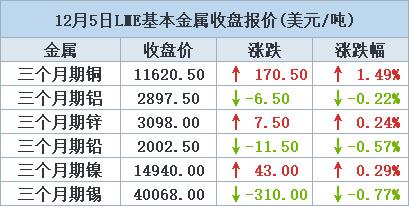
金属涨跌互现 期铜创历史新高,之前花旗上调价格预期【12月5日LME收盘】
Wen Hua Cai Jing· 2025-12-07 00:38
Core Viewpoint - LME copper prices surged to record highs, driven by Citigroup's upward price forecast and a weakening dollar ahead of anticipated Federal Reserve rate cuts [1] Group 1: Copper Market Insights - On December 5, LME three-month copper closed at $11,620.50 per ton, up $170.50 or 1.49%, with an intraday peak of $11,705 [1][2] - Copper prices have increased approximately 3.9% this week and have risen over 30% year-to-date [3] - Citigroup forecasts copper prices to continue rising, with an average price of $13,000 in Q2 2025, up from a previous estimate of $12,000, and a bullish scenario predicting $15,000 [3] Group 2: Market Dynamics and Supply Factors - Analysts suggest that the rise in copper prices is a gradual process, with funds beginning to favor copper due to anticipated shortages from supply constraints at major mines [3] - The arbitrage between Comex and LME is expected to lead to increased copper flows to the U.S., exacerbating supply tightness in the LME market [3] - Despite the upward trend, LME spot copper's premium over three-month contracts has decreased from approximately $88 per ton to $33, indicating a lack of urgent demand for the metal [3] Group 3: Other Base Metals Performance - Other base metals showed mixed performance, with three-month zinc rising 0.24% to $3,098 per ton, previously reaching a near one-year high of $3,125 [2][3] - LME spot zinc's premium over three-month contracts has narrowed but remains around $145 per ton [3]

【白银etf持仓量】11月28日白银ETF较上一交易日上涨28.21吨
Jin Tou Wang· 2025-12-01 08:45
Group 1 - The iShares Silver Trust reported a holding of 15,610.54 tons of silver as of November 28, with an increase of 28.21 tons from the previous trading day [1] - On November 28, the spot silver price closed at $56.71 per ounce, marking a 6.12% increase, with intraday prices reaching a high of $56.78 and a low of $53.30 [1] Group 2 - The Federal Reserve has initiated a new round of easing since September, with two consecutive 25 basis point cuts, bringing the federal funds rate to a range of 3.75% to 4% [3] - Market expectations suggest further rate cuts may occur in the December meeting, which has led to increased demand for silver as an inflation hedge [3] - The 10-year U.S. Treasury yield has fallen to around 4%, significantly reducing the opportunity cost of holding non-yielding precious metals [3] - Discussions surrounding debt sustainability, Federal Reserve independence, and potential "financial repression" have heightened the importance of gold and silver as tools to hedge against long-term policy uncertainty and inflation tail risks [3] - The silver market is projected to face a supply gap of approximately 95 million ounces in 2025, marking the fifth consecutive year of supply shortages, with a cumulative gap of nearly 820 million ounces from 2021 to 2025 [3]

贵金属有色金属产业日报-20251112
Dong Ya Qi Huo· 2025-11-12 11:27
Report Industry Investment Rating No relevant content provided. Core Views of the Report - In the medium - to long - term, central bank gold purchases and growing investment demand will push up the price of precious metals [3]. - The potential end of the US government shutdown and the weakening labor market indicators have increased the market's expectation of a December interest rate cut, weakening the US dollar index and boosting copper prices. Meanwhile, the average price in the domestic spot market has risen, and the premium has slowed [12]. - For aluminum, funds are the core factor affecting prices. There is a contradiction between funds and the industry, and the upward trend of Shanghai aluminum depends on continuous fund inflows. For alumina, it is still in an oversupply situation [32]. - In November, due to intense competition for zinc ore in the smelting sector and a decrease in TC, the willingness to reduce or halt production has increased. If demand remains stable, there is a possibility of inventory reduction, and zinc prices are expected to have upward momentum [56]. - For the nickel industry chain, weak demand in the off - season suppresses the upward space. The price of nickel ore may remain strong in the short term, while nickel iron prices have been decreasing, and stainless steel faces pressure [72]. - For tin, supply is weaker than demand due to limited resumption of production in Wa State and a sharp decline in concentrate imports. Shanghai tin will maintain high - level volatility, but there is a risk of price decline [87]. - For lithium carbonate, it is currently in a state of being prone to rise but difficult to fall, maintaining a strong - side oscillation, but there is a risk of correction [103]. - For the silicon industry chain, the overall supply - demand pattern of industrial silicon and the polysilicon industry chain is weak, and they are expected to show wide - range oscillations [114]. Summary by Related Catalogs Precious Metals - Price trends: Presented data on SHFE and COMEX gold and silver futures prices, as well as price - to - ratio relationships [4][10]. - Price differences: Showed SHFE and SGX gold and silver futures - spot price differences [5][7]. - Correlation: Illustrated the relationship between gold and US Treasury real interest rates and the US dollar index [8][9]. - Fund positions: Displayed the positions of gold and silver long - term funds [10]. - Inventory: Showed SHFE and COMEX gold and silver inventories [11]. Copper - Futures data: Provided data on copper futures prices, including Shanghai and London copper, with details such as the latest price, daily change, and daily change rate [13]. - Spot data: Presented copper spot prices and premium data from different regions, as well as import profit and loss and processing fee data [17][23]. - Scrap price difference: Gave the difference between refined and scrap copper prices [27]. - Warehouse receipts: Showed the quantity and change of copper warehouse receipts in the Shanghai Futures Exchange and international markets [28][30]. Aluminum and Alumina - Price data: Provided price data for aluminum, alumina, and aluminum alloy futures, including the latest price, daily change, and daily change rate [34]. - Price difference: Showed the price differences between different contracts of aluminum, alumina, and aluminum alloy [36][38]. - Spot data: Presented aluminum spot prices, basis, and price differences in different regions, as well as alumina basis data [42][44]. - Inventory: Showed the inventory data of aluminum and alumina futures, including Shanghai and London inventory changes [50]. Zinc - Price data: Provided zinc futures price data, including Shanghai and LME zinc, with details such as the latest price, daily change, and daily change rate [57]. - Spot data: Presented zinc spot prices and premium data, as well as LME zinc premium data [65]. - Inventory: Showed the inventory data of zinc futures, including Shanghai and LME inventory changes [69]. Nickel Industry Chain - Price data: Provided price data for nickel and stainless steel futures, including the latest price, change, and change rate, as well as trading volume, open interest, and warehouse receipt data [73]. - Downstream profit: Showed the profit data of downstream products in the nickel industry chain, such as the profit rate of producing nickel sulfate and stainless steel [82][84]. Tin - Futures data: Provided tin futures price data, including Shanghai and LME tin, with details such as the latest price, daily change, and daily change rate [88]. - Spot data: Presented tin spot prices and premium data, as well as the price data of tin - related products [93]. - Inventory: Showed the inventory data of tin futures, including Shanghai and LME inventory changes [98]. Lithium Carbonate - Futures price: Provided the price data of lithium carbonate futures, including the latest price, daily change, and weekly change, as well as the price difference between different contracts [104][106]. - Spot data: Presented lithium spot prices, including the prices of different types of lithium products and their price differences [108]. - Inventory: Showed the inventory data of lithium carbonate, including exchange inventory, social inventory, and inventory in different sectors [112]. Silicon Industry Chain - Industrial silicon: Presented industrial silicon spot prices, basis, and price differences, as well as futures price data and price differences between different contracts [115][116]. - Polysilicon and related products: Showed the price data of polysilicon, silicon wafers, battery cells, components, and other products in the silicon industry chain [123][125]. - Production and inventory: Displayed the production, inventory, and cost data of industrial silicon and polysilicon, as well as the production capacity and output data of silicon wafers [130][134].
金属狂潮席卷美股!铜铝板块迎“高光时刻”,高盛、Cowen齐声看多铜价
Zhi Tong Cai Jing· 2025-10-24 01:16
Group 1 - The core viewpoint of the articles highlights a significant increase in metal prices, particularly copper and aluminum, which has positively impacted the stock prices of related companies such as Alcoa and Freeport-McMoRan [1][2] - On October 23, 2025, Alcoa's stock rose by 12.59% and Freeport-McMoRan's by 1.10%, driven by a 2.1% increase in Comex copper futures to $5.10 per pound and a 1.8% rise in aluminum futures to $2,860 per ton [1] - Other companies in the sector also saw gains, with Kaiser Aluminum surging 19.55%, Century Aluminum up 3.38%, Hudbay Minerals increasing by 2.25%, and Teck Resources rising by 0.74% [1] Group 2 - Goldman Sachs analysts maintain a bullish outlook, predicting that copper prices may reach historical highs in the coming months, with some investors planning to increase their positions if prices exceed $10,900 per ton [1] - The positive arbitrage mechanism between COMEX and LME may lead to significant tightening effects in the physical market outside the U.S., posing temporary upward risks to LME copper price forecasts of $10,000 to $11,000 per ton [2] - TD Cowen has raised its 2026 Comex copper price target from $4.40 to $5.25 per pound, forecasting a supply gap of 222,000 tons due to production issues at key mines [2]

铜产业链周度报告-20251019
Guo Tai Jun An Qi Huo· 2025-10-19 09:17
1. Report Industry Investment Rating - There is no information provided about the report industry investment rating in the given content. 2. Core Viewpoints of the Report - The copper market shows a neutral performance with prices ranging from 83,000 to 88,000 yuan/ton. The VIX index's rapid rise indicates increased market uncertainty. The market is cautious due to the game between supply constraints and trade concerns [3]. - Macro risks have affected investor sentiment, but they have recently eased. The raw - material supply shortage persists, potentially leading to a future copper supply gap. Global copper inventories increased this week, with a significant rise in domestic inventories. The supply - shortage logic provides long - term opportunities for long - position allocation, and attention should be paid to the development of trade frictions. The long - short spread trading position can continue to be held [7]. 3. Summary by Relevant Catalogs Trading End - Volatility: The volatility of LME and COMEX copper has increased. The COMEX copper price volatility is around 27%, and the SHFE copper volatility is about 25% [13]. - Term Spread: The term structure of SHFE copper has flattened, and the LME copper spot discount has narrowed. The COMEX copper near - end structure has changed from B to C [15][19]. - Position: The positions of SHFE and international copper have decreased, while the COMEX copper position has increased. The SHFE copper position decreased by 47,700 lots to 530,600 lots [20]. - Capital and Industry Position: The net short position of LME commercial enterprises has decreased. The net short position of LME commercial enterprises decreased from 77,500 lots on October 3rd to 76,700 lots on October 17th [26]. - Spot Premium: The domestic copper spot premium has strengthened, while the bonded - area copper premium has declined. The domestic copper spot premium rose from 20 yuan/ton on October 10th to 55 yuan/ton on October 17th, and the Yangshan Port copper premium fell from 49 dollars/ton to 37 dollars/ton [31]. - Inventory: The global total copper inventory has increased, with a notable increase in domestic social inventory. The global total inventory increased from 695,700 tons on October 9th to 718,800 tons on October 16th, and the domestic social inventory increased from 166,300 tons to 177,500 tons [34]. - Position - to - Inventory Ratio: The LME copper position - to - inventory ratio has rebounded, while the SHFE copper position - to - inventory ratio is at a historically low level [35]. Supply End - Copper Concentrate: The year - on - year import of copper concentrate has increased, and the processing fee remains weak. In September 2025, China's import of copper ore and its concentrates was 2.587 million tons, a year - on - year increase of 6.22%. The port inventory decreased from 509,000 tons on October 10th to 468,000 tons on October 17th [38]. - Recycled Copper: The import and domestic production of recycled copper have increased year - on - year. The recycled copper import in August was 179,400 tons, a year - on - year increase of 5.79%, and the domestic production was 94,300 tons, a year - on - year increase of 15.99% [39]. - Blister Copper: The import of blister copper has decreased, and the processing fee is at a low level. The blister copper import in August was 61,700 tons, a year - on - year decrease of 18.72% [48]. - Refined Copper: The domestic refined copper production and import have increased, and the import loss has narrowed. In September, the production was 1.121 million tons, a year - on - year increase of 11.62%. The refined copper import in August was 264,300 tons, a year - on - year increase of 5.87% [52]. Demand End - Operating Rate: The operating rate of copper product enterprises rebounded in September. The operating rates of copper tubes and copper plates, strips, and foils rebounded in September but were at historically low levels. The operating rate of wire and cable rebounded marginally in the week of October 17th [56]. - Profit: The copper rod processing fee has increased but is at a historically low level, while the copper tube processing fee has rebounded. As of October 17th, the copper rod processing fee in the power industry in East China was 520 yuan/ton, higher than 490 yuan/ton on October 10th. The 10 - day moving average of the R410A special copper tube processing fee was 5,165 yuan/ton, higher than 5,112 yuan/ton on October 10th [60]. - Raw - Material Inventory: The raw - material inventory of wire and cable enterprises remains at a low level. The raw - material inventory of copper rod enterprises was at a neutral level in September, and that of copper tube enterprises was at a historically low level [61]. - Finished - Product Inventory: The finished - product inventory of copper rods has increased, while that of wire and cable has decreased. The finished - product inventory of copper rod enterprises was at a slightly high - level in September, and that of copper tube enterprises was at a historically low level [64]. Consumption End - Apparent Consumption: The domestic copper apparent consumption is good, and power grid investment is an important support. From January to August, the cumulative copper consumption was 10.6172 million tons, a year - on - year increase of 11.04%. From January to July, the apparent consumption was 10.6802 million tons, a year - on - year increase of 8.06%. The power grid investment from January to August was 379.6 billion yuan, a year - on - year increase of 14% [71]. - Other Consumption Areas: The air - conditioner production has resumed growth, and the new - energy vehicle production is at a historically high level. The domestic air - conditioner production in August was 12.8801 million units, a year - on - year increase of 9.43%. The new - energy vehicle production in September was 1.617 million units, a year - on - year increase of 23.72% [72].
黄金白银铜连番上涨,底层逻辑与未来前景如何?|资本市场
清华金融评论· 2025-09-30 09:41
Group 1: Gold Market Analysis - The current market is characterized by a "golden age of chaos" and an "industrial revolution," with gold remaining the core choice for de-dollarization and risk aversion [2][13] - As of September 29, 2025, gold prices reached historical highs, with London gold at $3827.37 per ounce and New York gold at $3856.38 per ounce, driven by increased demand for safe-haven assets, shifts in monetary policy, and changes in supply-demand dynamics [3][5] - The significant rise in gold prices, over 42% year-to-date, is attributed to heightened market risk aversion, expectations of Federal Reserve rate cuts, and geopolitical tensions [5][6] Group 2: Silver Market Analysis - Silver prices have surged, with London silver nearing $44 per ounce, marking a 40% increase year-to-date, driven by a recovery in the gold-silver ratio and strong industrial demand [8][9] - The dual nature of silver as both an industrial and financial asset has contributed to its price increase, particularly in sectors like photovoltaics and renewable energy [8][9] - The silver market is smaller than gold, making it more susceptible to speculative trading, which can lead to significant price volatility [10] Group 3: Copper Market Analysis - Copper prices have recently surpassed $10,000 per ton, with a nearly 20% increase this year, influenced by an expanding supply gap and surging demand from emerging sectors [12][13] - The supply gap is expected to reach 53,000 tons in 2025 and 87,000 tons in 2026, exacerbated by mining disruptions and limited production growth [12] - The structural bull market for copper is driven by long-term demand from green technologies and AI, while supply growth remains constrained [12]

大越期货原油周报-20250929
Da Yue Qi Huo· 2025-09-29 05:32
Report Summary 1. Investment Rating No investment rating for the industry is provided in the report. 2. Core View Last week, crude oil rebounded from a low level. Geopolitical tensions, supply - demand imbalances, and market sentiment all influenced the oil price. The supply gap of OPEC+ supported the oil price, while the increase in Iraqi oil export expectations and other factors brought downward pressure at times. The report suggests short - term trading within the 485 - 505 range and long - term investors to exit long positions on rallies [5][7][8]. 3. Summary by Directory 3.1 Review - **Price Movement**: NYMEX WTI crude futures closed at $65.19 per barrel, up 4.54% for the week; Brent crude futures closed at $68.82 per barrel, up 4.19% for the week; Shanghai crude oil futures closed at 495 yuan per barrel, up 1.64% for the week. Brent crude closed above $70 per barrel on Friday, with a weekly gain of 5.2%, and WTI was close to $66 per barrel [5]. - **Geopolitical Events**: Ukraine attacked Russian ports, paralyzing oil facilities with a daily export capacity of about 2 million barrels. Russia extended its export ban on some energy products. The US pressured Turkey and NATO members to stop buying Russian oil, and the UN may re - impose sanctions on Iran, tightening global supply [5][6]. - **Supply - related News**: Iraq reached an agreement for the central government to receive and export Kurdish - produced oil. OPEC+ has a supply gap of nearly 500,000 barrels per day, mainly due to compensatory cuts and shrinking idle capacity [5][6][7]. - **Fund Positions**: As of the week of September 23, Brent crude futures' speculative net long positions decreased by 11,592 contracts to 220,579 contracts, while WTI crude net long positions increased by 4,249 contracts to 102,958 contracts [5]. 3.2 Related News - Iraq's central government will take over the export of Kurdish - produced oil, aiming to solve the problem of lost fiscal revenue caused by the autonomous export of the Kurdish region [6]. - India asked the US to allow it to buy oil from Iran and Venezuela if it is required to cut Russian oil imports, warning that cutting off supplies from Russia, Iran, and Venezuela could lead to a global oil price spike [6]. 3.3 Outlook - The supply gap of OPEC+ supports the upward movement of oil prices. Saudi Arabia may increase sales to make up for potential revenue losses and prove that other OPEC+ members' idle capacity is lower than expected [7]. - There is a risk that the US government may shut down before the National Day holiday in the Chinese domestic market, and investors should control their positions [7]. 3.4 Fundamental Data - **Spot Prices**: The prices of various crude oil varieties showed different changes. For example, the price of UK Brent Dtd increased by 0.65 to 64.28, with a growth rate of 1.02% [11]. - **Inventory Data**: The Cushing inventory and EIA inventory showed different trends over time. For example, the EIA inventory decreased by 60.7 million barrels to 414.754 million barrels on September 19 [13][14]. 3.5持仓数据 - **CFTC Fund Net Long Positions**: The net long positions of WTI crude oil increased by 4,249 contracts to 102,958 contracts as of September 23 [20]. - **ICE Fund Net Long Positions**: The net long positions of Brent crude oil decreased by 11,592 contracts to 220,579 contracts as of September 23 [21].
国投期货农产品日报-20250923
Guo Tou Qi Huo· 2025-09-23 12:03
Report Industry Investment Ratings - Douyi: ☆☆☆ [1] - Doupo: ☆☆☆ [1] - Douyou: ☆☆☆ [1] - Palm Oil: ☆☆☆ [1] - Caipo: ★☆☆ [1] - Caiyou: ★☆☆ [1] - Corn: ★☆☆ [1] - Live Pigs: ★☆☆ [1] - Eggs: ☆☆☆ [1] Core Views - The overall supply of new soybeans this year is expected to be good, and the supply gap of soybeans in China in the first quarter of next year is likely to disappear. The export of Argentine soybeans and related products will impact the US soybean market, and the price of US soybeans needs to test the phased low point. The market's concern about the tight supply of domestic soybeans in the first quarter of next year is likely to ease. The domestic oil market is expected to be stronger than the meal market, and palm oil is stronger than soybean oil. The short - term trend of the vegetable oil and meal sector may be weak. The Dalian corn futures may continue to run weakly at the bottom around the National Day. The fundamentals of live pigs are weak, and the futures price is bearish. The egg futures are weakly adjusted, and the far - month contracts in the first half of next year can be considered for long positions [2][4][8][9] Summary by Related Catalogs Soybeans - Short - term attention should be paid to the purchase volume and price of domestic soybeans. The new soybean supply is expected to be good. The price difference between domestic and imported soybeans has rebounded, and the price of imported soybeans is weak. The export of Argentine soybeans will increase significantly in the short term, and the supply gap of soybeans in China in the first quarter of next year is likely to disappear. The export of Argentine soybeans will impact the US soybean market, and the price of US soybeans needs to test the phased low point [2] Soybeans & Doupo - On September 22, the Argentine government temporarily cancelled the export tax on soybeans and their derivatives until October 31 or the export volume reaches $7 billion. The previous export tax rates were 26% and 24.5% respectively. The import volume is worthy of continuous attention. The import of Argentine doupo may impact the current cost system. The short - term market is bearish, and it is recommended to wait and see. In the long term, there is still a cautious bullish view on the continuous contract [3] Douyou & Palm Oil - The export of Argentine soybeans will increase significantly in the short term, and the supply gap of soybeans in China in the first quarter of next year is likely to disappear. As long as the Brazilian soybean production in the 25/26 season is normal, the subsequent production will be connected. In October, attention should be paid to the actual sales and export of Argentine soybeans, and the export volume of douyou and doupo is likely to increase. The supply of domestic soybeans is expected to be marginally loose. The domestic oil market is expected to be stronger than the meal market, and palm oil is stronger than soybean oil. The export of Argentine soybeans will impact the US soybean market, and the price of US soybeans needs to test the phased low point. The supply of US soybeans is marginally loose, which will drag down the US douyou market. The final policy of US douyou for biodiesel will be announced in October, so the US douyou market is likely to be weaker than the Malaysian palm oil market in the short term [4] Caipo & Caiyou - The domestic vegetable oil and meal sector fell today. The zero - tariff measure of Argentina on grains and finished products still has a negative impact. Caiyou is still in the inventory reduction stage. Due to the time required for Australian rapeseed to arrive at the port, coastal oil mills may face shutdown in October. Caiyou is expected to be relatively stronger than other oils. The unit protein price difference between soybean meal and caipo is low, and the demand for caipo is suppressed. The demand for aquatic feed will decline seasonally, and the demand is expected to be mediocre. The Canadian rapeseed is in the harvest period, and its export is lower than the annual average for five consecutive weeks due to the lack of demand from the Chinese market. The overall short - term trend of the vegetable oil and meal sector may be weak [6] Corn - The Dalian corn futures rebounded slightly today. The weather in the main domestic corn - producing areas this year is mostly good, and the new - season corn production is relatively optimistic. However, as the listing volume of new corn in Northeast China increases, the opening price has continued to fall and has not stopped falling. Around the National Day, the Dalian corn futures may continue to run weakly at the bottom [7] Live Pigs - The futures contracts of live pigs all fell to new lows, and funds increased short positions. The spot price is still weak, and the average selling price has reached a new low. The government has carried out another round of frozen pork procurement this week, but the volume is still limited. The overall supply pressure in the second half of the year is large, and the fundamentals are weak. There is no inflection point in the number of fertile sows yet. The futures price is bearish [8] Eggs - The egg futures are weakly adjusted, and funds have reduced positions by more than 20,000 lots. The spot price is stable and weak, and the spot quotes in many places have been lowered. Since the peak season in September, the rebound of the spot price reached a phased high last Wednesday. With the approaching of the Mid - Autumn Festival and National Day, the driving force for the spot price to rise significantly is insufficient. After the National Day, the egg demand will return to a weak state. The industry still needs to deeply reduce production capacity. Although the elimination speed has accelerated since August, there is still a long way to go. The number of chick replenishment in July and August was at a low level, and the pressure of newly - laid hens is expected to decrease by the end of the year. It is estimated that the peak of this round of production capacity will be reached in the fourth quarter of this year. For the far - month contracts in the first half of next year, long positions can be considered, and for the near - month contracts, attention should be paid to the exit of short - selling funds [9]