
宏观经济预期

Search documents
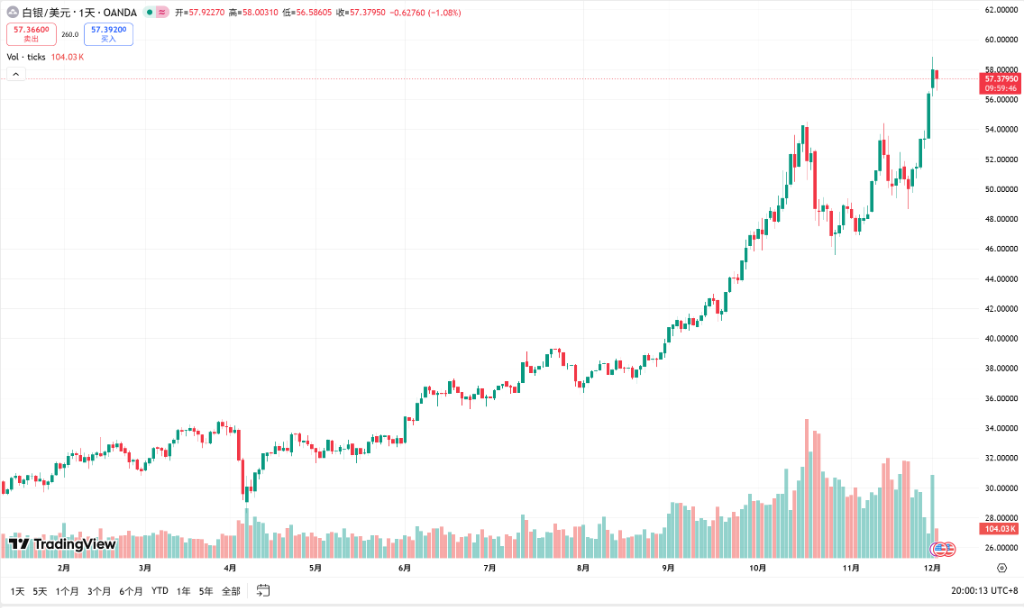
全球供应极度紧绷,白银上演史诗级逼空
Hua Er Jie Jian Wen· 2025-12-02 12:08
Core Viewpoint - A global silver market storm triggered by physical supply shortages is leading to soaring silver prices, reaching historical highs as Shanghai Futures Exchange inventories plummet to near ten-year lows [1][3]. Group 1: Supply Dynamics - Shanghai silver inventory dropped by 58.83 tons to 715.875 tons, marking the lowest level since July 3, 2016 [4]. - The tight supply is attributed to increased exports from London, with China's silver exports exceeding 660 tons in October, a record high [6]. - The silver futures market in Shanghai is experiencing a deep "spot premium" structure, indicating severe short-term supply pressure [8]. Group 2: Demand Factors - Strong industrial demand, particularly in the solar energy sector, is contributing to the price increase, as Q4 is typically a peak season for solar installations [9]. - Speculative demand is surging, with significant inflows into silver ETFs and rising volatility premiums for silver call options, indicating heightened investor interest [9]. Group 3: Macro and Policy Risks - Economic expectations and potential policy changes are adding uncertainty to the silver market, with rising speculation about possible interest rate cuts by the Federal Reserve [10]. - Concerns about potential tariffs on silver from the U.S. government are causing market tension, as this could lock in already imported silver and exacerbate supply issues [10]. Group 4: Market Reactions - Investor sentiment is high, with silver mining stocks experiencing significant gains; Coeur Mining Inc. rose by 3.5%, Pan American Silver Corp. by 2.5%, and Fresnillo Plc surged over 8% [11].

黑色金属数据日报-20251202
Guo Mao Qi Huo· 2025-12-02 03:49
1. Report's Industry Investment Rating - Steel: Adopt a unilateral range trading strategy; consider participating in cash-and-carry arbitrage for hot-rolled coils and use options strategies to assist spot procurement and sales [5]. - Ferrosilicon and Manganese Silicon: Investment clients should short on rallies, and industrial clients can use accumulating options to protect their spot exposure [5]. - Coking Coal and Coke: Speculators should focus on buying far-month contracts at low prices [5]. - Iron Ore: Hold short positions [5]. 2. Core Viewpoints of the Report - The steel market is expected to run slightly stronger, with prices fluctuating in a narrow range. There may be some room for a decline in iron ore production in December, and attention should be paid to the subsequent winter storage replenishment drive [3]. - The prices of ferrosilicon and manganese silicon are expected to be under pressure and weaken due to the over - supply situation, despite the strengthening cost support [5]. - The first round of coke price cuts has been fully implemented, but the coking coal and coke futures have shown signs of stabilizing and rebounding. It is recommended to buy far - month contracts at low prices, considering the possible downstream replenishment in mid - to - late December [5]. - Iron ore is facing significant pressure at the upper end of the range. Due to the expected increase in inventory and the decline in steel mill profitability, it is advisable to short on rallies [5]. 3. Summary by Related Catalogs Steel - On Monday, both futures and spot prices rose, and trading volume increased. In December, focus on macro - trading expectations, such as the US interest rate cut expectations and China's Central Economic Work Conference [3]. - In the industrial sector, the seasonal off - season has not yet formed a consistent negative narrative. The inventory and production pressure of hot - rolled coils are prominent, which restricts the upside of prices and market participants' willingness to hold inventory. However, funds are not actively shorting steel prices due to low steel mill profitability [3]. - After December, there may be some appropriate inventory replenishment in the industrial sector, providing support at low prices. The iron ore production may decline in December, and then attention should be paid to the start of the winter storage replenishment drive [3]. Ferrosilicon and Manganese Silicon - The prices of ferrosilicon and manganese silicon have rebounded with the black - metal sector, but the driving force is still insufficient [4]. - The steel price is under pressure, steel mill profits are shrinking, iron ore production is decreasing, and direct demand is expected to weaken. With the arrival of the off - season for terminal demand, the negative feedback pressure is gradually accumulating [5]. - Alloy factories have poor profits, but production remains high, and there is insufficient motivation for self - reduction or production control. The medium - term over - supply pressure remains high, and inventory and warehouse receipts are accumulating [5]. Coking Coal and Coke - In the spot market, the first round of coke price cuts has been implemented, the coking coal auction failure rate is high, and most transaction prices have fallen. Affected by the futures rebound, some Mongolian coal traders' quotes are temporarily stable, but market trading is average [5]. - In the futures market, on the first trading day of December, market risk appetite is good. With many domestic meetings in December, market expectations are high. Although the first - round coke price cuts have been implemented, the previous low points in the futures market have priced in 3 - 4 rounds of price cuts. With the increase in risk appetite, coking coal and coke futures have shown signs of stabilizing and rebounding [5]. - The steel data is still good, the apparent demand is seasonally weak but still resilient, production has increased, and the de - stocking slope is similar to the same period. The industrial contradictions are not prominent. Coking coal prices are weak due to the slowdown in downstream replenishment, but there are still fluctuations on the supply side [5]. Iron Ore - Iron ore has reached the upper end of the range - bound trading. In the short term, the arrival volume has increased, and the subsequent shipment volume is expected to remain stable, with no significant unexpected fluctuations [5]. - In the medium term, inventory will continue to accumulate under pressure. Some steel mills in southern China are facing increased losses and weakening demand, leading to maintenance. The steel mill iron ore production has slightly decreased to 268 million tons (-1.6). Steel mill profitability is affecting production willingness, and it is expected that subsequent fluctuations will mainly come from steel mill production cuts, which will lead to a continuous increase in port inventory [5]. - Due to inventory pressure, it is difficult for iron ore to break through the upper end of the range, and the recommended strategy is to short on rallies [5].
供需缺口扩大将驱动铜价再攀高峰
Qi Huo Ri Bao· 2025-11-20 00:17
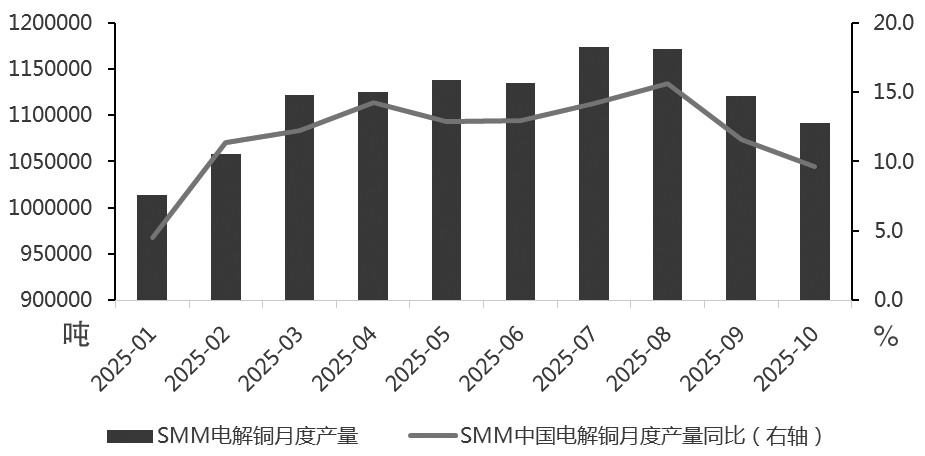
Core Viewpoint - Copper prices are at historical highs, influenced by supply shortages and weak traditional demand, creating a complex market dynamic [1] Supply Analysis - The supply side is constrained by tight mining supply and pressured smelting profits, with a significant decline in new large copper mining projects since 2015 [2] - Major copper-producing countries like Chile and Peru have seen a notable decrease in ore grades over the past decade, limiting global copper concentrate supply growth [2] - By Q3 2025, global copper mine output is expected to drop by 4.7% year-on-year, with significant production declines from key mines such as Antamina in Peru (down 26%) and Kamoa-Kakula in the Democratic Republic of Congo (down 28%) [2] - The International Copper Study Group (ICSG) projects a supply-demand gap of 150,000 tons in 2025, which will widen to 300,000 tons in 2026 [2] Smelting and Processing Fees - Copper concentrate processing fees (TC) have hit a record low since 1992, with long-term TC at $21.25 per ton in 2025, a 73.4% decrease from 2024 [3] - The tight copper concentrate market indicates an oversupply of smelting capacity relative to ore supply, leading to potential production limitations for electrolytic copper if by-product prices decline [3] - In September and October 2025, China's electrolytic copper production fell by 4.31% and 2.62% month-on-month, respectively [3] Demand Analysis - Traditional demand sectors such as real estate and home appliances are underperforming, with a projected 1.67% year-on-year decline in copper consumption from the construction sector in 2025 [5] - The home appliance sector faces pressure from both domestic and export markets, with a slowdown in production growth observed since the second half of 2025 [5] - Conversely, the power and new energy sectors are providing strong support for copper demand, accounting for 40%-50% of total copper consumption [6] - Significant growth in renewable energy sectors, with solar and wind power installations and electric vehicle production increasing by 46.76%, 59.40%, and 34.98% year-on-year, respectively, is expected to sustain copper demand [6] Macroeconomic Factors - Copper prices are highly sensitive to interest rate expectations and global economic growth forecasts, with potential for further easing in U.S. monetary policy [7] - Market uncertainty regarding the pace of global economic recovery influences risk appetite, affecting copper price performance [7] - The current market is characterized by a tug-of-war between macroeconomic pricing and fundamental pricing, with supply constraints and stable demand from the power and new energy sectors supporting copper prices [7] - In the medium to long term, the widening supply-demand gap and potential for interest rate cuts may lead to copper prices breaking historical highs [7]
宏观预期反复但稳定,基本金属探底回升
Zhong Xin Qi Huo· 2025-11-06 05:17
1. Report Industry Investment Rating - No specific industry investment rating is provided in the report. 2. Core Viewpoints of the Report - The macro - expectation is volatile but stable, and base metals bottomed out and rebounded. In the short - to - medium term, supply disruptions continue to support base metal prices, but macro support has weakened. Long - term, with potential domestic incremental stimulus policies and supply disruptions in copper, aluminum, and tin, the prices of these metals are expected to rise [1]. - Copper: Due to tight US monetary liquidity, copper prices adjusted in the short term, but are expected to be volatile and bullish in the medium - to - long term [8]. - Alumina: The current fundamentals are in surplus, and the price is under pressure and fluctuating [10]. - Aluminum: Pay attention to demand changes, and the price is volatile at a high level, with a potential upward shift in the medium - term price center [13]. - Aluminum alloy: Scrap aluminum supply remains tight, and the price is volatile at a high level in the short term, and volatile in the medium term [15]. - Zinc: LME zinc inventories are at a low level, and the price is volatile at a high level in the short term, with a potential decline in the long term [18]. - Lead: Social inventories are at a low level, and the price is volatile, and is expected to be volatile and bullish [19]. - Nickel: Market sentiment is volatile, and the price is volatile [21]. - Stainless steel: Ferronickel prices continue to fall, and the price is volatile [23]. - Tin: Market sentiment has declined, and the price is expected to be volatile and bullish due to supply disruptions [25]. 3. Summary by Related Catalogs 3.1行情观点 - **Copper** - **Viewpoint**: US monetary liquidity is tight, causing short - term copper price adjustments. Mid - term outlook is volatile and bullish. - **Analysis**: Fed cut interest rates in October, but Powell's speech was slightly hawkish. US financial system funding conditions worsened. In September, SMM China's electrolytic copper output decreased month - on - month. Spot premiums recovered, and inventories increased. Sino - US leaders' meeting is conducive to cooperation [8][9]. - **Logic**: Macro factors and tight monetary liquidity led to price adjustments. Supply is constrained by mine disruptions and increased scrap copper recycling costs. Demand may pick up as spot turns to premium [10]. - **Alumina** - **Viewpoint**: The fundamentals are in surplus, and the price is under pressure and fluctuating. - **Analysis**: Alumina spot prices in different regions showed different trends, and warehouse receipts increased [10][11]. - **Logic**: High - cost capacity fluctuates, and the domestic market is in a strong inventory - building trend. Ore prices loosen slightly, and the price is under pressure. However, low - valuation may attract more funds [11][12]. - **Aluminum** - **Viewpoint**: Pay attention to demand changes, and the price is volatile at a high level, with a potential upward shift in the medium - term price center. - **Analysis**: Aluminum prices and premiums decreased. Aluminum rod and ingot inventories changed slightly. A project will be put into production, and some areas have environmental protection restrictions. Some aluminum has been transported to the US [13]. - **Logic**: The macro - environment is generally positive. Supply is affected by domestic environmental protection and overseas disruptions. Demand is stable after the peak season, and inventory changes should be monitored [14]. - **Aluminum alloy** - **Viewpoint**: Scrap aluminum supply is tight, and the price is volatile at a high level in the short term, and volatile in the medium term. - **Analysis**: Alloy prices decreased. The US may restrict scrap aluminum exports, and the estimated scale of the passenger car market decreased [15]. - **Logic**: Cost support is strong due to tight scrap aluminum supply. Supply is affected by raw material shortages and other factors. Demand has a marginal improvement, especially in the automotive market [15]. - **Zinc** - **Viewpoint**: LME zinc inventories are at a low level, and the price is volatile at a high level in the short term, with a potential decline in the long term. - **Analysis**: Spot zinc premiums were stable. Inventories increased slightly. A mine's production was affected by an earthquake [18]. - **Logic**: The macro - environment is improving. Short - term zinc ore supply is loose, and smelters' profitability is good. Domestic consumption is in the off - season, and demand is average [18]. - **Lead** - **Viewpoint**: Social inventories are at a low level, and the price is volatile, and is expected to be volatile and bullish. - **Analysis**: Scrap battery prices were stable, and lead prices and inventories increased. Some enterprises are in maintenance or resuming production [19]. - **Logic**: Spot premiums and the price difference between primary and recycled lead decreased. Supply is affected by enterprise maintenance and resumption. Demand is in the peak season, and battery factories'开工率 is high [19]. - **Nickel** - **Viewpoint**: Market sentiment is volatile, and the price is volatile. - **Analysis**: LME and domestic nickel inventories increased. Some projects are in progress, and a company's new materials have achieved certain results [21]. - **Logic**: Market sentiment dominates the market. The industrial fundamentals are weakening marginally, with loose ore supply and increased inventories [22]. - **Stainless steel** - **Viewpoint**: Ferronickel prices continue to fall, and the price is volatile. - **Analysis**: Futures warehouse receipts were stable. Spot premiums were positive. Ferronickel prices decreased, and the Indonesian government allocated funds for mining projects [23]. - **Logic**: Cost support has weakened. Stainless steel production increased, but downstream demand's acceptance of price increases is limited. Inventories may accumulate seasonally [24]. - **Tin** - **Viewpoint**: Market sentiment has declined, and the price is expected to be volatile and bullish due to supply disruptions. - **Analysis**: LME and domestic tin inventories changed, and spot prices decreased. - **Logic**: Supply is constrained by problems in Myanmar and Indonesia. However, refined tin production has increased, and inventory accumulation restricts price increases [25]. 3.2行情监测 - No specific content for monitoring is provided in the text. 3.3中信期货商品指数 - On November 5, 2025, the comprehensive index, the special index (including the commodity 20 index, the industrial products index), and the PPI commodity index showed different changes. The non - ferrous metals index had a daily decline of 0.10%, a 5 - day decline of 1.28%, a 1 - month increase of 2.06%, and a year - to - date increase of 6.75% [151][152].
KVB外汇观察:美元兑日元为何反复波动?
Sou Hu Cai Jing· 2025-10-15 05:23
Core Insights - Recent fluctuations in the foreign exchange market have intensified, with the USD/JPY exchange rate experiencing volatility in a high range, influenced by changes in risk sentiment, monetary policy differences, and macroeconomic expectations [1][3][4] Group 1: Risk Sentiment - Risk sentiment remains a significant driver of capital flows, with investors tending to reduce risk assets and increase holdings in safe-haven currencies during periods of uncertainty [3] - The Japanese yen, as a traditional safe-haven asset, tends to gain support when risk appetite declines, thereby exerting pressure on the US dollar [3] Group 2: Monetary Policy Differences - The divergence in monetary policy between the US and Japan continues to impact the relative strength of their currencies, with the Federal Reserve expected to maintain a moderate easing stance in the coming months amid slowing economic growth and easing inflation [3] - In contrast, the Bank of Japan is likely to maintain its ultra-low interest rate environment, with cautious policy adjustments, affecting capital flows and the USD/JPY exchange rate [3] Group 3: Economic Data - Key economic indicators such as US inflation and employment reports are critical for market observation, with weak data potentially reinforcing expectations for interest rate cuts, thereby weakening short-term support for the US dollar [3] - Japan's economic recovery remains moderate, with no significant upward movement in inflation, suggesting that aggressive policy adjustments by the Bank of Japan are unlikely in the short term [3] Group 4: Technical Analysis - From a technical perspective, the USD/JPY has faced multiple resistance levels in the high range, indicating a weakening upward momentum [3] - A breakdown below key support levels could trigger further adjustments, while stabilization and a breakthrough of previous highs could signal a potential recovery in upward momentum [3] Group 5: Future Outlook - The future trajectory of the USD/JPY exchange rate will depend on the Federal Reserve's policy direction, the performance of US economic data, and shifts in market risk appetite [4]

ETF日报:随着煤价下跌,煤炭板块有所回调,煤炭股息率进一步提升,具有较大的股息吸引力,可关注煤炭ETF
Xin Lang Ji Jin· 2025-08-06 12:07
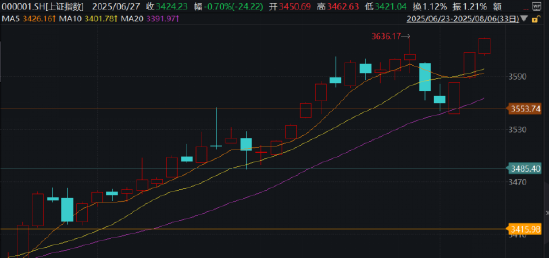
Market Performance - The Shanghai Composite Index closed up 16.39 points, a 0.45% increase, reaching 3633.99 points, with a trading volume of 707.22 billion yuan, marking a new three-year closing high [1] - The Shenzhen Component Index rose by 70.82 points, a 0.64% increase, closing at 11177.78 points, with a trading volume of 1026.847 billion yuan [1] - The ChiNext Index increased by 15.57 points, a 0.66% rise, closing at 2358.95 points, with a trading volume of 525.173 billion yuan [1] Sector Performance - Strong performances were noted in sectors such as military, gaming, coal, and robotics, while previously popular sectors like biomedicine and innovative drugs experienced corrections [1] - The coal sector showed significant gains, with prices for coking coal futures returning to an upward trend and port inventory decreasing [5][6] Investment Opportunities - The coal sector's dividend yield has increased, with the China Coal Index currently yielding over 5%, making it attractive for long-term investors [7][9] - The recommendation includes investing in coal ETFs (515220) and steel ETFs (515210) to capture potential rebound opportunities under the "anti-involution" policy [5][9] Economic Outlook - Policies aimed at improving macroeconomic expectations are expected to support coal prices from both supply and demand sides [9] - The market sentiment is gradually forming a consensus on the medium to long-term confidence in the Chinese economy, driven by a shift in policy focus from quantity to price [1][4] Technical Analysis - The A-share market has shown a strong upward trend, with significant participation from external funds, and the potential for further gains as the market approaches previous high points [2][4] - The likelihood of a significant correction is considered low, with various support levels in place [2][4] Gold Market Insights - The gold ETF (518800) has seen net inflows exceeding 300 million yuan in the past five days, driven by geopolitical risks and concerns over the U.S. economy [10][12] - The weakening of the dollar's credit system and the ongoing geopolitical tensions are expected to provide long-term support for gold prices [13]
国泰君安期货商品研究晨报-20250730
Guo Tai Jun An Qi Huo· 2025-07-30 03:17
1. Report Industry Investment Ratings No industry investment ratings are provided in the report. 2. Core Views of the Report - The report provides trend forecasts for various commodities on July 30, 2025, including gold, silver, copper, zinc, etc., and gives corresponding trend intensities [2]. - The trends of different commodities are affected by multiple factors such as macro - economy, industry news, and inventory changes [6][11][14]. 3. Summary by Commodity Precious Metals - **Gold**: Expected to oscillate and decline, with a trend intensity of - 1. Yesterday, the closing price of Shanghai Gold 2510 was 771.44 yuan, down 0.43%. The macro - economic situation and international trade policies have an impact on its price [2][6][9]. - **Silver**: Expected to break through and rise, with a trend intensity of 0. The closing price of Shanghai Silver 2510 was 9195 yuan, down 0.18%. The trading volume and inventory changes affect its price [2][6][9]. Base Metals - **Copper**: Lacks driving forces and the price will oscillate, with a trend intensity of 0. The closing price of Shanghai Copper's main contract was 78,840 yuan, down 0.20%. Macro - economic data and industry news such as potential tariffs and mining projects influence its price [2][11][13]. - **Zinc**: Will oscillate in a narrow range, with a trend intensity of 0. The closing price of Shanghai Zinc's main contract was 22,655 yuan, up 0.04%. Inventory changes and import - export factors affect its price [2][14][15]. - **Lead**: Overseas inventory increase pressures the price, with a trend intensity of 0. The closing price of Shanghai Lead's main contract was 16,900 yuan, down 0.09%. Inventory and macro - economic news are the influencing factors [2][18][19]. - **Tin**: Will oscillate within a range, with a trend intensity of - 1. The closing price of Shanghai Tin's main contract was 266,660 yuan, down 0.46%. Inventory and spot - futures price differences affect its price [2][22][26]. - **Aluminum**: Will oscillate within a range, with a trend intensity of 0. The closing price of Shanghai Aluminum's main contract was 20,605 yuan, down 10 yuan. The price is affected by factors such as inventory, trading volume, and enterprise profitability [2][27][29]. - **Nickel**: Macro - expectations determine the direction, while fundamentals limit the elasticity, with a trend intensity of 0. The closing price of Shanghai Nickel's main contract was 121,800 yuan, up 180 yuan. Industry news and supply - demand relationships affect its price [2][30][35]. - **Stainless Steel**: Macro - sentiment dominates the margin, and the real - world situation still needs to be repaired, with a trend intensity of 0. The closing price of the stainless - steel main contract was 12,920 yuan, up 80 yuan. Market sentiment and industry news are the influencing factors [2][31][35]. Energy and Chemicals - **Carbonate Lithium**: Will oscillate widely, and attention should be paid to the switch of macro - sentiment, with a trend intensity of 1. The closing price of the 2509 contract was 70,840 yuan, down 2,280 yuan. Market supply - demand and macro - economic factors affect its price [2][36][38]. - **Industrial Silicon**: The futures market is expected to be strong, with a trend intensity of 1. The closing price of Si2509 was 9,350 yuan, up 435 yuan. Supply - demand and cost factors affect its price [2][39][42]. - **Polysilicon**: Driven by news, the futures market is expected to be strong, with a trend intensity of 1. The closing price of PS2509 was 50,805 yuan, up 1,400 yuan. Industry news and market sentiment affect its price [2][40][42]. - **Iron Ore**: Supported by macro - expectations, it will oscillate strongly, with a trend intensity of 1. The closing price of I2509 was 798 yuan, up 12 yuan. Macro - economic news and supply - demand relationships affect its price [2][43]. - **Rebar and Hot - Rolled Coil**: Affected by the sector's market resonance, they will oscillate strongly. The trend intensity of rebar is 0, and that of hot - rolled coil is 0. The closing price of RB2510 was 3,347 yuan, up 65 yuan; the closing price of HC2510 was 3,503 yuan, up 69 yuan. Industry data and macro - policies affect their prices [2][45][47]. - **Silicon Manganese and Ferrosilicon**: Affected by the sector's sentiment resonance, they will oscillate strongly. The trend intensity of ferrosilicon is 0, and that of silicon manganese is 0. The closing price of ferrosilicon 2509 was 6110 yuan, up 270 yuan; the closing price of silicon manganese 2509 was 6212 yuan, up 184 yuan. Market supply - demand and industry news affect their prices [2][48][51]. - **Coke and Coking Coal**: After the sentiment is realized, they will oscillate widely, with a trend intensity of 0 for both. The closing price of JM2509 was 1120.5 yuan, up 20 yuan; the closing price of J2509 was 1633 yuan, up 24.5 yuan. Supply - demand relationships and price changes in the spot market affect their prices [2][52][55]. - **Steam Coal**: As daily consumption recovers, it will oscillate and stabilize, with a trend intensity of 0. Yesterday, there was no transaction for ZC2508. The price is affected by factors such as consumption and inventory [2][57][60]. Agricultural Products and Others - **Palm Oil**: Supported by positive factors such as crude oil and macro - sentiment in the short term. The price is affected by the price of crude oil and macro - economic sentiment [2][60]. - **Soybean Oil**: Will oscillate strongly, and attention should be paid to the progress of Sino - US trade. The price is affected by international trade relations and market supply - demand [2][60]. - **Soybean Meal**: Likely to oscillate, affected by the prices of US soybeans and rapeseed meal. The price is affected by the international soybean market and domestic supply - demand [2][62]. - **Corn**: Will oscillate. The price is affected by factors such as supply - demand and weather [2][64]. - **Sugar**: Will oscillate in a narrow range. The price is affected by factors such as production and consumption [2][65]. - **Cotton**: After the sentiment cools down, the Zhengzhou cotton futures will correct. The price is affected by market sentiment and supply - demand [2][66]. - **Eggs**: The spot price has weakened. The price is affected by factors such as production and consumption seasons [2][67]. - **Live Pigs**: With a weak reality and strong expectations, a trend reverse spread is recommended. The price is affected by factors such as production cycles and market expectations [2][68]. - **Peanuts**: Attention should be paid to the weather in the producing areas. The price is affected by weather conditions and supply - demand [2][69]. - **Log**: Will oscillate repeatedly. The price is affected by factors such as supply - demand and market sentiment [2][61].
国泰君安期货商品研究晨报-20250729
Guo Tai Jun An Qi Huo· 2025-07-29 03:02
1. Report Industry Investment Ratings No industry investment ratings are provided in the report. 2. Core Views of the Report The report provides daily research and analysis on various futures commodities, including precious metals, base metals, energy, agricultural products, etc., and gives corresponding price trends and trading suggestions for each commodity [2][5]. 3. Summary by Related Catalogs Precious Metals - **Gold**: Expected to oscillate downward [2][6] - **Silver**: Expected to break through and rise [2][6] - **Trend Intensity**: Gold -1, Silver 0 [11] Base Metals - **Copper**: The rising US dollar exerts pressure on prices [13] - **Zinc**: Expected to oscillate weakly [16] - **Lead**: Lacks clear driving force, prices oscillate [19] - **Tin**: Expected to oscillate within a range [22] - **Aluminum**: Expected to oscillate at a high level [26] - **Alumina**: Market sentiment declines [26] - **Cast Aluminum Alloy**: Follows the trend of electrolytic aluminum [26] - **Nickel**: Macroeconomic expectations determine the direction, fundamentals limit the elasticity [29] - **Stainless Steel**: Macroeconomic sentiment dominates the margin, the real - world situation still needs to be repaired [29] - **Trend Intensity**: Copper 0, Zinc -1, Lead 0, Tin -1, Aluminum 0, Alumina 0, Cast Aluminum Alloy 0, Nickel 0, Stainless Steel 0 [15][18][20] Energy and Chemicals - **Carbonate Lithium**: Expected to oscillate widely, pay attention to the progress of production cuts in Jiangxi mines [34] - **Industrial Silicon**: Pay attention to today's sentiment changes [38] - **Polysilicon**: Pay attention to today's market information [39] - **Iron Ore**: Supported by macroeconomic expectations, expected to oscillate strongly [42] - **Rebar**: Weakly oscillates due to sector - wide market resonance [45] - **Hot - Rolled Coil**: Weakly oscillates due to sector - wide market resonance [46] - **Silicon Ferrosilicon**: Weakly oscillates as funds compete with the real - world situation [49] - **Manganese Silicide**: Weakly oscillates as funds compete with the real - world situation [49] - **Coke**: Market sentiment is realized, expected to oscillate widely [53] - **Coking Coal**: Market sentiment is realized, expected to oscillate widely [54] - **Steam Coal**: Daily consumption recovers, expected to oscillate and stabilize [57] - **P - Xylene**: The unilateral trend is weak [2] - **PTA**: Weak, conduct basis reverse arbitrage and calendar spread positive arbitrage [2] - **MEG**: The trend turns weak, conduct calendar spread reverse arbitrage [2] - **Rubber**: Expected to oscillate weakly [2] - **Synthetic Rubber**: Under pressure and expected to oscillate [2] - **Asphalt**: Crude oil is strong, cracking continues to weaken [2] - **LLDPE**: Expected to oscillate weakly [2] - **PP**: Spot prices decline, trading is light [2] - **Caustic Soda**: Pay attention to delivery pressure [2] - **Pulp**: Expected to oscillate weakly [2] - **Glass**: The price of raw sheets is stable [2] - **Methanol**: Under short - term pressure and expected to oscillate [2] - **Urea**: Weakly operates in the short term [2] - **Styrene**: Compress profit margins [2] - **Soda Ash**: Little change in the spot market [5] - **PVC**: Weak in the short term [5] - **Fuel Oil**: Rebounds slightly at night, may turn strong in the short term [5] - **Low - Sulfur Fuel Oil**: Rises in the short term, the spread between high - and low - sulfur spot prices in the overseas market is temporarily stable [5] - **Trend Intensity**: Carbonate Lithium 0, Industrial Silicon 0, Polysilicon 1, Iron Ore 0, Rebar 0, Hot - Rolled Coil 0, Silicon Ferrosilicon 0, Manganese Silicide 0, Coke 0, Coking Coal 0, Steam Coal 0 [36][41][42] Agricultural Products - **Palm Oil**: The short - term rise has reached its limit, beware of a decline in sentiment [5] - **Soybean Oil**: Expected to oscillate within a range, pay attention to China - US trade progress [5] - **Soybean Meal**: Adjusts and oscillates [5] - **Soybean No.1**: Adjusts and oscillates [5] - **Sugar**: Ranges and consolidates [5] - **Cotton**: High basis and concerns about tight supply continue to support futures prices [5] - **Eggs**: Spot prices turn weak [5] - **Hogs**: Strong in the real - world situation but weak in expectations, conduct reverse arbitrage [5] - **Trend Intensity**: Not provided for agricultural products Others - **Container Freight Index (European Line)**: Hold 10 short positions and 10 - 12 reverse spreads [5] - **Short - Fiber**: Sentiment declines, weakly oscillates with increased volatility [5] - **Bottle Chip**: Sentiment declines, weakly oscillates with increased volatility [5] - **Offset Printing Paper**: Oscillates at a low level, lacks upward momentum [5] - **Pure Benzene**: Expected to oscillate strongly [5] - **Log**: Oscillates repeatedly [60] - **Trend Intensity**: Not provided for these commodities
宝城期货国债期货早报-20250725
Bao Cheng Qi Huo· 2025-07-25 01:21
Report Summary 1. Report Industry Investment Rating - No information provided 2. Core Viewpoints of the Report - The short - term view of TL2509 is oscillation, the medium - term view is oscillation, and the intraday view is weakly oscillating, with an overall view of oscillation. The core logic is that the monetary policy environment is relatively loose, but the possibility of a short - term interest rate cut is low [1]. - For the main bond futures varieties (TL, T, TF, TS), the intraday view is weakly oscillating, the medium - term view is oscillating, and the reference view is oscillating. The short - term bond futures will mainly oscillate and consolidate. The reasons include the central bank's net withdrawal of liquidity this week, a tightening of market liquidity, a rise in market interest rates due to the easing of Sino - US economic and trade relations, limited upward space for market interest rates due to the anchoring effect of policy rates, the existence of insufficient domestic effective demand, the need for a loose monetary environment to support the economy in the second half of the year, an expected interest rate cut, and the unchanged LPR in July making a short - term interest rate cut less likely [5]. 3. Summary by Relevant Contents Variety Viewpoint Reference - Financial Futures Stock Index Sector - For the variety TL2509, short - term (within one week) is oscillation, medium - term (two weeks to one month) is oscillation, intraday is weakly oscillating, and the overall view is oscillation. The core logic is that the monetary policy environment is loose, but the short - term possibility of an interest rate cut is low [1]. Main Variety Price Market Driving Logic - Financial Futures Stock Index Sector - The varieties include TL, T, TF, TS. The intraday view is weakly oscillating, the medium - term view is oscillating, and the reference view is oscillating. The central bank's net withdrawal of liquidity this week tightened market liquidity and raised market interest rates. The easing of Sino - US economic and trade relations led to a positive macro - economic outlook and a rise in market interest rates since July. The upward space for market interest rates is limited due to the policy rate anchor. There is still insufficient domestic effective demand, and a loose monetary environment is needed in the second half of the year, with an expected interest rate cut. However, the unchanged LPR in July makes a short - term interest rate cut less likely, so short - term bond futures will mainly oscillate and consolidate [5].
兴业期货日度策略-20250624
Xing Ye Qi Huo· 2025-06-24 12:12
Report Industry Investment Ratings No specific industry investment ratings are provided in the report. Core Viewpoints - The geopolitical conflict between Israel and Iran has cooled down, and the market risk appetite has rebounded. However, the impact of external factors on the A-share market is limited, and the shock center of the stock index is expected to gradually move up. With the approaching of the interim report season, IF and IH with higher performance certainty may be relatively strong, while IC and IM face increased performance verification pressure [1]. - The bond market sentiment is optimistic, but the high valuation restricts the upward space. The short - term policy interest rate is difficult to cut [1]. - The geopolitical risk premium of precious metals has declined, and the prices are oscillating at a high level. It is recommended to continue holding the strategy of selling out - of - the - money put options on gold and silver 08 contracts [1][4]. - The macro - uncertainty persists, and copper prices continue to oscillate. The supply of copper is tight, but the overseas macro situation is uncertain, and the real demand is cautious [4]. - The cost of aluminum is disturbed, and the inventory is at a low level. The supply of alumina is in excess, but the downward drive may slow down. The supply - demand of aluminum is intertwined, and the low inventory provides support [4]. - The fundamentals of nickel are weak, and the price continues to decline. The supply of the nickel industry chain is in excess, but the price of nickel ore is firm. It is recommended to continue holding the strategy of selling call options [4]. - The supply of lithium carbonate is loose, and the price is under pressure. The demand for lithium is weak, while the supply is increasing, and the inventory of smelters is rising [4][6]. - The high inventory of polysilicon suppresses the rebound. The supply - demand pattern of the polysilicon market is gradually becoming looser. It is recommended to continue holding the strategy of selling call options [6]. - The geopolitical risk premium of steel has declined, and the prices are close to the upper limit of the range. The fundamentals of steel are not significantly changed, and the upward space is limited. It is recommended to hold the strategies of selling out - of - the - money call and put options on rebar [6]. - Coke has completed four rounds of price cuts, and the spot price is approaching the bottom while the futures price rebounds first. The long - term supply of coking coal is in excess, but the short - term supply tightens. It is recommended that cautious investors close their short positions in coking coal and wait and see for new orders [8]. - The glass has stronger support than soda ash. The supply of soda ash is expected to be loose, and it is recommended to hold short positions. The performance of float glass is also weak, and it is recommended to hold short positions and some arbitrage strategies [8]. - The geopolitical premium of crude oil may further decline. It is recommended to close the long - call option positions [8]. - The import volume of methanol may not decrease significantly, and the futures price may face a correction. The positive impact of the Middle - East conflict is fading [10]. - The demand for polyolefins is poor, and the price is expected to decline. The demand for polyolefins is weak, and the crude oil premium is retreating [10]. - The inventory of the cotton industry is decreasing, and it is recommended to maintain a long - position strategy. The supply of cotton is expected to be tight, and the short - term fundamentals have no obvious negative drive [10]. - The demand for rubber is not fulfilled, and the port inventory is increasing. The supply of rubber is increasing while the demand is decreasing, and the price is under pressure [10]. Summary by Categories Stock Index - Geopolitical conflict cools down, market risk appetite rebounds, A - share oscillates upward on Monday, small and micro - cap indexes strengthen, and the trading volume of the two markets slightly rebounds to 1.15 trillion yuan [1]. - The performance of IF and IH may be relatively strong during the interim report season, while IC and IM face performance verification pressure [1]. Treasury Bond - The bond market sentiment is optimistic due to loose liquidity, but the high valuation and the difficulty of short - term policy interest rate cuts restrict the upward space [1]. Precious Metals - Geopolitical risk premium declines, gold and silver prices oscillate at a high level. It is recommended to hold the strategy of selling out - of - the - money put options on gold and silver 08 contracts [1][4]. Non - ferrous Metals - Copper: The supply is tight, but the overseas macro situation is uncertain, and the real demand is cautious. Copper prices continue to oscillate in the short term [4]. - Aluminum: The cost is disturbed, and the inventory is low. The supply of alumina is in excess, but the downward drive may slow down. The supply - demand of aluminum is intertwined, and the low inventory provides support [4]. - Nickel: The fundamentals are weak, the supply of the industry chain is in excess, but the price of nickel ore is firm. It is recommended to hold the strategy of selling call options [4]. Energy and Chemicals - Polypropylene (PP): The event - driven positive factors fade, and the supply is in excess. It is recommended to open new short positions in PP2509 [2]. - Polysilicon: The high inventory suppresses the rebound. It is recommended to continue holding the strategy of selling call options on polysilicon PS2508 - C - 34500 [2][6]. - Aluminum: The inventory is at a low level. It is recommended to hold the previous long positions in AL2508 [2]. - Crude Oil: The geopolitical premium may further decline. It is recommended to close the long - call option positions [8]. - Methanol: The import volume may not decrease significantly, and the futures price may face a correction [10]. - Polyolefins: The demand is poor, and the price is expected to decline [10]. Steel and Iron - Rebar: The geopolitical risk premium declines, and the price is close to the upper limit of the range. It is recommended to hold the strategies of selling out - of - the - money call and put options [6]. - Hot - rolled Coil: The fundamentals change little, and the price oscillates. It is recommended to wait and see for new orders [6]. - Iron Ore: The supply - demand may be slightly looser in June - July, and the price follows the steel price to oscillate in a narrow range. It is recommended to wait and see for new orders [6]. Coking Coal and Coke - Coking Coal: The long - term supply is in excess, but the short - term supply tightens. Cautious investors are recommended to close their short positions and wait and see for new orders [8]. - Coke: The fundamentals show a double - decline in supply and demand. The spot price is approaching the bottom, and the futures price rebounds first [8]. Soda Ash and Glass - Soda Ash: The supply is expected to be loose, and it is recommended to hold short positions and some arbitrage strategies [8]. - Float Glass: The performance is weak, and it is recommended to hold short positions and some arbitrage strategies [8]. Agricultural Products - Cotton: The inventory of the industry is decreasing, and the supply is expected to be tight. It is recommended to maintain a long - position strategy [10]. - Rubber: The demand is not fulfilled, the port inventory is increasing, and the price is under pressure [10].