平台化

Search documents
九方智投控股涨超6% 公司“投研+科技”双轮驱动 加快完善海外业务布局
Zhi Tong Cai Jing· 2026-01-12 07:28
Core Viewpoint - Jiufang Zhitu Holdings (09636) has completed the acquisition of JFFinancial, enhancing its competitive advantage in the investment advisory sector through a technology-driven research strategy [1] Group 1: Acquisition Details - The acquisition includes all shares and core business systems of JFFinancial, previously known as Yintech Financial [1] - Post-acquisition, Jiufang Zhitu will fully own JFFinancial and its key subsidiaries, Fangde Securities and Fangde Capital [1] Group 2: Strategic Insights - Xiangcai Securities highlights the company's commitment to a "technology + research" strategy, leveraging a mature research system and refined MCN traffic operations to create a differentiated competitive edge [1] - The enhancement of overseas licenses will enable the company to apply its successful domestic model to international markets, diversifying revenue sources [1] Group 3: Market Position and Future Outlook - Kaiyuan Securities notes the establishment of a multi-dimensional product matrix and a "1+N" research system, emphasizing R&D investment and comprehensive AI integration [1] - The company is expected to benefit from short-term high beta attributes due to active capital markets, while its long-term strategies of "small-scale" and "platformization" are likely to increase user engagement [1] - The sales performance of learning machines is strong, and the acquisition of a Hong Kong brokerage expands the company's international business footprint [1]
“牛基”启示录:工具化时代 要更新投基认知
Zheng Quan Shi Bao· 2026-01-06 23:45
Core Insights - The public fund industry is experiencing a significant transformation, with a notable increase in fund performance, as evidenced by one fund achieving over 200% growth and 89 funds doubling their performance, while over 1,100 funds recorded annual growth exceeding 50% [1] - The shift towards a tool-oriented approach in public funds necessitates a change in investors' understanding and strategies, moving from a focus on individual high-performing funds to a more diversified and needs-based portfolio allocation [1][2] Group 1 - The public fund market is entering an era of both active equity funds and passive products like ETFs, leading to a vast array of options that complicate the selection process for investors [1] - Traditional investment strategies, such as heavily investing in one or two funds, are becoming outdated as the industry encourages fund managers to specialize in their strengths rather than being all-rounders [2] - The emphasis is now on creating a balanced investment approach that combines core holdings with satellite opportunities to mitigate risks and capture market trends [2][3] Group 2 - Investors are advised to abandon the old mindset of chasing star fund managers and instead adopt a tool-based, balanced investment philosophy to achieve long-term stable financial management [3]
以科技蓝擎加速新能源商用车产业新未来
Zhong Guo Qi Che Bao Wang· 2025-12-29 08:49
Core Insights - The conference held in Weifang focused on the strategic planning and achievements of Weichai New Energy Commercial Vehicles for 2026, emphasizing high-quality development in the new energy commercial vehicle sector [1][14] Group 1: 2025 Achievements - Weichai New Energy Commercial Vehicles achieved sales of 17,000 units in 2025, marking a 26% year-on-year increase and setting a historical record [3] - The sales of new energy vehicles reached 10,500 units, while export sales amounted to 2,500 units, both showing significant growth [3] - The company launched over 180 differentiated products and completed more than 30 configuration upgrades, including the new pure electric platform "Blue Sky X7" [5] Group 2: Service and Digital Transformation - The company optimized its business policies and developed 103 new networks, achieving joint sales of 1,200 units through collaboration with 722 service stations [5] - Customer satisfaction reached 90%, with a first repair rate of 96.5% and a 24-hour issue resolution rate of 97.4% [5] - Weichai New Energy Commercial Vehicles advanced digital transformation across the entire supply chain, launching an AI marketing system and promoting the "Blue Sky Smart Travel" platform [5] Group 3: 2026 Strategic Goals - The sales target for 2026 is set at 25,000 units, with 20,000 units for the domestic market and 5,000 units for exports, aiming for 15,000 units of new energy vehicles [7] - The company plans to enhance product offerings by focusing on electric, hybrid, and hydrogen fuel products, targeting specific market segments [8] - Six core strategies will be implemented to achieve these goals, including product innovation, brand enhancement, digital transformation, after-market innovation, supply chain collaboration, and service network upgrades [9][11] Group 4: Industry Context - The commercial vehicle industry in China is undergoing significant transformation driven by new energy, intelligence, and compliance, with expectations for new energy vehicle penetration to exceed 50% by 2030 [12] - Weichai New Energy Commercial Vehicles aims to become a leader in the light truck segment and expand its global presence, aligning with the national "dual carbon" strategy [12][14]


从“特斯拉门徒”到“赋能滴滴”:智驾江湖中场,在夹击中爆发
Di Yi Cai Jing Zi Xun· 2025-12-26 11:35
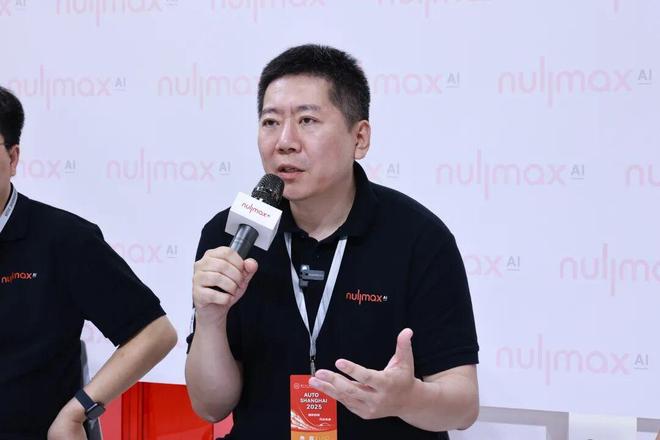
Core Insights - Nullmax, founded by a former Tesla executive, received a strategic investment in the C1 round from a domestic automotive-grade chip company, highlighting its credibility in an industry focused on "software-hardware integration" and "vertical integration" [1] - The company aims to position itself as an AI company rather than just a supplier for automotive firms, with a vision of expanding its technology beyond the automotive sector [1][2] - Nullmax's approach combines a "vision-centric" strategy with multi-sensor fusion, allowing it to stand out as a leading independent AI company capable of achieving "software-defined intelligent driving" [1][5] Company Development - The founder, Xu Lei, transitioned from Qualcomm to Tesla, where he played a key role in developing Autopilot, before establishing Nullmax in 2016 to focus on the rapid growth of ADAS in China [2][3] - The company initially collaborated with Didi on a project that faced challenges due to Didi's strategic shift, leading to a focus on a more flexible "platformization" strategy [3][6] - Nullmax has developed a middleware layer that abstracts hardware interfaces, allowing its software to be compatible across various chip platforms, enhancing deployment flexibility [5][6] Business Model - Nullmax's business model is more adaptable compared to traditional Tier 1 suppliers, focusing on high-margin, low-inventory risk "pure software licensing" [6] - The company aims to leverage its software platform to deploy solutions across different regions and chip platforms, emphasizing a pragmatic approach to business development [6][9] - The potential for rapid scalability is evident, with expectations of reaching a million vehicle scale in the next five years through partnerships with leading Tier 1 companies [7][9] Future Prospects - Nullmax is exploring applications beyond automotive, including industrial AGVs, agricultural machinery, and specialized robots, indicating a strategy to diversify its market presence [9][10] - The company is expanding into international markets, including Europe and Southeast Asia, through localized partnerships with Tier 1/OEMs to adapt to regional traffic regulations and chip ecosystems [9][10] - As the industry evolves, Nullmax aims to capitalize on its visual AI capabilities to drive innovation across various sectors, positioning itself for future growth opportunities [10]

昔日“牛基”今何在?
券商中国· 2025-12-23 09:03
Core Viewpoint - The article discusses the performance of actively managed equity funds in the context of the A-share market, highlighting the emergence of new "bull funds" and the fading glory of past top-performing funds, emphasizing the need for a shift from short-term performance to long-term investment strategies [1][11]. Group 1: Performance of Active Equity Funds - As of December 22, the Shanghai Composite Index has increased by 12.67% in 2024, with an annual increase of 16.87%, indicating a likely two-year consecutive rise in annual K-line [1]. - Nearly 40 actively managed equity funds have doubled their annual returns, with Yongying Technology Smart Selection A achieving approximately 219% annual return, marking it as the first "double fund" since 2008 [1]. - Historical analysis shows that only 5 out of 30 top-performing funds from previous bull markets have maintained strong performance, while 25 have returned to mediocre status [2]. Group 2: Reasons for Declining Performance of Former "Bull Funds" - Many former "bull funds" have lost their luster due to excessive scale growth, which reduces investment flexibility and increases transaction costs, making it harder to achieve excess returns [5][6]. - Over-reliance on a single star fund manager has led to significant performance drops when key personnel leave or fail to adapt to market changes [6]. - Short holding periods and frequent style shifts have hindered many funds from accumulating long-term returns, as they chase short-term trends without a stable investment framework [7]. Group 3: Structural Changes in the Fund Industry - The public fund industry is undergoing a structural transformation, moving from a "star-making" model focused on short-term rankings to a "systematic approach" that emphasizes value investing and stable returns [8][12]. - Successful long-term funds often have stable research teams and strong risk control capabilities, which help them navigate market downturns effectively [8][9]. - Companies are increasingly adopting innovative investment models and enhancing their research capabilities to adapt to market changes, indicating a shift towards a more collaborative and systematic investment approach [9]. Group 4: Long-term Investment Philosophy - The fate of past "bull funds" reflects the evolution of the A-share market and the investment philosophy of the industry, highlighting the importance of a stable investment strategy over reliance on individual fund managers [11]. - Investors are encouraged to focus on funds with clear investment philosophies, stable teams, and proven cross-cycle capabilities, rather than chasing annual performance champions [12].

“吸金”超百亿、A500ETF强势崛起 南方基金做对了什么?
Sou Hu Cai Jing· 2025-12-23 07:25
Core Viewpoint - The A500 ETF has seen significant trading activity and inflows, indicating a shift in investor preference towards quality assets amid market volatility, with institutional investors leading the charge [2][3][4]. Group 1: Market Activity and Trends - On December 17, the total trading volume of A500 ETFs exceeded 52 billion yuan, significantly outpacing the CSI 300 ETF [2]. - From December 15 to 19, the total net inflow into ETFs reached 76.036 billion yuan, with A500 ETFs receiving 80% of this inflow, bringing their total scale to over 230 billion yuan, an increase of nearly 37 billion yuan since the end of November [2][3]. - As of December 21, the total number of ETFs in the market surpassed 5,800, with a total scale exceeding 58 trillion yuan, solidifying their role as a backbone of the A-share market [3]. Group 2: Fund Performance and Management - The South A500 ETF's scale reached 36.1 billion yuan as of December 22, marking a net inflow of over 10 billion yuan in just two months, which has helped it regain its position as the second-largest fund in its category [4]. - The South A500 ETF has demonstrated strong performance with a 6-month return of 24.29% and a 1-year return of 21.19%, both exceeding the returns of the CSI 300 index during the same periods [5][6]. - The fund's management fee was reduced from 0.6% to 0.2%, which could enhance investor returns significantly over time [5]. Group 3: Competitive Landscape and Challenges - The competitive landscape for ETFs is intensifying, with top funds like South A500 ETF showing strong capital attraction even during market downturns, indicating robust investor confidence [3][4]. - Despite recent successes, South Fund faces challenges such as a significant reduction in equity fund sizes and regulatory scrutiny due to past compliance issues, which could impact its reputation and growth potential [11][12][14]. - The fund's performance in equity investments has lagged behind industry averages, with a 1-year return of only 20.32%, necessitating improvements in asset allocation and risk management strategies [14][15].

拟购杭州众硅控股权,中微公司12月19日起停牌
Bei Jing Shang Bao· 2025-12-18 10:57
Core Viewpoint - The company is planning to acquire a controlling stake in Hangzhou Zhonggui Electronic Technology Co., Ltd. through a share issuance and raise supporting funds, with stock suspension starting from December 19 for up to 10 trading days [1] Group 1: Transaction Details - The transaction is not expected to constitute a major asset restructuring and will not involve related party transactions [1] - There will be no change in the actual controller of the company, and it does not constitute a restructuring listing [1] Group 2: Business Overview - Hangzhou Zhonggui specializes in the research, production, and sales of high-end Chemical Mechanical Planarization (CMP) equipment, primarily focusing on 12-inch CMP devices [1] Group 3: Strategic Implications - The acquisition is anticipated to create significant strategic synergies and marks a critical step towards the company's goal of becoming more "group-oriented" and "platform-oriented" [1] - This move aligns with the company's strategy of combining organic growth with external acquisitions to continuously expand its coverage in the integrated circuit sector [1] Group 4: Market Reaction - On December 18, the company's stock fell by 2.31%, closing at 272.72 yuan per share, with a total market capitalization of 170.8 billion yuan [1]

平台化时代,优秀的主动权益团队何以锤炼?
券商中国· 2025-12-17 04:35
Core Viewpoint - The era of individual heroism in the star-driven model is fading, and the platform-based approach emphasizes the importance of cohesive teams to succeed in the market [1][4]. Group 1: Market Changes and Trends - The recent market changes since September 2022 have diminished the allure of star fund managers, leading to a shift in investor confidence towards team-based management [2]. - The public fund industry has witnessed cycles of "star movements," where individual fund managers attract significant attention and capital due to impressive performance [2]. - The need for institutional mechanisms to mitigate the irrational aspects of human nature in investment decisions has become increasingly apparent [2]. Group 2: Fund Company Transformation - The true strength of a fund company in this transformation is measured by its mechanisms, culture, and people, which are challenging to implement effectively in the asset management industry [3]. - Leading fund companies are advocating for a "platformization" approach, but the transition from individualistic to team-oriented thinking poses significant challenges [3][4]. Group 3: Mechanisms Supporting Research and Investment - The public fund industry is undergoing a profound restructuring, necessitating a shift from a star-driven model to a team-based approach to address market complexities [4]. - The establishment of a "1+7" operational model at the company aims to break down departmental barriers and promote integrated research and investment [6]. - This model includes an "Asset Allocation and Industry Comparison Group" and seven industry chain groups, enhancing both the breadth and depth of research [6]. Group 4: Tools and Cultural Empowerment - The company emphasizes the importance of tools in supporting investment strategies, including the establishment of a multi-strategy investment innovation department [7]. - The integration of big data and AI technologies is enhancing research efficiency and expanding cognitive boundaries [7]. - A culture of "integrity, focus, and openness" is being cultivated to drive the platform's development, emphasizing humility and collaboration over individual brilliance [8]. Group 5: Overcoming Internal Challenges - The biggest challenge in platformization is not technical but rather the human element, including entrenched interests and internal competition [9]. - The company is redefining talent selection criteria to prioritize passion for investment, alignment of interests with clients, and open-mindedness [10]. - Significant progress has been made in integrating research and investment, fostering a collaborative environment across departments [10]. Group 6: Long-term Value Creation - The company is embedding a culture of long-termism into its operations, ensuring that decisions align with core values even in challenging situations [12][13]. - The focus is on building a sustainable and replicable capability that can provide clients with stable returns and manage risks effectively [14][15]. - The future of the public fund industry will rely on teams that can deliver consistent performance through deep integration of research and investment processes [15].

软控股份:12月10日股东人数为63476户
Zheng Quan Ri Bao Zhi Sheng· 2025-12-16 13:41
Group 1 - The company has been deeply engaged in the rubber industry for 25 years, focusing on domestic substitution of imports and expanding from a single product to providing 80% of the full production line equipment [1] - The rubber machinery industry has significant growth potential with the development of the domestic and international tire industry [1] - The company will continue to focus on market, research and development, quality, growth, and organization to achieve high-quality development based on its strategies of digitalization, platformization, and internationalization [1] Group 2 - As of December 10, the number of shareholders in the company was 63,476 [1]

企业AI如何开发:告别“作坊式”定制,步入平台化、智能体驱动的规模化时代
Sou Hu Cai Jing· 2025-12-16 01:12
Core Insights - The development cycle for AI tools in manufacturing has significantly shortened, moving from months to weeks or even days, indicating a rapid evolution in AI application [1] - By 2027, over 70% of new intelligent terminals and applications are expected to be widely adopted in China, as outlined in the government's "Artificial Intelligence+" action plan [1] - A survey by IBM predicts that by the end of 2026, 70% of enterprises will deploy AI agents capable of independent action [1] Industry Trends - The penetration rate of AI applications in Chinese enterprises reached 42.3% by the end of 2024, with over 60% year-on-year growth in manufacturing and finance sectors [3] - The transition to AI is being driven by strong policy support at both national and local levels, including financial incentives for AI model development [3] - Traditional AI development faces challenges such as long development cycles (6-12 months), high technical barriers, and complex maintenance costs [3] Solutions and Innovations - The industry is shifting from custom development to platform-based, low-code, and modular approaches to AI development [3] - Platforms like "Yuan Zhi Qi" allow developers to create AI applications through visual modules, significantly reducing development time from an average of 100 person-weeks to just 1 person-week [4] - This new approach makes AI capabilities more accessible to small and medium-sized enterprises [4] Real-World Applications - Successful AI implementations in various industries demonstrate significant cost savings and efficiency improvements, such as a 30% reduction in downtime for a machinery company and a 62% decrease in R&D costs for an automotive parts firm [5] - Lenovo's AI assistant "Lenovo Lexiang" automates administrative tasks, greatly reducing coordination costs [5] - These cases highlight the importance of addressing specific business pain points and leveraging platform capabilities to create reusable intelligent applications [5] Future Directions - The evolution of enterprise AI development is expected to focus on the continuous evolution of model capabilities and the emergence of autonomous intelligent agents [6] - The infrastructure for "Agent-native" systems will be essential for managing complex multi-agent tasks, shifting the focus from computational power to coordination capabilities [6] - The value proposition of AI is expanding from cost reduction to revenue growth, as seen in legal services where AI helps firms identify high-value cases [6] Ecosystem Development - Collaboration among ecosystem partners is crucial for accelerating technology deployment, with 79% of executives believing that partnerships enhance AI implementation [6] - Local governments are actively fostering AI ecosystems through funding and resources, such as a 3 billion yuan AI industry fund in Henan [8] - The widespread adoption of AI in enterprises is becoming a reality, moving beyond pilot projects to integrate into everyday operations [8]