
资金面

Search documents
焦煤2605强势破局,多重逻辑共振点燃多头行情
An Liang Qi Huo· 2026-03-23 11:06
1. Report Industry Investment Rating - No information provided in the given content 2. Core View of the Report - On March 23, 2026, the main contract of coking coal 2605 soared, hitting the daily limit of 1289.5 yuan/ton with a single - day increase approaching 11%. The sharp rise was the result of the resonance of four core factors: geopolitical conflicts, tight supply - demand fundamentals, capital - driven short - squeezing, and positive macro - expectations, which reversed the previous weak market pattern and triggered a chain reaction in the black - series industrial chain [3]. 3. Summary by Relevant Catalogs 3.1 Geopolitical Conflicts - Qatar's LNG facilities were attacked and the situation in the Strait of Hormuz was tense, raising concerns about global LNG supply. Asian countries turned to coal for power generation, increasing the demand for coal and boosting the valuation of coking coal [5]. - The increase in natural gas prices led to an increase in the demand for coal - fired power generation, raising the valuation of coking coal and thermal coal [5]. - The conflict in the Middle East pushed up the price of methanol, improving the profit of coking by - products, increasing the willingness of coking enterprises to start production, and thus increasing the demand for coking coal [5][8]. 3.2 Supply - Demand Fundamentals - On the supply side, domestic coking coal supply was tight. Stricter safety and environmental inspections limited coal production, and imports could not effectively make up for the supply gap [8]. - On the demand side, it was the peak season after the Two Sessions. The blast furnace operating rate of steel mills increased, steel demand recovered, and steel prices rose. The inventory of coking coal in major links was at a low level, and the demand for replenishment increased, intensifying the supply - demand mismatch [9]. - The spot price of coking coal was higher than the futures price, providing strong support for the futures price to rise [13]. 3.3 Capital - Driven Factors - The coking coal 2605 contract had experienced a continuous decline before, and the expectation of a rebound had accumulated. On March 23, it broke through the key resistance level, attracting technical funds to enter the market. The increase in trading volume and open interest led to a short - squeezing situation, accelerating the rise [14]. - The increase was mainly driven by institutional main funds. The top 10 long - position seats increased their positions significantly, and the concentration of funds continued to rise, making the rise explosive [19]. 3.4 Positive Macro - Expectations - Since 2026, domestic growth - stabilizing policies have been continuously strengthened, and positive policies in infrastructure and real estate have been implemented. The industrial economic data from January to February exceeded expectations, enhancing market confidence in economic recovery [20]. - Black - series commodities benefited from the economic recovery, and the market risk appetite increased. The allocation value of commodities as anti - inflation assets was highlighted, and overseas funds flowed into the domestic commodity market, promoting the rise of coking coal [20]. 3.5 Outlook for the Future - In the short term, the coking coal 2605 contract has strong upward momentum, but three core variables need to be closely monitored: the evolution of the Middle East geopolitical situation, changes in the domestic coking coal supply - demand pattern, and capital flow trends [21].
高波与机会
HUAXI Securities· 2026-03-22 13:57
Report Industry Investment Rating No relevant content provided. Core Viewpoints of the Report - In mid-March, the two main logical lines in the bond market offset each other, causing interest rate pricing to become entangled. The escalation of the Middle East geopolitical conflict increased the volatility of domestic equity assets, but the decline in market risk appetite did not bring substantial benefits to the bond market due to rising oil prices and increased global inflationary pressure. The yields of 10-year and 30-year treasury bond active bonds remained stable at 1.83% and 2.30% respectively [2][20]. - For the bond market at the end of March, focus on three main lines: inflation, risk appetite, and capital flow. Inflation remains the top concern and the biggest resistance to the current decline in interest rates. Uncertainty in oil prices will keep the bond market worried about inflation. The adjustment of the stock market is a double-edged sword for the bond market, which may lead to both instability and stability. The capital flow will face short - and medium - term tests, and the MLF renewal on the 25th is crucial [3][20]. - The bearish tone set by inflationary pressure has not been broken, and the resistance to a significant decline in interest rates is still large. However, the resilience of the capital flow remains, and the upward space for interest rates is also limited. The range of 1.80 - 1.90% for the 10 - year treasury bond yield may remain stable. The focus of bond market trading may be the band opportunities brought by the fluctuation of risk appetite [5][27]. Summary According to the Directory 1. Multi - empty Confrontation, Entangled Bond Market Pricing - From March 16 - 20, the domestic market risk appetite declined, but the bond market still faced inflationary pressure. The long - end yields of 10 - year, 30 - year treasury bonds and 10 - year CDB bonds experienced a "up - down - up" trend, and the short - end yields of 1 - year and 3 - year treasury bonds decreased [10]. - Key events and factors this week include the release of strong economic data on the 16th, the attack on Iran's South Pars gas field on the 18th leading to rising oil prices, stable capital flow during the tax period from the 16th - 18th, the central bank's statement on the 19th not mentioning interest rate cuts, the Fed's decision to pause rate cuts on the 19th, and the strengthening of the market's expectation of a reserve requirement ratio cut on the 20th [13]. - In the third week of March, the capital flow was the key "stabilizer" of the bond market. Short - term interest - rate bonds and coupon products were popular, and the interest rate and credit curves both steepened. The yields of inter - bank certificates of deposit decreased, and the performance of treasury bonds and CDB bonds varied [14]. - In the credit bond market, short - term general credit bonds were preferred, and 3 - year secondary perpetual bonds performed better [15]. - Next week's bond market concerns include the renewal of 4500 billion yuan of MLF, the navigation situation of the Strait of Hormuz and oil price changes, the performance of the domestic stock market and the net subscription and redemption of various funds, and the release of February industrial enterprise profit data [19]. 2. Maintain Neutral Duration, Small - position Gamble on Band Opportunities - In mid - March, the two main logical lines in the bond market offset each other, and interest rate pricing was in a state of entanglement. The decline in market risk appetite did not bring substantial benefits to the bond market due to rising oil prices and increased inflationary pressure [20]. - For the bond market at the end of March, focus on inflation, risk appetite, and capital flow. Inflation is the top concern and the biggest resistance to interest rate decline. Uncertainty in oil prices will keep the bond market worried about inflation [20][21]. - The adjustment of the stock market is a double - edged sword for the bond market. The net redemption of active equity products and the liability loss of fixed - income + products may lead to bond market adjustments. However, if the stock market becomes more unstable, funds may flow into the bond market for risk - aversion, which is beneficial to the stability of the bond market [22][24]. - The capital flow will face short - and medium - term tests. On the 25th, the 7 - day repurchase supports cross - quarter, and the capital interest rate may rise. The renewal of 4500 billion yuan of MLF on the 25th is crucial. If the medium - and long - term investment continues to be in a net withdrawal state, the market's expectation of monetary easing may be shaken [27]. - The bearish tone set by inflationary pressure has not been broken, and the resistance to a significant decline in interest rates is still large. However, the resilience of the capital flow remains, and the upward space for interest rates is also limited. The range of 1.80 - 1.90% for the 10 - year treasury bond yield may remain stable. The focus of bond market trading may be the band opportunities brought by the fluctuation of risk appetite [5][27]. - For trading portfolios, the overall portfolio duration can be maintained at a neutral level, and the flexible position can participate in the game through 5 - 7 - year interest - rate bonds. For allocation portfolios, after the continuous adjustment since March, the window for gradual entry has reopened, and the 30 - year old treasury bond with a yield of 2.40% and the 30 - year local bond with a yield of 2.54% may have high allocation value [5][28]. 3. As the Quarter - end Approaches, the Scale of Wealth Management Products Declines 3.1 Weekly Scale: A Month - on - Month Decrease of 34.7 Billion Yuan - In the second week of March, the scale of wealth management products increased by 83.1 billion yuan month - on - month to 33.58 trillion yuan. This year's scale increased against the seasonal trend, possibly because the pressure on the liability side of the banking system is not large, and the end - of - quarter indicator assessment is relatively relaxed [30]. - As the end - of - quarter assessment approaches, the scale of wealth management products may still face pressure. From the 16th - 20th, the scale decreased by 34.7 billion yuan to 33.54 trillion yuan. It is expected that the scale will continue to shrink seasonally in the next two weeks, and the contraction amplitude will increase marginally [31]. 3.2 Wealth Management Risks: Significant Drawdown of Equity - Linked Products, Soaring Negative Yield of Products - The drawdown of equity - linked products was significant, and the negative yield of products increased. From March 16 - 20, the equity market declined, and the net value of partial - debt hybrid products declined significantly. The overall negative yield of wealth management products increased, but the negative yield in the past three months was still at a relatively low level [37]. - Affected by the significant drawdown of equity - linked wealth management products, the proportion of broken - net products and products with unmet performance targets increased. The broken - net rate of all products increased by 0.30 percentage points to 0.64%, and the proportion of products with unmet performance targets increased by 0.8 percentage points to 25.6% [46]. 4. Leverage Ratio: Both Inter - bank and Exchange Markets Declined - From March 16 - 20, during the tax period, the capital flow remained resilient. The inter - bank pledged repurchase trading volume decreased, and the average overnight ratio increased slightly. The inter - bank leverage ratio decreased from 107.44% to 107.30%, the exchange leverage ratio decreased from 121.74% to 121.64%, and the non - bank institution leverage ratio decreased from 112.79% to 112.47% [55][57]. 5. Medium - and Long - Term Bond Funds Continuously Compressed Duration - From March 16 - 20, the bond market still faced resistance to rising due to inflation expectations. The duration of medium - and long - term interest - rate and credit bond funds decreased. The weekly average duration of interest - rate bond funds decreased from 3.34 years to 3.27 years, and that of credit bond funds decreased from 2.20 years to 2.19 years. The duration of short - term and medium - short - term bond funds increased, but decreased during the week [64][65][69]. 6. The Issuance Scale of Government Bonds Declined - From March 23 - 27, the planned issuance of government bonds was 483.6 billion yuan, a decrease from the previous week. The actual issuance scale may be 523.6 billion yuan. The net payment scale of government bonds is expected to increase [71]. - As of March 26, the issuance scale of 2 - trillion debt - replacement special bonds was 940.4 billion yuan, with a progress of 47.02%. From January 1 to March 27, the cumulative net issuance of local bonds was 2.4844 trillion yuan, an increase of 61.8 billion yuan year - on - year. The cumulative net issuance of treasury bonds from January 1 to March 24 was 1.2069 trillion yuan, a decrease of 301.7 billion yuan year - on - year. The cumulative net issuance of policy - financial bonds from January 1 to March 23 was 80.7 billion yuan, a decrease of 302 billion yuan year - on - year [75][77][78].

近期长期限品种的机构行为特征
Western Securities· 2026-03-22 13:09
1. Report Industry Investment Rating There is no information about the industry investment rating in the provided content. 2. Core Viewpoints of the Report - The intensity of selling long - term and ultra - long - term bonds by trading desks did not increase this week, which limited the rapid rise of ultra - long - term bond yields to some extent. The willingness of allocation desks to buy long - term and ultra - long - term bonds is still relatively limited, and the 10Y Treasury bond yield may remain volatile at a high level in the short term. It is recommended to moderately participate in long - term bonds during adjustments, and pay attention to the opportunities of spread compression [1][2][10][16]. - This week, affected by the economic start - up, inflation recovery expectations, and external market fluctuations, the bond market was in a tug - of - war between bulls and bears, with intensified fluctuations. The yields of 10Y and 30Y Treasury bonds both rose by 2bp [9]. - The economic data from January to February generally improved, with obvious upward industrial growth and moderate consumption recovery. Since March, automobile consumption has been sluggish, while port throughput has been strong [62][63]. - The Federal Reserve maintained the interest rate range of 3.5% to 3.75%, and the dot - plot implied a hawkish tendency. Overseas bond markets, including US and European bonds, declined, and most emerging market bond markets also fell [71][72]. - The prices of live pigs and Shanghai gold fell this week. The performance of major asset classes was: crude oil > Chinese - funded US dollar bonds > Chinese bonds > rebar > US dollar > CSI 300 > convertible bonds > Shanghai copper > CSI 1000 > Shanghai gold > live pigs [77]. 3. Summary by Relevant Catalogs 3.1 Review and Outlook of the Bond Market - This week, the bond market fluctuated sharply due to the economic start - up, inflation recovery expectations, and external market fluctuations. The yields of 10Y and 30Y Treasury bonds rose by 2bp. The market showed different trends on different days, affected by various factors such as economic data, oil prices, and equity market performance [9]. - From the perspective of trading desks, the selling intensity of long - term and ultra - long - term bonds did not increase. From the perspective of allocation desks, large - scale banks increased their allocation of short - term bonds, and insurance institutions began to increase their allocation of ultra - long - term Treasury bonds in the past two weeks. The 10Y Treasury bond yield may remain volatile at a high level in the short term. It is recommended to moderately participate in long - term bonds during adjustments and pay attention to spread compression opportunities [1][10][14][16]. 3.2 Bond Market Review 3.2.1 Funding Situation - The central bank made a net injection of funds this week, and the funding sentiment was balanced. From March 16th to March 20th, the central bank's open - market net injection was 2458 billion yuan. The R001 and DR001 rates changed by +0.4bp and - 0.09bp respectively compared with March 13th, reaching 1.40% and 1.32%. The 3M certificate of deposit issuance rate first decreased, then increased, and then decreased again. The FR007 - 1Y swap rate first increased, then decreased, and then rebounded. As of March 20th, the 3M national - share bank acceptance bill transfer discount price was 1.43%, down 5bp from March 13th [20][23]. 3.2.2 Secondary Market Trends - This week, bond yields fluctuated sharply, and short - term bonds performed better. The yields of 3m, 1y, 3y, and 20y Treasury bonds declined, while those of 5y, 10y, and 30y Treasury bonds rose. Except for the 7Y - 5Y and 3Y - 1Y, the term spreads of other key - term Treasury bonds widened. As of March 20th, the yields of 10Y and 30Y Treasury bonds rose by 2bp compared with March 13th, reaching 1.83% and 2.39% respectively, and the term spread between them rose by 1bp to 56bp [25]. 3.2.3 Bond Market Sentiment - As of March 20th, the weekly turnover rate of 30Y Treasury bonds fell to 31%. The spread between 50Y - 30Y Treasury bonds widened by 2bp compared with March 13th, and the spread between 30Y - 10Y Treasury bonds widened significantly by 0.6bp to 56bp. The inter - bank leverage ratio dropped to 107.4%, and the exchange leverage ratio dropped to 121.7%. The median duration of medium - and long - term pure - bond funds increased by 0.02 years to 2.57 years compared with March 13th, while the median duration of interest - rate bond funds decreased by 0.03 years this week. The implied tax rate of 10 - year China Development Bank bonds narrowed [38]. 3.2.4 Bond Supply - This week, the net financing of interest - rate bonds increased significantly. From March 16th to March 20th, the net financing of interest - rate bonds was 818 billion yuan, a significant increase of 562.8 billion yuan compared with last week. The net financing of Treasury bonds and local government bonds increased, while that of policy - financial bonds decreased. The net financing of Treasury bonds was 525 billion yuan, an increase of 521.9 billion yuan; the net financing of local government bonds was 255.4 billion yuan, an increase of 147.3 billion yuan; the net financing of policy - financial bonds was 3.77 billion yuan, a decrease of 10.63 billion yuan. The net repayment of inter - bank certificates of deposit increased, and the average issuance rate continued to decline, dropping 1.7bp to 1.53%. Next week, a 7Y coupon - bearing Treasury bond 260007.IB will be newly issued [52][55][59]. 3.3 Economic Data - The economic data from January to February generally improved, with the year - on - year increase of industrial added value of above - scale industries at +6.3%, the year - on - year increase of social consumer goods retail at +2.8% (forecast +2.6%), and the year - on - year increase of fixed - asset investment (excluding rural households) at +1.8% (expected - 5.0%). The LPR quotation has remained unchanged for 10 consecutive months. Since March, automobile consumption has been relatively sluggish, while port throughput has been stronger than the Spring Festival seasonality. Industrial production has continued to improve marginally [62][63]. 3.4 Overseas Bond Market - The Federal Reserve maintained the federal funds rate target range at 3.5% to 3.75%. The dot - plot implied a hawkish tendency. Overseas bond markets, including US and European bonds, declined, and most emerging market bond markets also fell. The 2Y US Treasury bond rate rose 15bp to 3.88%, the 10Y US Treasury bond rate rose 11bp to 4.39%, and the 10Y - 2Y US Treasury bond spread narrowed 4bp to 51bp [71][72]. 3.5 Major Asset Classes - The CSI 300 index adjusted this week, closing at 4567.0 points as of March 20, 2026, a decrease of 2.19% compared with March 13th. This week, the Nanhua Crude Oil Index continued to rise, while the Nanhua Live Pig Index, Shanghai Gold, and Shanghai Copper all declined. The performance of major asset classes was: crude oil > Chinese - funded US dollar bonds > Chinese bonds > rebar > US dollar > CSI 300 > convertible bonds > Shanghai copper > CSI 1000 > Shanghai gold > live pigs [77]. 3.6 Bond Market Calendar - From March 23rd to March 27th, there will be liquidity injections and expirations, government bond supplies, and the release of fundamental data. There are also important domestic and international events, such as the Boao Forum for Asia Annual Conference 2026 and the 14th WTO Ministerial Conference [82].
今年1-2月财政收入同比增长0.7%,资金面平稳宽松,债市走势分化
Dong Fang Jin Cheng· 2026-03-20 12:26
1. Report Industry Investment Rating - No relevant content provided 2. Core Viewpoints of the Report - On March 19, the capital market showed a mixed performance. The capital market was stable and loose, the bond market had a differentiated trend with short - term bonds remaining strong and long - term bonds weakening. The convertible bond market followed the decline of the equity market, and most convertible bond individual securities fell. The yields of U.S. Treasury bonds of different maturities were also differentiated, and the 10 - year Treasury bond yields of major European economies generally increased [1]. 3. Summary by Directory 3.1 Bond Market News 3.1.1 Domestic News - From January to February this year, the national general public budget revenue was 4.4154 trillion yuan, a year - on - year increase of 0.7%. Among them, national tax revenue was 3.6393 trillion yuan, a year - on - year increase of 0.1%, and non - tax revenue was 776.1 billion yuan, a year - on - year increase of 3.4%. Central general public budget revenue decreased by 1.7% year - on - year, while local general public budget revenue increased by 2.6% year - on - year [3]. - The central bank will continue to implement a moderately loose monetary policy, firmly maintain the stable operation of financial markets such as stocks, bonds, and foreign exchange, and study the establishment of a liquidity support mechanism for non - bank financial institutions in specific scenarios [4]. - The CSRC held a symposium on the "15th Five - Year Plan" of the capital market with investment institutions, and participants put forward suggestions on deepening investment - side reform and enhancing the internal stability of the capital market [5]. - The State Administration of Foreign Exchange will further improve the expectation management mechanism, maintain the stable operation of the foreign exchange market, deepen foreign exchange reform and innovation, and promote high - level opening - up in the foreign exchange field [6]. - The Ministry of Commerce stated that China and the U.S. will continue to play the role of the Sino - U.S. economic and trade consultation mechanism, strengthen dialogue and communication, and promote the stable and positive development of bilateral economic and trade relations [7]. 3.1.2 International News - On March 19, the European Central Bank kept the deposit rate unchanged at 2% for the sixth consecutive time. It warned that the Middle East conflict has significantly increased the uncertainty of the euro - zone economic outlook, with upward inflation risks and downward economic growth pressure [8]. 3.1.3 Commodities - On March 19, WTI April crude oil futures fell 0.18% to $96.14 per barrel, Brent May crude oil futures rose 1.18% to $108.65 per barrel, spot gold fell 3.42% to $4,653.01 per ounce, and NYMEX April natural gas futures fell 2.31% to $3.128 per million British thermal units [9]. 3.2 Capital Market 3.2.1 Open Market Operations - On March 19, the central bank conducted 13 billion yuan of 7 - day reverse repurchase operations at a fixed - rate and quantity - tender basis, with an operating rate of 1.40%. The net withdrawal of funds on the day was 1.15 billion yuan due to the maturity of 24.5 billion yuan of reverse repurchases [10]. 3.2.2 Capital Interest Rates - On March 19, the capital market was stable and loose. DR001 rose 0.03bp to 1.320%, and DR007 fell 0.61bp to 1.427%. Other capital interest rates also showed different changes [11][12]. 3.3 Bond Market Dynamics 3.3.1 Interest - Bearing Bonds - **Spot Bond Yield Trends**: On March 19, the yields of major inter - bank interest - bearing bonds showed a differentiated trend. Short - term bonds were strong due to the loose capital market, while long - term bonds weakened due to profit - taking. For example, the yield of the 10 - year Treasury bond active bond 250022 rose 0.80bp to 1.8360%, and the yield of the 10 - year CDB bond active bond 250220 rose 0.65bp to 1.9780% [14]. - **Bond Tendering Situations**: Multiple bonds were tendered on March 19, with different issuance scales, winning yields, full - field multiples, and marginal multiples [16]. 3.3.2 Credit Bonds - **Secondary Market Transaction Abnormalities**: On March 19, the transaction prices of two industrial bonds deviated by more than 10%. "H2 Vanke 02" fell by more than 10%, and "H1 Vanke 06" rose by more than 11% [17]. - **Credit Bond Events**: Multiple companies announced events such as loan defaults, bill payment defaults, redemption option decisions, and bond issuance cancellations [20]. 3.3.3 Convertible Bonds - **Equity and Convertible Bond Indexes**: On March 19, the three major A - share indexes fell, and the convertible bond market also weakened. The CSI Convertible Bond Index, Shanghai Stock Exchange Convertible Bond Index, and Shenzhen Stock Exchange Convertible Bond Index fell 1.64%, 1.53%, and 1.84% respectively. Most convertible bond individual securities fell [19]. - **Convertible Bond Tracking**: On March 20, Tonglian Convertible Bond was listed. On March 19, Huaxiang Co., Ltd.'s convertible bond issuance was approved by the exchange, and Hongtu Convertible Bond announced a downward revision of the conversion price [26]. 3.3.4 Overseas Bond Markets - **U.S. Bond Market**: On March 19, the yields of U.S. Treasury bonds of different maturities showed a differentiated trend. The 2 - year U.S. Treasury bond yield rose 3bp to 3.79%, and the 10 - year U.S. Treasury bond yield fell 1bp to 4.25%. The yield spreads of 2/10 - year and 5/30 - year U.S. Treasury bonds narrowed [23][24]. - **European Bond Market**: On March 19, the 10 - year Treasury bond yield of Spain remained unchanged, while the 10 - year Treasury bond yields of other major European economies generally increased [27]. - **Daily Price Changes of Chinese - funded U.S. Dollar Bonds**: As of the close on March 19, the prices of Chinese - funded U.S. dollar bonds showed different changes, with some rising and some falling [29].
沪铅期货日报-20260319
Guo Jin Qi Huo· 2026-03-19 07:14
1. Report Industry Investment Rating - No relevant information provided 2. Core Viewpoints of the Report - On March 16, 2026, the lead futures price showed a high - opening and low - closing trend with a slight decline, and it is expected to maintain a range - bound oscillation in the short term due to the lack of clear trend - driving factors [2][5] 3. Summary by Relevant Catalogs 3.1 Futures Market - On March 16, 2026, the main contract of SHFE lead futures (PB.SHF) opened high and closed low, with an opening price of 16,550 yuan/ton, a highest price of 16,565 yuan/ton, a lowest price of 16,195 yuan/ton, and a closing price of 16,315 yuan/ton, down 1.63% from the previous trading day [2] 3.2 Spot Market Basis Analysis - On March 16, 2026, the average spot price of 1 lead in the domestic non - ferrous market was 16,410 yuan/ton. The spot price was at a premium of 95 yuan/ton over the main contract of lead futures, indicating a relatively stable supply of spot market resources and no obvious supply - demand imbalance [3] 3.3 Market Dynamics - Overseas: The continuous Middle East conflict has pushed up oil prices, strengthened inflation expectations, and the probability of the Fed's interest - rate cut in March has dropped to near zero. The US dollar index has broken through 100, suppressing the prices of commodities including lead [4] - Domestic: In February, the new social financing was 2.38 trillion yuan, and M2 increased by 9% year - on - year. The loose monetary policy provided some support for domestic commodity demand, but the slow consumption recovery restricted the upward space of lead prices [4] 3.4 Market Outlook - Technically, the lead price fell but did not break through the previous low - level range, and it is likely to maintain a range - bound oscillation in the short term [5] - Fundamentally, the current futures - spot price difference is reasonable, there is no obvious contradiction in the supply - demand side, and there are differences between long and short positions in the capital side without extreme unilateral positions, so there is a lack of clear trend - driving factors [5]
国债期货日报:市场情绪企稳,国债期货全线收涨-20260318
Hua Tai Qi Huo· 2026-03-18 05:28
Report Industry Investment Rating No relevant content provided. Core Viewpoints - The bond market is oscillating between stable growth and easing expectations, and short - term attention should be paid to the policy signals at the end of the month. The market sentiment has stabilized, and Treasury bond futures have closed higher across the board. The macro - policy is supportive, but there are still uncertainties such as inflation expectations and foreign capital inflows [1][3]. Summary by Directory I. Interest Rate Pricing Tracking Indicators - **Price Indicators**: China's CPI (monthly) has a month - on - month increase of 1.00% and a year - on - year increase of 1.30%; China's PPI (monthly) has a month - on - month increase of 0.40% and a year - on - year decrease of 0.90% [9]. - **Monthly Economic Indicators**: The social financing scale is 451.40 trillion yuan, with a month - on - month increase of 2.29 trillion yuan and a growth rate of 0.51%. M2 year - on - year is 9.00% with no change. The manufacturing PMI is 49.00%, with a month - on - month decrease of 0.30% and a decline rate of 0.61% [10]. - **Daily Economic Indicators**: The US dollar index is 99.57, with a month - on - month decrease of 0.24 and a decline rate of 0.24%. The US dollar against the offshore RMB is 6.8832, with a month - on - month decrease of 0.003 and a decline rate of 0.04%. SHIBOR 7 - day is 1.43, with a month - on - month decrease of 0.01 and a decline rate of 0.83%. DR007 is 1.43, with a month - on - month decrease of 0.02 and a decline rate of 1.20%. R007 is 1.55, with a month - on - month decrease of 0.01 and a decline rate of 0.55%. The 3 - month inter - bank certificate of deposit (AAA) is 1.50, with no change in value and a decline rate of 0.20%. The AA - AAA credit spread (1Y) is 0.09, with no change in value and a decline rate of 0.20% [11]. II. Overview of Treasury Bonds and Treasury Bond Futures Market - The report provides figures on the closing price trend, percentage change, precipitation funds trend, position ratio, net position ratio (top 20), and long - short position ratio (top 20) of Treasury bond futures main contracts [13][17][18]. III. Overview of the Money Market Funding Situation - The report includes figures on the spread between China Development Bank bonds and Treasury bonds, Treasury bond issuance, Shibor interest rate trend, inter - bank certificate of deposit (AAA) maturity yield trend, inter - bank pledged repurchase transaction statistics, and local government bond issuance [26][27][24]. IV. Spread Overview - The report presents figures on the inter - period spread trend of Treasury bond futures varieties and the spread between spot bond term spreads and futures cross - varieties [37][33][35]. V. Two - Year Treasury Bond Futures - The report shows figures on the implied interest rate and Treasury bond maturity yield of the two - year Treasury bond futures main contract, the IRR of the TS main contract and the funding rate, and the three - year basis trend and net basis trend of the TS main contract [39][40]. VI. Five - Year Treasury Bond Futures - The report provides figures on the implied interest rate and Treasury bond maturity yield of the five - year Treasury bond futures main contract, the IRR of the TF main contract and the funding rate, and the three - year basis trend and net basis trend of the TF main contract [42][57]. VII. Ten - Year Treasury Bond Futures - The report includes figures on the implied yield and Treasury bond maturity yield of the ten - year Treasury bond futures main contract, the IRR of the T main contract and the funding rate, and the three - year basis trend and net basis trend of the T main contract [52][56]. VIII. Thirty - Year Treasury Bond Futures - The report shows figures on the implied yield and Treasury bond maturity yield of the thirty - year Treasury bond futures main contract, the IRR of the TL main contract and the funding rate, and the three - year basis trend and two - year net basis trend of the TL main contract [60][65]. Strategies - **Unilateral Strategy**: As the repurchase rate declines, the price of Treasury bond futures oscillates [4]. - **Arbitrage Strategy**: Pay attention to the decline of the 2606 basis [4]. - **Hedging Strategy**: There is medium - term adjustment pressure, and short - sellers can use far - month contracts for appropriate hedging [4].
【笔记20260317— 大宗之王】
债券笔记· 2026-03-17 10:11
Group 1 - The article emphasizes the importance of starting with small investments to overcome psychological barriers and gradually increase investment once market validation is achieved [1] - The current financial environment shows a balanced and slightly loose liquidity, with the central bank conducting a 510 billion yuan reverse repurchase operation, resulting in a net injection of 115 billion yuan [3] - The overnight oil price fluctuations have caused a slight decline in the stock market, while the 10-year government bond yield has shown minor fluctuations, indicating a complex interaction between different asset classes [5] Group 2 - The article highlights a significant shift in wealth distribution among different age groups since 2020, with the 40-59 age group experiencing the most substantial wealth reduction, while the 60+ age group has seen the largest increase in wealth share [5] - The data indicates that high-net-worth individuals (those with assets over 500 million yuan) have been changing in proportion across age demographics from 2016 to 2025, with notable trends in wealth accumulation among older populations [6]

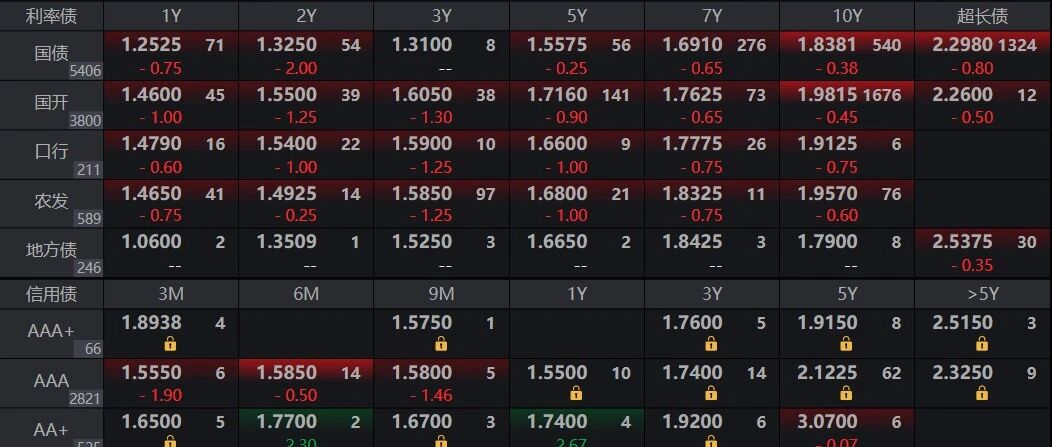
伊朗局势引发通胀担忧,外部扰动下港股震荡调整
Guoyuan International· 2026-03-16 14:49
Market Performance - The Hang Seng Index (HSI) fell by 1.13% last week, while the Tech Index decreased by 0.62%[1] - The energy sector rose by 3.25% due to an increase in international oil prices, while the financial sector dropped by 4.36%[1] - The electrical equipment sector saw a significant increase of 15.1%, and the coal industry rose by 8.3%[1] Capital Flows - The net inflow of funds through the Hong Kong Stock Connect reached HKD 52.44 billion last week, indicating a notable recovery in mainland capital[1] - The number of units in the Tracker Fund of Hong Kong decreased by 4.87%, while the short ETFs for the Hang Seng Index and Hang Seng Tech Index increased by 8.42% and 2.87%, respectively[1] External Influences - Global markets were impacted by the situation in Iran, with oil prices rising over 10% during the week[2] - Concerns about inflation are expected to deepen due to the potential for prolonged military conflict affecting shipping safety in the Strait of Hormuz[3] Economic Data - Domestic financial data showed that new RMB loans increased by CNY 5.61 trillion in the first two months of the year, with social financing scale growing by CNY 9.6 trillion, up by CNY 316.2 billion year-on-year[7] - The M2 money supply grew by 9% year-on-year, while the stock of social financing increased by 8.2%[7]
——流动性与机构行为周度跟踪260315:如何看待同业活期自律趋严对资金面的影响-20260315
Huafu Securities· 2026-03-15 06:58
Group 1: Monetary Market Overview - The central bank's OMO net withdrawal this week totaled 101.1 billion, with a significant decrease in the scale of OMO maturities, maintaining liquidity support despite government bond repayments [2][16] - The average daily transaction volume of pledged repos slightly decreased to 8.57 trillion, while the overall scale remained above 12 trillion [3][23] - The tightening of interbank liquidity self-discipline has led to a significant decline in short-term interest rates, with the DR001 maintaining around 1.32% [4][28] Group 2: Interbank Certificates of Deposit - The 1-year Shibor rate decreased by 0.88 basis points to 1.576%, while the 1-year AAA-rated interbank certificate of deposit rate fell by 1.75 basis points to 1.5325% [10] - The issuance of interbank certificates of deposit turned into a net repayment of 146.1 billion, indicating a decrease in financing from state-owned banks [10][23] - The supply-demand index for certificates of deposit showed an upward trend, with an increase in willingness to invest in secondary markets [10][29] Group 3: Government Bonds and Financing - The net repayment of government bonds this week was -132.1 billion, with upcoming issuances of 3Y, 5Y, and 10Y bonds totaling approximately 585 billion [5][39] - The average issuance term of local government bonds decreased from 17.2 years in February to 15.0 years in March, indicating a shift in financing strategies [5][39] - The estimated net financing for government bonds in March is approximately 1.07 trillion, which is lower than the same period last year [9][39] Group 4: Market Sentiment and Future Outlook - The central bank's recent statements indicate a reluctance to signal further easing of monetary policy, reflecting concerns over inflation and external pressures [37][38] - The expected net repayment of government bonds will increase to 306.3 billion next week, with significant repayments concentrated in the latter half of the week [5][39] - The overall liquidity environment is expected to remain accommodative, with DR001 likely to stay within the 1.3%-1.35% range [38]
股指黄金周度报告-20260313
中盛期货· 2026-03-13 11:57
Report Summary 1. Report Industry Investment Rating - No investment rating provided in the report 2. Core Viewpoints of the Report - Short - term: After the conclusion of the National Two Sessions, the policy side is mostly favorable, but geopolitical risks persist. Stock indices may fluctuate in the short - term, and investors should wait patiently for stabilization signals. The repeated escalation of the US - Iran situation has pushed up inflation expectations due to rising oil prices, suppressing expectations of Fed rate cuts, and gold has entered a high - level consolidation pattern, with the risk of a breakdown downward [35]. - Medium - to long - term: Stock index valuations will still be dragged down by the decline in corporate profit growth at the molecular end, while the support at the denominator end mainly comes from the recovery of risk appetite. The stock index will maintain a wide - range consolidation in the medium term. The stimulative effect of US tax cuts on the economy will gradually emerge, and there is a risk of a deep adjustment in gold [36]. 3. Summary by Relevant Catalogs 3.1 Macroeconomic Data - In February 2026, China's CPI rose 1.3% year - on - year, with the increase expanding by 1.1 percentage points from the previous month. PPI fell 0.9% year - on - year, with the decline narrowing by 0.5 percentage points. From January to February, imports increased 19.8% year - on - year, and exports increased 21.8% year - on - year, the highest growth rate since February 2022 [6]. - In the US in February, non - farm payrolls unexpectedly decreased by 92,000, the unemployment rate rose from 4.3% to 4.4%, CPI rose 2.4% year - on - year, and core CPI rose 2.5% year - on - year, with the increase remaining the same as the previous month [20]. 3.2 Stock Index Fundamental Data - The escalation of the Middle East geopolitical situation has led to rising prices of international crude oil and chemical commodities, which helps repair the profits of upstream raw material processing industries. However, downstream enterprises still face high operating pressure, with the long - standing phenomenon of increasing revenue without increasing profits, and they have to reduce production and inventory [14]. - The margin balance of the Shanghai and Shenzhen stock markets rebounded slightly to 2634.2 billion yuan. The central bank conducted 176.5 billion yuan of 7 - day reverse repurchase operations this week, achieving a net withdrawal of 101.1 billion yuan [17]. 3.3 Gold Fundamental Data - The growth of Shanghai gold futures warehouse receipts and inventory has slowed down, and the COMEX gold inventory in New York has continued to decline, indicating a relief of delivery pressure [34].