PPI转正

Search documents
【老丁投资笔记】2026年1月展望:市场明年的机会在哪里,1月还会继续涨价吗?
Sou Hu Cai Jing· 2025-12-31 12:41
Group 1 - The emergence of a new main theme in the market is commercial aerospace, which has gained traction recently [1] - Overall market sentiment is optimistic, with expectations for the index to rise from 4000 to 4500 by the end of next year, indicating a cautious but positive outlook [1] - There are differing views on market structure, with some investors favoring high-valuation stocks driven by AI, while others believe that blue-chip sectors like consumption and insurance may perform better due to high valuations without earnings support [1] Group 2 - Macroeconomic policies are expected to remain stagnant until after the upcoming Two Sessions, as this year marks the conclusion of the 15th Five-Year Plan [2] - The market is anticipated to react significantly once the Producer Price Index (PPI) turns positive, which is a key indicator for capital markets [2] - A rational approach to the market is advised, focusing on both valuation and trend rationality [2] Group 3 - The divergence in investor opinions reflects a critical point, with a tendency to favor trend rationality, as historical tech revolutions often lead to extreme valuations [3] - While there is optimism for current tech companies, caution is advised as many may not survive the eventual downturn following a tech revolution [3] - The conclusion of tech revolutions is often accompanied by macroeconomic events and data changes, indicating that it is premature to declare an end to the current phase [3] Group 4 - The focus for the upcoming year should be on the re-evolution of technology across various sectors, with a need for detailed market analysis and clear judgments [4]


基金观察:2026年市场关键变量有哪些?
Sou Hu Cai Jing· 2025-12-30 04:01
Core Insights - The key variables influencing A-shares in 2026 will be profitability, liquidity, and policy [2][3] - The recovery of the AI industry and energy storage sectors is leading in profit restoration compared to other industries [2] - The focus will be on which industries can show significant profit recovery and inflection points in 2026 [2] Profitability and Economic Indicators - Profitability will become a focal point in 2026, with expectations of improvement in the real economy and listed companies' earnings [2] - The Producer Price Index (PPI) is a critical indicator to watch, with expectations that it may turn positive by the second half of 2026, signaling potential earnings improvement for companies [3] Policy Environment - Domestic macro policies will focus on four main areas: stabilizing growth, expanding domestic demand, promoting transformation, and preventing risks [4] - Fiscal policies will emphasize targeted efforts in new infrastructure, energy transition, and transportation hubs, supported by special bonds [4] - Monetary policy will maintain overall looseness while ensuring structural precision, aiming to lower financing costs for enterprises and households [4] International Factors - The Federal Reserve's shift towards a looser monetary policy is expected to weaken the dollar, which could enhance global liquidity and risk appetite [5] - A weaker dollar may lead to increased foreign capital inflow into the Chinese capital market, potentially boosting A-share valuations [5] - The relationship between the Fed's rate cuts and the dollar's performance warrants further analysis [5]
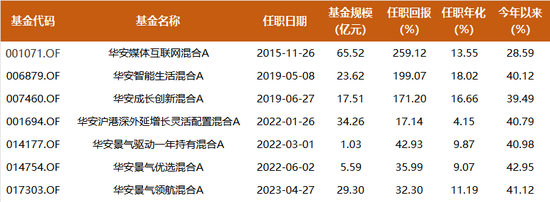
10年回报260%,百亿基金经理华安胡宜斌:可以用一点来证伪AI已泡沫化
Xin Lang Cai Jing· 2025-12-18 11:38
Core Viewpoint - The investment outlook for 2026 focuses on the "engineer dividend" in China, emphasizing the potential for growth in technology sectors driven by a rising number of high-educated workers and STEM graduates [6][64]. Group 1: Investment Strategy - The investment strategy highlights the early stage of the engineer dividend in China, with many industries still in a "land grab" phase, leading to low profit margins but potential for future profit increases as technology advantages solidify [8][66]. - Key investment directions include technology-related sectors such as computing power, innovative pharmaceuticals, and AI applications, which reflect the engineer dividend [9][67]. - The growth of tokens in internet technology companies is seen as a positive indicator, with token consumption doubling approximately every 4-5 months, suggesting strong user engagement [34][67]. Group 2: Market Trends - The Hang Seng Technology Index's relative underperformance compared to A-shares has returned to historical lows, indicating potential for recovery [68]. - Attention is given to the possibility of PPI turning positive next year, which could influence market dynamics and lead to opportunities in new consumption and cyclical sectors [10][69]. Group 3: AI and Technology - The discussion includes the positive cycle between overseas computing power investments and revenue, particularly in AI, which is expected to see significant growth in annual recurring revenue (ARR) [73][74]. - Concerns about AI market bubbles are addressed, with comparisons to the 2000 dot-com bubble, emphasizing that current capital expenditures are aligned with cash flow growth, reducing debt concerns [79][80]. Group 4: Consumer Trends - The investment strategy also considers new consumption trends in China, which are expected to experience three significant consumption surges at different life stages, creating investment opportunities [47][102]. - The focus is on understanding generational differences in consumption patterns and product preferences, which will shape the new consumption landscape [102]. Group 5: Industry Innovations - The human-robot industry is identified as being in the early stages of development, with potential for tenfold growth in demand as products are refined and supply increases [93]. - The renewable energy sector is highlighted for its global leadership in technologies such as solid-state batteries and photovoltaic systems, indicating strong competitive advantages [94].
【申万宏源策略 | 一周回顾展望】宏观环境“还原”,A股向上空间受限未变
申万宏源研究· 2025-12-15 01:18
Core Viewpoint - The A-share market has reverted to its previous state before late October, but the upward potential remains constrained. The only industry showing short-term upward movement is optical connectivity, while concerns about the decline in capital expenditure among leading US tech companies in 2026 persist, impacting the AI industry chain [2][3]. Group 1: Market Environment and Trends - Since late November, the macro environment for the A-share market has "reverted," reflecting the characteristics seen before late October. However, the upward space remains limited, with only optical connectivity showing potential for upward breakthroughs [2][3]. - The expectation for stable growth has been adjusted downward, and the anticipated return of the Federal Reserve's easing policies has led to a resurgence in optical connectivity, while other tech growth sectors are experiencing a rebound [2][3]. - The market is currently in a high-level oscillation phase, with the structural characteristics reverting to those observed before late October [2][3]. Group 2: Economic Policy Insights - The core idea of the 2025 Central Economic Work Conference is to "practice internal skills to cope with external challenges," with a focus on maintaining policy momentum in 2024 and potential marginal improvements in 2026 [5][6]. - Key policy points include addressing issues related to development and transformation, emphasizing quality and efficiency, stimulating domestic demand, and promoting technological innovation in key regions [6][7]. - The market anticipates that if economic results improve in the first half of 2026, additional efforts to stabilize growth in the second half are likely [5][7]. Group 3: Market Outlook and Investment Opportunities - The medium-term outlook remains a "two-stage bull market," with the first stage (tech structural bull) already at a high level, and the market currently in a quarterly high-level oscillation phase [7][8]. - The first half of 2026 is expected to favor cyclical and value styles, while the second half may see a comprehensive bull market driven by fundamental improvements and technological trends [7][8]. - Spring market trends are expected to focus on small-scale opportunities, particularly in optical connectivity and other tech sectors, with potential for new high-level oscillation phases [8].

【信达能源】煤炭2026年度策略:煤炭的“韧”与“实”
Xin Lang Cai Jing· 2025-12-12 14:20
Group 1 - The coal supply has entered a phase of low-speed growth, characterized by stable domestic production and a significant reduction in imports since 2025 [2][4][10] - In 2025, the total domestic coal production reached 3.97 billion tons, with a year-on-year growth of 1.5%, showing a recovery compared to 2024 [4][15] - The coal import volume from January to October 2025 was 388 million tons, a decrease of 11% year-on-year, primarily due to narrowing price advantages of overseas coal and adjustments in the international shipping market [4][15][27] Group 2 - Coal consumption continues to grow, with significant resilience in demand from the power and chemical sectors, reflecting structural changes in consumption patterns [3][5][56] - From January to September 2025, the total coal consumption was 3.57 billion tons, a year-on-year increase of 0.5%, indicating stable demand despite a slight slowdown [4][56] - The power sector remains the main driver of coal consumption, accounting for 63.5% of total demand, while the chemical industry has shown the fastest growth [4][5] Group 3 - Coal prices are expected to fluctuate within a reasonable range, with a "V-shaped" trend observed in 2025, where the average price for 5500 kcal thermal coal was 690 yuan per ton, down 19% year-on-year [9][10] - The price stabilization is supported by policy measures and cost factors, with projections for 2026 indicating a price range of 730-760 yuan per ton for thermal coal [9][10] Group 4 - The coal sector's valuation still has room for upward movement, with the Producer Price Index (PPI) expected to turn positive, presenting investment opportunities [6][10] - The coal industry is entering a new phase characterized by rigid supply, resilient demand, and cost support, which is likely to lead to a rebalancing of supply and demand [7][10] Group 5 - The investment focus in the coal sector has shifted towards downstream industries, with limited new coal production capacity being developed [42][44] - Major coal companies have seen a significant increase in construction projects, with a total investment of 208.7 billion yuan from January to September 2025, reflecting a trend towards integrated operations in power and chemical sectors [44][50]

信达证券:钢铁板块具备较强“反内卷”属性且盈利修复空间较大 维持行业“看好”评级
Zhi Tong Cai Jing· 2025-12-12 03:47
Core Viewpoint - The steel sector is positioned for a strong recovery due to favorable conditions such as PPI at a cyclical low, ample market liquidity, and an improved risk premium, indicating significant medium to long-term investment opportunities in quality steel companies [1] Supply Side - The steel industry is experiencing a dual decline in supply and demand, with structural optimization and marginal profit improvement [2] - Total supply is contracting with a weak growth trend in capital expenditure, expected to enter negative growth by 2025 due to multiple factors including "anti-involution" policies and a downturn in the real estate sector [2] - From January to October, China's crude steel production reached 820 million tons, a year-on-year decrease of 3.9%, with a notable decline in monthly production [2] - There is a significant structural differentiation in production, with high-end manufacturing steel products like cold-rolled sheets and seamless pipes showing growth, while construction steel rebar production has declined by approximately 1.2% [2] Demand Side - Domestic demand continues to shrink, with a 6.4% year-on-year decline in crude steel demand for January to October 2025, totaling 710 million tons [3] - Traditional steel demand from real estate and infrastructure remains weak, with new construction areas and ongoing construction areas in real estate dropping significantly [3] - Despite high net financing from local government special bonds, the impact on steel consumption has weakened, making exports a crucial support for the steel industry [3] - Steel exports reached 97.74 million tons from January to October, a 6.4% increase year-on-year, with expectations to exceed 110 million tons for the year, effectively offsetting domestic demand decline [3] Profitability - The profit distribution pattern in the coal-coke-steel supply chain has led to a noticeable improvement in the steel industry's profitability [4] - The industry is gradually recovering from low levels since 2022, with gross profit margins rising to 6.4% in Q3 2025, at the 45th percentile level since 2012 [4] - From January to October 2025, profits for large-scale industrial enterprises in the black metal smelting and rolling processing industry reached 105.3 billion yuan, showing significant growth compared to the same period in 2024 [4] Policy and Price Dynamics - The steel industry is a key focus of "anti-involution" policies, which aim to guide steel prices to a reasonable range, essential for achieving positive PPI [5] - Steel prices significantly influence the PPI, with the steel sector accounting for approximately 5.9% of PPI, and its price fluctuations typically exceeding those of most industries [5] - As of November 11, 2025, the steel price index is around 3,500 yuan/ton, reflecting a return to historical low levels, with current prices at 3,415 yuan/ton indicating weak industry conditions [5] Future Outlook - The steel PPI is expected to turn positive by the second quarter of 2026, supported by seasonal trends and anticipated price recoveries in Q4 2025 [6] - The transition of PPI from negative to positive is a critical indicator of industrial economic recovery and presents an important investment window [7] - Historical data shows that prior PPI recovery phases have led to significant increases in steel sector valuations, particularly for small to mid-cap companies with strong growth potential [7] Investment Recommendations - Focus on regional leading companies with advanced equipment and environmental standards such as Hualing Steel, Shougang, and Shandong Steel [8] - Consider companies with excellent growth potential and restructuring capabilities like Baosteel and Nanjing Steel [8] - Target high-quality special steel enterprises benefiting from the new energy cycle [8] - Invest in upstream raw material suppliers with competitive advantages [8]

钢铁2026年度策略:破内卷启新篇
Xinda Securities· 2025-12-12 03:25
Core Insights - The steel industry is experiencing a dual decline in supply and demand, with structural optimization and marginal profit improvement. Supply side: total contraction and structural differentiation, with capital expenditure continuing to show weak growth. The steel industry's capital expenditure has been slowing for four consecutive years, entering negative growth in 2025 due to multiple factors including "anti-involution" policies, a downturn in the real estate sector, and limited infrastructure support [2][10] - The domestic crude steel consumption has decreased significantly, with a 6.4% year-on-year decline in demand from January to October 2025, amounting to 710 million tons. The demand in traditional steel usage areas remains weak, particularly in real estate and infrastructure [2][32] - Exports have become a crucial support for the steel industry, with steel exports reaching 97.74 million tons from January to October 2025, a 6.4% increase year-on-year. The total annual export volume is expected to exceed 110 million tons, effectively offsetting the pressure from declining domestic demand [2][48] Group 1: Marginal Improvement in the Steel Industry - The average steel price has continued to decline, with the comprehensive price index for ordinary steel dropping to 3,447 yuan/ton as of November 24, 2025, down approximately 200 yuan from the year's peak [10][60] - The profit margin of the steel industry has shown significant improvement, with the gross profit margin reaching 6.4% in Q3 2025, marking a recovery from the low levels seen since 2022 [13][15] - The proportion of loss-making enterprises in the steel industry has slightly decreased but remains high at 37.18%, indicating ongoing challenges within the industry [17] Group 2: PPI Turnaround Expectations - The Producer Price Index (PPI) for the steel industry is expected to turn positive by Q2 2026, driven by improvements in supply structure and demand dynamics [53][60] - Historical data shows that the steel industry plays a significant role in PPI fluctuations, with past PPI turnarounds in 2016 and 2021 coinciding with significant steel industry performance [54][60] - The steel industry accounts for approximately 5.9% of the PPI, making its price movements critical for overall industrial price trends [53][54] Group 3: Investment Recommendations - The report suggests focusing on high-efficiency, low-emission regional leading enterprises such as Hualing Steel, Shougang, and Shandong Steel, as well as companies with strong growth potential like Baosteel and Nanjing Steel [4][60] - The steel sector is viewed as having strong "anti-involution" attributes and significant profit recovery potential, making it a strategic investment opportunity for the medium to long term [4][60] - The report emphasizes the importance of monitoring the performance of small and medium-sized steel companies, particularly those with strong earnings growth and valuation appeal [4][60]


中泰资管天团 | 胡达:固收“+”产品的视野可以更宽广
中泰证券资管· 2025-11-20 11:32
Core Insights - The current bond investment environment is characterized by complexity, presenting both opportunities and challenges. The inclusion of convertible bonds in investment portfolios can yield significant returns, while traditional long-duration asset strategies may underperform [1] - The performance of different fixed-income products has varied significantly this year, with convertible bond funds achieving close to 30% returns, contrasting with the underwhelming performance of long-term bond funds [1] - The implementation of asset management regulations and local government debt resolution processes will continue to profoundly impact the fixed-income industry, necessitating more refined investment strategies [4] Group 1: Investment Environment - The Wind convertible bond weighted index has seen a year-to-date increase of 16.83%, while the yield on 30-year government bonds has risen from 1.84% to 2.14%, leading to substantial capital losses for many investors [1] - In a low-interest-rate environment, overall yields for fixed-income products are expected to remain in the 2%-3% range, making it challenging to achieve significant excess returns while effectively managing product drawdowns [2] Group 2: Future Trends - The broadening of "fixed income +" products is seen as an inevitable trend in the fixed-income industry, with various strategies such as convertible bonds, equity ETFs, and commodity strategies still in the early stages of development [4] - Looking ahead to 2026, the likelihood of a significant shift in the low-interest-rate environment is low, and static coupon yields may decrease further as higher-yielding assets mature [5] - The potential for macroeconomic opportunities may focus on commodities, especially if policies aimed at reducing competition and expanding domestic demand are effectively implemented [5]

食品饮料行业:关注PPI的环比首次转正,利好食品饮料行业利润复苏
Dongxing Securities· 2025-11-14 05:32
Investment Rating - The report maintains a "Positive" outlook for the food and beverage industry, indicating expected performance above the market benchmark [4]. Core Insights - The report highlights the first month-on-month increase in PPI (Producer Price Index) in 2023, which is expected to positively impact the profitability recovery of the food and beverage industry [1][8]. - The correlation between food and beverage industry revenues and PPI is emphasized, suggesting that improvements in PPI will lead to better profit margins for food companies [1][9]. - The report recommends focusing on cyclical sectors such as the liquor segment and snack foods that benefit from channel advantages due to the overall price recovery [9]. Summary by Sections PPI and CPI Analysis - In October, CPI increased by 0.2% year-on-year and month-on-month, while PPI decreased by 2.1% year-on-year but showed a month-on-month increase of 0.1%, marking the first rise in 2023 [2][8]. - The report notes that the improvement in supply-demand relationships across various industries has led to price increases in sectors such as coal mining and photovoltaic equipment [2][8]. Market Performance - The report provides a weekly performance overview of various sub-sectors within the food and beverage industry, with seasoning and fermentation products leading with a 1.75% increase, while other food categories showed mixed results [10][13]. - Key companies in the liquor sector, such as Zhongxin Niya and Weilang Co., saw significant stock price increases, while others like Huaiqi Mountain and Jiu Gui Jiu experienced declines [13][21]. Company Tracking - The report includes recent announcements from major companies, such as Kweichow Moutai's mid-term profit distribution plan and share buyback initiatives, which aim to enhance shareholder confidence [23][27]. - It also notes the issuance of short-term financing by Yili Co. and the extension of pre-restructuring for Tianbang Food, indicating ongoing corporate activities within the industry [23][24].




【研选行业】这种半导体材料迎来替代窗口期,三龙头锚定国产化红利
第一财经· 2025-11-11 12:42
Group 1 - The advanced packaging market is projected to reach 85.2 billion, while the photoresist market is expected to demand 15 billion, indicating a critical window for the replacement of semiconductor materials, with three leading companies poised to benefit from domestic production dividends [1] - In the context of two rounds of positive PPI cycles, a specific sector has experienced significant growth, with institutions forecasting that PPI will turn positive again by Q2 2026, suggesting a strategic allocation roadmap for three core stocks that offer dividends and upward potential [1]