
地缘风险

Search documents
坚定的力量,贵金属夜盘刷新高点:申万期货早间评论-20260123
申银万国期货研究· 2026-01-23 00:42
Group 1 - The article discusses the recent geopolitical tensions and their impact on various commodities, particularly precious metals and oil [1][3][11] - Precious metals, including gold and silver, have reached historical highs due to weakened dollar credibility and increased central bank purchases, particularly Poland's plan to buy 150 tons of gold [3][17] - The U.S. crude oil production has decreased slightly, with an average of 13.732 million barrels per day, while geopolitical developments in Iran and Venezuela are influencing market dynamics [2][11] Group 2 - The article highlights the performance of key commodities, noting that synthetic rubber prices have surged, while natural rubber is expected to remain strong due to supply constraints [2][13] - The U.S. economy shows signs of growth, with a GDP growth rate of 4.4% for Q3 2025, and inflation indicators are aligning with expectations, suggesting a stable economic environment [5] - The People's Bank of China is set to inject 900 billion yuan through MLF operations, indicating a continued effort to support liquidity in the domestic market [6]


今日金价!1月22日最新黄金价格!各大金店、黄金回收价格查询
Sou Hu Cai Jing· 2026-01-23 00:27
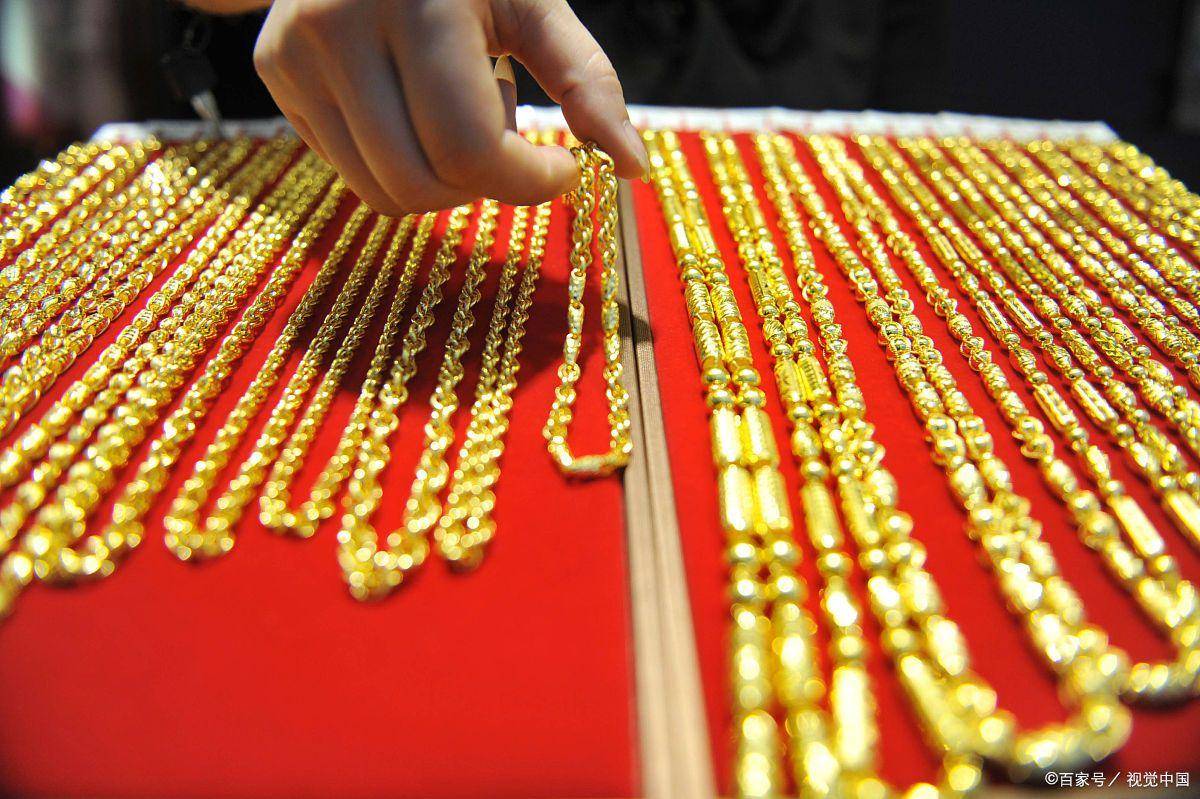
现货黄金首次突破4800美元/盎司并触及4835.28美元新高,带动国内金饰零售价格快速上调,周大福、老凤祥等足金普遍逼近1500元/克,部分门店单日上调 逾40元并出现"抢购",黄金股与上海金ETF资金净流入显著。金价上行由地缘风险、央行持续购金、去美元化与降息预期共振推动,高位波动与回撤风险亦 在累积,消费者需重视渠道价差与回收折价。 一、金价创历史新高,零售端一天一换价签 现货黄金上破4800美元/盎司,盘中最高至4835.28美元,国际价格急涨迅速传导至国内零售端,多家金店集中调价。 三、资金与股市同步升温 金价上行带动相关资产走强,A股与港股黄金板块多只个股大幅上涨,部分标的盘中创阶段新高,资金面也给出佐证:截至1月21日,上海金ETF整体出现明 显净流入,广发上海金ETF近四日净流入约18.54亿元,富国、建信等产品分别吸金8.06亿元、3.02亿元,四日合计净流入约32.90亿元。 与实物零售的热度相对应,投资者通过ETF等工具加仓,成为推动行情的重要增量资金来源之一。 四、央行购金与"去美元化"共同发力 推动本轮黄金上行的核心因素来自多线共振: 地缘政治不确定性抬升避险需求:贸易摩擦、地区局势 ...
橡胶甲醇原油:偏多情绪主导能化震荡偏强
Bao Cheng Qi Huo· 2026-01-22 09:58
1. Report Industry Investment Rating - No relevant content provided 2. Core Views - **Rubber**: On Thursday, the domestic Shanghai Rubber Futures 2605 contract showed a trend of shrinking volume, increasing positions, stabilizing in oscillation, and closing slightly higher. The intraday price center moved slightly up to below the 15,850 yuan/ton level, closing up 1.12% at 15,850 yuan/ton. The premium of the May - September spread widened to 55 yuan/ton. After the previous negative factors were gradually digested, the Shanghai Rubber Futures entered a stage of long - short divergence, and it is expected to maintain a stable oscillation trend in the future [6]. - **Methanol**: On Thursday, the domestic Methanol Futures 2605 contract presented a trend of shrinking volume, reducing positions, stabilizing in oscillation, and closing slightly higher. The price reached a maximum of 2,260 yuan/ton and a minimum of 2,212 yuan/ton, closing up 2.03% at 2,260 yuan/ton. The discount of the May - September spread narrowed to 19 yuan/ton. With the re - emergence of geopolitical risks, the Methanol Futures may maintain a strong oscillation trend [6]. - **Crude Oil**: On Thursday, the domestic Crude Oil Futures 2603 contract showed a trend of increasing volume, increasing positions, stabilizing in oscillation, and rebounding slightly. The price reached a maximum of 448.6 yuan/barrel and a minimum of 444.1 yuan/barrel, closing up 1.20% at 446.4 yuan/barrel. With the re - emergence of geopolitical risks in the Middle East, the crude oil premium was re - elevated, and the short - term oil price will maintain a strong oscillation pattern [6]. 3. Summary by Relevant Catalogs 3.1 Industry Dynamics 3.1.1 Rubber - As of January 18, 2026, the total inventory of natural rubber in bonded and general trade in Qingdao was 584,900 tons, a month - on - month increase of 16,700 tons or 2.94%. The bonded area inventory was 99,500 tons, an increase of 6.42%; the general trade inventory was 485,400 tons, an increase of 2.26%. The inbound rate of the sample bonded warehouses of Qingdao natural rubber increased by 0.85 percentage points, and the outbound rate increased by 0.05 percentage points; the inbound rate of general trade warehouses increased by 0.72 percentage points, and the outbound rate increased by 1.55 percentage points [8]. - As of January 16, 2026, the capacity utilization rate of China's semi - steel tire sample enterprises was 72.53%, a month - on - month increase of 8.75 percentage points and a year - on - year decrease of 5.03 percentage points; the capacity utilization rate of China's all - steel tire sample enterprises was 63.02%, a month - on - month increase of 7.52 percentage points and a year - on - year increase of 5.21 percentage points. With the gradual stabilization of the production schedules of maintenance enterprises this week, the output increased significantly compared with last week. The increase in foreign trade orders of some semi - steel tire enterprises promoted the increase in the capacity utilization rate of semi - steel tire sample enterprises. The rising finished product inventory of some all - steel tire enterprises limited the increase in the capacity utilization rate of all - steel tires [8]. - In 2025, the cumulative production and sales of automobiles reached 34.531 million and 34.4 million respectively, a year - on - year increase of 10.4% and 9.4% respectively, reaching a new historical high. The production and sales scale has remained above 30 million for 3 consecutive years and ranked first in the world for 17 consecutive years. Among them, the cumulative production and sales of passenger cars reached 30.27 million and 30.103 million respectively, a year - on - year increase of 10.2% and 9.2%. The cumulative production and sales of commercial vehicles in China reached 4.261 million and 4.296 million respectively, a year - on - year increase of 12% and 10.9%, and the production and sales returned to above 4 million. In 2025, the annual automobile exports exceeded 7 million, reaching 7.098 million, a year - on - year increase of 21.1% [9]. - In December 2025, about 95,000 heavy - duty trucks were sold in the domestic market, a month - on - month decrease of about 16% compared with November 2025 and a year - on - year increase of about 13% compared with 84,200 in the same period of the previous year. In total, the total sales volume of the domestic heavy - duty truck market in 2025 reached a new high in the past four years, 1.137 million, a year - on - year increase of about 26% [9]. 3.1.2 Methanol - As of the week ending January 16, 2026, the average domestic methanol operating rate remained at 86.80%, a slight week - on - week increase of 0.42%, a small month - on - month increase of 2.49%, and a significant year - on - year increase of 6.06%. The average weekly methanol production in China during the same period reached 2.0354 million tons, a slight week - on - week decrease of 7,000 tons, a slight month - on - month decrease of 4,400 tons, and a significant year - on - year increase of 113,500 tons compared with 1.9219 million tons in the previous year [10]. - As of the week ending January 9, 2026, the domestic formaldehyde operating rate remained at 31.05%, a slight week - on - week decrease of 0.65%. For dimethyl ether, the operating rate remained at 7.30%, a small week - on - week increase of 1.51%. The acetic acid operating rate remained at 81.89%, a small week - on - week increase of 4.28%. The MTBE operating rate remained at 58.12%, a slight week - on - week increase of 0.01%. As of the week ending January 9, 2026, the average operating load of domestic coal - (methanol) to olefin plants was 81.65%, a slight week - on - week increase of 0.33 percentage points and a small month - on - month decrease of 1.17%. As of January 16, 2026, the futures market profit of domestic methanol to olefins was - 236 yuan/ton, a small week - on - week recovery of 69 yuan/ton and a significant month - on - month decline of 105 yuan/ton [10]. - As of the week ending January 16, 2026, the methanol inventory at ports in East and South China remained at 1.0445 million tons, a significant week - on - week decrease of 114,800 tons, a small month - on - month increase of 26,100 tons, and a significant year - on - year increase of 281,400 tons. As of the week ending January 15, 2026, the total inland methanol inventory in China reached 450,900 tons, a small week - on - week increase of 28,200 tons, a significant month - on - month increase of 98,100 tons, and a significant year - on - year increase of 142,600 tons compared with 308,300 tons in the previous year [11]. 3.1.3 Crude Oil - As of the week ending January 9, 2026, the number of active oil drilling rigs in the United States was 409, a small week - on - week decrease of 3 and a decrease of 70 compared with the same period of the previous year. As of the week ending January 9, 2026, the average daily crude oil production in the United States was 13.753 million barrels, a small week - on - week decrease of 58,000 barrels per day and a significant year - on - year increase of 272,000 barrels per day, remaining at a historical high [11]. - As of the week ending January 9, 2026, the U.S. commercial crude oil inventory (excluding strategic oil reserves) reached 422.4 million barrels, a significant week - on - week increase of 3.391 million barrels and a significant year - on - year increase of 9.767 million barrels. The crude oil inventory in Cushing, Oklahoma, reached 23.585 million barrels, a small week - on - week increase of 745,000 barrels; the U.S. Strategic Petroleum Reserve (SPR) inventory reached 413.7 million barrels, a small week - on - week increase of 214,000 barrels. The U.S. refinery operating rate remained at 95.3%, a slight week - on - week increase of 0.6 percentage points, a slight month - on - month increase of 0.5 percentage points, and a small year - on - year increase of 3.6 percentage points [12]. - As of January 13, 2026, the average non - commercial net long positions in WTI crude oil were 58,128 contracts, a small week - on - week increase of 776 contracts and a small decrease of 643 contracts or 1.09% compared with the December average of 58,771 contracts. On the other hand, as of January 13, 2026, the average net long positions of Brent crude oil futures funds were 193,366 contracts, a significant week - on - week increase of 72,680 contracts and a significant increase of 87,907 contracts or 83.36% compared with the December average of 105,459 contracts [12]. 3.2 Spot Price Table | Variety | Spot Price (yuan) | Change from Previous Day (yuan) | Futures Main Contract Price (yuan) | Change from Previous Day (yuan) | Basis (yuan) | Basis Change (yuan) | | --- | --- | --- | --- | --- | --- | --- | | Rubber | 15,400 | +0 | 15,850 | +105 | - 450 | - 105 | | Methanol | 2,240 | +23 | 2,260 | +51 | - 20 | - 51 | | Crude Oil | 419.6 | +6.5 | 446.4 | +5.6 | - 26.8 | +0.9 | 3.3 Related Charts - **Rubber**: The report provides charts on rubber basis, May - September spread, Shanghai Futures Exchange rubber futures inventory, Qingdao bonded area rubber inventory, all - steel tire operating rate trend, and semi - steel tire operating rate trend [14][15][17][19][21][23]. - **Methanol**: The report provides charts on methanol basis, May - September spread, domestic port inventory, inland social inventory, methanol to olefin operating rate change, and coal - to - methanol cost accounting [26][28][30][32][34][36]. - **Crude Oil**: The report provides charts on crude oil basis, Shanghai Futures Exchange crude oil futures inventory, U.S. crude oil commercial inventory, U.S. refinery operating rate, WTI crude oil net position change, and Brent crude oil net position change [38][40][42][44][46][48].
百利好晚盘分析:地缘风险下降 黄金应声回落
Sou Hu Cai Jing· 2026-01-22 09:12
Group 1: Gold Market - Gold prices fell below the support level of $4800 due to a decrease in market risk appetite following Trump's change in stance on Greenland [2] - Trump announced the cancellation of threatened tariffs on European countries, indicating a framework for future agreements regarding Greenland, which may ease trade tensions [2] - Despite the temporary agreement, underlying distrust between the US and Europe remains, with geopolitical and economic risks still present [2] - Technically, gold has not broken below the moving average support, indicating potential for further price movement [2] Group 2: Oil Market - The oil market is currently in a state of adjustment, with geopolitical risks providing less support to oil prices, while oversupply remains a significant issue [3] - The IEA's latest report predicts a slight increase in global oil demand, with growth expected to rise from 860,000 barrels per day to 930,000 barrels per day this year [3] - Global oil supply growth has been adjusted to 2.5 million barrels per day, up from a previous forecast of 2.4 million barrels per day, but still lower than last year's 3 million barrels per day [3] - Technically, oil prices are experiencing small upward movements but face resistance above, indicating potential for long-term volatility [3] Group 3: US Dollar Index - The US dollar index has shown weakness recently, with improved US-EU relations failing to provide strong support due to the anticipated interest rate cuts by the Federal Reserve [4] - The market expects a 95% probability that the Federal Reserve will not cut rates in January, with expectations for rate cuts to begin in June [4] - Core PCE inflation in the US has risen to 2.8%, above the 2% target, which may justify the Fed's decision to maintain current rates in the short term [5] - The dollar index is experiencing a short-term bullish trend but faces long-term bearish pressures due to expected rate cuts [5] Group 4: Nikkei 225 - The Nikkei 225 index has closed with a bullish candle, indicating a potential reversal from previous downward trends, with clear support at lower levels [6] - The price has re-entered a previous trading range, suggesting a trend reversal may be underway [6] Group 5: Copper Market - Copper prices have shown small fluctuations but are likely to remain in a consolidation phase, with a potential downward continuation pattern forming [7] - Short-term support is noted at $5.60, indicating a critical level to watch for price movements [7]

1.22黄金闪崩100美金 高位洗盘
Sou Hu Cai Jing· 2026-01-22 07:35
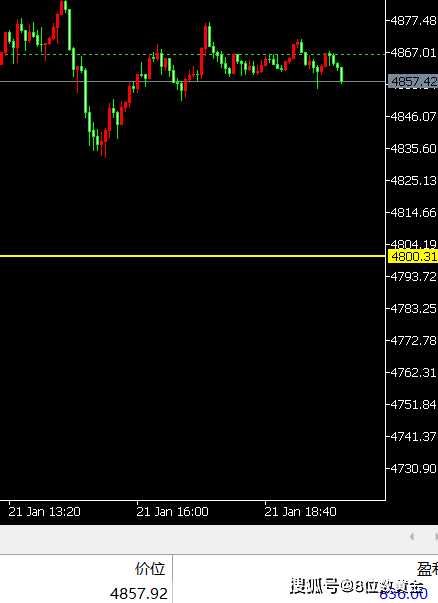
黄金一路走高,昨天加速冲顶,直线飙升130美金。触达4900关口附近后,再次上演高位跳水,闪跌超 100美金,不断上蹿下跳,高位洗盘。 昨天4866附近,再次空获利。 今天的走势 昨天涨势过猛,一波冲顶新高后。 直接进入了整理,闯关无果后。 美盘直接跳水,一路狂泄,至4755的位置。 到今天再次快速回升,围绕4800的位置调整。 上午4810的位置,遇阻小幅整理后。 再次反弹延续,上方来到了4830附近。 上方再看4840的位置,上破,那么继续看向4890的阻力。 当然了,处在4840下方调整,可再探4794的位置。 关注两个区域范围内的调整,多空争夺。 随着高位洗盘,下方再次跌破了4794,继续看大的回调,看向4755的位置。 黄金本月连刷历史新高,迎来连续3个月连涨。一路狂奔,特别是本月过半,修复跌幅后,再创历史高 位。而且本周进入高位洗盘,再次上破,续涨新高看向5000的关口。当然了,下方可调整空间拉大,可 看到4650的区域。 操作方面,黄金整体处在大的涨势中的调整,看反弹的机会,关注4794和4755做多的机会。此外,黄金 冲高跳水,短期内看承压调整,关注4840和4890做空的机会。 昨天主要影响 ...
贵金属日报:地缘风险降温,贵金属冲高回落-20260122
Hua Tai Qi Huo· 2026-01-22 05:27
1. Report Industry Investment Rating - Gold: Cautiously bullish [8] - Silver: Neutral [8] - Arbitrage: Short the gold-silver ratio on rallies [9] - Options: Hold off [9] 2. Core Viewpoints of the Report - Geopolitical risks have cooled down, causing precious metals to rise and then fall. The market risk sentiment has converged, but the trading focus remains on geopolitical factors. The demand logic for gold investment remains unchanged, and the gold price is expected to be mainly in a volatile and slightly stronger pattern. Silver is expected to maintain a volatile pattern due to the slight cooling of risk sentiment [1][8]. 3. Summary by Relevant Catalogs Market Analysis - Geopolitical aspect: The Greenland crisis has taken a turn. US President Trump announced an agreement framework on the Greenland issue with NATO Secretary-General Lute. If implemented, it will benefit the US and all NATO members. Trump will not implement the originally scheduled tariff measures on February 1st. Affected by this news, US stocks rose sharply, with all three major indexes rising more than 1%. The EU leaders' emergency summit will be held as planned on the evening of January 22nd local time [1]. - Economic outlook: Most economists expect the Fed to keep the benchmark interest rate unchanged this quarter and may remain on hold until Fed Chairman Powell's term ends in May. This view has shifted significantly from last month when most respondents expected at least one rate cut before March. However, most economists still expect at least two rate cuts later this year [1]. Futures Quotes and Trading Volumes - On January 21, 2026, the Shanghai Gold main contract opened at 1063.00 yuan/gram, closed at 1092.30 yuan/gram, a change of 3.03% from the previous trading day's close. The trading volume was 41,087 lots, and the open interest was 129,725 lots. In the overnight session, it opened at 1097.00 yuan/gram and closed at 1091.80 yuan/gram, a 0.05% decline from the afternoon closing price [2]. - On January 21, 2026, the Shanghai Silver main contract opened at 23,660.00 yuan/kilogram, closed at 23,131.00 yuan/kilogram, a change of 0.30% from the previous trading day's close. The trading volume was 870,541 lots, and the open interest was 301,919 lots. In the overnight session, it opened at 23,037 yuan/kilogram and closed at 22,938 yuan/kilogram, an 0.83% decline from the afternoon closing price [2]. US Treasury Yield and Spread Monitoring - On January 21, 2026, the US 10-year Treasury yield closed at 4.239%, unchanged from the previous trading day. The spread between the 10-year and 2-year Treasuries was 0.661%, also unchanged from the previous trading day [3]. Changes in Positions and Trading Volumes of Gold and Silver on the Shanghai Futures Exchange - On the Au2604 contract, the long positions changed by 14,122 lots compared to the previous day, and the short positions changed by 6,877 lots. The total trading volume of Shanghai Gold contracts on the previous trading day was 546,827 lots, a change of 93.32% from the previous trading day [4]. - On the Ag2604 contract, the long positions changed by -4,635 lots, and the short positions changed by -3,634 lots. The total trading volume of silver contracts on the previous trading day was 1,948,125 lots, a change of 23.03% from the previous trading day [4]. Precious Metals ETF Position Tracking - The gold ETF position was 1,081.66 tons, unchanged from the previous trading day. The silver ETF position was 16,222 tons, an increase of 149 tons from the previous trading day [5]. Precious Metals Arbitrage Tracking - On January 21, 2026, the domestic gold premium was -6.09 yuan/gram, and the domestic silver premium was -709.99 yuan/kilogram. The price ratio of the main gold and silver contracts on the Shanghai Futures Exchange was about 47.22, a change of 2.72% from the previous trading day. The overseas gold-silver ratio was 49.36, a change of -1.58% from the previous trading day [6]. Fundamentals - On January 21, 2026, the trading volume of gold on the Shanghai Gold Exchange T+d market was 95,478 kilograms, a change of 108.84% from the previous trading day. The silver trading volume was 422,976 kilograms, a change of -1.38% from the previous trading day. The gold delivery volume was 11,872 kilograms, and the silver delivery volume was 60 kilograms [7]. Strategy - Gold: The gold price is expected to be mainly in a volatile and slightly stronger pattern, and the oscillation range of the Au2604 contract may be between 1070 yuan/gram - 1150 yuan/gram [8]. - Silver: The silver price is expected to maintain a volatile pattern, and the oscillation range of the Ag2604 contract may be between 22,700 yuan/kilogram - 23,700 yuan/kilogram [8][9]. - Arbitrage: Short the gold-silver ratio on rallies [9]. - Options: Hold off [9].
宝城期货原油早报-20260122
Bao Cheng Qi Huo· 2026-01-22 02:25
期货研究报告 晨会纪要 宝城期货原油早报-2026-01-22 投资咨询业务资格:证监许可【2011】1778 品种晨会纪要 时间周期说明:短期为一周以内、中期为两周至一月 | 品种 | 短期 | 中期 | 日内 | 观点参考 | 核心逻辑概要 | | --- | --- | --- | --- | --- | --- | | 原油 2603 | 震荡 | 震荡 | 偏强 | 偏强运行 | 地缘因素增强,原油震荡偏强 | 备注: 3.偏强/偏弱只针对日内观点,短期和中期不做区分。 主要品种价格行情驱动逻辑—商品期货能源化工板块 原油(SC) 日内观点:偏强 中期观点:震荡 参考观点:偏强运行 核心逻辑:近期美国总统特朗普频繁释放地缘风险信号,格陵兰岛、加拿大或成为美国下一个夺取 和打击的目标。由于短期美军航母绕过马六甲海峡,赶赴中东战场,伊朗发表强硬言论,中东地缘 风险再度增强。随着原油期货市场地缘因素盖过偏弱供需基本面,本周三夜盘国内原油期货价格维 持震荡反弹的走势,期价小幅上行。预计本周四国内原油期货价格或维持偏强的格局。 ----------------------------------------- ...
《能源化工》日报-20260122
Guang Fa Qi Huo· 2026-01-22 01:53
1. Report Industry Investment Ratings - No industry investment ratings are provided in the reports. 2. Core Views of the Reports Methanol - Methanol futures fluctuated narrowly, with a firm basis and a somewhat subdued overall negotiation. The inland supply remained high, traditional demand was weak, and there was short - term pressure. However, under the expectations of spring maintenance and new production capacity, the long - term pressure might ease. The port inventory decreased slightly, but the MTO demand was weak, suppressing the price rebound. The risk premium from the reduction in imported methanol arrivals was gradually fading, and the geopolitical factors still had an impact [1]. Polyolefins (L2605, PP2605) - For PE, the HD - LL spread narrowed, the marginal supply of the standard product (LLDPE) was expected to increase, and demand entered the seasonal off - season with weakening downstream开工率. For PP, the supply - demand situation was weak on both sides, but the balance improved compared to the previous period. The weighted profit was repaired, and the far - month futures offered PDH hedging profits [2]. Natural Rubber - The supply in northern Thailand and northern Vietnam was decreasing, and overseas raw material prices stopped falling and rose, strengthening cost support. The demand of some semi - steel tire enterprises with a large proportion of European exports was sufficient, but the overall inventory of enterprises increased, and domestic sales were slow. The inventory in China continued to accumulate. The rubber price was expected to oscillate within the range of 15,500 - 16,500 yuan/ton [3]. Styrene and Pure Benzene - The supply - demand of pure benzene improved marginally, but the absolute level of port inventory was still high, and its own driving force was limited. Styrene was strong due to export - driven inventory reduction and unexpected device shutdowns, which drove up the price of pure benzene. However, the spread between styrene and pure benzene was expected to have limited room for further expansion. For styrene, although the short - term supply - demand was tight, there was an inventory accumulation expectation around the Spring Festival, and the upward space was limited [4]. Glass and Soda Ash - For soda ash, the main contract SA605 fell for five consecutive trading days. The supply was at a high level, demand did not improve significantly, and the factory inventory was at a historically high level. The futures price was expected to oscillate weakly in the short term. For glass, the main contract FG605 fell. The supply and demand were weak, and the inventory was still high. The futures price was expected to continue the weakening trend in the short term [5]. Urea - Urea futures oscillated and closed up, and the spot price was generally stable. The supply was sufficient in the short term, and demand from both agriculture and industry increased. The inventory continued to decline, and the price was expected to oscillate widely in the short term [6]. PVC and Caustic Soda - For caustic soda, the futures fell weakly, and the spot market price continued to decline. The supply - demand imbalance remained, with high inventory and weak demand, and the price was expected to continue to decline under pressure. For PVC, the futures opened low and moved lower, the supply was at a high level, and demand weakened before the festival. The price was expected to oscillate weakly in the short term, but the cost support limited the downward space [7]. Polyester Industry Chain - For PX, the supply was at a high level, and demand was weak. The overall supply - demand of PX and PTA was expected to weaken. For PTA, the supply - demand was expected to weaken in January, and it would follow raw material fluctuations. For MEG, there was a large - scale inventory accumulation expectation, and the price was under pressure. For short - fiber, the supply - demand was weak, and it would follow raw material fluctuations. For polyester bottle - chips, the supply decreased, and it would follow cost - end fluctuations [8]. Crude Oil - International oil prices rebounded. Geopolitical risks eased to some extent, but the instability remained. The temporary shutdown of two major oil fields in Kazakhstan and the increase in fuel demand due to the Arctic cold wave supported oil prices in the short term. However, the supply - demand expectation of crude oil was still weak, and the upward space of oil prices was limited. Brent crude oil was expected to oscillate between 60 - 66 dollars/barrel [9]. LPG - The LPG futures prices rose slightly. The refinery inventory ratio and port inventory decreased. The upstream refinery开工率 increased slightly, while the downstream PDH开工率 decreased. The price trend was affected by supply - demand and external market factors [11]. 3. Summaries According to Relevant Catalogs Methanol - **Prices and Spreads**: MA2605 closed at 2209 yuan/ton, up 0.14%; MA2609 closed at 2232 yuan/ton, up 0.31%. The MA59 spread was - 23 yuan/ton, down 21.05%. The port - inland regional spreads increased [1]. - **Inventory**: Methanol enterprise inventory decreased by 2.78% to 43.842 million tons, port inventory increased by 1.55% to 145.7 million tons, and social inventory increased by 0.51% to 189.6 million tons [1]. - **开工率**: The upstream domestic enterprise开工率 decreased by 0.23% to 77.91%, and the downstream external - procurement MTO装置开工率 decreased by 11.22% to 70.03% [1]. Polyolefins - **Prices and Spreads**: L2605 closed at 6666 yuan/ton, up 0.03%; PP2605 closed at 6485 yuan/ton, up 0.37%. The L59 spread was - 28 yuan/ton, and the PP59 spread was - 34 yuan/ton [2]. - **Inventory**: PE enterprise inventory decreased by 4.37% to 33.50 million tons, and PP enterprise inventory decreased by 7.85% to 43.10 million tons [2]. - **开工率**: The PE装置开工率 decreased by 2.48% to 81.59%, and the PP装置开工率 increased by 0.20% to 75.62% [2]. Natural Rubber - **Prices and Spreads**: The price of whole - milk rubber was 15400 yuan/ton, up 0.65%. The 9 - 1 spread was - 730 yuan/ton, down 8.96% [3]. - **Production and 开工率**: In November, Thailand's production decreased by 9.39% to 466.20 thousand tons, and the开工率 of automobile tires (semi - steel) increased by 7.55% to 73.44% [3]. - **Inventory**: The bonded area inventory increased by 2.94% to 584897 tons [3]. Styrene and Pure Benzene - **Prices and Spreads**: The price of pure benzene (Sinopec East China listed price) was 5750 yuan/ton, up 2.7%. The price of styrene East China spot was 7470 yuan/ton, up 1.4% [4]. - **Inventory**: Pure benzene Jiangsu port inventory decreased by 8.3% to 29.70 million tons, and styrene Jiangsu port inventory decreased by 7.1% to 10.06 million tons [4]. - **开工率**: The Asian pure benzene开工率 decreased by 0.9% to 77.0%, and the domestic styrene开工率 increased by 4.7% to 85.0% [4]. Glass and Soda Ash - **Prices and Spreads**: The price of glass 2605 was 1039 yuan/ton, down 1.61%; the price of soda ash 2605 was 1163 yuan/ton, down 1.19% [5]. - **Supply and Demand**: The soda ash开工率 increased by 5.93% to 84.70%, and the float glass daily melting volume decreased by 0.92% to 15.01 million tons [5]. - **Inventory**: The glass factory inventory decreased by 5.69% to 5551.80 million cases, and the soda ash factory inventory increased by 4.25% to 157.25 million tons [5]. Urea - **Prices and Spreads**: The 01 - 05 spread of urea futures was - 29 yuan/ton, down 26.09% [6]. - **Supply and Demand**: The domestic urea daily production was 19.98 million tons, up 0.17%. The domestic urea factory inventory decreased by 4.07% to 94.60 million tons [6]. PVC and Caustic Soda - **Prices and Spreads**: The price of Shandong 32% liquid caustic soda was 1946.9 yuan/ton, down 0.3%. The price of East China calcium - carbide - based PVC was 4500 yuan/ton, down 1.3% [7]. - **Supply and Demand**: The caustic soda industry开工率 increased by 0.3% to 89.1%, and the PVC total开工率 increased by 0.3% to 79.1% [7]. - **Inventory**: The liquid caustic soda East China factory inventory decreased by 3.2% to 22.6 tons, and the PVC upstream factory inventory decreased by 5.3% to 31.1 million tons [7]. Polyester Industry Chain - **Prices and Spreads**: The price of PTA East China spot was 5015 yuan/ton, up 1.4%. The price of MEG East China spot was 3601 yuan/ton, down 0.9% [8]. - **Supply and Demand**: The PX开工率 decreased by 1.7% to 89.4%, and the PTA开工率 decreased by 1.3% to 76.9% [8]. - **Inventory**: MEG port inventory decreased by 0.9% to 79.5 million tons [8]. Crude Oil - **Prices and Spreads**: Brent crude oil was 65.24 dollars/barrel, up 0.49%. The Brent M1 - M3 spread was 1.11 dollars/barrel, down 4.31% [9]. - **Supply and Demand**: The temporary shutdown of two major oil fields in Kazakhstan and the increase in fuel demand due to the Arctic cold wave affected the supply - demand situation [9]. LPG - **Prices and Spreads**: The price of the main PG2603 contract was 4069 yuan/ton, up 0.37%. The PG03 - 04 spread was - 277 yuan/ton, down 3.75% [11]. - **Inventory**: The LPG refinery inventory ratio decreased by 2.77% to 23.2%, and the LPG port inventory decreased by 4.89% to 203 million tons [11]. - **开工率**: The upstream main - refinery开工率 increased by 0.34% to 77.24%, and the downstream PDH开工率 decreased by 3.36% to 73.1% [11].
美国寒潮天然?连续第?天上涨,装置故障苯?烯利润?幅扩张
Zhong Xin Qi Huo· 2026-01-22 01:36
投资咨询业务资格:证监许可【2012】669号 中信期货研究|能源化⼯策略⽇报 2026-01-22 美国寒潮天然⽓连续第⼆天上涨,装置 故障苯⼄烯利润⼤幅扩张 原油价格延续震荡整理态势。哈萨克斯坦即将摆脱持续数周的出口限 制困境,因为一处位于黑海的重要石油装运设施的维修工作已接近尾声, 该国约90%的原油通过此路线运输,这将有助于缓解Brent高企的月差。IE A发布最新月报,报告上调2026年全球石油需求增速预期至93万桶/日,并 估测2026年供应将增长250万桶/日,IEA认为全球石油市场仍过剩。短期 需要关注极寒天气席卷美国对油气市场带来的影响,天然气价格连续两日 大幅拉升,取暖油需求也将环比走高,且需观察极端低温对油气生产的影 响。(以上新闻和数据均来自彭博终端) 板块逻辑: 化工链条中当前较为强势的品种仍是芳烃。苯乙烯自2025年12月19日 的低点已经上涨千点有余(按盘面主力合约计价),最开始是供给减量带 来估值的修复,接下来是出口有增加,改变了1-2月的供需平衡;当前我 们看到的是苯乙烯企业又有意外停车,河北一30万吨装置在1月20日突发 故障停车,产能占比约为1.3%,重启时间未定,这引发 ...
供应扰动+地缘风险发酵,铂钯震荡偏强
Zhong Xin Qi Huo· 2026-01-22 01:27
Report Summary 1. Report Industry Investment Rating No specific industry investment rating is provided in the report. 2. Core Views - Due to supply disruptions and escalating geopolitical risks, platinum and palladium prices are expected to show a moderately strong and volatile trend. As of January 21, 2026, the closing price of the GFEX platinum main contract was 628.5 yuan/gram, with a 2.49% increase, and the closing price of the GFEX palladium main contract was 485.8 yuan/gram, with a 0.21% increase [2]. - Platinum: Supply disruptions and rising geopolitical risks will cause platinum prices to continue their moderately strong and volatile trend in the short term. In the future, supply in South Africa, the main supplier of platinum - group metals, still faces risks such as power supply and extreme weather. Demand in the platinum market is in a stage of structural expansion, and the "interest - rate cut + soft landing" combination will amplify the long - term price elasticity. Overall, platinum prices are expected to be moderately strong and volatile [3]. - Palladium: Although the long - term supply and demand of palladium tend to be loose, short - term spot shortages support prices. The price is expected to remain in a wide - range volatile pattern in the short term, and the price bottom has certain support with the Fed's re - entry into the interest - rate cut cycle [4]. 3. Summary by Related Content Platinum - **Current Situation**: As of January 21, 2026, the closing price of the GFEX platinum main contract was 628.5 yuan/gram, with a 2.49% increase [2]. - **Logic**: South African floods may affect production and supply. Geopolitical and trade frictions are intensifying, and factors such as the nomination of the new Fed chair and US tariff expectations on platinum and palladium are key market influencers. In the short term, platinum prices may continue their moderately strong and volatile trend, and investors can consider low - buying opportunities. In the future, South African supply faces power and weather risks, while demand in the platinum market is expanding [3]. - **Outlook**: Moderately strong and volatile. With a healthy supply - demand fundamental and positive macro - expectations, platinum prices are expected to be moderately strong and volatile [3]. Palladium - **Current Situation**: As of January 21, 2026, the closing price of the GFEX palladium main contract was 485.8 yuan/gram, with a 0.21% increase [2]. - **Logic**: The market's previous expectation of a 50% tariff on palladium from the US did not materialize, leading to a price correction. However, the US Department of Commerce's report on Russian - imported palladium is still pending, and the spot shortage continues to support prices. In the short term, palladium prices may remain in a wide - range volatile pattern, and investors are advised to trade cautiously and consider low - buying opportunities. Palladium demand shows significant structural pressure [4]. - **Outlook**: Volatile. Short - term spot shortages support palladium prices, but in the medium - to - long - term, weak fundamentals and low investment attributes will suppress prices [4]. Index Information - **Commodity Index**: On January 21, 2026, the comprehensive index, the commodity 20 index, and the industrial products index were 2427.72 (+0.56%), 2790.52 (+0.61%), and 2316.66 (+0.35%) respectively [50]. - **Plate Index**: On January 21, 2026, the non - ferrous metal index was 2810.63, with a daily increase of 0.61%, a 5 - day decrease of 1.54%, a 1 - month increase of 8.36%, and a year - to - date increase of 4.64% [52].