
市场风险偏好

Search documents
股指期货策略早餐-20250616
Guang Jin Qi Huo· 2025-06-16 08:03
1. Report Industry Investment Ratings No relevant content provided. 2. Core Views of the Report - For financial futures and options, the overall market is affected by overseas and domestic factors. The stock index futures are expected to continue adjusting in the short - term and move in a range in the medium - term, while the bond futures are expected to be strong in the medium - term [1][2]. - For commodity futures and options, different varieties in the metal and new energy materials sector have different trends. Copper is expected to move in a range, while industrial silicon, polycrystalline silicon, and lithium carbonate are expected to be weak [4][6][8][11]. 3. Summary by Related Catalogs Financial Futures and Options Stock Index Futures - **Varieties**: IF, IH, IC, IM [1] - **Intraday View**: Continued adjustment [1] - **Medium - term View**: Range - bound, with the Shanghai and Shenzhen 300 Index operating in the range of [3800, 3950] [1] - **Reference Strategy**: Hold the sold MO2506 - P - 5800 out - of - the - money put option, and short - sell IM2506 on rallies [1] - **Core Logic**: Overseas, the initial Sino - US trade agreement and the Middle East conflict have mixed impacts; domestically, the fundamental data is weak, and the market lacks a continuous upward main line [1] Bond Futures - **Varieties**: TS, TF, T, TL [2] - **Intraday View**: Short - term bonds fluctuate narrowly, and long - term bonds are strong [2] - **Medium - term View**: Strong [2] - **Reference Strategy**: Hold long positions in T2509 or TL2509 [2] - **Core Logic**: Overseas, the Middle East conflict boosts the domestic bond market; in terms of funds, the central bank's operation is beneficial to long - term bonds; fundamentally, the financial data and price levels support the loose expectation [3] Commodity Futures and Options Metal and New Energy Materials Sector - Copper - **Intraday View**: 78000 - 79100 [4] - **Medium - term View**: 60000 - 90000 [4] - **Reference Strategy**: Adopt a shock - operation strategy [4] - **Core Logic**: Macroscopically, the Israel - Iran conflict affects the market; in terms of supply, the production plan of a copper mine is reduced, while Yunnan Copper's production increases; in terms of demand, the wire and cable and copper rod industries have different trends; in terms of inventory, LME and SHFE have different inventory changes. The Sino - US tariff negotiation results are crucial for the future copper price [4][5] Metal and New Energy Materials Sector - Industrial Silicon - **Intraday View**: Weak operation in the range of 7300 - 7400 [6] - **Medium - term View**: Under pressure in the range of 7000 - 8500 [6] - **Reference Strategy**: Sell SI2507 - C - 9000 and short - sell futures [6] - **Core Logic**: Both supply and demand have decreased, and the inventory is at a high level [6][7] Metal and New Energy Materials Sector - Polycrystalline Silicon - **Intraday View**: Weak operation in the range of 33000 - 34000 [8] - **Medium - term View**: Low - level operation in the range of 30000 - 40000 [8] - **Reference Strategy**: Hold the sold PS2507 - C - 45000 [8] - **Core Logic**: Both supply and demand have decreased, and the inventory is at a high level [8][9][10] Metal and New Energy Materials Sector - Lithium Carbonate - **Intraday View**: Weak operation in the range of 62000 - 65000 [11] - **Medium - term View**: The cost support weakens, and the price steadily declines in the range of 59000 - 65000 [11] - **Reference Strategy**: Hold the sold LC2507 - C - 83000 [11] - **Core Logic**: The spot price is low, the supply pressure is large, and the total inventory is at a high level [11]
日度策略参考-20250613
Guo Mao Qi Huo· 2025-06-13 08:42
Report Summary 1. Industry Investment Ratings The report does not explicitly provide an overall industry investment rating. However, it gives trend judgments for various commodities, including "bullish", "bearish", "sideways", etc. for specific products. 2. Core Views - **Macro - financial**: Domestic factors have weak driving force for stock indices, with weak fundamentals and a policy vacuum. Overseas factors dominate short - term fluctuations, and the probability of stock indices breaking upward is low without significant positive news. Asset shortage and weak economy are beneficial for bond futures, but short - term interest rate risks are prompted by the central bank [1]. - **Commodities**: Different commodities have different trends. For example, silver prices are expected to enter a weak sideways trend; copper prices may correct after rising; aluminum prices remain strong due to inventory decline; zinc prices are pressured by inventory increase, etc. 3. Summary by Commodity Categories **Macro - financial** - **Stock indices**: Domestic factors are weak, overseas factors dominate short - term fluctuations. Without significant positive news, the probability of upward breakthrough is low. It is recommended to wait and see, being vigilant about the repeated signals of Sino - US tariffs [1]. - **Bond futures**: Asset shortage and weak economy are beneficial, but short - term interest rate risks are prompted by the central bank, suppressing the upward movement. In the short - term, they may move sideways, while the long - term upward logic is still solid [1]. **Non - ferrous metals** - **Silver**: Expected to enter a weak sideways trend in the short - term [1]. - **Copper**: After the price rises, there is a risk of correction due to the decline in market risk appetite [1]. - **Aluminum**: Domestic electrolytic aluminum inventory continues to decline, increasing the risk of a short squeeze, and the price remains strong [1]. - **Alumina**: Spot price is stable, while the futures price is weak, with a significant futures discount. The profit of the smelting end is okay, and the increase in production pressures the futures price [1]. - **Zinc**: Inventory increase on Monday pressures the price. The downward space depends on the de - stocking sustainability of social inventory on Thursday. Buyers can enter the market at an appropriate time [1]. - **Nickel**: The removal of the nickel ore export ban in the Philippines suppresses market sentiment. The nickel price is in a weak sideways trend in the short - term, and there is still pressure from the long - term surplus of primary nickel. It is recommended to operate within a range in the short - term [1]. - **Stainless steel**: The spot trading is weak, and social inventory slightly increases. In the short - term, the futures are in a weak sideways trend, and there is still supply pressure in the long - term. It is recommended to focus on short - term operations [1]. - **Tin**: The supply of tin ore is expected to be affected by the Thai ban, and the short - term price is in a high - level sideways trend [1]. **Industrial metals** - **Industrial silicon**: The supply side shows an improvement trend, the demand side remains low without improvement, and the inventory pressure is huge [1]. - **Polysilicon**: The mine - end price continues to decline, and downstream raw material inventory is high, with inactive purchases [1]. - **Lithium carbonate**: In the window period from peak season to off - season, the cost is loose, and the supply - demand pattern is loose, with no upward driving force observed [1]. - **Iron ore**: There is an expectation that iron - making water has reached its peak, and there will be an increase in supply in June. It is necessary to pay attention to the pressure on steel [1]. - **Manganese silicon**: Short - term supply - demand is balanced, with a slight increase in production and okay demand, but there is heavy warehouse receipt pressure [1]. - **Silicon iron**: The cost is affected by coal, some alloy plants resume production, and there is still pressure of supply - demand surplus [1]. - **Glass**: The supply - demand is weak, the off - season is coming, demand is weakening, and the price continues to be weak [1]. - **Soda ash**: Maintenance is gradually restored, direct demand is okay, but there are concerns about supply surplus, and terminal demand is weak, pressuring the price [1]. - **Coking coal and coke**: The spot prices continue to weaken. Against the background of a high basis, the futures rebound to repair the discount. It is still possible to short - sell coking coal, and coke prices decline synchronously with the decrease in the cost of coal for furnace entry [1]. **Agricultural products** - **Palm oil**: According to the May report of MPOB, if there are unexpected data, there may be a gap - opening market at the opening of the afternoon session. There is a game between weak fundamentals and the fluctuations of other oils [1]. - **Soybean oil**: The expectation of Sino - Canadian negotiations is blocked, there is a lack of key negative driving forces, and it is necessary to be vigilant about the rebound of the futures [1]. - **Cotton**: In the short - term, there are disturbances such as trade negotiations and weather premiums for US cotton. In the long - term, macro uncertainties are still strong. Domestic cotton prices are expected to be in a weak sideways trend [1]. - **Sugar**: Brazil's 2025/26 sugar production is expected to reach a record high. If crude oil continues to be weak, it may affect Brazil's sugar - making ratio in the new crushing season [1]. - **Corn**: The annual supply - demand is expected to be tight, the wheat price stabilizes under the purchasing - support policy, and the corn price is expected to be sideways in the short - term [1]. - **Soybean meal**: The center of the futures price is lifted by the expectation of de - stocking in the fourth quarter and the slow inventory accumulation. However, with the continuous progress of ship purchases, if the weather is normal, the increase of M09 is expected to be limited, and it will generally remain sideways [1]. - **Pulp**: The current demand is light, but the downward space is limited. It is recommended to wait and see [1]. - **Logs**: The supply is abundant, the demand is light, and there is a lack of positive factors. It is recommended to hold short positions or short - sell after a rebound [1]. - **Hogs**: The inventory is being repaired, the slaughter weight is increasing, and the breeding profit is generally good. The futures are at a large discount to the spot. The spot is less affected by slaughter in the short - term, and the futures remain stable overall [1]. **Energy and chemicals** - **Crude oil and fuel oil**: The Sino - US Geneva negotiations have no unexpected results, geopolitical situations are disturbing, and the summer consumption peak may provide support [1]. - **Asphalt**: The cost side drags down, the inventory returns to normal with a reduced accumulation slope, and the demand is slowly recovering. The end of the 14th Five - Year Plan this year is promising for the downstream [1]. - **BR rubber**: The cost support weakens as the price of butadiene is reduced. In the short - term, high inventory and weak demand continue, and the price is expected to decline sideways due to the fall in raw material prices. In the long - term, pay attention to the support of butadiene maintenance and demand improvement [1]. - **PTA**: The supply - demand situation has been alleviated to some extent, and the short - fiber cost is closely related to it. Short - fiber factories have maintenance plans [1]. - **Ethylene glycol**: The profit of coal - based ethylene glycol expands due to the fall in coal prices. It continues to de - stock, and the arrival volume will decrease. The polyester production cut has an impact, and it is expected to continue to decline [1]. - **Styrene**: The basis difference between futures and spot returns fully, the cost support weakens, and the inventory decreases significantly [1]. - **PE**: There are many maintenance activities, demand is mainly for rigid needs, and the price moves sideways with a slight upward trend [1]. - **PVC**: Maintenance is about to end, new plants are put into operation, and the downstream enters the seasonal off - season. Supply pressure increases, and the price moves sideways with a downward trend. Pay attention to the results of Sino - US economic and trade consultations [1]. - **LPG**: The supply increases, port inventory is high, and the demand in the combustion off - season suppresses the price. Chemical demand has no significant increase. It is recommended to pay attention to the opportunity of selling high and buying low from mid - June to the end of the month [1]. **Shipping** - **Container shipping (European routes)**: There is a situation of strong expectation and weak reality. In the short - term, be cautious when short - selling during the price - holding period. As the futures start to show a safety margin, it is possible to lightly go long on the peak - season contracts. Pay attention to the 6 - 8 reverse spread, 8 - 10 and 12 - 4 positive spreads [1].
市场风险偏好持续改善 COMEX黄金小幅上涨
Jin Tou Wang· 2025-06-11 07:18
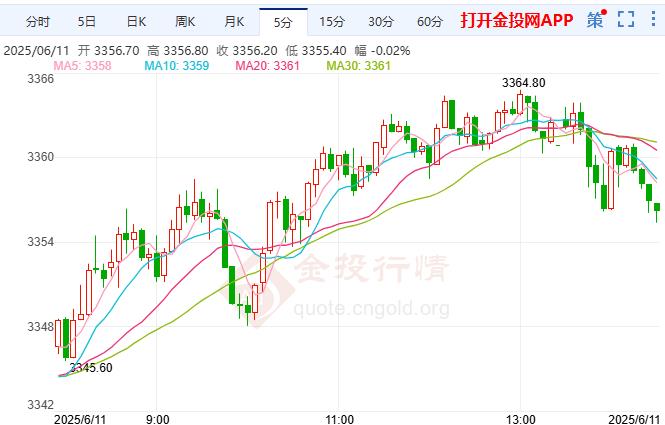
本周三(6月11日)欧市盘中,COMEX黄金价格小幅上涨,截至目前报3356.60美元/盎司,涨幅 0.35%,今日开盘于3344.30美元/盎司,最高上探3364.80美元/盎司,最低触及3335.40美元/盎司。 【要闻速递】 美国总统特朗普所实施的关税暂时被联邦上诉法院允许维持生效,贸易不确定性在短期内有所缓解。 "法院的暂缓裁定提升了市场对贸易局势的短期信心,激励投资者转向风险资产,削弱了避险货币日元 的需求。" 日元在全球贸易乐观情绪主导的市场环境中,连续第二日维持疲软走势。截至亚洲交易时段,美元/日 元交投在145.00附近,接近前一交易日触及的两周低点。 随着亚洲大国和美国贸易关系取得积极进展,市场风险偏好持续改善,削弱了日元作为避险货币的吸引 力。 与此同时,亚洲大国和美国双方在伦敦达成初步贸易框架。美国商务部长霍华德·卢特尼克指出,该框 架是缓解全球贸易紧张的第一步。 避险情绪的缓解使美元短线获得部分买盘支撑,帮助美元/日元维持涨势。不过,日本国内经济数据改 善,以及通胀扩散迹象不断增强,令市场对日本央行年内再次加息的预期逐步升温,部分对冲了日元持 续贬值的压力。 【COMEX黄金行情解析】 ...

冠通每日交易策略-20250610
Guan Tong Qi Huo· 2025-06-10 11:24
Report Industry Investment Rating No relevant content provided. Core Viewpoints of the Report - Crude oil prices are expected to fluctuate due to a combination of supply and demand factors, with supply pressure easing but demand data not performing well [3]. - Urea prices are expected to continue to weaken, with a possible rebound in the future, and the strength of the rebound depends on export dynamics [4]. - Copper prices are currently oscillating strongly, mainly supported by low inventory, and attention should be paid to inventory changes under the influence of tariff expectations [9]. - Lithium carbonate prices are expected to have a rebound trend at a low valuation, and short positions can be适量closed out, followed by a strategy of shorting on rebounds [10]. - Asphalt prices are expected to oscillate at a high level in the near term, and it is recommended to go long on the 09 - 12 spread [12]. - PP, plastic, PVC, and soybean oil prices are all expected to oscillate at a low level, affected by factors such as supply - demand imbalance and inventory pressure [14][15][17][18]. - Soybean meal prices are expected to maintain an oscillating and strengthening trend [20]. - Coking coal prices are generally bearish due to loose supply - demand and weakening demand [21]. Summary by Relevant Catalogs Crude Oil - Supply: OPEC+ will increase production by 411,000 barrels per day in July, but actual production growth is less than expected. Canadian wildfires have led to a reduction in production, and US oil production is expected to decline [3]. - Demand: Market risk appetite has rebounded, but refined oil demand and inventory data are not good, and the negative impact of the global trade war on the economy has not been fully reversed [3]. - Price trend: Expected to oscillate [3]. Urea - Supply: There are temporary inspections in some factories, and daily production has decreased, but the daily production is still around 200,000 tons [4]. - Demand: Market sentiment is weak, agricultural demand is not strong, and compound fertilizer factories are mainly focused on inventory reduction [4]. - Price trend: The price dropped by nearly 2% today, and the market sentiment is expected to continue to weaken, with a possible rebound in the future [4]. Copper - Supply: The supply of copper concentrates is tight, and smelters face the risk of production reduction due to losses. Other regions' copper inventories have decreased due to steel tariffs [9]. - Demand: Apparent consumption has decreased, downstream开工率has declined, and demand is the main factor restricting price increases [9]. - Price trend: Currently oscillating strongly, supported by low inventory, and attention should be paid to inventory changes under tariff expectations [9]. Lithium Carbonate - Supply: Production is expected to increase in June, and the fundamental situation is still one of oversupply [10]. - Demand: Downstream procurement is cautious, and the support for prices is limited [10]. - Price trend: Oscillating around 60,000 yuan, with a rebound trend at a low valuation, and short positions can be适量closed out [10]. Asphalt - Supply: The starting rate has rebounded, and the scheduled production in June is expected to increase [12]. - Demand: The starting rate of downstream industries has fluctuated, and the demand for road asphalt is restricted by funds [12]. - Price trend: Expected to oscillate at a high level in the near term, and it is recommended to go long on the 09 - 12 spread [12]. PP - Supply: Some overhauled devices have restarted, and new devices have been put into production, increasing supply [13][14]. - Demand: Downstream recovery is slow, new orders are limited, and inventory pressure is high [13][14]. - Price trend: Expected to oscillate at a low level [14]. Plastic - Supply: Some overhauled devices have restarted, and new production capacity has been put into operation [15]. - Demand: Downstream开工率is at a low level, and new orders are slow to follow up, with high inventory pressure [15]. - Price trend: Expected to oscillate at a low level [15]. PVC - Supply: The starting rate has increased, and social inventory is still high [16][17]. - Demand: Downstream开工率has declined, and export is affected by policies. Demand improvement is limited [16][17]. - Price trend: Expected to oscillate at a low level [17]. Soybean Oil - Supply: The inventory of imported soybeans has increased, and the soybean crushing volume is at a historical high, with high inventory [18]. - Demand: Terminal demand is weak, and downstream stocking willingness is low [18]. - Price trend: Expected to oscillate weakly in the short term [18]. Soybean Meal - Supply: The supply in the domestic market is sufficient, and the inventory is gradually accumulating [19][20]. - Demand: The weather in the United States is favorable for soybean growth, and the supply outlook is good [19]. - Price trend: Expected to maintain an oscillating and strengthening trend [20]. Coking Coal - Supply: The customs clearance volume remains high, and the total inventory is at a high level [21]. - Demand: Steel mills' demand for coking coal has decreased, and terminal demand has weakened [21]. - Price trend: Generally bearish [21].
三大风险事件接踵而至,全球金融市场高度紧张
Sou Hu Cai Jing· 2025-06-10 07:02
Group 1 - Global financial markets are in a rare "triple risk" waiting mode, with investors closely monitoring the outcomes of the US-China trade talks, the US May CPI data, and the US Treasury auctions [1][2] - The performance of the upcoming US Treasury auctions is critical, especially after the previous 20-year Treasury auction faced a "failed bid," leading to heightened sensitivity regarding long-term Treasury demand [2] - The 10-year Treasury yield is a key anchor rate for global financial assets, and a poor auction performance could push the yield above the critical threshold of 4.5%, potentially triggering a systemic sell-off in risk assets [2] Group 2 - The market expects the CPI data to rebound, and any significant increase could prompt investors to reassess the Federal Reserve's interest rate cut timeline, making CPI a crucial indicator for global markets [1] - The upcoming Treasury auction results will not only impact the bond market but also serve as a barometer for global financial stability, especially in the context of concurrent US-China trade negotiations and CPI data releases [2] - Various asset classes are exhibiting signs of unease, with the A-share market showing strong caution, increased volatility in US stock futures, and a renewed appeal for gold as a safe-haven asset [2]
金属周报 | 关税与非农扰动,金铜冲高回落、白银大幅上行
对冲研投· 2025-06-09 12:05
Group 1 - The market sentiment was initially "risk on" due to a call between the highest leaders of China and the US, leading to a price rebound, but concerns over economic growth resurfaced after the non-farm payroll data, causing prices to retreat [1][3]. - Gold prices experienced fluctuations while silver saw a significant increase, with COMEX gold rising by 0.54% and silver by 9.24% last week [2][20]. - The COMEX copper price showed a rebound from Monday to Thursday, peaking on Thursday before a pullback on Friday, influenced by concerns over increased tariffs on steel and aluminum [3][5]. Group 2 - The geopolitical tensions from the Russia-Ukraine conflict supported precious metal prices, while the call between the US and China leaders eased macroeconomic sentiment, boosting market risk appetite [4][20]. - Following the release of non-farm payroll data that exceeded market expectations but had a significant downward revision of previous values, concerns about the US economy led to a rise in US Treasury yields, putting pressure on gold prices [4][20]. - The COMEX copper price curve shifted upward, indicating a contango structure, with copper inventories nearing 200,000 tons, suggesting potential for further accumulation in US copper stocks [5][6]. Group 3 - The copper concentrate TC weekly index was stable, with trade prices for clean copper concentrate remaining in a narrow range, indicating limited market activity [7]. - Domestic refined copper social inventory increased, reflecting a rise in imports and limited downstream consumption, with expectations of a decrease in inventory in the coming week [13][10]. - The processing fees for 8mm refined copper rods mostly declined, with a notable drop in East China, while the market for recycled copper rods showed signs of recovery [16]. Group 4 - The gold and silver markets showed divergence, with silver's gains outpacing gold's, leading to a significant drop in the gold-silver ratio [22]. - COMEX gold inventory decreased by approximately 670,000 ounces, while silver inventory fell by about 1,290,000 ounces, indicating a tightening supply in the precious metals market [36][41]. - The SPDR gold ETF holdings increased by 4 tons to 934 tons, while SLV silver ETF holdings rose by 406 tons to 14,709 tons, reflecting increased investor interest in precious metals [41].

关注中美在英会议
Bao Cheng Qi Huo· 2025-06-09 11:13
Report Summary 1. Report Industry Investment Rating No relevant content provided. 2. Core Viewpoints - After the Dragon Boat Festival, the gold price showed a trend of rising first and then falling. COMEX gold lost the $3,400 mark, and SHFE gold fell below the 780 yuan mark. The post - festival increase was mainly due to the US raising steel and aluminum tariffs to 50%, while the subsequent decline was due to the easing of Sino - US relations and the resilience of the US employment [4][29]. - Silver rose significantly last week, breaking through the high in May 2024, and the gold - silver ratio declined sharply. In the short - term, silver's rise was based on the high gold - silver ratio and the inflow of funds due to the weakness of gold. It is expected that the gold - silver ratio will continue to decline [4][29]. - In the medium - to - short - term, the gold price is largely dominated by macro - economic data and news. The US policy's inconsistency may reduce the financial market's sensitivity to it. In the context of Sino - US relations easing and the US economy showing resilience, the gold price is expected to continue its weak operation, and attention can be paid to the support at the $3,300 mark of COMEX gold [4][29]. 3. Summary by Directory 3.1 Market Review - **Weekly Trend**: No detailed description provided, only accompanied by a graph of the linkage between the dollar index and COMEX gold [9]. - **Indicator Changes**: From May 30th to June 6th, COMEX gold rose 0.54%, COMEX silver rose 9.24%, SHFE gold futures rose 1.48%, SHFE silver futures rose 7.69%, the dollar index fell 0.24%, the dollar against the offshore RMB fell 0.23%, the 10 - year US Treasury real yield rose 0.13, the S&P 500 rose 1.50%, and WTI crude oil rose 6.55%. The COMEX gold - silver ratio fell 7.96%, and the SHFE gold - silver ratio fell 5.76%. SPDR Gold ETF and iShare Gold ETF also had certain increases [10]. 3.2 Easing of Sino - US Relations - The decline in the gold price last week was mainly due to the easing of Sino - US relations. First, the leaders of the two countries had a phone call, and then the two sides were expected to hold the first meeting of the economic and trade consultation mechanism in the UK, which led to a decrease in market risk - aversion demand and a significant decline in the gold price [12]. - In terms of trade policy, on June 5th, the leaders of the two countries had a phone call, expressing the importance of Sino - US relations. On June 7th, it was announced that from June 8th to 13th, China's vice - premier would visit the UK and hold the first meeting of the Sino - US economic and trade consultation mechanism with the US [13]. 3.3 Tracking of Other Indicators - According to the data on June 3rd, compared with the previous week, the long - position change was 12,895 contracts, the short - position change was - 826 contracts, and the net long - position change was 13,721 contracts. Since February, the net long - position of COMEX gold has continued to decline, but since late May, the non - commercial net long - position has continued to rise [18][19]. - In the first quarter, the holdings of major global gold ETFs increased significantly, but the increase rate slowed down in April. Since late May, gold ETFs have started to climb, and silver ETFs have risen significantly. Last week, silver rose sharply, with corresponding ETFs increasing their positions significantly, showing a combination of volume and price increases. It is expected to maintain its strength [22][23]. - Since late April, the gold price has risen and then fallen, and the gold - silver ratio has also fallen from a high level. Silver has benefited from its precious - metal attributes and short - term catch - up growth. It is expected that the gold - silver ratio will continue to operate weakly [26]. 3.4 Conclusion - The gold price trend and influencing factors are the same as the core viewpoints. The silver price and gold - silver ratio situation are also consistent with the core viewpoints. In the medium - to - short - term, the gold price is affected by macro - economic data and news. The inconsistency of US policies may reduce market sensitivity. In the context of Sino - US relations easing and the US economy showing resilience, the gold price is expected to continue its weak operation, and attention can be paid to the support at the $3,300 mark of COMEX gold [4][29]. - From June 8th to 13th, China's vice - premier will visit the UK and hold the first meeting of the Sino - US economic and trade consultation mechanism with the US. Attention can be continuously paid to the meeting. The previous Geneva meeting released positive signals, putting significant short - term pressure on the gold price [5][30].
【申万宏源策略】5月欧洲股债流入明显,中国股债出现“跷跷板”效应——全球资产配置资金流向月报(2025年5月)
申万宏源研究· 2025-06-09 08:04
Core Viewpoint - The article highlights a significant shift in global asset allocation, with a notable inflow into European equities and bonds, while Chinese equities are experiencing outflows, indicating a "seesaw" effect in the market dynamics [1][3][41]. Market Review - The successful outcome of the China-US-Switzerland talks on May 12 has significantly boosted global risk appetite, leading to an increase in global stock indices [10][41]. - The 20-year US Treasury auction on May 22 was poorly received, with the final yield surpassing 5%, raising concerns about US fiscal pressure [1][10]. Global Asset Performance - In May, equity assets generally rose, while US Treasury yields increased and the dollar weakened. The 10-year US Treasury yield rose by 24 basis points [2][13]. - Gold prices increased by 2.1%, and Brent crude oil rose by 1.7% during the same period [2][13]. Global Fund Flows - In May, there was a significant inflow of $215 billion into global money market funds, with developed market equities receiving $305 billion, while emerging market equities saw an outflow of $83 billion [3][20]. - Developed European fixed income and equity funds attracted inflows of $190 billion and $247 billion, respectively, indicating stronger performance compared to the US [3][20]. China Market Dynamics - By the end of May, global equity funds experienced an outflow of $88.5 billion from China, a reversal from the inflow of $198.3 billion in April [4][41]. - The outflow was primarily driven by passive ETFs, which saw a withdrawal of $82.5 billion in May compared to an inflow of $203.9 billion in April [4][41]. - In terms of sector performance, there was a significant inflow into technology, real estate, and materials, while telecommunications, consumer staples, and healthcare saw outflows [4][41]. Country Allocation - Global market funds reduced their allocation to US equities by 1.0 percentage points in April, while increasing allocations to European equities [5][41]. - The allocation to China remains stable at 26.4%, indicating potential for further growth [5][41]. Emerging Markets - Emerging market funds saw a decrease in allocation to Chinese equities, with a drop of 1.6 percentage points compared to March, while the allocation to Indian equities also decreased [5][41]. - In May, emerging market equity funds experienced a net outflow of $45 billion, with China being the primary contributor to this outflow [43][46].

海外市场周观察:标普500指数重返6000点
Huafu Securities· 2025-06-09 05:52
Group 1 - The S&P 500 index has returned above 6000 points for the first time since February, indicating a significant recovery in market risk appetite [8][9] - The overall performance of major global asset classes was mixed, with NYMEX platinum (+11.64%) showing the largest increase, while the Japanese yen against the RMB saw the largest decline (-1.05%) [30][41] - The U.S. non-farm payrolls for May increased by 139,000, slightly above the expected 130,000, while the unemployment rate remained at 4.2%, aligning with market expectations [8][9] Group 2 - The global equity markets exhibited varied performance, with the Korean Composite Stock Price Index rising by 4.24%, while the Nikkei 225 saw a decline of 0.59% [33][45] - In the U.S. equity market, the communication services sector experienced the highest gain at +2.96%, while the consumer discretionary sector faced the largest drop at -0.85% [40] - The major commodities market showed mixed results, with NYMEX platinum leading the gains, while CBOT corn recorded the largest decline at -0.34% [47][49] Group 3 - The report highlights the importance of upcoming economic data, particularly the June CPI data, which could influence interest rate expectations and further impact technology stocks [8][9] - The Federal Reserve's internal discussions reflect a cautious dovish tone, with officials indicating the possibility of rate cuts later in the year [9][10] - The report tracks significant economic indicators, including the ISM manufacturing PMI for May at 48.5, which is below both the previous value and market expectations [8][9]
A股市场情绪有望持续回暖 兼顾“防御与成长”把握机会
Shang Hai Zheng Quan Bao· 2025-06-08 18:03
Group 1 - The A-share market sentiment has improved due to increased risk appetite, with major indices rising, particularly the ChiNext Index, which increased by 2.32% over the week [1] - Analysts expect the A-share market to remain in a recovery phase in June, supported by the easing of external disturbances and the implementation of domestic growth policies [2][3] - The market is anticipated to maintain a volatile but upward trend, with rapid sector rotation, providing structural investment opportunities for investors [2][3] Group 2 - The small-cap stocks have shown strong performance recently, but there are concerns about potential volatility due to high trading congestion and valuation deviations [3] - The trading loss indicator has declined significantly, suggesting a diminishing profit effect in the small-cap sector, which may warrant a focus on fundamental investment logic [3] - Analysts recommend focusing on stocks with improving earnings growth in the upcoming semi-annual report season, particularly within the small-cap segment [3] Group 3 - Three main investment themes have emerged: domestic consumption, technology growth, and high-margin dividend assets, which are attracting institutional attention [4] - The domestic policy focus on expanding consumption is expected to catalyze further growth, with resilient performance anticipated in sectors like home goods and food processing [4] - The technology sector is viewed as a long-term investment focus, with investors advised to wait for significant catalysts to emerge from industry trends [4]