
金融属性

Search documents
白银50天涨逾80%,贵金属牛市已到高潮?这次有何不同
Mei Ri Jing Ji Xin Wen· 2026-01-16 00:53
Core Viewpoint - Silver prices have surged to historical highs, surpassing $90 per ounce, with the gold-silver ratio dropping to its lowest level in 13 years at 50.57, indicating that silver is currently the most expensive relative to gold in over a decade [1][2] Group 1: Price Movements and Historical Context - Since early 2025, gold and silver have increased by 75% and 190% respectively, with silver's growth being 2.5 times that of gold [1] - The gold-silver ratio has sharply declined from a peak of 105 in 2025 to around 50, suggesting a significant shift in market dynamics [1] - Historical patterns indicate that silver's rapid price increase often signals the peak of a precious metals bull market, but this time the correlation with PMI recovery has been disrupted [2][10] Group 2: Economic Indicators and Market Dynamics - Traditionally, the gold-silver ratio's recovery has been linked to improvements in the U.S. PMI, but this relationship has weakened as the U.S. manufacturing sector's global influence diminishes [3][2] - The current economic environment shows a disconnect between the gold-silver ratio and PMI, with the latter remaining below the growth threshold for ten consecutive months [2][3] Group 3: Industrial Demand and Strategic Importance - Silver's role in industrial applications is becoming increasingly critical, particularly in green energy and digital transformation, due to its superior conductivity and thermal properties [4][9] - The demand for silver in photovoltaic applications has surged, with a projected increase in global silver demand driven by the solar industry [9][4] Group 4: Supply Chain and Inventory Dynamics - The global silver inventory has been significantly impacted by tariff expectations, leading to a dramatic shift in silver stockpiles between regions [6][8] - The supply of silver has become more rigid since 2015, with annual global silver supply remaining stable between 30,000 to 33,000 tons [7][8] Group 5: Future Outlook and Market Predictions - Analysts predict that silver prices may stabilize between $80 and $100 per ounce, with the potential for rapid fluctuations due to market dynamics [11][12] - The current market conditions are reminiscent of the 1970s, characterized by stagflation and a potential crisis in dollar credibility, which could further support precious metals [12][13][14]


大降价!茅台也扛不住了?
Sou Hu Cai Jing· 2026-01-14 19:50
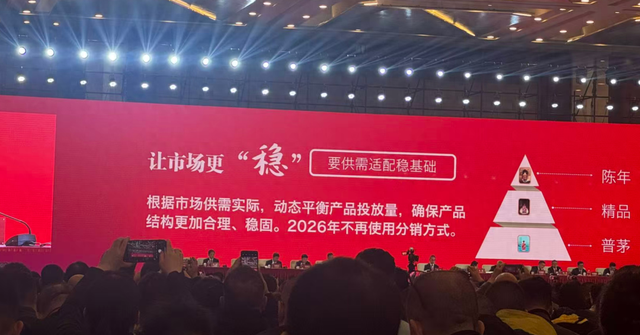
Core Viewpoint - Moutai is actively stepping down from its "altar" by implementing price reductions and increasing product availability, signaling a shift in its market strategy amidst declining sales growth and changing consumer behavior [2][7][23]. Price Reduction - Moutai plans to lower the "payment price" for several key products, including: - Moutai 1935 from 798 yuan to 668 yuan (a decrease of 16.3%) - Moutai premium from 2969 yuan to 1859 yuan (a decrease of 37.4%) - Moutai 15-year from 5399 yuan to 3409 yuan (a decrease of 36.9%) - 43-degree Moutai from 798 yuan to 739 yuan (a decrease of 7.4%) [3][4][5]. Increased Availability - Starting January 1, 2026, Moutai's iMoutai app will offer a wider range of products, with initial purchase limits set at 12 bottles per person per day, later adjusted to 6 bottles [4][5]. Financial Performance - Moutai's Q3 2025 report showed a total revenue of 1309.04 billion yuan, a year-on-year increase of 6.32%, and a net profit of 646.26 billion yuan, also up 6.25%. However, Q3 revenue growth slowed to 0.56%, marking the lowest quarterly growth in nearly a decade [7][9][10]. Inventory and Contract Liabilities - As of Q3 2025, Moutai's inventory reached 558.59 billion yuan, up 15.83% year-on-year, while contract liabilities decreased by 21.97%, indicating potential concerns about future sales and inventory management [9][10]. Sales Strategy Shift - Moutai is reducing the influence of distributors by increasing direct sales through its platforms, aiming to minimize the profit margins of middlemen. The number of distributors has decreased from 2987 in 2018 to 2143 by the end of 2024 [11][13]. Market Position and Financial Attributes - Moutai has historically been viewed as a financial asset due to its high margins and brand value, but recent price reductions may diminish its perceived financial attributes, impacting consumer behavior and investment sentiment [19][23]. Conclusion - Despite the challenges, Moutai remains a leading player in the Chinese liquor industry, with strong financial metrics and brand equity. However, the shift in pricing strategy and market approach may alter its long-standing reputation as a premium investment product [24].


100美元的白银还远吗
Bei Jing Shang Bao· 2026-01-14 15:09
Core Viewpoint - The price of silver has surged over 25% since the beginning of the year, reaching a record high of $91.551 per ounce, making it the second-largest asset globally with a market capitalization exceeding $5 trillion [1][3]. Group 1: Market Performance - Silver's price increase began in 2025, with a significant rise from a low range of $28-$32 per ounce at the start of last year, accelerating in the fourth quarter to surpass key price levels of $70, $75, and $80, ultimately reaching a peak of $83.971 per ounce by December 29, 2025 [3]. - The maximum increase in silver prices for 2025 was 196.84%, outperforming gold and becoming a focal point in capital markets [3]. - Currently, silver's market capitalization stands at $5.045 trillion, surpassing major companies like Google and Apple, while gold remains the largest asset at $32.251 trillion [3]. Group 2: Drivers of Price Increase - The ongoing strength in silver prices is attributed to a combination of industrial demand growth and financial attributes, moving beyond traditional monetary and safe-haven characteristics [4]. - Key sectors such as photovoltaics, electric vehicles, and AI hardware are driving increased consumption of silver, creating a structural supply-demand gap [4]. - The expectation of continued global liquidity easing and the current gold-silver ratio being above historical averages provide further support for silver's valuation recovery [4]. Group 3: Future Price Predictions - Market attention is now shifting towards the $100 per ounce mark, with Citigroup predicting that silver will reach this level within the next three months [5]. - Analysts suggest that the bullish market conditions are likely to persist, contingent on geopolitical tensions easing and reduced hedging demand for precious metals later in the year [5]. Group 4: Investment Strategies - Investors are advised to adopt a strategy of gradual accumulation and diversification, avoiding high-risk positions and instead using a dollar-cost averaging approach [8]. - The Chicago Mercantile Exchange plans to launch a new 100-ounce silver futures contract in February 2026 to meet the growing demand from retail investors [8].

镍价重拾金融属性,不宜过分看空
Yin He Qi Huo· 2026-01-12 03:07
1. Report Industry Investment Rating No relevant information provided. 2. Core Viewpoints - The nickel price has regained its financial attribute, and there is no need to be overly bearish. Although the non - ferrous sector has seen a general decline due to the correction of precious metals and copper, the medium - to - long - term trend remains upward. The nickel market is in a state of supply surplus and continuous inventory accumulation, but considering multiple dimensions such as the macro - environment, capital flow, and market sentiment, the price may not be overly pessimistic. [1][6] - The stainless steel market has a good inventory reduction recently, but the inflow of funds is limited. It passively follows the nickel price, with limited upside and difficulty in deep decline. [9] 3. Summary by Directory Chapter 1: Spread Tracking and Inventory 1.1 Nickel - Price and Spread Data - From January 5th to January 9th, the Shanghai - London ratio fluctuated around 7.96 - 8.05, with a 0.03 increase compared to the previous weekend and the end of last month. The spot import profit and loss, LME nickel premium/discount, and various nickel product premium/discounts also showed certain changes. For example, the SMM Jinchuan nickel premium increased by 1400 yuan compared to the previous weekend and the end of last month. [10] 1.2 Nickel - Global Nickel Inventory - Global visible nickel inventory reached 348,000 tons, an increase of 31,700 tons this week, mainly due to a large amount of warehousing in LME Asian warehouses stimulated by high nickel prices, and there was also an increase of over 2,000 tons in domestic social inventory. The supply of Jinchuan nickel is tight, and the spot premium has risen to 9,000 yuan/ton. [16] 1.3 Stainless Steel - Social Inventory and Warehouse Receipts - The social inventory of stainless steel continues to decline, and warehouse receipts are at a low level. Although the terminal demand for stainless steel is still weak, traders are actively replenishing inventory. The price of stainless steel has followed the rise of nickel prices, but the increase is relatively restrained due to the lack of large - scale capital inflow. [9][18] Chapter 2: Fundamental Analysis 2.1 Pure Nickel - **Production**: In 2025, the cumulative production of refined nickel increased by 17% year - on - year to 392,700 tons. In January, high nickel prices are expected to further boost production. From January to November 2025, the net import of domestic refined nickel was 48,900 tons, compared with a net export of 24,800 tons in the same period last year. Due to the opening of the import window at the end of December, the net import in January is expected to increase. From January to November 2025, the domestic supply of refined nickel was 410,000 tons, a year - on - year increase of 48%. [25] - **Demand**: From January to December, the cumulative consumption of pure nickel increased by 2% year - on - year to 291,000 tons. Electroplating consumption decreased seasonally, while alloy consumption increased slightly, and overall consumption slowed down. In December, the PMI of the downstream nickel industry stood above the 50 boom - bust line due to the recovery of stainless steel, but the consumption of pure nickel in electroplating, alloy, etc. was in the off - season, with a significant month - on - month decline. [28] 2.2 Stainless Steel - **Raw Materials** - **Nickel Ore**: The first - round benchmark price of Indonesian domestic nickel ore in January 2026 increased month - on - month, and the premium remained flat at HPM + 25 - +26 US dollars/wet ton. The Indonesian government will adjust nickel quotas according to industry demand. Some mines are operating normally, while others are waiting for quotas. [30] - **NPI**: The NPI market has recovered. The price of high - nickel iron has increased, and the production of China + Indonesia NPI has also shown a certain trend. The profit margin of NPI in some regions has improved. [32][33] - **Chromium - based Products**: Starting from January 1, 2026, Zimbabwe has imposed a 10% tax on the export of chromium - based products, causing the price of chromium ore to rebound continuously. The long - term purchase price of high - carbon ferrochrome by Tsingshan Group in January 2026 has decreased. [43] - **Cost and Hedging**: Estimating the cold - rolling cash cost at around 13,900 yuan/ton and the integrated cost at 13,400 yuan/ton. The futures market can provide hedging profits, reflecting a lively market atmosphere. [46] - **Supply**: It is estimated that the production of stainless - steel crude steel in China and India in 2025 was 45.06 million tons, a year - on - year increase of 4%. The production schedule in January has increased month - on - month, but whether it can be achieved depends on raw material supply. From January to November 2025, China's total stainless - steel imports were 1.374 million tons, a year - on - year decrease of 21%; total exports were 4.546 million tons, a year - on - year decrease of 1%; and the net export volume was 3.172 million tons, a year - on - year increase of 12%. [55] - **Demand**: The growth rate of shipbuilding plate production from January to November increased by 29% year - on - year, providing support for stainless - steel demand, while the growth rates in other terminal fields are not optimistic. [57] 2.3 New Energy Vehicles - **Domestic Market**: From January to November, the domestic sales of new energy vehicles were 12.466 million, a year - on - year increase of 23.2%. In December, the retail sales of new energy passenger vehicles were 1.387 million, a year - on - year increase of 7% and a month - on - month increase of 5%. The production of power cells increased by 41.9% year - on - year to 124.55 GWh from January to December. In January, the production of ternary power is expected to decrease by 6.1% month - on - month. [62] - **Global Market**: From January to November 2025, the global sales of new energy vehicles increased by 20.1% year - on - year to 18.39 million. European sales increased by 29.2% year - on - year to 3.434 million, while US sales increased by 0.7% year - on - year to 1.39 million. China's new energy vehicle exports from January to November were 2.283 million, a year - on - year increase of 100%. [67] - **Nickel Sulfate Market**: In 2025, China's nickel sulfate production decreased by 4.3% year - on - year to 354,000 nickel tons, while the production of ternary precursors increased by 6% year - on - year to 903,000 tons, and the production of ternary cathode materials increased by 19% year - on - year to 686,000 tons. In January, the demand for nickel sulfate slowed down, but the price followed the rise of refined nickel. [69] - **Nickel Sulfate Raw Materials**: In 2025, Indonesia's MHP production increased by 41% year - on - year to 444,000 tons, while high - grade nickel matte production decreased by 18% year - on - year to 224,000 tons. The increase in sulfur prices has raised the cost of MHP, and the good demand for nickel sulfate has boosted the price of intermediate products and stimulated production recovery. [75] 2.4 Overall Situation of Pure Nickel - The production of pure nickel has recovered, and the supply surplus has expanded, resulting in continuous inventory accumulation in the market. [76] Trading Logic and Strategies - **Nickel**: Considering the overall rise of the non - ferrous sector, it is recommended not to overly rely on industry constraints such as supply - demand and cost. Instead, multiple dimensions such as the macro - environment, capital flow, and market sentiment should be comprehensively considered. After the price has risen rapidly, the volatility has increased, so it is recommended to control positions and operate with caution. For unilateral trading, buy on pullbacks; for options, wait and see for the time being. [6] - **Stainless Steel**: Although the inventory of stainless steel has been reduced well recently, it has not attracted a large amount of capital inflow, so the increase is relatively limited. However, due to the low inventory level of downstream and insufficient arrival of goods at steel mills, there is inventory replenishment when the price pulls back, and it is also difficult for the price to decline sharply. It passively follows the nickel price to operate at a high level. For unilateral trading, it passively follows the high - level operation of the nickel price; for arbitrage, wait and see for the time being. [9]
铜铝价格持续上行!机构:金融、商品双属性支撑金属价格
Jin Rong Jie· 2026-01-06 05:20
Group 1 - The core viewpoint of the article highlights a significant positive performance in the non-ferrous metal sector, with companies like Anning Co., Xiyue Co. reaching their daily limit up, and others such as Huayou Cobalt, Hunan Silver, and China Aluminum also experiencing gains [1] - The non-ferrous mining ETF (159690) saw a 4.33% increase, with over 29 million yuan in trading volume and a net inflow of 33 million yuan over the past seven trading days [1] - According to CITIC Securities, industrial metal prices are influenced by both financial and commodity attributes, with the Federal Reserve entering a rate-cutting cycle and global copper and aluminum inventories at relatively low levels, indicating a potential recovery in demand driven by China's economic rebound and the new energy sector [1][20] Group 2 - The non-ferrous mining index has shown a historical performance with a total increase of 104.84% in 2025, compared to a 94.73% increase in the non-ferrous metal industry index, indicating a sharper rise relative to similar indices [1] - The non-ferrous mining index focuses on the upstream mining segment of the non-ferrous metal industry, with over 57% of its weight concentrated in copper, gold, and aluminum, which are strategically significant for both industrial development and financial markets [6] - The historical performance of the non-ferrous mining index over the past decade shows a cumulative increase of 172.62% with an annualized return of 10.87% and a Sharpe ratio of 0.49, indicating higher elasticity compared to similar indices [11][13]






有色金属的黄金时代-金融属性见大势-商品价值共向上
2026-01-05 15:42
Summary of Key Points from Conference Call Records Industry Overview - The conference call discusses the non-ferrous metals industry, focusing on precious metals, industrial metals, strategic minor metals, and energy metals, with a particular emphasis on their performance in 2025 and outlook for 2026 [1][2]. Core Insights and Arguments Precious Metals - **Gold**: Expected to perform strongly in 2025 due to the Federal Reserve's interest rate cuts and a weakening dollar. The bullish trend is anticipated to continue into 2026, driven by central bank purchases and concerns over dollar credibility [3][4][10]. - **Silver**: Exhibits both financial and industrial attributes, with significant upside potential as it transitions from reflecting solely financial attributes to incorporating industrial demand. Companies like Shanjin International and Shengda Resources are recommended for investment [5][11]. Industrial Metals - **Copper**: Benefited from financial attributes and supply constraints over the past two years. Strong demand is expected to continue from both traditional and emerging sectors. A shift towards recovery in trading is anticipated in the second half of 2026, with high copper prices stimulating production resumption [6][14][15]. - **Aluminum**: The investment logic is based on its resource attributes and potential to replace copper in certain applications. A strong performance is expected in 2026, contingent on the pace of China's economic recovery [7][14][15]. Strategic Minor Metals - **Rare Earths and Tungsten**: Supply constraints due to strict Chinese controls are expected to drive prices up. The geopolitical landscape, particularly the US-China dynamics, will significantly influence the market [3][8][13]. Lithium Carbonate - The market outlook is driven by demand from electric vehicles and energy storage. Despite some challenges in new supply due to policy restrictions, the demand remains robust, suggesting a favorable trading environment [9]. Additional Important Insights - The overall performance of the non-ferrous metals sector in 2025 is expected to be strong, driven by economic recession pressures and supply constraints. The focus will gradually shift towards demand in 2026 as economic recovery progresses [2]. - The strategic positioning of companies in the precious metals sector, particularly those with low valuations, is highlighted as a potential investment opportunity [4][10]. - The anticipated tightening of supply in the copper market due to unexpected disruptions in major mines is noted, which could lead to a significant price increase in 2026 [15]. - The importance of geopolitical factors and policy changes in shaping the supply dynamics of strategic minor metals is emphasized, particularly in the context of global trade tensions [8][13].
i茅台开售1499元茅台:半小时售罄
Di Yi Cai Jing· 2026-01-01 13:02
Core Viewpoint - The company Guizhou Moutai has launched a significant initiative by making its 53-degree 500ml Flying Moutai available for purchase on the "i Moutai" app starting January 1, 2026, with a daily purchase limit of 12 bottles per person, aiming to regain market pricing power and reduce speculation [1][4]. Group 1: Pricing Strategy - The price for the 2026 Flying Moutai is set at 1499 yuan per bottle, while prices for previous years range from 1909 yuan to 2649 yuan [1]. - Moutai management has expressed intentions to stabilize prices and prevent speculation by adjusting supply on the i Moutai platform based on market demand [4][5]. Group 2: Market Dynamics - Historically, there has been a significant discrepancy between Moutai's official pricing and actual market prices, sometimes exceeding a 100% difference due to speculation by distributors [2]. - The introduction of the i Moutai app is seen as a move towards market-oriented marketing, allowing consumers easier access to genuine Moutai products [4]. Group 3: Financial Implications - The financial attributes of Moutai have contributed to its popularity, but there are concerns that this may lead to market volatility as the company shifts focus back to consumer goods [5]. - The stock price of Guizhou Moutai has shown slight declines, indicating market apprehension regarding the potential detachment from its financial attributes and the impact on long-term performance [5].
金融+工业“双轮驱动” 伦敦银呈现强势前景
Jin Tou Wang· 2025-12-26 06:29
Group 1 - The core viewpoint is that the silver market is experiencing a dual drive from financial attributes and industrial demand, leading to a fluctuating upward trend in silver prices [1] - Silver has both monetary and investment properties, historically serving as an important currency function and currently acting as an inflation hedge reserve asset [1] - The global silver consumption structure for 2024 is projected to have industrial demand at 59%, jewelry at 18%, and coins and bars at 16%, with photovoltaic demand accounting for 197.6 million ounces, approximately 17% of total demand [1] Group 2 - Silver is a critical component in photovoltaic cells, directly affecting the efficiency of energy conversion and the long-term reliability of components [1] - The current mainstream PERC solar cells require about 80 milligrams of silver per piece, while the more promising N-type TOPCon cells require up to 130 milligrams [1] - Short-term market analysis indicates a need to be cautious of potential pullback risks, particularly around the key resistance area of $65.88, which may serve as a turning point for the market [2]
有色金属日度策略-20251226
Fang Zheng Zhong Qi Qi Huo· 2025-12-26 05:49
Report Industry Investment Rating The report does not provide an overall investment rating for the industry. Core Viewpoints - The non - ferrous metals sector is strong but volatile. The overall direction of monetary easing and ongoing contradictions in the mining end continue to support non - ferrous metals. However, due to factors such as capital outflows during Christmas, the sector experiences a round of strong consolidation. There are differences in fundamentals among non - ferrous metals, leading to a differentiation in strength. It is recommended to focus on opportunities where macro and micro factors resonate [12]. - Copper prices are expected to have an upward - moving central value in the future, driven by its financial attributes, valuation repair, and the global inventory structural contradiction. It is advisable to gradually go long on Shanghai Copper on dips [3]. - Zinc is in an oscillatory state. As long as the lower support level holds, one can go long on dips [4]. - For the aluminum industry chain, it is recommended to adopt a wait - and - see or long - biased approach. For alumina, a high - selling strategy is suggested [5]. - Tin is recommended to be on the sidelines, and attention should be paid to the trends of other non - ferrous metals and policy regulations [6]. - Lead shows a short - term upward trend, and one can go long on dips [8]. - Nickel and stainless steel are in a short - term bullish state, but attention should be paid to macro - liquidity changes and the implementation of Indonesian policies [9]. Summary by Section Part 1: Non - ferrous Metals Operating Logic and Investment Recommendations - **Macro Logic**: The non - ferrous metals sector is strong but volatile. Monetary easing continues, and contradictions in the mining end support the sector. Japan's intervention in the foreign exchange market weakens the US dollar, which is beneficial for non - ferrous metals. However, the appreciation of the RMB may lead to relatively stronger performance in the external market. During Christmas, capital outflows increase volatility, and non - ferrous metals experience a round of strong consolidation. The US economic data shows mixed performance, and China's economic data such as power consumption is positive. The non - ferrous metals sector has adjusted but moved away from lows, with internal differentiation in strength. Copper, with its tight supply - demand situation, drives the sector upward. As weak - performing varieties make up for losses, the sector may experience profit - taking and increased volatility. Attention should be paid to spot - market feedback [12]. - **This Week's Focus**: This week, the US will release a large amount of economic data, with the focus on the third - quarter real GDP on December 23. China will release the November industrial enterprise profit data on December 27. The Christmas holiday leads to market closures in the UK and the US [13]. - **Non - ferrous Metals Strategy** - **Copper**: Driven by factors such as the high - than - expected US GDP and inflation, and the global inventory structural contradiction, copper prices are expected to rise. It is advisable to go long on dips, with a short - term upper pressure range of 97,000 - 98,000 yuan/ton and a lower support range of 92,000 - 93,000 yuan/ton. Options strategies can consider buying near - month slightly out - of - the - money call options [3]. - **Zinc**: With a relatively warm macro environment and a slowdown in the decline of processing fees, zinc is in an oscillatory recovery state. It can be bought on dips as long as the support level holds, with an upper pressure range of 23,500 - 23,600 yuan/ton and a lower support range of 22,800 - 23,000 yuan/ton [4]. - **Aluminum Industry Chain**: For electrolytic aluminum, it is recommended to wait and see or go long on dips, with an upper pressure range of 23,000 - 24,000 yuan/ton and a lower support range of 21,000 - 21,300 yuan/ton. For alumina, a high - selling strategy is recommended, with an upper pressure range of 2,800 - 3,000 yuan/ton and a lower support range of 2,000 - 2,200 yuan/ton. For recycled aluminum alloy, a wait - and - see or long - biased approach is suggested, with an upper pressure range of 21,500 - 21,800 yuan/ton and a lower support range of 20,000 - 20,400 yuan/ton [5]. - **Tin**: Affected by sector adjustment, policy利空, and nickel market resonance, it is recommended to wait and see, with an upper pressure range of 350,000 - 355,000 yuan/ton and a lower support range of 310,000 - 320,000 yuan/ton. Options strategies can consider buying out - of - the - money put options for protection [6][7]. - **Lead**: With a weak US dollar and cost support, lead prices are rising. It is advisable to go long in the short term, with a lower support range of 16,700 - 16,800 yuan/ton and an upper pressure range of 17,200 - 17,300 yuan/ton [8]. - **Nickel and Stainless Steel**: Affected by the expected reduction of Indonesian nickel ore quotas and potential policy changes, nickel and stainless steel are short - term bullish. For nickel, the upper pressure range is 128,000 - 130,000 yuan/ton, and the lower support range is 123,000 - 124,000 yuan/ton. For stainless steel, the upper pressure range is 13,000 - 13,200 yuan/ton, and the lower support range is 12,500 - 12,600 yuan/ton [9]. Part 2: Non - ferrous Metals Market Review - The report provides the closing prices and price changes of various non - ferrous metals futures, including copper, zinc, aluminum, alumina, tin, lead, nickel, stainless steel, and cast aluminum alloy [17]. Part 3: Non - ferrous Metals Position Analysis - The report presents the latest position analysis of the non - ferrous metals sector, including the price changes, net long - short strength comparison, net long - short position base values, changes in net long and short positions, and influencing factors of various varieties such as polysilicon, silver, lead, copper, lithium carbonate, aluminum alloy, aluminum, industrial silicon, gold, zinc, alumina, tin, and nickel [19]. Part 4: Non - ferrous Metals Spot Market - The report shows the spot prices and price changes of various non - ferrous metals, including copper, zinc, aluminum, alumina, nickel, stainless steel, tin, lead, and cast aluminum alloy [20][22]. Part 5: Non - ferrous Metals Industry Chain - The report provides relevant charts for each non - ferrous metal in the industry chain, including inventory changes, processing fees, price trends, and other aspects of copper, zinc, aluminum, alumina, tin, cast aluminum alloy, lead, nickel, and stainless steel [25][28][30] Part 6: Non - ferrous Metals Arbitrage - The report provides relevant charts for non - ferrous metals arbitrage, including the Shanghai - London ratio changes, basis spreads, and other aspects of copper, zinc, aluminum, alumina, tin, lead, nickel, and stainless steel [56][57][59] Part 7: Non - ferrous Metals Options - The report provides relevant charts for non - ferrous metals options, including historical volatility, weighted implied volatility, trading volume, open interest, and other aspects of copper, zinc, and aluminum [74][76][79]
黄金,突发!
Sou Hu Cai Jing· 2025-12-24 04:34
Core Viewpoint - International gold prices have reached a new high, surpassing $4500 per ounce, driven by financial attributes and industrial demand, with expectations for a continued bull market in precious metals through 2026 [1] Group 1: Market Performance - As of the report, gold prices were at $4492.59 per ounce after initially breaking the $4500 mark [1] - The price surge is attributed to concerns over debt and monetary credit amid a global expansionary fiscal cycle [1] Group 2: Future Outlook - The bull market for precious metals is expected to be driven by dual engines: financial attributes and industrial demand, with significant differentiation among various metals [1] - The Federal Reserve's anticipated interest rate cuts and long-term structural support from central bank gold purchases are expected to maintain an upward trend in gold prices [1] - Despite the high price levels, it is projected that gold will not replicate the explosive growth seen in 2025, with a potential peak around $5000 per ounce in 2026 [1]