
库存

Search documents
【早盘直通车】行情提示及操作建议2025/11/20
Xin Lang Cai Jing· 2025-11-20 01:27
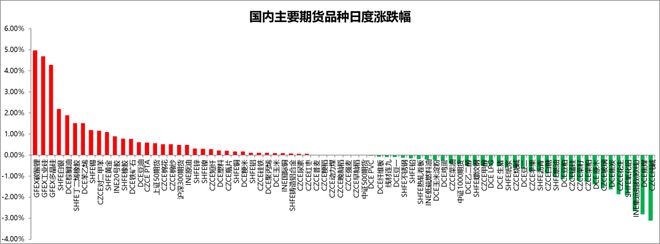
Market Overview - As of November 19, 2025, domestic futures contracts showed mixed performance, with lithium carbonate, industrial silicon, and polysilicon rising over 4%, while soda ash fell over 3% [3][4] - The A-share market experienced a volatile trading session, with the Shanghai Composite Index up 0.18% and the ChiNext Index up 0.25% [6] - The bond market saw a decline across all maturities, with the 30-year contract down 0.41%, reflecting increased market divergence on long-term interest rates [7] Commodity Insights - Palm oil prices increased significantly, reaching a three-week high, while soybean oil also saw a rise, indicating strong demand despite a weak supply outlook for Malaysian palm oil [8][9] - The coal market is under pressure due to concerns over potential supply increases, with the focus on energy production stability during the heating season [11] - Gold and silver futures rose by 2.01% and 3.84% respectively, influenced by recent employment data indicating a decrease in private sector jobs [12][13] Specific Commodity Analysis - Lithium carbonate prices surged by 6.18% due to high demand from the power and storage sectors, although there are concerns about potential supply disruptions from upcoming mine restarts [14] - Industrial silicon and polysilicon contracts rose by 4.57% and 4.63% respectively, driven by reduced production rates in key regions [15] - Soda ash prices fell sharply, with the main contract dropping to a new low, reflecting weak demand and a slowdown in new orders [16] Shipping and Logistics - The European shipping index declined by 2.66%, with a notable drop in freight rates for container shipments, indicating a potential oversupply in the market [19]

燃料油早报-20251120
Yong An Qi Huo· 2025-11-20 01:04
Report Summary 1. Report Industry Investment Rating No information provided. 2. Core View of the Report - This week, the high - sulfur crack in Singapore oscillated, the monthly spread strengthened slightly, and the basis weakened. The HSFO crack in Europe declined, and the EW strengthened this week. The 0.5% crack in Singapore rebounded, the monthly spread oscillated, and the basis oscillated at a low level. In terms of inventory, Singapore's residual oil decreased slightly, ARA's residual oil increased, Fujairah's residual oil increased, and EIA's residual oil inventory remained flat. The spread between high - and low - sulfur in the outer market rebounded. Singapore's high - sulfur is supported by EW and refinery purchases, but the spot basis is weakening rapidly. It is in a short - term oscillatory pattern, and the short - term downward space for low - sulfur is limited. [6][7] 3. Summary According to Relevant Catalogs Rotterdam Fuel Oil Data - From November 13th to November 19th, 2025, the price of Rotterdam 3.5% HSF O swap M1 decreased from 367.09 to 353.50, a change of - 6.29; the price of Rotterdam 0.5% VLS FO swap M1 decreased from 406.14 to 403.35, a change of - 7.88; the Rotterdam HSFO - Brent M1 decreased from - 4.95 to - 7.45, a change of - 0.48; the Rotterdam 10ppm Gasoil swap M1 increased from 687.85 to 734.17, a change of 1.75; the Rotterdam VLSFO - Gasoil M1 decreased from - 281.71 to - 330.82, a change of - 9.63; the LGO - Brent M1 increased from 30.65 to 34.17, a change of 0.50; the Rotterdam VLSFO - HSFO M1 decreased from 39.05 to 49.85, a change of - 1.59. [4] Singapore Fuel Oil Data - **Swap Data**: From November 13th to November 19th, 2025, the price of Singapore 380cst M1 decreased from 359.55 to 348.42, a change of - 6.90; the price of Singapore 180cst M1 decreased from 366.12 to 354.42, a change of - 6.15; the price of Singapore VLSFO M1 decreased from 439.87 to 448.06, a change of - 0.93; the price of Singapore Gasoil M1 increased from 90.65 to 96.80, a change of 3.51; the Singapore 380cst - Brent M1 decreased from - 5.70 to - 8.25, a change of - 0.80; the Singapore VLSFO - Gasoil M1 decreased from - 230.94 to - 268.26, a change of - 26.90. [4] - **Spot Data**: From November 13th to November 19th, 2025, the FOB 380cst price in Singapore decreased from 351.45 to 348.03, a change of - 0.09; the FOB VLSFO price decreased from 438.13 to 446.12, a change of - 2.87; the 380 basis increased from - 6.03 to - 5.80, a change of 0.75; the high - sulfur internal - external spread decreased from 3.7 to 3.2, a change of - 2.7; the low - sulfur internal - external spread decreased from 7.5 to 7.2, a change of - 1.2. [5] Domestic FU Data - From November 13th to November 19th, 2025, the price of FU 01 increased from 2595 to 2560, a change of 2; the price of FU 05 increased from 2618 to 2609, a change of 3; the price of FU 09 decreased from 2586 to 2578, a change of - 1; the FU 01 - 05 decreased from - 23 to - 49, a change of - 1; the FU 05 - 09 increased from 32 to 31, a change of 4; the FU 09 - 01 decreased from - 9 to 18, a change of - 3. [5] Domestic LU Data - From November 13th to November 19th, 2025, the price of LU 01 increased from 3164 to 3266, a change of 19; the price of LU 05 increased from 3154 to 3240, a change of 17; the price of LU 09 increased from 3170 to 3246, a change of 14; the LU 01 - 05 increased from 10 to 26, a change of 2; the LU 05 - 09 increased from - 16 to - 6, a change of 3; the LU 09 - 01 decreased from 6 to - 20, a change of - 5. [6]
纯苯苯乙烯日报:库存表现差异,EB-BZ价差回升-20251119
Hua Tai Qi Huo· 2025-11-19 02:32
Report Industry Investment Rating - Not provided in the documents Core Viewpoints - The recent increase in pure benzene inventory and decrease in styrene inventory are favorable for the short - term expansion of the EB - BZ spread [2] - For pure benzene, the lowest point of US refinery operations has passed, and the low gasoline inventory in the US and strong gasoline crack spreads support Asian aromatics. The arbitrage spread from South Korea to the US has recovered, but the window remains closed. In the short term, there is a concentrated arrival of pure benzene in China, leading to a faster increase in port inventory. Domestic production operations continue to rise, while downstream operations are weak [2] - For styrene, port inventory continues to decline due to export boosts and low domestic operations, but there are expectations of resumption in late November. Downstream demand is still present, but downstream operations are still low [2] Summaries by Directory 1. Pure Benzene and EB's Basis Structure and Inter - Period Spreads - Figures related to pure benzene include the main basis of pure benzene and its main futures contract price, the main contract basis of pure benzene, the spot - M2 paper cargo spread of pure benzene, and the spread between the first - and third - consecutive contracts of pure benzene [7][10] - Figures related to EB include the trend and basis of the EB main contract, the EB main contract basis, and the spread between the first - and third - consecutive contracts of styrene [13][16] 2. Production Profits and Domestic - Foreign Spreads of Pure Benzene and Styrene - Figures related to production costs and spreads include naphtha processing fees, the difference between FOB South Korea pure benzene and CFR Japan naphtha, the production profit of non - integrated styrene plants, the spread between FOB US Gulf pure benzene and FOB South Korea pure benzene, and the spreads between FOB US Gulf, FOB Rotterdam pure benzene and CFR China pure benzene [18][21][24] - Figures related to import profits include the import profit of pure benzene and styrene, and the spreads between FOB US Gulf, FOB Rotterdam styrene and CFR China styrene [30][36] 3. Inventory and Operating Rates of Pure Benzene and Styrene - Figures related to pure benzene include the East China port inventory of pure benzene and its operating rate [38] - Figures related to styrene include the East China port inventory, commercial inventory, factory inventory of styrene, and its operating rate [40][43] 4. Operating Rates and Production Profits of Styrene Downstream - Figures include the operating rates and production profits of EPS, PS, and ABS [49][51][54] 5. Operating Rates and Production Profits of Pure Benzene Downstream - Figures include the operating rates and production profits of caprolactam, phenol - ketone, aniline, adipic acid, PA6 conventional spinning bright, nylon filament, bisphenol A, PC, epoxy resin E - 51, pure MDI, and polymer MDI [59][62][71] Strategies - Unilateral: None [3] - Basis and Inter - Period: Conduct long - short inter - period positive spreads for EB2512 - EB2601 at low prices [3] - Cross - Variety: Expand the spread of EB2512 - BZ2603 at low prices [3]
能源化工日报 2025-11-19-20251119
Wu Kuang Qi Huo· 2025-11-19 01:28
1. Report Industry Investment Rating No related content provided. 2. Core Views of the Report - For crude oil, although the geopolitical premium has dissipated and OPEC's production increase is minimal with supply not yet surging, short - term oil prices should not be overly bearish. A low - buying and high - selling range strategy is maintained, but it's advisable to wait and see for now to verify OPEC's export price - supporting willingness [2]. - For methanol, high port inventories suppress prices. Overseas production remains high, and with high coal prices squeezing profit margins, corporate production has slightly declined. Demand is weak, so prices may fall further, and it's recommended to wait and see [3]. - For urea, the market is sensitive to positive news due to large domestic - foreign price differentials and low domestic prices. Domestic demand is weak, and supply is high. New export policies may improve the situation, and prices are expected to bottom out with limited downside [6]. - For rubber, a short - term long - biased trading strategy is recommended, and partial hedging positions can be established by buying RU2601 and selling RU2609 [11]. - For PVC, the supply - demand situation is poor with high supply and weak demand. Export expectations are weakening, and it's advisable to consider short - selling on price rallies in the medium term [14][15]. - For pure benzene and styrene, the supply of styrene is under pressure, but the BZN spread has room for upward repair. Port inventories are decreasing, and styrene prices may stop falling temporarily [18]. - For polyethylene, although the price may have bottomed out, high warehouse receipt volumes suppress the market. With seasonal demand picking up, prices may remain range - bound at a low level [21]. - For polypropylene, there is high supply pressure and weak demand. High inventory levels persist, and the market may be supported when the supply - surplus situation changes in Q1 next year [24]. - For PX, it is expected to see a slight inventory build - up in November, but there is support from aromatics blending and long - term supply - demand. There may be opportunities for valuation to rise in the medium term [25]. - For PTA, supply is increasing, and demand is facing challenges. However, there may be opportunities for PTA to strengthen driven by an increase in PXN in the medium term [27][28]. - For ethylene glycol, domestic supply is high, imports are rising, and inventories are building up. It's recommended to short - sell on price rallies [30]. 3. Summary by Related Catalogs Crude Oil - **Market Data**: INE's main crude oil futures closed down 2.00 yuan/barrel, a 0.43% decline, at 458.80 yuan/barrel. High - sulfur fuel oil futures fell 42.00 yuan/ton, a 1.62% decline, to 2558.00 yuan/ton, while low - sulfur fuel oil futures rose 10.00 yuan/ton, a 0.31% increase, to 3247.00 yuan/ton. In the Fujeirah port, gasoline inventories decreased by 1.11 million barrels to 6.31 million barrels, a 14.96% decline; diesel inventories increased by 0.02 million barrels to 2.85 million barrels, a 0.56% increase; fuel oil inventories decreased by 0.25 million barrels to 10.65 million barrels, a 2.33% decline; total refined oil inventories decreased by 1.35 million barrels to 19.81 million barrels, a 6.37% decline [1]. Methanol - **Market Data**: The Taicang price was down 10, Lunan was down 5, and Inner Mongolia was up 7.5. The 01 contract on the futures market was up 1 yuan, at 2030 yuan/ton, with a basis of - 28. The 1 - 5 spread was - 7, at - 123 [2]. Urea - **Market Data**: Shandong's spot price was up 10, Henan was up 10, and Hubei remained stable. The 01 contract on the futures market was unchanged at 1662 yuan, with a basis of - 62. The 1 - 5 spread was up 1, at - 74 [5]. Rubber - **Market Data**: Rubber prices rebounded. Typhoons affected rainfall in Thailand. The expiration of November warehouse receipts on the Shanghai Exchange led to positive market expectations. As of November 13, 2025, the operating rate of all - steel tires in Shandong was 64.70%, down 0.84 percentage points from the previous week but up 5.70 percentage points from the same period last year. The operating rate of semi - steel tires was 74.37%, down 0.08 percentage points from the previous week and down 4.38 percentage points from the same period last year. New export orders were not expected to be high. As of November 9, 2025, China's natural rubber social inventory was 105.63 tons, up 0.03 tons, a 0.03% increase. The total inventory of dark - colored rubber was 66.43 tons, a 0.97% increase, and the total inventory of light - colored rubber was 39.21 tons, a 1.52% decrease. The total inventory in Qingdao increased by 0.24 tons to 43.87 tons [9]. PVC - **Market Data**: The PVC01 contract fell 81 yuan to 4520 yuan. The spot price of Changzhou SG - 5 was 4480 yuan/ton, down 30 yuan/ton, with a basis of - 40 yuan/ton, up 51 yuan/ton. The 1 - 5 spread was - 319 yuan/ton, down 4 yuan/ton. The cost of calcium carbide in Wuhai was 2450 yuan/ton, up 50 yuan/ton. The overall operating rate of PVC was 78.5%, down 2.2%; the calcium - carbide method was 80.8%, down 0.4%; the ethylene method was 73.3%, down 6.4%. The overall downstream operating rate was 49.5%, down 0.1%. Factory inventories were 32.2 tons, down 1.2 tons, and social inventories were 102.8 tons, down 1.3 tons [13]. Pure Benzene and Styrene - **Market Data**: The spot price of pure benzene in East China was 5420 yuan/ton, unchanged. The closing price of the active contract was 5467 yuan/ton, unchanged, with a basis of - 47 yuan/ton, an increase of 80 yuan/ton. The spot price of styrene was 6500 yuan/ton, down 50 yuan/ton. The closing price of the active contract was 6465 yuan/ton, down 31 yuan/ton, with a basis of 35 yuan/ton, a decrease of 19 yuan/ton. The BZN spread was 110.75 yuan/ton, up 10.13 yuan/ton. The profit of the non - integrated styrene plant was - 471.8 yuan/ton, down 40 yuan/ton. The 1 - 2 spread of styrene was 69 yuan/ton, a decrease of 19 yuan/ton. The upstream operating rate was 69.25%, up 2.31%. Jiangsu port inventories decreased by 2.65 tons to 14.83 tons. The weighted operating rate of the three S products was 41.00%, up 0.21%. The PS operating rate was 55.40%, up 1.90%; the EPS operating rate was 51.63%, down 2.32%; the ABS operating rate was 71.80%, up 0.20% [17]. Polyethylene - **Market Data**: The closing price of the main contract was 6785 yuan/ton, down 58 yuan/ton. The spot price was 6900 yuan/ton, down 25 yuan/ton, with a basis of 115 yuan/ton, up 33 yuan/ton. The upstream operating rate was 82.24%, down 0.10%. Production enterprise inventories were 52.92 tons, up 3.90 tons, and trader inventories were 5.00 tons, down 0.01 tons. The average downstream operating rate was 44.49%, down 0.36%. The 1 - 5 spread of LLDPE was - 67 yuan/ton, a decrease of 8 yuan/ton [20]. Polypropylene - **Market Data**: The closing price of the main contract was 6392 yuan/ton, down 75 yuan/ton. The spot price was 6500 yuan/ton, down 25 yuan/ton, with a basis of 108 yuan/ton, up 50 yuan/ton. The upstream operating rate was 78.59%, up 0.33%. Production enterprise inventories were 62 tons, up 2.01 tons, trader inventories were 21.73 tons, down 1.13 tons, and port inventories were 6.69 tons, up 0.23 tons. The average downstream operating rate was 53.28%, up 0.14%. The LLDPE - PP spread was 393 yuan/ton, an increase of 17 yuan/ton [22][23]. PX - **Market Data**: The PX01 contract fell 28 yuan to 6768 yuan. The PX CFR price fell 4 dollars to 827 dollars. The basis was - 14 yuan, down 1 yuan, and the 1 - 3 spread was - 14 yuan, up 10 yuan. China's PX operating rate was 86.8%, down 3%; Asian operating rate was 78.5%, down 1.7%. Some plants had maintenance or planned to reduce production. PTA operating rate was 75.7%, down 0.7%. In early November, South Korea exported 14.5 tons of PX to China, an increase of 1.8 tons year - on - year. At the end of September, inventories were 402.6 tons, up 10.8 tons month - on - month. PXN was 260 dollars, up 5 dollars; South Korea's PX - MX was 100 dollars, up 1 dollar; the naphtha crack spread was 102 dollars, down 4 dollars [24]. PTA - **Market Data**: The PTA01 contract fell 22 yuan to 4670 yuan. The East China spot price was down 5 yuan/ton to 4610 yuan. The basis was - 72 yuan, up 1 yuan, and the 1 - 5 spread was - 56 yuan, up 8 yuan. The PTA operating rate was 75.7%, down 0.7%. Some plants had maintenance or increased production. The downstream operating rate was 90.5%, down 0.8%. As of November 7, social inventories (excluding credit warehouse receipts) were 222.7 tons, up 2 tons. The spot processing fee was up 15 yuan to 180 yuan, and the futures processing fee was down 4 yuan to 230 yuan [26]. Ethylene Glycol - **Market Data**: The EG01 contract fell 31 yuan to 3907 yuan. The East China spot price was down 28 yuan to 3952 yuan. The basis was 30 yuan, down 12 yuan, and the 1 - 5 spread was - 90 yuan, down 5 yuan. The supply - side operating rate was 71.6%, down 0.9%. Some plants had production adjustments. The downstream operating rate was 90.5%, down 0.8%. The expected import volume was 11.1 tons, and the export volume from East China on November 17 was 0.4 tons. Port inventories were 73.2 tons, up 7.1 tons. The profit of naphtha - based production was - 785 yuan, domestic ethylene - based production was - 614 yuan, and coal - based production was 150 yuan. The price of ethylene decreased to 735 dollars, and the price of steam coal in Yulin decreased to 650 yuan [29].
农产品早报2025-11-19:五矿期货农产品早报-20251119
Wu Kuang Qi Huo· 2025-11-19 01:27
Group 1: Report Overview - The report is the Agricultural Products Morning Report on November 19, 2025, from Wukuang Futures [1] Group 2: Soybean and Bean Meal Market Information - On Tuesday, CBOT soybeans first rose and then fell. The price of US soybeans reached 1070 cents per bushel, hitting the cost line and triggering a correction. Brazilian soybean premiums fell by 3 - 6 cents per bushel. The cost of imported soybeans fluctuated. The domestic soybean meal spot price decreased slightly by 20 yuan per ton, with the price in East China reported at 2990 yuan per ton. The trading and pick - up of soybean meal were both good. MYSTEEL estimated that the soybean crushing volume of domestic oil mills this week would be 2.3492 million tons, compared with 2.0776 million tons last week. Soybean and soybean meal inventories decreased week - on - week last week but remained high year - on - year [2] - In the next two weeks, the areas in the Brazilian soybean - producing regions with less rainfall in the early stage are expected to receive rainfall, and the sowing is expected to proceed smoothly. As of last Thursday, the planting progress had reached 71%. The USDA monthly report lowered the global new - crop soybean production by about 4.1 million tons and the ending inventory by 2 million tons, tightening the global soybean balance sheet marginally. The US soybean production was lowered by about 1.3 million tons, but the US soybean exports were lowered by 1.36 million tons, resulting in only a 280,000 - ton reduction in US soybean inventory. The US soybean futures price thus corrected at high levels [3] Strategy View - The bottom of the import cost of soybeans may have emerged, but the upward space may require greater production cuts. The current domestic soybean and soybean meal inventories are at high levels, and the crushing margin is under pressure. However, as the de - stocking season approaches, there is some support. Soybean meal is expected to trade in a range [5] Group 3: Oils Market Information - According to ITS and AMSPEC data, Malaysia's palm oil exports from November 1 - 10 decreased by 9.5% - 12.28% compared with the same period last month, and the exports in the first 15 days decreased by 10%. SPPOMA data showed that Malaysia's palm oil production in the first 5 days of November increased by 6.8% month - on - month, decreased by 2.16% in the first 10 days compared with the same period last month, and was expected to increase by 4.09% in the first 15 days. The US Department of Agriculture reported that exporters sold 792,000 tons of soybeans to China for delivery in the 2025/2026 season. Domestic oils fluctuated on Tuesday and rose at night. The expectation of seasonal de - stocking supported the market, and the EPA's proposal for higher biodiesel usage in 2026 than expected also had an impact. The domestic spot basis was stable [7] Strategy View - The higher - than - expected palm oil production in Malaysia and Indonesia has suppressed the palm oil market, but the recent improvement in Malaysian palm oil exports has provided some support. The sustainability of this support needs to be observed. Palm oil may reverse the current situation of inventory accumulation in the fourth quarter and the first quarter of next year. If Indonesia's high production does not continue, the de - stocking time may come earlier. It is recommended to view palm oil as range - bound, and turn to a bullish view if there are signals of production decline [8][10] Group 4: Sugar Market Information - On Tuesday, the Zhengzhou sugar futures price continued to fall. The closing price of the January contract was 5407 yuan per ton, a decrease of 51 yuan per ton or 0.93% from the previous trading day. In the spot market, Guangxi sugar - making groups had no quotes for old sugar; Yunnan sugar - making groups' new sugar was quoted at 5630 yuan per ton, a decrease of 20 yuan per ton from the previous trading day; the mainstream quotation range of processing sugar mills was 5750 - 5870 yuan per ton, a decrease of 0 - 20 yuan per ton from the previous trading day. The International Sugar Organization predicted that there would be a 1.63 - million - ton surplus in the 2025/26 sugar season, compared with a 2.92 - million - ton deficit in the 2024/25 season. It is expected that the global sugar production will increase by 3.15% to 181.77 million tons in the 2025/26 season, while consumption will only increase by 0.6% to 180.14 million tons. In October 2025, China imported 750,000 tons of sugar, an increase of 213,200 tons year - on - year. From January to October 2025, China imported 3.9054 million tons of sugar, an increase of 473,700 tons or 13.8% year - on - year. As of now, 325 sugar mills in India have started production, an increase of 181 compared with the same period last year. The sugarcane crushing volume reached 12.8 million tons, an increase of 3.7 million tons compared with the same period last year; the sugar production reached 1.05 million tons, an increase of 340,000 tons; the average sugar yield was 8.2%, an increase of 0.4 percentage points compared with the same period last year [11][12] Strategy View - Recently, the strengthening of import controls on syrup and premixed powder has driven up the Zhengzhou sugar futures price, but the external market is still weak. Since August this year, due to the significant increase in the proportion of sugarcane - made sugar, the cumulative sugar production in the central - southern region of Brazil has exceeded that of last year, leading to a continuous decline in the raw sugar price. With the expected increase in production in the northern hemisphere's major producing countries in the 2025/26 season, the upward space for raw sugar is limited, and the import profit has reached a five - year high. It is recommended to look for opportunities to short at high prices [13] Group 5: Cotton Market Information - On Tuesday, the Zhengzhou cotton futures price fluctuated and fell. The closing price of the January contract was 13,395 yuan per ton, a decrease of 50 yuan per ton or 0.37% from the previous trading day. In the spot market, the China Cotton Price Index (CCIndex) 3128B was reported at 14,789 yuan per ton, a decrease of 12 yuan per ton from the previous trading day. The basis between the CCIndex 3128B and the Zhengzhou cotton main contract (CF2601) was 1394 yuan per ton. In October 2025, China imported 90,000 tons of cotton, a decrease of 20,000 tons year - on - year. From January to October 2025, China imported 780,000 tons of cotton, a decrease of 1.61 million tons or 67.36% year - on - year. According to the USDA's latest monthly supply - demand report, the global cotton production in the 2025/26 season was revised up by 520,000 tons to 26.14 million tons compared with the September estimate. The US cotton production was revised up by 190,000 tons to 3.07 million tons; the Brazilian production was revised up by 110,000 tons to 4.08 million tons; the Indian production remained at 5.23 million tons; the Chinese production was revised up by 220,000 tons to 7.29 million tons. As of the week of November 14, the spinning mill operating rate was 65.6%, an increase of 0.2 percentage points from last week, a decrease of 4.6 percentage points from the same period last year, and a decrease of 7.4 percentage points from the five - year average. The national commercial cotton inventory was 3.28 million tons, an increase of 370,000 tons year - on - year [15][16] Strategy View - Fundamentally, the downstream demand is weak, and the operating rate of the downstream industry chain has declined significantly compared with the same period in previous years. There is also significant selling - hedging pressure due to this year's domestic bumper harvest. However, the previous decline in the futures price has digested some negative factors. The market currently lacks strong driving forces, and the cotton price is expected to continue to trade in a range in the short term [17] Group 6: Eggs Market Information - The national egg price was stable to lower yesterday. The average price in the main producing areas decreased by 0.08 yuan to 2.84 yuan per catty. The price in Heishan decreased by 0.1 yuan to 2.7 yuan per catty, and the price in Guantao remained unchanged at 2.64 yuan per catty. The supply remained stable, the downstream demand was generally weak, and there was a small amount of inventory pressure. Traders were conservative, and the short - term bearish sentiment was mild. The egg price is expected to be stable to lower today [20] Strategy View - The futures price rebounded earlier than the spot price due to market expectations of a turnaround in the egg - laying hen inventory and increased demand after the temperature drop. The far - month contracts were relatively strong, but the spot price did not rise as expected, leading to an increase in the premium. The futures price fluctuated due to market sentiment. In the short term, the focus is on the strength of demand. The futures price is expected to trade in a range before the spot price realizes the seasonal increase. The near - month contracts are about the premium/discount game, and the far - month contracts reflect the expectation of production capacity reduction. In the medium term, as demand weakens and the focus returns to supply, pay attention to the upper resistance and look for opportunities to short on rebounds [21] Group 7: Pigs Market Information - The domestic pig price was mainly stable with some minor increases yesterday. The average price in Henan increased by 0.09 yuan to 11.62 yuan per kilogram, and the average price in Sichuan increased by 0.02 yuan to 11.27 yuan per kilogram. Farmers were reluctant to sell, and the supply of large - sized pigs was normal. The downstream had difficulty in purchasing at low prices. The pig price is expected to be stable to higher today [23] Strategy View - The current rebound in the pig price is mainly driven by frozen pork storage and second - fattening. The subsequent supply will, together with the basic supply and future pre - supply, create a bearish pattern of high slaughter volume and large pig weight before the Spring Festival. In the context of oversupply, the general direction of the futures price is to short on rebounds. However, the current pattern of low prices and high open interest has formed, and there is a possibility of a rebound in the short term. Considering the large near - term supply and the expectation of production capacity reduction in the long term, the first - recommended strategy is the reverse spread, followed by shorting on rebounds [24]
南华期货油料产业周报:USDA报告利多不足,中国采购主导盘面-20251118
Nan Hua Qi Huo· 2025-11-18 14:07
Report Industry Investment Rating No relevant content provided. Core Views of the Report - The trading focus of the soybean meal futures lies in whether the 53 bushels per acre yield of US soybeans on the external market will continue to decline, and whether the 12 million tons of Chinese purchases claimed by the US can be reflected in the annual balance sheet. If the inventory remains around 300 million bushels, the annual price of US soybeans will fluctuate around the cost line, and the domestic soybean meal will lack a unilateral driving force. The near - term contracts will strengthen due to seasonal de - stocking, while the far - term contracts will be weak due to Brazilian supply pressure, continuing the positive spread logic [1]. - The rapeseed meal futures will maintain a state of weak supply and demand in the fourth quarter. There are additional negotiation expectations between China and Canada, and with the arrival of Australian rapeseed after November, the subsequent demand growth is limited, and supply is expected to recover. Therefore, the inventory of rapeseed meal at coastal and oil mills remains high, and it is considered weak. Attention can be paid to the registration of new warehouse receipts after the concentrated cancellation of warehouse receipts in November [2]. Summary According to the Table of Contents Chapter 1: Core Contradictions and Strategy Recommendations 1.1 Core Contradictions - **Soybean Meal**: The external market focuses on supply - side yield adjustments and demand - side Chinese purchases. The domestic market has a near - strong and far - weak pattern. Near - term contracts are affected by seasonal de - stocking, and far - term contracts are pressured by Brazilian supply [1]. - **Rapeseed Meal**: It will have a weak supply - demand situation in Q4. There are negotiation expectations between China and Canada, and Australian rapeseed arrivals will limit demand growth and increase supply expectations [2]. - **Proximal Trading Logic**: Currently, the supply of imported soybeans at ports and oil mills is high, and the oil mill crushing volume has slightly increased. The demand is limited, and the warehouse receipt pressure of soybean and rapeseed meal is about to decline, making the near - term narrative dominant [6]. - **Distal Trading Expectations**: The cost of far - month soybeans is high, and import profits are falling, indicating limited far - month purchases. Sino - US trade relations are easing, and the supply gap is expected to narrow. Rapeseed meal supply may improve, and demand is expected to weaken. Brazilian and Argentine soybean planting is progressing well, and future harvest pressure will affect domestic meal prices [17]. 1.2 Trading - Type Strategy Recommendations - **Trend Judgement**: The market will be in a range - bound state. The M2601 contract will fluctuate between 2800 - 3200 [25]. - **Strategy Suggestions**: Unilateral long positions can be reduced; consider a covered call strategy with options; hold the previously sold call options for rapeseed meal 2601; for non - holders, avoid excessive short - chasing after a Monday low - opening, and consider high - selling and low - buying or positive spread strategies [25]. - **Basis, Spread and Hedging Arbitrage Strategy Recommendations**: For basis strategies, use accumulated option purchases to reduce basis risk. For spread strategies, reduce positions in M3 - 5 and M1 - 3 spreads. For hedging arbitrage strategies, narrow the spread of soybean and rapeseed meal 2601 at high levels [26]. 1.3 Industry Customer Operation Suggestions - **Price Range Forecast**: The price range of soybean meal is 2800 - 3300, and that of rapeseed meal is 2250 - 2750 [28]. - **Hedging Strategies**: Traders with high protein inventory can short soybean meal futures; feed mills with low inventory can buy soybean meal futures; oil mills worried about excessive imports can short soybean meal futures [28]. 1.4 Basic Data Overview - **Futures Prices**: The closing prices, daily changes, and percentage changes of soybean meal, rapeseed meal, CBOT soybeans, and the offshore RMB are provided [29]. - **Spreads**: Information on the spreads between different contracts of soybean and rapeseed meal, as well as the basis and spot spreads, is presented [30]. - **Import Costs and Pressing Profits**: The import costs and pressing profits of US, Brazilian soybeans, and Canadian rapeseed are given [31]. Chapter 2: This Week's Important Information and Next Week's Concerns 2.1 This Week's Important Information - **Positive Information**: The USDA's November report shows a lower US soybean yield and production than previous forecasts. Argentina's soybean planting progress is behind schedule, and the NOPA's October report shows an increase in soybean meal production [33][34]. - **Negative Information**: Brazil's soybean planting progress is fast, and its October exports are higher than last year. The USDA has not resumed the weekly crop growth report due to the government shutdown [35]. - **Spot Transaction Information**: Downstream customers continue to purchase on a need - to - use basis [35]. 2.2 Next Week's Concerns - Monday: USDA export inspection report and domestic weekly inventory data; Tuesday: Brazil's Secex weekly report; Saturday: CFTC agricultural product position report [42] Chapter 3: Disk Interpretation 3.1 Price - Volume and Capital Interpretation - **Domestic Market**: The soybean meal futures followed the external market, first falling, then rising, and then falling again. The rapeseed meal futures continued to decline due to previous China - Canada negotiations. Key profitable seats in soybean and rapeseed meal reduced short positions and increased long positions, and the market sentiment for soybean meal turned bullish. The 1 - 5 spreads of both soybean and rapeseed meal weakened. The basis of both soybean and rapeseed meal declined, and the spot spread between soybean and rapeseed meal narrowed [39][40][44]. - **External Market**: After the USDA report, the prices of both domestic and external markets declined. Then, with the news of Sino - US soybean purchases, US soybeans rebounded, and the domestic market followed. The net long positions of CBOT soybeans returned above the zero - axis [56][60]. Chapter 4: Valuation and Profit Analysis 4.1 Production Area Profit Tracking - The pressing profits in US soybean production areas are weakening due to rising costs, while the monthly pressing volume remains high. The pressing profits in Brazilian and Argentine production areas are also weakening, and the pressing profits of Canadian rapeseed are rising due to falling prices [62]. 4.2 Import - Export Pressing Profit Tracking - After Argentina opened the export window in September, the domestic soybean meal price declined, but the decline was limited due to the lack of negative feedback from domestic purchases. Recently, although the market has rebounded, the pressing profits have not improved. The near - term domestic supply pressure and profit support limit the downward space, while the far - term market may decline after the collapse of Brazilian premium prices. The import of rapeseed has shown pressing profits, but subsequent purchases are expected to be cautious due to margin factors [67]. Chapter 5: Supply - Demand and Inventory Deduction 5.1 International Supply - Demand Balance Sheet Deduction - For the September new - crop balance sheet, the US soybean production is expected to be between 4.2 - 4.3 billion bushels. The demand for crushing will continue to grow, while the export will be weak. If Sino - US trade resumes, exports may recover. The ending inventory is expected to be moderately tight. The October balance sheet was not released due to the government shutdown, and attention should be paid to the November balance sheet [71]. - Globally, in the 2025/26 soybean balance sheet, the beginning inventory and production are expected to decline, the crushing volume will decrease, the export volume will slightly increase, and the ending inventory will decline [75]. 5.2 Domestic Supply - Side and Deduction - The import of soybeans will gradually decrease in the fourth quarter, and the supply will enter a seasonal de - stocking phase. The import of rapeseed will remain low [77]. 5.3 Domestic Demand - Side and Deduction - The domestic soybean crushing volume will remain high, and the consumption of soybean meal will have limited growth [79]. 5.4 Domestic Inventory - Side and Deduction - The domestic soybean inventory will decline in the fourth quarter and is expected to stabilize and rebound in the first quarter of next year. The soybean meal inventory will also decline and remain at around 600,000 tons in the first quarter of next year [81].
国投期货:化工日报-20251118
Guo Tou Qi Huo· 2025-11-18 14:04
Industry Investment Ratings - Two-olefin: ★☆☆ [1] - Plastic: ★☆☆ [1] - Polypropylene: ★☆☆ [1] - Pure benzene: ★☆☆ [1] - Styrene: ★☆☆ [1] - PTA: ★★★ [1] - Ethylene glycol: ★☆☆ [1] - Short fiber: ★★★ [1] - Bottle chip: ★☆☆ [1] - Methanol: ★☆☆ [1] - Urea: ★☆☆ [1] - PVC: ★☆★ [1] - Caustic soda: ★★★ [1] - Soda ash: ★★★ [1] - Glass: ★★★ [1] Core Views - The futures of olefins and polyolefins declined. Propylene prices were supported, while plastics and polypropylene faced supply pressure and weakening demand but had a technical rebound need [2]. - Overseas pure benzene rebounded, but the domestic market faced pressure. Styrene maintained a tight balance with high port inventory but a de - stocking expectation [3]. - PX supported PTA, but PTA faced weakening demand. Ethylene glycol had supply growth pressure and a bearish outlook. Short fiber and bottle chip faced demand weakening [5]. - Methanol was weak due to high inventory and weak demand. Urea might be strong before the Indian tender but could decline later [6]. - PVC continued to decline with high supply and low demand. Caustic soda was in a downward trend with high supply and insufficient demand [7]. - Soda ash declined with a long - term oversupply. Glass continued to decline with high intermediate inventory [8]. Section Summaries Olefins - Polyolefins - Two - olefin futures fell. Propylene prices were supported by restarted downstream devices and low inventory. Plastic and polypropylene futures fell, with supply pressure and weakening demand but a technical rebound need [2]. Pure Benzene - Styrene - Overseas pure benzene rebounded but lacked sustainability. The domestic market faced pressure. Styrene maintained a tight balance, with high port inventory but a de - stocking expectation [3]. Polyester - PX supported PTA, but PTA faced weakening demand. Ethylene glycol had supply growth pressure and a bearish outlook. Short fiber and bottle chip faced demand weakening [5]. Coal Chemical Industry - Methanol was weak due to high inventory and weak demand. Urea might be strong before the Indian tender but could decline later [6]. Chlor - Alkali Industry - PVC continued to decline with high supply and low demand. Caustic soda was in a downward trend with high supply and insufficient demand [7]. Soda Ash - Glass - Soda ash declined with a long - term oversupply. Glass continued to decline with high intermediate inventory [8].
纯碱、玻璃日报-20251118
Jian Xin Qi Huo· 2025-11-18 11:58
Report Information - Report Title: Soda Ash and Glass Daily Report [1] - Report Date: November 18, 2025 [2] Industry Investment Rating - Not provided Core Viewpoints - The soda ash market is expected to maintain a short - term oscillatory and slightly stronger trend, while the glass market is likely to continue its downward trend in the medium term if there is no new market expectation stimulus [8][9] Summary by Section 1. Soda Ash and Glass Market Review and Operation Suggestions Soda Ash - On November 17, the main soda ash futures SA601 contract oscillated with a slight upward trend. The closing price was 1,231 yuan/ton, up 2 yuan/ton or 0.16%, with a daily reduction of 19,289 lots [7] - Fundamentally, enterprise production and sales are approaching balance, and inventory reduction is not obvious. Weekly soda ash production decreased 1.01% to 73.93 tons, still at a high level. The soda ash device is running stably, and individual overhauls have little overall impact. In the demand side, the shipment of Chinese soda ash enterprises from mid - to early November increased 1.57% to 74.62 tons. The production of float glass decreased 1.08% to 111.39 tons. The alkali plant inventory slightly decreased to 170.73 tons, in the middle range of the past six months [8] - In the short - term, the disk price is affected by the increase in light soda ash price and the expected equipment overhaul in late November, and is expected to maintain an oscillatory and slightly stronger trend. In the long - term, the supply - demand pattern of oversupply may continue [8] Glass - Fundamentally, the daily melting volume of float glass remains high, and the supply is supported. The photovoltaic glass is in a weak balance, and the overall glass supply is at a high level for the year. After the holiday, the factory inventory remains high. The real estate market has not shown a stabilizing trend, and the demand for float glass may not continue to rise [9] - Recently, the disk price has been oscillating weakly. In the medium - term, if there is no new market expectation, the downward trend of the disk is difficult to change [9] 2. Data Overview - The report provides data on the price trends of active soda ash and glass contracts, weekly soda ash production, soda ash enterprise inventory, central China heavy soda ash market price, and flat glass production, with data sources from Wind and iFind [12][14][17]
瑞达期货合成橡胶产业日报-20251118
Rui Da Qi Huo· 2025-11-18 09:09
行,由于检修企业在本周涉及检修天数增多,预计产能利用率将进一步下滑。br2601合约短线预计在1020 研究员: 林静宜 期货从业资格号F03139610 期货投资咨询从业证书号Z0021558 0-10700区间波动。 免责声明 本报告中的信息均来源于公开可获得资料,瑞达期货股份有限公司力求准确可靠,但对这些信息的准确性及完整性不做任 合成橡胶产业日报 2025-11-18 | 项目类别 | 数据指标 环比 数据指标 | 最新 | | 最新 | 环比 | | --- | --- | --- | --- | --- | --- | | 期货市场 | 主力合约收盘价:合成橡胶(日,元/吨) | 10505 | 50 主力合约持仓量:合成橡胶(日,元/吨) | 72021 | -1785 | | | 合成橡胶12-1价差(日,元/吨) | 5 | -35 仓单数量:丁二烯橡胶:仓库:总计(日,吨) | 2980 | 0 | | | 主流价:顺丁橡胶(BR9000,齐鲁石化):山 | 10500 | 主流价:顺丁橡胶(BR9000,大庆石化):山 0 | 10500 | 0 | | 现货市场 | 东(日,元/吨) ...
广发期货《农产品》日报-20251118
Guang Fa Qi Huo· 2025-11-18 07:01
1. Report Industry Investment Rating No information about the industry investment rating is provided in the reports. 2. Core Views 2.1 Fats and Oils - Palm oil is expected to maintain a low - level volatile or weakly rebound trend, with Dalian palm oil futures fluctuating between 8600 - 8700 yuan. There is pressure to weaken again. Port inventory may rise due to reduced demand in cold weather [1]. - For soybean oil, the 2025/26 US soybean oil supply is up, but the ending stocks are down. CBOT soybean oil is supported. In China, the spot price is slightly up, and the inventory is stable [1]. 2.2 Live Pigs - The spot price is weak, and the market is in a weak - range oscillation. The mid - term outlook is not optimistic. The 3 - 7 reverse spread strategy can be held [3]. 2.3 Meal Products - The USDA report lacks positive factors for US soybeans. China's soybean meal supply is loose, and the price will maintain a wide - range oscillation [8]. 2.4 Corn and Corn Starch - Corn has a short - term supply - demand imbalance, and the price rebounds, but the upside is limited due to supply pressure. Attention should be paid to selling and purchasing rhythms and storage [10]. 2.5 Sugar - India's sugar export may face difficulties in the short term. Brazil's supply is loose. The raw sugar price will oscillate around 14 cents/pound. The sugar market will maintain an oscillation this week [14]. 2.6 Cotton - The 11 - month USDA report is bearish for cotton. In China, new cotton supply is high, and demand is weak, but some downstream support exists. The short - term cotton price will be under pressure [15]. 2.7 Eggs - The egg market supply is loose, and demand is weak in the short term. The price decline has not widened, and the market will be weakly oscillating. Near - month short positions can be closed gradually [17][18]. 3. Summary by Relevant Catalogs 3.1 Fats and Oils - **Soybean Oil**: The spot price in Jiangsu is 8590 yuan, unchanged from November 14. The basis is 308 yuan, down 7.78%. The 2025/26 US soybean oil supply is up to 322.76 billion pounds [1]. - **Palm Oil**: The spot price in Guangdong is 8590 yuan, up 20 yuan. The basis is - 54 yuan, down 103.70%. The inventory may rise [1]. 3.2 Live Pigs - **Futures**: The main contract basis is - 45 yuan, down 120%. The price of live pigs 2605 is 12140 yuan, down 0.45% [3]. - **Spot**: The price in Henan is 11650 yuan/ton, down 350 yuan. The slaughter volume is up 0.05% [3]. 3.3 Meal Products - **Soybean Meal**: The spot price in Jiangsu is 3060 yuan, down 0.65%. The basis is - 3 yuan, up 90.63% [8]. - **Rapeseed Meal**: The spot price in Jiangsu is 2420 yuan, down 3.2%. The basis is - 29 yuan, down 390% [8]. 3.4 Corn and Corn Starch - **Corn**: The price of corn 2601 in Jinzhou Port is 2182 yuan, down 0.14%. The basis is 48 yuan, up 92% [10]. - **Corn Starch**: The price of corn starch 2601 is 2489 yuan, down 0.64%. The basis is 21 yuan, up 320% [10]. 3.5 Sugar - **Futures**: The price of sugar 2601 is 5458 yuan, down 0.22%. The 1 - 5 spread is 60 yuan, down 9.09% [14]. - **Spot**: The price in Nanning is 5600 yuan, down 1.06%. The national sugar production is up 12.03% [14]. 3.6 Cotton - **Futures**: The price of cotton 2605 is 13455 yuan, down 0.11%. The 5 - 1 spread is 10 yuan, down 50% [15]. - **Spot**: The price of Xinjiang 3128B is 14579 yuan, down 0.1%. The commercial inventory is up 70.4% [15]. 3.7 Eggs - **Futures**: The price of egg 12 contract is 2987 yuan/500KG, down 1.52%. The 12 - 01 spread is - 242 yuan, down 19.8% [17]. - **Spot**: The egg price in the producing area is 2.96 yuan/jin, down 0.82%. The laying hen inventory is high [17].