
春季行情

Search documents
光大证券:对春季行情保持耐心
Xin Lang Cai Jing· 2026-01-04 08:53
来源:光大证券 核心观点一:从震荡的四季度到春季行情。2025年12月A股先跌后涨,整体窄幅震荡。但月中,中长期 资金开始逐步入市,其再次成为了市场的稳定器,叠加居民资金的持续流入,十二月下旬市场持续上 行,春季行情表现值得期待。 核心观点三:春季行情的风格与方向。历史上春季行情通常以成长与顺周期两条主线为主。从往年春季 行情中各板块的表现来看,成长板块在大多数时候均有不错的表现,此外,顺周期板块成为主线的次数 也较高,而成长+周期双主线的情景在过去13次春季行情中共出现过6次。相关行业的行情短期有较强 持续性,不过春季行情中的强势行业未必会成为年度主线。对于今年而言,我们认为消费与成长有望成 为春季行情的两条主线。 核心观点一:从震荡的四季度到春季行情。2025年12月A股先跌后涨,整体窄幅震荡。但月中,中长期 资金开始逐步入市,其再次成为了市场的稳定器,叠加居民资金的持续流入,十二月下旬市场持续上 行,春季行情表现值得期待。 核心观点二:对春季行情保持耐心。春季行情多数年份都存在,不过表现有明显差异,当前来看,12月 下旬的上涨或许就是本轮春季行情的起点。不过需要注意的是,从历史规律来看,上证指数当年1月 ...

申万宏源:上证综指连续阳线后,春季行情仍有纵深
Xin Lang Cai Jing· 2026-01-04 08:47
Group 1 - The December 2025 PMI shows a significant month-on-month improvement, reinforcing the absence of downward risks for the spring season [1][5] - The favorable economic conditions are supported by the late timing of the 2026 Spring Festival, which has led to a pre-emptive increase in export orders [1][5] - The spring season is expected to provide a continuous window for risk appetite, with key events such as the February pre-Spring Festival rebound and the March Two Sessions potentially enhancing policy catalysts [1][5] Group 2 - The economic and industrial variables are slow-moving, while capital supply and demand are fast-moving, a characteristic that may become more pronounced in the spring market [1][5] - The A500 ETF has entered a stable phase, and the influx of new capital at the beginning of the year is expected to coincide with a recovery in foreign investment activity due to the appreciation of the RMB [1][5] - The A-share market is anticipated to have a positive start, with widespread profit-making effects likely to emerge [1][5] Group 3 - The conditions for a comprehensive bull market in 2026 are gradually being established, with a dynamic development process underway [2][6] - The market's previous skepticism regarding foreign capital inflows is shifting, as the recent appreciation of the RMB enhances the competitiveness of Chinese manufacturing, potentially accelerating foreign capital return [2][6] - The second half of 2026 is expected to witness a bull market driven by various positive factors, including cyclical improvements in fundamentals and increased asset allocation towards equities by residents [2][6] Group 4 - The spring market structure remains unchanged, with higher elasticity in thematic trading opportunities, particularly in AI computing chains and cyclical sectors [3][7] - The thematic rotation includes industrial themes (commercial aerospace, robotics, nuclear fusion), capital themes (A500, insurance, foreign capital return), and policy themes (service consumption, Hainan) [3][7] - The investment focus is on sectors with Alpha logic, while cyclical sectors are recommended only for those with strong fundamentals [3][7]

信达证券:春季行情可能缓步启动
Xin Lang Cai Jing· 2026-01-04 08:47
Group 1 - The core conclusion indicates that the Shanghai Composite Index is expected to end December 2025 with an "11 consecutive days of gains," primarily benefiting from a recovery in risk appetite and increased volume in ETFs, particularly the CSI A500 [1][5] - The Hong Kong stock market showed strength during the New Year holiday, attributed to southbound capital inflows, RMB appreciation, and intensive catalysts in the semiconductor industry, which may positively influence A-shares after the New Year [1][5] - The liquidity environment before the Spring Festival is likely to remain favorable, with the market expected to continue its upward trend, although some volatility may occur in January [1][5] Group 2 - Seasonal trends suggest that February has the highest probability of market gains, with historical data from 2008 to 2025 indicating that February, July, and November are the months with the highest likelihood of market increases, often coinciding with policy changes [2][6] - In years where the Spring Festival occurs later, the market may perform better before the holiday compared to after, contrasting with earlier years where pre-holiday performance tends to be weaker [3][7] - Historical data shows that significant fluctuations in Q1 are often influenced by major economic turning points or substantial changes in household financing, with examples from various years illustrating the impact of policy and economic conditions on market performance [3][7]

光大证券:消费与成长有望成为春季行情的两条主线
Di Yi Cai Jing· 2026-01-04 07:15
(文章来源:第一财经) 光大证券研报表示,当前来看,2025年12月下旬的上涨或许是本轮春季行情起点。对于1月份指数的行 情,投资者或许应该保持耐心。消费与成长有望成为今年春季行情的两条主线。1月行业配置方面,关 注电子、电力设备、有色金属、汽车等。若市场风格为成长,五维行业比较框架打分靠前的行业分别为 电子、电力设备、通信、有色金属、汽车、国防军工;若1月份市场风格为防御,五维行业比较框架打 分靠前的行业分别为非银金融、电子、有色金属、电力设备、汽车、交通运输等。 ...
申万宏源策略一周回顾展望(25/12/29-26/01/04):开门红
Shenwan Hongyuan Securities· 2026-01-04 05:32
Group 1 - The report indicates that the December 2025 PMI, production, new orders, and new export orders showed significant improvement compared to seasonal trends, reinforcing the absence of downward risks for the spring season [4][6][8] - The report highlights that the spring season presents a continuous window of favorable factors, with key events such as the Chinese New Year and the Two Sessions potentially catalyzing market performance [4][8] - The report suggests that the economic and industrial variables are slow-moving, while the supply-demand dynamics of capital are fast-moving, which may become more pronounced in the spring market [8][12] Group 2 - The report anticipates that conditions for a comprehensive bull market in 2026 will gradually be fulfilled, driven by various positive factors including improved supply-demand dynamics in the manufacturing sector and increased foreign capital inflow [12][13] - The report maintains the "two-stage bull market" theory, indicating that the current bull market (Bull Market 1.0) is in a high-level consolidation phase, while a second stage (Bull Market 2.0) is expected in the second half of 2026 [13][14] - The report emphasizes that the spring thematic trading will be characterized by higher elasticity, with opportunities in AI computing chains and cyclical sectors being highlighted [13][14] Group 3 - The report notes that the A-share market is expected to experience a "red opening" at the beginning of the year, supported by increased capital inflows from insurance and foreign investments, which may enhance overall risk appetite [12][16] - The report identifies specific sectors such as defense, machinery, and automotive as continuing to expand in terms of profit effects, while sectors like communications and consumer goods are experiencing contraction [16] - The report suggests that the focus on thematic investments will continue, with particular attention to sectors like commercial aerospace, robotics, and nuclear fusion [13][16]
策略周报:春季行情可能缓步启动-20260104
Xinda Securities· 2026-01-04 05:20
Group 1 - The core conclusion indicates that the Shanghai Composite Index ended December 2025 with an "11 consecutive days of gains," primarily benefiting from a recovery in risk appetite and increased trading volume in ETFs focused on the CSI A500 [2][10] - The report suggests that the liquidity environment before the Spring Festival is likely to remain favorable, with the market expected to continue performing strongly, although some volatility may occur in January [10][17] - Historical data shows that the probability of market gains is highest in February, with seasonal patterns indicating that February, July, and November are the months with the highest likelihood of market increases [11][12] Group 2 - The report highlights that in years when the Spring Festival is later, the market may perform better before the festival compared to after, contrasting with earlier years where the opposite trend was observed [12][15] - It notes that significant fluctuations in the market during the first quarter are often influenced by major economic turning points or substantial changes in household funding [13][14] - The report emphasizes that the current market position is not low, with the Shanghai Composite Index currently at approximately the 35th percentile of the past decade, indicating a potential for gradual increases in the spring market [17][20] Group 3 - The report recommends increasing allocations to flexible assets in anticipation of the spring market, particularly in technology and cyclical sectors, which typically show significant excess returns during this period [22][24] - It suggests that the financial sector, particularly non-bank financials, may see increased earnings elasticity as resident funds flow into the market [26][24] - The report also indicates that the consumer sector may present investment opportunities, especially in new consumption models and sectors benefiting from policy catalysts [26][24]
定期报告:节后春季行情进行中聚焦成长
Huajin Securities· 2026-01-04 02:01
1. Report Industry Investment Rating No relevant content provided. 2. Core Viewpoints of the Report - This year after the New Year's Day, the A - share spring market is underway and may be volatile and bullish, affected by factors such as policy implementation, liquidity, and the performance of the Hong Kong stock market [1][4][7]. - After the holiday, technology growth and some cyclical industries may be relatively dominant, with continuous upward industrial trends and policy support [1][26]. - After the holiday, it is recommended to continue to allocate industries such as technology, some cyclical and consumer sectors on dips [1][38][46]. 3. Summary by Relevant Catalogs 3.1 Post - holiday Spring Market is Underway 3.1.1 Factors Affecting Post - holiday A - share Movement - Since 2010, in 11 out of 16 years, the Shanghai Composite Index showed the same upward or downward trend in the 10 trading days before and after the holiday. The post - holiday short - term market performance is affected by policies, external events, liquidity, and the performance of the Hong Kong stock market [1][4]. - Positive policies and external events may lead to a short - term rise in the post - holiday A - shares, while tight policies or negative external events may result in weak performance. Liquidity also plays a key role, and the performance of the Hong Kong stock market during the holiday has a certain impact on the post - holiday A - shares [4]. 3.1.2 This Year's A - share Spring Market is Underway and May be Volatile and Bullish - Positive policies may continue to be implemented after the holiday, and external risks may be limited. The "two new" policies are accelerating implementation, local two - sessions may be held intensively, and consumption - stimulating policies may be introduced. Externally, the Fed may cut interest rates in January, Sino - US relations may remain stable, and geopolitical conflicts may ease [7][8]. - Post - holiday short - term liquidity may be further relaxed. Overseas, the Fed is likely to cut interest rates, and the RMB exchange rate may be strong. Domestically, the central bank may cut interest rates and reserve requirements. Also, stock market funds may accelerate inflow [9]. - The Hong Kong stock market performed strongly during the New Year's Day holiday, which may boost the post - holiday A - shares. The correlation coefficient between the Hong Kong stock market's rise and fall during the New Year's Day holiday and the Shanghai Composite Index's rise and fall in the 10 trading days after the holiday is about 0.5 [18][19]. - The post - holiday economy and corporate profits are still in weak recovery. The economy is in a weak recovery state, and corporate profits may continue to recover, although the industrial enterprise profits in November continued to decline [21]. 3.2 Industry Allocation: Focus on Growth after the Holiday 3.2.1 Technology Growth and Some Cyclical Industries May be Relatively Dominant after New Year's Day - Historically, policy and industrial trends drive pre - holiday strong industries to maintain their strength after the holiday. Pre - holiday leading industries may switch due to high sentiment or market adjustments. Industries with continuous strength around the New Year's Day usually have a relatively low historical quantile of trading volume [26]. - This year, the industrial trends of technology growth and some cyclical industries may continue to rise after the holiday. The pre - holiday leading cyclical industries have neutral - low sentiment, while the technology growth industries have high sentiment [26]. 3.2.2 Currently, the PEG of Electric Power, Media, and Automobile is Low - Among the primary growth industries, the predicted PEG of electric power equipment, media, and automobile is relatively low, at 0.64, 0.86, and 1.13 respectively. The historical quantiles of trading volume of medicine, computer, media, and automobile are low [40]. - Among the secondary growth industries, the sentiment of traditional Chinese medicine, biological products, automobile services, and chemical pharmaceuticals is low. The predicted PEG of nautical equipment, games, commercial vehicles, and wind power equipment is relatively low [44]. 3.2.3 After the Holiday, it is Recommended to Continue to Allocate Industries such as Technology, Some Cyclical and Consumer Sectors on Dips - It is recommended to allocate industries with upward policy and industrial trends, such as machinery (robotics), military (commercial aerospace), electric power (nuclear fusion, energy storage), media (AI applications, games), computer (AI applications, satellite Internet), electronics (semiconductors, AI hardware), communication (AI hardware), and medicine (innovative drugs) on dips [46]. - In the short term, it is recommended to allocate sectors that may make up for lost ground and have potentially improved fundamentals, such as securities and consumer sectors (food, retail, social services) on dips [56].
1月度金股:“春季行情”徐徐展开-20260103
Soochow Securities· 2026-01-03 12:01
Group 1 - The "Spring Market" is gradually unfolding, with both internal and external environments showing positive changes, including favorable macroeconomic conditions and supportive policies [2][3] - The report suggests that the focus for investment should be on growth sectors, particularly those related to the "14th Five-Year Plan," which is expected to attract significant capital [3][4] - Key investment directions for January include AI industry chains, emerging industries, and cyclical price increases in industrial metals and chemicals [6][7] Group 2 - The report highlights specific companies as top investment picks, including North China Innovation (机械), Maiwei Co., Ltd. (机械), Wanhua Chemical (能源化工), Chipbond Technology (电子), Ping An Insurance (非银), Zijin Mining (煤炭有色钢铁), Giant Network (传媒互联网), AVIC High-Tech (军工), Sanhua Intelligent Control (电新), and Kaiter (北交所) [7][11] - North China Innovation is expected to benefit from increased domestic equipment adoption and the expansion of storage and AI chip production [14][20] - Maiwei Co., Ltd. is positioned to capitalize on the U.S. solar expansion due to a significant gap in battery production capacity [23][30] - Wanhua Chemical is projected to strengthen its market position in MDI and TDI, with expected price increases due to supply constraints [33][35] - Chipbond Technology is set to benefit from the growing demand for PCB and semiconductor equipment driven by AI [41][42] - Ping An Insurance is anticipated to maintain strong growth in new business value (NBV) and dividend yield, supported by its insurance operations [45][46] - Zijin Mining is expected to see price increases in gold and copper, with a clear growth path in production [49][50] - Giant Network's game "Supernatural Action Group" is expected to show significant potential for long-term growth and profitability [56][57] - AVIC High-Tech is positioned to benefit from the increasing demand for aerospace composite materials as the C919 enters mass production [58][59] - Sanhua Intelligent Control is expected to see growth from its involvement in Tesla's supply chain and the increasing demand for cooling solutions in data centers and energy storage [65][66] - Kaiter is projected to benefit from the automotive electronics sector and its expansion into robotics and liquid cooling markets [72][78]






突然,集体暴涨!特朗普,发出威胁
Qi Huo Ri Bao· 2026-01-03 02:05
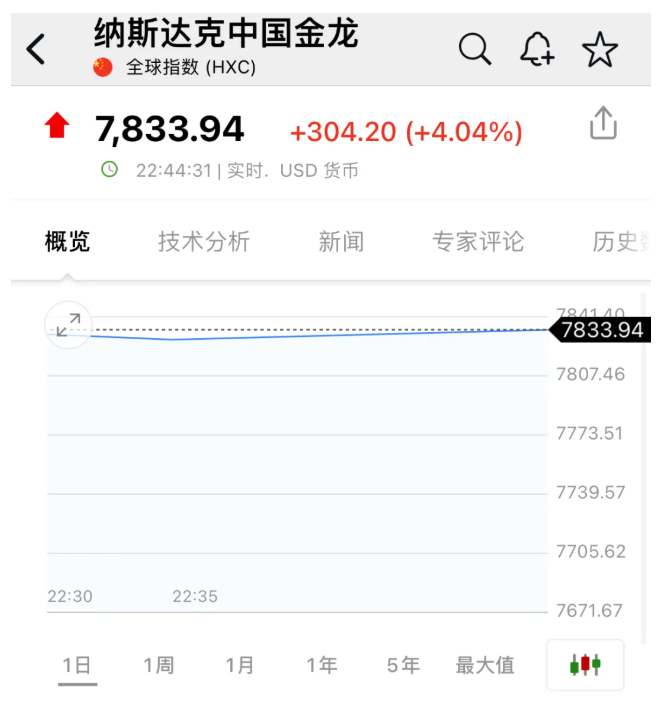
Market Performance - On January 2, US stock indices opened higher, with the Dow Jones up 0.19%, S&P 500 up 0.58%, and Nasdaq up 1.03% [1] - By the end of the trading day, the Nasdaq closed down 0.03%, while the S&P 500 rose 0.19% and the Dow increased by 0.66% [3] - The Nasdaq China Golden Dragon Index surged 4.38%, with notable gains in Chinese stocks such as Baidu up 15% and Alibaba up over 6% [4][6] Sector Performance - Semiconductor stocks saw significant gains, with ASML rising nearly 9% and Micron Technology up over 10%, both reaching historical highs [3] - The solar energy sector also performed well, with GCL-Poly Energy up over 22% [7] - The innovative drug sector showed strength, with companies like Innovent Biologics and Hengrui Medicine rising over 5% [6] Investment Outlook - Goldman Sachs predicts a 38% upside potential for the Chinese stock market by the end of 2027, citing factors such as improved domestic policies and a favorable investment environment [10] - Analysts suggest that the A-share market is likely to experience a "spring rally," supported by recent positive market sentiment and increased trading volumes [11][12] - The market is expected to benefit from a stable external environment, with reduced geopolitical risks and improved liquidity conditions [14] Economic Indicators - Recent data indicates a recovery in A-share trading volumes, with daily trading amounts rising from 1.6 trillion yuan to over 2 trillion yuan [12][13] - Analysts note that the market's risk appetite is increasing, with expectations for a strong start to the new year [16]

2026年1月份投资策略报告:春季行情或逐步开启-20251231
Dongguan Securities· 2025-12-31 09:31
Market Overview - In December 2025, the A-share market exhibited a "high-level fluctuation and structural switching" pattern, with the Shanghai Composite Index rising by 2.06%, the Shenzhen Component Index by 4.17%, and the ChiNext Index by 4.93% [8][13][45] - The market sentiment improved significantly towards the end of December, with the Shanghai Index achieving eleven consecutive gains, driven by easing concerns over AI bubbles and favorable policy expectations for 2026 [8][45] Economic Environment Analysis - Global economic indicators showed signs of stabilization but with a slowdown, as evidenced by the marginal decline in the US and Eurozone PMI indices [19][39] - The Federal Reserve's interest rate cut in December marked the third reduction of the year, with expectations for a slower pace of future cuts in 2026 due to internal divisions within the FOMC [20][44] - Domestic economic indicators reflected weak internal growth momentum, with November's industrial value-added growth at 4.8% and fixed asset investment declining by 2.6% year-on-year [21][25] Policy Direction - The Central Political Bureau and the Central Economic Work Conference set the tone for 2026, emphasizing a more proactive macroeconomic policy aimed at enhancing growth and addressing risks [29][33] - The focus on expanding domestic demand and optimizing supply was reiterated, with a commitment to maintaining a fiscal deficit rate around 4% to support economic stability and transformation [31][32] Sector Allocation - Recommendations for sector allocation in January include overweighting mechanical equipment, TMT (Technology, Media, and Telecommunications), electric power equipment, and non-ferrous metals [46] - The mechanical equipment sector is expected to benefit from increased demand in robotics and infrastructure projects, while the TMT sector may see growth driven by rising raw material prices and technological advancements [46][48]