
流动性

Search documents
华泰证券:预期验证期不改港股中枢上移趋势
Sou Hu Cai Jing· 2025-08-17 23:30
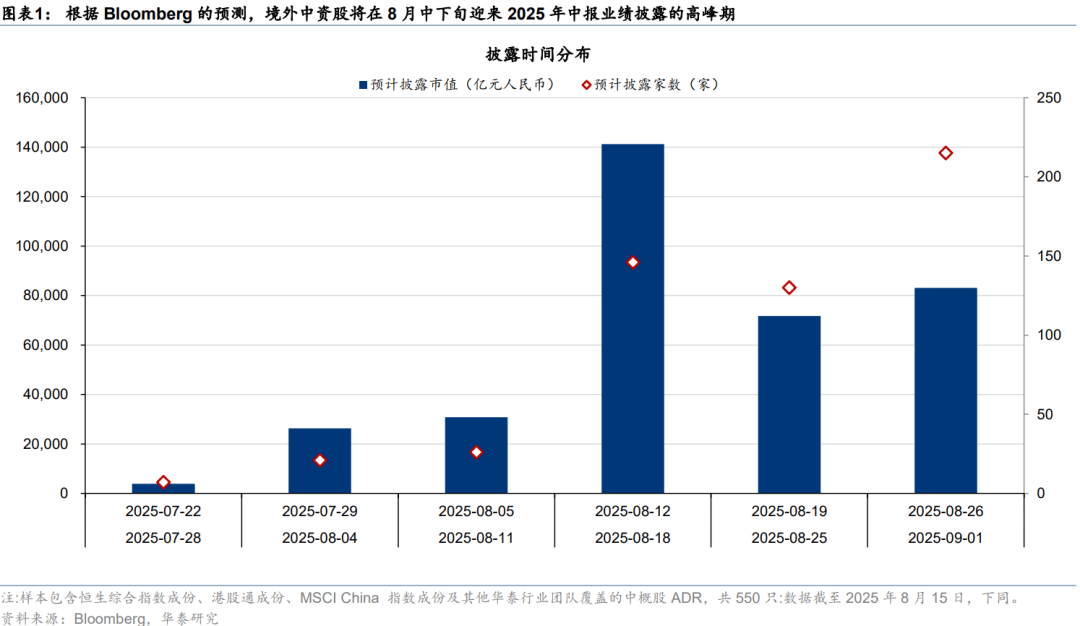
Group 1 - The market is currently in a critical verification phase for both domestic and international expectations, with a recent rise in the Hong Kong stock market driven by improved inflation expectations and strong earnings reports from leading companies [1] - As of August 15, 2025, 132 earnings forecasts were released for 550 major overseas Chinese stocks, with a positive forecast rate of 58%, particularly high in the utilities, financial, and healthcare sectors [2] - The overall earnings recovery for the first half of 2025 is expected to be 13%, compared to 8% in 2024, indicating significant industry differentiation [2] Group 2 - Short-term liquidity pressures exist in the market, but the medium-term outlook remains positive, with a projected net issuance of $1 trillion in U.S. Treasury bonds for Q3 2025, which may exert upward pressure on 10-year Treasury yields [3] - The Hong Kong stock market is experiencing a notable inflow of southbound funds, with recent inflows exceeding 30 billion HKD, indicating a strong interest from mainland investors [4] - The liquidity in the Hong Kong dollar remains relatively loose, with the total balance returning to levels seen before the Hong Kong Monetary Authority's intervention in May [4] Group 3 - The earnings forecast for the overseas Chinese stocks indicates a significant recovery potential, with the financial sector showing a positive outlook, particularly in banking and insurance [9] - The healthcare sector is also expected to see a positive earnings contribution, with a forecasted growth rate of 36% for 2025 [9] - The utilities sector has a forecasted positive growth rate of 19%, reflecting strong demand and favorable regulatory conditions [9]


大消息!A股市场融资余额节节攀升,下周有新这些新变化→
Sou Hu Cai Jing· 2025-08-17 08:51
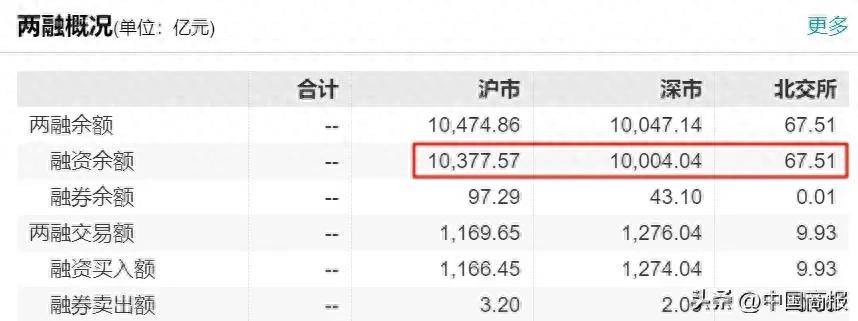
Market Performance - The A-share market has seen significant gains, with the Shanghai Composite Index rising 1.69% to close at 3696.77 points, the Shenzhen Component Index up 4.55%, and the ChiNext Index increasing by 8.58% [1] - As of August 15, the Shanghai Composite Index, Shenzhen Component Index, and ChiNext Index have accumulated increases of 10.29%, 11.71%, and 18.33% respectively this year [2] Economic Indicators - July economic data indicates steady growth in the national economy, with production demand continuing to rise and overall employment and prices remaining stable [1] - The total social financing scale increased by 23.99 trillion yuan in the first seven months of the year, which is 5.12 trillion yuan more than the same period last year [1] Financing and Margin Trading - The A-share market's financing balance has reached a new high of over 2.04 trillion yuan, the highest in nearly a decade [1][3] - As of August 15, the financing balance for the Shanghai Stock Exchange was 1.037757 trillion yuan, for the Shenzhen Stock Exchange was 1.000404 trillion yuan, and for the Beijing Stock Exchange was 67.51 billion yuan [2] Market Sentiment and Trends - Analysts believe that the current market dynamics are supported by improved policy expectations and a rebound in market risk appetite, indicating that the current bullish trend may continue [5][6] - The recent surge in A-share prices has led to an increase in the number of stocks doubling in value, particularly in the pharmaceutical and machinery sectors [2] Upcoming Events - The upcoming week will see significant events, including the announcement of the latest Loan Prime Rate (LPR) on August 20, which is crucial for market liquidity and borrowing costs [10] - A total of 34 companies will have their restricted shares released next week, amounting to a total market value of 999.17 billion yuan [14]
【广发宏观团队】再谈本轮权益市场修复的背后驱动
郭磊宏观茶座· 2025-08-17 08:45
Group 1 - The core viewpoint of the article discusses the driving factors behind the recent recovery in the equity market, emphasizing that attributing the market's rise to a single perspective is insufficient. It highlights the importance of economic fundamentals, liquidity, and risk appetite as contributing factors [1][2][3] - The article notes that from September last year to May this year, economic fundamentals were highly effective, with the recovery of profit expectations under a stable growth policy serving as the basis for market pricing recovery [2][3] - It identifies two periods of divergence between economic indicators and market performance: from Q2 to Q4 of 2021 and from June to August of this year, both characterized by ample liquidity but insufficient credit expansion due to local investment shortfalls [2][3] Group 2 - The article mentions that in the second week of August, the speed of asset rotation decreased, with a "risk on" sentiment dominating the stock and currency markets. The domestic ChiNext index led the gains, while global markets also showed positive trends [4][5] - It highlights that the rotation index for major assets has slowed down since mid-June, indicating a certain degree of persistence in strong assets and a return to a more focused trading approach [4][5] - The article discusses the performance of various asset classes, noting that the A-share market exhibited a pattern of rising prices, expanding volume, and low volatility, while the concentration of winning sectors increased [4][5][6] Group 3 - The article outlines the impact of U.S. economic data on market expectations, particularly the mixed signals from CPI and PPI, which influenced the fluctuations in U.S. Treasury yields and the dollar's performance [7][8] - It notes that the U.S. retail sales data showed resilience despite a slowdown compared to last year, with specific categories like furniture and clothing performing well [14] - The article also discusses the implications of the upcoming Jackson Hole global central bank meeting, where the Fed's stance on monetary policy will be closely watched [11][12][13] Group 4 - The article highlights the recent adjustments in China's monetary policy, emphasizing a focus on stabilizing prices and supporting credit flow to the real economy [19][20] - It mentions the seasonal contraction of narrow liquidity due to tax payment periods, with the central bank's report indicating a positive outlook for price levels [18][19] - The article discusses the increase in project funding and the improvement in the funding rate for construction projects, indicating a potential recovery in infrastructure investment [21] Group 5 - The article details a new policy in China providing a 1% interest subsidy for personal consumption loans, which is expected to stimulate consumer spending [22][23] - It estimates that this policy could boost retail sales by approximately 0.2-0.3 percentage points, reflecting the government's efforts to enhance consumer demand [22][23] - The article also discusses the recent trends in commodity prices, noting fluctuations in various sectors, including energy and industrial products [25][26]

申万宏观·周度研究成果(8.9-8.15)
赵伟宏观探索· 2025-08-16 16:04
Group 1 - The article discusses the upcoming expiration of the tariff suspension measures between China and the US on August 12, and the potential for easing trade risks based on recent trade agreements between the US and other economies like Japan and the EU [7] - It highlights the ongoing economic situation in July, characterized by strong supply but weak demand, with consumer and investment data showing significant weakness while industrial production remains resilient [11] - The article notes that the weak Producer Price Index (PPI) is influenced by low capacity utilization rates in upstream and downstream sectors, indicating underlying economic challenges [12] Group 2 - The financial data for July indicates a rebound in M2 year-on-year growth, primarily driven by an active capital market [15] - The article mentions that the US has established a three-tiered tariff system as part of its trade agreements, with significant uncertainty regarding the execution of investment and procurement commitments [17][18] - It emphasizes the long-term and targeted nature of tariff leverage, with secondary and transshipment tariffs gradually taking shape [18]

流动性跟踪:税期扰动,之后或重回宽松
HUAXI Securities· 2025-08-16 15:13
Group 1: Market Overview - The tax period has initiated, leading to a marginal tightening of liquidity, with R001 remaining stable at 1.35% for 10 consecutive trading days[1] - On August 15, the central bank switched to a net injection of CNY 116 billion, with R001 rising by 9 basis points to 1.44%[1][11] - The CNEX liquidity sentiment index increased to 50-54 on August 14, indicating a shift in market sentiment[1] Group 2: Future Outlook - Following the tax period, liquidity is expected to ease, with overnight rates likely returning to around OMO-5 basis points[2] - The government bond net payment decreased to CNY 2,641 billion, significantly lower than the previous week's CNY 4,604 billion[5][31] - The upcoming week (August 18-22) will see a total of CNY 9,318 billion maturing in the open market, including CNY 7,118 billion in reverse repos[3][20] Group 3: Interbank Market - The weighted issuance rate of interbank certificates of deposit rose slightly to 1.61%, up 1 basis point from the previous week[6][36] - The total issuance of interbank certificates of deposit was CNY 7,747 billion, with a net financing of -CNY 1,318 billion[6][44] - The average maturity of interbank certificates of deposit extended to 8.1 months, compared to 6.4 months the previous week[6][45]
流动性:流动性税期资金波动怎么看?
CAITONG SECURITIES· 2025-08-16 12:45
1. Report Industry Investment Rating The document does not provide the industry investment rating. 2. Core Views of the Report - The central bank's operations in August are more optimistic than in June. In terms of timing, the purchase - style reverse repurchase was timely, and there was better coordination with fiscal policies. In terms of quantity, the net purchase - style reverse repurchase in August was more than in June, and there was no withdrawal of 6 - month liquidity. The net injection during the tax period was also higher than in June. The funds' central price has declined compared to June [3][16]. - Looking forward, considering the historical low of credit in July, the negative month - on - month growth of social retail and investment in July, the downward trend of bill rates, and the continuous increase in government bond issuance, the central bank will maintain a suitable financial environment, and liquidity can remain optimistic. There is no need to worry about "preventing idle capital circulation" as the central bank focuses on standardizing bank loans rather than raising capital rates [3][21]. - For certificates of deposit (CDs), the net financing of state - owned banks' CDs turned negative again last week. Under the central bank's support, the supply side is not a constraint. The secondary - market trading volume has continued to shrink, and yields have fluctuated within a narrow range. Institutions mostly adopt a configuration strategy. The supply - side pressure is relatively limited, and considering the low - level funds, the configuration value of CDs above 1.65% is not low. CDs may perform well when risk appetite declines and interest rates return to the fundamental logic [23]. 3. Summaries According to the Table of Contents 3.1 Keep an Optimistic Judgment on Funds - Last week, except for the last trading day, the weighted DR001 funds price remained at 1.31%, and state - owned banks' net lending remained high. The bond market adjusted, non - banks reduced leverage, and the overall stratification was at a low level [9]. - There are two key points to note in the past week: First, during the monetary - fiscal coordination period, the central bank maintains relatively stable liquidity, and more optimistic capital conditions are more likely to occur during the initial issuance of long - term bonds. Second, the marginal tightening of funds on August 15 was a normal tax - period fluctuation. Medium - and long - term funds remained stable and loose, and based on the fundamentals and the central bank's operating style, one can remain optimistic about funds [15][16]. 3.2 Weekly Funds and CDs Tracking and Key Point Reminders - This week (August 11 - 15), the central bank's OMO had a net withdrawal of 4149 billion yuan, with 7 - day OMO funds of 7118 billion yuan issued and 11267 billion yuan withdrawn. There was a 5000 - billion - yuan 6 - month purchase - style reverse repurchase operation. The government bond had a net financing of 2069 billion yuan, with a cumulative net financing of 97439 billion yuan and a net financing progress of 70.3%, and a net payment of 4344 billion yuan. Large banks' bill - buying efforts remained strong, and bill rates generally declined. The RMB was stable against the US dollar, and the central bank's counter - cyclical regulation demand was stable. In terms of funds, state - owned banks' lending ability was strong, and the leverage of some institutions changed [29]. - Next week (August 18 - 22), short - term funds of 7118 billion yuan will mature, and there will be 9000 - billion - yuan purchase - style reverse repurchase and 3000 - billion - yuan MLF maturities. The government bond's net financing will be 4979 billion yuan, with a cumulative net financing of 102418 billion yuan and a net financing progress of 73.9%, and a net payment of 2641 billion yuan. Attention should be paid to the central bank's support during the initial issuance of long - term government bonds on August 22 [29][30]. 3.3 Central Bank: 6 - Month Purchase - Style Reverse Repurchase Operation Implemented - This week, the central bank had a net withdrawal of short - term funds and carried out a 5000 - billion - yuan 6 - month purchase - style reverse repurchase operation. The OMO had a net withdrawal of 4149 billion yuan, with 7 - day OMO funds of 7118 billion yuan issued and 11267 billion yuan withdrawn. As of August 15, the reverse repurchase balance was 7118 billion yuan, down 4149 billion yuan from August 8, still higher than the seasonal level [32]. - Next week, 7118 billion yuan of short - term funds will mature, and there will be 9000 - billion - yuan purchase - style reverse repurchase and 3000 - billion - yuan MLF maturities in August [34]. 3.4 Government Bonds: Net Payment Declined to 264.1 Billion Yuan - This week, the government bond's net financing was 206.9 billion yuan, with a cumulative net financing of 9743.9 billion yuan and a net financing progress of 70.3%, and a net payment of 434.4 billion yuan. Next week, the net financing will be 497.9 billion yuan, with a cumulative net financing of 10241.8 billion yuan and a net financing progress of 73.9%, still at a seasonal high, and a net payment of 264.1 billion yuan [37]. - Structurally, the issuance of new special bonds has accelerated. The net financing progress of national bonds is 72.0% (higher than the historical average), and the issuance progress of new local government general bonds, new local government special bonds, and special refinancing bonds are 73.0% (lower than the historical average), 69.0% (lower than the historical average), and 97.3% respectively [39]. 3.5 Bills: Large Banks' Bill - Buying Efforts Remained Strong, and Rates Generally Declined - This week, large banks' bill - buying efforts remained strong, and bill rates generally declined. As of August 15, the 3 - month and 6 - month national - share direct and transfer bill rates were 1.13%, 1.00%, 0.70%, and 0.68% respectively, down 11BP, 12BP, 7BP, and 7BP from August 8 [47][48]. 3.6 Exchange Rates: Stable During the Statistical Period, with the RMB Spot Exchange Rate at 7.18 - This week, the RMB was stable against the US dollar, with the USDCNH/USDCNY swap points around 1600/1700 points. The carry - trade strategy for short - term bonds by foreign investors has limited value. The central bank's counter - cyclical regulation demand was stable, with the central parity rate of the US dollar against the RMB dropping to 7.14 and the depreciation upper limit around 7.28, and the counter - cyclical factor narrowing to around 314.68 pip [50][52]. 3.7 Market Funds Supply and Demand: State - Owned Banks' Lending Continued to Increase - The central bank's second - round purchase - style reverse repurchase operation strengthened state - owned banks' lending ability. The bond market adjusted, money market funds increased lending, and non - banks reduced borrowing. The average daily lending of the banking system was 4.28 trillion yuan, and that of national - share banks increased to 5.10 trillion yuan. The average daily lending of state - owned banks recovered to 5.14 trillion yuan, while that of joint - stock banks decreased to - 0.04 trillion yuan [55]. - The average daily lending of (money market funds + wealth management subsidiaries) increased to 1.21 trillion yuan. Major non - bank institutions reduced borrowing. The leverage ratios of the inter - bank market, commercial banks, and insurance companies increased, while those of broad - based funds and securities companies decreased [59][63]. - In terms of funds prices, the increase in the R series > the DR series > the Shibor series > the GC series, indicating tight funds for banks and non - banks and relatively stable funds for money market funds. The term stratification narrowed, and the institutional stratification was basically flat, showing a mitigation of market stratification [69]. 3.8 CDs: Net Financing Turned Negative, and the Buying Efforts of Money Market Funds and Joint - Stock Banks Increased 3.8.1 Primary Issuance Market: The Success Rate of Fund - Raising Improved, and the Overall Net Financing of CDs Turned Negative - This week, the net financing of CDs was - 131.1 billion yuan, and the average issuance rate increased by about 1BP. In the next three weeks, 794.72 billion yuan, 751.78 billion yuan, and 330.05 billion yuan of CDs will mature respectively. This week, the issuance scale of national - share banks increased, but the net financing turned negative. The weighted issuance duration of CDs increased, and the success rate of long - term CD fund - raising improved [72][75]. - In terms of different terms, the weighted issuance duration of CDs increased to 8.12 months. The issuance proportion of 9 - month and 12 - month CDs increased significantly, and the success rate of fund - raising for most terms improved. The issuance rates of CDs of all terms decreased to varying degrees, with a larger decline in short - term national - share banks [78][83]. 3.8.2 Secondary Trading Market: Trading Activity Declined, and the Buying Efforts of Money Market Funds Increased Significantly - In terms of quantity, the trading activity of CDs continued to decline this week, and the yields increased. Joint - stock banks, money market funds, and other non - non - bank institutions had strong buying, while other institutions mostly bought at a steady pace. The 1 - year AAA CD yield reached 1.6400% [85][87].
申万宏观·周度研究成果(8.9-8.15)
申万宏源宏观· 2025-08-16 04:32
Group 1 - The article discusses the upcoming expiration of the tariff suspension measures between China and the U.S. on August 12, and the potential for easing trade risks based on recent trade agreements with Japan and the EU [7] - It highlights the ongoing economic situation in July, characterized by strong supply but weak demand, indicating a mixed economic outlook [11] - The article notes that the Producer Price Index (PPI) has shown weakness due to low capacity utilization in mid and downstream sectors, which are considered two underlying factors affecting PPI performance [12] Group 2 - The financial data for July indicates a significant rebound in M2 year-on-year, primarily driven by an active capital market [15] - The article mentions that the U.S. has established a three-tiered tariff system as part of its trade agreements, with significant uncertainties regarding the execution of investment and procurement commitments [17][18] - It emphasizes the long-term and targeted nature of tariff leverage, with secondary and transshipment tariffs gradually taking shape [18]

X @外汇交易员
外汇交易员· 2025-08-15 10:04
Monetary Policy Stance - The People's Bank of China (PBOC) will implement a moderately easing monetary policy [1] - The PBOC will maintain ample liquidity in the market [1] - The PBOC aims to align the growth of social financing and money supply with economic growth and price stability targets [1] - The PBOC considers promoting a reasonable rebound in prices as an important factor in monetary policy [1] Economic Objectives - The PBOC aims to maintain price levels at a reasonable level [1]
债市日报:8月15日
Xin Hua Cai Jing· 2025-08-15 08:31
Market Overview - The bond market experienced fluctuations on August 15, with most government bond futures closing lower, particularly the 30-year main contract which fell by 0.29% to 117.480 [1][2] - The interbank bond yield initially decreased before rising by approximately 1 basis point in the afternoon, indicating a cautious sentiment among investors [1][2] Monetary Policy and Liquidity - The central bank conducted a net injection of 116 billion yuan through reverse repos, with a total of 238 billion yuan in 7-day reverse repos conducted at a rate of 1.40% [1][6] - The upcoming tax period is expected to lead to a tightening of liquidity, although there remains confidence in the central bank's ability to provide timely support [1][6] Economic Indicators - In July, the industrial output increased by 5.7% year-on-year, slightly below the expected 5.8%, while retail sales grew by 3.7%, also below expectations [8] - Fixed asset investment for the first seven months of the year rose by 1.6%, falling short of the anticipated 2.7% [8] Real Estate Market - The real estate sector showed signs of decline, with a 12% year-on-year drop in development investment and a 4% decrease in new housing sales area [8] - The real estate development climate index stood at 93.34 in July, indicating ongoing challenges in the sector [8] Institutional Insights - Huatai Securities recommends focusing on high-quality leading companies with long-term growth potential, particularly in sectors like new energy, semiconductors, and biomedicine [10] - Xingsheng Fixed Income suggests that the bond market may face downward pressure in the latter half of August, with potential buying opportunities as yields approach 1.75% for 10-year bonds and 2.0% for 30-year bonds [10]
宁证期货今日早评-20250815
Ning Zheng Qi Huo· 2025-08-15 02:03
Report Industry Investment Ratings No relevant information provided. Core Views - The coke market is expected to continue its volatile and upward trend in the short term due to tight supply and strong demand [1]. - Gold is expected to have a short - term rebound but remain volatile and bearish in the medium term due to the strength of the US dollar [1]. - Iron ore prices are expected to remain range - bound in the short term, with support from iron water demand and seasonal shipping lulls [3]. - Rebar prices may be volatile and weak in the short term due to weak demand and increased inventory [4]. - Treasury bonds are expected to have a short - term rebound but remain volatile and bearish in the medium term, with the stock - bond seesaw as the main logic [4]. - Silver is expected to have a short - term correction but remain volatile and bullish [5]. - The pig market has a short - term rebound expectation, but the supply exceeds demand. It is recommended to wait for the end of the correction [5]. - Palm oil prices are expected to be in a high - level volatile state in the short term, and it is recommended to take profit on long positions [6][7]. - Methanol is expected to be volatile in the short term, and it is recommended to hold short positions cautiously [7]. - Soda ash is expected to be volatile in the short term, and it is recommended to wait and see or short on rebounds [8]. - LLDPE is expected to be volatile in the short term, and it is recommended to wait and see [9]. - Crude oil is expected to be volatile and weak, with market focus on the US - Russia negotiation [10]. - PTA follows the trend of crude oil, and there is pressure on the supply side [11]. - Rubber is expected to be volatile and bullish, with short - term supply support and improved demand expectations [11]. Summary by Variety Coke - On August 14, mainstream steel mills raised coke purchase prices. Coke prices have risen for six consecutive rounds. Some coking coal varieties have weakened, and coking enterprises' operating pressure has eased. Supply may tighten slightly, and demand remains strong. Coke supply is tight, and the market is expected to be volatile and upward in the short term [1]. Gold - US initial jobless claims decreased, and PPI increased significantly, strengthening the US dollar and pressuring precious metals. Gold is expected to have a short - term rebound but remain volatile and bearish in the medium term [1]. Iron Ore - From August 4 - 10, global iron ore shipments decreased. Iron water production decreased slightly, but demand remained resilient, and port inventory increased. Ore prices are expected to be range - bound in the short term, and it is recommended to operate within the range of the Iron Ore 2601 contract with a support level of 750 yuan/ton [3]. Rebar - As of August 14, rebar production decreased slightly, while factory and social inventories increased, and apparent demand decreased significantly. With weak demand and increased inventory, rebar prices may be volatile and weak in the short term [4]. Treasury Bonds - The central bank has increased liquidity injection, which supports the bond market. The bond market is currently affected by liquidity and the stock - bond seesaw, with a short - term rebound and medium - term bearish trend [4]. Silver - US PPI in July increased significantly, suppressing interest - rate cut expectations. The US dollar index rebounded, pressuring precious metals. Silver may correct further in the short term but remains volatile and bullish [5]. Pig - On August 14, the national average pork price decreased slightly. Pig prices in different regions showed a mixed trend. There is a short - term rebound expectation, but supply exceeds demand. It is recommended to wait for the end of the correction, with a support level of 13700 for the LH2511 contract [5]. Palm Oil - India's palm oil imports in July decreased. Affected by news and profit - taking of long - position funds, palm oil prices are expected to be high - level volatile in the short term, and it is recommended to take profit on long positions [6][7]. Methanol - Methanol port inventory increased, and the capacity utilization rate rose. The downstream demand was stable. Methanol is expected to be volatile in the short term, with a pressure level of 2465 for the 01 contract, and it is recommended to hold short positions cautiously [7]. Soda Ash - The price of heavy - duty soda ash was volatile and weak. Production increased, and inventory rose. The float glass industry was stable, but inventory increased. Soda ash is expected to be volatile in the short term, with a pressure level of 1425 for the 01 contract, and it is recommended to wait and see or short on rebounds [8]. LLDPE - The price of LLDPE increased slightly, production decreased, and enterprise inventory decreased. The downstream demand was general. LLDPE is expected to be volatile in the short term, with a pressure level of 7365 for the L2601 contract, and it is recommended to wait and see [9]. Crude Oil - US refined oil demand increased year - on - year. OPEC + has increased production, and the IEA has adjusted supply and demand forecasts. The US - Russia meeting has uncertainty. Crude oil is expected to be volatile and weak, with market focus on the negotiation [10]. PTA - PTA supply pressure exists, and the downstream is the traditional peak season. However, polyester profit is poor, which may affect production enthusiasm. PTA follows the trend of crude oil [11]. Rubber - The price of rubber raw materials was stable. Tire capacity utilization showed differentiation. The supply side has short - term support, and demand expectations have improved. Rubber is expected to be volatile and bullish [11].