
金九银十

Search documents
消费贷“国补”落地,消费建材“金九银十”可期
Xuan Gu Bao· 2025-08-17 15:22
Group 1 - The National Building Materials and Home Furnishing Prosperity Index (BHI) for July 2025 is reported at 112.02, showing a month-on-month decline of 4.12 points and a year-on-year decline of 8.90 points, indicating a slowdown in consumer spending during the traditional off-season [1] - Despite the overall decline in BHI, the "Manager Confidence Index" increased to 147.89, up 11.36 points month-on-month, reflecting positive short-term market expectations due to upcoming peak seasons and supportive government policies [1] - Recent implementation of personal consumption loan interest subsidy policies and service industry loan interest subsidies is expected to lower interest costs, improving market expectations for home furnishing demand stabilization [1] Group 2 - Companies to watch as the peak season approaches include Sangokushi and Beixin Building Materials, indicating potential investment opportunities in the sector [2]
铝行业周报:下游铝加工开工率回升,静待库存拐点-20250817
Guohai Securities· 2025-08-17 13:04
Investment Rating - The report maintains a "Recommended" rating for the aluminum industry [1]. Core Viewpoints - The aluminum processing sector is witnessing a recovery in operating rates, with expectations for inventory to reach a turning point. The upcoming "Golden September and Silver October" peak season is anticipated to boost demand [11]. - The macroeconomic environment is leaning towards favorable conditions, with expectations of interest rate cuts by the Federal Reserve and a temporary suspension of tariffs between China and the U.S. [6]. - The report highlights that the current low inventory levels and reduced aluminum ingot supply provide support for aluminum prices [11]. Summary by Sections 1. Prices - As of August 15, the LME three-month aluminum closing price was $2,603.0 per ton, down $12.0 from the previous week but up $276.0 year-on-year [24]. - The Shanghai aluminum active contract closing price was 20,770.0 yuan per ton, up 85.0 yuan week-on-week and up 1,755.0 yuan year-on-year [24]. - The average price of A00 aluminum in Changjiang was 20,680.0 yuan per ton, up 50.0 yuan week-on-week and up 1,750.0 yuan year-on-year [24]. 2. Production - In July 2025, the production of electrolytic aluminum was 3.721 million tons, an increase of 112,000 tons month-on-month and 168,000 tons year-on-year [55]. - The production of alumina in July 2025 was 7.650 million tons, up 392,000 tons month-on-month and 808,000 tons year-on-year [55]. 3. Inventory - As of August 14, the inventory of electrolytic aluminum ingots in major domestic consumption areas was 588,000 tons, an increase of 24,000 tons week-on-week [7]. - The inventory of aluminum rods was 138,500 tons, down 4,000 tons week-on-week, indicating a continuous decline due to reduced production by manufacturers [7]. 4. Key Companies and Earnings Forecast - Key companies in the aluminum sector include China Hongqiao, Tianshan Aluminum, Shenhuo Co., China Aluminum, and Yunnan Aluminum, all rated as "Buy" [5].




有色金属行业周报(20250811-20250815):淡季偏强,宏观利好支撑金属价格-20250817
Huachuang Securities· 2025-08-17 12:13
Investment Rating - The report maintains a "Buy" recommendation for the non-ferrous metals sector, indicating a strong outlook supported by macroeconomic factors that bolster metal prices [2]. Core Insights - The report highlights a robust performance in the copper and aluminum sectors, with specific companies recommended for investment, including Zijin Mining, Jincheng Mining, Western Mining, and Minmetals Resources for copper, and China Hongqiao, Hongchuang Holdings, Tianshan Aluminum, and others for aluminum [3][4]. - The macroeconomic environment is favorable, with recent developments such as the suspension of tariffs between China and the U.S. and the implementation of consumer loan interest subsidies contributing to a bullish outlook for aluminum prices, which have recently surged above 20,800 CNY/ton [7][8]. Industry Overview Non-Ferrous Metals - The report notes that the total market capitalization of the non-ferrous metals sector is approximately 360.65 billion CNY, with 125 listed companies [4]. - The sector has shown strong performance over various time frames, with absolute returns of 14.3% over one month, 28.2% over six months, and 52.1% over twelve months [5]. Aluminum Sector - The report indicates that aluminum inventories are increasing, with a notable rise in domestic electrolytic aluminum ingot inventory to 588,000 tons, reflecting a short-term oversupply situation [7]. - Despite the current inventory build-up, the report anticipates that the upcoming peak consumption season ("Golden September and Silver October") and potential supply risks may support aluminum prices [7]. Copper Sector - The report provides insights into copper inventories, with the Shanghai Futures Exchange (SHFE) reporting a total of 86,400 tons, an increase of 4,428 tons week-on-week [3]. - The global visible copper inventory stands at 555,000 tons, with a slight increase of 2,458 tons compared to the previous week [3]. Rare Metals - The report emphasizes the rising prices of praseodymium and neodymium oxide, which have increased by 7.01% week-on-week, driven by strong demand from major magnet manufacturers [9]. - Companies in the rare metals sector, such as China Rare Earth and Guangxi Rare Metals, are highlighted as potential investment opportunities due to their strategic positioning in the market [9]. Company Performance - China Hongqiao reported a significant increase in revenue and net profit for the first half of 2025, with revenue reaching 81.04 billion CNY, a year-on-year increase of 10.1%, and net profit of 12.36 billion CNY, up 35% [7]. - Zhongfu Industrial completed its employee stock ownership plan, indicating strong confidence in future growth, with a total of 329 million shares purchased at an average price of 3.21 CNY per share [7].

有色金属周报20250817:供给扰动+降息预期,看好商品价格表现-20250817
Minsheng Securities· 2025-08-17 06:18
Investment Rating - The report maintains a "Buy" rating for several companies in the non-ferrous metals sector, including Zijin Mining, Luoyang Molybdenum, and China Nonferrous Mining [5][7]. Core Views - The report highlights that supply disruptions and expectations of interest rate cuts are likely to support commodity prices in the near term [1][2]. - Industrial metals are expected to see price increases due to the upcoming "golden September and silver October" season, despite some weakness in demand [2][3]. - Energy metals, particularly cobalt and lithium, are projected to experience price increases due to supply constraints and strong demand [3]. - Precious metals are anticipated to rise in price, driven by central bank gold purchases and changing tariff policies [4]. Summary by Sections Industrial Metals - The report notes that copper prices are supported by rising production rates and demand from downstream cable consumption, with the SMM import copper concentrate index showing a slight increase [2][3]. - Aluminum production remains high, but demand is weak, leading to an increase in social inventory [2][21]. - Key companies recommended include Zijin Mining, Luoyang Molybdenum, and China Nonferrous Mining [2][5]. Energy Metals - Cobalt prices are expected to rise due to supply shortages, while lithium prices are also increasing due to tight supply conditions [3]. - Key companies recommended include Huayou Cobalt and Ganfeng Lithium [3]. Precious Metals - Gold prices are expected to rise due to ongoing central bank purchases and geopolitical uncertainties, with a target of breaking the $3,500 per ounce mark [4]. - Key companies recommended include Shandong Gold and Zhongjin Gold [4][5].





明日生效,美国宣布扩大钢铁和铝关税实施范围!特朗普:暂不针对中国购买俄油加征关税
Qi Huo Ri Bao· 2025-08-17 00:00
Group 1: Tariff Expansion - The U.S. government announced an expansion of the 50% tariff on steel and aluminum imports, adding hundreds of derivative products to the tariff list [2] - The U.S. Department of Commerce included 407 product codes in the U.S. Harmonized Tariff Schedule, which will incur additional tariffs due to their steel and aluminum content [2] - The expanded tariff list will take effect on August 18, 2025, following a previous announcement to increase tariffs from 25% to 50% [2] Group 2: Market Impact - The expanded tariff range is expected to alter global aluminum trade flows, potentially exacerbating supply-demand tensions in certain markets, particularly in North America [3] - Increased tariffs will raise production costs for downstream industries in the U.S., such as automotive, home appliances, and construction materials, which may lead to weaker consumer data amid low consumer confidence [3] - The expansion of tariffs may impact China's aluminum and aluminum product exports, with a potential decline in exports expected in the fourth quarter [3] Group 3: Aluminum Market Outlook - Recent trends show strong fluctuations in aluminum prices, with the main futures contract hovering around 20,700 yuan/ton [6] - Analysts suggest that while there is a positive macro outlook and expectations of demand recovery during the traditional peak season, the overall aluminum market fundamentals remain weak due to low operating rates in key industries [6][8] - The upcoming peak season may not see robust demand, as reduced subsidies and trade tensions could lead to cautious consumer behavior [8]
7月房价数据揭晓:楼市深度调整,市场静待新转机
Sou Hu Cai Jing· 2025-08-16 15:23
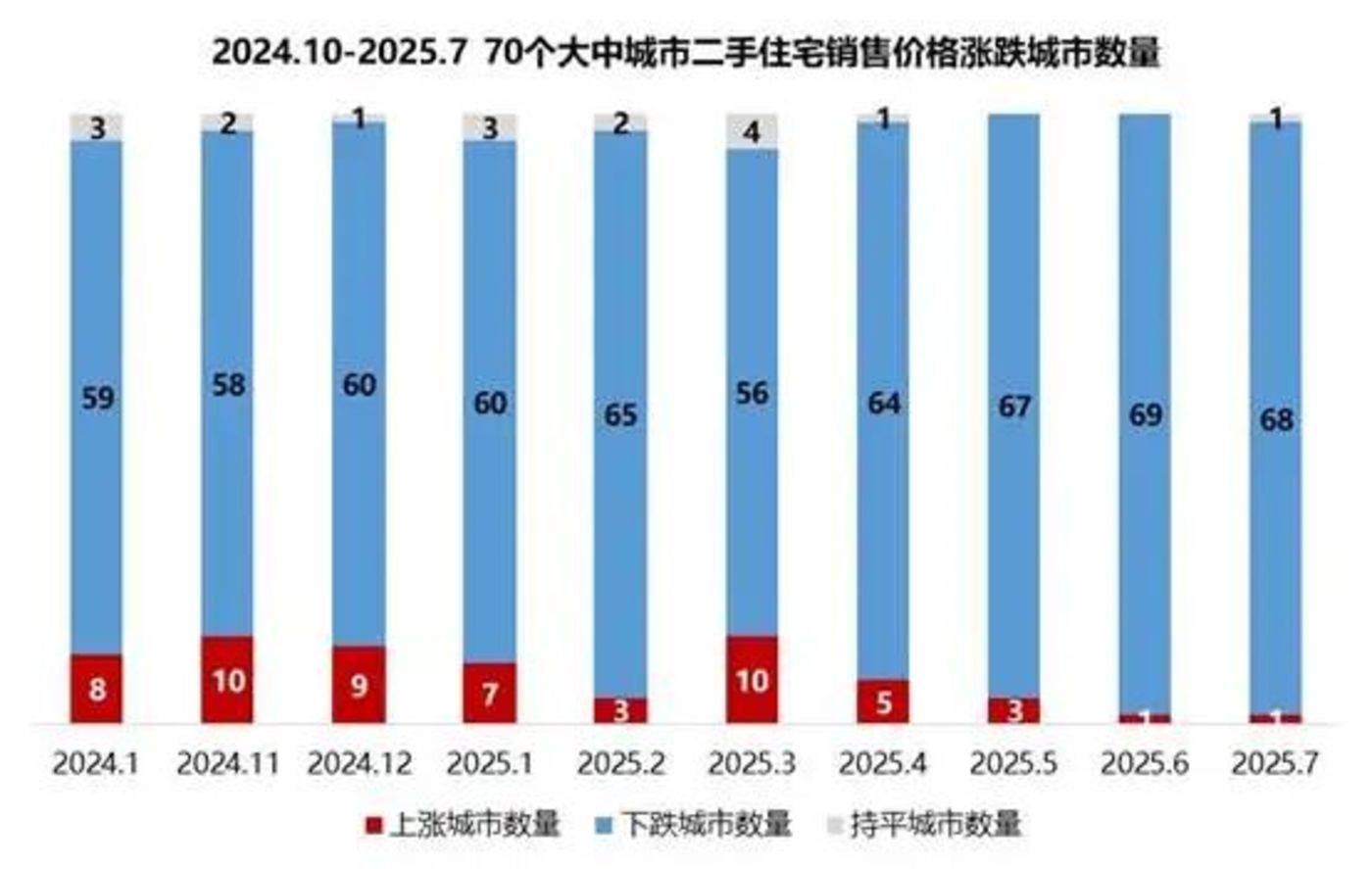
Group 1: Market Trends - The latest data from the National Bureau of Statistics indicates a significant adjustment in the real estate market, with only 6 cities experiencing a month-on-month increase in new residential property prices, the lowest since the implementation of major policies last September [1] - From January to July, real estate development investment decreased by 12.0% year-on-year, while the sales area and sales revenue of new residential properties fell by 4.0% and 6.5%, respectively, highlighting a weakening effect of the "price for volume" strategy [1] - The area of new housing starts saw a substantial decline of 19.4%, further exacerbating market pessimism [1] Group 2: Performance of Major Cities - Shanghai stands out as the only first-tier city with a continuous month-on-month increase in new residential property prices for 10 consecutive months, with July sales reaching 31.4 billion yuan, where luxury properties contributed 41% of total sales [4] - In contrast, Beijing's market remains weak despite some luxury projects boosting sales, while Guangzhou has not seen any month-on-month price increases for 10 months, and Shenzhen continues to experience a widening decline [4] - Among 31 major second-tier cities, only Urumqi and Changchun reported month-on-month price increases, with cities like Chengdu and Hangzhou also facing declines [4] Group 3: Policy Responses - Despite efforts from central and local governments to stabilize the market, the response has been lukewarm, with policies such as expanding affordable housing supply in population inflow cities failing to reverse the downward trend [5] - Beijing's recent easing of purchase restrictions outside the Fifth Ring Road did not address more impactful measures like core area restrictions or mortgage rates, leading to perceptions of passive rather than proactive policy adjustments [5] - The recovery of market confidence faces multiple challenges, including limited effectiveness of the "price for volume" strategy in the second-hand market and weak demand in the new housing market [5]

甲醇周报:供增需弱,价格破位下跌-20250816
Wu Kuang Qi Huo· 2025-08-16 13:39
1. Report Industry Investment Rating - No information provided in the report. 2. Core Viewpoints of the Report - The methanol market is currently characterized by high supply and weak demand, with the price breaking through support levels and falling. The short - term weakness is difficult to reverse, but demand is expected to improve with the arrival of the peak seasons of "Golden September and Silver October". The report suggests a short - term wait - and - see approach [11]. 3. Summary According to the Table of Contents 3.1. Weekly Assessment and Strategy Recommendation - **Market Review**: The futures price has broken through support levels and fallen. The current situation is high supply and weak demand, with port inventories accelerating accumulation. Traditional downstream industries are generally in a loss - making state, and port MTO plants have shut down. Methanol has become a weak variety in the sector, with the basis weakening and the inter - monthly spread at a low level in the same period [11]. - **Supply**: The domestic operating rate has gradually bottomed out and is expected to increase marginally, reaching 82.4% this week, a 0.97% increase from the previous week. Overseas operating rates have returned to seasonal highs [11]. - **Demand**: Port olefin plants are operating at a low load, and the domestic olefin operating rate has declined slightly. Traditional demand operating rates are gradually rising, and improvement is expected during the "Golden September and Silver October" period [11]. - **Fundamentals**: The 1 - 5 spread is at a low level compared to the same period, and the current situation remains weak [11]. - **Valuation**: Coal prices have bottomed out and risen, increasing methanol costs, but coal - to - methanol profits are still at a high level. Port MTO plants have shut down, and port olefin profits are continuously rising. The price ratio between methanol and related varieties is at a medium - to - high level, indicating that methanol is not undervalued [11]. - **Inventory**: Port inventories are 1.0218 million tons, a 96,300 - ton increase from the previous week. Enterprise inventories are 295,600 tons, a 1,900 - ton increase from the previous week, and are at a low level in recent years [11]. - **Market Logic**: Methanol's own fundamentals are weak. Even though coal prices are strong, it is still difficult to break out of the downward pattern, with short - term supply increasing and demand weak [11]. - **Strategy**: Adopt a short - term wait - and - see approach [11]. 3.2. Futures and Spot Market - **Basis and Spread**: The 1 - 5 spread is at a low level compared to the same period [20]. 3.3. Profit and Inventory - **Production Profit**: Coal - to - methanol profits are at a high level compared to the same period [38]. - **Inventory**: Port inventories are increasing, and enterprise inventories are at a low level in recent years [11]. 3.4. Supply Side - **Capacity**: In 2025, new methanol production capacity in the northwest region amounts to 7.45 million tons, including projects from Inner Mongolia Baofeng, Gansu Liuhua, Xinjiang Zhongtai New Materials, etc [50]. - **Operating Rate**: The domestic methanol operating rate has gradually bottomed out and is rising, and the overseas operating rate has returned to seasonal highs [11][52]. - **Import Volume**: Import volume is expected to increase gradually as overseas plants operate at high rates [11]. - **Arrival Volume**: Data on arrival volumes in different regions are presented in relevant charts [65][68]. - **International Price Difference**: Various international price differences and domestic freight rates are analyzed through charts [71][76]. 3.5. Demand Side - **Demand Forecast**: Consumption and end - of - period inventory data are presented in relevant charts [80]. - **Methanol - to - Olefins**: The olefin operating rate has declined slightly, and the profitability of related plants has shown some changes. There are also analyses of relevant spreads [83][93]. - **PP Production Profits**: Production profits of different PP production processes are presented in relevant charts [91]. - **Downstream Industries**: The operating rates and profits of downstream industries such as formaldehyde, dimethyl ether, MTBE, and dichloromethane, as well as downstream inventories, are analyzed through charts [104][107]. - **Related Product Price Ratios**: Price ratios between methanol and related products are presented in relevant charts [111]. 3.6. Options - Related - **Methanol Options**: Data on option trading volume, open interest, PCR, and volatility are presented in relevant charts [115][117]. 3.7. Industry Structure Diagram - **Industry Chain and Research Framework**: Diagrams of the methanol industry chain and the research framework analysis mind - map are provided [120][122].
金晟富:8.16黄金震荡承压还看延续!下周黄金趋势分析参考
Sou Hu Cai Jing· 2025-08-16 04:57
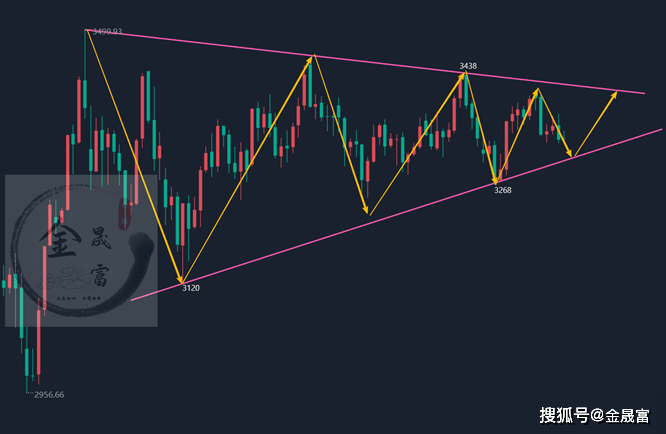
Core Viewpoint - The international gold market is experiencing a cautious phase influenced by geopolitical tensions and economic factors, with gold prices fluctuating between $3330 and $3350, while the outlook remains bullish due to increasing demand and macroeconomic uncertainties [1][2]. Economic and Geopolitical Factors - The second half of the year is expected to see heightened macroeconomic and geopolitical risks, enhancing gold's appeal as a safe-haven asset [2]. - Key supporting factors for gold's bullish outlook include tariff increases, global economic slowdown, easing U.S. monetary policy, and a persistently weak dollar [2]. - Recent economic data has shown mixed signals, with expectations of a 25 basis point rate cut by the Federal Reserve in September, although inflation data has tempered these expectations [2]. Market Analysis - The recent U.S.-Russia summit yielded no concrete agreements, leading to limited volatility in gold prices, which remained within a narrow range [3]. - Technical analysis indicates a bearish trend for gold, with the market currently in a downward C-wave and indicators suggesting increased selling pressure [3][5]. - Short-term resistance levels are identified at $3350-$3353, while key support is at $3330, with further potential declines if this level is breached [5]. Trading Strategies - Suggested trading strategies include short positions on rebounds near $3348-$3350 and long positions on pullbacks near $3310-$3315, with strict stop-loss measures recommended [5].
与上半年截然相反,甲醇市场格局有变
Qi Huo Ri Bao· 2025-08-15 23:52
Core Viewpoint - The domestic methanol market is experiencing significant regional differentiation, characterized by a "strong inland and weak port" scenario, contrasting sharply with the "strong port and weak inland" situation observed in the first half of the year [1][2]. Group 1: Market Dynamics - The current methanol price gap between inland and port regions has narrowed, with the ex-factory price in the northwest exceeding 2100 yuan/ton, while port prices have dropped to around 2350 yuan/ton, resulting in a price difference of 230-250 yuan/ton [1]. - The northwest region is facing low inventory levels and strong demand due to maintenance of coal-to-olefin facilities, while port areas are experiencing rapid inventory accumulation, exceeding 200,000 tons as of August, with total coastal inventory surpassing 1,100,000 tons [1][2]. Group 2: Historical Context - In the first half of the year, the methanol market was characterized by a "strong port and weak inland" dynamic, primarily due to low imports from Iran and a significant drop in port inventories [2]. - The shift in market dynamics is attributed to maintenance of port-based methanol production facilities and an increase in imports, leading to a substantial rise in port inventories [2]. Group 3: Supply and Demand Factors - Current market conditions are influenced by macroeconomic uncertainties and regional supply-demand imbalances, with rising coal prices supporting methanol costs, while declining crude oil prices weaken downstream product prices [3]. - The inland coal chemical enterprises are facing rising production costs, while coastal downstream enterprises are experiencing significant losses, leading to weak demand and low acceptance of high-priced domestic methanol [3]. Group 4: Future Outlook - The methanol market is expected to maintain regional differentiation, with stable operating rates and a slight strength in the inland market, while coastal markets may continue to accumulate inventory due to increased imports [4]. - The key factors influencing future price trends will be actual demand during the peak season and inventory accumulation, with potential buying opportunities following market corrections [4].

丙烯日报:下游需求跟进偏弱,丙烯延续震荡-20250815
Hua Tai Qi Huo· 2025-08-15 05:46
1. Report Industry Investment Rating - The unilateral investment rating is neutral; the recommendation for the PL01 - 02 inter - period is reverse arbitrage; there is no recommendation for cross - variety [3] 2. Core View of the Report - The overall supply - side start - up has increased slightly month - on - month. Although the maintenance plan of Shandong Zhenhua previously supported prices, the new production capacity of a 280,000 - ton K - COT device in Shandong was released, and the Tianhong PDH device is expected to restart. With the continuous increase in supply, the propylene price continued to be weakly sorted. The downstream start - up showed a mixed trend. The profit of propylene oxide dropped significantly, and its start - up also declined. The start - up of butanol decreased significantly, while the start - up of octanol increased rapidly. The start - up of the main downstream PP increased slightly, but the purchasing enthusiasm was not strong, and the start - up of the PP downstream was also weak. Overall, the downstream demand for propylene provided a small - scale, phased support, but the resilience was still insufficient. Later, attention should be paid to the purchasing rhythm of the main downstream industries during the peak seasons of "Golden September and Silver October". The cost of crude oil weakened, and the decline in Saudi CP drove down the propane price, resulting in a downward shift in the cost support for propylene [2] 3. Summary by Relevant Catalogs 3.1 Propylene Basis Structure - The report includes figures on the closing price of the propylene main contract, the propylene basis in East China and North China, the propylene 01 - 05 contract, and the market prices of propylene in East China and Shandong [7][10][13] 3.2 Propylene Production Profit and Capacity Utilization - It covers figures on the difference between China's propylene CFR and Japan's naphtha CFR, propylene capacity utilization, PDH production gross profit and capacity utilization, MTO production gross profit, methanol - to - olefin capacity utilization, propylene naphtha cracking production gross profit, and the capacity utilization of the main crude oil refineries [18][25][32] 3.3 Propylene Import and Export Profit - The report presents figures on the price differences between South Korea's FOB and China's CFR, Japan's CFR and China's CFR, Southeast Asia's CFR and China's CFR, and propylene import profit [35][39] 3.4 Profit and Capacity Utilization of Propylene Downstream Industries - It includes figures on the production profit and capacity utilization of PP powder, propylene oxide, n - butanol, octanol, acrylic acid, acrylonitrile, and phenol - acetone [41][42][56][65] 3.5 Propylene Inventory - The report has figures on propylene in - plant inventory and PP powder in - plant inventory [67][68]