
反内卷政策

Search documents
2025年11月资产配置报告:牛市歇脚,震荡整固
HWABAO SECURITIES· 2025-11-05 09:57
Macro Strategy Overview - The report indicates that the current bull market is experiencing a pause and is undergoing a phase of consolidation, with expectations of continued volatility in the near term [1][6]. - The U.S. Federal Reserve is likely to continue its interest rate cuts in December, with a high probability of a 25 basis point reduction, as inflation remains manageable and the job market shows signs of weakness [6][29]. - The economic performance in the first three quarters of 2025 has exceeded expectations, with GDP growth at 5.2%, but there are increasing pressures on domestic demand [6][43]. Overseas Economic Environment - Following the U.S.-China trade negotiations, tariffs on Chinese goods have been reduced by 10%, although ongoing tensions between the two countries are expected to persist [6][30]. - The overall impact of tariffs on U.S. inflation has been limited, with inflation expected to remain stable due to insufficient demand [6][20]. Domestic Economic Environment - Domestic consumption and investment are showing signs of decline, while external demand remains relatively strong, indicating a divergence in economic performance [6][43]. - The report highlights that the policy environment is expected to remain stable, with a focus on infrastructure investment to support economic growth [6][55]. A-Share Market Strategy - The A-share market is currently in a phase of consolidation, with a shift towards a more balanced investment style as external disturbances ease [7][12]. - The report suggests a cautious approach to investment in the A-share market, with a focus on sectors that are expected to benefit from technological innovation in the medium to long term [7][8]. Asset Allocation Insights - The report presents a neutral outlook for major asset classes, including A-shares, Hong Kong stocks, and U.S. stocks, indicating a shift from a relatively optimistic stance in previous reports [8]. - The recommendation is to adopt a balanced asset allocation strategy while remaining vigilant for opportunities in technology and other growth sectors [8][7].
“反内卷”政策推动 看好钢铁机会——从三季报看钢铁如何布局?
Mei Ri Jing Ji Xin Wen· 2025-11-05 09:16
Core Viewpoint - The steel industry has shown a significant improvement in profitability in Q3 2025, driven by policies aimed at reducing competition and improving supply-side dynamics, leading to a return to profitability year-on-year [1][3]. Performance - In Q3 2025, the steel sector achieved revenue of 483.4 billion yuan, remaining stable compared to Q2, and reported a net profit attributable to shareholders of 9 billion yuan, reflecting an 11% quarter-on-quarter increase and a return to profitability year-on-year [1]. - The average profit margin for steel mills increased from 59% at the end of June to 64% by the end of August, with an average profit margin of 62% in Q3, up 4.5 percentage points from Q2 [3]. Analysis - The "anti-involution" policy has strengthened expectations for supply-side reductions, resulting in a rapid increase in steel prices starting in Q3, combined with lower raw material inventory costs, which has significantly improved steel mill profits [3]. - The estimated net profit per ton for steel in Q3 2025 was 92 yuan, representing a quarter-on-quarter increase of 14 yuan per ton, placing it in the 68th percentile since 2021 [3]. Outlook - Expectations for supply-side reductions are increasing, with policies aimed at reducing production capacity and promoting the exit of inefficient capacities, which will lead to a more competitive environment in the steel industry [4]. - The "Steel Industry Stabilization and Growth Work Plan (2025-2026)" outlines specific targets for production control to maintain supply-demand balance, indicating a shift towards a phase of survival of the fittest in the industry [4]. Cost Factors - The supply of iron ore is expected to become more favorable for the steel industry, particularly with the upcoming production from the West Simandou iron ore project, which is projected to reach an annual output of 120 million tons [5]. - The profit distribution within the steel industry shows that iron ore profits accounted for 72%, while coking coal and finished products accounted for 7% and 22%, respectively, indicating a significant potential for iron ore to benefit the steel sector [5]. Investment Opportunities - The steel sector is currently undervalued, with a price-to-book ratio of 1.13 as of November 4, 2025, which is in the 56.56th percentile over the past decade, suggesting potential for investment as funds begin to position for the upcoming year [6]. - The unique steel ETF (515210) is recommended for investors looking to capitalize on the anticipated improvements in the steel sector driven by the "anti-involution" policies and favorable supply-demand dynamics [6].

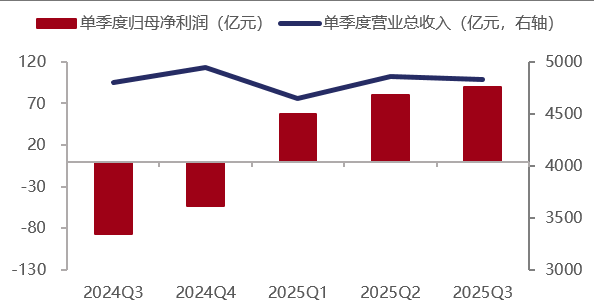
“反内卷”政策推动,看好钢铁机会——从三季报看钢铁如何布局?
Sou Hu Cai Jing· 2025-11-05 09:13
在"反内卷"政策推动下,钢铁供给侧退出预期强化,三季度开始钢铁价格快速上涨,叠加原材料库存成本较低,钢厂利润明显改善。从Mysteel统计的数据 看,钢厂盈利率从6月底的59%上行至8月底的64%,9月钢价涨幅不及焦炭涨幅,钢厂盈利率转为下行,三季度钢厂盈利率平均62%,相比二季度抬升4.5个 百分点。根据长江证券跟踪的重点钢铁行业上市公司测算,2025年Q3吨净利92元,环比+14元/吨,处于2021年来的68%分位数。 展望:供给与成本有望共振,看好钢铁行业明年年度级别的机会 业绩:环比继续改善,同比扭亏为盈 根据中证钢铁指数成分股计算,2025Q3钢铁板块实现营收4834亿元,基本与Q2持平;实现归母净利润90亿元,环比增长11%,自2024Q4起连续4个季度环比 上行,同比扭亏为盈。 分析:"反内卷"政策推动三季度钢铁盈利改善 (数据来源:Wind,更新至2025年11月4日) 供给方面,钢铁产能产量退出预期提升。基本面上,随着钢厂盈利改善,生产动力增强,近期铁水维持高位运行,目前供给减量偏弱。《钢铁行业稳增长工 作方案(2025—2026年)》公开,明确提到要继续实施产量压减政策,按照支持先进企业发 ...

日度策略参考-20251105
Guo Mao Qi Huo· 2025-11-05 03:21
Report Industry Investment Ratings - **Bullish**: None - **Bearish**: Palm oil, Rapeseed oil, Soybean meal, Paper pulp - **Neutral (Oscillating)**: Stock index, Treasury bond, Gold, Copper, Aluminum, Alumina, Zinc, Nickel, Stainless steel, Tin, Polysilicon, Lithium carbonate, Iron ore, Manganese silicon, Soda ash, Coking coal, Coke, Cotton, Sugar, Corn, Crude oil, Fuel oil, Asphalt, Natural rubber, Synthetic rubber, PTA, Ethylene glycol, Short - fiber, Styrene, Urea, PE, PP, PVC, Caustic soda, PG, Container shipping European line Core Views - Short - term, market sentiment may shift from optimism to caution, and the stock index may enter an oscillating phase to accumulate momentum for the next upward movement, with strong support below due to policy and liquidity [1]. - Asset shortage and weak economy are favorable for bond futures, but short - term central bank interest - rate risk warnings suppress the upside [1]. - Precious metals are under short - term pressure due to tight dollar liquidity [1]. - Copper price is expected to have limited downside, while aluminum price oscillates, and alumina has a weak fundamental situation [1]. - Zinc price is expected to stay high, but chasing high should be cautious; nickel and stainless - steel prices are affected by macro factors and have different trends [1]. - Tin has long - term buying opportunities at low prices; polysilicon, lithium carbonate, and other commodities have their own oscillating or directional trends based on supply - demand and macro factors [1]. - Some agricultural products like palm oil, rapeseed oil, etc. face bearish factors, while others like sugar and cotton have complex supply - demand situations [1]. - Energy - chemical products' prices are affected by factors such as supply - demand, policies, and cost, showing various trends [1]. Summary by Related Catalogs Stock Index - Short - term, with the release of positive factors, the stock index may oscillate to accumulate momentum for the next upward movement, and there is strong support below due to policy and liquidity [1]. Treasury Bond - Asset shortage and weak economy are favorable for bond futures, but short - term central bank interest - rate risk warnings suppress the upside [1]. Gold - Precious metals are under short - term pressure due to tight dollar liquidity [1]. Copper - Macro - positive sentiment is digested, and copper price may decline, but the downside is limited [1]. Aluminum - Recent industrial drivers are limited, and with the digestion of macro - positives, aluminum price oscillates [1]. Alumina - Domestic alumina production capacity is continuously released, with both production and inventory increasing, and the fundamental situation is weak, putting pressure on the spot price [1]. Zinc - Market risk aversion rises, LME zinc inventory is decreasing, and zinc price is strong, but domestic over - supply requires caution when chasing high [1]. Nickel - Short - term, nickel price may be dominated by macro factors and oscillate weakly, with high inventory pressure; long - term, primary nickel over - supply persists [1]. Stainless Steel - Macro sentiment weakens, and stainless - steel futures are under pressure; short - term operations are recommended, and opportunities for selling hedges at high prices should be noted [1]. Tin - Long - term, there are opportunities to go long at low prices due to the unrepaired raw - material end and good new - quality demand expectations [1]. Polysilicon - Northwest production capacity is recovering, production in November is decreasing, and there are expectations of capacity reduction and increased terminal installation [1]. Lithium Carbonate - There are concerns about potential weakening of industrial demand in the off - season, and attention should be paid to upward pressure after the realization of macro sentiment [1]. Iron Ore - Near - month production is restricted, and far - month has upward potential [1]. Manganese Silicon - Direct demand is good, but high supply and inventory pressure limit price rebound [1]. Soda Ash - It follows glass, but supply - demand is average, and there is strong upward resistance [1]. Coking Coal and Coke - Coking coal is testing support, and coke has a complex situation; short - term, single - side operations should be observed, and long - term, low - buying is recommended [1]. Palm Oil - Short - term, it faces seasonal production increase and weak exports; from November, there may be a phased rebound if exports improve [1]. Rapeseed Oil - Sino - Canadian relations and Canadian harvest put pressure on the price [1]. Cotton - Uncertainty in cotton demand exists due to the contradiction between Xinjiang's capacity expansion and reduced spinning profit; the downside is limited, but new - crop base and price may be under pressure [1]. Sugar - Short - term, there is seasonal upward momentum, but new - sugar listing may limit the rebound space [1]. Corn - Futures and spot face selling pressure, and the price may oscillate and bottom out [1]. Soybean Meal - Domestic soybean purchase and processing profit is poor, and the price may rebound to repair the profit, but supply expectations limit the rebound height [1]. Paper Pulp - The 11 - contract has pressure, and an 11 - 1 reverse spread is recommended [1]. Log - The fundamental situation has declined, and it is recommended to wait and see [1]. Live Pig - Short - term, futures follow the spot and turn weak [1]. Crude Oil and Fuel Oil - OPEC+ continues to increase production slightly, geopolitical hype cools down, and market sentiment eases [1]. Asphalt - Short - term supply - demand is not prominent, and the "14th Five - Year Plan" demand may be false; supply is sufficient, and profit is high [1]. Natural Rubber - Supported by raw - material cost, mid - stream inventory decreases, and the market atmosphere is positive [1]. Synthetic Rubber - Cost support weakens, supply is loose, and the price is adjusted downwards [1]. PTA and Short - fiber - The "anti - involution" policy drives the price up, and short - fiber follows the cost [1]. Ethylene Glycol - It follows the decline of crude oil, but cost support strengthens, and polyester demand is stable [1]. Styrene - Asian benzene price is weak, and styrene profit declines, with more device overhauls [1]. Urea - Export is weak, and there is cost support [1]. PE and PP - Supply pressure is high, and downstream improvement is less than expected [1]. PVC - Supply pressure is large, and cost support strengthens [1]. Caustic Soda - Production plans increase, over - concentration of overhauls decreases, and there is a risk of short - squeeze [1]. PG - International oil and gas supply is loose, and domestic spot is stable [1]. Container Shipping European Line - Macro - positive sentiment is digested, and November's shipping capacity supply is relatively loose [1].
新能源及有色金属日报:整体商品情绪偏弱,工业硅多晶硅盘面回落-20251105
Hua Tai Qi Huo· 2025-11-05 03:05
Report Industry Investment Rating No relevant information provided. Core Viewpoints - The overall sentiment in the commodity market is weak, leading to a decline in the industrial silicon and polysilicon futures markets. For industrial silicon, the current low valuation may present an opportunity for price increases if relevant policies are introduced. For polysilicon, the market is affected by anti - involution policies and weak reality, with limited upside potential and expected to remain in a wide - range oscillation [3][7]. Summary by Related Content Industrial Silicon Market Analysis - On November 4, 2025, the industrial silicon futures price dropped. The main contract 2601 opened at 9,130 yuan/ton and closed at 8,885 yuan/ton, a change of - 210 yuan/ton (- 2.31%) from the previous settlement. The position of the 2511 main contract was 242,153 lots at the close, and the total number of warehouse receipts was 45,823 lots, a decrease of 338 lots from the previous day [1]. - The spot price of industrial silicon remained stable. In November, the supply is expected to increase as some maintenance devices resume production, while demand shows no significant change, resulting in an oversupply situation. Although the cost of industrial silicon has been oscillating slightly upward recently, it can only provide short - term support for the price of DMC and cannot drive a substantial price rebound [1][2]. - In October 2025, China's industrial silicon production was 452,200 tons, a month - on - month increase of 31,400 tons (7.5%) and a year - on - year decrease of 17,600 tons (4%). From January to October 2025, the cumulative production of industrial silicon was 3.4699 million tons, a year - on - year decrease of 16.6% [1]. Strategy - The intraday correction was mainly affected by the overall commodity sentiment. Production cuts started in the southwest at the end of October, and the supply - demand pattern may improve. The industrial silicon futures market is currently oscillating based on the overall commodity sentiment and policy news. If relevant policies on capacity exit are introduced, there may be room for price increases. Short - term interval trading is recommended, and long positions can be taken at low prices for contracts during the dry season [3]. Polysilicon Market Analysis - On November 4, 2025, the main contract 2601 of polysilicon futures declined, opening at 56,000 yuan/ton and closing at 53,715 yuan/ton, a 3.91% decrease from the previous trading day. The position of the main contract was 128,876 lots (143,844 lots the previous day), and the trading volume was 274,348 lots [4]. - The spot price of polysilicon weakened slightly. The inventory of polysilicon manufacturers and silicon wafers increased. The latest statistics show that the polysilicon inventory was 261,000 tons, a month - on - month increase of 1.16%, and the silicon wafer inventory was 18.93GW, a month - on - month increase of 2.49%. The weekly production of polysilicon was 28,200 tons, a month - on - month decrease of 4.41%, and the silicon wafer production was 14.24GW, a month - on - month decrease of 3.32%. In October, the polysilicon production was about 133,500 tons, an increase from September, exceeding market expectations. In November, production in the southwest region will be significantly reduced, and production is expected to decline [4][5]. Strategy - The supply - demand fundamentals of polysilicon are average, with significant inventory pressure. Both supply and demand may decrease starting in November. The futures market is affected by anti - involution policies and weak market reality. Policy implementation and the downward transmission of spot prices need to be continuously monitored. It is expected that relevant policies will be introduced this year. Without significant improvement in consumer demand, the upside potential of the futures market is limited, and it is expected to remain in a wide - range oscillation. Short - term interval trading is recommended, and the 12 - contract is expected to oscillate between 50,000 and 57,000 yuan/ton [7].
大越期货玻璃早报-20251105
Da Yue Qi Huo· 2025-11-05 02:15
Report Industry Investment Rating No relevant content provided. Core Viewpoints of the Report - Glass supply has declined to a relatively low level compared to the same period, with increasing disturbances on the supply side recently. However, the recovery of terminal demand is weak, so it is expected that glass will mainly move in a volatile manner [3][7]. Summary by Related Catalogs Glass Futures Market - The closing price of the main glass futures contract increased from 1093 yuan/ton to 1105 yuan/ton, a rise of 1.10%. The spot price of Shahe Safety large glass panels remained unchanged at 1048 yuan/ton. The main basis decreased from -45 yuan/ton to -57 yuan/ton, a change of 26.67% [8]. Glass Spot Market - The market price of 5mm white glass large panels in the spot benchmark area of Hebei Shahe was 1048 yuan/ton, remaining unchanged from the previous day [13]. Fundamental Analysis - Cost Side - No specific content on cost side analysis was provided other than mentioning glass production profit, but no detailed data was given. Fundamental Analysis - Supply - The number of operating national float glass production lines is 226, with an operating rate of 76.35%, and the number of operating production lines is at a historical low for the same period. The daily melting volume of national float glass is 161,300 tons, with the production capacity at the lowest level in the same period in history and showing a stable recovery [24][26]. Fundamental Analysis - Demand - In August 2025, the apparent consumption of float glass was 4.8602 million tons [30]. Fundamental Analysis - Inventory - The inventory of national float glass enterprises is 65.79 million weight boxes, a decrease of 1.24% compared to the previous week, and the inventory is running above the five - year average [45]. Fundamental Analysis - Supply - Demand Balance Sheet - The annual supply - demand balance sheet of float glass shows production, consumption, output growth rate, consumption growth rate, and net import ratio from 2017 to 2024E. For example, in 2024E, the production is 55.1 million tons, the consumption is 53.1 million tons, the output growth rate is 3.94%, the consumption growth rate is -1.15%, and the net import ratio is -0.90% [46]. Influencing Factors Summary - **Positive Factors**: Under the influence of the "anti - involution" policy, there is an expectation of capacity clearance in the float glass industry. Some production lines in the Shahe area are undergoing "coal - to - gas" conversion, increasing supply - side disturbances [5]. - **Negative Factors**: The terminal demand in the real estate sector remains weak, and the number of orders from glass deep - processing enterprises is at a historical low for the same period. The capital collection in the deep - processing industry is not optimistic, and traders and processors are cautious, mainly focusing on digesting the inventory of raw glass [6].
研究所晨会观点精萃-20251105
Dong Hai Qi Huo· 2025-11-05 01:59
Report Industry Investment Rating No relevant information provided. Core View of the Report - Overseas, the divergence within the Fed has raised doubts about another rate cut this year, and risk aversion has led investors to seek the dollar as a safe - haven, causing the dollar index to strengthen. Large banks have warned of a potential stock market pullback, reflecting growing concerns about over - valuation, which has significantly cooled global risk appetite. Domestically, China's manufacturing sentiment declined in October, and economic growth slowed, dampening optimistic expectations. The strengthening dollar has weakened the RMB exchange rate in the short term, affecting domestic risk appetite. However, the Fourth Plenary Session of the CPC has enhanced policy stimulus expectations, which helps boost domestic risk appetite. The short - term upward macro - drive has weakened, and future attention should be paid to domestic economic growth and the implementation of incremental policies [2]. Summary by Related Catalogs Macro Finance - **Stock Index**: Affected by sectors such as energy metals, precious metals, and industrial metals, the domestic stock market declined. With the decline in China's manufacturing sentiment in October and economic slowdown, along with the short - term weakening of the RMB due to the strong dollar, the short - term macro - upward drive has weakened. After the Fourth Plenary Session of the CPC, policy stimulus expectations have increased. It is recommended to observe cautiously in the short term [2][3]. - **Treasury Bonds**: Treasury bonds are expected to oscillate and rebound in the short term, and it is advisable to go long cautiously [2]. - **Commodity Sector**: - **Black Metals**: They are expected to oscillate in the short term, and it is recommended to observe cautiously [2]. - **Non - ferrous Metals**: They are expected to oscillate in the short term, and it is recommended to observe cautiously [2]. - **Energy and Chemicals**: They are expected to oscillate in the short term, and it is advisable to go long cautiously [2]. - **Precious Metals**: After a short - term high - level correction, they are expected to adjust in the short term while maintaining a long - term upward trend. It is recommended to observe in the short term and buy on dips in the long term [2][3]. Black Metals - **Steel**: On Tuesday, the domestic steel futures and spot markets oscillated and declined. With a lack of macro - drive, the market is mainly focused on fundamental logic. Although the apparent consumption of the five major steel products continued to rise last week, it is generally expected that the demand peak in the second half of the year has passed. Due to losses in some varieties, the steel production capacity release has weakened, and with more environmental protection restrictions, supply may contract further. The steel market is expected to oscillate within a range in the short term [4]. - **Iron Ore**: On Tuesday, the decline in iron ore futures and spot prices widened. With the continuous narrowing of steel mill profits and the upgrading of environmental protection restrictions, pig iron production continued to decline, and steel mill ore inventories also decreased. The global iron ore arrivals this week increased by 1.2298 million tons to 3.3141 million tons, and port inventories increased by 167,000 tons on Monday. The supply pressure remains high, and iron ore prices are expected to fall further [6]. - **Silicon Manganese/Silicon Iron**: On Tuesday, the spot price of silicon manganese declined slightly, while that of silicon iron remained flat, and the futures prices also declined slightly. The production of the five major steel products increased slightly, and the demand for ferroalloys is acceptable. The supply of silicon manganese shows that the national capacity utilization rate is 42.99%, a slight decrease from last week, and the daily output increased by 45 tons. The prices of silicon iron in the main production areas are stable, and the raw material prices are also stable. The prices of silicon iron and silicon manganese futures are expected to continue to oscillate within a range [7]. Non - ferrous Metals and New Energy - **Copper**: The US manufacturing PMI in October was lower than expected, and the US copper inventory has reached a historical high, restricting future import demand. There are concerns about the restart of a Panamanian copper mine. In China, the copper de - stocking is not as expected, and the social inventory is at a relatively high level. However, the shutdown of Indonesia's second - largest copper mine intensifies the global copper shortage, supporting the futures price, which is expected to oscillate at a high level in the short term [9][10]. - **Aluminum**: On Tuesday, the closing price of Shanghai aluminum declined. The overall market sentiment cooled, and domestic commodities generally fell, which is negative for aluminum prices. The previous sharp rise deviated from fundamentals due to market speculation. With high domestic supply and imports, weakening demand, and difficulty in de - stocking, along with a significant increase in foreign aluminum inventories, the price is expected to oscillate in the short term. If the price rises above 20,800 yuan/ton, short - selling can be considered [10]. - **Tin**: The Philadelphia Semiconductor Index dropped significantly overnight due to renewed concerns about the AI bubble. The smelting start - up rate has rebounded significantly and is at a high level, and the supply of tin ore is expected to increase. The demand side is still weak, with the tin solder start - up rate at a low level and limited improvement in downstream orders. The high tin price has suppressed physical demand, but due to previous low inventory levels, some downstream enterprises have carried out small - scale replenishment, and the inventory has decreased. In the medium and short term, the price has support below but limited upside space, and it is expected to oscillate at a high level [11]. - **Lithium Carbonate**: On Tuesday, the main contract of lithium carbonate declined. The weighted contract reduced its position significantly. With rumors of a mine restart and a short - term macro - negative environment, it is recommended to hold a light position and wait patiently for the "emotional bottom" [12]. - **Industrial Silicon**: On Tuesday, the main contract of industrial silicon declined. The weighted contract increased its position. The demand is relatively stable, and the social inventory has slightly increased at a high level. The market is expected to oscillate within a range, and attention should be paid to the cash - flow cost support of large enterprises [12]. - **Polysilicon**: On Tuesday, the main contract of polysilicon declined. The weighted contract reduced its position. There is a stalemate between strong policy expectations and weak reality. The policy provides support for the spot price, but weak terminal demand restricts price increases. It is expected to oscillate in a high - level range, and interval trading is recommended [13]. Energy and Chemicals - **Crude Oil**: The dollar has reached a five - month high, pressuring crude oil prices. Although Russian seaborne crude oil exports have decreased significantly due to sanctions, some doubt the long - term effectiveness of the sanctions. In the short term, oil prices will face a divergence between short - and long - term trends, and the medium - term pressure remains high [14]. - **Asphalt**: With a slight decline in oil prices, the asphalt futures price dropped significantly, and the basis continued to narrow. There is a slight inventory accumulation pressure in social and factory warehouses, and the pressure will increase as the demand off - season approaches. Although the profit has increased slightly due to the decline in crude oil prices, and the supply pressure has decreased temporarily, future crude oil prices may be affected by OPEC+ production increases, and asphalt still has a large selling pressure [14]. - **PX**: As crude oil prices declined, the polyester sector was weak, and PX oscillated. With high PTA start - up rates, PX still has some demand support. The PXN spread has slightly adjusted, and PX remains in a tight supply situation. Short - term price changes are mainly driven by crude oil cost fluctuations [15]. - **PTA**: PTA remained weak. Although downstream start - up rates have increased slightly and winter textile demand has increased, the long - awaited production cut agreement among leading manufacturers has not been achieved. With new device replacements, the overall supply remains high, and there is a great inventory accumulation pressure in November. The decline in oil prices also exerts pressure on PTA [15]. - **Ethylene Glycol**: Ethylene glycol prices dropped, and the port inventory has accumulated again. Although the downstream start - up rate is neutral in the short term, the shipping volume is low, and the arrivals are at a relatively high level. There is a large inventory accumulation pressure in November, and the downstream start - up rate may decline. Caution is required before entering the market [15]. - **Short - fiber**: Short - fiber oscillates in the short term but faces greater pressure in the future. Terminal orders are seasonally declining, and the start - up rate has decreased in some areas, with limited inventory accumulation. It is recommended to go short on rallies in the medium term [16]. - **Methanol**: The methanol market shows regional differentiation. The port inventory is at a high level but is slightly decreasing without a significant increase in imports and stable MTO demand. Inland, due to increased device start - up rates and weakening demand, enterprise inventories have accumulated, and prices have weakened. In the short term, the market sentiment is bearish, but with the approaching winter gas restrictions, the supply contraction expectation will gradually emerge, and the downward space is expected to be limited, with the market likely to enter an oscillatory consolidation phase [16]. - **PP**: In the PP market, supply growth continues to outpace demand recovery, and the industrial chain inventory is relatively high. However, demand has shown marginal improvement, and the recent rebound in crude oil prices supports the cost, limiting the downward space. In the short term, the price is expected to oscillate weakly [17]. - **LLDPE**: The core contradiction in the polyethylene market is the continuous accumulation of supply pressure. With the release of new production capacity and the planned restart of previously shut - down devices, supply is increasing. Demand is expected to weaken after peaking in early November, and the weak crude oil price provides limited cost support. The price is expected to continue to be under pressure [17]. - **Urea**: The urea supply is expected to increase, and the overall supply is becoming more abundant. With the recent price rebound, downstream replenishment has slowed down. Local agricultural demand is gradually ending, and industrial demand remains weak. The export is expected to stay at a low level due to unclear policies [17]. Agricultural Products - **US Soybeans**: Overnight, the CBOT January soybean contract declined. With the Sino - US economic and trade consultations reaching a phased consensus, the trade window for agricultural products may open, and US soybeans may strengthen. The USDA may increase the export forecast in subsequent reports, and if the yield per acre is further reduced, the cost - repair logic of US soybeans will be enhanced [18]. - **Soybean and Rapeseed Meal**: The pressure of concentrated soybean arrivals in China is increasing, and oil mills are maintaining high - level crushing, resulting in sufficient soybean meal supply. With the repair of Sino - US agricultural trade relations, the cost of imported soybeans will increase, and the risk of future soybean shortages will decrease, which may lead to inventory accumulation of soybean meal and limit its upside potential. The spread between soybean meal and rapeseed meal is expected to narrow. Attention should be paid to whether China cancels the 10% reciprocal tariff and opens the market - oriented import window [19]. - **Palm Oil**: After continuous declines, palm oil has entered a technically oversold stage, and the risk of short - selling is increasing. Although the unexpected increase in Malaysian palm oil production in October has caused short - term adjustment pressure, the rising prices of international oilseeds and crude oil provide some support. As palm oil enters the production - reduction cycle, the seasonal inventory - reduction trend remains unchanged. The domestic spot basis is stable with a slight decline, and palm oil continues to operate weakly [19]. - **Soybean and Rapeseed Oil**: Soybean oil continues to adjust weakly in a narrow range, with a supply - exceeding - demand situation. Supported by the rising cost of imported soybeans, it is relatively more resistant to decline compared to palm oil. Rapeseed oil inventory is still at a high level, but rapeseed inventory is running out. Affected by the uncertainty of Sino - Canadian trade, the sentiment of traders to hold back supply and support prices is strong, and the basis continues to strengthen [19]. - **Corn**: The pressure of wet corn sales is gradually weakening, and the prices in production areas are stable, but the intention of traders to build inventories is still general. The situation of a bumper harvest and market pressure has gradually stabilized. The futures prices are running weakly recently, but the phased bottom - range market may provide effective support [20]. - **Hogs**: In late October, the overall slaughter rhythm of large - scale pig farms was adjusted, but there was no significant reduction in supply, and the average slaughter weight decreased. It is expected that the supply will continue to increase in November, and the pig - raising profit will remain in the red. Before the small peak of pickled meat consumption around the Winter Solstice in December, it is difficult for pig prices to rebound significantly [20].
内需承压的局面或延续
Guotou Securities· 2025-11-04 07:03
Economic Overview - October manufacturing PMI dropped to 49.0, a significant decline of 0.8 percentage points, indicating a contraction in total demand[6] - Industrial enterprise profits in September increased by 21.6% year-on-year, up 1.2 percentage points from the previous month, marking four consecutive months of profit growth[4] - The PPI year-on-year growth rate is expected to enter a period of fluctuation, with a slight decline anticipated in October[6] Demand and Supply Dynamics - The combination of a softening demand policy and supply-side clearing policies is leading to quantity contraction and price increases, affecting profit margins[4] - New housing and second-hand housing transaction volumes in October were significantly below seasonal expectations, indicating a prolonged recovery period for the real estate sector[6] Market Trends and Predictions - Despite a potential continuation of high export growth due to improved Sino-U.S. trade relations, internal demand is unlikely to recover significantly without additional economic stimulus[7] - The U.S. Federal Reserve is expected to maintain a high probability of rate cuts in December, influenced by a weak labor market and easing inflation pressures[18] Investment Outlook - The equity market is currently experiencing a shift in focus towards cyclical sectors, although the fundamental recovery in real estate and consumption may take time[8] - The bond market is anticipated to enter a phase of fluctuation in the short term, with medium-term adjustments likely still ongoing due to changing market risk preferences[15]
山西焦煤(000983)季报点评:煤价回暖业绩环比提升 反内卷背景下业绩修复在即
Xin Lang Cai Jing· 2025-11-04 06:41
Core Viewpoint - The company reported a significant decline in revenue and net profit for the first three quarters of 2025, primarily due to falling coal prices, but anticipates a recovery in Q4 as coal prices begin to rise again [1][2] Group 1: Financial Performance - For the first three quarters of 2025, the company achieved revenue of 27.2 billion yuan, a year-on-year decrease of 17.9%, and a net profit attributable to shareholders of 1.43 billion yuan, down 49.6% year-on-year [1] - In Q3 2025, the company reported revenue of 9.1 billion yuan, a decline of 20.8% year-on-year, and a net profit of 420 million yuan, down 52.2% year-on-year but up 26.3% quarter-on-quarter [1] Group 2: Coal Price Dynamics - The decline in performance is attributed to a significant drop in coal prices, with the average price of coking coal at Jing Tang Port falling to 1,240 yuan/ton in June 2025, a decrease of 39.8% year-on-year [1] - Starting from June 2025, coking coal prices began to rise, reaching 1,698 yuan/ton by the end of October, an increase of 458 yuan/ton from June [1] Group 3: Pricing Strategy - The company has shifted to a monthly pricing model for coking coal, which allows it to better benefit from rising coal prices compared to the previous quarterly long-term contracts [1] - The Shanxi coking coal long-term contract index was reported at 1,125 yuan/ton in October, reflecting a month-on-month increase of 49 yuan/ton and a significant rise from 896 yuan/ton in July [1] Group 4: Future Prospects - The company is currently developing coal and associated resource exploration in the Lüliang Xing County block, with a designed capacity of 8 million tons/year, which is expected to provide incremental growth [2] - As a listed platform under the Shanxi Coking Coal Group, there is potential for future asset injections related to coking coal [2] Group 5: Earnings Forecast - The company is projected to achieve revenues of 36 billion, 37.2 billion, and 39.8 billion yuan for 2025-2027, with year-on-year changes of -20.45%, +3.30%, and +7.03% respectively [2] - Net profit attributable to shareholders is expected to be 1.961 billion, 2.334 billion, and 2.897 billion yuan for the same period, with year-on-year changes of -36.89%, +18.98%, and +24.14% respectively [2]

供应端收缩预期增强,多晶硅领涨新能源金属
Zhong Xin Qi Huo· 2025-11-04 05:29
Group 1: Report's Core View - The expectation of supply contraction is increasing, and polysilicon is leading the rise in new energy metals. In the short and medium term, the expectation of supply contraction is increasing, with polysilicon leading the rise. In the long term, the expectation of supply contraction in silicon is strong, especially for polysilicon, and the price center may rise. The lithium ore production capacity is still in the rising stage, and the high growth of lithium carbonate supply will limit the upside of lithium prices [2]. Group 2: Industry Investment Rating - Not provided in the report. Group 3: Summary by Related Catalogs Industrial Silicon - **View**: With the arrival of the dry season, silicon prices are oscillating [3][6]. - **Information Analysis**: The spot price has small fluctuations, with the domestic inventory increasing by 0.6% month - on - month to 447,700 tons. The domestic monthly production in October was 452,000 tons, up 7.5% month - on - month and down 3.8% year - on - year. The export in September was 70,233 tons, down 8.4% month - on - month and up 7.7% year - on - year. The single - month photovoltaic new installation in September was 9.66GW, down 53.76% year - on - year [6]. - **Main Logic**: The supply in the southwest will decrease due to the dry season, while the northwest supply is stable with the possibility of further resumption. The demand from polysilicon in the southwest may decline slightly, the organic silicon market is weak and stable, and the demand from the aluminum alloy industry has limited growth. The industrial silicon warehouse receipts have been decreasing, providing some support to the market [6]. - **Outlook**: The silicon price is expected to oscillate [7]. Polysilicon - **View**: The supply side is expected to cut production, and polysilicon prices are running at a high level [3][7]. - **Information Analysis**: The成交 price of N - type re -投料 is in the range of 49,000 - 55,000 yuan/ton, with an average of 53,200 yuan/ton. The export in September decreased by 53% year - on - year, and the import decreased by 49.46% year - on - year. Some southwest bases are reducing raw material input, with an expected affected capacity of about 320,000 tons/year [7][8]. - **Main Logic**: The production in October is expected to remain high, and the supply will contract in November. The demand in the fourth quarter may weaken. The current supply - demand situation still has pressure, but it is expected to improve in the dry season, and there are still policy expectations [8][9]. - **Outlook**: The polysilicon price is expected to oscillate widely [9]. Lithium Carbonate - **View**: Supply speculation is fermenting repeatedly, and lithium prices are oscillating widely [3][10]. - **Information Analysis**: On November 3, the closing price of the lithium carbonate main contract increased by 1.86% to 82,280 yuan/ton, and the total position increased by 26,819 lots to 909,910 lots. The spot price of battery - grade lithium carbonate increased by 450 yuan/ton [10]. - **Main Logic**: The current supply and demand are both strong. The supply has been increasing, and there are small - scale supply - side disturbances. The apparent demand is good, and the social inventory is decreasing. Upstream enterprises can participate in hedging, and downstream enterprises should purchase as needed [10]. - **Outlook**: The short - term supply - demand is in a tight balance, and the price is expected to oscillate at a high level [11]. Group 4: Market Index - **Comprehensive Index**: On November 3, 2025, the commodity index was 2250.33 (+0.10%), the commodity 20 index was 2546.82 (+0.02%), and the industrial product index was 2237.50 (+0.09%) [51]. - **New Energy Commodity Index**: On November 3, 2025, it was 424.76, with a daily increase of 0.78%, a 5 - day increase of 1.76%, a 1 - month increase of 6.18%, and a year - to - date increase of 3.00% [53].