反内卷政策

Search documents
碳中和ETF(159790)冲击两连阳,年内涨幅超30%
Sou Hu Cai Jing· 2025-10-16 02:52
每日经济新闻 信达证券认为,反内卷政策的执行核心集中于产能调控与价格引导,或将催生双重拐点。一是有望推动 产能过剩下行拐点出现,二是随着产能过剩化解进程加快,PPI也有望迎来上行拐点。不过,"反内 卷"过程中可能出现制造业增长动能阶段性衰减的情况,若能辅以有效的扩大需求举措,本轮"反内 卷"政策的持续落地有望为资本市场带来牛市支撑。 相关产品:碳中和ETF(159790)是全市场规模最大的碳中和主题ETF基金。跟踪中证内地低碳经济主 题指数,聚焦电池、电力、光伏设备等低碳主题公司,受益于国家"3060"碳达峰、碳中和,相关新能 源、节能环保公司,业绩增长空间广阔。指数覆盖社会经济各领域与减碳相关的行业及企业,便于投资 者精准全面把握市场热点。 2025年10月16日,碳中和ETF(159790)上涨0.52%,持仓股阳光电源涨超5%,天赐材料、锦浪科技涨 超2%。在反内卷加持下,今年以来碳中和ETF(159790)年内涨幅超30%。 ...
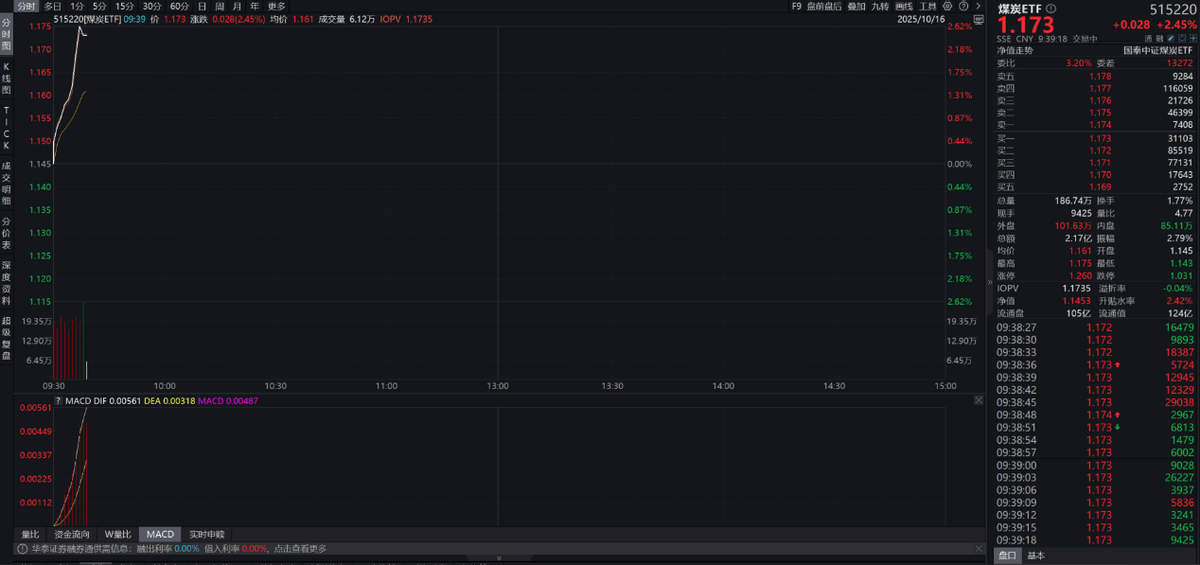
冷冬概率增加,煤炭需求旺盛,全市场唯一煤炭ETF(515220)盘中涨超2%
Mei Ri Jing Ji Xin Wen· 2025-10-16 02:48
Core Viewpoint - The expectation of a cold winter in 2025 is likely to increase coal demand in November and December, supported by favorable policies and market conditions that may drive up coal prices [1][3][5]. Group 1: Demand Factors - The forecast of a cold winter due to a potential double La Niña event in 2025 is expected to boost coal demand during the winter months [1][3]. - The China Electricity Council anticipates a year-on-year increase of 5% to 6% in national electricity consumption for 2025, driven by higher demand in the second half of the year [3]. - The coal sector is experiencing positive developments, including government measures to regulate price competition, which may enhance market stability and support price increases [3][5]. Group 2: Supply Factors - The entry of safety inspection teams in November is expected to address safety issues related to overproduction in the coal sector, potentially leading to a reduction in coal supply [4]. - The anticipated decrease in coal production due to safety checks and adverse weather conditions is expected to tighten supply, further supporting coal prices [5][6]. Group 3: Investment Opportunities - The only coal ETF in the market (515220) has seen a significant increase, with a scale exceeding 12 billion yuan, making it an attractive option for investors looking to capitalize on the coal sector [1][7]. - The coal sector is characterized by high dividend yields, with the index tracking a dividend yield of over 5.3% in the past 12 months, enhancing its appeal in a declining interest rate environment [7].

价格和金融数据的增量信号
Xinda Securities· 2025-10-16 02:36
Group 1: Price Trends - Food prices have been in negative territory for several months, but consumer goods are driving a rebound in CPI, marking the first divergence since food prices turned negative[1] - In September, the PPI for non-ferrous, black, and energy sectors all saw year-on-year increases, with black PPI showing the largest rise[1] - The core CPI reached a new high for the year at 1%, indicating potential structural policy tools may be more effective moving forward[1] Group 2: Financial Data Insights - The divergence between social financing (社融) growth and loan balance growth that began in December 2024 appears to have ended, suggesting a return to synchronized growth[1] - The M2-M1 spread has narrowed further, indicating an increase in the liquidity of funds, which historically correlates with positive stock market performance[1] - In September, M2 growth slowed while M1 growth increased, reflecting a more active financial environment[1] Group 3: Economic Policy Implications - Current inflation levels are under pressure, necessitating a continuation of loose monetary policy, as both CPI and PPI remain in negative territory[1] - The government's CPI target for 2025 is set at around 2%, the lowest since 2003, indicating a cautious approach to inflation management[1] - The ongoing anti-involution policies are expected to support PPI recovery, with potential for CPI to turn positive in Q4 2025[1] Group 4: Risk Factors - Geopolitical risks and unexpected increases in international oil prices are highlighted as potential threats to economic stability[1]
大越期货玻璃早报-20251016
Da Yue Qi Huo· 2025-10-16 02:20
Report Summary 1. Report Industry Investment Rating The report does not provide an industry investment rating. 2. Core View The fundamentals of glass are weak, and it is expected to fluctuate weakly in the short term [3]. 3. Summary by Relevant Catalogs Glass Futures Market - The closing price of the main contract was 1129 yuan/ton, a decrease of 0.79% from the previous value; the spot price of Shahe Safety large - board glass was 1124 yuan/ton, a decrease of 0.71% from the previous value; the main basis was - 5 yuan/ton, a decrease of 16.67% from the previous value [8]. Glass Spot Market - The market price of 5mm white glass large - board in Hebei Shahe, the spot benchmark, was 1124 yuan/ton, down 8 yuan/ton from the previous day [13]. Fundamentals - Cost Side - The report mentions glass production profit but does not provide specific data. Fundamentals - Supply - The number of operating national float glass production lines was 225, with an operating rate of 76.01%, at a historically low level in the same period. The daily melting volume of national float glass was 161,300 tons, at the lowest level in the same period in history and showing a stable recovery [24][26]. Fundamentals - Demand - In August 2025, the apparent consumption of float glass was 4.8602 million tons [30]. Fundamentals - Inventory - The inventory of national float glass enterprises was 62.824 million weight - boxes, an increase of 5.84% from the previous week, and the inventory was running above the five - year average [46]. Fundamentals - Supply - Demand Balance Sheet - From 2017 to 2024E, the production, consumption, and other data of float glass showed different trends. For example, in 2024E, the production was 55.1 million tons, with a growth rate of 3.94%, and the consumption was 53.1 million tons, with a growth rate of - 1.15% [47]. Influencing Factors - **Positive Factors**: Under the influence of the "anti - involution" policy, there is an expectation of capacity clearance in the float glass industry. Some production lines in the Shahe area are undergoing "coal - to - gas" conversion, increasing supply - side disturbances [5]. - **Negative Factors**: The terminal demand in the real estate industry remains weak, and the number of orders from glass deep - processing enterprises is at a historical low in the same period. The capital collection in the deep - processing industry is not optimistic, and traders and processors are cautious, mainly digesting the inventory of raw glass [6]. Main Logic - The glass supply has declined to a relatively low level in the same period. Although there have been more supply - side disturbances recently, the recovery of terminal demand is weak, and it is expected that glass will mainly fluctuate [7].
文字早评2025/10/16:宏观金融类-20251016
Wu Kuang Qi Huo· 2025-10-16 02:03
Report Industry Investment Ratings No relevant content provided. Core Views of the Report - After a previous continuous rise, high - level hot sectors such as AI have shown divergence recently. The market risk appetite has decreased, and short - term indices face uncertainties due to concerns about Sino - US tariffs. However, the policy support for the capital market remains unchanged, and the mid - to long - term strategy is mainly to go long on dips [4]. - Recent Sino - US trade disputes have led to a short - term decline in risk appetite, which is beneficial for the bond market's repair. But the progress of tariffs is highly uncertain in the later stage. In the fourth quarter, the bond market needs to focus on the fundamentals and institutional allocation power. The overall bond market may maintain a volatile trend, and it may oscillate and repair if the stock market cools down and the allocation power increases [8]. - Precious metals have shown strong price performance due to dovish remarks from Fed officials and a tight silver spot situation. Although prices have fallen after a short - term rapid increase, it is still recommended to hold long positions [9][10]. - For various metals and non - metals, the Sino - US trade situation is uncertain, and each product's price trend is affected by its own supply - demand fundamentals, cost factors, and market sentiment. Some products are expected to have limited downside space, while others may face downward pressure [13][15][27]. - In the energy and chemical sectors, different products have different price trends and trading strategies based on their supply - demand balances, inventory levels, and cost factors. Some products are recommended for short - term observation, while others may have opportunities for long - or short - term operations [52][54][55]. - In the agricultural products sector, different products have different supply - demand situations. Some products are expected to have price increases, while others are expected to decline, and corresponding trading strategies are proposed accordingly [74][75][84]. Summaries by Relevant Catalogs Macro - financial Stock Index - **Market Information**: In late September, M2 balance was 335.38 trillion yuan, up 8.4% year - on - year; M1 balance was 113.15 trillion yuan, up 7.2% year - on - year; M0 balance was 13.58 trillion yuan, up 11.5% year - on - year. By the end of 2027, 28 million charging facilities will be built nationwide. US nuclear power concept stocks rose strongly, and the rumor of a large robot order for Sanhua Intelligent Control was false [2]. - **Strategy View**: After a previous continuous rise, high - level hot sectors such as AI have shown divergence. The market risk appetite has decreased, and short - term indices face uncertainties due to concerns about Sino - US tariffs. However, the policy support for the capital market remains unchanged, and the mid - to long - term strategy is mainly to go long on dips [4]. Treasury Bonds - **Market Information**: On Wednesday, the TL, T, TF, and TS main contracts had different changes. In the first three quarters of 2025, the cumulative increase in social financing scale was 30.09 trillion yuan, 4.42 trillion yuan more than the same period last year. In late September, M2, M1, and M0 balances had year - on - year increases. The central bank conducted a 435 - billion - yuan 7 - day reverse repurchase operation on Wednesday, with a net investment of 435 billion yuan [5][6][7]. - **Strategy View**: Recent Sino - US trade disputes have led to a short - term decline in risk appetite, which is beneficial for the bond market's repair. But the progress of tariffs is highly uncertain in the later stage. In the fourth quarter, the bond market needs to focus on the fundamentals and institutional allocation power. The overall bond market may maintain a volatile trend, and it may oscillate and repair if the stock market cools down and the allocation power increases [8]. Precious Metals - **Market Information**: Shanghai gold rose 1.39% to 962.08 yuan/gram, and Shanghai silver rose 3.97% to 12,138 yuan/kilogram. Fed officials' dovish remarks and a tight silver spot situation led to strong precious metal prices [9]. - **Strategy View**: Although precious metal prices have fallen after a short - term rapid increase, it is still recommended to hold long positions. The reference operating range for the Shanghai gold main contract is 921 - 980 yuan/gram, and for the Shanghai silver main contract is 11,368 - 13,000 yuan/kilogram [10]. Non - ferrous Metals Copper - **Market Information**: Overnight, Powell mentioned the possible end of balance - sheet reduction. The copper price first rose and then fell. LME copper inventory decreased, and domestic spot premiums varied. The domestic copper spot import loss narrowed, and the refined - scrap price difference decreased [12]. - **Strategy View**: Trump's threat to impose high tariffs on China is uncertain. Fundamentally, the expected tightening of copper supply in the next two years and the decrease in domestic refined copper production support the price. The short - term decline in copper prices may be limited. The reference operating range for the Shanghai copper main contract is 84,400 - 86,500 yuan/ton, and for the LME 3M copper contract is 10,450 - 10,750 US dollars/ton [13]. Aluminum - **Market Information**: The aluminum price oscillated and rebounded. The LME 3M aluminum contract rose slightly, and the Shanghai aluminum main contract closed at a certain price. Domestic and overseas inventories decreased, and the downstream consumption sentiment improved [14]. - **Strategy View**: The Sino - US trade situation is uncertain. Domestically, with the increase in the proportion of aluminum water, seasonal consumption recovery, and resilient exports, the pressure on aluminum ingot inventory accumulation is small, and the downside space for aluminum prices is expected to be limited. The reference operating range for the Shanghai aluminum main contract is 20,740 - 21,050 yuan/ton, and for the LME 3M aluminum contract is 2,720 - 2,770 US dollars/ton [15]. Zinc - **Market Information**: The Shanghai zinc index fell. LME zinc prices also decreased. The domestic social inventory increased slightly, and the basis and spreads had different values [16]. - **Strategy View**: During the holiday, domestic zinc smelters continued production, and some downstream enterprises had long holidays. The LME registered zinc warrants are at a low level, and there is a structural risk. After the opening of the zinc ingot export window, short - covering in the domestic market provides short - term support for Shanghai zinc. It is expected that Shanghai zinc will oscillate at a low level in the short term, with increased risk and volatility [17]. Lead - **Market Information**: The Shanghai lead index rose. LME lead prices also increased. The domestic social inventory remained unchanged, and the basis and spreads had different values [18]. - **Strategy View**: The visible lead ore inventory increased slightly, and the production of primary lead smelters remained high. The waste lead inventory decreased, and the production of secondary lead smelters increased slightly but remained at a low level. The lead ingot factory inventory increased. The downstream storage enterprises had shorter holiday times than in previous years, and the industrial data improved marginally. On October 10, a large number of LME lead warehouse warrants were cancelled, increasing the structural risk of LME lead. It is expected that Shanghai lead will run strongly in the short term [19]. Nickel - **Market Information**: The nickel price oscillated. The spot market trading was average, and the price of nickel ore and nickel iron remained stable. The price of MHP remained high due to increased demand [20]. - **Strategy View**: In the short term, Sino - US trade frictions may drive down market risk appetite, but the impact on nickel prices is relatively small. The recent weakening of nickel iron prices and the significant inventory pressure on refined nickel may drag down nickel prices. However, in the long term, the US easing expectations, China's anti - involution policy, and the RKAB approval are expected to support nickel prices. It is recommended to wait and see in the short term, and consider going long on dips if the price drops significantly. The reference operating range for the Shanghai nickel main contract is 115,000 - 128,000 yuan/ton, and for the LME 3M nickel contract is 14,500 - 16,500 US dollars/ton [20]. Tin - **Market Information**: The Shanghai tin main contract rose. The domestic futures registered warehouse warrants increased, and the price of tin concentrate decreased. The supply of tin ore in Myanmar and Indonesia was tight, and the smelter's operating rate decreased. The demand in the new energy and AI sectors was strong, but the traditional consumer electronics and home appliance sectors were weak. The demand in the peak season improved marginally, but high prices still inhibited consumption [21]. - **Strategy View**: In the short term, Sino - US trade frictions may drive down market risk appetite, but the short - term supply - demand of tin is in a tight balance, and the demand in the peak season is recovering. Tin prices may maintain a high - level oscillation in the short term. It is recommended to wait and see. The reference operating range for the domestic main contract is 270,000 - 290,000 yuan/ton, and for overseas LME tin is 34,000 - 36,000 US dollars/ton [21]. Lithium Carbonate - **Market Information**: The spot index of lithium carbonate decreased slightly, and the futures contract price increased slightly. The spot premium was flat [22]. - **Strategy View**: The warehouse warrants of lithium carbonate on the Guangzhou Futures Exchange decreased this week, and the inventory continued to decline. The available spot for circulation is tight, and the premium is strengthening. If consumption remains strong and resonates with the macro - environment, the upside space for lithium prices may be opened. It is more likely to oscillate strongly in the short term. The reference operating range for the Guangzhou Futures Exchange lithium carbonate 2601 contract is 71,880 - 75,280 yuan/ton [23]. Alumina - **Market Information**: The alumina index fell. The domestic and overseas spot prices decreased, and the import window was close to closing. The futures inventory increased, and the ore price remained stable [24]. - **Strategy View**: The ore price is supported in the short term but may be under pressure after the rainy season. The over - capacity situation in the alumina smelting end is difficult to change in the short term, and the inventory accumulation trend continues. The opening of the import window may intensify the over - supply situation. However, the increased expectation of Fed rate cuts may drive the non - ferrous metal sector to run strongly. It is recommended to wait and see in the short term and wait for the resonance of macro - sentiment. The reference operating range for the domestic main contract AO2601 is 2,600 - 3,000 yuan/ton, and attention should be paid to supply - side policies, Guinea's ore policy, and the Fed's monetary policy [25]. Stainless Steel - **Market Information**: The stainless steel main contract fell slightly. The spot prices in different markets had different changes, and the raw material prices remained stable. The futures inventory decreased, and the social inventory increased [26]. - **Strategy View**: After the holiday, the social inventory increased significantly, but the terminal consumption was weak, and the market did not show the characteristics of the traditional peak season. The prices of Tsingshan products led the decline, and the market trading was light. It is expected that the market trend will be weak [27]. Cast Aluminum Alloy - **Market Information**: The AD2511 contract rose. The trading volume decreased, and the warehouse warrants decreased. The price difference between the AL2511 and AD2511 contracts increased. The domestic mainstream ADC12 price remained unchanged, and the import price increased. The domestic inventory increased slightly [28]. - **Strategy View**: The market sentiment is volatile, and the delivery pressure on the near - month contracts of cast aluminum alloy is still high, and the upside space for prices is relatively limited [28]. Black Building Materials Steel - **Market Information**: The prices of rebar and hot - rolled coil futures and spot decreased. The registered warehouse warrants and open interest increased [30]. - **Strategy View**: The overall commodity market atmosphere was weak yesterday, and steel prices continued to decline. Trump's tariff remarks disturbed the market, but the direct impact on steel is limited. Fundamentally, the demand for steel during the National Day holiday was significantly weaker than last year, and the inventory continued to accumulate. In the short term, the weak real - demand pattern of steel is difficult to reverse, and attention should be paid to the policy strength and direction around the Fourth Plenary Session [31]. Iron Ore - **Market Information**: The iron ore main contract fell. The spot price and basis had certain values [32]. - **Strategy View**: In terms of supply, the overseas iron ore shipment volume decreased seasonally, and the near - term arrival volume increased. In terms of demand, the daily average pig iron output remained stable, and the steel mill profitability rate continued to decline. The inventory accumulation level of steel during the holiday was high, and the post - holiday de - stocking situation is under test. Fundamentally, if the situation of finished steel weakens after the holiday, the iron ore price may adjust accordingly. The terminal demand is weak, and the macro - disturbance continues. The iron ore price is expected to oscillate weakly [33]. Glass and Soda Ash - **Market Information**: The glass main contract fell. The spot prices in different regions had different changes, and the inventory increased. The open interest of long and short positions increased. The soda ash main contract fell slightly. The spot price decreased, and the inventory increased. The open interest of long and short positions also increased [34][36]. - **Strategy View**: For glass, some production lines are planned to resume production, and the cost has decreased. The terminal demand is weaker than expected, and the supply pressure is increasing. The market sentiment is cautious and bearish. For soda ash, the supply is stable, but the price has decreased. The demand is weak, and the market trading is light. It is expected to run weakly in the short term [35][36]. Manganese Silicon and Ferrosilicon - **Market Information**: The manganese silicon main contract rose slightly, and the ferrosilicon main contract also rose. The spot prices were higher than the futures prices. The manganese silicon price is in an oscillation range and is currently close to the lower limit. The ferrosilicon price has broken through the support level and is weak [37]. - **Strategy View**: Affected by short - term demand pressure, the black sector has experienced a downward correction. The high pig iron output still exerts pressure on prices. The price may first decline to release the bearish sentiment and then rise with the expectation of the Fourth Plenary Session. For the black sector, it is more cost - effective to look for rebound opportunities on dips. For manganese silicon, if the black sector strengthens, pay attention to the disturbance from the manganese ore end. For ferrosilicon, it is likely to follow the black sector's trend [38][39][40]. Industrial Silicon and Polysilicon - **Market Information**: The industrial silicon futures main contract rose. The spot prices remained stable, and the basis was positive. The polysilicon futures main contract rose. The spot prices remained unchanged, and the basis was positive [42][44]. - **Strategy View**: For industrial silicon, the short - term price oscillates. Fundamentally, the supply - demand situation is stable in the short term. In the future, the supply pressure will decrease, and the far - month contract valuation is expected to increase. There is still room for price repair. For polysilicon, the market may enter a fundamental correction stage. The short - term price is constrained by high inventory and weak demand. The supply - demand pattern may improve after November. The current price fluctuation is regarded as a technical correction [43][45]. Energy and Chemicals Rubber - **Market Information**: The rubber price oscillated and showed signs of stabilization. The long and short sides had different views. The tire开工率 decreased during the National Day holiday, and the export of semi - steel tires slowed down. The domestic natural rubber inventory decreased. The spot prices of some rubber products increased [47][48][49][50][51]. - **Strategy View**: The macro - disturbance may temporarily decrease, and the rubber price may stabilize in the short term. It is recommended to set a stop - loss and go long on dips with a short - term and quick - in - quick - out strategy. It is also recommended to partially build a hedging position by buying RU2601 and selling RU2609 [52]. Crude Oil - **Market Information**: The INE main crude oil futures and related refined oil futures fell. The Singapore ESG oil product inventory data showed different changes in gasoline, diesel, and fuel oil inventories [53]. - **Strategy View**: Although the geopolitical premium has disappeared, OPEC's supply has not increased significantly, so the oil price should not be overly bearish in the short term. It is recommended to maintain a range - trading strategy of buying low and selling high, but currently, it is recommended to wait and see and wait for the verification of OPEC's export price - support intention when the oil price falls [54]. Methanol - **Market Information**: The methanol spot and futures prices had different changes, and the basis turned positive. The 1 - 5 spread increased [55]. - **Strategy View**: The import disturbance has weakened, and methanol is expected to return to its own fundamental pricing. The domestic supply is at a high level, and the demand is weak. The inventory pressure is large, and the fundamental situation is weak. However, the downside space is relatively limited, and it is recommended to wait and see [55].
金融期货早评-20251016
Nan Hua Qi Huo· 2025-10-16 01:49
Report Industry Investment Ratings No relevant content provided. Core Views of the Report - The domestic economy is in the process of recovery, with the narrowing of the decline in CPI and PPI, and the improvement of export growth. However, the effective demand is still the core problem, and there may be incremental policies in the future to promote the stable recovery of prices [1]. - The impact of the current Sino - US trade friction on the foreign exchange market is expected to be weaker than that in April. The short - term outlook for Sino - US trade talks is not optimistic, and the uncertainty of future tariff progress is relatively high [1]. - The stock index is expected to continue wide - range fluctuations, with limited rebound space due to factors such as weak trading volume and the differentiation of leading industries [4]. - The bond market is expected to maintain a volatile trend. The impact of recent data on the bond market is neutral to positive, and short - term trading should be based on a volatile mindset [5]. - The shipping index (European line) futures may continue to fluctuate or slightly rise in the short term, but there is a risk of a decline from the high point [7]. - Precious metals are expected to be bullish in the medium and long term, but with increased short - term volatility. Copper, aluminum, and other non - ferrous metals have different trends. For example, copper has a spot premium, and aluminum is expected to be slightly bullish in the short term [8][10][12]. - In the black market, steel products may need to cut production to relieve pressure, and iron ore prices are expected to be under pressure. Coal and coke prices are affected by downstream steel demand, and ferroalloys face challenges to cost support due to weak downstream demand [21][22][26]. - Crude oil is expected to remain weak, and LPG is expected to fluctuate weakly. PX - TA and MEG - bottle chips are mainly affected by macro events, and methanol is also affected by macro trading and supply - demand factors [27][28][32]. - In the agricultural product market, for pigs, it is recommended to sell short at high prices, and for oilseeds, they are expected to fluctuate weakly. Oils may stop falling and stabilize [52][53][54]. Summary by Relevant Catalogs Macro - **Market Information**: In September, China's new social financing was 3.53 trillion yuan, new RMB loans were 1.29 trillion yuan, and the M2 - M1 gap reached a new low for the year. The decline in CPI and PPI narrowed, and the core CPI returned to 1% for the first time in 19 months. Overseas, the US government shutdown and trade policies also had an impact on the market [1]. - **Core Logic**: Although the National Day holiday had a good performance in personnel flow, there were contradictions in the consumption end. The subsequent economic recovery needs to focus on the residents' demand side. Policies are being promoted in an orderly manner, and there may be incremental policies. The export growth in September was supported by low - base effects and demand from emerging economies, and the anti - involution policy promoted the recovery of the price index [1]. RMB Exchange Rate - **Market Review**: The on - shore RMB against the US dollar closed at 7.1239 at 16:30 on the previous trading day, up 172 basis points from the previous trading day [1]. - **Core Logic**: The current Sino - US trade friction is expected to have a weaker impact on the foreign exchange market than in April. The short - term upward space of the US dollar index is limited, and the RMB exchange rate is expected to remain stable [2]. Stock Index - **Market Review**: The stock index rebounded on the previous trading day, with the Shanghai and Shenzhen 300 Index rising 1.48%. The trading volume of the two markets decreased to 5033.75 billion yuan, and the futures contracts all rose with reduced volume [3]. - **Core Logic**: The rebound of the stock index was in line with the wide - range fluctuation expectation. Although the risk - aversion sentiment eased, the trading volume decreased significantly, and the rebound space was limited. The stock market was less sensitive to economic data and more focused on Sino - US trade relations and policy expectations [4]. Treasury Bonds - **Market Review**: Treasury bond futures opened lower and closed down on Wednesday. The yield of spot bonds fluctuated during the day and slightly increased at the end of the day [4]. - **Core Logic**: The stock - bond relationship showed a seesaw effect. The recent data had a neutral to positive impact on the bond market, and the short - term trading of treasury bond futures should be based on a volatile mindset [5]. Container Shipping - **Market Review**: The container shipping index (European line) futures prices were generally volatile. Except for EC2510, the prices of other monthly contracts increased [5]. - **Core Logic**: The rise in futures prices was mainly due to the stable quotes of Maersk at the end of October and the price increase notice of Hapag - Lloyd. However, due to the unstable geopolitical and tariff issues, there was a risk of a decline from the high point [7]. Precious Metals - **Market Review**: On Wednesday, precious metal prices continued to be strong. COMEX gold 2512 contract closed at $4224.9 per ounce, up 1.48%, and silver 2512 contract closed at $52.525 per ounce, up 3.76% [8]. - **Core Logic**: The medium - and long - term trend of precious metals may be bullish, but short - term fluctuations are large. It is advisable to wait and see or conduct short - term operations [10]. Copper - **Market Review**: The overseas copper market fell in the second half of the night. Comex copper closed at $4.966 per pound, down 0.97%, and LME copper closed at $10576 per ton, down 0.02% [10]. - **Core Logic**: The spot market had a premium, and the futures price showed a Back structure. The 84000 level support was effectively broken, and the upper pressure level was at 86000 [11]. Aluminum Industry Chain - **Market Review**: The previous trading day, the main contract of Shanghai aluminum closed at 20910 yuan per ton, down 0.10%, and LME aluminum closed at $2744.5 per ton, up 0.18% [11]. - **Core Logic**: The release of the Fed's Beige Book increased the market's expectation of interest rate cuts. In the short term, Shanghai aluminum is expected to fluctuate slightly upward. Alumina is in an oversupply situation, and cast aluminum alloy is expected to follow the trend of aluminum with certain support [12]. Zinc - **Market Review**: The main contract of Shanghai zinc closed at 22015 yuan per ton on the previous trading day [13]. - **Core Logic**: The overnight opening of zinc prices was lower, possibly due to the stop of inventory reduction in LME. The domestic zinc market has a pattern of strong supply and weak demand, and the short - term price may face downward pressure [13]. Nickel and Stainless Steel - **Market Review**: The main contract of Shanghai nickel closed at 121180 yuan per ton, up 0.08%, and the main contract of stainless steel closed at 12560 yuan per ton, down 0.24% [13]. - **Core Logic**: The short - term downward driving force has weakened. The new energy sector is in the peak season, and the demand for downstream procurement is high. However, the price of nickel iron is weak, and the stainless steel market is also affected by factors such as profit pressure and demand [14]. Tin - **Market Review**: The main contract of Shanghai tin closed at 281,700 yuan per ton on the previous trading day [14]. - **Core Logic**: The fundamentals of tin remain unchanged, and it is still regarded as a long - term bullish product. The support level at 278,000 yuan is stable [15]. Lithium Carbonate - **Market Review**: The main contract of lithium carbonate futures closed at 72,720 yuan per ton on Tuesday, up 0.06% [16]. - **Core Logic**: The market demand is good, and the continuous reduction of warehouse receipts may support the futures price. It is expected to fluctuate in the range of 70,000 - 78,000 yuan per ton [17]. Industrial Silicon and Polysilicon - **Market Review**: The main contract of industrial silicon futures closed at 8570 yuan per ton on Wednesday, up 0.59%, and the main contract of polysilicon futures closed at 50,865 yuan per ton, up 1.75% [17]. - **Core Logic**: With the arrival of the dry season, the production reduction of industrial silicon enterprises may increase, and the price may rise slightly. The polysilicon market is in a game between news and fundamentals, and the market is expected to focus on relevant events such as the "October platform establishment" and "November warehouse receipt cancellation" [18][19]. Lead - **Market Review**: The main contract of Shanghai lead closed at 17,110 yuan per ton on the previous trading day [19]. - **Core Logic**: The lead price fluctuated narrowly. The supply is affected by the high silver price, and the demand is expected to have potential in the Southeast Asian market. The inventory may accumulate in the short term, and the price is expected to fluctuate with a certain downward possibility [19][20]. Black Market - **Steel Products**: The steel market continued to accumulate inventory, and the profit of steel mills continued to shrink. It may be necessary to cut production to relieve pressure, and the overall market is expected to be under pressure [21]. - **Iron Ore**: Under the premise of weak steel demand and high inventory, the iron ore price has no basis for a trend - upward. The price is expected to rise first and then fall, and remain in a range - bound oscillation [22][24]. - **Coking Coal and Coke**: The downstream steel product supply - demand contradiction has deteriorated, and the coal - coke inventory structure is under pressure. However, the "anti - involution" and "over - production inspection" policies limit the supply elasticity of coking coal in the fourth quarter, and the winter storage this year is expected to support the price [25]. - **Silicon Iron and Silicon Manganese**: The contradiction between high supply and weak demand persists. The cost support is facing challenges, and there is no obvious upward driving force in the short term [26]. Crude Oil - **Market Review**: The price of light crude oil futures for November delivery on the New York Mercantile Exchange fell 43 cents to $58.27 per barrel, and the price of Brent crude oil futures for December delivery fell 48 cents to $61.91 per barrel [27]. - **Core Logic**: The crude oil market is affected by macro - sentiment and supply - demand factors. The current supply - demand fundamentals are unfavorable, and the price is expected to remain weak [28]. LPG - **Market Review**: The LPG2511 contract closed at 4138 (+11), and the LPG2512 contract closed at 4019 (+39) [28]. - **Core Logic**: The domestic LPG fundamentals have little change. The profit - shrinking drive still exists, and the market is expected to fluctuate weakly [29]. PTA - PX - **Market Review**: The PX supply is expected to increase in October, and the PTA load has decreased. The polyester demand has a seasonal improvement, but the overall impact on the price is limited [30][31]. - **Core Logic**: The PX - TA trend is mainly driven by macro - factors and oil prices. It is recommended to wait and see on the single - side operation, and consider expanding the processing fee of TA01 below 280 [32]. MEG - Bottle Chips - **Market Review**: The inventory of East China ports has increased, and the supply of some devices has changed [32]. - **Core Logic**: The MEG fundamentals have a marginal improvement, but the valuation is under pressure. The price is expected to move in the range of 3850 - 4250, and it can consider selling put options on eg2601 - P - 3850 when there is an over - decline [35]. Methanol - **Market Review**: The methanol 01 contract closed at 2298 on Wednesday [35]. - **Core Logic**: The methanol market is affected by macro - trading and supply - demand factors. The 01 contract has high supply and high demand, but the inventory pressure has not been resolved. It is recommended to buy a small amount of bottom positions at low prices [36]. PP - **Market Review**: The PP2601 contract closed at 6595 (-7) [36]. - **Core Logic**: The PP supply is expected to increase, and the demand is weak. The price is following the cost - end decline, and it is recommended to wait and see on the single - side operation [38]. PE - **Market Review**: The plastic 2601 contract closed at 6910 (-8) [39]. - **Core Logic**: The PE supply is increasing, and the demand recovery is slow. The inventory is high, and the price is under pressure. It is recommended to wait and see on the single - side operation [41]. Pure Benzene and Styrene - **Market Review**: The BZ2603 contract closed at 5579 (-18), and the EB2511 contract closed at 6540 (-4) [42]. - **Core Logic**: The pure benzene supply is expected to be high in the fourth quarter, and the demand is weak, with a difficult - to - change inventory - accumulation pattern. The styrene supply is tightening in the short term, and it is recommended to wait and see on the single - side operation [42][43]. Fuel Oil - **Market Review**: The FU01 contract closed at 2683 yuan per ton [43]. - **Core Logic**: The fuel oil supply is tightening, and the demand is stable. The crack spread has limited upward momentum, and it is recommended to pay attention to short - selling the crack spread [43][44]. Asphalt - **Market Review**: The BU11 contract closed at 3250 yuan per ton [44]. - **Core Logic**: The asphalt supply is relatively stable, and the demand is affected by the holiday and weather. The cost is expected to decline, and the price may have a short - term upward opportunity during the demand peak season [45]. Glass, Soda Ash, and Caustic Soda - **Soda Ash**: The supply pressure in the long - term is high, and the inventory is increasing. The demand is stable, and the price is limited by high inventory but has cost support [46]. - **Glass**: The inventory is high, the production and sales are average, and the price is restricted by weak demand. It is waiting for industrial policy guidance [47]. - **Caustic Soda**: The spot market is oscillating weakly, and there is an expectation of non - aluminum replenishment in the future, but it needs to be observed [48]. Pulp - **Market Review**: The sp2601 contract closed at 5164 (-6) [48]. - **Core Logic**: The pulp market sentiment is weak, affected by factors such as the decline in the price of foreign - sourced softwood pulp, high port inventory, and weak downstream demand. It is recommended to wait and see [49][50]. Logs - **Market Review**: The lg2511 contract closed at 793 (5.5) [50]. - **Core Logic**: As the delivery approaches, the long - position receiving willingness is insufficient, and the price is expected to decline. It is recommended to pay attention to the 11 - 01 reverse spread position [50]. Agricultural Products - **Pigs**: The supply is still abundant, and it is recommended to sell short at high prices. Pay attention to the farmers' replenishment behavior and the implementation of capacity - reduction policies [52]. - **Oilseeds**: The internal market is expected to fluctuate weakly, affected by Sino - US trade relations and the supply and demand of soybeans [53]. - **Oils**: The export of Malaysian palm oil has improved, and the internal market may stop falling and stabilize [54].
9月PMI数据点评:年内扩内需政策或仍值得期待
Bank of China Securities· 2025-10-16 01:29
Manufacturing Sector Insights - The manufacturing PMI for September is 49.8%, a month-on-month increase of 0.4 percentage points, indicating a slight recovery within the contraction zone[3] - The new orders index stands at 49.7%, up 0.2 percentage points from the previous month, while the new export orders index increased by 0.6 percentage points to 47.8%[3] - The production index rose to 51.9%, reflecting a month-on-month increase of 1.1 percentage points, indicating active manufacturing activities[3] Price and Demand Dynamics - The major raw material purchase price index remains high at 53.2%, despite a month-on-month decline of 0.1 percentage points[8] - The "anti-involution" policy has supported the prices in certain manufacturing sub-sectors, with the specialized equipment manufacturing price index rising by 2.2 percentage points[2] - However, the overall demand remains weak, as evidenced by declines in finished goods inventory and new orders in the electrical machinery and general equipment manufacturing sectors[2] Non-Manufacturing Sector Overview - The non-manufacturing PMI for September is 50.0%, down 0.3 percentage points, indicating stagnation at the threshold level[4] - The new orders index for non-manufacturing is at 46.0%, a decrease of 0.6 percentage points, while the new export orders index improved to 49.8%, up 1.0 percentage points[10] - The employment index in the non-manufacturing sector is at 45.0%, reflecting a contraction with a month-on-month decline of 0.6 percentage points[10] Sector-Specific Performance - The construction sector's PMI is at 49.3%, with a new orders index of 42.2%, indicating continued contraction despite a slight month-on-month improvement[14] - The service sector PMI is at 50.1%, showing a slight decline of 0.4 percentage points, but still within the expansion zone[14] - Notably, the metal products and automotive manufacturing sectors have shown significant month-on-month improvements in their economic performance[16]
9月通胀点评:核心CPI同比增速持续回暖
Bank of China Securities· 2025-10-16 01:12
Inflation Overview - In September, the CPI year-on-year growth rate was lower than the Wind consensus expectation, with a month-on-month increase of 0.1%, up 0.1 percentage points from August[1] - The CPI year-on-year decreased by 0.3%, an increase of 0.1 percentage points from August, while the core CPI rose by 1.0%, also up 0.1 percentage points from August[2] - Food prices significantly dragged down the CPI year-on-year, with a decline of 4.4%, impacting the CPI by approximately 0.83 percentage points[5] Price Index Trends - The PPI remained flat month-on-month in September, with a year-on-year decline of 2.3%, which is an improvement of 0.6 percentage points from August[14] - The decline in PPI was primarily driven by production materials, which fell by 2.4% year-on-year, while living materials decreased by 1.7%[14] - The PPI's year-on-year decline has narrowed for two consecutive months, indicating a potential bottoming out, with expectations for a recovery in PPI growth by Q2 2026[18] Sector-Specific Insights - Durable consumer goods prices showed a continuous upward trend, with household appliances and communication tools increasing by 5.5% and 1.5% year-on-year, respectively[6] - The prices of precious metal consumer goods have seen significant increases due to rising international gold prices, while energy prices have been negatively impacted by falling international oil prices[7] - Seasonal factors have heavily influenced service prices, which saw a month-on-month decline of 0.3%[6] Future Outlook - The CPI is expected to maintain an upward trend in Q4, influenced by low base effects and the impact of traditional consumption peaks combined with the release of government subsidies[7] - The ongoing "anti-involution" policies are anticipated to improve supply-demand dynamics in certain industries, contributing to a sustained increase in PPI growth[18] - Risks include the potential for global inflation to rise again, a rapid slowdown in the European and American economies, and increasing international complexities[28]
中信证券:当前工业品价格层面的改善仍然以上游行业为主 普遍意义上的涨价尚未到来
Xin Lang Cai Jing· 2025-10-16 00:56
Core Viewpoint - The year-on-year decline in September PPI continues to narrow, driven by price increases in anti-involution policy benefiting industries and non-ferrous metal sectors [1] Group 1: Anti-involution Policy Benefiting Industries - Industries benefiting from anti-involution policies include coal processing, black metal smelting and rolling, coal mining and washing, photovoltaic equipment and components manufacturing, battery manufacturing, and non-metallic mineral products, all showing a continued narrowing in year-on-year PPI decline [1] - The improvement in industrial product prices is primarily concentrated in upstream industries, with only localized price transmission observed in mid and downstream sectors, such as the photovoltaic equipment and components industry [1] Group 2: Non-ferrous Metal Sector - The non-ferrous metal sector, particularly copper prices, has seen significant increases driven by supply-side disruptions and the onset of the Federal Reserve's interest rate cut cycle [1] - Despite the improvements in industrial prices, a widespread price increase has not yet materialized across the board [1]

【固收】PPI中加工业价格环比下降——2025年9月CPI和PPI数据点评兼债市观点(张旭/李枢川)
光大证券研究· 2025-10-15 23:06
Group 1 - The core viewpoint of the article highlights the slight improvement in CPI and the continuous rise in core CPI, indicating a mixed economic outlook [4][5]. - In September 2025, the CPI decreased by 0.3% year-on-year, showing a 0.1 percentage point improvement from August, while the core CPI increased by 1.0% year-on-year [4][5]. - The PPI also showed a narrowing decline, with a year-on-year decrease of 2.3% in September, compared to a 2.9% decline in August, indicating potential stabilization in industrial prices [4][6]. Group 2 - The bond market is experiencing a divergence in yield trends, with short-term yields remaining stable while long-term yields have increased significantly, leading to a steeper yield curve [7]. - The current market conditions are viewed as optimistic for the bond market, with a recommendation to gradually shift from short to long duration investments, maintaining a 10Y government bond yield central fluctuation point at 1.7% [7]. - In the convertible bond market, the China Securities Convertible Bond Index has seen a year-to-date increase of 15.7% as of October 14, 2025, but current valuations are near historical highs, suggesting potential volatility ahead [8].