
中美贸易谈判

Search documents
贵金属有色金属产业日报-20251027
Dong Ya Qi Huo· 2025-10-27 10:28
Report Industry Investment Rating No relevant content provided. Core Viewpoints of the Report - The gold market is affected by multiple factors. The decline in risk - aversion sentiment and the expectation of improved Sino - US trade relations put pressure on gold prices, while the Fed's interest - rate cut expectation provides support. The uneven global economic recovery and the uncertainty of major central banks' monetary policies are the core factors causing gold market fluctuations [3]. - For copper, last week, macro - level positive expectations prevailed, but the weak downstream demand in the industrial chain restricted the price breakthrough. This week, the market will be in a game between the Fed's interest - rate decision and the industry's acceptance of high copper prices, with potential increased volatility [16]. - Regarding aluminum, macro - policies are the core factors affecting the price of Shanghai aluminum. The favorable macro - environment and overseas supply disruptions have led to the rise of aluminum prices. Alumina is in an oversupply situation, while cast aluminum alloy has strong support [34]. - For zinc, the supply - demand situation has not changed significantly recently. The price difference between domestic and overseas markets has widened. The domestic market is in a situation of strong supply and weak demand, and low inventory provides support for prices [57]. - In the nickel industry, the new regulations for Indonesia's nickel ore quota application in 2026 are stricter. The new energy sector is in the peak season, while nickel - iron prices lack upward momentum. Stainless steel may fluctuate widely [72]. - For tin, the supply is weaker than the demand. Short - term supply - side disturbances are difficult to resolve, and Shanghai tin is expected to remain strong [89]. - For lithium carbonate, considering both supply and demand factors, it may show a short - term oscillatory and strengthening trend [103]. - In the silicon industry chain, industrial silicon is in a situation of strong supply and weak demand. The polysilicon industry chain has weak fundamentals, and the polysilicon futures have high volatility [115]. Summaries by Related Catalogs Precious Metals - **Price Influencing Factors**: The decline in risk - aversion sentiment and the expectation of improved Sino - US trade relations put pressure on gold prices, while the Fed's interest - rate cut expectation provides support. The uneven global economic recovery and the uncertainty of major central banks' monetary policies are the core factors causing gold market fluctuations [3]. Copper - **Price Fluctuation and Market Situation**: Last week, macro - level positive expectations prevailed, but the weak downstream demand in the industrial chain restricted the price breakthrough. This week, the market will be in a game between the Fed's interest - rate decision and the industry's acceptance of high copper prices, with potential increased volatility [16]. - **Futures and Spot Data**: The latest prices of Shanghai copper futures (main contract, continuous one, continuous three) and London copper 3M are provided, along with their daily changes and percentage changes. Spot copper prices from different sources also show daily and percentage changes [17][20]. Aluminum - **Price Influencing Factors**: Macro - policies are the core factors affecting the price of Shanghai aluminum. The favorable macro - environment and overseas supply disruptions have led to the rise of aluminum prices. Alumina is in an oversupply situation, while cast aluminum alloy has strong support [34]. - **Futures and Spot Data**: The latest prices of Shanghai aluminum, London aluminum, alumina, and aluminum alloy futures, as well as their daily changes and percentage changes, are presented. Spot aluminum prices from different regions and related basis data are also provided [35][45]. Zinc - **Supply - Demand and Price Situation**: The supply - demand situation has not changed significantly recently. The price difference between domestic and overseas markets has widened. The domestic market is in a situation of strong supply and weak demand, and low inventory provides support for prices. Short - term attention should be paid to the opening of the export window and the possibility of macro - level upward drivers [57]. - **Futures and Spot Data**: The latest prices of Shanghai zinc and London zinc futures, along with their daily changes and percentage changes, are given. Spot zinc prices and related premium data are also provided [58][65]. Nickel - **Industry Situation**: The new regulations for Indonesia's nickel ore quota application in 2026 are stricter. The new energy sector is in the peak season, while nickel - iron prices lack upward momentum. Stainless steel may fluctuate widely. Macro - level factors such as Sino - US tariffs and interest - rate cut expectations also have an impact [72]. - **Futures and Related Data**: The latest prices of Shanghai nickel and London nickel 3M futures, along with their changes, are provided. Data on trading volume, open interest, and warehouse receipts are also included [73]. Tin - **Supply - Demand and Price Outlook**: The supply is weaker than the demand. Short - term supply - side disturbances are difficult to resolve, and Shanghai tin is expected to remain strong, with a predicted support level around 276,000 yuan [89]. - **Futures and Spot Data**: The latest prices of Shanghai tin and London tin 3M futures, along with their daily changes and percentage changes, are presented. Spot tin prices and related data are also provided [89][92]. Lithium Carbonate - **Supply - Demand and Price Trend**: Considering both supply and demand factors, it may show a short - term oscillatory and strengthening trend. The supply may increase with the release of lithium ore production capacity, while the demand from downstream lithium - battery material enterprises is expected to grow [103]. - **Futures and Spot Data**: The latest prices of lithium carbonate futures contracts, along with their daily and weekly changes, are given. Spot lithium prices from different sources and related price differences are also provided [104][108]. Silicon Industry Chain - **Supply - Demand and Market Situation**: Industrial silicon is in a situation of strong supply and weak demand. The polysilicon industry chain has weak fundamentals, and the polysilicon futures have high volatility. Attention should be paid to industry policies [115]. - **Futures and Spot Data**: The latest prices of industrial silicon futures contracts, along with their daily changes and percentage changes, are presented. Spot industrial silicon prices from different regions and related basis data are also provided [116].
美代表:美国无法忍受,只对中国有利的中美贸易关系,将重新审视
Sou Hu Cai Jing· 2025-10-27 09:20
Group 1 - The U.S. Trade Representative, Tai, stated that the U.S. will reassess its trade relationship with China, claiming that the past 20 years have only benefited China and that the U.S. can no longer tolerate this situation [1][3] - The bilateral trade structure between the U.S. and China is characterized by complementarity, with China's exports to the U.S. primarily consisting of electromechanical products, while the U.S. exports mainly agricultural products and energy [5] - The U.S. is facing increased competition from China's industrial upgrades, particularly in high-value products like electric vehicles and lithium batteries, which are eroding the U.S.'s traditional advantages in high-end manufacturing [7] Group 2 - The agricultural sector in the U.S. is under pressure, with soybean imports from China dropping to zero for the first time in seven years, leading to significant impacts on American farmers [9][11] - The current effective tariff rate in the U.S. is close to 19%, the highest since the Great Depression, resulting in an average annual expenditure increase of $2,400 for American households [13] - The U.S. is heavily reliant on China for rare earth elements, which are critical for military applications, and efforts to reduce this dependency are ongoing but face significant challenges [14][16] Group 3 - China is diversifying its foreign trade to reduce reliance on a single market, with exports to ASEAN countries increasing by 9.6%, making ASEAN China's largest trading partner [20] - China's technological self-sufficiency is accelerating, with advancements in various sectors, indicating a shift towards higher value-added production [22] - The internal policy divisions within the U.S. government regarding trade with China are evident, with conflicting statements from officials highlighting the pressures from both businesses and political considerations [24][26] Group 4 - The potential for limited consensus in negotiations exists, particularly regarding tariff exemptions on certain Chinese goods, which could alleviate costs for American consumers [26][28] - The ongoing trade conflict reflects a clash of two development models, with the U.S. attempting to maintain its technological dominance while China pursues multilateral cooperation and industrial upgrades [28]


贸易乐观情绪打压避险需求,美债全线回落
智通财经网· 2025-10-27 09:05
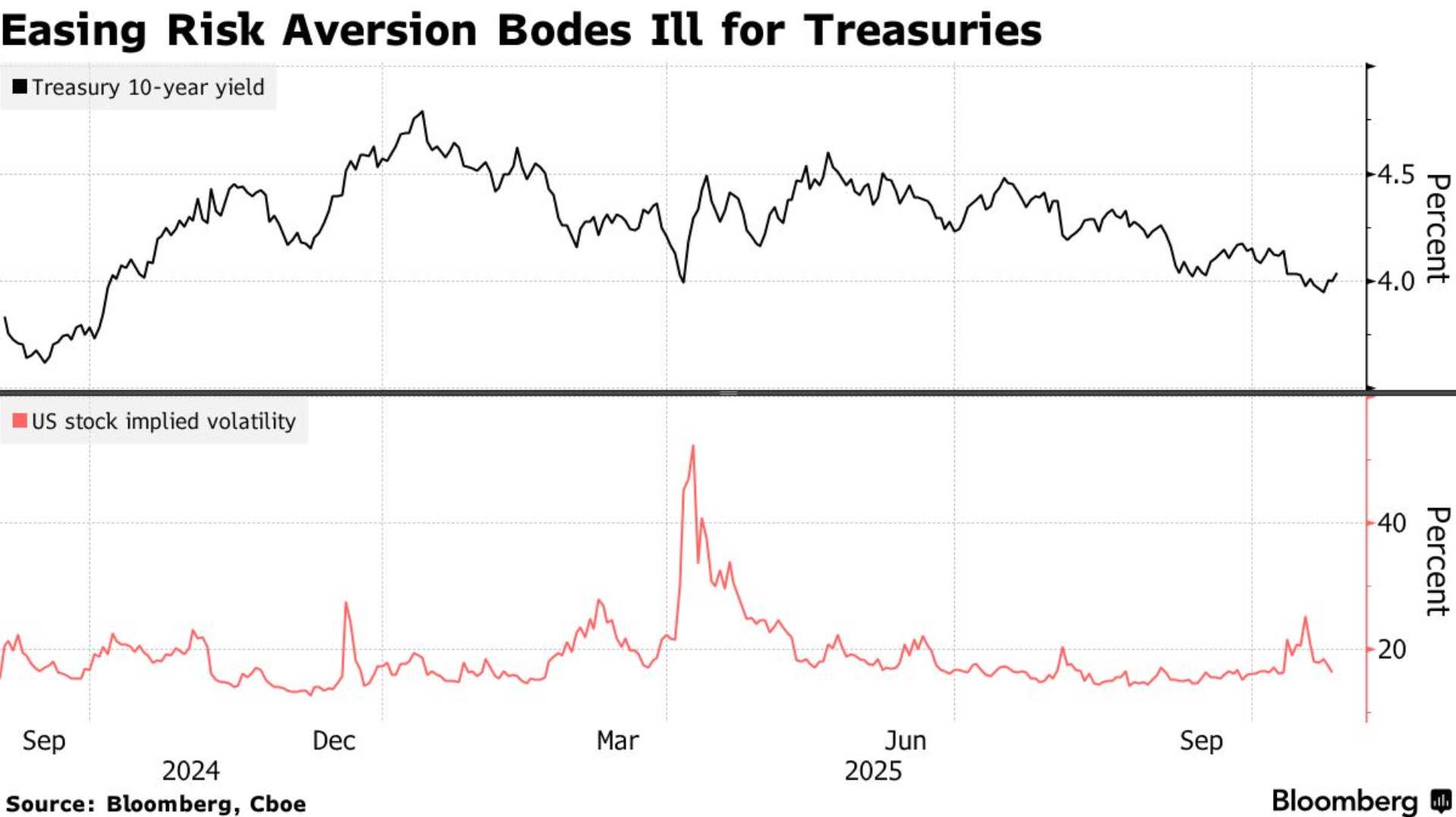
Group 1 - The core viewpoint of the articles highlights that optimism surrounding a potential US-China trade agreement is reducing market risk aversion, leading to a sell-off in US Treasury bonds [1][4] - The 10-year benchmark US Treasury yield rose by 4 basis points to 4.04%, marking a new high in over a week, while 5-year and 2-year yields increased by 3 basis points [1] - Market volatility is heightened as traders closely monitor the Federal Reserve's policy decisions and the outcomes of US-China negotiations, with any significant developments potentially triggering renewed risk aversion [4] Group 2 - Analysts suggest that the recent decline in US Treasury yields is due to investors closing positions that were previously taken in response to deteriorating US-China trade relations [4] - The ongoing US government shutdown has reached the second-longest record in history, resulting in the absence of key economic data and amplifying interest rate positioning risks [4] - Market participants are currently focused on trade optimism as a significant theme, with the progress of trade negotiations being a key driver of risk appetite [4]
光大证券伍礼贤:市场关注中美元首会面 料恒指年内仍有望刷新高位
智通财经网· 2025-10-27 08:07
Core Viewpoint - The market is currently in a wait-and-see mode regarding the outcomes of the US-China trade negotiations and the upcoming meeting between the two presidents, which is expected to significantly influence future market trends [1] Market Sentiment - The meeting between the two leaders is anticipated to have a notable impact on market direction, with the Hang Seng Index expected to find substantial support around the 25,200 points level [1] - A positive outcome from the negotiations could lead to the index potentially reaching new highs for the year [1] Trading Volume and Trends - Current events are limiting market movement, resulting in low trading volumes, but a clear direction is expected to emerge following the announcement of the negotiation results, which will be crucial for Hong Kong stock performance in November [1] Economic Indicators - The expectation is that a certain level of agreement will be reached, although resolving all issues between the US and China will take time [1] - The Federal Reserve's recent interest rate cuts are factored into the market, and while there is speculation about Hong Kong following suit, the ultimate performance of the Hang Seng Index will depend on the progress of US-China negotiations [1] Investment Recommendations - It is suggested to consider high-dividend stocks, particularly Chinese telecom companies with growth prospects and oil stocks that have attracted ongoing interest from investors [2] - For those interested in technology stocks, it is advised to wait for the results of the US-China negotiations before making any investments [2]

全球宏观及大类资产配置周报-20251027
Dong Zheng Qi Huo· 2025-10-27 06:43
1. Report Industry Investment Ratings | Asset Category | Rating | | --- | --- | | Gold | Bearish | | Dollar | Sideways | | US Stocks | Sideways | | A-Shares | Sideways | | Treasury Bonds | Slightly Bearish and Sideways | [31] 2. Core Viewpoints of the Report - The US government shutdown continues, and the macro data is in a vacuum. The September CPI is slightly lower than expected, supporting two interest rate cuts by the Fed this year. The market has fully priced in the cuts, and the downside space for US bond yields is limited. The 10 - month Fed interest rate meeting is coming up, and the future interest rate cut path and balance - sheet reduction rhythm are the focus of market games. The domestic market is boosted by macro events and themes, deviating from the economic fundamentals in the short term [6]. - Global market risk appetite continues to recover, with most global stock markets rising. The US dollar index fluctuates at a high level, and major currencies show different trends. Global major national 10 - year treasury bond yields fluctuate. The commodity futures and spot markets show a divergent trend [8][12][17][29]. - Different asset classes are expected to show different trends next week. Gold lacks upward momentum and has a callback risk; the dollar is expected to fluctuate; US stocks are supported but volatile; A - shares are affected by top - level planning and liquidity; treasury bonds are expected to fluctuate slightly bearishly [31]. 3. Summary by Directory 3.1 Macro Context Tracking - The US government shutdown persists, and the macro data is in a vacuum. The September CPI is slightly lower than expected, supporting two interest rate cuts by the Fed this year. The market has fully priced in the cuts, and the downside space for US bond yields is limited. The upcoming 10 - month Fed interest rate meeting will focus on the future interest rate cut path and balance - sheet reduction rhythm. The short - term market is more affected by macro news, and the market volatility remains high. The sanctions on Russia by the US and Europe amplify short - term energy price fluctuations, while the marginal relaxation of Sino - US negotiations boosts market risk appetite. The domestic market is boosted by macro events and themes, deviating from the economic fundamentals in the short term. The Fourth Plenary Session's top - level planning for the technology industry supports the stock market's risk appetite, while the bond market lacks a trading mainline and shows a slightly weak and sideways trend [6]. 3.2 Global Asset Class Trends Overview 3.2.1 Equity Market - Global market risk appetite continues to recover, and most global stock markets rise. In developed markets, the S&P 500 rises 1.92%, the Nikkei 225 rises 3.61%, the South Korean KOSPI index rises 5.14%, and the German DAX index rises 1.72%. In emerging markets, the Shanghai Composite Index rises 2.88%, the Hong Kong Hang Seng Index rises 3.62%, and the Taiwan Weighted Index rises 0.84%. The MSCI Global Index shows that emerging markets > global > developed > frontier [8][10]. 3.2.2 Foreign Exchange Market - The US dollar index fluctuates at a high level, finally closing at 98.9, appreciating 0.39% from last week. The RMB exchange - rate index remains the same as the previous value, and the RMB appreciates slightly against the US dollar. The Mexican peso depreciates 0.46%, the Brazilian real appreciates 0.26%, the euro depreciates 0.22%, the yen depreciates 1.5%, the won depreciates 1.2%, the pound depreciates 0.86%, and the Australian dollar appreciates 0.29% [12][13]. 3.2.3 Bond Market - Global major national 10 - year treasury bond yields fluctuate. In developed countries, the US bond yield remains at 4.02%, with limited downside space; the Japanese treasury bond yield rises 3bp; the UK treasury bond yield falls 12bp; the German treasury bond yield rises 5bp. In emerging market countries, the Chinese treasury bond yield rises 2bp to 1.85%, the Brazilian treasury bond yield falls 21bp, and the Indonesian treasury bond yield rises 7bp [17][18]. 3.2.4 Commodity Market - This week, the global commodity futures and spot markets show a divergent trend, with the futures index rebounding significantly and the spot index continuing to fall. Affected by geopolitical risks, energy prices rise, with WTI crude oil rising 7.32% to $61.4 per barrel. The metal sector shows a differentiated performance, with LME copper rising 3.21% and LME aluminum rising 2.81%. The precious - metal sector continues to correct, with COMEX gold falling 3.3% and silver falling 4.38% as of Friday. The domestic commodity market shows a differentiated performance, with the energy - chemical sector > industrial products > non - ferrous metals > black metals > agricultural products > precious metals [29]. 3.3 Weekly Outlook for Asset Classes 3.3.1 Precious Metals - Precious metals correct from high levels. After the geopolitical risks do not further intensify, long - position holders take profits. Geopolitical risks decline marginally, which is negative for gold. The US government shutdown continues, dragging down the economy and the employment market. The US September core CPI slightly drops to 3%, and the inflation pressure is generally controllable. The market has fully priced in a 25bp interest rate cut in the October interest rate meeting. Short - term gold prices lack upward momentum, and there is a risk of correction. The international gold price tests the support at the $4000 mark. The actual interest rate slightly rises to 1.75%, the 10 - year US bond yield returns to 4%, and the US bond yield has limited downside space. The dollar index fluctuates at a high level, and the RMB fluctuates. After the correction of the outer - market gold price, the discount of Shanghai gold narrows. The Comex gold futures speculative data suspension is due to the government shutdown, the SPDR Gold ETF holdings slightly drop to 1047 tons, and the Shanghai gold positions are significantly reduced. The London silver spot price drops 6% to $48.5 per ounce, and the forced - buying market in the London spot market eases [32][40][47]. 3.3.2 Foreign Exchange - The market fluctuates significantly this week. The cease - fire agreement proposed by Ukraine and Europe raises the market's expectation of a cease - fire in the Russia - Ukraine conflict, causing a short - term plunge in safe - haven assets. However, Russia does not support a cease - fire based on the current actual control line, and the meeting between Trump and Putin is cancelled. The US September CPI is lower than expected, indicating that the inflation pressure in September is controllable, and the expectation of two interest rate cuts by the Fed in 2025 is basically determined, which boosts the market risk appetite. Sino - US trade negotiations are held in Malaysia, and it is expected that the short - term trade war will not intensify, but it is also difficult to reach a significant trade agreement. The dollar is expected to fluctuate in the short term [48]. 3.3.3 US Stocks - The US government shutdown is still deadlocked, and the market fluctuates mainly due to the progress of Sino - US negotiations and earnings data. Sino - US negotiations are tortuous, and the tension eases this week. As corporate earnings are released, the market continues to raise its profit expectations, and corporate profits expand steadily. Large technology companies will release their earnings next week, which may further boost the market. The overall view of US stocks is bullish, but attention should be paid to the increased volatility caused by corporate earnings falling short of expectations and the twists and turns in Sino - US negotiations. Cyclical sectors lead the index, and the technology sector remains strong. The market risk appetite recovers, with only the consumer staples and utilities sectors recording declines. As earnings are released, the market profit expectations continue to rise, and the expected profit growth rate for Q3 rises to 9.3%. Short - term Sino - US negotiations are tortuous, and the market is more volatile [53][65]. 3.3.4 A - Shares - This week, the average daily trading volume of the Shanghai, Shenzhen, and Beijing stock markets is 1.7975 trillion yuan, a decrease of 395.6 billion yuan compared with last week. All A - share sectors rise, with the ChiNext Index rising 8.05% and the BeiStock 50 rising 2.74%. Among the first - level industries, 27 rise and 3 fall. The leading industry is communication (+11.56%), and the lagging industry is agriculture, forestry, animal husbandry, and fishery (-1.59%). The market ERP slightly declines, boosting the risk appetite. Attention should be paid to the rapid decline in A - share trading volume. If the trading volume continues to decline, the high - level and high - valuation situation of the stock index will lack support; if the trading volume stabilizes, the market may still be boosted by macro events and themes [66][76]. 3.3.5 Treasury Bonds - The main logic of the bond market is still unclear, mainly affected by multiple factors such as market risk appetite, Sino - US trade negotiations, and the tax period. There are many uncertain factors, and the bond market is expected to fluctuate slightly bearishly. However, the bond - market adjustment should be temporary. After November, there will be limited incremental policies, and the market risk appetite will lack a driving force to continue rising. The bond market should turn to focus on the fundamentals, and there should be a recovery market at that time. Currently, opportunities to buy on dips and play the trading range can be grasped. The 10Y - 1Y spread of treasury bonds narrows 4.91bp to 36.96bp, the 10Y - 5Y spread narrows 0.66bp to 22.52bp, and the 30Y - 10Y spread narrows 1.32bp to 36.54bp. As of the close on October 24, the settlement prices of the two - year, five - year, ten - year, and thirty - year treasury bond futures main contracts are 102.334, 105.615, 108.015, and 115.030 yuan respectively, with changes of - 0.044, - 0.160, - 0.250, and - 0.700 yuan compared with last weekend. The trading volumes of the 2 - year, 5 - year, 10 - year, and 30 - year treasury bond futures this week are 76,489, 154,308, 264,330, and 179,114 lots respectively, with changes of +1958, - 1892, +4151, and - 672 lots compared with last week [77][88]. 3.4 Global Macroeconomic Data Tracking 3.4.1 Overseas High - Frequency Economic Data Tracking - The GDPNow model estimates the Q3 growth rate at 3.9%, and the year - on - year growth rate of Redbook retail sales is 5%, with an average year - on - year growth rate of about 5% since the beginning of the year, indicating that the US economy maintains resilience. The bank reserve balance drops to 2.44 trillion, the TGA account balance rises to 905.1 billion, and the overnight reverse - repurchase scale drops to 2.44 billion, indicating that the market liquidity continues to tighten. The corporate - bond credit spread slightly declines, and the short - term credit risk decreases. The September CPI is slightly lower than expected, and the market fully prices in a 25bp interest rate cut in October and a further interest rate cut in December. The September CPI data shows that the year - on - year growth rate is 3%, the month - on - month growth rate is 0.3%, the core CPI year - on - year slightly drops to 3%, and the month - on - month growth rate drops to 0.2%, slightly lower than expected. This report consolidates the possibility of a 25bp interest rate cut next week and supports further interest rate cuts this year. However, the inflation risks in categories more affected by tariffs still exist [90][108][117]. 3.4.2 Domestic High - Frequency Economic Data Tracking - The real - estate transaction remains weak, with both volume and price continuing to decline. The Fourth Plenary Session has relatively few arrangements for real estate, and the market's expectation of stable housing prices weakens again. The financial data mostly shows a slightly weak performance, and the active financing demand of the real - economy sector is still weak. The M1 growth rate is high, but this rise does not represent an improvement in the real economy. The PPI year - on - year growth rate in September is - 2.3%, and the CPI year - on - year growth rate is - 0.3%. Although the PPI year - on - year reading rebounds, the momentum for price increases on a month - on - month basis is still insufficient, and it is difficult for upstream price increases to be transmitted to the terminal. China's exports in September (in US dollars) increase 8.3% year - on - year, and imports increase 7.4% year - on - year. The increase in import growth may be related to China's capacity upgrade and the increased demand for imported mechanical and electrical products and high - tech products [118][142][149][159]
养殖油脂产业链周度策略报告-20251027
Fang Zheng Zhong Qi Qi Huo· 2025-10-27 05:10
1. Report Industry Investment Rating No relevant content provided. 2. Core Views of the Report - The soybean oil futures price oscillated downward this week. With sufficient supply and weak expectations due to increased palm oil production in Malaysia and ongoing Sino - US trade negotiations, short - term upward drivers are lacking. It is advisable to wait and see, with support at 8100 - 8130 yuan/ton and resistance at 8400 - 8450 yuan/ton [3]. - The rapeseed oil futures price had a weak adjustment. Although supply is tight, there is substitution pressure from soybean oil and palm oil. It may oscillate in the short - term and is bullish in the long - term. Aggressive strategies can consider buying out - of - the - money call options after stabilization, with support at 9690 - 9710 and resistance at 9980 - 10000 [3]. - The palm oil futures price oscillated downward due to continuous production increases in Malaysia. As the production season is approaching, short - selling is not advisable. It may test the support at 9000 - 9050, with resistance at 9350 - 9400. Temporarily wait and see and monitor Sino - US trade negotiations [4]. - The soybean meal price followed the rise of US soybeans. With sufficient domestic inventory, it has limited downward drivers. Consider waiting and see, with support at 2800 - 2830 yuan/ton and resistance at 2960 - 2970 yuan/ton [4]. - The rapeseed meal futures price oscillated. Due to weak demand and improved Sino - Canadian trade relations, it has been weak. It is recommended to go long on the 01 contract of the rapeseed oil - meal ratio, with support at 2250 - 2270 and resistance at 2380 - 2400 [4][5]. - The soybean No. 1 price was firm. With new - season soybeans on the market and strong demand for high - protein soybeans, look for long - buying opportunities, with support at 4000 - 4030 yuan/ton and resistance at 4150 - 4200 yuan/ton [5]. - The peanut spot price was stable. With increased planting area and potential Sino - US trade impacts, it may oscillate in the short - term. Cautious investors can hold reverse spreads, with support at 7900 - 7550 and resistance at 8020 - 8160 [5]. - The corn and corn starch futures prices continued to oscillate. Given the harvest situation and market dynamics, short - term upward space is limited. Consider reducing short positions on dips or looking for 1 - 5 spread reverse arbitrage opportunities [6]. - The live pig spot price was strong. With prices below the cost and production - reduction policies, the futures price hit a new low. Cautious investors can hold reverse spreads, and aggressive investors can buy the 2607 contract below the cost [7]. - The egg spot price was stable and slightly strong. With expected consumption improvement in November and potential capacity reduction, aggressive investors can buy the 2512 contract on dips, and avoid short - selling blindly [8]. 3. Summary According to the Directory 3.1 First Part: Sector Strategy Recommendation 3.1.1 Market Analysis - Various products in the feed, breeding, and oil industries are expected to oscillate, with different supply - demand logics. Most products are recommended for temporary waiting and watching, while some have specific trading strategies such as reducing short positions on dips or long - buying on dips [11]. 3.1.2 Basis and Spot - Futures Strategies - The table shows the spot prices, price changes, basis of the main contracts, and basis changes of different products in various sectors, including oilseeds, oils, proteins, energy and by - products, and breeding [12]. 3.2 Second Part: Key Data Tracking Table 3.2.1 Oilseeds and Oils - **Daily Data**: It provides import cost data for soybeans, rapeseeds, and palm oil from different origins and shipping periods, including arrival premiums, futures prices, CNF prices, and arrival - duty - paid prices [14][15]. - **Weekly Data**: It shows the inventory and operating rates of various oilseeds and oils, such as soybeans, rapeseeds, palm oil, and peanuts [16]. 3.2.2 Feed - The table presents weekly data on corn and corn starch, including deep - processing enterprise consumption, inventory, operating rates, and inventory of starch enterprises [17]. 3.2.3 Breeding - **Live Pigs**: It shows key weekly data on the live pig market, including spot prices, breeding costs, profits, slaughter data, etc. [18]. - **Eggs**: It presents weekly key data on the egg market, including supply - side data (laying rate, culling data), demand - side data (inventory), and profit - related data [19]. 3.3 Third Part: Fundamental Tracking Charts - **Breeding End (Live Pigs, Eggs)**: It includes charts of the closing prices of live pig and egg futures contracts, spot prices, and related prices such as piglet prices and chicken - culling prices [21][23][24]. - **Oilseeds and Oils**: - **Palm Oil**: It shows charts related to Malaysian palm oil production, inventory, export, import, and domestic inventory and trading [31][32][35]. - **Soybean Oil**: It includes charts of US soybean crushing volume, soybean oil inventory, domestic soybean oil mill operating rates, and inventory [38][39]. - **Peanuts**: It presents charts of peanut arrival, shipment, pressing profit, and inventory [45][47]. - **Feed End**: - **Corn**: It includes charts of corn spot prices, futures prices, basis, inventory, import volume, and processing profit [49][51][53]. - **Corn Starch**: It shows charts of corn starch spot prices, futures prices, basis, operating rates, and inventory [57][59][60]. - **Rapeseed**: It includes charts of rapeseed meal and rapeseed oil spot prices, basis, inventory, and pressing profit [62][63][66]. - **Soybean Meal**: It presents charts of US soybean growth rates and domestic soybean and soybean meal inventory [71][73]. 3.4 Fourth Part: Options Situation of Feed, Breeding, and Oils - It includes charts of historical volatility of rapeseed meal, rapeseed oil, soybean oil, palm oil, and peanuts, as well as options trading volume, open interest, and put - call ratios of corn [76][80][81]. 3.5 Fifth Part: Warehouse Receipt Situation of Feed, Breeding, and Oils - It shows charts of warehouse receipts of rapeseed meal, rapeseed oil, soybean oil, palm oil, peanuts, corn, corn starch, live pigs, and eggs [87][90][91].
日经突破5万点 “早苗经济学”推动行情
日经中文网· 2025-10-27 03:38
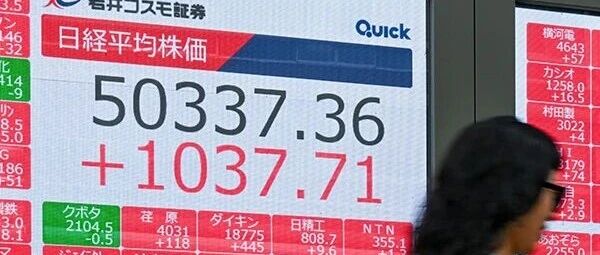
Group 1 - The Nikkei average index rose significantly, reaching 50,337.36 points, marking a historic breakthrough above 50,000 points, driven by expectations surrounding the economic policies of the new Kishida administration and external factors like anticipated interest rate cuts in the US and the expansion of the AI market [2][4]. - The Kishida administration's approval rating stands at 74%, significantly higher than the previous administration's 51%, which is perceived positively by the market as it suggests greater stability for the government [4]. - The "Japan Weeks" event highlighted the shift from savings to investment in Japan, with Finance Minister Shunichi Suzuki noting that the proportion of cash and deposits in personal financial assets remains high compared to the US, indicating substantial room for change [4]. Group 2 - AI and semiconductor-related stocks, such as Advantest and SoftBank Group, contributed to the market's upward movement, while defense-related stocks saw increased buying ahead of the upcoming US-Japan summit [5]. - The Bank of Japan is expected to maintain its current interest rates during the upcoming monetary policy meeting, with market consensus suggesting potential rate hikes could occur in January or as early as December [5]. - The external environment is favorable, with the US CPI for September coming in below expectations, raising the likelihood of interest rate cuts in the US, and easing trade tensions between the US and China, which supports investor sentiment [6].
豆粕:反弹震荡,等待中美经贸会谈指引,豆一,调整震荡
Guo Tai Jun An Qi Huo· 2025-10-27 02:50
1. Report Industry Investment Rating - Not provided in the report 2. Core View of the Report - The report indicates that the price of soybean meal will experience a rebound and fluctuate, awaiting guidance from the China - US economic and trade talks, while the price of soybean No.1 will be in an adjustment and fluctuation phase [1] 3. Summary by Relevant Catalogs 3.1 Fundamental Tracking 3.1.1 Futures - DCE Soybean No.1 2601 closed at 4,104 yuan/ton during the day session, up 23 yuan (+0.56%), and 4,098 yuan during the night session, down 12 yuan (-0.29%) [1] - DCE Soybean Meal 2601 closed at 2,933 yuan/ton during the day session, up 17 yuan (+0.58%), and 2,949 yuan during the night session, up 9 yuan (+0.31%) [1] - CBOT Soybean 01 closed at 1,060.5 cents/bushel, down 1.5 cents (-0.14%) [1] - CBOT Soybean Meal 12 closed at 293.9 dollars/short - ton, up 1.6 dollars (+0.55%) [1] 3.1.2 Spot - In Shandong, the price of soybean meal (43%) was 2,990 - 3,020 yuan/ton, up 20 or 40 yuan compared to the previous day. The spot basis was M2601 + 80, unchanged from the previous day [1] - In East China, the price of soybean meal in Taizhou Huifu was 2,920 yuan/ton, up 30 yuan compared to the previous day. The basis was M2601 + 50, down 20 yuan from the previous day [1] - In South China, the price of soybean meal was up 20 - 50 yuan compared to the previous day, reaching 2,980 yuan/ton [1] 3.1.3 Main Industry Data - The trading volume of soybean meal was 5.4 million tons per day on the previous trading day, compared to 9.4 million tons per day two trading days ago [1] - The inventory of soybean meal was 104.67 million tons per week two trading days ago, while the data for the previous trading day was not available [1] 3.2 Macroeconomic and Industry News - On October 24, 2025, CBOT soybean futures fell slightly from a one - month high, mainly due to the decline of international crude oil futures and farmers' selling. The market was waiting for the China - US trade talks [3] - US President Donald Trump will meet with Chinese leaders in South Korea next week, and soybean procurement will be a key topic. High - level economic officials from the US and China will meet in Malaysia to prevent the escalation of the trade war [3] - Analysts pointed out that a trade agreement may help US farmers avoid huge losses, but the window period for China to import soybeans from the US is narrowing. If an agreement is reached in early November, China can purchase soybeans with a shipment date in mid - December or January next year [3] 3.3 Trend Intensity - The trend intensity of soybean meal and soybean No.1 is 0, indicating a neutral trend for the main contract futures prices during the day session on the reporting day [3]
大越期货原油早报-20251027
Da Yue Qi Huo· 2025-10-27 02:15
1. Report Industry Investment Rating No relevant content provided. 2. Core View of the Report - Short - term market sentiment is relatively optimistic due to positive signals from Sino - US trade negotiations, and there are expectations for the summit at the end of the month. Geopolitically, the US may increase sanctions on Russia, causing market concerns. Short - term oil prices are expected to remain in a relatively strong oscillatory state, with SC2512 operating in the range of 465 - 475, and long - term investors are advised to wait and see [3]. 3. Summary by Directory 3.1 Daily Prompt - **Crude Oil 2512 Fundamentals**: After the Sino - US high - level economic officials' trade talks, Trump is confident of reaching an agreement with China. The US may impose additional sanctions on Russia. US energy companies increased oil and gas rig numbers for the second consecutive week since September. The overall assessment is neutral [3]. - **Basis**: On October 24, Oman crude oil spot price was $69.03 per barrel, Qatar Marine crude oil spot price was $68.71 per barrel, with a basis of 51.07 yuan per barrel, indicating that the spot price is higher than the futures price, which is a bullish signal [3]. - **Inventory**: US API crude oil inventory decreased by 2.981 million barrels in the week ending October 17. EIA inventory decreased by 0.961 million barrels in the week ending October 17, against an expected increase of 1.205 million barrels. Cushing region inventory decreased by 0.77 million barrels in the week ending October 17. As of October 24, Shanghai crude oil futures inventory remained unchanged at 5.211 million barrels, which is bullish [3]. - **Market Chart**: The 20 - day moving average is flat, and the price is above the average, with a neutral assessment [3]. - **Main Position**: As of September 23, WTI crude oil main position was long, with an increase in long positions. As of October 21, Brent crude oil main position was long, with a decrease in long positions, which is bearish [3]. 3.2 Recent News - **Sino - US Trade Negotiations**: After the Sino - US high - level economic officials' trade talks, Trump is confident of reaching an agreement with China. The US Treasury Secretary expects the agreement to postpone China's export control expansion on rare earth minerals and magnets and avoid new 100% tariffs on Chinese goods. However, the US Trade Representative's Office has launched a new tariff investigation against China, and China has strongly opposed it [5]. - **US Economic Data**: US consumer price increase in September was slightly lower than expected, with the Fed likely to cut interest rates again at the October 28 - 29 meeting. In September, CPI increased by 0.3% month - on - month and 3.0% year - on - year, while economists predicted 0.4% and 3.1% respectively. Core CPI increased by 0.2% month - on - month in September [5]. 3.3 Long - Short Concerns - **Bullish Factors**: Positive signals from Sino - US trade negotiations, cancellation of US - Russia talks and potential increase in sanctions on Russia [6]. - **Bearish Factors**: Easing of the Middle East situation, risk of US government shutdown, and OPEC+ considering further production increase [6]. - **Market Driver**: Short - term geopolitical conflicts intensify, while there is a medium - to - long - term risk of increased supply [6]. 3.4 Fundamental Data - **Futures Market**: The settlement price of Brent crude oil decreased from $65.99 to $65.20, a decrease of 1.20%. WTI crude oil decreased from $61.79 to $61.50, a decrease of 0.47%. SC crude oil increased from 454.0 to 466.2, an increase of 2.69%. Oman crude oil increased from $68.16 to $68.31, an increase of 0.22% [7]. - **Spot Market**: The price of UK Brent Dtd increased from $65.98 to $67.04, an increase of 1.61%. WTI increased from $61.79 to $61.50, a decrease of 0.47%. Oman crude oil increased from $68.10 to $69.03, an increase of 1.37%. Shengli crude oil increased from $61.25 to $62.40, an increase of 1.88%. Dubai crude oil increased from $68.21 to $69.05, an increase of 1.23% [9]. - **Inventory Data**: API inventory decreased by 2.981 million barrels in the week ending October 17. EIA inventory decreased by 0.961 million barrels in the week ending October 17 [3]. 3.5 Position Data - **WTI Crude Oil Fund Net Long Position**: As of September 23, the net long position was 102,958, an increase of 4,249 [17]. - **Brent Crude Oil Fund Net Long Position**: As of October 21, the net long position was 52,521, a decrease of 57,085 [19].
综合晨报:美国9月CPI略不及预期-20251027
Dong Zheng Qi Huo· 2025-10-27 01:13
1. Report Industry Investment Ratings No industry investment ratings are provided in the report. 2. Core Views of the Report - The US 9 - month CPI was slightly lower than expected, and the market fully priced in two 25 - basis - point interest rate cuts by the Fed this year. The outcome of Sino - US trade negotiations and the Fed's future interest rate path are key factors affecting the market [20][21]. - The "15th Five - Year Plan" has boosted the stock market, especially technology stocks, but concerns about shrinking trading volume and liquidity decline remain. The performance of various commodities is affected by factors such as supply - demand relationships, policy changes, and geopolitical situations [2][25]. 3. Summary by Relevant Catalogs 3.1 Financial News and Reviews 3.1.1 Macro Strategy (Gold) - The US 9 - month CPI was lower than expected, and the impact of tariffs on inflation was not fully reflected. Core inflation declined due to the easing of service costs. The Fed's 25 - basis - point interest rate cut in the October meeting was fully priced in. Sino - US trade negotiations made some progress, which was negative for gold. Gold prices were expected to continue to be weak and may have further downward adjustment space [12]. - Investment advice: Gold prices are expected to be weak in the short term, and it is recommended to observe the support at the $4000 level [13]. 3.1.2 Macro Strategy (Foreign Exchange Futures - US Dollar Index) - Trump announced a 10% tariff on Canada, and Sino - US trade negotiations reached a preliminary consensus, reducing the possibility of short - term trade friction escalation. The US dollar index was expected to fluctuate in the short term [14][17]. - Investment advice: The US dollar index will fluctuate in the short term [18]. 3.1.3 Macro Strategy (US Stock Index Futures) - The US 10 - month Markit service and manufacturing PMI preliminary values were better than expected, and the 9 - month core CPI growth was lower than expected. The market fully priced in two 25 - basis - point interest rate cuts by the Fed this year. Sino - US trade negotiations did not deteriorate further. The market risk appetite increased [19][20][21]. - Investment advice: Maintain a bullish view and buy on dips [22]. 3.1.4 Macro Strategy (Stock Index Futures) - The "15th Five - Year Plan" boosted the stock market, and technology stocks rose strongly, but trading volume was shrinking. Attention should be paid to the sustainability of this change [25]. - Investment advice: It is recommended to allocate various stock indexes evenly [26]. 3.1.5 Macro Strategy (Treasury Bond Futures) - The press conference on the "15th Five - Year Plan" boosted market risk appetite, and the bond market declined. In the short term, the bond market was expected to fluctuate weakly, but there were still upward opportunities later [28]. - Investment advice: The market may adjust recently. It is recommended to pay attention to the opportunity of going long on dips [29]. 3.2 Commodity News and Reviews 3.2.1 Black Metals (Steam Coal) - The price of Indonesian low - calorie steam coal was stable, and the domestic market sentiment cooled. Coastal power plant restocking slowed down, but the early arrival of winter demand and stable supply provided strong support for coal prices [31]. - Investment advice: Coal prices are expected to have strong support at the bottom [31]. 3.2.2 Black Metals (Iron Ore) - LKAB's iron ore production in Q3 2025 increased significantly year - on - year. The downstream demand weakened slightly, and the steel mill profit narrowed. Iron ore inventory was expected to gradually accumulate in the fourth quarter, and its fundamentals were structurally weak [32]. - Investment advice: The fundamentals of iron ore are structurally weak [32]. 3.2.3 Agricultural Products (Soybean Oil/Rapeseed Oil/Palm Oil) - In the 43rd week, the actual soybean crushing volume of domestic oil mills was higher than expected, and it was expected to decline slightly in the 44th week. The production of Malaysian palm oil increased significantly in October, and there were news about Indonesian palm plantations. The Brazilian soybean planting progress was good, and the production of US renewable fuels increased [33][34]. - Investment advice: For palm oil, consider going long on dips; for soybean oil, pay attention to the latest progress of Sino - US relations [34]. 3.2.4 Agricultural Products (Sugar) - China's sugar production in September 2025 increased year - on - year. India advanced the sugar - cane crushing start date. Datagro expected an increase in Brazilian sugar production and a global sugar supply surplus in the 25/26 season. The market was bearish, but there were still factors that could affect Brazilian sugar production, and the production in the Northern Hemisphere needed to be verified [35][37][38]. - Investment advice: Zhengzhou sugar is expected to be weakly volatile. Do not chase short positions blindly and pay attention to the upcoming National Sugar Conference [39]. 3.2.5 Agricultural Products (Cotton) - Brazil's cotton exports accelerated in October. The international spot market was sluggish, and the increase in yarn prices was blocked. Zhengzhou cotton rose due to factors such as the increase in Xinjiang seed - cotton purchase prices, but its upward space was limited [40][42][43]. - Investment advice: Zhengzhou cotton's upward space is limited. Pay attention to the new cotton listing, downstream orders, and Sino - US relations [44]. 3.2.6 Agricultural Products (Soybean Meal) - The soybean planting rate in Mato Grosso, Brazil, reached 60%. The domestic oil mill's soybean crushing volume was at a high level. The US soybean drought area remained unchanged, and the USDA report was suspended. The market was concerned about Sino - US trade talks and South American weather [45][46]. - Investment advice: Soybean meal prices are expected to fluctuate. Pay attention to Sino - US relations and South American weather [47]. 3.2.7 Black Metals (Rebar/Hot - Rolled Coil) - The daily average pig iron output of 247 steel mills decreased. The Southeast Asian Iron and Steel Association proposed to impose carbon taxes on steel imports. The inventory of key steel enterprises increased. The overall demand was weak, and steel prices were expected to fluctuate [48][50][51]. - Investment advice: Adopt a range - trading mindset for steel prices [51]. 3.2.8 Agricultural Products (Jujube) - The jujube price in the Hebei market was stable. The futures price of the main contract declined. The Xinjiang jujube was in the normal drying stage, and the inventory was at a high level. The market was bearish [52][53]. - Investment advice: The jujube market is bearish. It is recommended to wait and see and pay attention to the price negotiation and purchase progress in the production area [53]. 3.2.9 Agricultural Products (Corn Starch) - The starch inventory decreased seasonally. The raw material supply in North China decreased, and the opening rate decreased. The starch enterprise remained slightly profitable. The futures price difference between corn and starch was repaired [54]. - Investment advice: The price difference of the 01 contract may continue to be repaired [55]. 3.2.10 Agricultural Products (Corn) - The corn inventory of deep - processing enterprises increased seasonally, while the inventory days of feed enterprises decreased. The spot price was expected to continue to oscillate and find the bottom, and the 01 contract was expected to fluctuate horizontally [56]. - Investment advice: It is recommended to wait and see in the short term. Short - selling has a poor risk - return ratio, and going long may need to wait for an opportunity [57]. 3.2.11 Non - Ferrous Metals (Alumina) - The Huatong electrolytic aluminum project in Angola is expected to be put into operation in December 2025. The domestic alumina price was under pressure due to the opening of the import window and oversupply [58][59]. - Investment advice: It is recommended to wait and see [60]. 3.2.12 Non - Ferrous Metals (Copper) - The copper production of some mines decreased in Q3 2025. The QB copper mine's short - term production capacity was affected by tailings facilities, which is expected to improve in 2027. The market's risk appetite increased due to Sino - US trade negotiations, which supported copper prices. The short - term fundamentals were weak, but the medium - term outlook was good [61][62]. - Investment advice: For unilateral trading, buy on dips; for arbitrage, wait and see [63]. 3.2.13 Non - Ferrous Metals (Lithium Carbonate) - Pilbara's lithium - spodumene production in Q3 2025 increased, and the sales price rose. The inventory of lithium carbonate decreased, and the demand in the energy - storage field was strong. In the short term, the price was supported, but further upward movement may depend on supply - side disturbances [64][65]. - Investment advice: Adopt a range - trading strategy in the short term; consider short - selling opportunities after the demand peaks in the medium term. For arbitrage, take profit on the previous reverse - spread and pay attention to the positive - spread opportunities of the LC2601 contract against more distant contracts [65]. 3.2.14 Non - Ferrous Metals (Polysilicon) - The domestic new - installed photovoltaic capacity in September 2025 decreased year - on - year. The polysilicon price was stable, but the terminal demand weakened in late October. The cost of battery factories increased, and the silicon - wafer price was under pressure. However, due to policies and inventory conditions, the spot price was expected to remain stable [66][67]. - Investment advice: When the futures price is at a significant premium to the spot price, the cost - effectiveness of policy - based trading decreases. When the futures price is at a discount to the spot price, consider going long [68]. 3.2.15 Non - Ferrous Metals (Industrial Silicon) - The "15th Five - Year Plan" aims to break market barriers. The operating rate of industrial silicon in some regions changed, and the inventory decreased slightly. The demand from downstream industries was for necessary purchases. The price was expected to be difficult to reduce inventory in November and may reduce inventory in December [69][70]. - Investment advice: Buying on dips for industrial silicon may be more cost - effective [70]. 3.2.16 Non - Ferrous Metals (Lead) - Western Mining's lead and zinc production and sales increased significantly in the first three quarters of 2025. The primary lead production was restricted by raw materials, and the secondary lead production might increase. The social inventory of lead decreased, and the price was expected to be strong in the short term [71][72]. - Investment advice: Be cautious when going long; consider positive - spread opportunities for arbitrage; be cautious in international trading [72]. 3.2.17 Non - Ferrous Metals (Zinc) - The 0 - 3 cash spread of LME zinc increased, and the LME inventory rebounded. The domestic TC quotation decreased, and the refinery profit might be under pressure. The demand was mainly oscillating, and the new special - bond issuance plan in November increased [74][75]. - Investment advice: It is recommended to wait and see for unilateral trading; pay attention to medium - term positive - spread opportunities for arbitrage; wait and see for international trading [76]. 3.2.18 Non - Ferrous Metals (Nickel) - The LME received a listing application for the "PTENICO" nickel brand. The global nickel inventory accumulation was priced into the current low valuation. The price was in a narrow - range oscillation, waiting for a breakthrough. The Philippine nickel - mine supply was affected by the rainy season, but the domestic port inventory was sufficient [77]. - Investment advice: Allocation portfolios can consider buying on dips; speculative portfolios can consider selling near - the - money puts and buying deep - out - of - the - money calls [78]. 3.2.19 Energy and Chemicals (Carbon Emissions) - The EU carbon price decreased slightly, and the investment fund's net long position reached a new high. The EU failed to reach an agreement on the 90% emission - reduction target, and the carbon price was expected to oscillate in the short term [79]. - Investment advice: The EU carbon price will oscillate in the short term [80]. 3.2.20 Energy and Chemicals (Crude Oil) - The number of US oil rigs increased. The sanctions on Russia by the US and the EU led to a significant increase in oil prices. The reduction of Russian oil imports by Indian refineries needs further attention [81]. - Investment advice: The risk of a decline in Russian oil supply has increased, and oil prices will be boosted by the rising risk premium in the short term [82]. 3.2.21 Energy and Chemicals (Pulp) - The import pulp spot price was stable, with individual slight adjustments. The futures price was relatively strong, but considering the poor supply - demand situation, the upward space was limited [83][84]. - Investment advice: The upward space of pulp futures is limited [84].