有色

Search documents
策略深度报告:A股主升初期调整后的应对策略
Huaxin Securities· 2025-09-17 06:42
Group 1 - The report highlights that the initial adjustments during the main upward phases of A-shares in 2015, 2017, and 2020 typically saw an average adjustment period of 11 trading days, with an average decline of nearly 5% for the overall market and a 20% pullback in popular sectors [5][28][32] - The report indicates that the current adjustment has lasted for 6 trading days with a decline of 2.35%, and popular sectors have experienced a pullback of 28.5%, suggesting that the adjustment is nearing completion and a consolidation phase is beginning [5][8][66] - The report suggests that the main upward phase of A-shares is characterized by a significant influx of household deposits into the market, which has been a driving force behind the current upward trend [15][17] Group 2 - The report outlines that the adjustment in 2015 was primarily driven by regulatory warnings and weak earnings reports, leading to a decline in market sentiment [33][36] - In 2017, the adjustment was influenced by disappointing macroeconomic data and external shocks, such as credit rating downgrades, which affected investor confidence [51][52] - The 2020 adjustment was marked by a significant outflow of northbound capital and the IPO of a major company, which created short-term liquidity pressure on the market [64][66] Group 3 - The report identifies key sectors to focus on during the current market phase, including interest rate-sensitive sectors (TMT, non-bank financials, and metals), sectors benefiting from a potential PPI recovery (chemicals, machinery, and consumer goods), and growth sectors that may see rotation (AI hardware, innovative pharmaceuticals, and defense) [8][66] - The report emphasizes that the style rotation in the market is contingent on fundamental performance, with growth sectors expected to continue leading, while a shift towards consumer and cyclical sectors may occur if earnings improve [7][8][66]
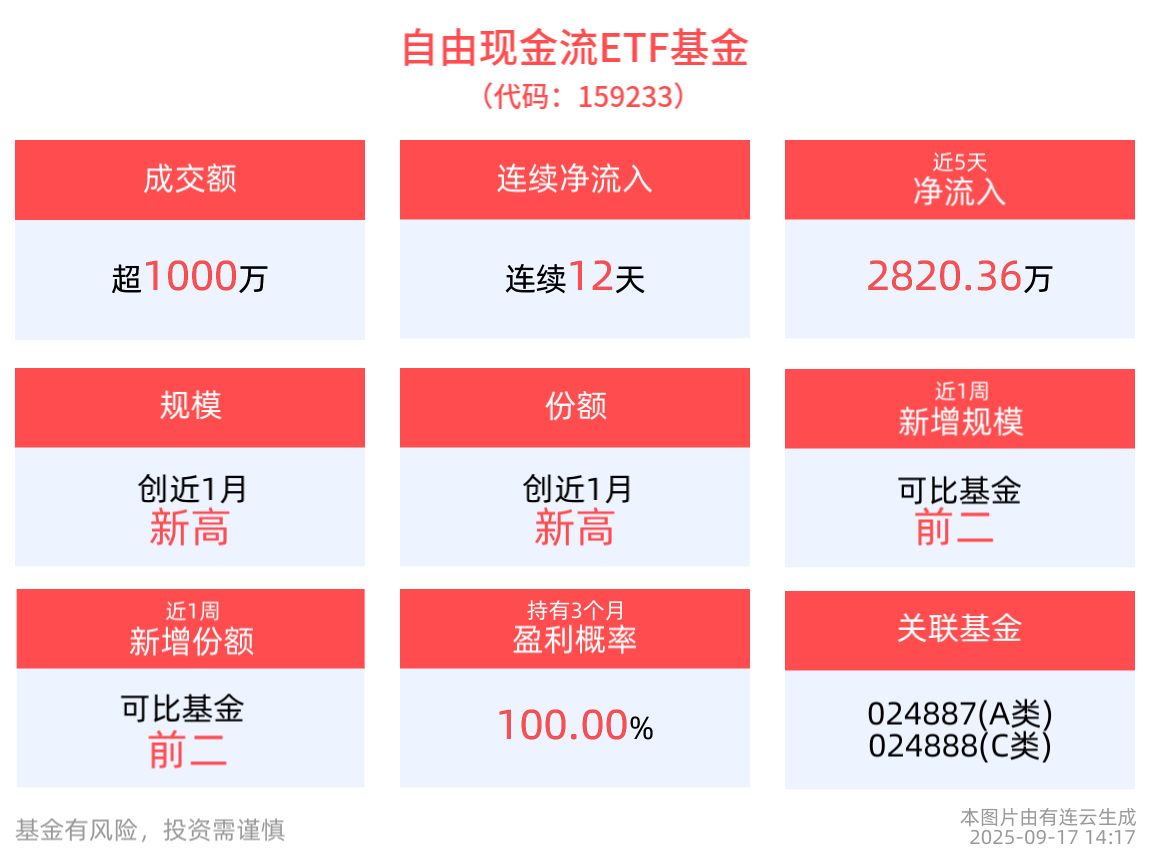
受益于宁德时代上涨,有色、煤炭等行业涨幅居前,自由现金流ETF基金备受关注
Sou Hu Cai Jing· 2025-09-17 06:33
Group 1 - The core viewpoint highlights that the Free Cash Flow ETF Fund (159233) has outperformed the market, particularly in sectors like non-ferrous metals and coal, with a rise of over 0.5% [1] - As of September 17, 2025, the CSI Free Cash Flow Index (932365) increased by 0.39%, with notable gains from stocks such as Mould Technology (000700) up 10.02% and Guizhou Moutai (000858) being among the top weighted stocks [1][3] - The Free Cash Flow ETF Fund has shown a weekly increase of 0.36% as of September 16, 2025, indicating positive momentum in the fund's performance [1] Group 2 - The Free Cash Flow ETF Fund reached a new high in size at 185 million yuan and in shares at 165 million as of the latest report [2] - The fund has experienced continuous net inflows over the past 12 days, with a total of 84.34 million yuan and an average daily net inflow of 7.02 million yuan [2] - The fund's historical performance shows a maximum monthly return of 7.80% and a 100% probability of profit over a three-month holding period [2] Group 3 - The Free Cash Flow ETF Fund closely tracks the CSI Free Cash Flow Index, which includes 100 companies with high free cash flow rates, reflecting strong cash flow generation capabilities [3] - The top ten weighted stocks in the CSI Free Cash Flow Index account for 57.03% of the index, with major companies like China National Offshore Oil Corporation (600938) and Wuliangye (000858) included [3]


广发期货期货日评-20250917
Guang Fa Qi Huo· 2025-09-17 05:58
Report Industry Investment Ratings - No specific industry investment ratings are provided in the report. Core Viewpoints - The market may pre - price the Fed's probability of restarting interest rate cuts during the September interest rate meeting this week [2]. - The technology sector in stock index futures has regained strength, and funds are rotating among sectors [2]. - Treasury bond futures first declined and then rose, with an increasing expectation of central bank bond - buying [2]. - The Fed's decision may intensify market divergence and increase short - term volatility [2]. - The main contract of the container shipping index is weakly volatile [2]. - Coal supply contraction expectations have resurfaced, driving up steel prices [2]. - Iron ore prices are supported by factors such as resumed shipments, increased hot metal production, and restocking demand [2]. - The prices of some energy and chemical products are affected by factors such as supply - demand patterns, production maintenance, and inventory changes [2]. - The prices of some agricultural products are influenced by factors like supply, demand, and market sentiment [2]. - Some special and new - energy commodities are affected by factors such as cost, macro - environment, and industry meetings [2]. Summary by Related Catalogs Stock Index Futures - The technology mainline in stock index futures has regained strength, and funds are rotating among sectors. If volatility continues to decline, a double - buying strategy for options can be attempted [2]. Treasury Bond Futures - Treasury bond futures first declined and then rose, with an increasing expectation of central bank bond - buying. A unilateral strategy suggests investors wait and see, and pay short - term attention to changes in the capital market, the equity market, and fundamentals [2]. Precious Metals - Before the Fed's decision, the expectation of easing has been rising, and the US dollar index has fallen to the lowest point of the year. For gold, it is recommended to wait and see and then buy on dips after the decision. An option double - buying strategy at the strike price of 840 can be tried. Silver has high elasticity above $42, but volatility may rise and then fall after the decision. It is recommended to sell out - of - the - money put options on rallies [2]. Container Shipping Index (European Line) - The main contract is weakly volatile, and a spread arbitrage between December and October can be considered [2]. Steel and Related Products - Coal supply contraction expectations have resurfaced, and coking coal has driven up steel prices. It is recommended to go long on steel in the short term. For iron ore, go long on the 2601 contract at dips, with a reference range of 780 - 850, and short hot - rolled coils. For coking coal, go long on the 2601 contract at dips, with a reference range of 1150 - 1300, and short coke. For coke, go long on the 2601 contract at dips, with a reference range of 1650 - 1800, and short coke [2]. Energy and Chemical Products - For crude oil, it is recommended to mainly wait and see unilaterally. For urea, wait and see unilaterally, with a short - term support level of 1630 - 1650 yuan/ton. For PX, it is expected to oscillate between 6600 - 6900 in the short term. For PTA, it is expected to oscillate between 4600 - 4800 in the short term and conduct a rolling reverse spread between TA1 and TA5. For short - fiber, it has no obvious short - term driver and follows raw materials. For bottle - grade polyester chips, its demand may decline in September, and the processing fee is expected to fluctuate between 350 - 500 yuan/ton. For ethylene glycol, wait and see unilaterally and conduct a 1 - 5 reverse spread. For caustic soda, wait and see. For PVC, wait and see. For pure benzene, it follows styrene and oil prices in the short term. For styrene, conduct a rolling low - buying strategy and pay attention to the pressure around 7200, and widen the spread between EB11 and BZ11 at a low level. For synthetic rubber, its price is expected to fluctuate between 11400 - 12500. For LLDPE, it will oscillate between 7150 - 7450 in the short term. For PP, it is slightly bullish. For methanol, conduct range - bound operations between 2350 - 2550 [2]. Agricultural Products - For soybeans and related products, operate the 01 contract in the range of 3000 - 3100. For live pigs, the market is in a weakly volatile pattern. For corn, be cautious about short - selling. For palm oil, soybean oil, and rapeseed oil, observe whether the main contract of palm oil can stabilize above 9500. For sugar, pay attention to the pressure level around 5700 - 5750. For cotton, wait and see unilaterally. For eggs, reduce previous short positions and control positions. For apples, the main contract runs around 8300. For red dates, pay attention to the support at 10700. For soda ash, wait and see [2]. Special and New - Energy Commodities - For glass, wait and see and pay attention to the sentiment of the spot market during the peak season. For rubber, it is in a high - level oscillation due to positive macro - sentiment. For industrial silicon, it is strongly volatile, with the main price fluctuation range expected to be between 8000 - 9500 yuan/ton. For polysilicon, wait and see. For lithium carbonate, the main contract is expected to run between 70,000 - 75,000 [2].
周末大事件!下周关注一件大事
Mei Ri Jing Ji Xin Wen· 2025-09-17 05:36
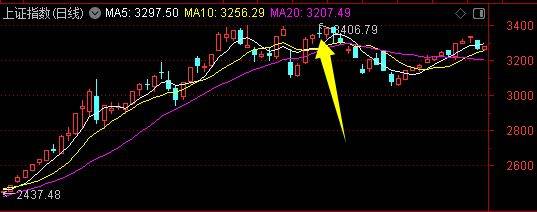
Market Overview - The A-share market rebounded this week, with five out of nine major indices reaching new highs, indicating that the two-week period of volatility is likely over [1] - The Shanghai Composite Index, Shenzhen Component Index, ChiNext Index, CSI 300 Index, and CSI 500 Index all set new highs, suggesting a potential end to market fluctuations [1][5] Key Events - The Ministry of Commerce has initiated an anti-dumping investigation into imported simulation chips from the United States, which is seen as a positive development for the domestic chip sector [7][8] - The upcoming Federal Reserve meeting on September 18 is anticipated to be a significant event for global capital markets, with expectations of a potential interest rate cut [5][9] Sector Analysis - The semiconductor sector is expected to benefit from the anti-dumping investigation, with the involvement of major funds like the National Integrated Circuit Industry Investment Fund [8] - The market is currently experiencing a shift towards low-core assets, particularly in the food and beverage sectors, which may see a rebound if the Federal Reserve cuts interest rates [12][13] - The AI hardware sector is facing volatility, with some stocks experiencing declines due to negative news, while second-tier stocks in this category are showing potential for upward movement [12][13] Investment Strategy - The market outlook suggests a cautious yet optimistic approach, with an emphasis on observing individual stock performance before making investment decisions, particularly in the semiconductor and AI hardware sectors [8][12] - Investors are advised to focus on sectors that may benefit from the Federal Reserve's potential interest rate cut, including low-core assets and innovative pharmaceuticals [13]
国内主要股指再度上攻,券商、有色板块续获资金流入
Great Wall Securities· 2025-09-17 03:40
Report Industry Investment Rating No relevant content provided. Core View of the Report Last week, the major domestic stock indices rose across the board, with small and medium - cap indices outperforming large - cap indices. ETFs in different sectors showed mixed performance, and there were significant differences in capital flows among various sectors [1][8]. Summary According to the Table of Contents 1. Fund Market Overview 1.1 Stock Market Last week (2025/09/08 - 2025/09/12), major domestic stock indices all rose. Large - cap indices such as the CSI 300, SSE 50, and SSE Composite Index had weekly changes of 1.38%, 0.89%, and 1.52% respectively. Small and medium - cap indices like the CSI 500, CSI 1000, and ChiNext Index had changes of 3.38%, 2.45%, and 2.10% respectively. Style indices showed mixed performance, with the financial, cyclical, consumer, growth, and stable style indices changing by 0.24%, 1.87%, 0.88%, 3.56%, and 1.14% respectively. Among the growth style, the large - cap, mid - cap, and small - cap growth style indices changed by 2.30%, 2.26%, and - 1.20% respectively. The recent trading activity of A - shares has been oscillating upwards and is currently close to the level in December 2024 [1][8][9]. 1.2 Bond Market and Futures Market Last week, the SSE Convertible Bond Index changed by 0.33%. Pure - bond indices showed mixed performance, with the SSE Treasury Bond, SSE Corporate Bond, and Shenzhen Local Government Bond indices changing by - 0.19%, 0.03%, and - 0.18% respectively. The main contracts of major stock index futures all rose, with the CSI 300, SSE 50, and CSI 500 futures changing by 1.63%, 1.00%, and 3.83% respectively. The prices of 10 - year, 5 - year, and 2 - year Treasury bond futures changed by - 0.16%, 0.07%, and 0.01% respectively [15][16]. 1.3 Commodity Market In the past week, the commodity market showed mixed performance. The Nanhua Precious Metals Index, CRB Commodity Index, and CRB Metal Spot Index changed by 2.34%, 1.33%, and 1.17% respectively. The main contracts of domestic key commodity futures also showed mixed performance. For example, the SHFE Silver, SHFE Gold, and DCE Iron Ore main contracts changed by 2.79%, 2.41%, and 1.59% respectively [18][21]. 2. ETF Market行情统计 The report selects representative ETFs in different sectors of comprehensive and industry themes for long - term tracking. By classifying these ETFs into large - and small - cap styles and monitoring indicators such as changes in circulating shares, net buying funds, and trading volume, it can serve as a reference for market style switching and capital flows [23]. 2.1 Domestic Stock - Type ETF Trading Activity Ranking Using the weekly fund turnover rate as a measure of ETF trading activity, last week's trading hotspots were mainly concentrated in comprehensive indices such as ChiNext 50 and ChiNext, as well as sectors such as semiconductors, home appliances ETF, and bank ETF [24]. 3. Large - and Small - Cap Style Monitoring 3.1 Comprehensive Stock ETF As of last week, the trading volume of comprehensive ETF funds was 103.231 billion yuan, a change of - 29.2 billion yuan from the previous week. Among them, the trading volume of large - and mid - cap style comprehensive ETFs was 38.176 billion yuan, a change of - 10.858 billion yuan; the trading volume of small - and mid - cap comprehensive ETFs was 67.061 billion yuan, a change of - 18.634 billion yuan. The on - site share of comprehensive ETF funds was 352.087 billion shares, a change of - 16.62 billion shares from the previous week. Among them, the on - site share of large - and mid - cap style comprehensive ETFs was 239.009 billion shares, a change of - 7.75 billion shares; the on - site share of small - and mid - cap comprehensive ETFs was 113.078 billion shares, a change of - 8.87 billion shares [26]. 3.2 Theme Stock ETF As of last week, the average weekly change rate of 32 theme ETFs was 2.83%. The average weekly change rate of large - cap style ETFs was 1.55%, and that of small - and mid - cap style ETFs was 3.83%. The total trading volume of the tracked theme ETFs was 93.485 billion yuan, a change of - 28.186 billion yuan from the previous week. Among them, the trading volume of large - cap style ETFs was 52.494 billion yuan, a change of - 8.399 billion yuan; the trading volume of small - and mid - cap style ETFs was 40.992 billion yuan, a change of - 197.87 billion yuan. The on - site share of the tracked theme ETFs was 420.971 billion shares, an increase of 47.27 billion shares from the previous week. Among them, the on - site share of large - and mid - cap style theme ETFs was 212.673 billion shares, an increase of 78.16 billion shares; the on - site share of small - and mid - cap style theme ETFs was 208.298 billion shares, a change of - 30.89 billion shares [27]. 4. Sector Capital Flow Tracking As of last week, among comprehensive ETFs, the top three in terms of returns were the Innovation and Entrepreneurship 50 ETF, 500ETF, and 1000ETF, with changes of 3.91%, 3.29%, and 2.42% respectively. The last three were the 50ETF, ChiNext 50, and 300ETF, with changes of 1.04%, 1.43%, and 1.47% respectively. Among industry - theme ETFs, the top three were the Chip ETF, Semiconductor 50, and Electronic ETF, with changes of 7.79%, 7.62%, and 7.11% respectively. The last three were the Pharmaceutical ETF, Biomedical, and Bank ETF, with changes of - 1.12%, - 1.08%, and - 0.72% respectively. In terms of capital flow, among comprehensive ETFs, the important broad - based index CSI 300 had capital outflows, while the ChiNext and CSI 500ETF had capital inflows. In industry themes, multiple important sectors such as securities and non - ferrous metals had significant capital inflows, while semiconductor chips had capital outflows [31]. 5. Commodity ETF Last week, the tracked commodity ETF funds showed mixed performance. The Gold ETF, Boshi Gold, Soybean Meal ETF, Non - Ferrous Metals Futures, and Energy and Chemical ETF changed by 2.30%, 2.31%, 0.75%, 1.40%, and - 0.84% respectively. The overall on - site share of the tracked commodity ETFs increased by 278 million shares compared with the previous week, and the overall trading volume changed by - 5.371 billion yuan compared with the previous week [36]. 6. Overseas ETF Last week, among the tracked overseas ETF funds, the Nasdaq ETF, H - share ETF, and Hang Seng ETF changed by 0.63%, 3.40%, and 3.77% respectively. The overall on - site share of the tracked overseas ETF funds changed by - 124 million shares compared with the previous week, and the overall trading volume changed by - 1.175 billion yuan compared with the previous week [38]. 7. Money - Market ETF As of the end of last week, the overnight SHIBOR was 1.37%, an increase of 0.05% from the previous week; the one - week SHIBOR was 1.47%, an increase of 0.03% from the previous week. The seven - day annualized yield of Huabao Tianyi decreased by - 0.01% from the previous week, and that of Yinhua Rili decreased by - 0.14% from the previous week. In terms of on - site shares, the on - site share of Huabao Tianyi was 68.379 billion shares, a change of - 619 million shares from the previous week; the on - site share of Yinhua Rili was 70.266 billion shares, a change of - 7.967 billion shares from the previous week [42].
研究所晨会观点精萃-20250917
Dong Hai Qi Huo· 2025-09-17 02:53
1. Report Industry Investment Ratings - **Equity Index**: Short - term shock is on the strong side, and short - term cautious long positions are recommended [3][4] - **Treasury Bonds**: Short - term shock is on the weak side, and cautious observation is recommended [3] - **Black Metals**: Short - term shock, short - term cautious observation [3] - **Non - ferrous Metals**: Short - term shock is on the strong side, and short - term cautious long positions are recommended [3] - **Energy and Chemicals**: Short - term shock, cautious observation [3] - **Precious Metals**: Short - term high - level shock is on the strong side, and cautious long positions are recommended [3] 2. Core Views of the Report - Overseas, the US may impose more tariffs on imported auto parts, and the dollar is weak due to expected Fed rate cuts. Domestically, economic data is lower than expected, but risk appetite has increased due to reduced external uncertainties and enhanced easing expectations. The market focuses on domestic stimulus policies and easing expectations [3]. - Different sectors in the commodity market have different trends. For example, steel may continue to rebound, while some energy - chemical products are in a state of shock [6][13]. 3. Summary by Related Catalogs Macro - finance - **Overseas**: The US may increase tariffs on auto parts, the dollar index is at a 10 - week low due to expected Fed rate cuts, and global risk appetite has increased [3]. - **Domestic**: In August, consumption, investment, and industrial added - value growth were lower than expected, but risk appetite increased due to policy measures and reduced external uncertainties. The market focuses on domestic policies, and the short - term macro - upward drive has strengthened [3]. - **Asset Recommendations**: Short - term long positions for equity indices, cautious observation for treasury bonds. For commodities, short - term long positions for non - ferrous metals and precious metals, and cautious observation for others [3]. Black Metals - **Steel**: Futures and spot prices continue to rebound. Demand is still weak, but supply is likely to shrink. The market is expected to be in a short - term shock - strong trend [6]. - **Iron Ore**: Prices are strong, but the upward space is limited. Supply is high, and inventory has decreased slightly. It is recommended to view prices with an interval shock idea [6][7]. - **Silicon Manganese/Silicon Iron**: Spot and futures prices have rebounded slightly. Supply is increasing, and the market is expected to continue to fluctuate in the short term [7]. - **Soda Ash**: High - level shock. Supply is increasing, demand is weak, and it is recommended to take a bearish view in the medium - to - long term, while being vigilant about short - term policy impacts [8]. - **Glass**: High - level shock. Supply is stable, demand growth is limited, and it is expected to fluctuate in the short term [8]. Non - ferrous and New Energy - **Copper**: Prices are strongly rising, driven by expected Fed rate cuts. It is short - term strong, but the upward space is limited [9]. - **Aluminum**: Prices are rising, but the fundamentals are weak. There is a technical pressure level at 21,300 yuan/ton [9]. - **Aluminum Alloy**: Supply is tight, demand is weak, and prices are expected to be in a short - term shock - strong trend with limited upward space [10]. - **Tin**: Supply has decreased due to maintenance, but it is expected to recover. Demand is weak, and prices are expected to be in a short - term shock - strong trend with limited upward space [10]. - **Lithium Carbonate**: Prices are rising, with both supply and demand increasing. The market is expected to be in a shock - strong trend [11]. - **Industrial Silicon**: Prices are rising, and it is expected to be in a shock - strong trend [11]. - **Polysilicon**: Prices are rising, and it is expected to be in a high - level shock and easy - to - rise - hard - to - fall state [12]. Energy and Chemicals - **Crude Oil**: Prices are slightly rising due to supply pressure and expected Fed rate cuts [13]. - **Asphalt**: Prices are following the rise of crude oil, but demand is weakening, and the upward space is limited [14]. - **PX**: Prices are rebounding slightly, in a tight pattern, and are expected to be in a shock state [14]. - **PTA**: Prices are rebounding slightly, but the upward space is limited. There is also support below, and it is expected to be in a shock state [15]. - **Ethylene Glycol**: It is expected to be in a weak - shock state due to factors such as inventory accumulation and weak downstream demand [15]. - **Short - Fiber**: Prices are slightly rising, but the upward space is limited, and it can be short - sold in the medium term [15]. - **Methanol**: Supply is increasing, demand is weakening, and inventory is rising. It is in a short - term shock - weak state with limited downward space [16]. - **PP**: Supply is still loose, and it is expected to be in a shock - weak state in the short term [16]. - **LLDPE**: Supply is increasing, demand improvement is limited, and it is expected to be in a shock - weak state [16]. - **Urea**: Supply pressure is expected to increase, demand is weak, and prices are expected to be low in the medium - to - long term [17]. Agricultural Products - **US Soybeans**: Prices are rising. The crop rating is declining, and the harvest rate is slightly lower than last year [18]. - **Soybean and Rapeseed Meal**: The short - term supply is excessive, but the price center may rise in late September and October [18]. - **Oils and Fats**: Soybean oil supply is sufficient, and consumption support is limited. Rapeseed oil inventory is decreasing, and the market is bullish. Palm oil demand is weakening, and production concerns exist [19]. - **Corn**: New - season prices are chaotic at the beginning, but the expected decline is limited. Futures are in a short - term correction, but the low - valuation support is strong [19][20]. - **Pigs**: The supply in September is increasing, and the price rebound expectation is reduced. There may be an over - seasonal pressure on prices from October to November [20].
8月经济总体平稳,四季度稳增长政策需提前谋划
2 1 Shi Ji Jing Ji Bao Dao· 2025-09-16 13:30
Group 1 - The core task remains to boost effective demand, highlighting the increasing necessity for stable growth policies in the fourth quarter [1][8] - The economic growth rate for China in the first half of the year was 5.3%, achieved amidst challenges such as global trade uncertainties and the transition of economic drivers [1][2] - The August data from the National Bureau of Statistics indicates a narrowing decline in various economic indicators compared to July, suggesting a potential for policy intervention [2][3] Group 2 - The social financing scale increased by 25,693 billion yuan in August, but this represents a year-on-year decrease of 4,630 billion yuan, indicating weak credit demand [3][4] - Government bond financing has decreased, and the effectiveness of proactive fiscal policies needs to be supported in key quarters and months [5][6] - Fixed asset investment growth was only 0.5% year-on-year from January to August, with infrastructure investment growing by 2% and real estate investment declining by 12.9% [6][7] Group 3 - The investment sentiment among enterprises remains subdued, correlating with the slow growth in fixed asset investment observed this year [4][6] - The retail sales of consumer goods in August reached 39,668 billion yuan, growing by 3.4% year-on-year, with certain sectors like sports and home appliances performing well [7][8] - The necessity for structural monetary policies is increasing, with potential measures including the restart of government bond purchases to inject medium to long-term liquidity [8]
8月经济总体平稳,四季度稳增长政策需提前谋划 | 宏观月报
2 1 Shi Ji Jing Ji Bao Dao· 2025-09-16 13:28
Economic Overview - China's economy achieved a growth rate of 5.3% in the first half of the year, despite challenges from global trade uncertainties and the transition of economic drivers [1] - The necessity for stable growth policies in the fourth quarter is increasing, as indicated by the recent economic data [2] Financing and Credit - The growth rate of social financing decreased in August, with a total increment of 25,693 billion yuan, which is a year-on-year decrease of 4,630 billion yuan [3] - The demand for credit remains weak, with new loans amounting to 6,233 billion yuan in August, down by 4,178 billion yuan year-on-year [3][4] - Government bond financing has also seen a decline, indicating that the effectiveness of active fiscal policies needs to be supported in key quarters [5] Investment Trends - Fixed asset investment growth was only 0.5% year-on-year from January to August, with infrastructure investment growing by 2% and manufacturing investment by 5.1%, while real estate investment fell by 12.9% [6][7] - The government is focusing on stabilizing investment in key industries, particularly manufacturing, to support economic recovery [7] Consumption Patterns - In August, the total retail sales of consumer goods reached 39,668 billion yuan, with a year-on-year growth of 3.4%, although certain sectors like dining faced challenges [7][8] - The recovery in consumption is expected to take time, and effective demand needs to be stimulated [8] Policy Recommendations - There is a growing need for the introduction of stable growth policies in the fourth quarter, with potential measures including the issuance of special government bonds and the use of policy financial tools [2][8] - Structural policy tools may be accelerated to support key industries and foreign trade, while fiscal policies may need to be intensified [8]
稳住70%工业基本盘!十大行业放大招
21世纪经济报道· 2025-09-16 13:19
Core Viewpoint - The article discusses the introduction of a new round of policies aimed at stabilizing economic growth in ten key industries, which are expected to support 70% of the industrial base and pave the way for future industrial upgrades [1][2]. Summary by Sections Key Industries Benefiting - The ten key industries identified include steel, non-ferrous metals, petrochemicals, chemicals, building materials, machinery, automobiles, power equipment, light industry, and electronic information manufacturing, collectively representing 70% of the industrial economy [1]. Rationale for Policy Introduction - The timing of the new policies is significant as it coincides with the conclusion of the 14th Five-Year Plan and the tenth anniversary of supply-side structural reforms. Despite exceeding growth expectations in the first half of the year, the third quarter has seen increased uncertainties, prompting the need for measures to stabilize the economy and allow for growth in the fourth quarter [2]. Policy Focus and Implementation - The policies are designed to be precise rather than broad, addressing both supply and demand, as well as technology and market needs. Key initiatives include promoting innovation, improving quality, and integrating artificial intelligence into traditional industries [2]. Demand and Supply Alignment - The policies aim to stimulate consumption and expand market scenarios, with a focus on major engineering projects and large-scale equipment updates. This dual approach is intended to align supply and demand effectively [2]. Guidance for Enterprises - The policies serve as a guide for enterprises, emphasizing the importance of avoiding irrational competition and instead focusing on technology, brand differentiation, and quality. Support for XR equipment, smart grids, and first-of-a-kind equipment trials is also highlighted [2]. Market Order and Fair Competition - The government is placing a strong emphasis on regulating market order and combating low-price competition to ensure a fair environment for all businesses to thrive [2].

我国创新药IND审批正式迈入30天高效时代,该公司已布局
摩尔投研精选· 2025-09-16 10:33
Macro Strategy Highlights - The market consensus has been strong since August, with industry rotation intensity showing a seasonal decline, while September is traditionally a window for upward industry rotation intensity [1] - As the third-quarter report disclosure period approaches in late September to October, the correlation between stock prices and performance will gradually increase, marking a phase of enhanced effectiveness for cyclical investments [1] - Key areas to focus on include Hong Kong internet stocks, innovative pharmaceuticals, and new energy sectors, which are expected to benefit from interest rate cuts and industry catalysts [1][2][3] Industry Tracking - The Hong Kong internet sector is positioned to benefit from interest rate cuts and AI expansion, with platforms that have the best social scenarios and ecosystems likely to see early gains [1] - The innovative pharmaceutical sector has reached a moderate level of crowding, with sentiment sufficiently digested, and is expected to see catalysts from industry conferences in September and Q4 [1] - The new energy sector is driven by technological breakthroughs and anti-involution trends, providing a flexible new direction [2] - The new consumption sector has high odds currently, with seasonal catalysts and improved cyclical expectations enhancing success rates [3] - The cyclical sectors, particularly non-ferrous metals and chemicals, are experiencing multiple catalysts, with leading chemical companies showing a high safety margin in valuations [3]