
债券

Search documents
信用债周策略20251012:城投债净偿还态势延续
Minsheng Securities· 2025-10-12 13:00
Group 1 - The core viewpoint of the report indicates that the net financing scale of urban investment bonds has been negative for seven consecutive months, with a net repayment scale of 693.49 billion yuan in September 2025, reflecting a tight financing rhythm and continuous contraction of net supply [1][8][11] - Only six provinces have shown positive net financing since the beginning of the year, with Guangdong being the largest at 140.21 billion yuan, while Jiangsu has the largest net repayment scale at nearly 1200 billion yuan [1][11][15] - The report highlights that Heilongjiang has the highest net repayment ratio, reaching 52.01%, indicating that over half of its outstanding urban investment bonds have been repaid [1][13][15] Group 2 - The report emphasizes the encouragement of policies to foster innovative, specialized, and unique small and medium-sized enterprises (SMEs), with a focus on expanding social capital investment in various sectors of the national economy [3][32][40] - Recent trends show an expansion in production and sales in key manufacturing sectors, with the manufacturing purchasing managers' index (PMI) rising to 49.8% in September, indicating a slight acceleration in overall economic output [32][33][34] - The report notes that the government is actively supporting SMEs through various funds aimed at nurturing and investing in distinctive and high-potential enterprises, which is expected to enhance the development of high-tech manufacturing [3][32][40] Group 3 - The report outlines investment strategies focusing on regions with strong economic fundamentals and effective debt management, particularly in major economic provinces like Guangdong, Jiangsu, and Zhejiang, suggesting a duration extension to 5 years for investments [43][46] - It also recommends paying attention to areas where significant debt resolution policies or funding have been implemented, with a suggested duration of 3-5 years for investments in regions like Chongqing and Tianjin [46][47] - The report highlights the importance of local government support and industrial foundations in cities with strong strategic significance, advising a shorter duration of 2-3 years to mitigate risks from potential interest rate fluctuations [47][48]
债市或呈“牛平”态势,关注震荡修复与结构机遇
Sou Hu Cai Jing· 2025-10-12 12:28
Core Viewpoint - The bond market is expected to exhibit a "bull flattening" trend in the fourth quarter, characterized by declining yields and a flattening yield curve, with a focus on certain returns and structural opportunities [1][5]. Group 1: Market Conditions - In the third quarter, the bond market experienced a range-bound adjustment, with the 30-year government bond yield rising approximately 10 basis points in September, leading to a bear steepening of the yield curve [3]. - The overall risk appetite in the market has suppressed bond market performance, as risk assets like equities performed well, exerting pressure on bonds [3]. - The market anticipates potential changes in policy, with expectations of reserve requirement ratio cuts and interest rate reductions to support economic growth, which has shaken investor confidence in long-term bonds [3][5]. Group 2: Investment Strategies - Fund managers suggest focusing on coupon income while being cautious with duration, and closely monitoring policy changes and structural opportunities in the bond market [8]. - The probability of reserve requirement ratio cuts and interest rate reductions remains, with an emphasis on macroeconomic policy and its timing and magnitude [9]. - Investment strategies should consider extending duration moderately, exploring coupon income, and being flexible in trading while keeping an eye on policy and funding changes [9][10]. Group 3: Future Outlook - The bond market is expected to improve in the fourth quarter compared to the third quarter, although uncertainties remain [5]. - The ten-year government bond yield is projected to fluctuate between 1.65% and 1.85%, with a tendency for long-term rates to decline while short-term rates may be influenced by funding fluctuations and policy rate guidance [5]. - The bond market's short-term outlook is likely to remain range-bound, with potential for adjustments based on macroeconomic indicators and policy developments [6].
债市或呈“牛平”态势,关注震荡修复与结构机遇
中国基金报· 2025-10-12 12:19
Core Viewpoint - The bond market is expected to exhibit a "bull flattening" trend in the fourth quarter, characterized by declining yields and a flattening yield curve, with a focus on certain returns and structural opportunities [2][6]. Group 1: Factors Influencing Bond Market Adjustment - In the third quarter, the bond market experienced a range-bound adjustment, particularly in September, where the 30-year government bond yield rose by approximately 10 basis points, leading to a bear steepening of the yield curve [4]. - The bond market's performance in September was primarily influenced by two factors: overall market risk appetite suppressing bond performance and marginal changes in policy expectations, with the central bank maintaining liquidity but investors losing confidence in long-term bonds due to anticipated policy shifts [4][6]. - The introduction of new public fund sales regulations also contributed to market disturbances, raising concerns about potential redemptions from bond funds [4][6]. Group 2: Outlook for the Fourth Quarter - The bond market is expected to improve in the fourth quarter compared to the third, although uncertainties remain. The central bank may restart government bond purchases and utilize tools like reserve requirement ratio cuts and interest rate reductions to support the market [7][8]. - The overall monetary policy environment remains supportive, but there are signs of "deposit migration" that could affect banks' bond allocation capabilities. Additionally, the Ministry of Finance's early issuance of local government debt limits may exert supply pressure on government bonds [7][8]. - The ten-year government bond yield is projected to fluctuate between 1.65% and 1.85%, with a tendency for long-term rates to decline while short-term rates may be influenced by policy rate guidance [7][8]. Group 3: Investment Strategies and Structural Opportunities - In the current volatile bond market, investment strategies should focus on coupon income while being cautious about duration, paying close attention to policy changes and structural opportunities [10]. - The probability of interest rate cuts remains, and investors are advised to monitor macroeconomic policies and their impacts on the bond market [10][11]. - The bond market's risk of credit spread adjustments persists, and investors should focus on medium to short-duration credit bonds to secure more certain returns [10][11]. - The bond market's odds and cost-effectiveness have improved following significant declines since July, with potential for a rebound as risks associated with redemptions diminish [11].


债市多种叙事切换,“TACO”交易能否重现?
ZHONGTAI SECURITIES· 2025-10-12 06:24
1. Report Industry Investment Rating No information about the industry investment rating is provided in the report. 2. Core Viewpoints of the Report - In September, most bond varieties saw corrections, with long - end interest - rate bonds and long - end Tier 2 and perpetual bonds (referred to as "Er Yong" bonds) leading the decline, which are the heavy - position bonds preferred by funds. The "killing of funds' heavy - position bonds" in this round has a more significant curve steepening compared to the adjustment in Q4 2022 [1][5]. - Although commodity demand has weakened, inflation expectations remain strong. If PPI is transmitted to core CPI, the year - on - year core CPI in March next year may reach 1.6%, and real interest rates may decline [1][20]. - In the fourth - quarter bond market, from the EVA comparison perspective, 30Y treasury bonds have a high comparison advantage over mortgage loans, while 10Y treasury bonds are relatively neutral. Despite weak fundamentals, the necessity of interest - rate cuts may not be high from the perspective of real interest rates. Currently, the IRS - implied interest - rate cut expectation is low. Insurance bond - allocation growth may be weaker than before, and banks may redeem funds in advance, which is unfavorable to the bond - market supply - demand structure. The impact of the new round of tariff turmoil on the bond market is smaller than that in April [1][23][34]. 3. Summary by Relevant Catalogs 3.1 9 - Month Institutional Behavior Pattern: Killing Funds' Heavy - Position Bonds - **Bond Market Correction in September**: Interest - rate bonds' long - end correction was greater than the short - end, with the curve steepening and long - end spreads widening, while the 5Y - 3Y spread narrowed. The long - end of "Er Yong" bonds led the decline, and the credit spreads of 5 - 7Y varieties widened rapidly [5]. - **Funds' Bond Preferences**: Since 2024, funds have preferred to net - buy 7 - 10Y interest - rate bonds, 20 - 30Y treasury bonds, 1 - 5Y medium - term notes, and 7 - 10Y "Er Yong" bonds, except for short - term financing bonds [8]. - **Comparison with Q4 2022**: Both rounds showed the characteristic of "Er Yong" bonds leading the decline, but in this round, the short - end decline was small, and the curve steepening was more significant [9]. - **Funds' Trading Behavior**: In September, funds mainly sold "Er Yong" bonds, 10Y old policy - bank bonds, and old ultra - long treasury bonds. They had a net - selling of 16 billion yuan of cash bonds in total, with 101.5 billion yuan of other bonds (including "Er Yong" bonds) mainly sold in the 7 - 10Y and over 30Y maturities, and 55.2 billion yuan of old 20 - 30Y treasury bonds sold. At the same time, they also bought new treasury bonds of the same maturities [13]. - **Funds' Selling Progress**: Fund selling has accelerated, but there is still a large clearing space, and funds can still be seen in ultra - long active bonds [16]. 3.2 Commodity Demand Weakens, but Inflation Expectations Remain Strong - **Commodity Market Situation**: The "Golden September and Silver October" in the commodity market was not as expected. After the pre - holiday inventory - replenishment narrative ended, commodities reached the lowest point after the Politburo meeting. There was a differentiation between upstream and downstream, with the downstream dominated by the "supply - demand logic" and the upstream by the "anti - involution" logic [18]. - **Inflation Expectations**: According to the monthly spread of coking coal, the year - on - year PPI in 2026 was priced at 1.2% on September 30th, and it may exceed 2% in April. If PPI is transmitted to core CPI, the year - on - year core CPI in March next year may be 1.6%, and real interest rates may decline, with the effect of re - inflation similar to the interest - rate cut in 2024 [18][20]. - **Travel and Consumption Improvement**: During the 8 - day National Day and Mid - Autumn Festival holiday this year, the number of tourist trips increased by 16.1% year - on - year, and domestic tourism spending increased by 13.5%. The daily average number of tourist trips increased by 1.6%, and consumption increased by 1%. Since 2022, the economic cycle has been in the recovery stage, and by October 2025, the number of tourist trips (+10.4%) and tourism revenue (+3.1%) have exceeded the 2019 levels [21]. 3.3 Fourth - Quarter Bond - Market Highlights: Comparison, Institutional Behavior, and Tariff Re - trading - **EVA Comparison Perspective**: As of the end of September, the after - tax EVA level of 30Y treasury bonds was 2.15%. Even considering the restoration of value - added tax on interest income, it had a high comparison advantage over the existing mortgage loan rate of 1.71%, with the spread reaching the 79% historical quantile since 2015. However, the EVA spread of 10Y treasury bonds compared to general loans only recovered to the 24% historical quantile, with a relatively neutral comparison advantage [23]. - **Fundamental Perspective**: Economic data from July to August was weak. Investment - end sub - items declined significantly, and the previously strong social retail sales also declined. Manufacturing growth turned negative, infrastructure investment declined, and real - estate investment continued to decline. Although this may lead to expectations of interest - rate cuts, from the perspective of real interest rates, the necessity of interest - rate cuts may not be high, and currently, the IRS - implied interest - rate cut expectation is low [26][30][32]. - **Institutional Behavior**: Currently, the market risk preference is high. Insurance bond - allocation growth may be weaker than before, and banks may redeem funds in advance, which is unfavorable to the bond - market supply - demand structure [34]. - **Tariff Turmoil**: The impact of the new round of tariff turmoil on the bond market was smaller than that in April. The decline in the A - share adjustment space on Monday may not be large. Compared with April, the increments in the A - share market include a strong AI industry trend, more familiarity with the "TACO" investment model, but also the risk of high valuations [36][37][38].
【财经分析】节后信用债弱势震荡 四季度投资如何布局?
Xin Hua Cai Jing· 2025-10-11 11:22
Core Viewpoint - Since July, long-end interest rates have been fluctuating upwards, leading to structural resilience in credit bond yields and significant declines in certain varieties, particularly under the influence of macroeconomic narratives and regulatory factors [1][2] Group 1: Market Performance - The credit bond market has shown structural resilience and significant declines in specific varieties since the third quarter, with short-term credit bonds experiencing minimal yield increases, generally within 10 basis points [2] - Long-end credit bonds, particularly perpetual bonds, have seen yield increases of over 30 to 50 basis points, indicating a more pronounced decline compared to ordinary credit bonds [2] - Historical data suggests that credit bonds typically perform better in the fourth quarter, with overall yields generally declining, except for 2022 when policy shifts caused adjustments [2] Group 2: Investment Strategy - Analysts recommend focusing on short-term credit bonds, particularly those with maturities of 2 to 3 years, as they have shown better performance during market adjustments [5] - For 4 to 5-year bank perpetual bonds, the current yield spread has exceeded the annual high, indicating a favorable entry point for institutions [5] - The current credit spreads for ultra-long credit bonds are nearing two-year highs, and there is an increasing interest from market participants, suggesting potential investment opportunities [6]
中资离岸债风控周报(10月6日至10日 ):一级市场发行遇冷,二级市场多数上行
Xin Hua Cai Jing· 2025-10-11 07:49
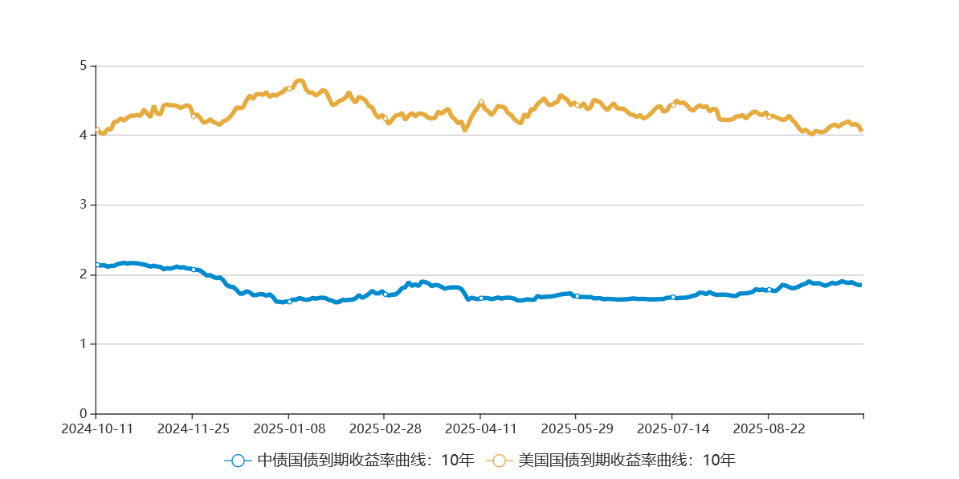
Market Overview - In the primary market, a total of 7 offshore bonds were issued by Chinese entities from October 6 to October 10, including 5 USD bonds and 2 HKD bonds, with issuance sizes of USD 1.7 million and HKD 500 million respectively. All bonds were issued via direct issuance [1] - The largest single issuance in the USD corporate bond market this week was USD 0.5 million by the International Finance Corporation, with the highest coupon rate at 4.5% also from the same issuer [1] Secondary Market Insights - The yield on Chinese USD bonds mostly increased this week. As of October 10, the Markit iBoxx Chinese USD bond composite index rose by 0.22% to 250.46, while the investment-grade USD bond index increased by 0.25% to 242.9. The high-yield USD bond index decreased by 0.05% to 245.55. The real estate USD bond index fell by 0.14% to 187.22, while the city investment USD bond index rose by 0.08% to 152.35, and the financial USD bond index increased by 0.12% to 290.03 [2] Benchmark Spread - As of October 10, the spread between the 10-year benchmark government bonds of China and the US narrowed to 228.02 basis points, a decrease of 8.47 basis points from the previous week [3] Domestic News - A one-stop account opening platform for foreign institutions in the interbank bond market was launched for trial operation on October 9, as per the People's Bank of China [5] - The Central Securities Depository and Clearing Company, in collaboration with the Interbank Lending Center, launched a centralized bond lending business, with 78 institutions participating in the first batch [6] - The Hong Kong government plans to issue HKD 16.75 billion and RMB 11 billion in bonds over the next six months, with a tentative schedule for six bidding sessions [7] Overseas News - Federal Reserve Governor Christopher Waller indicated support for further interest rate cuts but emphasized the need for caution due to mixed economic signals, suggesting a potential 25 basis point cut in each of the remaining two meetings this year [9] Offshore Debt Alerts - Fantasia Holdings announced that the hearing for its offshore debt restructuring plan is scheduled for January 16, 2026 [10] - Poly Developments announced that 4.512 billion shares will be transferred without compensation to Poly Group, making it the controlling shareholder [11] - Aoyuan Meigu's first temporary creditors' meeting is set to be held on October 25, 2025 [12]

黄金飙升背后的逻辑,美债并不认可?
美股IPO· 2025-10-11 05:48
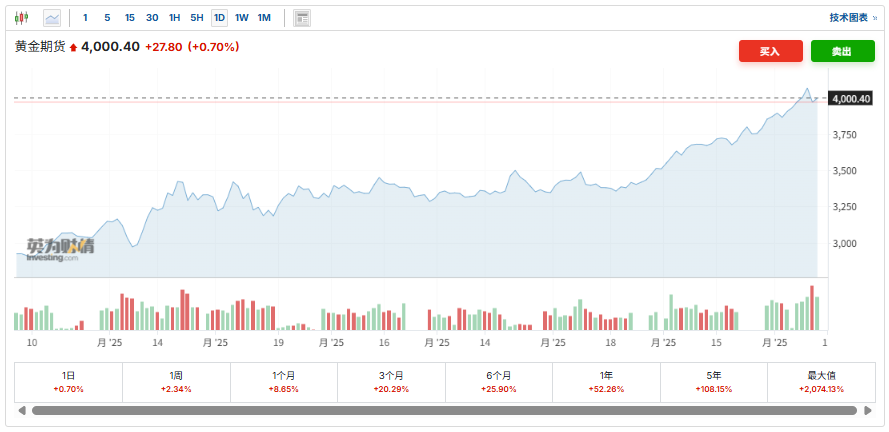
Core Viewpoint - The article discusses the contrasting narratives of gold and U.S. Treasury bonds, highlighting gold as a "vote of no confidence" in future monetary credit, while U.S. bonds represent a "vote of confidence" in policy credibility [1][3]. Group 1: Market Dynamics - Gold prices have surged by 51% over the past 12 months, surpassing $4000, while the U.S. dollar has depreciated by over 10% against a basket of major currencies [6][8]. - The stock market has reached new highs, indicating a growing interest in "devaluation trades," where investors bet on inflation to dilute government debt [6][7]. - The U.S. government's net debt-to-GDP ratio has increased from 96% in 2020 to 98% in 2023, raising concerns about future inflation as a means to address debt issues [8]. Group 2: Inflation Expectations - The key indicator for long-term inflation expectations, the five-year, five-year forward breakeven inflation rate, remains stable and close to the Federal Reserve's 2% target, suggesting that bond investors do not foresee runaway inflation [9][10]. - Despite the heated gold market narrative, the bond market has not reacted to the inflation concerns that gold investors are expressing [9][10]. Group 3: Divergent Market Sentiments - The article notes a split in market sentiment, with the stock market driven by optimism around AI technology and strong economic growth, rather than solely inflation hedging [11][12]. - The current macroeconomic data presents contradictions, with signs of a slowing job market suggesting a need for preventive rate cuts, while strong growth and rising inflation raise concerns about the implications of such cuts [12][13]. Group 4: Long-term vs Short-term Risks - Long-term risks indicate that if the U.S. does not alter its fiscal trajectory, a "debt market reckoning" may eventually occur, with inflation becoming a political choice [13]. - In the short term, the fate of the market is in the hands of the Federal Reserve, which may need to abandon rate cut expectations if economic growth continues [13].

2025年9月境外人民币市场综述
Sou Hu Cai Jing· 2025-10-11 02:37
Core Insights - In September, the offshore (CNH) RMB depreciated against the USD while the onshore (CNY) RMB appreciated, with a daily average price difference of 67 basis points (BP), a decrease of 13 BP from the previous month [1][3]. Group 1: Offshore RMB Deposits in Hong Kong and Taiwan - As of August 2025, offshore RMB deposits in Hong Kong increased to 967.96 billion yuan, up 3.2% from the previous month, while Taiwan's deposits decreased to 120.59 billion yuan, down 3.0% [2]. Group 2: Offshore RMB Foreign Exchange Market - On September 30, the CNH/USD exchange rate closed at 7.1287, a depreciation of 0.09% from the previous month, while the CNY/USD exchange rate closed at 7.1186, an appreciation of 0.20% [3]. - The CFETS RMB exchange rate index rose by 0.21%, the BIS currency basket index rose by 0.20%, and the SDR currency basket index remained unchanged [3]. Group 3: Offshore RMB Bond Market - In September, the offshore RMB bond market issued 121 bonds, an increase of 11 bonds from the previous month, with a total issuance amount of 291.004 billion yuan, up 77.4% [5]. Group 4: Offshore RMB Money Market - By the end of September, the CNH HIBOR rates for overnight, 7-day, 3-month, and 1-year periods were 1.8127%, 1.6218%, 1.7100%, and 1.9688%, respectively, with changes of +22 BP, +5 BP, -3 BP, and +5 BP compared to the previous month [6]. - The average interest rate differentials between offshore and onshore borrowing rates showed mixed trends, with some periods experiencing declines and others increases [6]. Group 5: Dynamics of Foreign Institutions in Domestic Interbank Market - As of the end of September, the total number of foreign institutions participating in the domestic interbank foreign exchange market reached 237, an increase of 1 from the previous month [7]. - The total number of foreign institutions and their products in the domestic interbank currency market reached 5775, an increase of 20 from the previous month [7]. Group 6: Trading Volume of Foreign Institutions - In the domestic interbank foreign exchange market, the total trading volume for foreign institutions was 33,086.45 billion yuan, a decrease of 11.4% compared to the previous month [8]. - The trading volume in the domestic interbank bond market for foreign institutions totaled 9,648.90 billion yuan, a decrease of 16.6% [8].

黄金飙升背后的逻辑,美债并不认可?
Hua Er Jie Jian Wen· 2025-10-11 02:33
Core Viewpoint - The current market is experiencing a divergence in asset pricing, particularly between gold and U.S. Treasury bonds, driven by differing expectations regarding inflation and economic policy responses [1][2][9]. Group 1: Market Dynamics - Gold prices have surged by 51% over the past 12 months, surpassing $4000, while the U.S. dollar has depreciated by over 10% against a basket of major currencies [4][5]. - The concept of "devaluation trade" has gained traction, where investors bet on government-induced inflation to alleviate rising debt burdens, leading to increased demand for hard assets like gold and stocks [5][6]. - The U.S. debt-to-GDP ratio has risen from 96% in 2020 to 98% in 2023, raising concerns about future inflation as a means to manage debt [5]. Group 2: Inflation Expectations - The long-term inflation expectations in the U.S. bond market remain stable, with key indicators like the five-year, five-year forward breakeven inflation rate close to the Federal Reserve's 2% target [7][8]. - This stability suggests that bond investors do not foresee runaway inflation, contrasting sharply with the bullish sentiment in the gold market [6][8]. Group 3: Divergence in Economic Signals - The market is currently divided on which economic signals will dominate Federal Reserve decisions—whether to cut rates in response to potential recession or tighten policies to combat inflation [2][10]. - The stock market's rise is attributed more to optimism surrounding AI technology and its potential to drive strong growth with moderate inflation, rather than solely as a hedge against inflation [9]. - The conflicting macroeconomic data, with signs of a slowing job market and strong growth, creates uncertainty about the Fed's future actions [9][10].
10月,信用策略如何布局?:信用策略系列报告
Hua Yuan Zheng Quan· 2025-10-11 01:57
Group 1 - The core view of the report emphasizes that short-end sinking strategies have outperformed in September 2025, with various credit strategies yielding positive returns due to sufficient coupon income covering capital loss, although the contribution to overall returns was limited [2][3][4] - Historical performance of credit strategies in October since 2021 shows that most strategies have achieved positive returns, with a notable success rate for bullish credit positions in October [10][24] - The report suggests that in the current steep yield curve environment, increasing allocation to medium and long-term credit bonds and utilizing bond repurchase agreements to introduce leverage could significantly enhance the returns of the strategies [10][24] Group 2 - In September 2025, the market was cautious due to concerns over new public fund sales regulations, leading to a tightening of credit bond market sentiment [3][4] - The report highlights that the performance of various credit strategies in September was negatively impacted by rising interest rates, with some strategies recording capital losses exceeding 1% [3][4][5] - The anticipated liquidity support from the central bank's operations in October 2025 is expected to bolster the bullish logic for credit investments, despite potential constraints from institutional behavior and policy impacts [17][24]